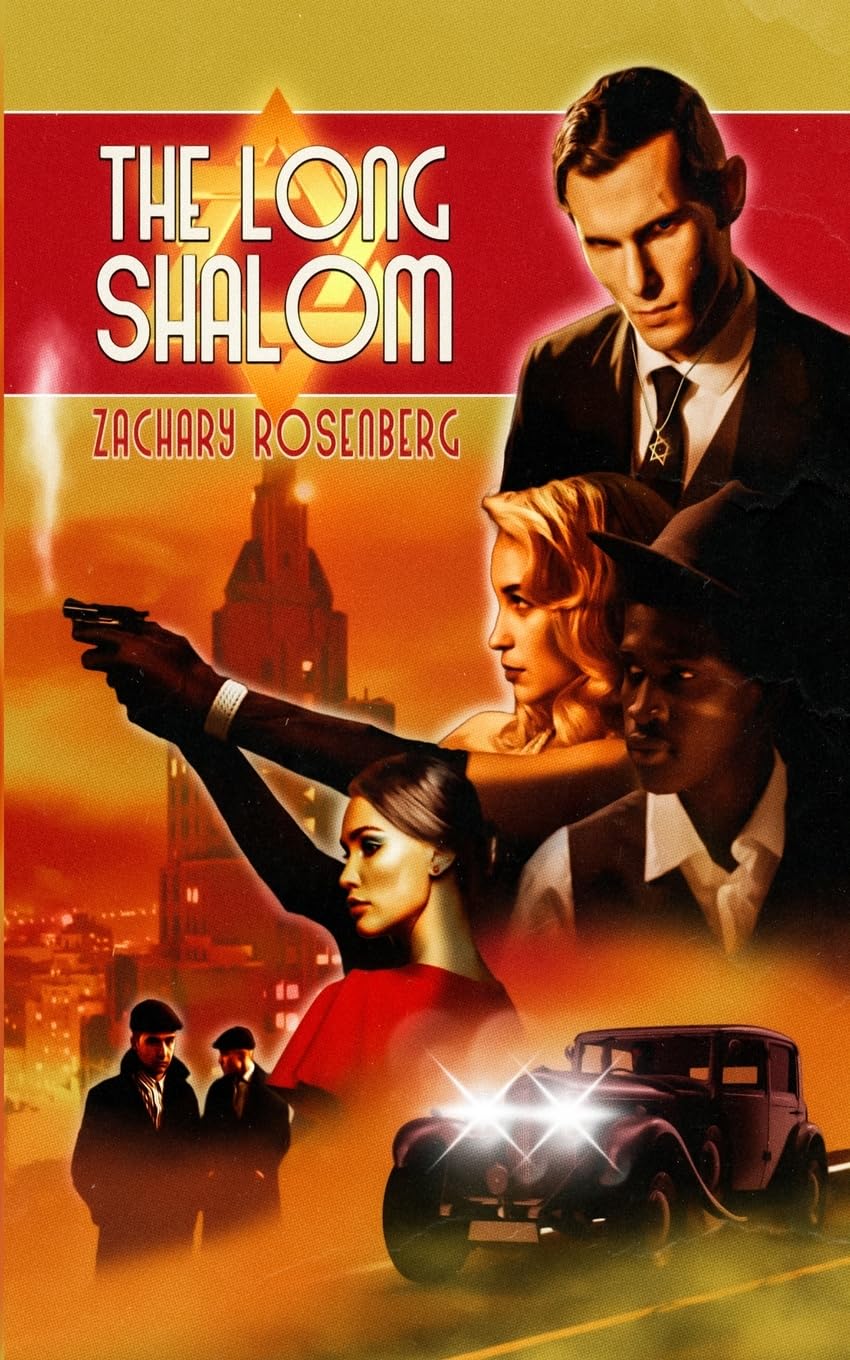
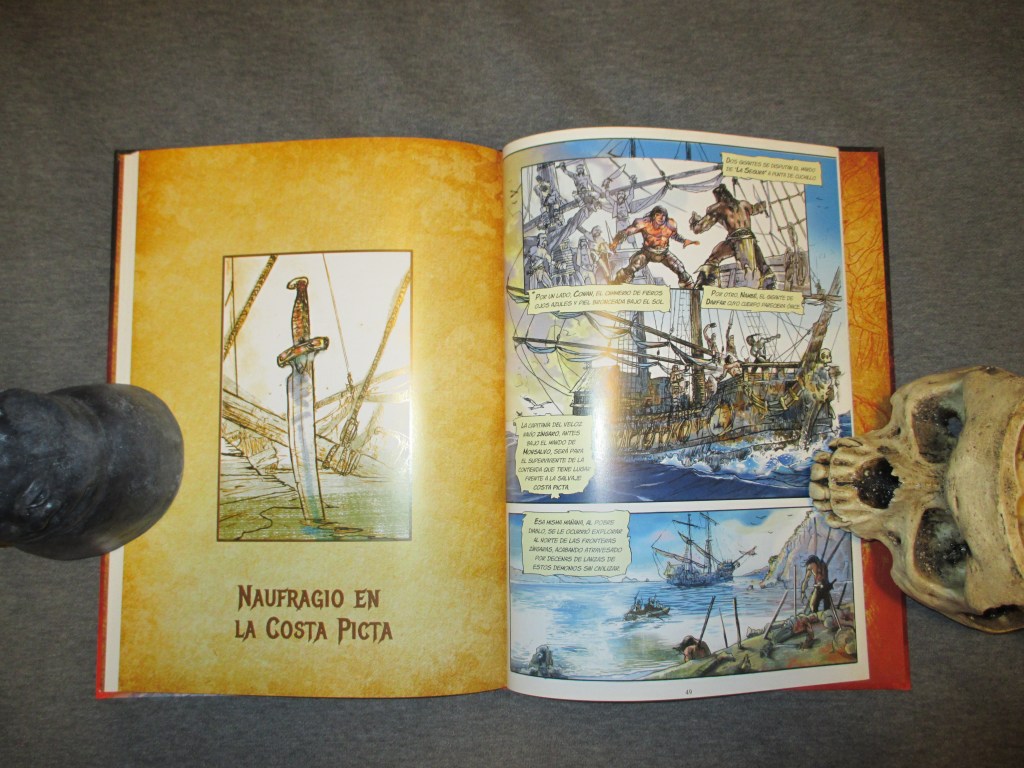
The Long Shalom (2023) by Zachary Rosenberg

People have such queer ideas about private detectives.
—Raymond Chandler, The Long Goodbye (1953)

Hardboiled detective fiction has never ignored the existence of ethnic minority, BIPOC, and LGBTQ+ characters. The representation often wasn’t great; prejudices were common, and sometimes a plot point. Genre-blending mixes with hardboiled fiction tend to follow similar lines. In the made-for-tv movie Catch A Deadly Spell (1991), for example, a key plot point is that the man who stole the Necronomicon is in a relationship with a transwoman.

There has been a trend in contemporary works, however, to swing the other way. Instead of token diversification or showcasing prejudices while fixing on a white cisgender heterosexual viewpoint, there are stories that focus on minority viewpoints, and in particular on intersectional experiences. Winter Tide (2017) by Ruthanna Emrys has as a protagonist an Innsmouth woman during the 1950s, but her group includes two gay men, a brother and his Black girlfriend, and a Japanese-American woman; Ring Shout (2020) by P. Djèlí Clark focuses on a group of Black women, one of whom is gender-nonconforming and homosexual, another mixed-race; The City We Became (2020) by N. K. Jemisin has a group as cosmopolitan as New York itself.

The Long Shalom by Zachary Rosenberg is another entry in that mode—I asked a few folks for a pithy descriptive term, and they suggested “wokepunk” and “diversifiction”—focused on protagonist Alan Aldenberg, a bisexual Jewish WW1 veteran and ex-mob gunsel, now wise-cracking private detective, who ends up dealing with a Lovecraftian supernatural threat. Aldenberg teams up with his half-Japanese/half-Jewish bisexual ex-girlfriend and two fellow WW1 veterans: an African-American man and a transwoman.

Yet the most important thing about The Long Shalom isn’t the cast of characters; it’s how the story is fundamentally based on their experiences and the discrimination they face. As in Ring Shout, the racial, ethnic, and gender discrimination they face becomes embodied as both traditional and supernatural threats. These individuals, who each have to deal with intersectional discrimination for their particular identities, also now have bigoted cosmic horrors to deal with.

Which leads to a certain aspect of the protagonists taking these new horrors in stride. There is more to the complex interplay of identity as Alan, long non-practicing, returns to the Jewish neighborhood and finds himself an outcast among outcasts, than there is to him confronting an ancient horror that seems immune to bullets. As the fantasy aspects increase—thanks to ancient scrolls and some very Innsmouthian-flavored Jewish women in a remote seaside community—the impression becomes closer to a retelling of a game of Harlem Unbound (2017), albeit with more of a Jewish than Black focus, and the mundane antagonists become almost cartoonish in their bigotry.

Yet that is kind of the point: as much as some of these characters feel like a caricature, the real thing, whether they were police uniforms or Klan robes, was if anything more explicit and violent. Racism and prejudice is seldom nuanced or interesting at base; it’s dull, ugly, and stupid, a combination of ignorance and stereotypes, hot points of emotions that can flash into bursts of unbelievable violence over almost nothing.

Alan clenched his teeth, fighting for something inspiring to say and coming up emptier than a wine bottle after Purim.
—Zachary Rosenberg, The Long Shalom 90

While the novel is short and the fantastic elements get away a bit from the more grounded characterizations, Rosenberg does have a certain style and authentic understanding of the characters and their cultures, which is appealing. Like Ring Shout, the threat is Lovecraftian without being based explicitly on Lovecraft’s Mythos; this is fundamentally an effort to write a Jewish horror story, with a hardboiled setting and more than a taste of pulp action—and it succeeds at that.


Bobby Derie is the author of Weird Talers: Essays on Robert E. Howard and Others and Sex and the Cthulhu Mythos.

Deep Cuts in a Lovecraftian Vein uses Amazon Associate links. As an Amazon Associate I earn from qualifying purchases.
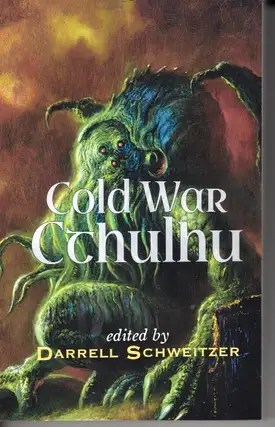
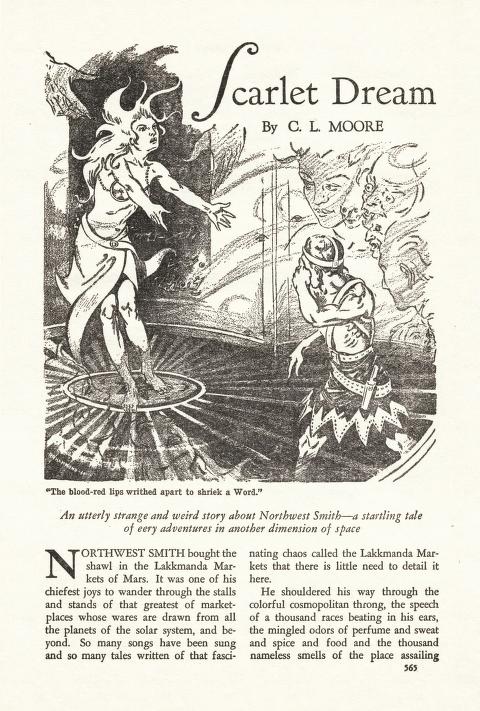
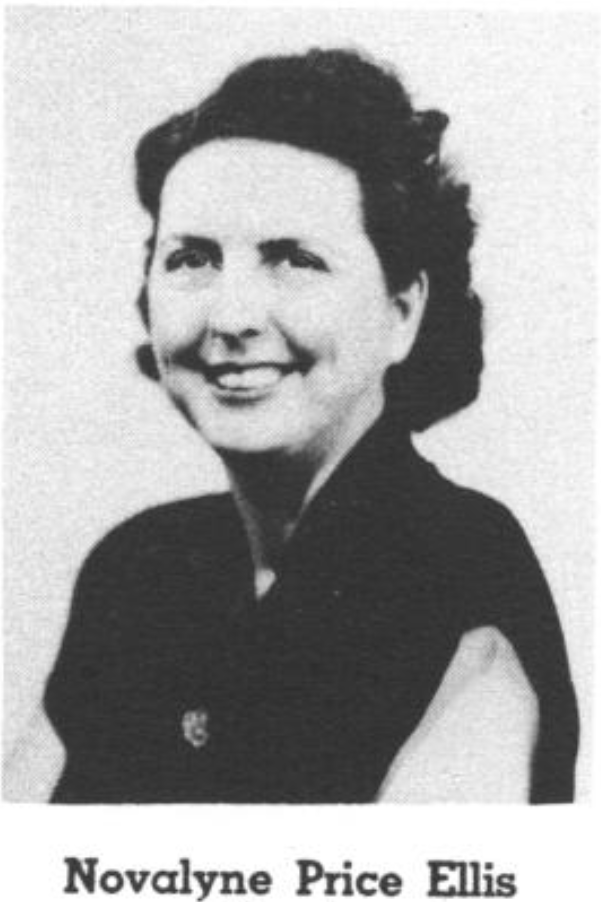
Deeper Cut: How to Read One Who Walked Alone by Novalyne Price Ellis

How to Read One Who Walked Alone by Novalyne Price Ellis
by
Bobby Derie

While they were acquainted for only about 22 months between the autumn of 1934 and the summer of 1936 (with a brief meeting in 1933), Ellis’ remembrance of Howard is the longest and most intimate memoir from anyone who personally knew him to be published. By the time that Howard scholarship focused on trying to record the memories of Howard’s friends and relatives, many had died, others were attempting to recall events from forty or fifty years before, and relatively few had intimate knowledge of Bob’s life and work.

All of which makes Novalyne Price Ellis’ One Who Walked Alone, published in 1986, an important resource for Howard studies. The book-length memoir of her on-again, off-again relationship with Bob Howard from 1934-1936 also gives a picture of life as a schoolteacher in a small Texas town, and the community of Cross Plains during the Great Depression, providing additional context to the narrative of her life and relationship with Bob.

The question scholars have to ask themselves before they use One Who Walked Alone is: how to read it? Can we read it strictly as nonfiction, or should it be considered closer to a work of fiction strongly drawn from real life, like Robert E. Howard’s semiautobiographical novel Post Oaks & Sand Roughs? What are Novalyne Price Ellis’ intentions and biases in writing this book, and how do these affect the final work? Perhaps most importantly, what does Ellis not address in One Who Walked Alone, and what can we read from those gaps?

These aren’t easy questions to answer because with Mrs. Ellis is deceased, and her original source materials have never been made available. However, we do have access to contemporary newspaper articles, memoirs about Robert E. Howard, and Howard’s own collected letters, which we can compare against the text and use to verify specific dates and events. We also have access to some of Novalyne Price Ellis’ own statements and letters, both during the period when she was writing and editing her manuscript for publication, and afterwards when she answered questions from fans and scholars. 

By combining these materials, a close reading of One Who Walked Alone reveals more about the nature of Novalyne’s book and how we should read it. When it comes to evaluating memoirs as historical documents, we must trust the authors to be honest—but verify as much as we can.

To begin with the text itself, in her foreword Novalyne Price Ellis reveals that the text began with “old diaries and journals I had kept from 1934 to 1936 (OWWA 11); in her preface, she reveals that “two names in the book […] were changed in order not to embarrass anyone still living” (OWWA 12). This by itself makes evident two important facts: that this memoir is drawn from her journals (and in fact takes the form of entries from those primary source documents), and that they have been edited or altered.

In fact, a look at Novalyne Price Ellis’ letters from 1978-1986 gives an idea of her process in writing and editing One Who Walked Alone. Early letters suggest she began simply transcribing her handwritten diaries and journals, typing them out to make them legible, e.g.:

Several years before I met Bob I was interested in writing, and I kept diaries and journals. Because of my interest in drama, I wrote conversations I had with people including those (many of them) that Bob and I had. The last few months Sprague de Camp has been urging me to write about Bob. If I could publish the diaries exactly as I wrote them, I would do so. Then people would know that Bob was neither crazy nor a freak. I am trying to type up the diaries and journals this summer before I begin another year of teaching.
—Novalyne Price Ellis to Glenn Lord, 3 Jul 1978, Selected Letters 2.3

However, it quickly becomes clear that Ellis wasn’t just transcribing the diaries and journals, but was also rewriting portions of the text:

Last week, I finished a section of my book that I have rewritten twice, and I still don’t like it. Some of the things I wrote in 1934 were pretty bad. I couldn’t decide what to do with it—whether or not to throw it away entirely, but I couldn’t do that, because it was something that had to be in the book.
—Novalyne Price Ellis to L. Sprague de Camp, 5 Aug 1979, Selected Letters 1.30

What exactly this rewriting consisted of is unclear—presumably changes of phrasing, silently correcting spelling errors, making entries stylistically consistent, etc. Some of the changes were clearly done on Ellis’ part to reflect the interests of people still living and, possibly, confidences once entrusted to her:

About four weeks ago, I was going through some material and I came across these words of Bob’s: “I’ll say this to you, but I wouldn’t say it to anybody else.” Where does that put me? He made that statement several different times. Am I still bound by that confidence? I wonder.
—Novalyne Price Ellis to Glenn Lord, 11 May 1980, Selected Letters 2.41

Also incorporated into the book were drafts of articles that were likely also drawn from the diaries and journals, to whit:

There are two chapters in the first 135 pages I do like, and I think Donald wanted to cut them. One of them described my trip to Cross Plains to apply for the job, and the other was the first faculty meeting. I think both of those chapters tell a lot about Cross Plains. They are the chapters I called you and Kirby about to ask if you didn’t think they should be left in, because they formed a background for Bob’s town, and both of you agreed with me. Both of them had been first drafts of articles about school teaching.
—Novalyne Price Ellis to Glenn Lord, 18 Mar 1984, Selected Letters 2.121

Mrs. Ellis also makes it clear that she was attempting to stick closely to the original diary and journal entries, sometimes to the detriment of readability:

While I was working on it and before I read it, all I could think of was that it does tell a lot more about Bob Howard the man than anyone else has written. What I didn’t realize was that in most cases, I stuck too close to the old diaries and journals; consequently, I wanted to cry while I went over the first 135 pages. How in the world could I fail to see that I was overwriting?
—Novalyne Price Ellis to Glenn Lord, 18 Mar 1984, Selected Letters 2.120

There are (depending on how you count) 78-80 entries, ranging in length from less than half a page to 11 pages in length. While predominantly told in the first person from Ellis’ perspective in a diary style, she does sometimes include fragments of dialogue and bits of conversation she had with others, in a more novel-esque fashion, which presumably came from her journal entries, as she was in the habit at the time of recording conversations in her journal to practice dialogue technique (SL1.26).

The first entry is dated 1933, and the last is in 1936, after Robert E. Howard’s death. The sequence of entries appears to be linear and some entries are specifically dated while others are vague. Ellis herself admitted that “The diary has a few dates—not enough” in a letter to Glenn Lord (SL2.46). Attempting to map the book directly onto a calendar doesn’t work, and the timeline is alternately compressed or decompressed depending on how prominently Robert E. Howard features in the narrative. We can assume entries not featuring him were edited out or combined, and this, combined with Ellis’ inconsistent tendency to date her entries, is why some of the dating is ambiguous. However, by correlating the events in One Who Walked Alone with other sources, we can map out a rough timeline for the book that corresponds closely with what we know of Novalyne and Bob’s lives in 1933-1936.

For example, we know from newspaper sources and yearbooks that Novalyne Price Ellis graduated from Daniel Baker College in May 1933, and that she was elected to teach at Cross Plains High School in August 1934, the school year beginning 10 September, which agrees with the beginning of One Who Walked Alone. When Novalyne mentions “We had such a large crowd that people had to be turned away” on page 118 agrees with the account given of the Hallowe’en frolic in the Cross Plains Review for 2 November 1934. When Novalyne writes “Bob is still in Temple” on page 182, we can confirm from Howard’s own letters that Bob and Hester Howard spent a month in Temple, TX for medical treatment (A Means to Freedom 2.838).

Further interpreting the content of One Who Walked Alone requires understanding the context of its publication and what other works may have influenced Novalyne Price Ellis’ manuscript, consciously or unconsciously. Interest in Robert E. Howard had begun to revive in the 1950s with the hardback publication of his Conan fiction by Gnome Press, and then seemed to explode in the 1960s and 70s with paperback publication. Science fiction and fantasy fandom, which had long neglected Robert E. Howard, began to organize with fanzines like Amra and The Howard Collector by Glenn Lord, and organizations like the Hyborian Legion and the Robert E. Howard United Press Association. Critical interest in Howard’s fiction led to scholarly interest in Howard the person, and finally, attention was given to his surviving friends, neighbors, relatives, and colleagues to learn more about Bob Howard.

According to her letters, Novalyne Price Ellis had conceived of a book-length memoir of Bob Howard shortly after his death in 1936:

I have always felt that I owed it to Bob to write about him as a person. After his death in 1936, I began organizing the things I’d written while we were going together and writing new things. However, I only wrote about 30 or 40 pages. I’m sure the book was more about me than about Bob, but I called it THE NEW HAMLET . . . YOUNG AND TRUE. There are a number of reasons I did not finish it: writing it was painful, I was still going with Truett and liked him, but mostly because I have always liked teaching better than writing.
—Novalyne Price Ellis to L. Sprague de Camp, 20 Aug 1977, Selected Letters 1.14 

She certainly still had interest in the subject in the 1940s, as shown by her radioplay “Day of the Stranger” (1947). However, she was at that point employed full time as a teacher with many extracurricular activities, married, and a mother; the project lapsed. Mrs. Ellis came to the attention of fandom and scholars in the 1970s, including correspondence with L. Sprague de Camp and Glenn Lord. According to her letters, the contact with these scholars and interest in Howard and ongoing publications about his life and work, along finally Mrs. Ellis’ retirement from teaching in 1979, encouraged her to revive her project.

At the time she was writing and editing (~1978-1982), the vast majority of Robert E. Howard’s correspondence had not yet been published. Many of the memoirs from Howard’s friends had only been published in various fanzines, some quite rare and obscure. Novalyne Price Ellis did read a few of these things:

I have read very few things about Bob—sometimes a book review or comment—and what I did read didn’t seem to me to be exactly what should have been said. I read one short biography that was filled with what I felt were inaccuracies.
—Novalyne Price Ellis to Glenn Lord, 1 Aug 1979, Selected Letters 2.10

In a later letter, she says this was a book published by Arkham House, which would be Literary Swordsmen and Sorcerers (1976) by L. Sprague de Camp, whose biographical chapter on Robert E. Howard is “The Miscast Barbarian.” We also know that Ellis read Harold Preece’s article “Women and Robert Ervin Howard” in Fantasy Crossroads #3 (May 1975), because she mentions it in her letters (ibid.), there are also references to her having read pieces on Robert E. Howard by E. Hoffmann Price and an individual named Troll (SL2.19).

The major accounts of Howard’s life that were relatively available were E. Hoffmann Price’s stories of his two visits to Robert E. Howard in Cross Plains in 1934 and 1935; Tevis Clyde Smith’s Frontier’s Generation, which included an essay on Bob in the enlarged 1980 edition; Glenn Lord’s The Last Celt: A Bio-Bibliography of Robert E. Howard (1976); and a series of biographical works by L. Sprague de Camp: The Miscast Barbarian (1975), a chapter in Literary Swordsmen & Sorcerers (1976), and Dark Valley Destiny (1983), written with his wife Catherine Crook de Camp and Jane Griffin. These are the sources that Mrs. Ellis would most likely have had access to and be influenced by.

Smith was a personal friend of Ellis going back to the 1930s; it is impossible to discount the possibility that his memories or memoirs of Bob Howard influenced her own, and she references his book in One Who Walked Alone (11, 52, 170). While there aren’t any specific incidents that seem drawn from Smith’s memoirs, we can assume any influence was baked in, as he both wrote the introduction and directly influenced the editing. She wrote that when the book was finished:

As you know, I wanted Clyde Smith to read what I had written about Bob before anyone else read it. I visited with him and his wife Rubye in early 1980. 
—Novalyne Price Ellis to Thomas W. Collins, 10 Nov 1988, Selected Letters 1.47

According to Ellis, when Smith reviewed the manuscript, he said: “Novalyne, you’ve got me saying ‘God damn’ too much.” Ellis’ reply was: “I laughed and agreed to cut some of them out.” (Report on a Writing Man & other reminiscences of Robert E. Howard 6). In One Who Walked Alone, Smith never swears worse than “damn.”

E. Hoffmann Price’s memoirs are functionally brief, and while they offer good detail on Robert E. Howard and, to a lesser extent his family, offer little detail on the town or its inhabitants. While she never met E. Hoffmann Price during his 1934 or 1935 visit or afterwards, she does mention that she had heard of the visit (OWWA 114-116, 263). While there are no direct anecdotes repeated in their respective memoirs, there are some interesting parallels. For example, both Price and Ellis mention how Hester Howard acted as a filter on the phone, keeping young women from talking to Bob Howard (The Acolyte Fall 1945, 32; OWWA 41). Likewise, both Price and Ellis discuss Bob talking about enemies (BOD 74, OWWA 257), and both mention that Howard kept a firearm in the glovebox of his car (The Acolyte Summer 1944; OWWA 73).

Ellis entered correspondence with Glenn Lord in the late 1970s, and The Last Celt contained biographic materials including essays by Howard’s friend Harold Preece and E. Hoffmann Price. Regarding this and other of Lord’s publications on Howard, Ellis politely declined to read them:

Thank you for telling me about your book—THE LAST CELT. I haven’t looked for a copy yet because I am busy with my own story about Bob. I don’t want to read anyting [sic] of anyone else’s until I finish. Whatever value my book will have will be Bob as he impressed people in Cross Plains and as I knew him. Naturally, I sincerely feel I knew the real Bob Howard.
—Novalyne Price Ellis to Gleen Lord, 18 Jul 1978, Selected Letters 2.5-6

However, in later letters, Mrs. Ellis does mention Preece’s biographical essay on Bob in The Last Celt (SL2.16, 19). Regarding E. Hoffmann Price’s essay:

 In The Last Celt, I thought Price was unnecessarily harsh about Bob too. Consequently, I had wanted my book to present him as he was—a good, kind man, who—if he was a little peculiar—had a right to be under the circumstances.
—Novalyne Price Ellis to Glenn Lord, 27 May 1984, Selected Letters 2.125

Some parallels are to be expected when discussing the same subject, so this doesn’t mean that Mrs. Ellis was cribbing notes off Price but it is important to note those parallels because sometimes knowledge of other memoirs or scholarship can creep into a work. Novalyne Price in 1934-1935, for example, could not know that Robert E. Howard would commit suicide; yet there are passages in One Who Walked Alone which can clearly be read as foreshadowing. For example, there is an encounter with Dr. Howard in what would be about November 1934, on One Who Walked Alone 181-182:

Dr. Howard straightened his shoulders, and his voice was stronger.

“Robert will be all right now, I think.”

That surprised me. “Has he been sick, too?”

Dr. Howard looked closely at me for a moment before he answered. He shook his head. 

“No. Not sick. He is very close to his mother.”

So that is unique? I thought, irritated slightly. I thought of my own mother and grandmother, and wondered how I could ever get along without them. 

“All of us are close to our mothers,” I said. “Somehow we manage to make it without them, I suppose.”

Dr. Howard sighed and looked toward the street at the passing cars. He didn’t see me. “Yes,” he said. “We manage.”

If this exchange happened when the text indicates, it is a significant foreshadowing of events. Mrs. Ellis, compiling and editing the work in the 1970s, clearly realized in hindsight how significant such a conversation would be. Yet we have no way of knowing if this exchange actually take place, when and where and how Novalyne Price Ellis indicated, or if it was fabricated to better fit the narrative. Some evidence in her letters suggests that Ellis definitely moved things around to fit her narrative:

Another thing I want to comment on is the first 168 pages that I have already sent to you. I want to cut some of the things in them for two reasons: 1) I think some later material concerning Bob is more important than some of that presently included. 2) I found a few things that I think should be included in the first part of the book. Some of the things can fit in anywhere, but one or two really need to be included early.
—Novalyne Price Ellis to Glenn Lord, 8 Dec 1980, Selected Letters 2.50

Dark Valley Destiny makes a particularly interesting point of comparison because one of the sources for that first full biography of Robert E. Howard was Mrs. Ellis herself, and was also drawing on E. Hoffmann Price’s memoirs and correspondence. Novalyne and the de Camp’s correspondence reveals a complex relationship, as the de Camps were very interested in her as a source of information about Robert E. Howard but were keen to interpret that information through their own lens when writing about him. For her own part, Novalyne was very aware that the de Camps were writing a biography about Bob at the same time that she was writing a memoir. The result was a kind of cagey rivalry, neither side wanting to give up too much data or make concessions on what material they would or would not use in their own book.

As a consequence, while Dark Valley Destiny covers Bob and Novalyne’s relationship, there are some subtle differences between the two works, both in detail and especially in interpretation. Several exchanges mentioned in both books are given slightly differently (cf. OWWA 39/DVD 314, 317; OWWA 54/DVD 315; OWWA 82/DVD 314-316). The reason for the discrepancy may be a factor of different routes of transmission (Ellis had her journals and her own memories, the de Camps only their conversations and correspondence with Ellis) or different editorial preferences. In some cases, the distinction represents an expansion that might be beyond the original journals. For example, in One Who Walked Alone 160 she says Robert E. Howard “talked about Atlantis,” but in Dark Valley Destiny she is quoted quoting Bob:

“Look, girl! Once upon a time, long ago, there was this vanished civilization of Atlantis, on an island in the ocean….”

In another instance, in One Who Walked Alone, Ellis quoted Howard:

“The Cro-Magnon man had it all over us modern men. He saw a woman he wanted, grabbed her by the hair of the head and dragged her back to his cave.”

In Dark Valley Destiny, Ellis is quoted quoting Howard:

“Look, girl, if this were Conan, he’d bat you down and drag you by the hair in the dust!” (DVD 319-320)

The phrasing echoes Bob’s dialogue in One Who Walked Alone, even though it doesn’t appear there. Were these passages from the journals that didn’t make the cut, something Ellis remembered but wasn’t included in the journals, or a paraphrase of something Bob said? We have no way to know.

If we compare Robert E. Howard as he appears in One Who Walked Alone versus the Howard that emerges from de Camp’s efforts at biography, the results are more subtle than profound. Her approach differs from others: while Bob Howard is presented as somewhat quirky and eccentric, but also a basically decent and normal human being. Ellis does not attempt to provide any of the pseudo-psychological analysis that characterizes de Camp’s works and paints Howard as an emotionally immature man-child with an unhealthy fixation on his mother or latent homosexual.

Novalyne Price Ellis makes no startling or easily falsifiable claims about Bob’s character or history. Neither does she discuss particular anecdotes of which she should have no knowledge, or events that are solely discussed in Dark Valley Destiny et al. and nowhere else. While it isn’t possible to prove Ellis was not influenced by Howard scholarship at the time she compiled and edited One Who Walked Alone, neither are there any red flags that suggest she was definitely drawing on any particular source. 

We’ve already seen how Ellis admitted using pseudonyms for some individuals still alive at the time the book was written, and how the arrangement of the entries suggests that they have been edited to emphasize Robert E. Howard, which affected the timeline of the narrative. There are indications, like the foreshadowing, that some conversations may have been emphasized, moved, paraphrased, or fabricated for narrative purposes.

When Glenn Lord approached Donald M. Grant about publishing One Who Walked Alone, the response he received was:

Grant replied that, while it was interesting, he felt she emphasized herself too much and did not put enough Howard into her work. He wanted her to rewrite and emphasize Howard. At first Novalyne was hesitant about whether she could do it. I encouraged her to try, she knocked out the work, it was acceptable to Grant, and thus we have the result today.
—Glenn Lord to the Cimmerian, 2008; Selected Letters 1.38n39

This broadly matches what we see in the text of One Who Walked Alone; many entries that were largely about Novalyne herself were probably excised to focus on Bob.

There are also many aspects of Ellis’ life that aren’t included in the book. While we do get an account of Ellis’ illness at one point, the book doesn’t cover her general health to any degree of detail; we never know if she’s on her period or feeling a bit under the weather, because these aren’t necessary to the narrative. She never mentions physical intimacy with Robert E. Howard beyond some kissing; is that because their relationship really was chaste, or because she didn’t feel it appropriate to discuss such things (keeping in mind her husband was still alive and well)? We can perhaps judge how much self-censorship Ellis engaged in when she writes in one letter:

It occurred to me that Sprague had probably written something derogatory about Bob and me, for Catherine had asked me (you won’t believe this) if I objected to people reading my diaries and journals because they contained sex! I tried to assure the evil minded woman that such an idea was preposterous!
—Novalyne Price Ellis to Glenn Lord, 22 Apr 1982, Selected Letters 2.86

It is also worth noting that Ellis fully expected that the book would be cut after she submitted the manuscript and before publication. She even asked directly about this:

Will I be given the privilege of cutting some of the first portion of the manuscript which I have already sent in? After I cut it, the editor can cut what he pleases; however, I should like to discuss the cuts with him. I am particularly interested in making a few cuts and adding a couple of paragraphs. Recently, I found an old diary that I’d been looking for and part of an old scrap book.
—Novalyne Price Ellis to Glenn Lord, 30 Jun 1980, Selected Letters 2.46

One segment we know she wrote but cut was the original introduction to the book (SL2.50). Other changes were likely corrections or proofing changes, for example:

Also, I wanted to ask you to delete the word lustful on page 582. I think it’s better not to use that word because I couldn’t think of a word then or now to describe my feelings about Bob’s overwhelming sense of duty to his mother and father. I should like to just put a comma after the word say. Sometimes it’s hard to describe a situation.
—Novalyne Price Ellis to Glenn Lord, 10 Aug 1981, Selected Letters 2.68

How much was cut from the initial manuscript is unclear, although one letter suggests Donald said “at least 100 pages should be cut” (SL2.87), and that Ellis ultimately cut 125 pages (SL2.90, 110), and then an additional 32 pages on a subsequent editorial pass (SL2.124). Other people who saw the manuscript apparently also suggested changes, although what these are exactly is unclear. Ellis wrote:

When James Turner of Arkham House refused the bookscript about Bob, he took the time to edit it and he also made several suggestions. He said that one incident I had described did not tell anything about the town or about Bob, but that it had so much delightful humor in it he didn’t think any editor would want to delete it. (SL2.95)

Every document is produced for a purpose, stated or unstated, every author has their bias and their blindspots, and some disagreement between sources should be expected, simply because different people recalling the same events at different times and from different perspectives are going to remember things differently. Based on Novalyne Price Ellis’ letters and other writings, One Who Walked Alone was her honest effort to present Robert E. Howard as she had known him—but what it is not is an exact transcription of primary source materials.

In the end, Ellis’ work might be more properly categorized as creative nonfiction than as either a straight memoir or a work of semiautobiographical fiction like Howard’s Post Oaks & Sand Roughs. Its purpose is to accurately represent a certain time, place, persons, relationships, and events. Yet to do that, Ellis had to go beyond just a dry recitation of facts or or raw transcriptions from her diaries and journals; she constructed and presented a narrative for readers, and while that narrative is based in fact, it still represents her particular take on events, and should be read as such. Scholars can still cite and draw from One Who Walked Alone, but they should do it with an understanding that what they are citing has been filtered, rewritten, edited, and presented to depict a particularly human image of Robert E. Howard, as a direct counter to some of the depictions of Howard as mentally ill or freakish.

When she saw how the de Camps were using the information she provided them to depict Bob Howard in a way she did not agree with, Novalyne Price Ellis noted:

I, who have always liked biographies, feel now that biographies are about the feelings and emotions of the people writing them instead of the subject.
—Novalyne Price Ellis to L. Sprade de Camp, 20 Aug 1977, Selected Letters 1.14

Which is demonstrably true, and in One Who Walked Alone, she makes no attempt to conceal her own feelings and emotions. 

Originally presented as part of the Glenn Lord Symposium at Howard Days 2025.


Bobby Derie is the author of Weird Talers: Essays on Robert E. Howard and Others and Sex and the Cthulhu Mythos.

Deep Cuts in a Lovecraftian Vein uses Amazon Associate links. As an Amazon Associate I earn from qualifying purchases.
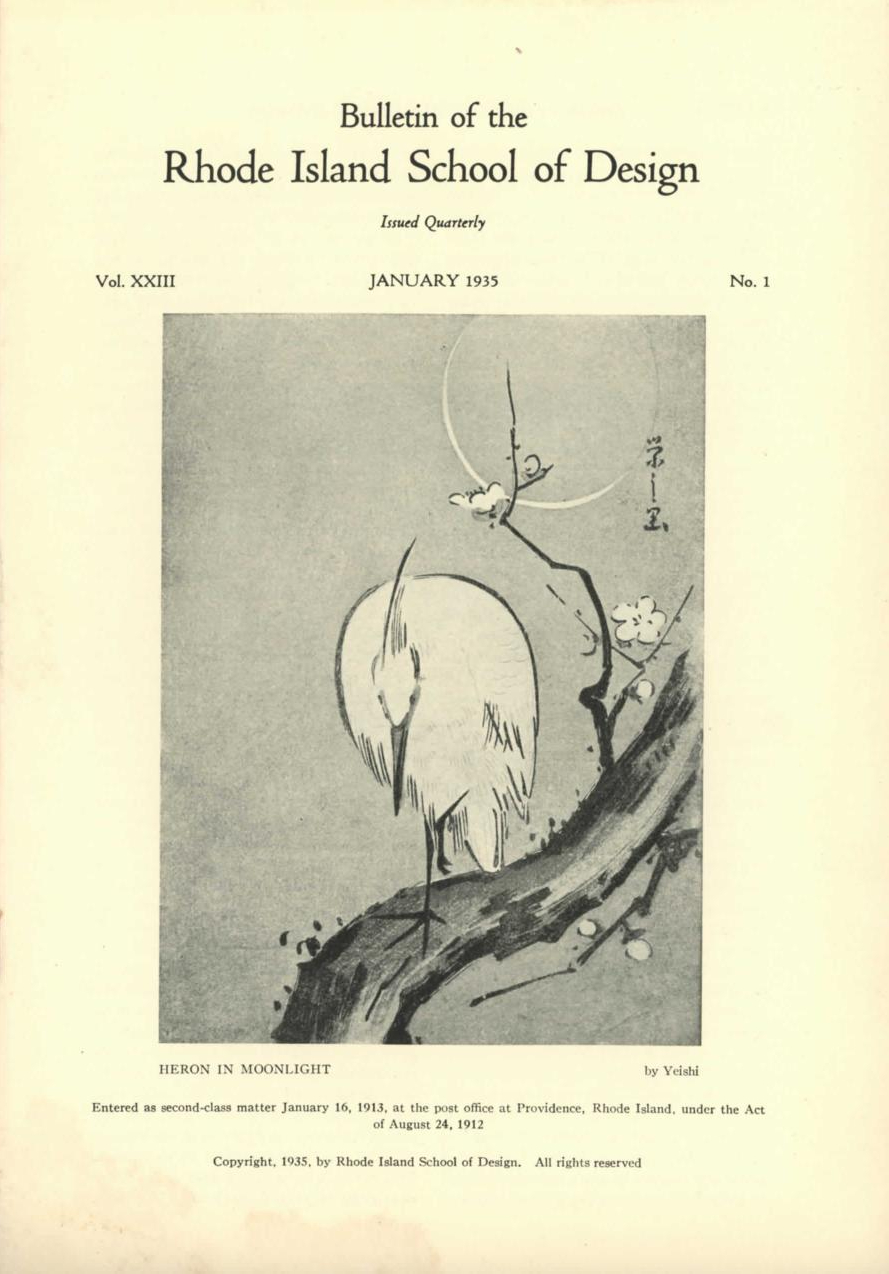
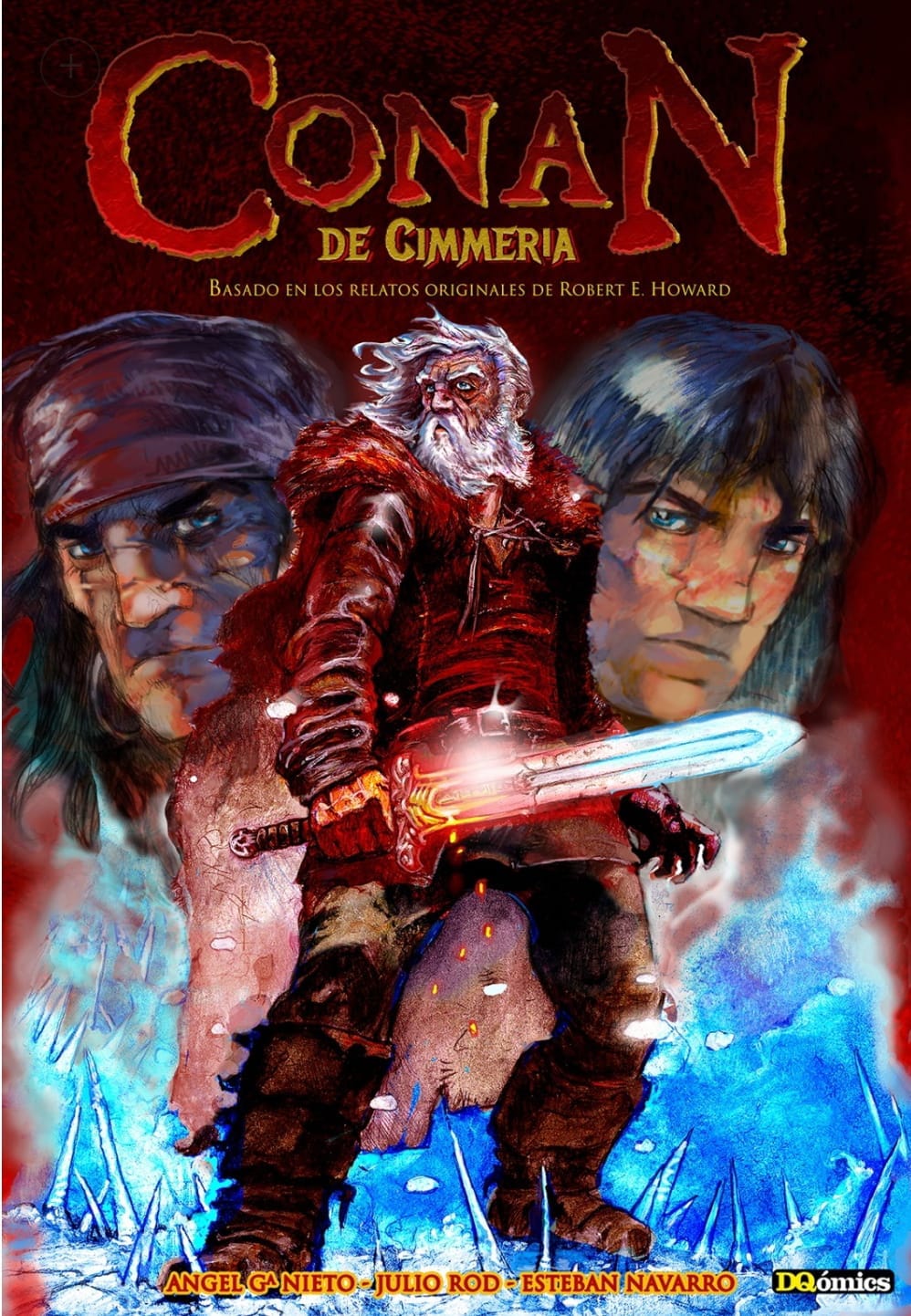
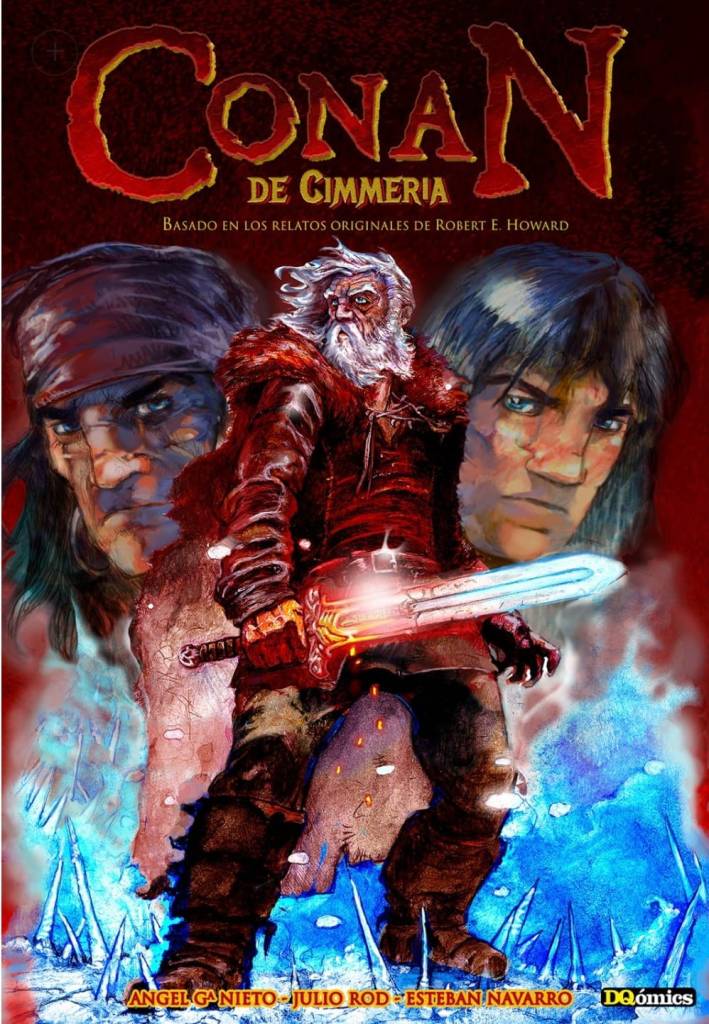
Conan de Cimmeria (2021) by Ángel Gª Nieto, Julio Rod, & Esteban Navarro

Derivative works all share a connection with the parent work. Every story with Cthulhu derives, directly or indirectly, from Lovecraft’s “The Call of Cthulhu.” Every story with Conan the Cimmerian derives from the original stories written by Robert E. Howard. From the humble pages of Weird Tales have spun out thousands of creative works in a dizzying array of media—short stories, novels, comics (strips, books, magazines, and graphic novels), cartoons, live-action and animated films, music, paintings, sculptures, toys, video games—and one of the key thing to remember about these works is that they aren’t being created in a vacuum, but in communication with one another.

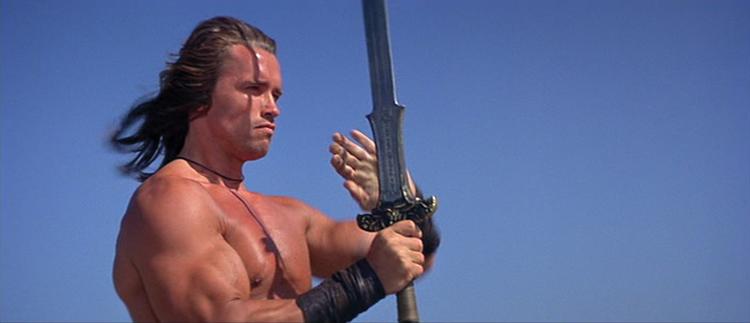
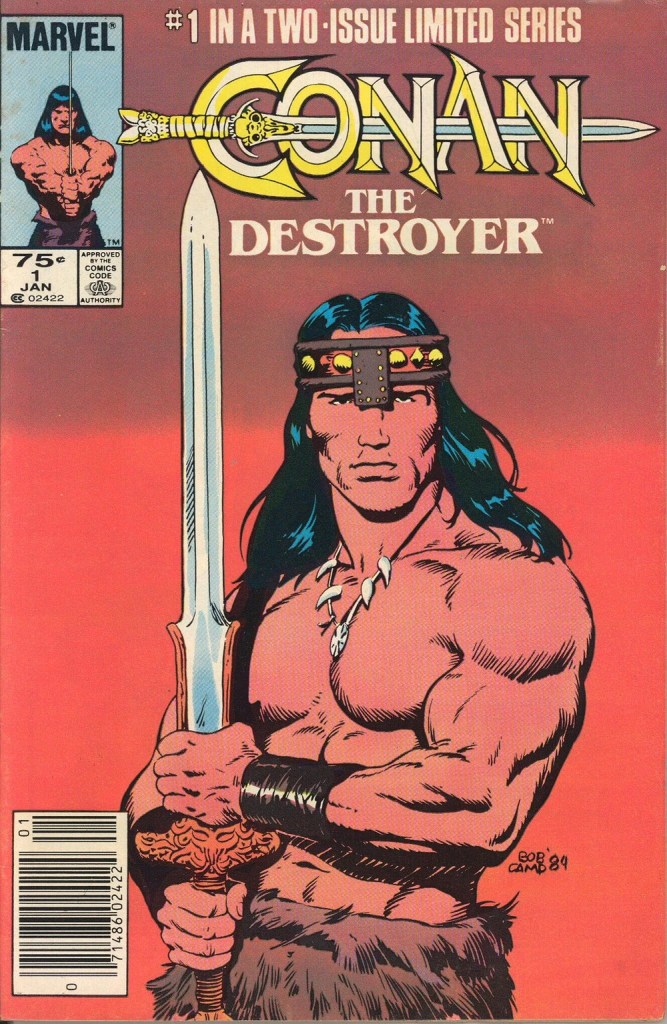
The Atlantean sword in the film Conan the Barbarian (1982) owes nothing to anything in the stories of Robert E. Howard; the closest the Texas pulpster managed to a special weapon was in the first Conan tale, “The Phoenix on the Sword,” and that sword was broken in the course of the story. Some of the pastiche tales and comic book stories that followed included magic weapons, but none of them served as the immediate inspiration for the Atlantean sword in the film either. Nevertheless, the sword featured extensively in the poster and marketing materials for both Conan the Barbarian and its sequel Conan the Destroyer (1984)—and, unsurprisingly, was represented fairly faithfully in the Marvel Comic adaptations of the films.

Art by Bob Camp

For many years, outside the movie continuities, the Atlantean sword was not a key feature of most Conan media. While it continued to have lingering appeal because of the tie to the film—including multiple weapon makers providing official or bootleg versions of the sword for fans and collectors—publishers like Marvel and Dark Horse did not lean into that aspect of the film iconography.

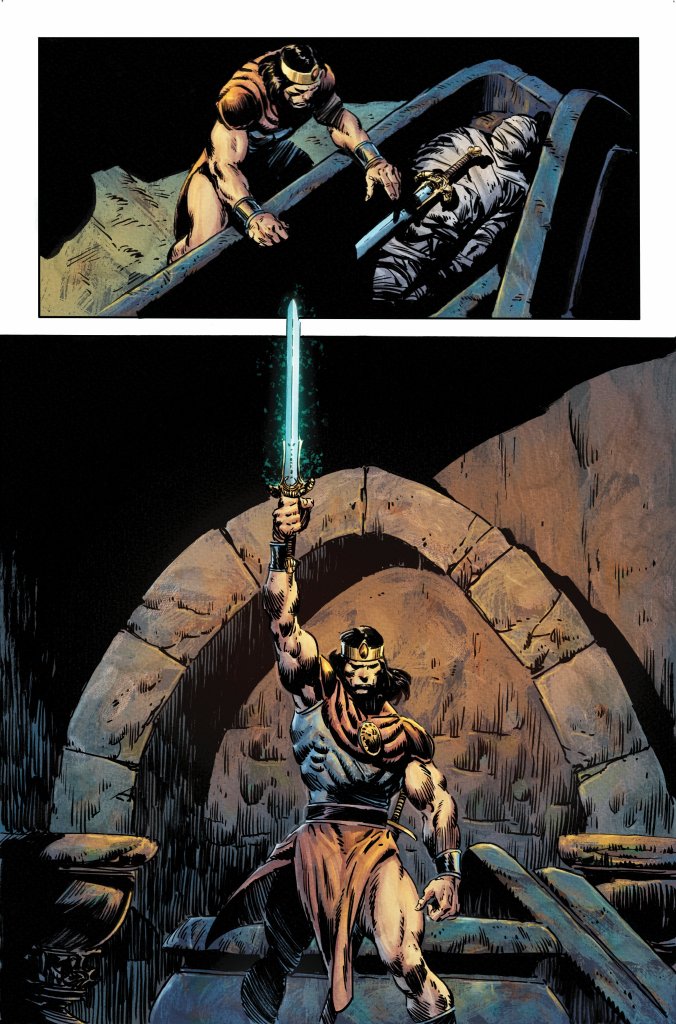
More recently, however, the iconic Atlantean sword has seen increased placement in both official and unofficial Conan media. The latest Conan comics published by Titan have deliberately leaned into a melding of the iconic looks of previous incarnations of the Cimmerian, drawing both from the John Buscema/Ernie Chan era of Marvel Comics as well as the 1982 film. It’s little surprise that when Conan does actually go to Atlantis in Conan the Barbarian #11, the Atlantean sword—or at least a good facsimile—makes an appearance.

Art by Roberto de la Torre, Color by Diego Rodriguez

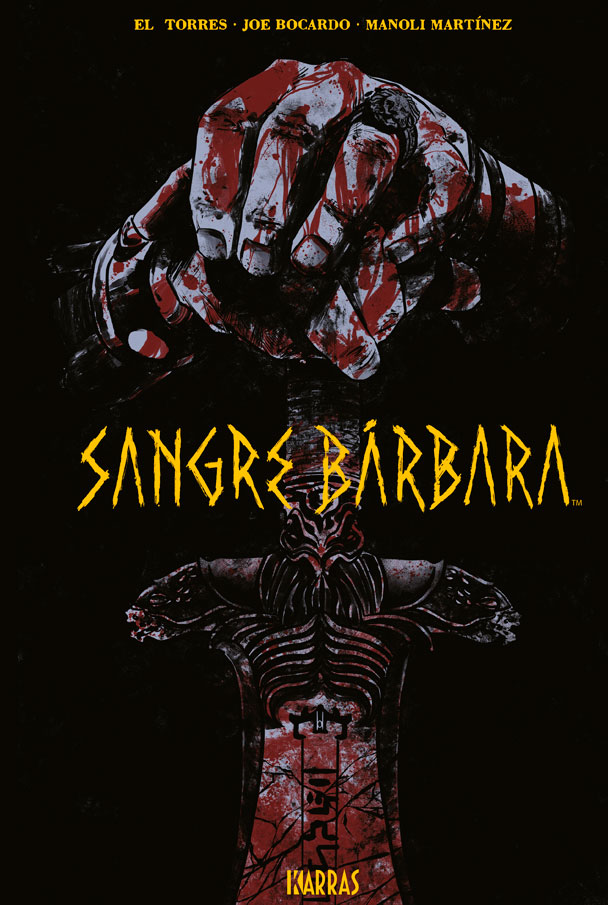
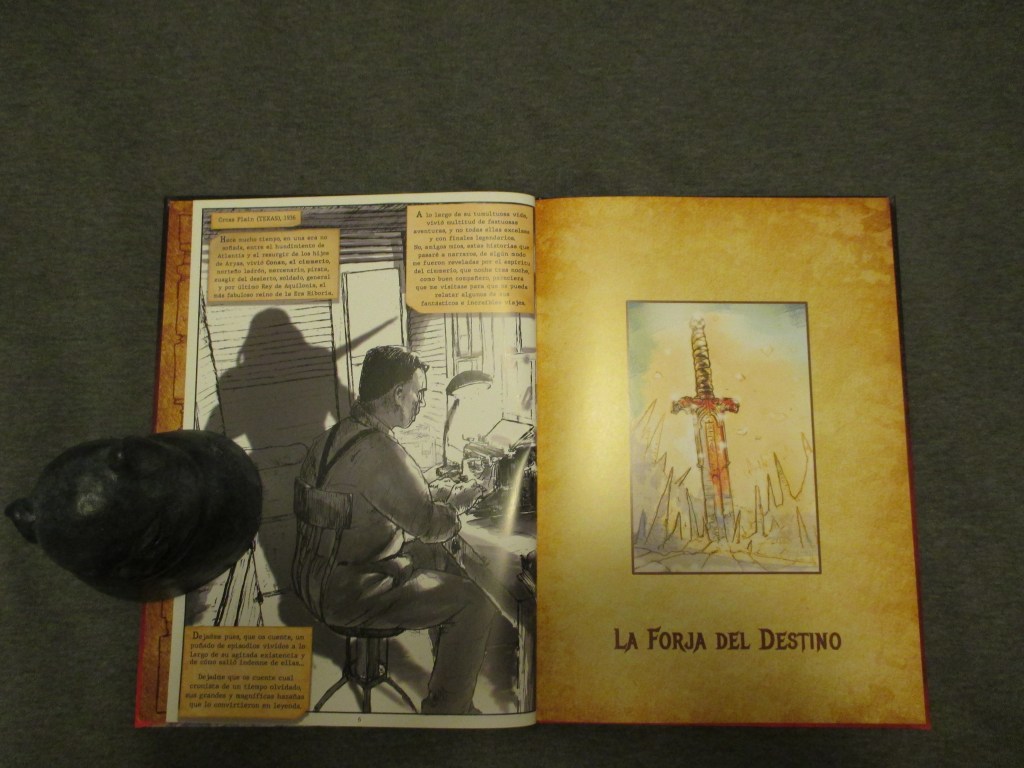
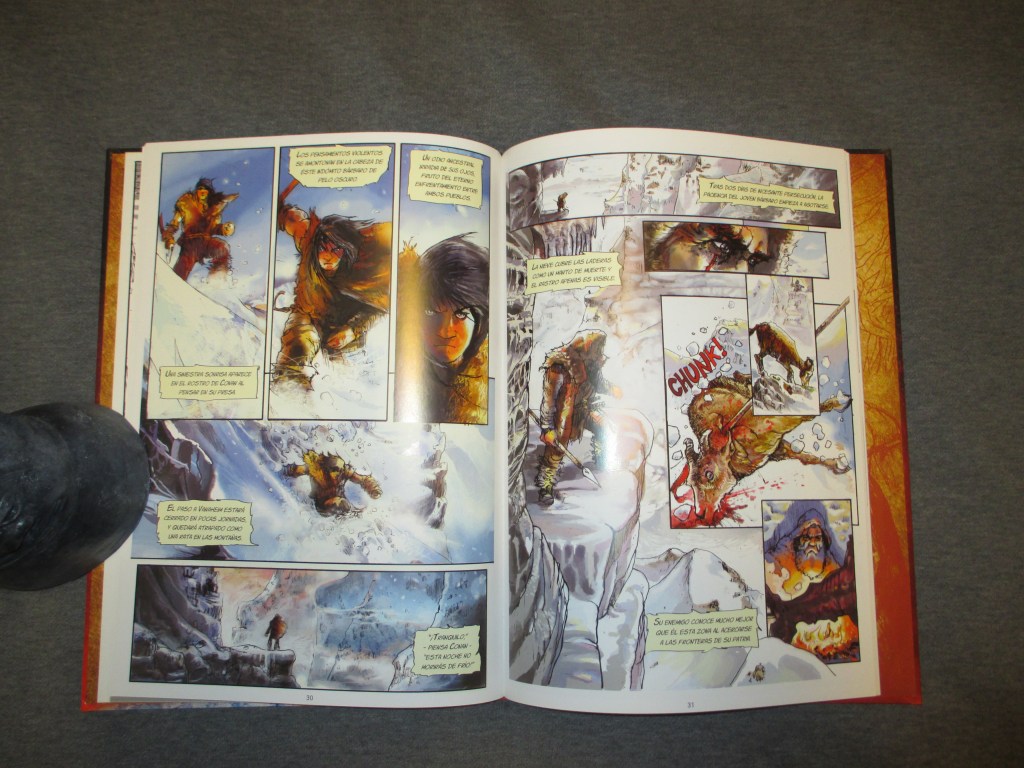
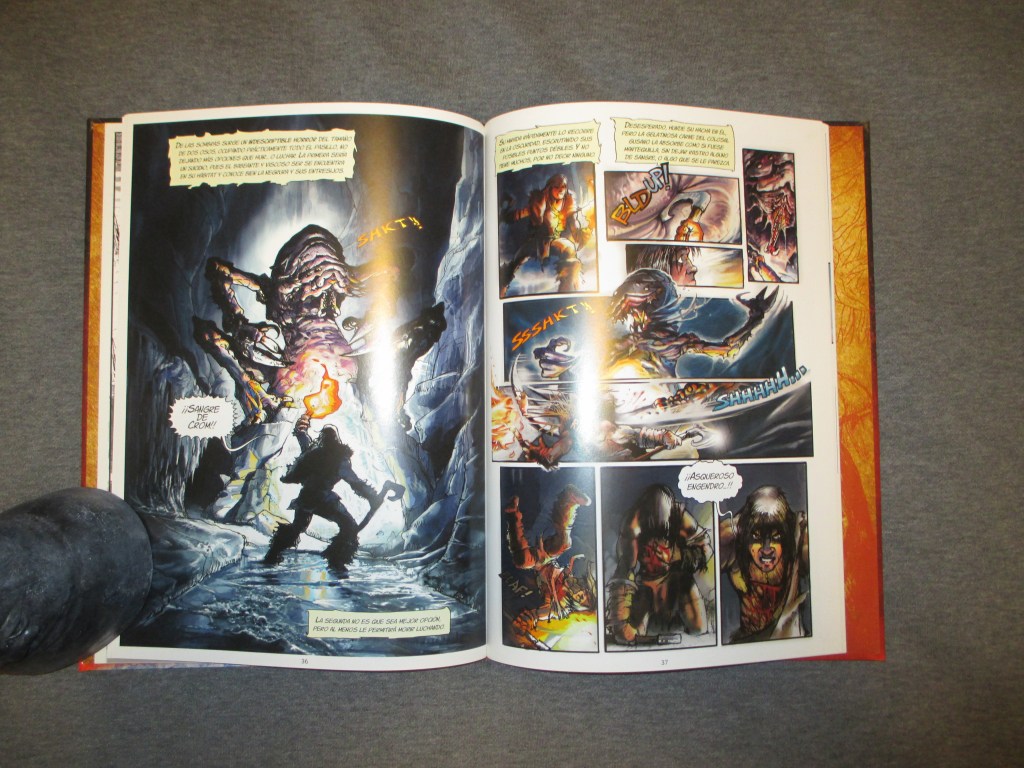
Outside of the official comics, works produced in areas where the Conan the Cimmerian stories by Robert E. Howard have fallen into the official domain have had fewer qualms about borrowing the iconic imagery of the Atlantean sword. Such is the case for Sangre Bárbara (2021) by El Torres, Joe Bocardo, & Manoli Martínez, and such is also the case for Conan de Cimmeria (2021) by the creative team of Ángel Gª Nieto (writer), Julio Rod (artist), & Esteban Navarro (colorist).

Hace mucho tiempo, en una era no soñada, caminó Conan, el Cimmerio, que a lo largo de su turbulent existential vivió multiud de fastuosas adventuras.

Dejadme que os cuente cual cronista de un tiempo olvidado sus grandes y magníficas hazañas, que lo convertieron en Leyenda.
Long ago, in an age undreamed of, walked Conan the Cimmerian, who throughout his turbulent life lived a multitude of magnificent adventures.

Let me tell you like a chronicler of a forgotten time his great and magnificent exploits, which made him a Legend.
Conan de Cimmeria, Back cover copyEnglish translation

Conan de Cimmeria is a standalone Spanish-language graphic novel that tells three original stories based on the Conan character created by Robert E. Howard, each one telling a brief adventure of the Cimmerian at a different point in his career. It is essentially identical in general form and intent to the majority of comics produced officially by the owners of the Conan trademarks, just produced independently. The prominent usage of the Atlantean sword in the first story, “La Forja del Destino” (“The Forge of Destiny”), is perhaps the most notable artistic callback to other Conan-related works, but the book also appears to draw inspiration from the classic Marvel comics, while still taking the opportunity to present an original—if recognizable—version of the barbarian.

The stories are a bit more violent and bloody than the classic Marvel Comics, but not so gore-filled as to detract from what are essentially pulpy adventure tales; there is one scene with the topless corpse of a woman, but other than that, there is no nudity or sex. It is the kind of Conan comics that could please everyone from 13 to 93 in terms of being exactly what it sets out to be: the kind of broad-appeal Conan comic that is reminiscent and evocative of what has come before, but which is distinctly original, an addition to the Conan cycle that is respectful of the source material.

In an era when properties falling into the public domain often leads to a splurge of derivative trash that pays little to no respect for the original, it’s nice to find examples of works where the creators basically want to use the stories to create new tales of character they like, int he style in which they’d like to read them.


Bobby Derie is the author of Weird Talers: Essays on Robert E. Howard and Others and Sex and the Cthulhu Mythos.

Deep Cuts in a Lovecraftian Vein uses Amazon Associate links. As an Amazon Associate I earn from qualifying purchases.
Her Letters to Robert E. Howard: Edna Mann

Among Robert E. Howard’s papers are several lists of addresses. One such list includes the entry:

Miss Edna Mann
Bagwell, Texas.
Collected Letters 3.483

Bagwell is a small, unincorporated community in Red River County, bordering Oklahoma. According to Howard scholars like Patrice Louinet, the Howard family had lived in Bagwell from ~1913-1915; it was in Bagwell that a young Howard would have attended school for the first time, when he was eight years old, and it was in Bagwell that a young Howard listened to the stories of former slave Mary Bohannon.

A single letter from Howard to Edna Mann survives, written from Brownwood, TX, dated 30 Oct 1926, and beginning:

Dear Friend;

As usual I have to start my letter with an apology, but I’ve been kept busy
what with lessons, risings on my arm and rotten eyes.

I don’t know if you’re still at the same address, but if not, I suppose this
letter will be forwarded to you. The days are getting cooler. Believe me, if I ever
get wealthy, I’ll go to some country where they have summer the year round.
—Robert E. Howard to Edna Mann, 30 Oct 1926, Collected Letters 1.110

The brief letter covers what Howard has been up to (he was at the time taking a college-level bookkeeping course), the poem “The Campus at Midnight,” and signs off asking if she has seen any good American football games lately, noting “Your hometown always had a good team.”

There are no other mentions of Edna Mann in Howard’s extant letters. So, who was Edna Mann?

On the Texas Digital Newspaper archive, The Detroit (TX) News-Herald, which covers several communities in Red River County, has several mentions of a “Miss Edna Mann” in the period of 1929-1931 (e.g. 10 Jul 1930). The 1930 Federal census lists an Edna Mann, age 28, widowed with one child and working as a telephone operator living in Red River Country, Texas. A little digging through the genealogy databases turns up Myttie Edna Smith, born 19 May 1901 in Van Alstyne, TX—another newspaper account says she has relatives in Van Alstyne (23 Jan 1930). In 1919, she married Valda Jewell Mann; and gave birth to a daughter Tina Lareda on 17 Mar 1920. Valda Mann died in 15 May 1923. Edna Mann died on 1 Jan 1986, and is buried in Val Alstyne Cemetery.

Many questions remain regarding Edna Mann and Robert E. Howard. We have no idea, for example, how they became acquainted or how long their correspondence ran. It seems reasonable to surmise that they probably began correspondence between 1923 and 1926, as he addresses her as “Miss Edna Mann,” not “Mrs. Edna Mann” or “Miss Edna Smith.” Beyond that, we can only speculate.

Howard scholar Rob Roehm has suggested that Edna Mann was the “young mother” he mentioned in his semi-autobiographical novel Post Oaks & Sand Roughs (2019):

[…] Violet, the chief soda jerker, a rather pretty little blond who hummed the latest song hit while she worked and flirted with some of the customers […]

As for Violet, Steve supposed that she was merely a flapper working for the purpose of having some spending money, until one day he noticed a small child following her about, and asked:

“That’s your little sister?”

“My daughter.”

“My God, how old are you?” asked Steve bluntly.

“Twenty-five—don’t I look it?”

“Good Lord, no. I thought you were about my age.”

He never questioned her regarding her past, but gathered from remarks that she dropped that she had been supporting herself ever since she was old enough to work, that she had a husband somewhere in Oklahoma, and that she had worked in offices and jerked soda “all the way from the Great Lakes to the border of Mexico.”

More driftwood, following the oil booms. Steve felt remarkably young and inexperienced beside the girl. (170-171)

There is a little more on Violet in the short novel, but how much is fact or fiction is impossible to say.

Thanks to Dave Goudsward and Rob Roehm for their help.


Bobby Derie is the author of Weird Talers: Essays on Robert E. Howard and Others and Sex and the Cthulhu Mythos.

Deep Cuts in a Lovecraftian Vein uses Amazon Associate links. As an Amazon Associate I earn from qualifying purchases.
Her Letters to Robert E. Howard: Lexie Dean Robertson

In 1920, Lexie Dean Robertson (25 Jul 1893 – 16 Feb 1954) and her husband James Franklin Robinson moved to the small town of Rising Star, about 12 miles East of Cross Plains, TX. She was a schoolteacher and poet, whose work was gaining wider publication in newspapers and poetry journals through the 1920s and 30s, including the publication of her 1928 collection Red Heels. In 1939 Lexie Dean Robertson was named the Poet Laureate of Texas, the first native Texan to be awarded that honor. Given that Robertson lived right down the road from Robert E. Howard, who was also a published poet, fans might wonder if the two had ever met or corresponded.

The best answer I can give is: maybe.

There are no overt references to Lexie Dean Anderson or her poetry in the surviving letters of Robert E. Howard; nor is her address included on any of Howard’s surviving address lists. The only mention of Rising Star in Howard’s letters is in reference to a car accident when, in late December 1933, he struck a traffic light that had been set up in the middle of the street. However, there are some scraps of evidence in other sources that suggest they might have met or corresponded, at least briefly.

He also says that he can’t find Cross Plains in the atlas but wants to meet
me when he comes to Dallas in October to lecture on modern poetry — a kind
of lecture tour over the country, I gather.
—Robert E. Howard to Tevis Clyde Smith, c. July 1939, Collected Letters 1.349

“He” was Benjamin F. Musser, a poet from Atlantic City, New Jersey, and editor of Contemporary Verse and JAPM: The Poetry Monthly, who was headed West in mid-late 1929. In the September 1929 issue of Contemporary Verse, he gave one address stop as “c/ Mrs. J.F. Robertson, Box 303, Rising Star, Texas, no later than October 12.” This wouldn’t be strange, Robertson was a contributor to Musser’s poetry magazines, just as Robert E. Howard himself was. Some years later, Howard seems to allude that he met Musser:

I once met a noted poet, who had been kind enough to praise my verse most highly, and with whom I’d had an enjoyable correspondence. But I reckon I didn’t come up to his idea of what a poet should be, because he didn’t write me, even after he returned East, or even answer the letter I wrote him. I suppose he expected to meet some kind of an intellectual, and lost interest when he met only an ordinary man, thinking the thoughts and speaking in the dialect of the common people. I’ll admit that after a part-day’s conversation with him, I found relief and pleasure in exchanging reminiscences with a bus driver who didn’t know a sonnet from an axle hub.
—Robert E. Howard to H. P. Lovecraft, 6 Mar 1933, Collected Letters 3.25

Howard did not buy his first car until 1932, so the bus would be the logical means of transport to and from Rising Star, unless he hitched a ride. That Lexie Dean Robertson entertained in Rising Star seems is apparent from a passage in a letter from Howard’s friend Harold Preece to his sister Lenore Preece:

[Robert E. Howard] did meet at least one professional writer—Lexie Dean Robertson, the versifier, who lived over at Rising Star in the same county. But I regarded Lexie as a nice, big fat gal with cultural interests rather than as a poet. Yet, who couldn’t help but like her?
—Harold Preece to Lenore Preece, 16 Jan 1965, The Howard Collector 234-235

This assertion that Howard met Lexie Dean Robertson was repeated by another of Howard’s friends:

“Bob, I heard that the poet, Lexie Dean Robertson, invited you over to her house for a dinner. She wanted you to meet some of her friends who are writers. She wanted you to be in a writer’s group she was trying to organize.”

Bob looked at me frowning. “That little woman in Rising Star?”

“Yes. She’s a nice little person. I know her. Did she invite you over one time?”

Bob groaned. “One time? Hell, I only went once, but I seem to remember she had a dozen pink-lace parties she tried to invite me to.”

“You only went once?”

Bob became exasperated. “Yeah. Once. Damn it, girl, if you make a living writing for the pulps, you don’t have time to go to pink teas.”
—Novalyne Price Ellis, One Who Walked Alone 179

The idea that Howard knew Lexie Dean Robertson, or at least knew of her and was familiar with some of her work, has been strengthened by Howard scholar Rusy Burke, who pointed out that both Robertson and Howard had poems titled “Recompense” with similar rhyme schemes. Robertson’s poem appeared in her collection Red Heels, which Howard’s is undated but first appeared in Weird Tales (Nov 1938). Burke has suggested that Howard’s poem may be a response to Robertson’s.

Taken together, there is reasonable evidence that around October 1929, when Ben Musser stopped over in Rising Star with the Robertson’s, Robert E. Howard accepted her invitation to her little literary salon. If we take Novalyne Price Ellis’ exchange at face value this might have been one of several invitations, that given the distance, were likely sent via post. It seems fairly evident from the lack of references in Howard’s letters that such correspondence is apocryphal at best, and probably did not cover much beyond invitations and polite refusals.

The reference to “pink teas” is a disparaging one, referring to a then-popular style of formal social gathering which came to be associated with superficiality and effeminacy. “Pink tea poets,” a term attributed to Texas writer J. Frank Dobie (though I have not been able to find where he ever used the term), was applied to middle-aged women poets whose verse was considered inconsequential, more interested in the social aspect of being a poet—poseurs, for lack of a better word. Howard does use the phrase in his letters, e.g.:

I want to send a copy, for one thing, to the editor of the Poet’s Scroll, who used to reject my verse because he said it was not rhythmic, whereas he didn’t have the guts to admit the real reason — which was that it was entirely too brutal for him and his pink tea laureates.
—Robert E. Howard to Tevis Clyde Smith, c. Oct 1931, Collected Letters 2.208

Looking back at his friendship with women poets and his discussions of the same in his letters, it seems likely that Howard did not disrespect Robertson as a poet, but probably felt uncomfortable (even disdainful, if Novalyne Price Ellis’ account is taken at face value), with the particular atmosphere of such decorum as a formal tea party. One might well imagine him as the barbarian among the lace doilies, at least in his own mind.

For her part, it seems likely that if Lexie Dean Robertson did extend an invitation to Howard, it was probably a sincere one. It was a lonely country for writers and poets of any stripe, and being so close geographically, it seems a pity that the two of them were not closer socially as well. Alas, some connections don’t click.


Bobby Derie is the author of Weird Talers: Essays on Robert E. Howard and Others and Sex and the Cthulhu Mythos.

Deep Cuts in a Lovecraftian Vein uses Amazon Associate links. As an Amazon Associate I earn from qualifying purchases.
“The Ballad of Conan” (1983) by Anne Braude

Tune: “When I Was A Lad” (H. M. S. Pinafore)
—Anne Braude, “The Ballad of Conan” in Niekas #31 (1983), 41

The first fandom of Robert E. Howard’s Conan of Cimmeria arose in the 1930s, when the adventures of the barbarian were published in the pages of Weird Tales. Some fans, including R. H. Barlow, Emil Petaja, Charles B. Hornig, Alvin Earl Perry, and P. Schuyller Miller wrote to Howard—and the Texas pulpster wrote back, answering questions, sometimes gifting manuscripts of his stories, subscribing to fan publications like The Fantasy Fan, and providing unpublished stories and poetry for fanzines like The Phantagraph to publish as well.

This early interaction with fandom endeared Howard to his fans, and helped provide the basis for the first fan-publications, like Miller & Clark’s “A Probable Outline of Conan’s Career” in The Hyborian Age (1938), a one-shot zine published after Howard’s death by eager fans and containing Howard’s worldbuilding-essay of the same name. However, early desires to publish a collection of Howard’s Conan stories came to naught in the 30s; while the Texan had fans, he lacked anyone with the entrepreneurial spirit to start their own publishing business like August Derleth and Donald Wandrei did when they established Arkham House in 1939 to print the work of H. P. Lovecraft, who died the year after Howard passed away.

Following Howard’s death in 1936, his works passed to his father, Dr. I. M. Howard, who survived his son; Dr. Howard largely entrusted his son’s literary legacy to his agents, the Otis Adelbert Kline Agency, and several previously unpublished works appeared in the pages of Weird Tales, which continued to pay Dr. Howard the monies they owed his son. Still, within a few years publications dwindled, and no new Conan material was forthcoming in the 1930s. One by one, the first caretakers of Howard’s legacy passed: Farnsworth Wright, editor of Weird Tales, died in 1940; Dr. Howard joined his wife and son in 1944; Otis Adelbert Kline passed away in 1946. Dr. Howard willed the rights to his son’s material to his friends the Kuykendalls, and Kline’s agency was taken up by his associated Oscar Friend. Slowly, new published opportunities emerged.

In 1946, Arkham House published the collection Skull-Face and Others, and in 1950 Gnome Press published Conan the Conqueror, the first in a series of Conan titles. These collections in hardcovers weren’t just found new fans—and a more organized fandom. The first fanzine devoted to Howard’s creation was Amra, which began publication in 1956, and fan Glenn Lord got the ball rolling on Howard scholarship with The Howard Collector, founded in 1961. In the late 1960s and 70s, paperback reprints of these books exploded in popularity, part of the rise in paperback fantasy that included the Hobbit and The Lord of the Rings by J. R. R. Tolkien, and the Ballantine Adult Fantasy series that began in 1969.

In 1970, Marvel Comics published the first Conan the Barbarian comic, adapting and expanding his adventures into a new medium. The series and its sister magazine title Savage Sword of Conan would run for decades, drawing comic fans to read the stories as much as they drew fans of Howard’s fiction to buy the comics. In 1982 when the film Conan the Barbarian starring Arnold Schwarzenegger in the title role appeared on screens, it was swiftly followed by a tie-in comic from Marvel’s Conan creative team.

All of this increased fan activity, such as the Hyborian Legion and the Robert E. Howard United Press Association (founded in 1972). Conan was no longer an obscure hero from the pages of Weird Tales; the Cimmerian had become a staple of science fiction and fantasy, an archetype of barbarians, fighters, and rogues, a multi-media figure well-known and established in fandom—and the serious critical study of Robert E. Howard’s life and fiction were picking up, echoing the scholarly interest that Lovecraft had attracted a decade earlier.

Which is where things stood when fan Anne Braude wrote the jocular (but largely accurate) “Ballad of Conan” for the Conan-heavy issue of the fanzine Niekas in 1983. Drawing on the canonical Conan tales then widely available in paperback, rather than the comics adventures or the recent film. Unlike “I Remember Conan” (1960) by Grace A. Warren, this is tongue very much in cheek, showing someone familiar with the material but decidedly irreverent. All in good fun.


Bobby Derie is the author of Weird Talers: Essays on Robert E. Howard and Others and Sex and the Cthulhu Mythos.

Deep Cuts in a Lovecraftian Vein uses Amazon Associate links. As an Amazon Associate I earn from qualifying purchases.
Her Letters to Robert E. Howard: Lenore Preece

Friendships kept converging and, through letters, kept broadening. Bob began writing also to my sister, Lenore, who was winning poetry prizes at the University of Texas, and to Booth Mooney, a Lone Scout and son of an old grassroots Baptist rebel in the Bible-tamed cowtown of Decatur. […]  He published verse—probably some of his best—in a little type-written journal of one copy passed through the mails, and called The Junto after Benjamin Franklin’s coterie in Philadelphia. Booth Mooney initiated the publication after a session of us two on a cold rainy day in Decatur. Lenore afterwards inherited it from Booth.
—Harold Preece, “The Last Celt” in The Last Celt: A Bio-Bibliography of Robert E. Howard 96

Honey Lenore Llewellyn Preece (17 Jan 1912 – 7 Dec 1998), more generally known simply as Lenore Preece, was one of the younger sisters of Harold Preece (16 Jan 1906 – 24 Nov 1992). The Preeces were Texans who lived in Austin, had literary interests, writing short stories and poetry, some of which were submitted to contests or competitions.

Harold Preece was a Lone Scout, an offshoot of scouting that was popular in Texas, where scattered settlements might not support a traditional Boy Scout troop. Scouting would be carried out largely via mail, and this lent itself to amateur journalism, with some Lone Scouts publishing “tribe papers,” small self-published ‘zines with news, essays, poetry, etc. Some Lone Scouts then pivoted toward other forms of amateur journalism, reaching beyond the Lone Scout organization in their literary and publishing interests. So it was that former Lone Scouts like Booth Mooney made connections with like-minded friends and drew them into an amateur press publication called the Junto, whose contributors included Robert E. Howard, Truett Vinson, Harold Preece, and his sisters Lenore, Katherine, and Louise.

In Robert E. Howard’s surviving correspondence, letters to Harold Preece begin to appear in 1928, roughly when the Junto began publication. No letters from Howard to Lenore Preece survive, but it seems reasonable that they were introduced through the Junto, as his first comments mentioning her are in relation to the amateur newsletter.

I hope to hell Mooney puts some of yours and Truett’s work in the next Junto. Most of the last was a lot of hokum, though Harold and Lenore did good work.
—Robert E. Howard to Tevis Clyde Smith, c. Nov 1928, Collected Letters 1.241

In 1928, Lenore Preece was 16 years old, still in high school. Robert E. Howard, who was a few years old (born 1906, so the same age as her brother Harold), had graduated from high school and begun landing stories and poems in the pulps. Despite her age, Lenore was intelligent and must have had some force of character; when Preece was no longer able to continue editing and publishing the Junto in late 1929, she took over editing and publishing. The first issue she published was lost, but later issues made the rounds, and she kept the Junto afloat for another year—at which point no doubt cost, her graduation from high school and acceptance at the University of Texas in Austin, and her job at a local hospital (according to the 1930 Federal census) likely impacted her time and ability to continue.

The Junto became a casualty of the depression and of Lenore’s heavy college schedule. Nor did a proposed gathering of Junto readers ever materialize.
—Harold Preece to Glenn Lord, 11 Jan 1966, The Howard Collector 240

Lenore and Robert’s earliest contact would have been through the shared medium of the Junto, but at some point they also clearly began a separate correspondence, just as Harold and Robert did. When this flow of letters started and how heavy it was, we have no clear indication, since Howard rarely spoke of his other correspondents in his letters. They were definitely in at least occasional contact in 1930, when the next reference to his correspondence with Lenore is made in Howard’s letters:

I got the copy of the Longhorn though I was a long time in acknowledging receiving it to Lenore. I enjoyed her poems very much. They stood out from the muck and drivel which characterizes all college magazines.
—Robert E. Howard to Harold Preece, 4 Jan 1930, Collected Letters 2.3

The Longhorn was the literary magazine of the University of Texas at Austin. Howard had some experience with college magazines from his time in Brownwood, TX, and his association with friends who encouraged his contribution to magazines like Daniel Baker Collegian and the Howard Payne Yellow Jacket. Howard’s letters to her brother Harold contain occasional comments about Lenore, but are insufficient to say how well she and Bob kept in touch:

Speaking of poets, thanks very much for the poem you sent me — the one by Lenore. That is a truly splendid piece of work, as indeed, all of your sister’s work is. I have no hesitation in declaring that she will be some day — and that soon — recognized as one of the foremost poets of the world. She should make an attempt to bring out her work in book form. To my mind she is far superior to Edna St. Vincent Millay right now.
—Robert E. Howard to Harold Preece, c. Oct or Nov 1930, Collected Letters 2.90

I imagine that Lenore finds anthropology a very interesting subject; it is one I would like to explore myself, but I’ll never have a chance, I reckon. I certainly hope she gets the scholarship she is working for, and feel confident of her ability to do so. However, I see no reason why her scientific studies should affect her poetry. It should merely widen her poetic horizons; there is no richer field for the poet than the study of man from the primitive slime to the ultimate and unredeemable slime of civilized sophistication.
—Robert E. Howard to Harold Preece, 24 Nov 1930, Collected Letters 2.112

Still, they shared an avid interest in not just writing poetry, but seeing it published. The final echo of the Junto saga was a proposal by Juntite Alvin P. Bradford to self-publish a small collection of their poetry, under the proposed title Virgin Towers. Howard, Lenore Preece, and others sent Bradford copies of their poems, but ultimately nothing came of the endeavor. In 1932, Lenore Preece, Clyde Smith, and Robert E. Howard approached Christopher House in Boston to publish a collection of poems to be titled Images Out of the Sky, but the venture fell apart when the publishers asked for money for the printing (So Far the Poet… xxvi).

Howard’s letters regarding this affair suggest he was not in regular contact with Lenore:

I guess you’re right about the Virgin Towers business. I’ll send Bradford the fish and a half, but not till I write him and ask him what the Hell. I have an idea the Juntites wouldn’t kick in with the required dough. I hope to Hell you and I can bring out a volume of verse soon. I got one of those sterotypes from Lenore, by the way of Mooney, myself, and I reckon everybody connected with the Junto got one or more.
—Robert E. Howard to Tevis Clyde Smith, week of 18 May 1931, Collected Letters 2.163

I’ve been patiently waiting for the return of my verse from Bradford, and I don’t know why in Hell he hasn’t sent it, or at least written me. I’m getting fed up on this sort of treatment. If he doesn’t send them pretty damned soon, I’m going to San Antonio after them. Have you heard anything from him, or from Lenore?
–Robert E. Howard to Tevis Clyde Smith, c. Sep 1931, Collected Letters 2.205

What Bob and Lenore might have written about, besides the Junto, poetry, and the possible publication of a volume of poems to which both contributed, is purely speculative. More than likely, their correspondence was sporadic, driven by events (Christmas cards and the like) more often than a free flow of ideas and keeping in touch as were Bob’s letters with her brother Harold. The one thing we may say for certain is that Howard held Lenore Preece’s poetry in high regard:

But if a discerning critic like Lovecraft likes my stuff, then the world will certainly be enriched by our book, because both your poems and Lenore’s are superior to mine. (I say this not in mock humility, but because it’s true.)
—Robert E. Howard to Tevis Clyde Smith, c.Mar 1932, Collected Letters 2.259

You know, the finest poets the Southwest has ever produced are absolutely unknown, and are not even listed in the Texas Almanac. (Neither am I, for that matter, though it lists dozens of youngsters who never sold a line for cash in their life.) They are my very good friend Tevis Clyde Smith Jr., of Brownwood, and the sister of another friend, Lenore Preece of Austin. […] The other poet — or poetess — I mentioned, Lenore Preece, I have never seen, but we used to correspond, and to my mind she is superior to any other woman-poet America has yet produced. As I said before, I do not consider myself an art critic; but I do believe that most critics would admit that Lenore and Clyde are real poets.
—Robert E. Howard to H. P. Lovecraft, 6 Mar 1933, Collected Letters 3.30

After the poetry book fizzled, Lenore Preece is seldom mentioned in Howard’s letters, and likely the two drifted apart. Lenore’s college yearbook for 1934, the year she graduated, suggest how busy she was. Howard for his part was writing full time, traveling when he could, caring for his mother, and dating Novalyne Price. It would not be surprising if one or the other let things trail off as life got full of other things.

No letters from Lenore to Bob or vice versa are known to survive. We might be thankful that in later years, when Howard scholarship was rooting out old friends, Lenore was able to find copies of the Junto and assist her brother Harold in locating some of his old letters from Robert E. Howard, which have expanded immeasurably on our store of information about Bob during these crucial years when he was finding his footing as a pulp author, but still kept a toehold in the amateur writing and writing community that encouraged his literary pursuits.

Note: Credit must be given to Rob Roehm, who has done so much work on the Junto and its contributors, and in editing Howard’s letters. Without his scholarship, far less information on the Junto and Lenore Preece’s contributions would be available.


Bobby Derie is the author of Weird Talers: Essays on Robert E. Howard and Others and Sex and the Cthulhu Mythos.

Deep Cuts in a Lovecraftian Vein uses Amazon Associate links. As an Amazon Associate I earn from qualifying purchases.
“U.S. Fish and Wildlife Services Inspection Report No. IF-32651” (2024) by Sarah Hans

Have any of these yokels even seen a Black woman before?
—Sarah Hans, “U.S. Fish and Wildlife Services Inspection Report No. IF-32651” in Arkham Institutions (2024) 137

“The Shadow over Innsmouth” is one of Lovecraft’s most quintessential tales, not just in the sense that it has become one of the core stories for his artificial mythology, but because when you strip down the story to its fundamentals it is one of the quintessential stories of its type: a civilized intruder tale. Someone from wider civilization travels to a liminal community, someplace that is, whether or not it is physically far away, somehow isolated culturally from the wider network of the world we know, and there’s something wrong there.

What is wrong and who does the intruding vary. In The Wicker Man (1973), a police officer finds a neo-pagan religion up to no good. In Midsommar (2019), tourists go to a remote Swedish village and find a pagan survival group up to no good. The essential framework is supremely adaptable, and most importantly, it leaves a great deal of room for novelty and reinvention. When Lovecraft used the idea in “The Shadow over Innsmouth,” the idea wasn’t new; he was riffing off stories like Herbert Gorman’s “The Place Called Dagon” (1927) and Algernon Blackwood’s “Ancient Sorceries” (1908). What Lovecraft added was the twist: that the intruder was not really an intruder at all, but was akin to the horrors.

Innumerable versions of this basic idea have played out through the Cthulhu Mythos, sometimes revisiting and recapitulating “The Shadow over Innsmouth,” sometimes with other locations. Stories like “Satan’s Servants” (1949) by Robert Bloch and “The Moon Lens” (1964) and “The Horror Under Warrendown” (1997) by Ramsey Campbell all riff on the basic concept, while La Planète aux Cauchemars (2019) by Mathieu Sapin & Patrick Pion, “The Chabad of Innsmouth” (2014) by Marsha Morman, and now with “U.S. Fish and Wildlife Services Inspection Report No. IF-32651” (2024) by Sarah Hans are examples of revisiting and updating the Innsmouth story itself.

With a few changes.

Before I exit the truck, I get my gun out of the glovebox. I do have a permit for it, but I’m not supposed to carry one while I’m on official duties. I can’t risk being caught in the middle of nowhere unarmed, though. I work alone most of the time and sundown towns don’t exactly advertise themselves
—Sarah Hans, “U.S. Fish and Wildlife Services Inspection Report No. IF-32651” in Arkham Institutions (2024) 138

The pitch for Arkham Institutions is “to explore how the people who run these towns and their institutions deal with the eldritch abominations of Lovecraftian terror” (back cover text). Which is as good a reason why a Fish & Wildlife Service agent will pop into Innsmouth for an inspection of the Innsmouth Fisheries as any other reason why someone might intrude on this liminal community.

Hans’ Innsmouth isn’t exactly Lovecraft’s, and the story doesn’t try to recapitulate the whole narrative. It is a contemporary setting, there’s no mention of the government raid of 1927, no reference to the Marsh Refinery. The business of the town is fishing, and Agent Cherise Brown has no ancestral links to the inbred locals. What plays out is a very different story that takes inspiration from Lovecraft—and probably wouldn’t be very comprehensible unless you’re familiar with that story—but tries to do something original with the idea.

The central idea is one I can dig: no liminal community can remain unvisited forever. Innsmouth was always going to receive some outside visitor who would cause problems. The question was not a matter of if it would happen, but who would intrude and when, and how the community would respond to that intrusion. It is an idea that suggests different possibilities—when would Innsmouth be no longer able to hide? As timeless as the locale seems in Lovecraft’s tale, in the context of how the world has developed after his death, it is easy to see how fragile Innsmouth’s isolation really was.


Bobby Derie is the author of Weird Talers: Essays on Robert E. Howard and Others and Sex and the Cthulhu Mythos.

Deep Cuts in a Lovecraftian Vein uses Amazon Associate links. As an Amazon Associate I earn from qualifying purchases.
Innsmouth (2015)

インスマスを覆う影 (Innsumasu o Oou Kage, 1994). Return to Innsmouth (1999). Dagon (2001). Innsmouth Legacy (2004). Cthulhu (2007). Innsmouth (2015). H. P. Lovecraft’s The Deep Ones (2020). The Innsmouth School for Girls (2023). H. P. Lovecraft’s The Shadow over Innsmouth (2024).

Those titles don’t even cover the entire cinematic legacy of H. P. Lovecraft’s “The Shadow over Innsmouth,” which includes a number of short films, television episodes, and a broad thematic influence that crops up in a number of films. Innsmouth, with its relatively accessible settings, modicum of action, near-human creatures that are fairly easy to depict with make-up and prosthetics, and a combination of folk, cosmic, and body horror vibes is one of the most popular and identifiable works for filmmakers to either adapt, riff on, or incorporate into their own original works.

Each film is unique, each faces its own limitations and creative choices, which makes the variations on the familiar theme interesting for comparison with the others. So what sets Innsmouth (2015) apart from its fellows?

Innsmouth (2015) is an 11-minute short film, directed by Izzy Lee, written by Izzy Lee and Francesco Massaccesi based on the novella by H. P. Lovecraft, and starring Diana Porter and Tristan Risk. Cinematographer was Bryan McKay, and they even used the exterior of the Wentworth Coolidge Mansion, which Lovecraft actually visited (Horror Guide to Northern New England 211).

The story is a highly abbreviated adaptation of “The Shadow over Innsmouth” crossed with a police procedural: Detective Olmstead travels to Innsmouth to solve a murder, and finds some unexpected genealogical (and gynecological) revelations. As Izzy Lee put it:

Innsmouth was created to make [Lovecraft] roll over in his grave a little by having the cast 98% female and switching the gender roles. […] there’s also a ton of light being shed on how film excludes central female characters. I wanted to create a film where women call the shots onscreen, in nearly every role.
—quoted in Joe Yanick’s “Izzy Lee puts a New Spin on Lovecraft with Short INNSMOUTH” (Diabolique, 8 Mar 2016)

The result is, like most shorts with hard budget limitations, a bit bare-bones. One of those works that promise something a bit more than can be delivered in the running time. It would have been nice to have seen this premise stretched out to feature length, more atmosphere, and characters and plot given more time to develop. Yet within the constraints, Lee seems to have achieved her directorial goals.

Most of the cast is women, and that results in a shift in focus away from the normally patriarchal stories of Innsmouth. In The Deep Ones (2020), the point is made explicit that this is a story about fish men impregnating human women; in Cthulhu (2007), the prodigal son is not exactly welcomed home, but is expected to get busy fairly immediately with breeding the next generation of Deep One hybrids. The male characters in these stories rarely come out sympathetic, and the women characters are often fairly eager to accommodate.

KATHERINE 
Asses are made to bear, and so are you.

PETRUCHIO 
Women are made to bear, and so are you.
—Shakespeare, The Taming of the Shrew, Act II, Scene 1

Lee and Massaccesi’s script doesn’t ignore the Deep One colonization project angle, but they do but their own twist on it, which is aided by some relatively simple but very effective props/makeup effects. Picture Innsmouth as more matriarchal and more fishlike in their reproduction and you get the gist.

Detective Diana Olmstead (Diana Porter) arrives on the scene of a bizarre death: a body with a strange bite wound and a mysterious egg sac on her back. A clue leads her to Innsmouth, where she meets a seductive and horrific fate in the form of Alice Marsh (Tristan Risk: American Mary, The Editor, ABCs of Death 2). Innsmouth explores the “monstrous feminine” with an all-female cast and two male extras. This is notable because Lovecraft’s universe is traditionally male-dominated.

You can expect nudity, blood, egg sacs, gills, teeth, claws, and a soon-to-be notorious scene with Tristan Risk.
—”Innsmouth” at H. P. Lovecraft Film Festival website

Part of the short film’s fame comes from one scene that it would be unfair to spoil. It is enough to say that of all the films that have tried to capture something of the sexual and body horror that Lovecraft implied in his story but could never put on the page, Izzy Lee’s “Innsmouth” may be the most daring in trying to depict it. Kudos to Tristan Risk for her work in bringing that to the screen. In the hands of a less conscientious director, the camera might have lingered too long and crossed the line into exploitation, but I think the brief glimpse into the eye of madness was the mingled shock and titillation needed to set this short film apart.

As with many short films, the length ultimately works against it. This film whets the appetite for a more daring, less traditional reimagination of Lovecraft’s story that treats the subject seriously and isn’t afraid to break a few taboos if it gives the final product some punch, but doesn’t completely satisfy. Lovecraftian film fans who appreciate more mature fare should watch this at least once; filmmakers tackling Innsmouth should challenge themselves to see what works here.

After its initial run on the film festival circuit, Innsmouth (2015) was available for a time on DVD from Nihil Noctem films, though it is now out of print. As of this writing, the film is available for streaming on Shudder.


Bobby Derie is the author of Weird Talers: Essays on Robert E. Howard and Others and Sex and the Cthulhu Mythos.

Deep Cuts in a Lovecraftian Vein uses Amazon Associate links. As an Amazon Associate I earn from qualifying purchases.
“Of Gold and Sawdust” (1975) by Samuel Loveman

Antisemitism

The following article deals explicitly with antisemitism in a historical context. Frank discussion of these matters requires the reproduction of at least some samples of antisemitic speech from historical sources (e.g. Lovecraft’s letters). As such, please be advised before reading further.


“American literature has produced three great writers of terror fiction: Edgar Allan Poe, Ambrose Bierce and Howard Phillips Lovecraft. It has been my good fortune—certainly, no inconsiderable one—to have been on intimate terms with tow of these: Ambrose Bierce and Howard Phillips Lovecraft.
—Samuel Loveman, “Howard Phillips Lovecraft” in The Arkham Sampler (Summer 1948)

For a matter of three years and more I was actually in daily association with him—years of plenitude and literary activity; years of happiness. I can safely assert that Lovecraft’s conversation takes its place among the masters of that brilliant but difficult art.
—Samuel Loveman, “Lovecraft as a Conversationalist” in the Howard Phillips Lovecraft Memorial Symposium (1958)

During that period I believed Howard was a saint. Of course, he wasn’t. What I did not realize (or know) was that he was an arrant anti-Semite who concealed his smouldering hatred of me because of my taint of Jewish ancestry. It would be impossible for me to describe the smug, cloaked hypocrisy of H.P.L.
—Samuel Loveman, “Of Gold and Sawdust” in The Occult Lovecraft (1975), 22

H. P. Lovecraft came into contact with Samuel Loveman (1887-1976) in 1917; the two shared a love of poetry and Classical themes, and with their correspondence, Loveman was drawn back into amateur journalism.

Loveman has become reinstated in the United through me. Jew or not, I am rather proud to be his sponsor for the second advent to the Association. His poetical gifts are of the highest order, & I doubt if the amateur world can boast his superior.
—H. P. Lovecraft to Rheinhart Kleiner, 8 Nov 1917, LRK 93

Lovecraft’s antisemitism, so adamant when speaking about the faceless, anonymous mass of Jews as a people, often broke down at the individual level. Loveman and Lovecraft became close friends, and their acquaintence brought Lovecraft into contact with the poet Hart Crane and his circle. In her memoir, Sonia H. Greene claimed that when she wished to prove to Lovecraft that his antisemitic prejudices were bunk, she invited both HPL and Loveman to New York. During the period of Lovecraft’s marriage and inhabitation of New York (1924-1926), the two were closely associated, sometimes seeing one another on a daily business, and for a time were neighbors at 169 Clinton Street. When thieves broke into Lovecraft’s apartment and stole his clothes and his wife’s suitcase, they also stole an expensive radio set that Loveman had secured with HPL.

Loveman and Lovecraft did not always move in exactly the same circles, however. For one, Loveman was a working bookman, always either employed or operating as a bookseller on his own account, while Lovecraft perpetually failed to find gainful employment. For two, Loveman was gay, a fact that Lovecraft never directly alludes to (and possibly was ignorant of); Loveman’s homosexual affairs are absent in Lovecraft’s letters, and largely only became more widely written about in later decades. After Lovecraft left New York, their lives drew apart, though they seem to have remained in correspondence until Lovecraft’s death.
For the next few decades, Loveman was a bookman. He developed a somewhat infamous reputation for his fanciful catalogues and a few inept attempts at forgery. As Lovecraft’s posthumous star waxed, Loveman produced three memoirs of his friend: the largely laudatory “Howard Phillips Lovecraft” (1948) that barely mentions Lovecraft’s xenophobia in New York, the anecdotal “Lovecraft as a Conversationalist” (1958), and the much more barebones and critical “Gold and Sawdust” (1975), written near the end of his life and addressing, for essentially the first time in print, his reaction to Lovecraft’s antisemitism.

So what changed Loveman’s attitude?

During Lovecraft’s lifetime, he had several Jewish correspondents, including Sonia H. Greene, Adolphe de Castro, Robert Bloch, Julius Schwartz, and Kenneth Sterling. While Lovecraft was an antisemite, these people were still his friends and loved ones; as such, his letters to them are notably absent of anti-Jewish sentiments. Even when Lovecraft was discussing the Nazis with a teenaged Robert Bloch in late 1933, HPL was careful to talk around certain issues, never once mentioning Jews or the Nazis’ antisemitic policies directly, e.g.:
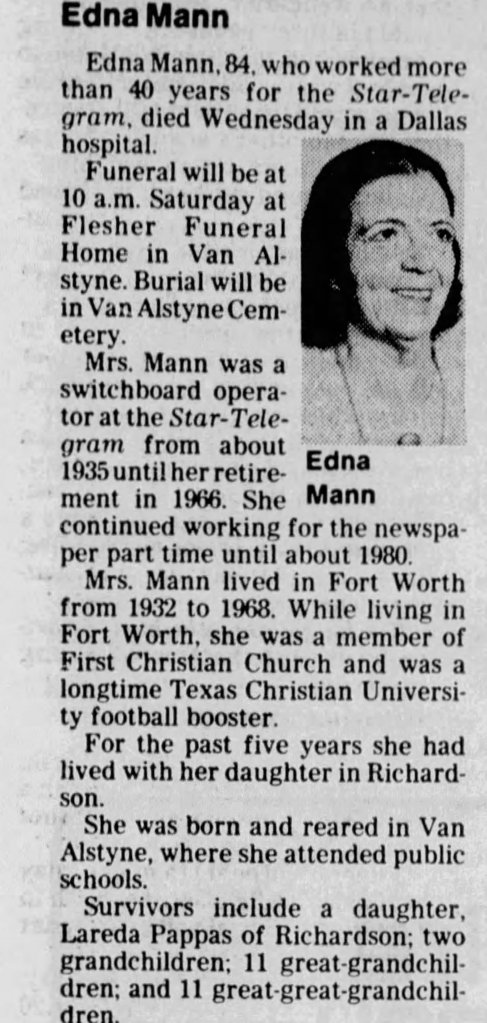
Regarding the defeat of disproportionate cultural & standard-building influence by sharply-differentiated minority-groups—here again we have a sound principle misinterpreted & made a basis for ignorant, cruel, & fatuous action. There is of course no possible defence of the policy of wholesale confiscation, de-industrailisation, & (in effect) expulsion pursued toward groups of citizens on grounds of ancestral origin. Not only is it barbaric in the hardship it inflicts, but it involves a faulty application of ethnology & anthropology. However—this does not obscure the fact that there is always a peril of the concentration of disproportionate power & articulateness in the hands of non-representative & alien-minded minorities—whether or not of alien birth or blood. Cases are very numerous where small groups of especially active & powerful thinkers have tacitly & gradually secured a “corner” on expression & value-definition in nations widely different from themselves in natural instincts, outlook, & aspirations.
—H. P. Lovecraft to Robert Bloch, [late October 1933], LRB 82-83

Lovecraft’s surviving letters to Loveman are few and end in 1927, so we don’t know exactly how or if HPL discussed the Nazis with his other Jewish friend, but based on his letters to Bloch et al., it seems reasonable to assume that HPL was careful to never give his friend offence on account of his Jewish ethnicity. It is quite possible that at the time of Lovecraft’s death in 1937, Loveman had no idea of Lovecraft’s real thoughts about the Nazis during Hitler’s rise to power, or the discussions he had with others as the antisemitic policies began to go into effect. If Loveman did have any idea about Lovecraft’s antisemitism, it likely came from his friendship with Sonia H. Davis, Lovecraft’s ex-wife.

In the mid-1940s, as WW2 was coming to a close, Loveman was contacted by early Lovecraft biographer Winfield Townley Scott, who was looking for data. Loveman pointed Scott at Sonia, and between Scott’s article and Sonia’s memoir, she seems to have come into correspondence with Loveman again; at least, there are some letters between the two dated 1947. Sonia had been in correspondence with August Derleth, who attacked her memoir and claims of Lovecraft’s prejudice, keeping in mind that this was in the immediate aftermath of the Holocaust. Sonia vented her spleen a little to Loveman:

In his Marginalia he is all wrong in stating how much older I am than HP, also that our divorce was the result of HP’s inability to write for money or his lack of desire to write for money. None of this is true. I carried a handsome salary at the time and provided many things for him. I did not leave him on account of non-providence, but chiefly on account of his harping hatred of J__s.
—Sonia Davis to Samuel Loveman, 4 Jan 1948, JHL

This is likely why Loveman wrote:

Her treatment by H.P. L. was, whether consciously or unconsciously, cruel. His anti-Semitism formed the basis for their eventual divorce. Howard’s monomania about race was about as close to insanity as anything I can think of.
—Samuel Loveman, “Of Gold and Sawdust” in The Occult Lovecraft (1975), 22

Elsewhere, Sonia wrote:

But I told him this very soon after we met; especially when he remarked that it was too bad that Samuel Loveman was a Jew.
—Sonia Davis to Winfield Townley Scott, 24 Sep 1948, JHL

This is presumably the source for when Loveman wrote:

Lovecraft had a hypocritical streak to him that few were able to recognize. Sonia, his wife, was indubitably his innocent victim. her love for him blinded her to many things. Among the things he said to her was, “Too bad Loveman’s a Jew; he’s such a nice guy.”
—Samuel Loveman, “Of Gold and Sawdust” in The Occult Lovecraft (1975), 22

This kind of context was important because Loveman had relatively little save his own memories of Lovecraft to go by when he wrote his first memoir of Lovecraft, published in 1948. He wrote to Derleth:

I look forward to the publication of the letters [of Lovecraft] with a great deal of eagerness. I have practically nothing at all, or I would have tend[er]ed them to you. All my material was either destroyed or confiscated when I left Cleveland for New York.
—Samuel Loveman to August Derleth, 1 Dec 1949,
quoted in Letters to Maurice W. Moe & Others 29

How Loveman lost most of his letters from Lovecraft isn’t clear, but in the 1940s Loveman purchased several hundred pages of letters that Frank Belknap Long, Jr. had received from Lovecraft; HPL’s letters were already becoming collectors’ items. When Loveman wrote his second memoir of Lovecraft in 1958, this material was presumably available, but perhaps Loveman had not taken the time to read through several hundred pages of his friend’s infamous handwriting when approached for a brief memoir.

So what happened between 1958 and 1975 that caused Loveman to write:

The one last letter of his I have fills the bill, and a hundredfold more! It advocates the extinction of the Jews and their exclusion from colleges. The letter was written to a partner of W. Paul Cook, who published my books, “The Sphinx” and “The Hermaphrodite.”
—Samuel Loveman, “Of Gold and Sawdust” in The Occult Lovecraft (1975), 22

The unnamed “partner” would be Walter J. Coates, an amateur journalist and small press publisher during the 30s; Coates’ letters from Lovecraft had apparently also passed through Loveman’s hands. Several of Lovecraft’s letters to Coates appear to be in private hands or lost, so the exact statements that Loveman found so damnable are not widely available. However, a letter from Lovecraft to Coates contains several of these sentiments:

Undeniably—all apart from the effects of natural change and altered philosophic-scientific-psychological perspective—the world of American taste & opinion is distinctly & lamentably Jew-ridden as a result of the control of publicity media by New York Semitic groups. Some of this influence certainly seeps into Anglo-Saxon critical & creative writing to an unfortunate extent; so that we have a real problem of literary & aesthetic fumigation on our hands. The causes are many—but I think the worst factor is a sheer callous indifference which holds the native mind down to mere commercialism & size & speed worship, allowing the restless & ambitious alien to claim the centre of the intellectual stage by default In a commercialized civilization publicity & fame are determined by economic causes alone—& there is where the special talents of Messrs. Cohen & Levi count. Before we can put them in their place, we must de-commercialise the culture—& that, alas, is a full-sized man’s job! Some progress could be made, though, if all the universities could get together & insist on strictly Aryan standards of taste. They could do much, in a quiet & subtle way, by cutting down the Semite percentage in faculty & student body alike.
—H. P. Lovecraft to Walter John Coates, [mid-October? 1929], LWH 121

The date is uncertain, but the sentiments are in keeping with some of Lovecraft’s other letters. It followed Lovecraft’s time in New York, when he was most vociferous about the city and its Jewish population. The idea that Jews exerted an outsized influence on national media was one that Lovecraft apparently picked up in New York and retained in follow years, and unfortunately dovetailed with Nazi propaganda. Similar-though-not-identical statements appear in some of Lovecraft’s letters from 1933 and ’34, though this is the most explicit instance where Lovecraft suggests censorship of Jews from universities and academia.

The title of Loveman’s final essay, “Of Gold and Sawdust,” echoes a famous statement from W. Paul Cook’s “In Memoriam: Howard Phillips Lovecraft” (1941), on Lovecraft’s return to Providence after his stint in New York—a frustrating period which had seen Lovecraft married, separated, failed to find employment, robbed, and utterly miserable by the end of it, but had matured somewhat as a writer with his best work ahead of him, still to be written—”He had been tried in the fire and came out pure gold.”

These were happy days when I believed H.P.L. was pure gold—not sawdust!
—Samuel Loveman, “Of Gold and Sawdust” in The Occult Lovecraft (1975), 21

What Loveman’s final essay—really, his final word—on Lovecraft captures is the sense of betrayal. These were two men who had been intimate friends, through thick and thin, who had dedicated poems to each other (cf. “To Mr. Theobald” (1926) by Samuel Loveman), who were, if far from agreeing on every subject, at the least open and accepting of differences of opinion. In the 1920s and 30s, when antisemitism was so rife in the United States and rising abroad, there was likely a bit of trust there, that at least Lovecraft was different. Maybe (we don’t know, unless Loveman’s letters to Sonia surface), he even doubted Sonia’s initial claims regarding Lovecraft’s antisemitism, since they didn’t match his own memories.

Then the letters came into his hands that gave undeniable proof.

There is a broader context that Loveman missed, having not lived long enough to see the publication of more of Lovecraft’s correspondence than the first volumes of the Selected Letters from Arkham House. He did not see where Lovecraft’s antisemitism began or where it ended, did not see how and why Lovecraft’s prejudices changed over time and in response to personal and world events. Would it have made any difference? “Of Gold and Sawdust” is the cry of a wounded soul, of memories forever poisoned by the thought that in his heart, Lovecraft had hated Loveman just because he was a Jew.

Lovecraft’s letters do not speak of hatred for his friend Sam Loveman. Imperfect as Lovecraft was, he was loyal in his appreciation for Loveman as a friend and poet. That makes “Of Gold and Sawdust” especially bittersweet; there is no reply that Lovecraft could make, no apology, no way to mend the hurt he had inadvertently caused. While Lovecraft’s friends are all dead, it is a feeling that echoes in the lives of many fans who, wanting to learn more about this Lovecraft person and their stories, finds out about his prejudices. It is something we all have to come to terms with, each in our own way.

“Of Gold and Sawdust” was published in The Occult Lovecraft (1975). It has not been reprinted.


Bobby Derie is the author of Weird Talers: Essays on Robert E. Howard and Others and Sex and the Cthulhu Mythos.

Deep Cuts in a Lovecraftian Vein uses Amazon Associate links. As an Amazon Associate I earn from qualifying purchases.