She gently unrolled the parchment, staining its edges with her filthy hands, then did her best to recite the strange serpentine text with the same guttural intonation the witch was so fluent with. She remembered the book this passage had been transcribed from, and that stark silver word embossed on its greasy black cover: Eibon.
—H. K. Lovejoy, “Phantasmagore” in Beyond the Book of Eibon 192
In 1980, Italian filmmaker Lucio Fulci directed City of the Living Dead (Italian title: Paura nella città dei morti viventi), the first of what would become known as his “Gates of Hell Trilogy,” the other two films of which are The Beyond(1981, …E tu vivrai nel terrore! L’aldilà) and The House by the Cemetery(1981, Quella villa accanto al cimitero). The films share little continuity of plot or setting: all involve one of the doorways to hell opening, resulting in hauntings, baroque and gory deaths, and the undead, and all contain references to or elements of the Mythos—the eponymous “City of the Living Dead” is Dunwich, and the Book of Eibon appears to prophesy or predict some of the events of the films.
Even these references are very slight; Fulci wasn’t quite trying to bring Lovecraft or Clark Ashton Smith directly to the big screen, and the films do not reference each other and can be viewed standalone. What unites them is Fulci’s style: visceral, weird, almost poetic compositions of color and sound. He was fond of eye trauma and smoking acid dissolving faces, but largely avoided sexual exploitation or the mondo excesses of, say, Cannibal Holocaust (1980).
Fulci’s trilogy became cult favorites among the horror movie buff scene, and remain so even today with remastered re-releases and commentaries. They’ve also inspired some other media, notably a series of comic adaptations form Eibon Press, and fiction including The Final Gate (2021) by Wesley Southard and Lucas Mangum, and the anthology Beyond the Book of Eibon(2021) edited by Perry Ruhland and Astrid Rose for Death Wound Publishing. Unfortunately, the latter company appears defunct so if you missed the kickstarter, finding a copy might be quite difficult.
“Phantasmagore” by H. K. Lovejoy is the final story in Beyond the Book of Eibon. The tale is brief, and Lovejoy enjoys an elaborate and detailed style reminiscent of Smith or Lovecraft’s more ultraviolet prose:
Mounds of her honey hair fell in an exquisite latticework across her bare breasts and stomach, only to be gently reshuffled by her lover.
—H. K. Lovejoy, “Phantasmagore” in Beyond the Book of Eibon 193
In the context of Fulci’s trilogy, however, it works. It evokes something of his style, of the artistry of horror, the beautiful moments that then break into desolation and decay. As with the films, the story is set in their orbit but independent of their plots: a Dunwich affair leads to ghastly supernatural revenge via the Book of Eibon. Lovejoy isn’t afraid to go full Fulci when it comes to describing the culmination of the affair, doesn’t let the reader’s eye drift away from the page. Which is, again, quite fitting.
Her eyes had reduced to frothing pools of blood, allowing the brains, which had taken on a gelatinous state, to plunge through her sockets from the blind momentum of nightcrawlers.
—H. K. Lovejoy, “Phantasmagore” in Beyond the Book of Eibon 194
“How Lovecraftian (or Klarkash-Tonian) is ‘Phantasmagore’?” is an interesting question. Fulci’s films themselves borrow little from the Mythos, and have their own aesthetic entirely. There are few explanations in Fulci’s films, and it is up to the reader to theorize and interpret the images and events that appear on screen, to try and make sense of what are ultimately irrational happenings. Lovejoy’s story is more straightforward than Fulci’s films, and outside the context of the anthology in which it appears could easily be taken as a brief Mythos tale—there, after all, is Dunwich, there is the Book of Eibon. You don’t need the whole eldritch pantheon in every story.
At the opening of the film Manhattan Baby(1982), Fulci gives an apocryphal (and most likely invented) quote from Lovecraft:
Il mistero non è attorno alle cose, ma dentro le cose stesse.
Mystery is not around things, but within things themselves.
Ultimately, it is up to the reader to decide where “Phantasmagore” lies…whether it “counts” as a Mythos story, or a story set exclusively in the Gates of Hell narrative universe, or perhaps neither or both at the same time. The story exists as its own work, and can be enjoyed as such; any greater meaning has to be supplied by someone else.
In all of his stories, not one of H. P. Lovecraft’s characters ever pissed themselves in fright. No character soiled their britches as Great Cthulhu stumbled through the waves, or noisily vomited up a half-digested lunch on seeing the swiftly-decomposing remains of Wilbur Whateley. You might run across a reference to a man whose face has been bitten away, but never a dirty diaper; a suggestive smear of blood, but never a drop of menses. A character might be described as moving through filth, but you never get the actual description of the turds, or the rotting carcasses buzzing with flies, or the sudden desperate need for a restroom.
Weird fiction may be horrifying, but it is rarely disgusting. Fear and disgust are basic emotions that can both arise from transgressions, and can be quite intimately linked: a dead body may engender fear and disgust, a prude might find a Satanic orgy both horrifying and revolting. During the heyday of Weird Tales, there was a limit one could go in explicit description, and while later decades grew more lax in terms of actual censorship, many practical limitations remain. Nudity is still more acceptable in horror films than actual feces; a character might be shot a hundred times or bisected by a saw blade, but they probably won’t be drowned in a toilet full of urine.
Even in weird and horror fiction, there are many norms and mores…and transgressing these can result in quite powerful works of art and literature. Terrible, in their own way, but powerful.
This is the psychology of the exploitation films, underground comix, heavy metal and all of its many musical sub-genres and modes with their cover art, and of Splatterpunk fiction and its literary descendants Extreme Horror and Bizarro fiction. For writers and artists who embrace the transgression beyond mere fright, there are strange, vast opportunities to go beyond what any normal writer—even the normal Lovecraftian writer—has gone before.
Of course, it isn’t necessarily pleasant to read or write, but that’s the point. The visceral response, the new emotional sensation that you can’t get anymore. After reading “Innsmouth” or “Cthulhu” for the fiftieth or a hundredth time, do you really still feel the same dread? Or have you gotten used to it? Cthulhu, for many, has become a familiar horror. There are plushies. You can go buy dice and pillows, Cthulhu panties and sex toys. While a Lovecraft reader might be horrified at the mere existence of such merch, Cthulhu itself is far less a figure of terror to most. Cthulhu has become…cuddly.
Many of these works are now out of print and rare. Extreme fiction tends to have a limited audience, and self-publishing and small presses have been the norm; once it was Arkham House that published what the big publishers wouldn’t, but now the bleeding, gore-stained edge of extreme Lovecraftian fiction is mostly occupied in self-publishing…and there are some delightfully disgusting treats out on the fringes of known literature.
“Adolf Lovecraft” was the pseudonym for a bizarro writer who self-published three ebooks: Cthulhu Scat Hangover (2014), The Innsmouth Porno VHS (2014), and Cthulhu Bomb (In A Whore’s Guts (2016). While never destined for any best-of anthologies and largely ignored by critics, these are works that are exactly what they set out to be: nasty deep dredges where the balance is less on Lovecraftian horror than Lovecraftian disgust.
Cthulhu Scat Hangover contains two stories: “The Brown Eye From Beyond” and “Cthulhu Scat Hangover.” Both of these stories deal with very similar themes and visuals, and barely amount to more than a scene each; they may or may not have been inspired by a similar scene in chapter four of “The Apocalypse Donkey” in Squid Pulp Blues…
The wet sounds of shit-hitting-cement got louder. The tentacles got closer and before they wrapped around his leg, JImbo thought he saw the hypnotic and crystalline eyes of a squid. He blinked, thinking it was his imagination but when he looked again, they were still there.
—Jordan Krall, Squid Pulp Blues 146
…or perhaps not; independent invention has happened before and will again.
While some of the images are striking, the prose is rather straightforward, with an almost business-like low-budget horror movie earnestness than any effort to wax loquacious. Adolf Lovecraft does not try to ape Lovecraft’s loquaciousness and occasional ultraviolet prose.
The pain was indescribable as Angela from accounts slowly forced her entire fist into his sphincter. He was screaming gibberish, completely helpless, and she too was shouting something equally nonsensical—”Cthulhu R’lyeh wgah’nagl fhtagn!” or some such bollocks—as her wrist, then her forearm, strekaed with gore and faeces, disappeared past Donny’s torn, haemorrhaging anus.
—Adolf Lovecraft, “Cthulhu Scat Hangover”
The stories also have no wider Mythos to tie into; aside from the name and familiar incantation, we aren’t left with any idea of why Angela from accounts is doing this, exactly. We don’t see the cult, if there is one, we get one perspective of a life with all of its petty bullshit hopes, ambitions, fears, and insecurities, and then he dies on a toilet after shitting out a tentacled horror.
It isn’t even played for laughs.
The Innsmouth Porno VHS also consists of two short works: the eponymous “Innsmouth Porno VHS” and “Brown Shower Apocalypse.” The latter has more in common with the contents of “Cthulhu Scat Hangover” than the others, and again there’s that sense of familiarity of theme, if nothing else, with Krall’s Squid Pulp Blues: the looming apocalypse, the terrible mundane sordidness of human relationships, sexual paraphilia, and the use of drugs and alcohol to cope. While it isn’t wholesome to any degree, “Brown Shower Apocalypse” isn’t written as a story to cater to or condemn those who have a sexual desire for a woman to shit on their chest like that infamous scene in Ilsa, She-Wolf of the S.S. As kinks go, it’s disgusting but not horrorific…except, perhaps in this story where it blends from one into the other at the end.
“The Innsmouth Porno VHS” is a different approach: no scat, for one thing. For another, it engages in a bit of intriguing worldbuilding:
Mike and I, in our early 20s, had been born into a world in which the Innsmouth Condition already existed. The Innsmouth kids had been born about a decade earlier. It wasn’t exactly commonplace to us—I’d only ever seen a couple of people with it in my life, and that had been in large cities—but it definitely was part of the world.
—Adolf Lovecraft, “The Innsmouth Porno VHS”
Imagine a world where developing fishy attributes was like Thalidomide babies. Pornography is already intensely driven by genre and tags; the desire for new and different sees users browse by both specific sexual acts and kinks and types of performers. Race, sex and gender, hair color, body types, body modifications like tattoos and piercings are all fair game. It wouldn’t be that strange to imagine what adults with Innsmouth Condition might end up doing in front of the camera…
It is about as far from cosmic horror as you can get. If Joe Koch is correct that body horror is the opposite end of the spectrum from cosmic horror (A Transmusculine Horror Writers Looks At Lovecraft), then “The Innsmouth Porno VHS” might suggest that the spectrum has another axis, and that body disgust is the opposite end of the spectrum from cosmic disgust. The idea recalls Arthur Machen’s dialogue on sorcery and sanctity, the idea that there are transgressions of the mundane world that are more repellent than mere theft or murder, the kind of revulsion against reality hinted at in some weird tales:
And for three hundred years I have done his bidding, from this marble couch, blackening my soul with cosmic sins, and staining my wisdom with crimes, because I had no other choice.
—Robert E. Howard, “The Tower of the Elephant”
A tentacled entity sliding out of a broken rectum covered in shit into a toilet might evoke mingled disgust and horror, but there is nothing of the cosmic in a videotaped orgy featuring two women with birth defects. Weird, certainly; outside the mundane categories on your pornographic website of choice, but the physicality of a hardcore sex tape, with spitting, rough sex, and dirty talk spoken from mouths ill-adapted to human speech trends more toward disgust than horror…although there is still that strange fascination that accompanies anything unusual, bizarre, and taboo.
As the name implies, “The Innsmouth Porno VHS” is sexually explicit, but the real focus is on the mental or spiritual corruption of the protagonist. The eponymous VHS awakens something in him, and Adolf Lovecraft deftly captures that sense of utter fascination, of something beguiling in its wrongness, the shivering sensation of watching something you weren’t meant to see…trying to capture, in a sense, that liminal state of watching pornography for the first time, except with less explicit fear of being caught and more explicit visceral attraction mixed with disgust.
The orgy, gangbang, fish fry, whatever it was, began to wind down.
—Adolf Lovecraft, “The Innsmouth Porno VHS”
The difference between this story and the others in Adolf Lovecraft’s small corpus is that the dirtiness and disgust are on the inside. The other stories are gross-outs, violent, nasty, and viscerally disgusting in the acts they describe, and the point-of-view characters don’t survive to develop new kinks or learn any moral lesson. In “The Innsmouth Porno VHS” however, there’s something more…not in the sense of a greater extreme of physical disgust, but maybe in the sense of cosmic disgust. It isn’t just about jerking off to a new fetish for Innsmouth girls, it’s what that new and unnatural libido leads him to do…and that is, in many ways, more disgusting than all the scat-filled references in the other stories combined.
Cthulhu Bomb (In A Whore’s Guts) is an omnibus anthology of Adolf Lovecraft’s work, including all four stories from the previous two collections along with several new ones. The same themes are at play, but the stories don’t build on one another, there is no larger picture to grasp. Many of the same ideas, spinning out in variations, fucked-up situations that are brutal but never beautiful, that degrade but don’t enlighten.
Disgusting stories aren’t for everyone; it is a different kind of transgression, meant to invoke a different response, and while disgust and fear are closely related, the effects they have on mind and body can be very different. For those who think they have delved into the depths of cosmic horror…there may be some things out there that you aren’t ready for yet, and may never be. There are stranger and more terrible things than Adolf Lovecraft out there.
While men are thinking of the planets, other worlds may be thinking of us. At least the curious phenomena of that old New England house suggested that possibility… An unforgettable new story of uneathly wonder by two masters of the science-fiction terror tale.
Epigraph to “The Murky Glass” in Saturn: The Magazine of Fantasy & Science Fiction May 1957
August Derleth was one of the original creators of what became known as the Cthulhu Mythos. His contributions started while Lovecraft was alive with “The Lair of the Star Spawn” (1932) and “The Thing That Walked on the Wind” (1933). After the death of H. P. Lovecraft in 1937 and the creation of Arkham House in 1939 to publish Lovecraft’s work, August Derleth would continue to write a number of tales of the Cthulhu Mythos and in the Lovecraftian vein. These were not written immediately with an eye toward filling out the Lovecraft collections or even his own anthologies, but for sale to magazines, mostly Weird Tales, and published over a series of years. The stories can be divided into three groups:
Older stories written with Mark Schorer that were not published until later (“Spawn of the Maelstrom” (1939) and “The Evil Ones” (1940, later reprinted as “The Horror from the Depths”).
Pulpy horror tales (“The Return of Hastur” (1939), “Passing of Eric Holm” (1939), “The Sandwin Compact” (1940), “Ithaqua” (1941), “Beyond the Threshold” (1941), “The Dweller in Darkness” (1944), “Something in Wood” (1948), “The Whippoorwill in the Hills” (1948), “The House in the Valley” (1953), “The Seal of R’lyeh” (1957, also as “The Seal of the Damned”), and the Trail of Cthulhu series (“The Trail of Cthulhu” (1944, also as “The House on Curwen Street”), “The Watcher from the Sky” (1945), “The Testament of Clairmont Boyd” (1949, also as “The Gorge Beyond Salapunco”), “The Keeper of the Key” (1951), and “The Black Island” (1952)).
“Posthumous collaborations” with H. P. Lovecraft: The Lurker at the Threshold (1945), “The Survivor” (1954), “Wentworth’s Day” (1957), “The Peabody Heritage” (1957), “The Gable Window” (1957, also as “The Murky Glass”), “The Ancestor” (1957), “The Shadow Out of Space” (1957), “The Lamp of Alhazred” (1957), “The Shuttered Room” (1959), “The Fisherman of Falcon Point” (1959), “Witches’ Hollow” (1962), “The Shadow in the Attic” (1964), “The Dark Brotherhood” (1966), “The Horror from the Middle Span” (1967), “Innsmouth Clay” (1971), and “The Watchers Out of Time” (1974); and Robert E. Howard: “The House in the Oaks” (1971).
The individual merit of these stories varies considerably, but it should be apparent that taken together they represent a substantial body of “Lovecraftian” fiction: 34 short stories, novelettes, and a novel—and Lovecraft’s own published fiction only amounts to 65 stories (plus ~33 revisions and collaborations like “Four O’Clock” (1949), “The Curse of Yig” (1929),“The Night Ocean” (1936), etc.)…and Derleth had, as well as his fictional input to the Mythos, a strong editorial influence on how Lovecraft’s fiction was interpreted, through his introductions to various anthologies and collections of Lovecraft’s work, analyses of his fiction, press releases etc. This is why after Derleth’s death in 1971 there was pushback from fans like Richard L. Tierney in “The Derleth Mythos”—and this in turn lent impetus to a Lovecraft purest movement in publishing and scholarship.
Much of the animus against Derleth is centered on his “posthumous collaborations” with Lovecraft. To better understand the reasoning behind these, it is important to understand what Derleth publicly claimed and presented these stories as:
Not for twelve years has the byline of the late, great Howard Phillips Lovecraft appeared on any new work–and it appears now only because, among the papers of the late R. H. Barlow are found Lovecraft’s notes and/or beginnings for the seven stories which go to make up this collection–all now completed by August Derleth, just as he completed Lovecraft’s unfinished novel, The Lurker at the Threshold.
Here are seven tales–two novelettes and five shorter stories–which belong to virtually every period of Lovecraft’s work–from the early fantasies (The Lamp of Alhazred), through the New England pieces (Wentworth’s Day and The Peabody Heritage) to the Cthulhu Mythos (The Gable Window, The Shadow out of Space, The Survivor). Taken together, these seven stories are a nostalgic backward look to the macabre world in which H. P. Lovecraft was supreme.
These are tales of terrifying witchcraft, of cosmic horror, of quaint magic, such as only H. P. Lovecraft could have conceived. Here in these pages Great Cthulhu walks again, the Dunwich-Arkham country lives once more, and, in a final allegory, Lovecraft himself is portrayed in a quasi-autobiographical manner.
August Derleth’s completion of these stories was a labor of love. Perhaps no other contemporary writer has so closely emulated the Lovecraft style as he–as these stories testify.
The Survivor and Others 1957, inside front jacket flap
Among the papers of the late Howard Phillips Lovecraft were various notes and/or outlines for stories which he did not live to write. Of these, the most complete was the title story of this collection. These scattered notes were put together by August Derleth, whose finished stories grown from Lovecraft’s suggested plots, are offered here as a final collaboration, post-mortem.
The Survivor and Others 1957, copyright page
The works in The Survivor and Others and the novel The Lurker at the Threshold were all presented as “unfinished” works, or works built up from Lovecraft’s notes. The truth was quite different: Lovecraft left no such incomplete stories. What he did leave was a commonplace book containing various bare ideas for stories, some fragments of prose, and a body of correspondence that included Lovecraft’s dreams and other ideas for stories never written during his lifetime. From these, Derleth wrote his “posthumous collaborations”—some of them (“The Lamp of Alhazred”) contained some genuine text from Lovecraft, but most of them were little more than stories vaguely suggested from Lovecraft’s commonplace book, as close to pure Derleth as most of Lovecraft’s “ghostwriting” efforts were pure Lovecraft. Derleth’s marketing of these works as “by Lovecraft and Derleth” was seen by some as dishonest…and worse than that, those that took Derleth at his word often took the works to be primarily Lovecraft’s, such as David Punter’s influential textbook The Literature of Terror (first edition 1980, second edition 1996).
It should be noted thas as much as the publication of these stories always emphasized Lovecraft’s name and contribution, this was first and foremost a marketing gimmick. In private, just as Lovecraft would acknowledge his own contributions in his revision and ghostwriting work, Derleth would frankly acknowledge the full extant of his authorship:
[…] & Ballantine’s paperback of THE SURVIVOR & OTHERS (emphasizing Lovecraft, understandably, over Derleth, who did 97% of the writing) […]
The pushback against Derleth’s interpretation of and contributions to the Mythos has led to his stories being largely neglected by scholars and fans. Yet many of Derleth’s stories are worth at least a little study, and some understanding of how and why they were written and published can help elucidate the picture of Mythos publishing post-Lovecraft.
As should be clear, August Derleth didn’t start out writing “posthumous collaborations” as soon as Lovecraft’s corpse was cold. His first was The Lurker at the Threshold, which has the distinction of being the first Mythos novel, wasn’t published until 1945. Including Lovecraft’s name in this work can be barely defended—the ~50,000 word novel contains two unrelated fragments from Lovecraft’s papers, “The Round Tower” and “Of Evill Sorceries Done in New-England, of Daemons in No Humane Shape” which come to ~1,200 words—but it is clear that Derleth is using Lovecraft’s name predominantly for marketing purposes, and did not assay another “posthumous collaboration” until late 1953 or early 1954:
You already have “The Survivor,” which I hope can appear in the July or September issue. Three others are now ready–
“Wentworth’s Day,” at 4500 words
“The Gable Window,” at 7500 words
“The Peabody Heritage,” at 7500 words
There will be at least two more–or enough for an entire year of Weird Tales. And we might be able to turn up more thereafter, if the use of them has any noticeable effect on the sales of the magazine.
By 1954, Weird Tales under editor Dorothy McIlwraith was on its last legs, having switched to bimonthly and a digest format, and even re-instated reprints to cut costs—which included reprinting some of Lovecraft’s fiction. Derleth was a loyal contributor and could have resurrected the “posthumous collaboration with Lovecraft” gimmick in an effort to help save the magazine—or, considering that Derleth had married in 1953 and his wife was pregnant, perhaps he simply needed the money. In either case, it was too little, too late to save Weird Tales, which folded with the September 1954 issue, before any of Derleth’s “posthumous collaborations” except “The Survivor” (WT July 1954) could be published.
I have here: “The Gable Window,” “The Ancestor,” “Wentworth’s Day,” “The Peabody Heritage,” “Hallowe’en for Mr. Faukner,” also “The Seal of R’lyeh.” It might be that whoever takes over WT might see the value of the Lovecraft tie-in, but I don’t know…
Despite McIlwraith’s hopes, no one picked up publication of Weird Tales, and August Derleth was left with a handful of “posthumous collaborations” and very few markets in which to publish them. Eventually, Derleth would publish these stories through Arkham House in a volume titled The Survivor and Others (1957)…yet there is an interesting note in that book regarding one of the stories:
The Gable Window, copyright 1957, by Candar Publishing Company, Inc., (as The Murky Glass), for Saturn, May 1957.
The Survivor and Others 1957, copyright page
Derleth had managed to get “The Gable Window” published, albeit under a different title—which is no great surprise, many editors change titles to suit their tastes, and some editors go further: they might break up or combine chapters and paragraphs, revise wording, even excise extraneous text or revise endings. Lovecraft decried these practices and would in later years be adamant that the editor not even change a comma, but Derleth was probably more practical and less particular: weird fiction was, for Derleth, often more of a potboiler effort than a major form of personal expression as it was with Lovecraft.
As it happens, a close (line-by-line) comparison between the Saturn text of “The Murky Glass” and the Survivor text of “The Gable Window” shows a number of differences between the two texts, most relatively minor. Without access to surviving drafts, it’s difficult to reconstruct the exact sequence of revision or editorial interference, but by looking at a handful of the differences we might get an idea of the editorial thought behind those changes—and this is especially the case since “The Gable Window” text in The Survivor and Others is the basis for all other publications of the text. “The Murky Window” has never been reprinted as-is.
“The Murky Glass”
“The Gable Window”
It seemed, therefore, that the first order of business was a restoration of the rightful way of existence in the house, a resumption of life on the ground floor. To tell the truth, I found myself from the beginning curiously repelled by the gable room; in part, certainly, because it reminded me so strongly of the living presence of my dead cousin who would never again occupy his favorite corner of the house, and in part, also, because the room was to me unnaturally alien and cold, holding me off as by some physical force I could not understand, though this was surely consistent with my attitude about the room, for I could understand it no more than I ever really understood my cousin Wilbur. (SA103)
It seemed, therefore, that the first order of business was a restoration of the rightful way of existence in the house, a resumption of life on the ground floor, for to tell the truth, I found myself from the beginning curiously repelled by the gable room; in part, certainly, because it reminded me so strongly of the living presence of my dead cousin who would never again occupy his favorite corner of the house, and in part, also, because the room was to me unnaturally alien and holding me off as by some physical force I could not understand, though this was surely consistent with my attitude about the room, for I could understand it no more than I ever really understood my cousin Wilbur. (SO79-80)
One of the characteristics of Derleth’s pastiche style of Lovecraft is long, run-on sentences; a tendency that is more marked when sentences (and paragraphs) that were separate in “The Murky Glass” are conjoined in “The Gable Window.” Whether this was a result of an editor chopping up Derleth’s initial draft, or Derleth splicing together things to make longer sentences and paragraphs when preparing it for book publication is unclear, and either is likely. Derleth’s choice to omit “cold” from the description of the gable room probably reflects that he never refers to the room as particularly cold in the remainder of the story; a little clean-up.
My cousin’s will had been probated, the estate had been settled, and no one challenged my possession of the house. (SA105)
My cousin’s will had been probated, the estate had been settled, and no one challenged my possession. (SO82)
Pulp writers typically had to shave words from a manuscript to meet tight wordcount limits, so the question here is: did Derleth include “of the house” originally and decide to excise it as unnecessary in “The Gable Window?” Or did the editors of Saturn think the line was unclear and add “of the house” to clarify?
Dear Fred, he wrote, The best medical authorities tell me I have not long to live, and, since I have already set down in my will that you are to be my heir, I want to supplement that document now with a few final instructions, which I adjure you not to dismiss and want you to carry out faithfully. There are specifically three things you must do without fail, and these are as follows:
One: All my papers in Drawers A, B, and C of my filing cabinet are to be destroyed. Two: All books on shelves H, I, J, and K are to be turned over to the library of Miskatonic University at Arkham. Three: The round glass window in the gable room upstairs is to be broken. It is not to be simply removed and disposed of elsewhere, but it must be shattered.
You must accept my decision that these things must be done, or you may ultimately be responsible for loosing a terrible scourge upon the world. I shall say no more of this, for there are other matters of which I wish to write here while I am still able to do so. One of these is the question… (SA108)
“Dear Fred,” he wrote, “The best medical authorities tell me I have not long to live, and, since I have already set down in my will that you are to be my heir, I want to supplement that document now with a few final instructions, which I adjure you not to dismiss and want you to carry out faithfully. There are specifically three things you must do without fail, as follows:
“1) All my papers in Drawers A, B, and C of my filing cabinet are to be destroyed. “2) All books on shelves H, I, J, and K are to be turned over to the library of Miskatonic University at Arkham. “3) The round glass window in the gable room upstairs is to be broken. It is not to be simply removed and disposed of elsewhere, but it must be shattered.
“You must accept my decision that these things must be done, or you may ultimately be responsible for loosing a terrible scourge upon the world. I shall say no more of this, for there are other matters of which I wish to write here while I am still able to do so. One of these is the question…” (SO86)
The most notable changes between the two texts are format. The Saturn editors preferred italics to quotation marks, and spelling out words and months to abbreviations, The Survivor text is pithier. Which is better for reading is a bit of an open question; as a digest Saturn had to be divided into two columns per page, which might encourage shorter paragraphs, more frequent breaks, and the more streamlined experience italics give…or perhaps Derleth changed his mind.
What was I to make of these curious instructions? (SA108)
What was I to make of these strange instructions? (SO86)
Case in point, “curious” and “strange” in this context are basically synonymous, so the changing from one to the other is essentially down to personal preference rather than any kind of artistic or editorial justification. These are the kind of changes in word choice that you might expect to see either from an editor determined to change something or a writer that just liked to fiddle.
Most of the differences in “The Murky Glass” and “The Gable Window” are like that: formatting, word choice, a little cutting or rearranging, mostly in The Survivor and Others text. There are a handful of typos as well: “scratching” (“Murky”) becomes “cratching” (“Gable”); “Shanteks” (“Murky”) becomes “Shantaks” (“Gable”), “myths” (“Murky”) becomes “Mythos” (“Gable”), “subterranean” (“Murky”) becomes “subterrene” (“Gable”) and other bits like that. There is one rather significant and noticeable difference, however, in a particular passage:
These books were in various languages; they bore titles such as the Pnakotic Manuscripts, the R’lyeh Text, the Unaussprechlichen Kulten of von Junzt, the Book of Eibon, the . Celano Fragments, the Cultes des Goules of the Comte d’Erlette, the Book of Dzyan a photostatic copy of the Necronomicon, by an Arabian, Abdul Alhazred, and many others, some of them apparently in manuscript form. (SA109)
These books were in various languages; they bore titles such as the Pnakotic Manuscripts, the R’lyeh Text, the Unaussprechlichen Kulten of von Junzt, the Book of Eibon, the Dhol Chants, the Seven Cryptical Books of Hsan, Ludvig Prinn’s De Vermis Mysteriis, the Celano Fragments, the Cultes des Goules of the Comte d’Erlette, the Book of Dzyan a photostatic copy of the Necronomicon, by an Arabian, Abdul Alhazred, and many others, some of them apparently in manuscript form. (SO87)
Either Derleth decided to insert several eldritch tomes in “The Gable Window,” or whoever was setting text or type for “The Murky Glass” dropped a line; given the odd period right before Celano, I lean toward the latter. Little printing errors like that just happen sometimes.
Even taken all together, the sum of these small textual differences do not substantially impact the story; this is not a Mythos equivalent of the Wicked Bible, but it shows that you should not take a given version of a text for granted. How do you know that the text you are reading in a Lovecraft book is what Lovecraft set down—or is by Lovecraft at all? How many editors have had their hands on it? Textual errors and variations have propped up and been carried forward…sometimes for decades and through multiple versions. In many online versions of “Herbert West—Reanimator” for example, you will find the text prefaced with a spurious quote from Dracula—which was not in Lovecraft’s original text or any major subsequent printing; it appears to have been added on to a freely available text on the internet sometime in the 2000s and to have spread from there, even into print editions that use Wikisource as their source.
You might well imagine how a reader in the 1950s might have felt as they sat down with their “new” book of Lovecraft stories, and wondered to themselves: did Lovecraft write this?
The point is all the more cogent because “The Murky Glass”/”The Gable Window” is one of Derleth’s most poorly-received “posthumous collaborations.” We’ve focused so far on textual criticism and publishing history, but we haven’t discussed the content of the story or how it fits into the larger body of Mythos fiction. To understand that, let’s rewind back to how this story came to be.
After writing “The Survivor” (which was based on some actual notes Lovecraft left for a story of that name), Derleth turned to Lovecraft’s Commonplace Book, which had been preserved by R. H. Barlow, for inspiration. Two plot-germs probably inspired “The Gable Window”:
Something seen at Oriel window of forbidden room in ancient manor house. (29)
Pane of peculiar-looking glass from a ruined monastery reputed to have harbored devil-worship set up in modern house at edge of wild country. Landscape looks vaguely and unplaceably wrong through it. It has some unknown time-distorting quality, and comes from a primal, lost civilization. Finally, hideous things in other world seen through it. (41)
Derleth identified the second entry (“Pane of…”) as the genesis for the story in The Shuttered Room and Other Pieces (1959); Derleth scholar John Haefele adds the other (“Something seen…”) as a probable inspiration in A Look Behind the Derleth Mythos 224, and I have to agree (the distinction between “oriel” and “gable” in this case being close enough for amateurs to mistake one for the other). The story is, although this is not immediately apparent, a tie-in to Lovecraft’s “The Whisperer in Darkness,” since the protagonist’s uncle is Henry Akeley—Derleth would be the first pasticheur to exploit genealogical connections, adding cousins to Lovecraft’s family trees in stories like “The Shuttered Room,” though far from the last.
The set-up for the plot is familiar: a relation has died, and the heir must goes to the old house and finds they’ve inherited a bit of a Mythos mess. Lovecraft himself never used this exact formulation, though “The Moon-Bog” and “The Rats in the Walls” both involve an heir rebuilding an ancestral manse or castle. Derleth had already written something similar in “The Return of Hastur” and “The Whippoorwills in the Hills,” and would use the premise again in “The Seal of R’lyeh,” “The Peabody Heritage,” “The Shuttered Room,” “The Shadow on the Attic,” “The Horror from the Middle Span,” and “The Watchers out of Time.” It is ultimately a variation on the haunted house tale, or even of the Gothic inheritance of an ancestral house or castle, and there are a million different variations on that familiar theme, and Derleth was well-versed in such tales.
The pseudo-haunting takes its time to develop. While not every “posthumous collaboration” that Derleth wrote was explicitly part of the Mythos, “The Gable Window” was intended to be such a story, and so Derleth is careful to place it not far from Dunwich and Arkham, to drop references to Miskatonic University, and to build up to the succession of revelations. His prose doesn’t try to capture Lovecraft’s more ultraviolet style, and there is at least one passage which is very un-Lovecraftian:
No matter how I tried, I failed utterly to catch any sight of the cat, though I was disturbed in this fashion fully half a dozen times, until I was so upset that, had I caught sight of the cat, I would probably have shot it.
August Derleth, “The Gable Window” in The Survivor and Others 83
It is always difficult to tell with Derleth whether certain details are drawn from his great familiarity with Lovecraft’s correspondence and life and how many are original to him. The name of the cat “Little Sam,” for example, recalls “Little Sam Perkins,” one of the neighborhood cats that Lovecraft doted on while he lived at 66 College St. If Derleth had incorporated some of Lovecraft’s material from his letters about Sam Perkins, we could say for certain, but Derleth didn’t. Instead, Little Sam occupies largely the same purpose in the text as the cat in “The Rats in the Walls” does, as an animal attuned to the strange dangers in the house.
As the story progresses, Derleth presents his interpretation of the Mythos. Keep in mind, “The Gable Window” was originally intended for magazine publication, and not necessarily to an audience that would be immediately familiar with any of the preceding Mythos fiction, so this is a point he tends to bring up more often and more explicitly in his 1940s and 1950s fiction to introduce it to new audiences; when reading chunks of his fiction at once, it can get a bit repetitive:
It was the old credo of the force of light against the force of darkness, or at least, so I took it to be. Did it matter whether you called it God and the Devil, or the Elder Gods and the ancient Ones, Good and Evil or such names as the Nodens, Lord of the Great Abyss, the only named Elder God, or these of the Great Old Ones—the idiot god, Azathoth, that amorphous blight of nethermost confusion which blasphemes and bubbles at the center of all infinity; Yog-Sothoth, the all-in-one and one-in-all, subject to neither the laws of time nor of space, co-existent with all time and con-terminous with space; Nyarlathotep, the messenger of the Ancient Ones; Great Cthulhu, waiting to rise again from hidden R’lyeh in the depths of the sea; the unspeakable Hastur, Lord of the Interstellar Spaces; Shub-Niggurath, the black goat of the woods with a thousand young?
August Derleth, “The Gable Window” in The Survivor and Others 83
Derleth was capable of subtlety in his fiction and the slow and careful development of mood, but this recital or regurgitation of blasphemous names and casting the whole implicitly complex artificial mythology into a Manichaean dichotomy is not an example of it. This tendency to cram everything into a story is very fannish, but in the case of this story it also serves as build-up for the next section: the reader is basically given a crash course on the Mythos so that they can be prepped to see where the story is heading. Mythos fans can pat themselves on the back for catching the references, and new readers can at least sort of follow along.
In portraying the Mythos this way, Derleth also repeats many of the inherent prejudices in Mythos fiction in brief and in miniature. For example:
There were also more recognizable human beings, however distorted—stunted and dwarfed Oreintals living in a cold place, to judge by their attire, and a race born of miscegenation, with certain characteristics of the batrachian beings, yet unmistakably human.
August Derleth, “The Gable Window” in The Survivor and Others 90
The “stunted and dwarfed Orientals” are probably the Tcho-Tcho; the “race born of miscegenation” probably the inhabitants of Innsmouth. It’s notable that Derleth is more explicit in his language here than Lovecraft ever was in “The Shadow over Innsmouth,” and he gets even more explicit on the next page when he writes: “Deep Ones together with humans of partly similar origin: hybrid white” (91). The dry technical nature of the language robs the idea of Innsmouth hybrids of their mystery and mystique; he might as well be describing a creole colony…and that kind of misses the entire point of Lovecraft’s story. “Innsmouth” presented miscegenation (without ever using the word) as the intended accepted explanation for why the people of Innsmouth were hated and feared by their neighbors; racial discrimination was the red herring that concealed the much weirder revelation that the horror wasn’t a mixed race Pacific Islander or Asian community, but something altogether less homo sapiens.
Like many of Lovecraft’s stories, there isn’t an excess of plot. The use of the journal excerpts allows Derleth to indulge himself a bit in describing exotic landscapes and beings, and to build mood. The result is something of an orgy of evidence for the Mythos, touching on many different entities and places, some of which would be unfamiliar to Mythos fans. Yet at the same time, there’s a certain laziness to Derleth’s approach. Why would the words that activate the glass from Leng be “Ph’nglui mglw’nafh Cthulhu R’lyeh wgah’nagl fhtagn?” That is the motto of the Cthulhu cult in “The Call of Cthulhu,” but here Derleth uses it where another writer of a more mundane demonology might have used “abracadabra.”
Pedantic nitpicking aside, “The Gable Window” comes to a well-telegraphed end…and a relatively light legacy. Readers of “The Murky Glass” in Saturn might have been intrigued by the idea of an extraterrestrial glass that showed alien worlds, which has had its fair number of variations in fantasy already (e.g. “The Wonderful Window” by Lord Dunsany), but Mythos fans took very little notice of it. Derleth introduces the Sand-Dwellers in this story, for example, but never used or referenced them elsewhere again, and very few other authors have picked up the threads of this story (most notably Adam Niswander in his 1998 novel The Sand Dwellers). The biggest impact the story had has been on the Call of Cthulhu Roleplaying Game, which gladly incorporated both the Glass from Leng and the Sand-Dwellers into its version of the Mythos, and has continued to make some small use of them in every edition since.
While it is impossible to say if Derleth himself was unsatisfied with “The Gable Window” as written, but there is the suggestion that he might have been inspired to make another attempt:
This glass also has attributes similar to the tower window in The Lurker at the Threshold, which Derleth derived from Lovecraft’s “The Rose Window” prose fragment. Referring to the fragment as the “notes relative to the mysterious window or ‘carved surface with convex glass circle seven inches in diameter in centre’ related primarily to a story to be set on ‘Central Hill, Kingsport’ in the ancient house of ‘Edward Orne,'” Derleth admits how, “This story remains in essence to be written, since not enough was borrowed from this set of notes to invalidate a second story; and I mean to write it, possibly in novel length, time and circumstances permitting, under the title The Watchers Out of Time” (“Unfinished Manuscripts”).
Derleth would not live long enough to finish “The Watchers Out of Time,” but it may well be that the fragment of a story he did write owes something to “The Gable Window,” since he felt he hadn’t quite exhausted the possibilities of the glass from Leng. One had to wonder if the massive spread of televisions in United States homes after World War II played any influence in what was, in many ways, an eldritch audiovisual receiver.
Taken as a whole, “The Murky Glass”/”The Gable Window” represents much of what has soured Derleth’s reputation among Lovecraft fans and scholars: it is neither a terrible or a terrific weird tale, but a relatively average story that remixes some very familiar tropes and adds a smorgasbord of Mythos references, in addition to a somewhat preachy version of Derleth’s particular take on the Mythos (although it leaves out the elemental associations). Perhaps most damning, in every publication it was presented as a joint work with Lovecraft, who had nothing to do with it. Derleth was a competent weird fictioneer, and that’s what this story was intended to be when it was written with Weird Tales in mind: the Mythos as a reliable product, with Lovecraft’s name as a marketing draw.
Which is probably the most damning thing. Lovecraft was an auteur who took painstaking efforts with his stories, and whether or not you like his person or his prose, his stories represent a great deal of work from the initial plotting to the craft of writing. Derleth, by comparison, was much more restricted in the time and energy he could or would devote to his weird fiction, and while the stories might have been passable to pulp audiences in the 1950s, they are consistently outshone by Lovecraft’s actual fiction, and Derleth’s conception of the Mythos is shown to be much more limited and imperfect than that of his friend…as though viewed through a murky glass.
“The Murky Glass” was published in Saturn May 1957, and was not published again under that title. “The Gable Window” has been published in multiple anthologies and collections of Lovecraft and Derleth’s Mythos fiction, including The Watchers Out of Time (2008, Del Rey).
There was never any question about the name of our publishing house—the imprint to be used on what we then thought perhaps the first of three volumes. Arkham House suggested itself at once, since it was Lovecraft’s own well-known, widely-used place-name for legend-haunted Salem, Massachusetts, in his remarkable fiction; it seemed to use that this was fitting and that Lovecraft himself would have approved it enthusiastically. […]
Nevertheless, the buyers of our first book were sufficiently enthusiastic to persuade me to believe there might be a market for small editions of books in the general domain of fantasy, with emphasis on the macabre or science-fiction.
Before he was a professional writer of weird fiction, Lovecraft was an amateur. He came out of his shell in the 1910s with the amateur press movement, and his first weird fiction was published not in pulp magazines or anthologies, but in small amateur journals—and he carried that amateur attitude with him for the rest of his life. While Lovecraft did not disdain being paid for his work, he disliked writing for money rather than for art. He loved weird fiction, and that appreciation and passion became a part of his legend.
So too, it became a part of the legend of Arkham House.
It is easy today to consider Arkham House as a mere business venture. It was not the first small press in the United States, nor the first to publish anthologies and novels of weird fiction. The Popular Fiction Publishing Co., the publishers of Weird Tales, had tried their hand at a slim anthology titled The Moon Terror and Others(1927), culled from the magazine; it was a commercial failure that took decades to sell out. More success was found in the United Kingdom with the Not At Night series edited by Christine Campbell Thomson, which had its pick of the most gruesome Weird Tales, and brought writers like H. P. Lovecraft and Robert E. Howard into hardback publication.
Yet mainstream publishers, while they might tolerate H. P. Lovecraft in the occasional anthology like Creeps By Night: Chills and Thrills(1931), would never bring out a collection of Lovecraft’s fiction during his lifetime, or in the years immediately after. Nor was Robert E. Howard collected during his lifetime, except for the Western stitch-up novel A Gent from Bear Creek (1937). Popular as they might have been in the pages of Weird Tales, many of the most prominent Weird Talers lacked recognition outside of the pulps and the growing body of organized science-fiction/fantasy fandom.
Imagine for a moment that you were at a newsstand in July 1954, and you put down your thirty-five cents for the penultimate issue of Weird Tales. It was the 278th issue of the Unique Magazine, which during its initial run had been published since 1923. The first story in that issue you might have read was “The Survivor,” one of August Derleth’s “posthumous collaborations” with H. P. Lovecraft, worked up from a note in Lovecraft’s commonplace book.
If that story resonated with you—if you wanted to read more from this “Lovecraft” person—how would you do it? Try to buy back issues of Weird Tales? Hope for a reprint in another pulp? Or, perhaps, you would note the advertisement for Arkham House in the back of the issue, and write to them for a catalog, or mail off your check or money order for one of the advertised titles.
That is what Arkham House was, for much of its existence: for decades, it was practically the sole source for Lovecraft’s works and those related to him. As it expanded, it also published works by Robert E. Howard, Clark Ashton Smith, Lord Dunsany, Arthur Machen, Robert Bloch, Ray Bradbury, Henry S. Whitehead, Frank Belknap Long, and many more. These were relatively expensive books at the time, in limited print runs, but it was not the limited book market of today. These books took years and sometimes decades to sell through 2,000-4,000 copies.
August Derleth did not get rich off Arkham House. It was a business, to be sure, and he was by necessity a businessman as well as a writer, an editor, and a fan. Yet if it had just been about the money, or just about Lovecraft, Derleth could have stopped long decades before his death and focused more on his own writing. Instead…he inspired competition.
By the close of the first decade of publishing, the seeming success of Arkham House had brought into being a dozen other small houses in direct competition, following the lead of Arkham House.
Derleth doesn’t name names, but Arkham House outlived erstwhile publishers like Fantasy Press (1947-1961), Gnome Press (1948-1962), and Macabre House (1954-1979). With longevity came the legend: Arkham House had not only been the first to publish many works by Lovecraft & co., but those books, once sold out, began to demand higher prices on the used & rare book market. A cycle which still feeds collectors paying fabulous prices even today, with no end in sight.
Like Weird Tales, Arkham House was not some faceless corporate enterprise. The readership was relatively small, and intimate, especially during the first period under August Derleth’s directorship—when Derleth would often personally take and fulfill orders, answer letters, put together newsletters and journals like The Arkham Sampler (1948-1949) and The Arkham Collector (1967-1971)…and it would have been Derleth who received a token of poetic appreciation from a fan toward the enterprise he was so closely associated with:
For Judy Reber, the best of macabre verse, Cordially, August Derleth
That was the connection between fantasy fans and the director of Arkham House; that was the kind of personal touch which built the legend of Arkham House, above and beyond their catalog. It was the weird community of spooky book lovers, and the experience of being able to order those strange and weird works which were otherwise inaccessible to the average fan which Judy Reber paid tribute.
“Lines On Placing An Order With Arkham House” by Judy Reber appeared on several of Arkham House’s promotional materials from 1965 until 1970. Being ephemera, these small pamphlets and folded sheets are often overlooked by cataloguers, so the exact publication history is obscure. The poem is in the public domain (no copyright registration or renewal could be found), and was last published in Leigh Blackmore’s ‘zine Mantichore vol. 4, no. 1 (2009).
Occult readings of Lovecraft’s fiction began while he was still alive, with correspondents like William Lumley and the unnamed Salem witch descendent and “Maine wizard” expressing interest or belief in the reality of the artificial mythology and lore that Lovecraft and his contemporaries concocted. As Lovecraft put it:
[William Lumley] is firmly convinced that all our gang—you, Two-Gun Bob, Sonny Belknap , Grandpa E’ch-Pi-El, and the rest—are genuine agents of unseen Powers in distributing hints too dark and profound for human conception or comprehension. We may think we’re writing fiction, and may even (absurd thought!) disbelieve what we write, but at bottom we are telling the truth in spite of ourselves—serving unwittingly as mouthpieces of Tsathoggua, Crom, Cthulhu, and other pleasant Outside gentry. Indeed—Bill tells me that he has fully identified my Cthulhu and Nyarlathotep ……. So that he can tell me more about ‘em that I know myself.
Lovecraft, as an ardent materialist, always disabused those who wrote to him asking for the reality of the Necronomicon or for occult lore; while he was happy to play the game of terrible incantations and rites in fiction and in his letters, he did not wish to actually misinform or mislead anyone. The interest generation in such works did, however, present an interesting possibility:
I dont wonder that you recieve letters inquiring about the Necronomicon. You invest it with so much realism, that it fooled me among others. Until you enlightened me, I thought perhaps there was some such book or manuscript sufficiently fantastic to form the basis of fictionized allusions. Say, why dont you write it yourself? If some exclusive house would publish it in an expensive edition, and give it the proper advertising, I’ll bet you’d realize some money from it.
Robert E. Howard to H. P. Lovecraft, c. Apr 1932, A Means to Freedom 1.279
While neither Lovecraft or Howard pursued the idea, long after their death others acted on the idea. Two of the earliest and most prominent of these were the Necronomicon by Simon, first published by Schlangekraft in 1977 and in 1980 as an affordable mass-market paperback (which has never yet gone out of print) and in 1978 The Necronomicon: The Book of Dead Names edited by George Hay. These two books were both hoaxes that claimed to derive their text from a genuine manuscript; the Simon Necronomicon took as its inspiration Sumerian mythology and a dash of Aleister Crowley’s Thelema, while the Hay Necronomicon riffed off the European medieval grimoire tradition.
Of the two, the Simon book was more “serious” and aimed at fooling students of the occult, while the Hay book (with a lengthy introduction by Colin Wilson) was more fun. However, both books were embraced by burgeoning occult communities in the 1970s and 80s, were referenced by Kenneth Grant (a successor to Aleister Crowley) in his occult workbooks The Typhonian Trilogies (1972-2002), and continue to influence contemporary works of occultism such as Necronomicon Gnosis: A Practical Introduction (2007) by Asenath Mason. For more on the complicated Lovecraftian occult scene, see The Necronomicon Files by Daniel Harms & John W. Gonce III.
Nor were they the only such works; many occult Necronomicons have proliferated over the years…and not all of them in English. Many non-English language Necronomicons are, in whole or in part, translations of the popular Simon and Hay Necronomicons, sometimes with their rituals and imagery mixed together, sometimes interpolated with original material. Other works are largely original. Two particular works from Italy are good examples to compare and contrast how the occult Necronomicon tradition functions.
Magic of Atlantis: Sauthenerom: The Real Source of the Necronomicon (1985) by Frank G. Ripel
This Work is essentially divided into two parts. The first reveals the Text “Sauthenerom” whose source is lost in the Night of Times, and the other is an essay on particular esoterical matters that are related to the Ordo Rosae Misticae (The Order of the Mystic Rose) and connected with the Current of Occult Knoweldge that reaches back 4,000 years to the end of the Stellar-Lunar Cults and the beginning of the Lunar Cults. […]
I can assert that the Sauthenerom (The Book of the Law of Death) is the Text of the Real Necronomcion (The Book of Dead Names), i.e. the Text out of which later on the Necronomicon had developed.
Frank G. Ripel, “Introduction” to Magic of Atlantis 7
Frank Giano Ripel is an Italian occultist whose works primarily derive from Aleister Crowley’s system of ceremonial magic, whose best-known practitioners are the Ordo Templi Orientalis (O.T.O.). This system of ritual magic in turn grows out of the teachings of the Hermetic Order of the Golden Dawn, which in turn attempted to distill, codify, and systemize various occult practices such as the Western grimoire tradition such as The Sacred Book of Abramelin the Mage, Christian Kabbalah, and tarot (for more on which, see Eldritch Tarot (2021) by Sara Bardi).
After Aleister Crowley’s death, his last secretary Kenneth Grant sought to expand the system of Thelema through a series of books, starting with The Magical Revival (1972), which began to incorporate fictional elements—particularly the Lovecraft Mythos—into the already complicated system of occult correspondences. Other occultists picked up on this thread, and the Simon Necronomicon in particular included a table of correspondences suggesting that the Necronomicon and the Lovecraft Mythos were associated with Crowley’s teachings; Grant referred back to this in his later books, and like how the Cthulhu Mythos grew up from different authors pursuing their own writing goals and referencing one another’s work, the Lovecraftian occult began to expand. Ripel was part of that expansion.
As with many occultists and groups, the background is a little hazy. It appears that in the 1980s Ripel began self-publishing his own occult works for a relatively small and select audience; the principal volumes of these are the Sabean Trilogy which consists of three books, with the titles Magic of Atlantis, Red Magic, and Stellar Magic in English. Various translations of some of these were made in English, Spanish, and Serbian by small presses, and today several editions are available as ebooks, but the early English translations Magic of Atlantis are quite rare and it isn’t clear if the other books in the trilogy were ever translated into English, so Ripel’s influence on English-speaking Lovecraftian occultists appears to be minimal.
Ripel’s Magic of Atlantis is a sort of hybrid between Kenneth Grant’s and Simon’s approaches. The first part of the book, called the Sauthenerom, is implicitly a “received text” on the order of “The Book of the Forgotten Ones” (1977) by Nema Andahadna—or at least, unlike The Book of Dzyan (1888) by Helena Blavatsky there is no suggestion that Ripel was pretending to work off of a physical manuscript he had discovered. This Necronomicon ur-text borrows rather liberally from Lovecraft, though not without its original changes:
The Old Ones Are, the Old Ones Were and the Old Ones Will Be. From the Dawn of Times, in the Primordial Chaos, in ever Centre of the Infinite called Naxyr, the Gods Were and Were-Not; They were floating in the formless Waters of Darkness, in the Void of Naxyr. […]
At the Centre of Naxyr resideth his Manifestation in the form of that Protoplasmic Chaos, that Boiling Energy; the Manifested Father who is also the Son, the Projection of the Mother.
His Name is Azathoth,the Blind God who Explodes with no End, and out of his Death, the Manifested Worlds are born; and Planets and Stars and Suns and their inhabitants. He is the One that sits on the Double Throne. He is the One that clothes Yog-Sothoth of his Mother.
Frank G. Ripel, Magic of Atlantis 11
This mythological section borrows fairly heavily from Theosophy…too much, in that it reproduces some of the inherent racism of the “root races”:
There were divisions among the Races caused above all by climactic conditions. For example, the South Race developed the faculty of enduring the bruning Sun’s Rays through the emission of a substance which darkens the skin. In the span of Ten Generations, this factor became hereditary.
Frank G. Ripel, Magic of Atlantis 25
References to Lovecraft’s Mythos aside, the Sauthenerom section is relatively brief (26 pages) and divided into 13 chapters with a combination of myth, cosmology, and ritual. The bulk of the book is the second section, which details the magickal practices and beliefs of the Ordo Rosae Misticae, which presents itself as a splinter of the O.T.O.; Ripel both criticizes Grant’s publications while borrowing from them—like Crowley and Simon, Ripel borrows in Lovecraft’s creations to his system, though much of the Magic of Atlantis involves “correcting” Grant’s errors:
Talking of the relation between Lovecraft’s Cult and that of Crowley, we must point out an erroneus assertion of Kenneth Grant (see The Magical Revival) that Lovecraft did not know the Work of Crowley. Lovecraft’s letters, instead, demonstrate precisely the contrary. Besides, Grant’s comparative table between the Two Cults contains considerable mistakes.
Frank G. Ripel, Magic of Atlantis 56-57
The third part of the book is devoted to the grades of Ripel’s order, and the actual magickal operations are described in part four; these mostly involve fairly typical instructions for how to create various ritual tools and spaces, and variations of familiar Thelemic rites—in place of Crowley’s “Mass of the Phoenix,” for example, is given instructions for the “Host of Satan”:
To prepare the Host of Satan (Lucifer’s Bread of Light) various types of Blood could be used, the best is that of the Moon, that is the Menstrual Blood. One will have to burn the Blood making cakes out of it.
Frank G. Ripel, Magic of Atlantis 179
There is little to nothing of Lovecraft in this “operational” portion of the book, and that rather reveals Magic of Atlantis for what it is: a handbook for by and for practicing Thelemic magicians working within Ripel’s particular interpretation of Crowley and Grant’s system.
The fanciful pseudo-Lovecraftian material that fronts the book ultimately gives way to almost prosaic repetition of standard Hermetic ceremonial matters in the back half; despite grand claims to have at his access ultimate secrets, at least in this book Ripel’s imagination falls far short of expectations. Would-be Lovecraftian cultists may be disappointed not to find anything as weird or grand as in the Simon and Hay Necronomicons…but actual serious-minded occultists will probably appreciate Ripel’s criticisms of Grant (provided they agree) and his efforts at magical scholasticism.
Necronomicon: Il Libro Proibito di Abdul Alhazred (2022) by Miranda Gurzo
La versione di Hay e Wilson, ad esempio, è interessante per tutta la parte introduttiva, che tesse un intricato mistero attorno alla figura di John Dee e alle sue “comunicazioni angeliche”, ma il testo vero e proprio del libro maledetto è piuttosto breve e modellato senza tropa fantasia sull’impronta dei manuali magical medievali.
Hay and Wilson’s version, for example, is interesting throughout the introductory part, which weaves an intricate mystery around the figure of John Dee and his “angelic communications”, but the actual text of the cursed book is rather short and modeled without too much imagination on the imprint of medieval magical manuals.
Where Magic of Atlantis is a book for magicians by magicians, Miranda Gurzo’s Necronomicon is plain about being a work of fiction more in the vein of the Hay Necronomicon—but to go it one better and try and produce a work of fiction that is more in keeping with the spirit and scope of the Necronomicon-as-medieval-grimoire. Rather than overly concerning itself with contemporary Lovecraftian occultism, Gurzo focused on creating something closer to what the Necronomicon in Lovecraft’s stories might have looked like, if it was a real book.
There have been a few other books with similar approaches, but most of them are ultimately prop books—works that look the part, but without a particularly coherent or interesting original text. Italian publisher Libri Prohibiti for example creates beautiful, functionally unique works of book art, but the texts of these imaginary-books-made-flesh aren’t original, being often taken from some public domain text, sometimes with alterations to reflect the theme. Efforts to actually write the Necronomicon in whole or in part tend to run up hard against a lack of effort, lack of creativity, or both. L. Sprague de Camp, for example, famously published a version of the Al Azif in 1973 that consists only of a long narrative introduction and eight pages of the same pseudo-Duriac text, repeated to fill the space.
It looks the business, but you can’t actually read it.
Many other authors have tried to write pieces of the Necronomicon, as collected in the Chaosium book of the same name, but the results usually fail to meet expectations. In part, that has to do with the reputation that the Necronomicon was attributed by Lovecraft in his early fiction, and which has only grown over subsequent generations. It’s pretty much impossible to distill something sufficiently shocking, terrible, revelatory, occult, grotesque, and weird into a single book…and if you did manage that feat, it would still fail to live up to expectations, because the whole point of the Necronomicon is a book which is literally defined as being beyond your imagination. If you can pick it up and read it, how could it ever compare to that ancient, moldering tome kept under lock and key in the Miskatonic University library?
In a sense, Gurzo tries to get around this by tempering expectations.
Ma io, Abdul Alhazred, ho potuto con i miei stessi occhi scrutare i mistici caratteri delle Cronache di Nath, la cui antichita’ supera quella del nostro cosmo, e la cui origine si situa nel mondo da cui Quelli di Prima vennero in principio, che i mistici conoscono come Nath dei Tre Soli.
But I, Abdul Alhazred, was able with my own eyes to scrutinize the mystical characters of the Chronicles of Nath, whose antiquity surpasses that of our cosmos, and whose origin lies in the world from which Those who First came in the beginning, which the mystics know as Nath of the Three Suns.
Basically, the Gurzo Necronomicon is a kind of pseudo-medieval occult textbook, combining aspects of fantastical geography, cosmology, theology, metaphysics, and “functional” occultism. It is written in a pseudo-archaic style—as far as tone and format—although the actual language is contemporary Italian rather than another dialect (such as Venetian), and all the proper names (Abdul Alhazred, Shub-Niggurath, Cthulhu, etc.) are in recognizable contemporary forms. In this, it probably more closely resembles translations of actual medieval grimoires into contemporary languages than it does a genuine medieval product…but you can actually read it (or, if you don’t read Italian, translate it by hand or via an app).
If the Gurzo Necronomicon doesn’t promise the most terrible secrets of the universe, it does at least present a reasonable and readable facsimile of what a medieval occult textbook based on the Mythos might actually have looked like. It is relatively long (356 pages of text), detailed, and certainly a labor of love to gather bits and pieces of Mythos lore from across dozens of stories and try to weave them together into something like a coherent narrative. This goes beyond just Lovecraft, but borrowing from Clark Ashton Smith and other Mythos writers as well:
Compresi allora aldila’ di ogni dubbio che quello che avevo veduto altro non era che l’Idolo dei Ciechi, il simulacro di un mostruoso Essere venuto dall’Esterno; Egli dimora nel lago sotterraneo del deserto di Chaur, e nelle tenebre tartaree e’ adorato e servito da una razza degenerata di Aihai chiamati Yorhis, i quali sono costantemente mantenuti dall’Abitatore dell’Abisso in uno stato di oblio e inconsapevolezza, cosi’ che non possano ribellarsi alla tirannia del loro Signore.
I understood then beyond any doubt that what I had seen was none other than the Idol of the Blind, the simulacrum of a monstrous Being who came from Outside; He dwells in the underground lake of the desert of Chaur, and in the Tartarean darkness he is worshiped and served by a degenerate race of Aihai called Yorhis, who are constantly kept by the Dweller of the Abyss in a state of oblivion and unawareness, so that they cannot rebel against the tyranny of their Lord.
Probably the closest equivalent in English would be Necronomicon: The Wanderings of Alhazred (2004) by Donald Tyson, which was part of a series of Necronomicon-related works of dubious merit for the new spirituality shelves at your favorite local chain bookstore. Tyson’s books are almost the definition of cheap pop-occultism, utterly unambitious and aimed at a reader that doesn’t know much of anything about either magic or the Mythos. Gurzo at least delves deep into Mythos lore, to the point where you might want to keep the Cthulhu Mythos Encyclopedia handy to look up an obscure reference or two.
Gurzo hasn’t neglected the Lovecraftian occult elements, but the incantations, magic circles, and other instructions tend to be interspersed through the text; to give the flavor of it:
E le labbra degli stregoni, e con loro le mie, iniziarono a cantilenare le Parole proibite del Rituale Nero di Yaddith:
Like the Hay Necronomicon, the Gurzo Necronomicon is not attempting to be a complete magical system or text in the sense of the Simon Necronomicon or Ripel’s Magic of Atlantis. What it is trying to do, more than the other books, is to present a Necronomicon that is reasonably accurate to the contents of the Necronomicon as Lovecraft and his contemporaries and heirs described it, with explicit and frequent reference to the Mythos entities, places, books, and magical operations that you can read about in Mythos fiction.
Which probably won’t stop some eager cultists from trying out a few of the tongue-twisting incantations on their own. The nature of the Lovecraftian occult is to spur the imagination of practitioners, who tend to borrow from myriad sources as they explore the weird world of magick. Ripel and Gurzo are coming from different perspectives, and in different ways: Magic of Atlantis is a relatively slim hardback that was published in a single edition in limited numbers, and the main illustrations are a series of line-diagrams of the Tree of Life and poorly-reproduced black-and-white photographs; Gurzo’s Necronomicon is a fat hardback published print-on-demand with relatively more diagrams…but the images show loss of resolution, blurring and pixelization. Both are primarily products of single creators rather than corporate products, but the publishing environment has shifted vastly in the nearly 40 years between the two books.
Ripel is attempting to appeal to occultists, and Gurzo to weird literature fans—but they have ended up in practically the same place, both of them crafting new recensions in the Necronomicon occult tradition. The line between “real” occultism and fiction is blurry, and the two influence one another all the time; the Necronomicon quotes that Lovecraft came up with in “The Dunwich Horror” have been assimilated into these fictional grimoires, and some of those practices have in turn inspired new Lovecraftian fiction like Trolling Lovecraft (2021) by V. McAfee.
How much influence these particular works will ever have on English-language Mythos fiction or the Lovecraftian occult is hard to say; the language barrier can be difficult to pass. Plus, the market is saturated: we are in the fifth decade of Lovecraftian occult publishing, and there is no end in sight, and would-be practitioners have a lot of raw material to choose from.
My stories always feature a Black woman lead, no matter how hard history tries to erase us and our contributions. I speak to my experiences in my stories as a way to flush them out as well as show the world that we are here, we matter, we are worthy.
—Women in Horror Month Fiction Fragments: Zin E. Rocklyn (26 Feb 2021) by Michelle R. Lane
Perspective in any story is more than just the race or gender of the protagonist: it is a way of looking at the world. The history of slavery in the United States, for example, looks different from the perspective of the slave than it does from the perspective of the slaver and abolitionist. The experience and the stakes are different. It leaves its mark on individuals and generations in a way that is almost inescapable, and it shapes the way people understand and pass on their own stories and histories.
Persecution is not something Lovecraft thoroughly understood or expressed in his stories. While his life featured great hardships and poverty, he and his family never experienced systemic prejudice or discrimination. In stories like “The Festival,” he alludes to the hangings at Salem Village and the quiet diaspora of witches, but the witches are not sympathetic victims, even from the perspective of their descendants. There is no rancor at the injustice done, because to Lovecraft there was no injustice: they were witches, after all. Likewise, the fate of the people of Innsmouth is not presented as a crime amounting almost to genocide akin to the forced relocation of the Native Americans, though in all particulars it certainly approaches it.
Chronological distance offers one axis for reflection: “The Doom That Came to Innsmouth” (1999) by Brian McNaughton & “The Litany of Earth” (2014) by Ruthanna Emrys both shift the narrative on “The Shadow over Innsmouth,” seeing in the Innsmouth camps parallels to the Japanese internment camps and the Holocaust of World War 2. These stories deal with individuals who survived true persecution, the personal trauma and the breakup of families, and deal with the psychological and cultural consequences.
What Zin E. Rocklyn brings to her stories is not necessarily a need to counter, refute, reimagine, or even mention Lovecraft and his Mythos, but her existence and perspective as a Black woman writing weird fiction. As she puts it, when asked about whether she puts broader messages on race into her work:
By default, my presence within horror and writing horror is a message unto itself. Me showing up is message enough, so there’s no definitive way for me to divorce myself from that ongoing narrative.
—Women in Horror Month Fiction Fragments: Zin E. Rocklyn (26 Feb 2021) by Michelle R. Lane
Which is absolutely the case for her short novel Flowers for the Sea (1921). Readers familiar with Lovecraft might well identify this story, which is set in an ambiguous time and place, as a left-handed descendant of “The Shadow over Innsmouth,” by way of ecological disaster fiction like “Till A’ the Seas” by R. H. Barlow with H. P. Lovecraft. Iraxi is one of the last survivors of a persecuted minority with rumored supernatual powers and ties to the sea, a literary cousin to the survivors of the Innsmouth diaspora in stories like “All Our Salt-Bottled Hearts” (2016) by Sonya Taaffe—but, the details aren’t quite right. There is a visceral reality to the persecution often missing from Innsmouth stories, ugly details like this one:
They called us nims. A word with hardly any meaning other than to spit upon its victim.
It morphed, much like forked tongues who spoke it, an encapsulating slure that reduced one to shreds, to the foam of the sea we feared, to nothing but the scent of a bowel movement.
—Zin E. Rocklyn, Flowers from the Sea 15
Slurs in science fiction and fantasy are not to be created lightly; too often they tend to mask real-world prejudices, and be substituted for them. Yet in this story, it serves the purpose of an introduction to the history of persecution that has brought Iraxi to this point, the beginning of the end of the pregnancy she didn’t want aboard a dying ship, hated by and hating those around her.
There is no calm, philosophical Lovecraftian indifference in this story. Anger is a major theme, sometimes ugly and sometimes righteous, but never unjustified. There is history behind that anger, long history, some of which is only hinted at…and it isn’t over. The people around her on the ship tolerate her, use her, but she is only and ever a resource to be managed, not a person to be respected…until, at last, it is too late.
Hate has its place in every life; it is a natural reaction to the pain of loss. An excess of hate can lead to terrible consequences; it is what leads to the transformation of Tommy Tucker in “The Ballad of Black Tom,” and nearly damns Maryse Boudreaux in her fight against the Ku Kluxes in Ring Shout (2020) by P. Djèlí Clark. Through Rocklyn’s prose, we get Iraxi’s struggle with her own hatred…but if she becomes a monster, it is because the monsters around her have made her one. The people that burned down her home, killed her family, called her people names for generations, and finally forced her to carry a child she didn’t want…it was their monstrous deeds that stoked the furnace of her rage and honed her cruelty to a sharp point.
There are counter-narratives that might be considered, since we only have Iraxi’s viewpoint for the whole novel. The ship is dying, women unable to bear children, and in this context Iraxi is an ungrateful madonna, given the best food while the others slowly starve. Should she not be thankful for the life she is to give birth to? Is she an unreliable narrator, self-centered and toxic, unable to appreciate what others sacrifice for her sake? Or how her individual sacrifice is for the greater good, for the survival of all?
The problem with these counter-narratives is that they run up hard against issues of bodily autonomy. How grateful should a slave be, to bear the child of her master to increase his wealth? Why should she submit herself and her own needs and desires for the good of a people who see her as little more than a particularly stubborn breeding cow? That is the presence Rocklyn brings to the tale. The arguments against Iraxi’s perspective are ultimately ugly because what Iraxi suffers is, by and large, an extrapolation of the horrors and indignities that women, especially Black women, have suffered for centuries in the United States and the Caribbean.
While we’re seen as sexual beings, we’re rarely seen as sensual beings. We’ve been used and abused for hundreds of years for the sake of personal slavery to the advancement of science, but never as human beings who own their bodies and their sexuality. Even in contemporary thought, there is the myth of the Strong Black Woman who needs no partner, no love, and it simply isn’t true. It’s a bastardisation of a mantra that means we won’t put up with bullshit. I want my fiction to make that distinction, that we crave and deserve love and nurturing.
—Interview: Zin E. Rocklyn by Gordon B. White in Nightmare 107 (Aug 2021)
So it is with Inaxi, though her desire for love is never requited…hence the depth and intensity of her hatred. The issues of desire for love and bodily autonomy for women, especially within the context of pregnancy, are seldom made explicit in Lovecraftian fiction; stories like “In His Daughter’s Darkling Womb” (1997) by Tina L. Jens and “A Coven in Essex County” (2016) by J. M. Yales touch on them, but Flowers for the Sea is particularly vivid not only in its microscopic emphasis on the horrors of an unwanted pregnancy, approaching splatterpunk levels of grue when the chapter arrives for the birth, but in the implications. Iraxi is not just a Black Lavinia Whateley; her experience comes out of a very distinct experience of Black Womanhood.
Which is ultimately something that sets Flowers for the Sea apart from many other “Lovecraftian” tales. “The Shadow over Innsmouth” is not so much a distant ancestor as it is the raw material for a tube of Mummy brown that Rocklyn uses to paint her own distinct picture.
H. P. Lovecraft grew up in a culture where racism was relatively commonplace, and prejudices with regard to race, ethnicity, language, and cultural heritage dominated the national discourse. 135 years after the Declaration of Independence and 46 years after the end of the American Civil War, people still argued about who was a “real” American, or who could be.
In the New-York Tribune for 30 June 1911, an anonymous editor filled some column inches with the article “‘American’ Is Right,” which reads in part:
The article argues in favor of the continued use of “American” as a demonym for citizens of the United States, and “American” as an adjective related to the United States of America and its people—and in common use, the term continues to carry that meaning into the present day.
Buried as it is on page 6 of a slim 14-page daily newspaper, the “‘American’ Is Right” elicited little immediate attention. Some months later, however, reader John L. M. Allen wrote in to the editor concerning the article, and this letter was published in the 10 September 1911 New-York Tribune as “Wants An American Language”:
The years before World War I were marked by increasing nationalism in the United States and abroad; relations between the United States and the United Kingdom were undergoing a change, as close economic relations, common language and culture, racialist ideas, shared history, and similar political ideologies fostered a Great Rapprochement between the two nations. Still, anglophobia remained in the United States, and ultranationalists emphasized the differences rather than the commonalities between United States and United Kingdom culture, a sentiment especially strong in immigrants or those with ties to Ireland or British colonies.
In September 1911, H. P. Lovecraft was in his seclusion; the death of his grandfather in 1904 had forced his mother Sarah Susan Lovecraft and himself to move out of the family house where he had grown up and into smaller quarters; nervous illness in 1908 forced his withdrawal from high school, so that he did not finish his formal education or receive a high school diploma. Twenty-one years old and unemployed, he seems to have largely made his own hours, and filled them in part by reading extensively in newspapers and magazines. As this was some years before Lovecraft’s joining amateur journalism or any regular correspondence that has come down to us, there is little data to go on. However, we know that Lovecraft read “Wants An American Language”—because the opinionated young man wrote his own letter to the editor; “The English Language” was published in the 21 September 1911 New-York Tribune:
Lovecraft was a lifelong and ardent anglophile, a point which would in a few years bring him into contention with the Irish-American amateur journalist John T. Dunn, first with regards to Lovecraft’s support of the United Kingdom in World War I, and then with regard to the Irish War of Independence. As a lover of the English language, Lovecraft was also in favor of British (and, to a point, British Colonial) spelling, as is evident in many of his letters and stories. It would not be out of line to suggest that Lovecraft saw himself as essentially English except in certain trifling legal definitions, and saw the English language as his own:
I deny flatly that American civilisation is composite, or in any way otherwise than Anglo-Saxon. This land was bleak, Indian-haunted wilderness when England found it. England made it what it is. […] If this nation ever becomes really composite; if the polyglot lower elements ever rise to the surface and direct the destinies of the whole people, then the United States will have undergone intellectual and moral death, and must be content to take its inferior place beside Argentina, Brazil, Chile, and other decidedly immigrant nations. […] If other nationalities are now represented here, it is only on sufferance. They are charity boarders, as it were. For this is an Englishman’s country. —H. P. Lovecraft to John T. Dunn, 14 Oct 1916, Letters to Alfred Galpin & Others 166
I stick to the civilisation my blood & people belong to—the Old English civilisation of Great Britain, New England, & Virginia. To that, & to the language & manners characteristic of it. —H. P. Lovecraft to James F. Morton, 8 Jan 1930, Letters to James F. Morton 215
At this point in his life, Lovecraft’s white supremacist notions (“Anglo-Saxons […] by their racial superiority”) and nativist bias (“polyglot mass of sodden foreigners”) were likely as yet unperturbed by broad travel, first-hand experience, or vocal opposition.
Lovecraft’s use of the term “Anglo-Saxon” as synonymous with “English” in this instance is worth examining. “Anglo-Saxon” is an often misunderstood and misused term that found its place in racial hierarchies because it fit the narrative of an “English race” that the people at the time wanted to impose on their understanding of history—the idea of a homogenous, and above all white, population that was distinct from the indigenous Gaelic peoples of the British Isles or from the British Empire’s colonial possessions. When Lovecraft uses the term “Anglo-Saxon,” he is specifically invoking that idea of racial and cultural unity and the added implications of white supremacy.
By comparison, while “American” has gradually become a term to refer to all citizens of the United States regardless of race or ethnicity, during Lovecraft’s time it was still predominantly seen as a synonymous term for “white” — the default assumption was that “American” referred to someone descended from Northern Europe, probably British, and English-speaking — “Anglo-American” was used when Lovecraft or others felt the need to specify such descent to differentiate from other ethnicities, but even this sometimes involved pushback. After a visit to New Mexico, Robert E. Howard wrote:
The native population is, of course, predominantly Mexican. Or as they call them out there, Spanish-Americans. You or I would be Anglo-Americans according to their way of putting it. Spanish-American, hell. A Mexican is a Mexican to me, wherever I find him, and I don’t consider it necessary for me to hang any prefix on the term “American” when referring to myself. —Robert E. Howard to H. P. Lovecraft, c. Jul 1935, A Means to Freedom2.872
Lovecraft, Howard, and many others during this period were inculcated in the use of racialist language to both define and promulgate the ideas of white supremacy. To Lovecraft, the use of “Anglo-Saxon” was a technical and specific term to emphasize the English people he felt himself a part of, biologically and culturally. Even though the idea that “Anglo-Saxon” race and culture are essentially pseudo-scientific and historical fictions, they were commonly accepted as real at the time, and used by folks like Howard and Lovecraft to define their own identities. While we don’t have much material from the period of 1910-1912 to work with, based on Lovecraft’s later letters this kind of comment slipping would probably have been relatively common—after all, “Anglo-Saxon” and “Anglo-American” were the prevailing paradigm. Who was going to correct him?
An answering letter to the editor appeared as “Not All Anglo-Saxons” in the 25 September 1911 New-York Tribune:
This is an impressive turnaround time…all the more so since Lovecraft’s letter was published on the 21st, yet Herbert O’Hara Molineux’s reply is dated the 20th! What likely happened is that the next day’s paper was sold in the late night or early morning of the 20th/21st, and Molineux was incensed enough to write a letter to the editor immediately, complete with date (or else there was an error somewhere in the transcription and printing). Even with Molineux in New York at the time, it must have been delivered and read by the editor within a day or two, who then chose to publish it only a day or two after that, so only four days after Lovecraft’s letter was published there was an answer. This small controversy in letters foreshadows Lovecraft’s later disputes-by-mail in the letters column of the Argosy and All-Story in 1913-1914.
Not much is known Herbert O’Hara Molineux (sometimes Molyneux); a number of short articles and letters to the editor were published by that name, mostly between 1910-1914 in New York papers, often on subjects of Ireland and Irish or “Celtic” peoples in newspapers, and those same articles describe him as an antiquarian and a member of the Gaelic Society of New York. Irish immigrants and Irish-Americans in the United States were still often discriminated against in the early 20th century and its racialist schemas, but the rise in nationalism had affected Ireland and the Irish diaspora too, with a renewed interest in Irish language and culture called the Gaelic Revival, which would precede and inform the broader Celtic Revival of the 1920s and beyond.
It is not surprising to see in this letter that Molineux’s hibernophilia or celtiphilia ran up hard against Lovecraft’s anglophilia. The most notable point in Molineux’s argument is not his assertion that most Americans are Celts, but his deriding Lovecraft for his racial prejudice. If Lovecraft read these lines, it might be the first denunciation of his racism he had ever seen in print—predating “Concerning the Conservative” (1915) by Charles D. Isaacson by some years.
Unfortunately, there is no evidence that Lovecraft ever read this rebuke. This period of Lovecraft’s life is simply too poorly documented; where we would normally turn to his letters to find some reference to Molineux or the brief affray in letters, there is nothing in the indices to shed any light on the subject. It is interesting to speculate how Lovecraft might have responded; in 1915, private correspondence with friends and peers ultimately tempered and muted Lovecraft’s instinct for a vicious reprisal in print, and even his poetic rejoinder went unprinted. Interestingly, there is a poetic barb aimed at Herbert O’Hara Molineux, but it is from several years later, in a different newspaper, and not at all in Lovecraft’s normal style or signed by one of his known pseudonyms.
In the context of Lovecraft’s other letters, this brief exchange doesn’t share much of anything new in terms of his prejudices—we knew he was a nativist and an anglophile—but it is a data point that extends our understanding of how Lovecraft’s views on race were received during his own lifetime. While white supremacy prevailed in the United States, even down to the terminology of history and science, it was not the sole viewpoint. Lovecraft would learn, as he emerged from his period of relative obscurity into the company of amateur journalism and then pulp writing, there were many people who did not agree with the prejudices he had long accepted as facts, and other perspectives of history and biology that would challenge his preconceptions.
As with several of his other letters, Molineux’s “Not All Anglo-Saxons” was picked up and published in at least one other paper, which can be found in an online newspaper database; from there the chain of letters-to-the-editor can be traced back through papers whose scans don’t include sufficiently accurate optical character recognition to search for specific names. Otherwise, this small affray in letters might have gone unnoticed.
“Where is Bess?” said Solomon Kane.
“Woe that I caused her tears.”
“In the quiet churchyard by the sea
she has slept these seven years.”
The sea-wind moaned at the window-pane,
and Solomon bowed his head.
“Ashes to ashes and dust to dust,
and the fairest fade,” he said.
—Robert E. Howard, “Solomon Kane’s Homecoming” (1936)
For any other pulp writer, Solomon Kane would be a breakout character. Robert E. Howard’s original pulp stories, even the unpublished drafts, fragments, and synopses, have been collected, published, translated into other languages, and recorded as audiobooks. Kane has been adapted to comics by at least Marvel, Blackthorne, Dark Horse, Diabolo Ediciones, and now Karras Comics. In 2009 a feature film titled Solomon Kane was released; no less an author than Ramsey Campbell handled the novelization, and Campbell had also previously completed some of Howard’s Solomon Kane fragments. There is a Solomon Kane roleplaying game, a Solomon Kane board game, toys and action figures, and bootleg t-shirts. Solomon Kane has even been borrowed into the work of other authors, like Paul Di Filippo’s “Observable Things.”
Few pulp characters can claim as much success in publication, commercialization, and longevity. Yet Robert E. Howard’s Solomon Kane has since the 1930s dwelled in the shadow of Conan the Cimmerian. While Solomon Kane was Howard’s first successful series character, Conan was easily his most popular, and the tales and poems of the Puritan swordsman are often discovered by readers after they have already been hooked by Conan.
El Puritano(“The Puritan,” 2021, Karras Comics) is an original graphic novel based on Robert E. Howard’s Solomon Kane, who has fallen into the public domain in Europe. The creators of this graphic novel are El Torres (script), Jaime Infante (pen & inks), & Manoli Martínez (colorist); the logo was designed by Ferran Delgado. While it is a standalone graphic novel in that the story is self-contained, the framing narrative makes this a kind of “second chapter” to Sangre Bárbara (2021) by El Torres, Joe Bocardo, & Manoli Martínez—El Puritano begins where Sangre Bárbara ends, with the former slave Mary Bohannon telling tales to a young Robert E. Howard, so while each stands on its own, taken together there is an episodic narrative…or perhaps it would be more accurate to say that Robert E. Howard’s own story, the narrative and mythology of his life, have been closely entwined with his characters so that he becomes the common bridging element between them.
Solomon Kane did not attract as much fan interest as Conan in the 1930s, ’40s, and ’50s, so there were fewer efforts to define a canonical chronology of his adventures—and indeed, Howard made no particular effort to set down a timeline; certain adventures clearly take place after others, because they refer to earlier events or Kane had acquired his strange cat-headed staff, but trying to fix real-world dates gets problematic. We never see Solomon Kane’s parents or home, we never get a fix for when he was born or how old he is; Kane steps onto the page, fully formed, and leaves the same way after completing his mission.
In El Puritano, El Torres and Jaime Infante have placed a much older but still spry Solomon Kane in the English colonies of North America. Various influences are at play here, some more obvious than others: Arthur Miller’s The Crucible (1956); Twins of Evil (1971), starring Peter Cushing as a witch-hunter; and The VVitch (2015) by director Robert Eggers all play their part in the mix, with little nods and homages to the various creators, actors, and storylines at play. Solomon Kane, the self-declared Puritan, is present in a colony of fellow believers, and yet he is apart from them. As it may be, since Howard noted:
All his life he had roamed about the world aiding the weak and fighting oppression, he neither knew nor questioned why. That was his obsession, his driving force of life. Cruelty and tyranny to the weak sent a red blaze of fury, fierce and lasting, through his soul. When the full flame of his hatred was wakened and loosed, there was no rest for him until his vengeance had been fulfilled to the uttermost. If he thought of it at all, he considered himself a fulfiller of God’s judgment, a vessel of wrath to be emptied upon the souls of the unrighteous. Yet in the full sense of the word Solomon Kane was not wholly a Puritan, though he thought of himself as such.
—Robert E. Howard, “Red Shadows”
The story that unfolds is a love letter to the character, with many references to past adventures without dwelling on them. Kane is faced once again with supernatural evil, and the need to defend an innocent young woman whose only crime may have been to love a witch. But Kane is also faced with his own conscience and past deeds—and how his own people, with all their superstition and ignorant faith, judge him and others. N’longa makes a surprising but very appropriate appearance, this time inhabiting the flesh of a Wampanoag woman, a kind of transgender experience that is at once novel and yet very fitting for the character.
Jaime Infante’s subdued, realistic artwork greatly compliments the script, and Manoli Martínez does some really notable work as a colorist, shifting the palette of the scenes to depict flashbacks, astral visitations, somber daylight, and vicious battle.
The story ends, not with Mary Bohannon talking to a young Robert E. Howard, but with Bob himself in his room, standing before the typewriter. The house still stands in Cross Plains, TX, now a museum with Bob’s room restored. You can see a Tour of the Robert E. Howard Home by Ben Friberg online, if you can’t get out there in person, and see it just as Infante tried to capture it on the page. Bob needs to write a story, and begins to type the opening words of “Red Shadows”…so it is both an ending and a beginning; what might be the last tale of Solomon Kane loops around as Howard records his legend. It begins and ends with Robert E. Howard.
El Puritano can be purchased from Karras Comics; they are working on other new works based on Robert E. Howard’s stories and characters as well.
“…que entre los años en que los océanos enguilleron Atlantis y sus resplandecientes ciudades, y el surgir de los hijoes de Aryas…
“…hubo una edad no soñada.”
Brillantes reinos se esparacían por el mundo como mantos azules bao las estrellas.
“Nemedia, Ofir, Brithunia, Hiperbórea…”
“Zamora, con sus mujeres de oscuros cabellos y sus torres plagadas de arácnidos misterios…”
“Zingara y su gallardía, Koth, que lindaba con las tierras de pastoreo de Shem.
“Estigia, con sus tumbas custodiadas por sombras.
“E Hirkania, cuyos jinetes vestían de acero, seda y oro.
“Pero el reino más orgulloso del mundo era Aquilonia, que reinaba suprema en el oeste.
“Ya hacía años que allí regia el poderoso Rey Conan, el cimmerio, aquel que fue guerrero, ladrón, pirata y saqueador antes que gran monarca.
“Y llegó el tiempo en que una sombra se agitó en las junglas Pictas que dormitaban al oesta de Aquilonia.”
“Know, oh Prince…
“…that between the years when the oceans engulfed Atlantis and her resplendent cities, and the rise of the sons of Aryas…
“There was an age undreamed of.”
Brilliant kingdoms spread across the world like blue mantles beneath the stars.
“Nemedia, Ophir, Brythunia, Hyperborea…”
“Zamora, with its dark-haired women and its towers plagued by arachnid mysteries…”
“Zingara and her chivalry, Koth, which bordered on the pastoral lands of Shem.
“Stygia, with its shadow-guarded tombs.
“And Hyrkania, whose horsemen wore steel, silk, and gold.
“But the proudest kingdom in the world was Aquilonia, which reigned supreme in the west.
“It had been years since the mighty King Conan, the Cimmerian, ruled there, the one who was a warrior, thief, pirate, and plunderer before being a great monarch.
“And the time came when a shadow stirred in the Pictish jungles that slept west of Aquilonia.”
So begins Sangre Bárbara (“Barbarian Blood,” 2021, Karras Comics). It is a fitting opening, with a variation of the incipit that Robert E. Howard wrote for “The Phoenix on the Sword,” which was the very first Conan the Cimmerian story, and which ran as a masthead across the Marvel Conan the Barbarian comics for decades, and even ran in a slightly different form at the beginning of the Conan the Barbarian (1982) film that starred Arnold Schwarzeneggar. The opening sets the mood; it immediately places the reader in the time and place for the action, and then the story opens…
Like The Barbarian King, Sangre Bárbara is set after the series of stories written by Robert E. Howard, giving the creators a freer hand in writing the adventure. Unlike that work, the principal character in the story is not Conan of Cimmeria…although he is still very much in the story…it is his son, the Prince Conan. A lean young man with the lean build and close-cropped hair of a boxer or legionnaire, scouting in the Pictish wilderness over the Aquilonian border, much as his father did in “Beyond the Black River.”
The story that follows wears several of its literary and artistic influences openly: the iconography of the 1982 film runs through the book like a river, from the cover to almost the last page. There is strong dedication to the original Howard texts, as shown in the opening. And there are hints of suggestions from the Marvel comics as well; I wouldn’t liken it to any kind of borrowing, but more of an inspiration: there was a storyline in Marvel’s Conan the King series titled “The Prince is Dead” which might have been the seed of this story…but Karras Comics takes the storyline much further than Marvel would ever have dared.
There is nudity, and there is gore; the writers and artist get away with it because they finally can—the same way the writers and artists of the French Glénat adaptations, and the Italian Leviathan Labs The Barbarian King books. Conan comics have almost always been a little more mature than the standard superhero fare, a little more bloody and sexy and visceral, but they have never been primarily ago either sex or blood. There are plenty of pornographic and horror comics that go in for plenty of each, if those are what readers want; so the trick for Conan comics nowadays is finding the right balance—in 2006, Dark Horse released a nude cover for Conan the Barbarian #24, and that was too much for some. In Sangre Bárbara, for the story being told and the atmosphere being set, it is certainly not much more explicit than in the 1982 film.
When reading this neo-Howardiana, it is interesting to see the choices that the writers and artists make in the depiction of the Hyborian Age. In this particular case, it is notable how racially diverse the cast is. Robert E. Howard held many of the racial prejudices one would expect of a young white man who grew up primarily in small towns in Texas; it was mentioned in the memoir One Who Walked Alone (1986) by Novalyne Price Ellis how Cross Plains was a sundown town. Some of this 1930s Texas racial stratification made it into Howard’s tales of the Hyborian Age—and some of that was continued in the Conan pastiches by other authors, which is why Charles R. Saunders wrote “Die Black Dog! A Look At Racism In Fantasy Literature” (1975, rev. 2011)—but they aren’t essential to it. Of course you can have Black characters in the Hyborian Age. Why not?
It is difficult not to compare Sangre Bárbara and The Barbarian King, since both works are branching off from similar premises, but they go about their work very differently. The Barbarian King is more acid sword & sorcery, heavier on the magic and the melancholy, the dream-like sequences and monstrous clash of color. Sangre Bárbara is much more gritty, subdued, and realistic; there is sorcery, but it isn’t bolts of flame erupting from fingertips, and the conflicts in the story are more complex than just a math problem of how many bodies can be piled up with a sword. There is a constant thread on the nature of civilization that runs through the story…right down to the last, and my favorite page.
As regards African-legend sources, I well remember the tales I listened to and shivered at, when a child in the “piney woods” of East Texas, where Red River marks the Arkansaw and Texas boundaries. There were quite a number of old slave darkies still living then. The one to whom I listened most was the cook, old Aunt Mary Bohannon who was nearly white—about one sixteenth negro, I should say.
This is, as far as I am aware, the first appearance of Mary Bohannon in comic book or graphic novel—and I like the sentiment, that to honor the past does not mean to be bound to every part of it irrevocably, and that the future remains to be written. The adventures of Conan are far from over, there are tales of the Hyborian Age left to tell—and maybe they will be a little more mature in more ways than just enough blood and nudity to ensure an NC-17 rating, but in what stories they tell and how, and how race fits into the age undreamed of. Certainly, this is a good start.
Sangre Bárbara can be purchased from Karras Comics; they are working on other new works based on Robert E. Howard’s stories and characters as well.
La vista dell’Inferno è così terrificante de spaventare a morte anche la strega.
Con le ultime energie rimaste stringe un patto con un demonio, un traghettatore di anime, prigioniero anch’egli degli Inferi.
Salomé gli dona parti del suo corpo e quel che rimane della sua anima per fuggire dall’Inferno. In cambio dovrà donare al demone un erede, ma fare patti con il Male ha sempre delle consequenze terribili.
Salomé dies and arrives in the afterlife.
The sight of Hell is so terrifying that it scares even the witch to death.
With her last remaining energy she makes a pact with a demon, a ferryman of souls, also a prisoner of the Underworld.
Salomé gives him parts of her body and what remains of his soul to escape from Hell. In exchange she will have to give the demon an heir, but making deals with Evil always has terrible consequences.
One of the surprises in The Barbarian King 1: Le Spade Spezzate (2019) by Massimo Rosi & Alessio Landi was the appearance of Salomé, the witch-queen from Robert E. Howard’s Conan story “A Witch Shall Be Born” (Weird Tales Dec 1934). This was a surprise not only because of a tie-in with another classic Conan tale, but because Salomé was quite firmly deceased at the end of that episode, long before Conan won his kingdom of Aquilonia. So how did she show up in The Barbarian King?
To answer that, Leviathan Labs published a spin-off: The Barbarian King: Salomé (2020). The creative team for this effort was Barbara Giorgi (script), Nicolò Tofanelli (pencils/inks), Angelo Razzano (colorist), Massimo Rosi (editor), Mattia Gentili (letter), and Lucrezia Benvenuti (logo & map design). This graphic novel covers what happened to Salomé between the end of “A Witch Shall be Born” and her appearance to aid the stricken Conan in The Barbarian King 1.
Robert E. Howard did populate his Conan tales with various non-Conan characters, but he never wrote any separate adventures of Bêlit or Valeria, or of Conan’s grandfather or sons or daughters, so there was no exact precedent for spin-offs. Thus it should not be surprising that in the seventy-odd years of Conan pastiche stories and novels, and fifty-odd years of Conan comics, spin-offs for side characters are comparatively rare. Pasticheurs, faced with the choice of writing new Conan tales or new non-Conan tales set in the Hyborian Age, generally went with the former; although The Leopard of Poitain (1985) by Raul Garcia-Capella is a notable early exception, and The Song of Bêlit (2020) by Rodolfo Martínez focuses in large part on Bêlit, though it is still a Conan story at heart.
In comic books, Marvel was largely skittish about spin-offs, early in Conan the Barbarian‘s run Roy Thomas and Gil Kane had produced a “Tale of the Hyborian Age” backup feature, echoing the successful “Tales of Asgard,” but the idea was never repeated. As Thomas tells it:
So I enlisted Gil to do a “Tale of the Hyborian Age”—a series I’d hoped to use occasionally in the 52-page Conan to give Barry [Windsor Smith] a rest. “The Blood of the Dragon” introduced the concept (which may have been Gi’s idea, since we co-plotted the story) that, when the hydragon was killed, its human assassin was magically changed to take its place. I was always proud of the name “hydragon,” combining the mythical “hydra” and the word “dragon,” and intended one day soon to use the hydragon of the Bossonian Marches in an actual Conan story.
Conan never faced the hydragon, and there would be no more “Tales of the Hyborian Age.” Instead, Thomas created Red Sonja—an original Hyborian Age character loosely inspired by Robert E. Howard’s Red Sonya of Rogatino from “The Shadow of the Vulture” (The Magic Carpet Magazine Jan 1934). Red Sonja would go on to become a character who could be the protagonist of her own series—or series of series—which are still ongoing as of this writing.
Leaving Red Sonja aside, there were very few non-Conan series to spin-off from the main line: Conan: The Book of Thoth(2006, Dark Horse), Age of Conan: Bêlit (2019, Marvel), Age of Conan: Valeria(2020, Marvel), and Bêlit & Valeria: Swords vs. Sorcery (2022, Ablaze) are the only other spin-off series centered on characters from the Conan line; one might add Robert E. Howard Presents Thulsa Doom(2010, Dynamite) which spun out of Dynamite’s Red Sonja comics, though the character shares little more than a name with Howard’s original creation. Even so, that is a rather sparse showing from the dozens of series and hundreds of Conan and Red Sonja comics produced.
Red Sonja probably gives a good explanation why: for all of the worldbuilding that was put into the Hyborian Age by Robert E. Howard and subsequent writers, many of the comic adventures made little use of this. Red Sonja and Conan often tackled monster-of-the-month in their individual comics, or adventured through cities and countries never named by Robert E. Howard, in what were effectively generic sword-and-sorcery stories starring familiar protagonists. Even when Marvel published both Conan and Red Sonja comics at the same time, the two series were not written with reference to one another; they were effectively standalone S&S series that only nominally shared the same setting.
The same issue is evident in the spin-off series based around Thoth-Amon, Bêlit, Valeria, and Thulsa Doom. Many of these stories were well-written and illustrated—Sana Takeda’s covers for Age of Conan: Bêlit are absolutely gorgeous—but for the most part, these stories veer fairly far from Howard’s original conception of the characters and often have limited continuity with the Hyborian Age in the series they’re nominally spinning off from. Readers interested in greater lore for the Hyborian Age, like readers of the Cthulhu Mythos that desire more fragments of the artificial mythology to fit into their puzzle, were disappointed.
The Barbarian King: Salomé certainly takes it liberties with the character and the setting—but it begins very faithfully to “A Witch Shall Be Born.” Salomé begins just as Howard and Conan had left her, dead and her schemes unraveled. What we get next is her afterlife, which Howard never depicted or wrote about, so the writer and artist had a very free hand. I rather suspect that a possible inspiration for the series was Claudia Chevalier Vampire (2004- , Pat Mills & Franck Tacito), which is a spin-off of the popular Requiem Chevalier Vampire (2000-2012, Pat Mills & Olivier Ladroit)—both series have an emphasis on Hell, violence, sexuality, and mature storytelling, with the spin-offs taking a prominent female supporting character and turning them into a protagonist to expand on their characterization and tell their story.
Salomé’s harrowing, and the physical and mental transformations of her character—something less than redemption—lead her very far from the character that Robert E. Howard created. Yet it does change her into exactly the strange, wan, damaged character who aids Conan in the pages of The Barbarian King. Nor do they ever lose sight of where Salomé came from; her own abandonment as an infanticide and rescue being important themes in her interactions with other characters.
In that sense, Salomé follows the same philosophy of The Barbarian King: Robert E. Howard’s work is the launching point from which the creators start, but they are pushing into new, unwritten territory…but not without losing sight of where they came from, or where they’re going. If you like The Barbarian King, Salomé is an interesting accessory that goes deeper into the background and character of an important supporting character.
The Barbarian King: Salomé (2020) is available from Leviathan Labs. Like The Barbarian King it is in Italian, with no English translation yet.

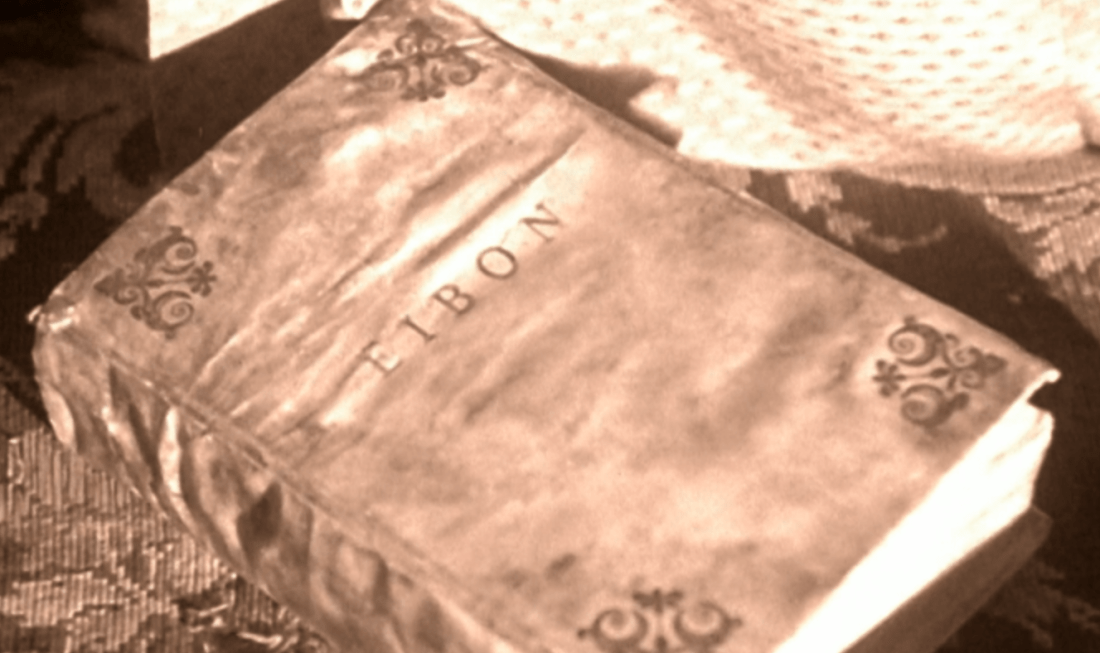

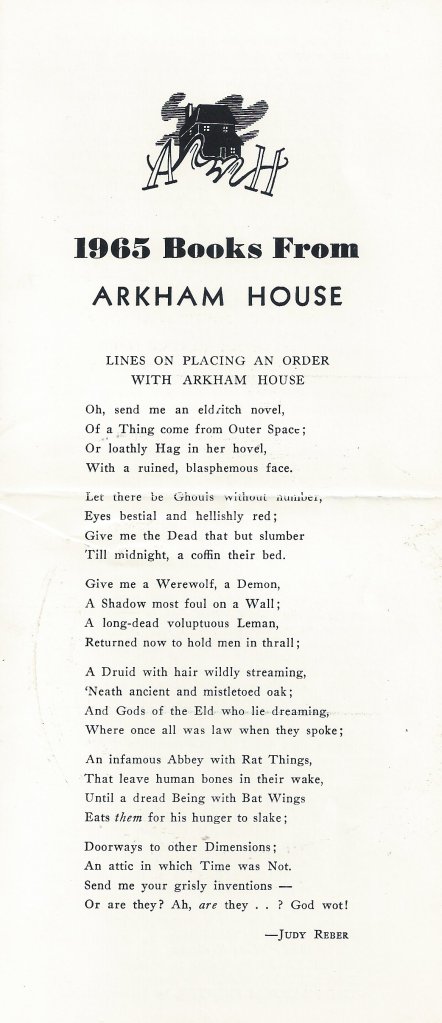
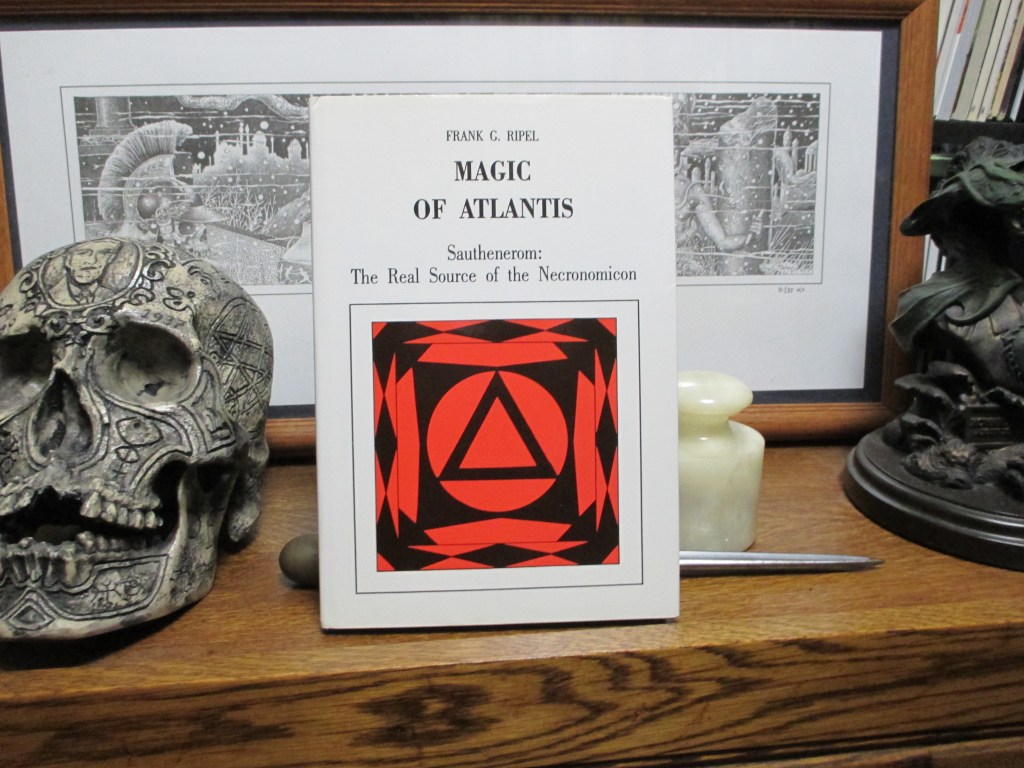

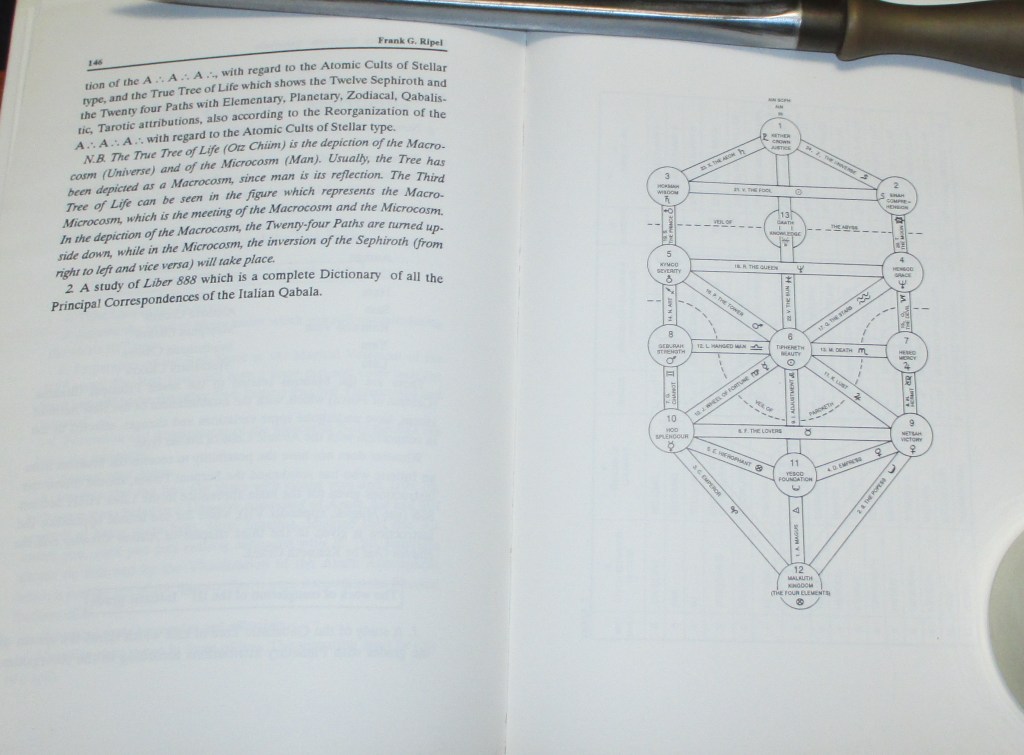
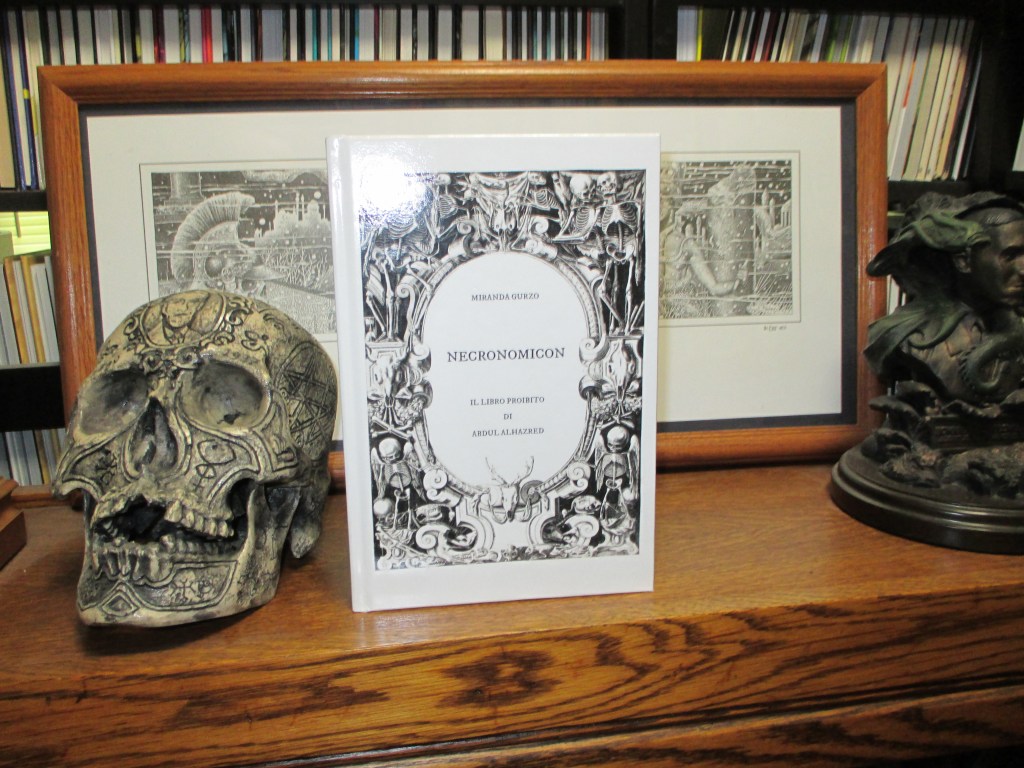
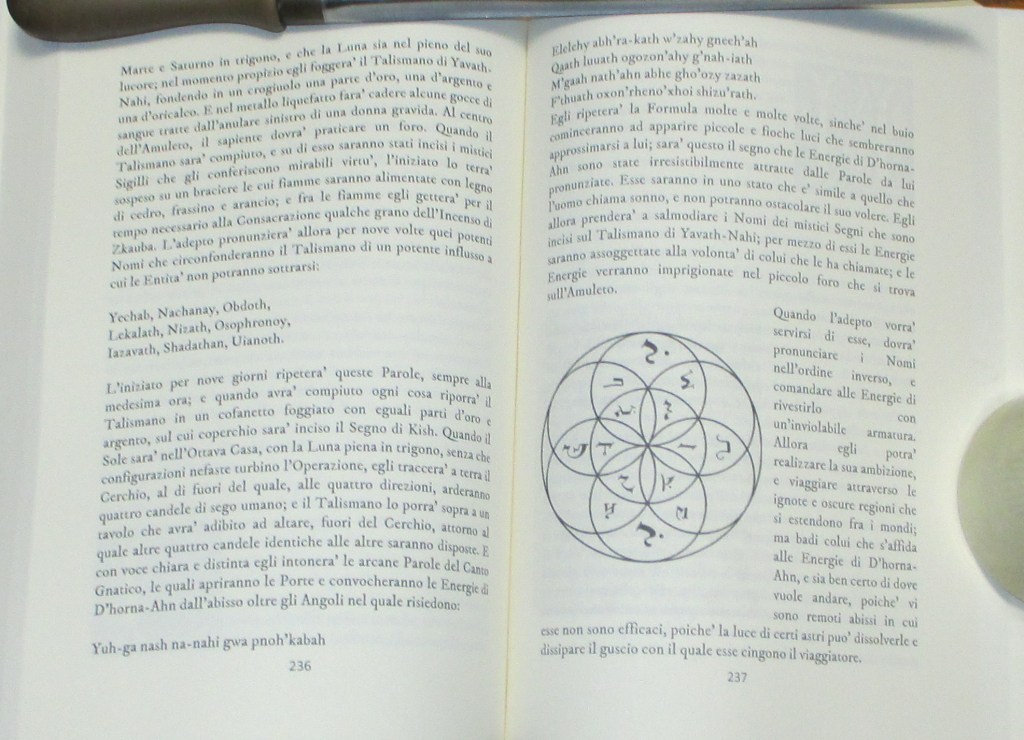
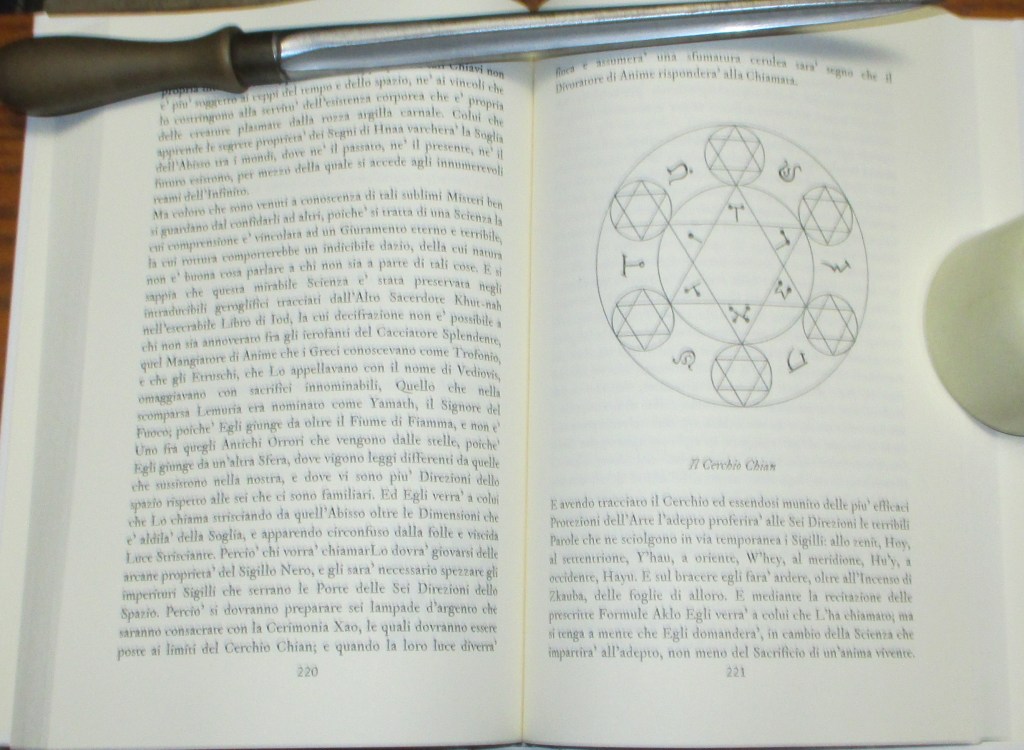
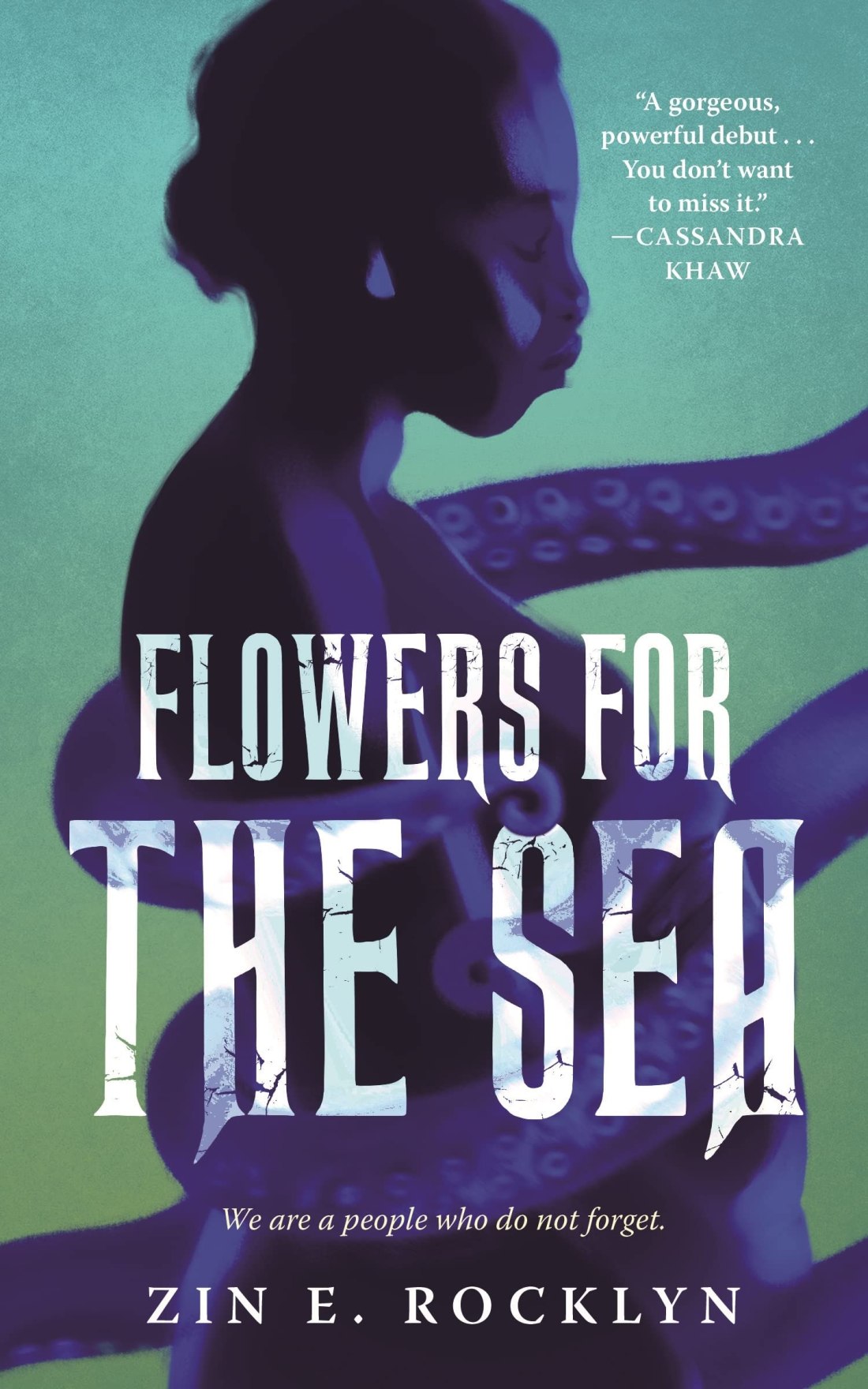


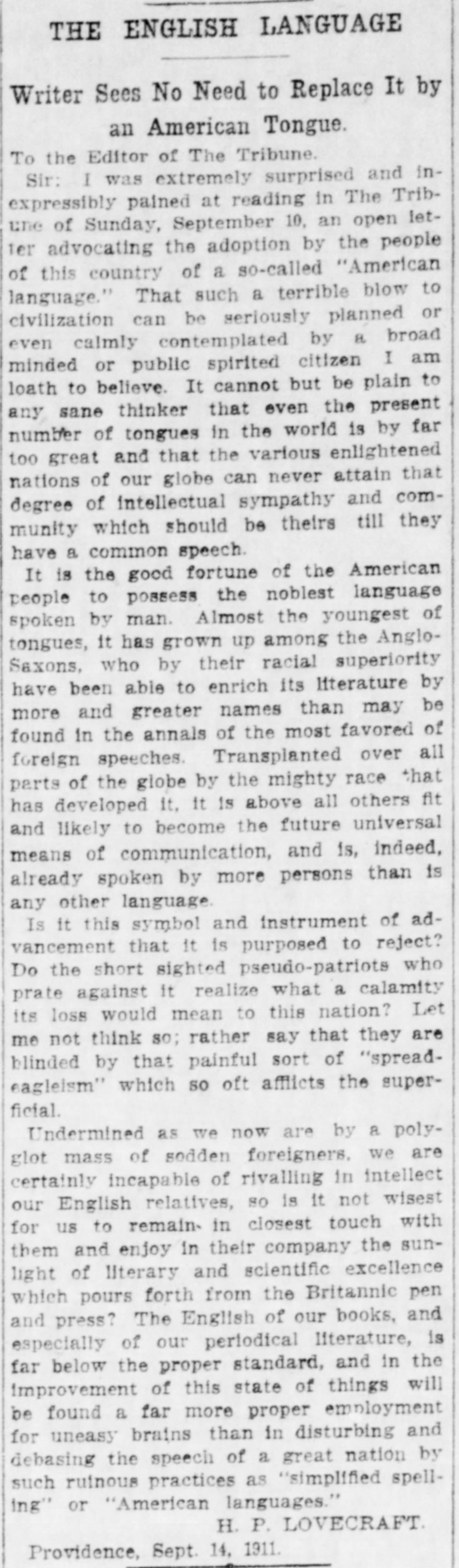
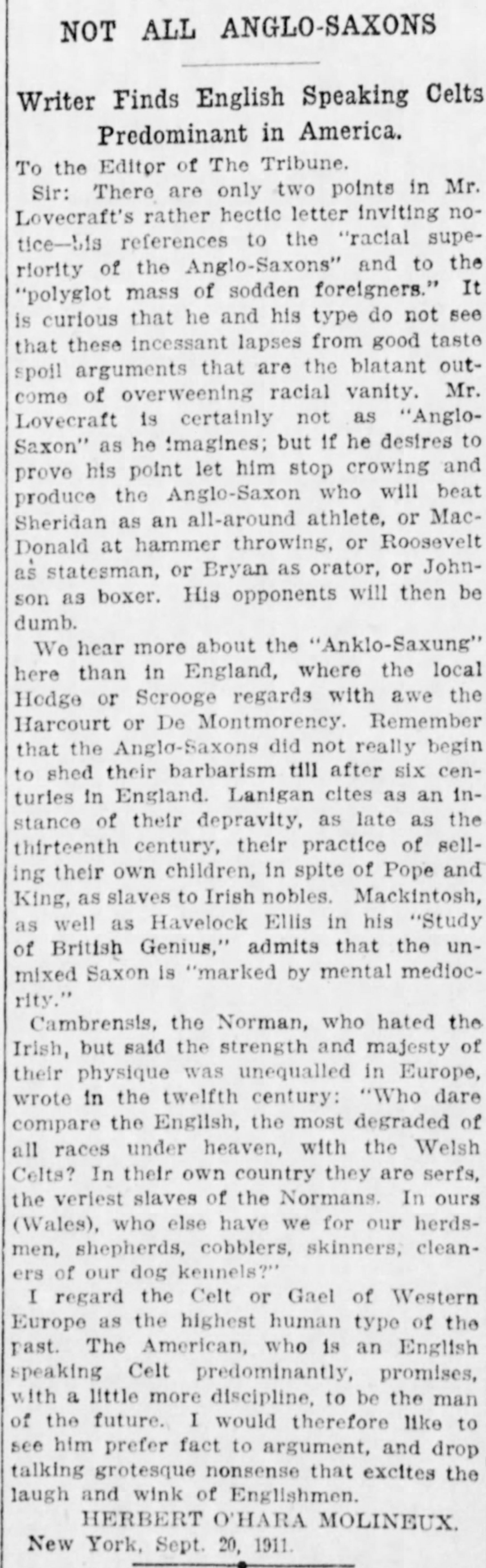

 Deep Cuts in a Lovecraftian Vein