Tänk om H.P. Lovecraft hade levt idag och bott i Uppsala! Hur hade hans berättelser sett ut då? Vår bok heter helt enkelt 1000 Ögon: Lovecraft och är vår hyllning till denna skräckens mästare. Vi tolkar några av hans berättelser och placerar dem i vårt 1000 Ögon-universum.
What if H.P. Lovecraft was alive today and lived in Uppsala! What would his stories look like then? Our book is simply called 1000 Eyes: Lovecraft and is our tribute to this master of horror. We interpret some of his stories and place them in our 1000 Eyes universe.
1000 Ögon(1000 Eyes) is the label for a contemporary Swedish-language series of horror graphic novels (really, thin bandes dessinée-style hardbacks) by the creative team of Jonas Anderson, Anders Björkelid, and Daniel Thollin, the last three published by Albumförlaget. Several of these have Lovecraftian influences, notably Filgia (2013), Lovecraft (2014), and Cthulhu (2015), but like a lot of non-English language publications that don’t make it into translation, they tend to get overlooked by English-reading audiences. The name “1000 ögon” is presumably a reference to the Swedish horror film Skräcken har 1000 ögon (“Fear has 1000 Eyes,” 1970).
This is a bit of a shame because Lovecraft has an interesting basic premise: taking the core of four of Lovecraft’s stories (“The Hound,” “The Shunned House,” “The Statement of Randolph Carter,” and “The Shadow over Innsmouth”), and reworking them in a shared, contemporary setting, keeping what they feel is the essence of Lovecraft’s stories while freely altering the trappings and settings. In this way, the two graverobbing aesthetes of “The Hound” become more notably occult in their predilections (and apparently drive a Citroën GS); the protagonist of “The Shunned House” is a young woman named Cecilia dealing with something more than the standard mildew and black mold in the house, “The Statement of Randolph Carter” involves facetime over a smartphone rather than a field telephone, and “The Shadow over Innsmouth” takes some specific visual cues from the buildings of Uppsala and the Swedish fishing industry.
“The Hound”
Like many contemporary takes on the Mythos, Thollin and Anderson each work in references to the Cthulhu Mythos in these stories, even if there were none before. As each one writes and draws their respective episodes independently (“The Shunned House” and “The Statement of Randolph Carter” for Daniel Thollin and “The Hound” and “The Shadow over Innsmouth” for Jonas Anderson), this provides a degree of narrative continuity that might otherwise be lacking. Readers get the sense that these stories are connected, expressions of some common threat or body of myth, in a way that might not be obvious otherwise.
“The Shunned House”
For those at least passingly familiar with Swedish architecture or Uppsala in particular, the connectivity of the stories is also geographic and cultural. Which is rather the entire point of this exercise. While Lovecraft never weighed in on localization per se, he did famously note:
Searchers after horror haunt strange, far places. For them are the catacombs of Ptolemais, and the carven mausolea of the nightmare countries. They climb to the moonlit towers of ruined Rhine castles, and falter down black cobwebbed steps beneath the scattered stones of forgotten cities in Asia. The haunted wood and the desolate mountain are their shrines, and they linger around the sinister monoliths on uninhabited islands. But the true epicure in the terrible, to whom a new thrill of unutterable ghastliness is the chief end and justification of existence, esteems most of all the ancient, lonely farmhouses of backwoods New England; for there the dark elements of strength, solitude, grotesqueness, and ignorance combine to form the perfection of the hideous.
Which is to say: horror can be found closer to home than you think. Forget for a moment all those Hollywood horrors set in the United States, don’t think yourself safe just because Lovecraft restricted himself primarily to New England. Horror can be anywhere, closer than you would like…you may be in some corner of Lovecraft Country already and not even know it.
“The Statement of Randolph Carter”
Visually, Thollin’s style is “cleaner” and closer to American-style comic figuring, while Anderson’s is a little scratchier and closer to the Franco-Belgian school, and the digital coloring on Anderson’s work in particular can look a little muddy at times. While it wouldn’t be correct to say that none of the stories being adapted lend themselves to grand visuals, it seems both Thollin and Anderson lean into a more subdued approach, focusing on the human characters and generally keeping things at their scale. So there are few grand visuals, but several clever and well-designed elements, like the stark outcropping of Devil’s Reef, which really stands out when compared to how it is normally portrayed, as barely a bump above the waterline.
“The Shadow over Innsmouth”
Lovecraft was followed up by a sequel titled Cthulhu. Whereas Lovecraft consists of four adaptations, Cthulhu is made up of two original works, both set in Uppsala, before and after the stars are right. The stories maintain much of the same artistic style and themes of the Lovecraft adaptations, but the creators have a little more free play to indulge their imaginations. Readers who dig the style and want to see what happens what Thollin and Anderson move beyond adaptation to pastiche won’t be disappointed.
While you might find Filgia, Lovecraft, and Cthulhu available online in some second-hand bookstores, the best way to order them is probably direct from Albumförlaget.
After Lars’ and my collaboration on the book CREATION OF A GOD [ATT BYGGA EN GUD, 2015], the plans of a trilogy began to take shape. While CREATION OF A GOD was a cross between the works of Lovecraft and Lord Dunsany, the second book, CREATION OF THE NECRONOMICON, was pure Lovecraftian fan fiction. The third will be a kind of Clark Ashton Smith-inspired postapocalyptic dark fantasy about three pregnant outlaws running from the law after a trainrobbery [SKAPANDET AV EN MYT —CREATION OF A MYTH, 2018].
Henrik Möller, introduction to Vägen till Necronomicon—Creation of the Necronomicon (2017)
The middle of a trilogy of illustrated books, Vägen till Necronomicon—Creation of the Necronomicon (2017) consists of a text in Swedish and English by Henrik Möller, and black-and-white illustrations by Lars Krantz. While some sellers have categorized this book as a graphic novel, it would probably be more correct to label this an illustrated novel; text and image stand in contrast to one another, complementing one another: where one is sparse, the other is detailed; when one is subdued, the other is vivid. The result is as effective a work of graphic fiction as has yet been produced.
Möller’s description of the work as “fanfiction” is accurate, although that doesn’t quite do it justice. The story is an expansion of Lovecraft’s “The History of the Necronomicon,” retaining the essential elements of the story but expanding the narrative of Abdul Alhazred, adding a Vathek– or 1,001 Nights-style doomed romance. However, like many fans Möller and Krantz chose to weave fact with fiction, and the story has a framing narrative: one night in Providence, H. P. Lovecraft is out in a walk and finds his mind cast back a thousand years.
This is a not-uncommon device, the idea that Lovecraft and his fictional creation were both real, that the Mythos he created was real, at least to him—that the stories he told are occult truth, or even that he found or inherited a copy of the Necronomicon, from which he learned all this eldritch lore. The idea tends to rob Lovecraft of a certain genius, or at least agency; it makes him from a master storyteller to a kind of pulp journalist or cryptic occultist.
However, when carried out with sufficient style, the narrative convention of “the real Necronomicon!” still holds a bit of cachet. The tome, and its creators real and fiction, have achieved that legendary status where fact and fiction easily flow together. There are dozens of Necronomicons in the world today, from comic books to grimoires like Magic of Atlantis: Sauthenerom: The Real Source of the Necronomicon (1985) by Frank G. Ripel & Necronomicon: Il Libro Proibito di Abdul Alhazred (2022) by Mirando Gurzo, long novels to pillowbooks. All variations on the idea of the terrible book whose secrets are so terrible they make the skin crawl and the bright light of day a bit dimmer.
The Necronomicon is a sourcebook of horror. So it should come as no surprise that parts of Möller and Krantz’ book are appropriately horrible.
He fought bravely until the caliph revealed what it was Alhazred had been fed the last three days, holding up the mangled remains of his newborn son. FInally, Alhazred screamed out, a mutes [sic], muffled cry of the soul. The small insect was hiding in his throat. Waiting… Waiting.
Henrik Möller, Vägen till Necronomicon—Creation of the Necronomicon (2017)
This motif of the insect comes from a very small, often overlooked detail about the Necronomicon, which Lovecraft had borrowed from another source:
Original title Al Azif—azif being the word used by Arabs to designate that nocturnal sound (made by insects) suppos’d to be the howling of daemons.
H. P. Lovecraft, “The History of the Necronomicon“
It is a small detail, often overlooked. Some authors credit Alhazred as an arch-cultist, heretic, and magician; others a hero whose dire warnings are often misinterpreted and abused; or a prophet, puppeted about by unseen powers. His life is a function with a single output: the Necronomicon. It is often the book that matters, the text itself, not necessarily where it came from or how it got into its current form.
Yet for Lovecraft, the whole point of “The History of the Necronomicon” is that the story of the text was what was important. The contents could never match the darkest depths of the readers’ imagination. Alhazred is integral to the story; it was the first such book to have a proper author and history, to be more than a strange and terrible name on the shelf in the secret library of some cultist. The story of the Necronomicon is important, because without that story, it is just another odd tome, no more special than the rest.
It is a book born in blood and mystery.
There is an epilogue. The narrative returns to the frame-story. Lovecraft at his typewriter. The temporal loop is closed. In the final pages, the story comes to a bit of an ugly and unsettling close, weaving fact and fiction again:
Finally, on his deathbed, he wrote down all of Alhazred’s writings from memory into what he called his death diary and bequeathed it to his friend Robert Barlow.
After Lovecraft’s death, Barlow took the book to Mexico where he eventually committed suicide. The book is, as of today, still missing.
Henrik Möller, Vägen till Necronomicon—Creation of the Necronomicon (2017)
The truth of Lovecraft’s “death diary” is more prosaic, and perhaps more terrible for that. It was a minute record of Lovecraft’s final, fatal illness and last days, beginning 1 January 1937. While the actual diary is missing, Barlow copied and condensed some entries, which are reproduced in Lovecraft’s Collected Essays volume 5. The entry for March 7th simply reads “hideous pain.”
The reality of the death diary puts the Necronomicon in context. We may fill it with whatever terrible cruelties and eldritch lore we may dream up. The Necronomicon Files by Daniel harms & John Wisdom Gonce III has a list; everything from the secret of telepathy to how to breed worms in the carcasses of camels. The real world is often more prosaic, but no less horrible. Lovecraft’s death diary is an account of adult fears, the yawning death in hospital beds as cancer gnaws at our bowels. A death by inches, punctuated by a thousand indignities, and then…nonexistence. Throwing the gates wide to let the Old Ones come again would at least be a choice.
Henrik Möller is also a filmmaker, and to accompany the publication of Vägen till Necronomicon—Creation of the Necronomicon (2017), he also released a short video adaptation of the work, which is still available on Youtube. The film in narrated by Möller in Swedish and English, to Krantz’ illustrations, with a soundtrack by Möller. If you cannot get the book, it is a good way to experience their story.
This review deals with a work of pornography, and the history of erotic art and writing. As part of this review, selected images with cartoon depictions of genitalia and/or sexually explicit contact will be displayed. As such, please be advised before reading further.
The history of underground comix is necessarily (and often deliberately) vague, but it is a truism that these non-traditional comics often take their inspiration from more traditional peers. The Tijuana bibles (8-pagers, bluesies, etc.) that began to appear in the 1920s or 1930s often took as their subject then-current celebrities or characters from popular comic strips like Popeye, Blondie, and The Phantom. The earliest comic book magazines were nothing more than collections of newspaper strips, although by the end of the 1930s they became original works with their own characters in the recognizable format that still survives today.
Tijuana bibles were explicitly pornographic and often used characters owned by others; as a consequence they were broadly illegal, sold under-the-counter, and the artists and publishers left off dates, names, and other information. As a consequence, dating of many such underground works is often approximate, and in some cases relies on context clues. A Tijuana bible starring The Phantom, for example, could not date before 17 February 1936 when the first daily comic strip starring that character was published; there could be no pornographic depiction of Superman before June 1938 when Action Comics #1 was published, no Batman before Detective Comics #27 (March 1939), no Robin before Detective Comics #38 (April 1940), etc. That still leaves a rather open question as to period of publication, but sometimes the field can be narrowed down further by changes of costume that reflect a given artist’s run.
A sample of Tijuana Bibles featuring comic book characters from the 1930s-1950s.
Such is the case with “Batman and Robin in The Occult Coven,” a 8-page story that was published in Filthy Sunday Funnies (no date or publisher given), which is also published in Original Dirty Comics 2. This is not a Tijuana bible in the traditional 8-pager format, although it is a later work in the same vein of pornographic satire and parody; Filthy Sunday Funnies was one of a number of small side-stapled digest-sized collections of adult comics that were around the same price point (mostly $5) and format, indicating a common publisher…other titles including Trash Comics, Jolly Time Fun Book, Original Dirty Comics, Sexotic Comics, Raunchy Tales from the Arabian Nights, and Gwendoline in “Sin Island.” Some of these are reprints of older Tijuana bibles, others are apparently original works by various unnamed artists.
Some of these works can be roughly attributed to various known artists based on style or character. The Gwendoline collection, for example, involves the character created by John Willie; a gender-bending riff on Jekyll & Hyde in Trash Comics has the hallmarks of John Blackburn. At least one comic references the San Francisco Ball, an adult-oriented independent newspaper from the 1970s that included pornographic comics with an emphasis on parody and satire, including comic book superheroes; Filthy Sunday Funnies may reprint material from the pages of that newspaper, but indexing for the San Francisco Ball is basically non-existent.
Among the artists who did comics for the San Francisco Ball was Lee Carvel, who released several collections of adult comics work, including several parodies of 70s comic book characters, titled Lee Carvel’s Dirty Comics. An online entry for Lee Carvel’s Dirty Comics #2 lists “Batman and Robin in the Occult Coven” among the contents, but that entry is almost identical to another, unsigned collection Original Dirty Comics #3—which does contain “The Occult Coven.” However, it’s known that Carvel signed some of his work—such as “Gonad the Horney” (a Conan the Barbarian spoof)—and none of his signed works Best of San Francisco Ball Comics #1 show similarities to “Batman and Robin in the Occult Coven,” though some other unsigned works do.
Part of the complication is that because pornographic comics were illegal to sell and often used copyrighted characters, they were almost never copyrighted, nor could the creator or publisher enforce their copyright without revealing their identity. As a consequence, pirating was rampant. There are already three possible printings of “Batman and Robin in the Occult Coven” and it isn’t clear which was the original (if any of them are), and which are reprints or pirated editions.
Faced with bibliographic confusion and lack of printing dates, we have to rely on internal evidence to date “Batman and Robin in The Occult Coven.” Given cultural references (parodies of Star Trek, The Lone Ranger, and contemporary superheroes, etc.) the other comics in the collection Filthy Sunday Funnies can be roughly dated to anywhere from the 1960s to the 1970s—but for “The Occult Coven” we can go a step further, as the unnamed artist took deliberate inspiration from a particularly recognizable work.
DC Comics’ character Batman had received his own title starting in 1940; by the 1970s it had become a 52-page anthology magazine, often with a lead story, back-up story, and sometimes a reprint. The editor was Julius Schwartz, who as a teenage fan had been an agent for a couple of Lovecraft’s stories to Astounding and published material about him as fanzines, Batman #241 (14 March 1972) features a distinctive cover by Neal Adams (pencils), Bernie Wrightson (inks), and Gaspar Saladino (lettering):
“Batman and Robin in The Occult Coven” first pageBatman #241 cover
The artist also “swiped” other panels from the same issue and story, for example:
Batman #241Batman #241Batman and Robin in The Occult Coven
The really interesting part for Mythos fans is the back-up story in Batman #241 is “Secret of the Psychic Siren!” by Mike Freidrich (writer) and Rich Buckler (pencils & inks), where Robin and his telepathic girlfriend Terri Bergstrom run afoul of the cult of Cthulhu. While the Batman comics have long tipped their hat to Lovecraft with Arkham Asylum, this storyline was decades before The Doom That Came To Gotham, a more explicitly Cthulhu Mythos story published starring the Caped Crusader. There are no tentacles waved about, the Necronomicon is mentioned but never appears; the cult-leader is aware that Lovecraft was a pulp writer and might just be insane.
Batman #241 (1972)
The narrative ends on a cliffhanger; finished up in the story “Death-Point!” next issue (Batman #242, June 1972) by the same creative team, though Dick Giordano inks over Buckler’s pencils. The storyline would mark the last appearance of Terri Bergstrom, and connections to the wider DC universe are pretty much minimal. The Cthulhu cult is little more than an Easter egg tossed out for fans of Lovecraft and the Mythos…but it obviously fired the imagination of at least one would-be pornographer.
“Batman and Robin in The Occult Coven” is a blatant riff off of “Secret of the Psychic Siren!”; the distinctive cover is virtually traced, and there are a number of swipes throughout the 16-page pornographic parody. While the eponymous coven is not explicitly worshipping Cthulhu—they are more focused on sex and murder—it is clearly based on the Cthulhu-worshippers.
Batman #241Batman and Robin in The Occult Coven
While the sex is explicit, Batman is a little stiffly posed—”Secret of the Psychic Siren!” was a Robin-only story, so the Batman character swipes came from somewhere else. The artist apparently took delight in putting some salty language in Batman’s mouth. The strong influence of Batman #241 on the story makes it clear that “Batman and Robin in The Occult Coven” couldn’t have been produced before 1972, and probably dates to the mid-1970s. That might make this one of the first Lovecraftian pornographic comics, although still a bit later than “Tales of the Leather Nun’s Grandmother” by Jaxon in Tales from the Leather Nun (1972).
There is no easily accessible reprint of “Batman and Robin in The Occult Coven” as far as I can find. However, those who want to read “The Secret of the Psychic Siren!” are in luck, as the story and its sequel were republished in Showcase Presents: Robin the Boy Wonder #1 (2008) and Robin: The Bronze Age Omnibus (2020)
In the aftermath of the deep cut on “The Ten-Cent Ivory Tower” (1946) by John Wilstach, Bill Plott revealed that Wilstach and Lovecraft had been mentioned together before, in a brief news item in The Rhinebeck Gazette, the local newspaper of Rhinebeck, New York, dated 28 June 1945. Armed with this information, the appropriate page was found at the online newspaper archive of the Fulton County History website.
The Rhinebeck Gazette, Rhinebeck, NY, 28 June 1945, p4
“Long Pond” is a shallow lake in New York state, located a little over five miles south of Rhinebeck, which itself lies on the east bank of the Hudson River. The 1930 U. S. Census put John Wilstach and his wife at Long Pond Road, which encircles the lake. So we can definitely say that John Wilstach was at Long Pond at the time. What about Lovecraft?
As it happens, we know Lovecraft visited the area twice. The first trip came in May 1929; Lovecraft had taken his first serious trip to the Southern United States via bus, and in New York City he met his friend and fellow pulp-writer Frank Belknap Long, Jr:
From Philadelphia I proceeded to New York, where my young grandchild Frank B. Long & his parents gave me a motor lift up the Hudson shore to Kingston—the ancient town harbouring my artist-fantaisiste friend Bernard Austin Dwyer, whom neither Long nor I had ever met in person before, despite long & interesting correspondence. Dwyer turned out to be as genial & pleasant in person as on paper, & I stayed at his house several days—though Long had to move on & collaborate with his father in a trout-fishing excursion (which turned out absolutely fruitless!). Kingston itself interested me prodigiously, for it is a highly venerable & historical place ful of reliques of the past. The present city is a fusion of two once separate villages—Kingston proper, where my host lives & which is about a mild infland from the Hudson’s west bank, & the river-port of Rondout on the hilly bank itself, where the ferry from Rhinebeck lands & which is now a somewhat picturesque slum.
The Longs and Lovecraft would have taken the car up the east bank of the Hudson to Rhinebeck, and then the ferry over to the west bank to Kingston (as Rhinebeck is situated some ways from the river, it’s possible the actual drop-off was at Rhinecliff on the river, or that a bus from Rhinebeck took Lovecraft to the ferry). While he was in Kingston with Bernard Austin Dwyer, Lovecraft visited the nearby communities of Hurley (“abt. 3 m. N W of Kingston”) and New Paltz (“16 m. S.”), both on the western side of the river. Lovecraft would then have continued north to Albany, N.Y., and then east to Massachusetts to meet another friend, the printer W. Paul Cook.
Lovecraft mentions this leg of his 1929 trip in varying detail in a number of letters, and the whole trip was recorded in an extensive travelogue, “Travels in the Provinces of America” (Collected Essays 4.32-61). None of these letters or the travelogue mention Wilstach, Long Pond, or any extended stay or exploration of Rhinebeck, though the travelogue mentions the ferry. To give an idea of the scope of the 1929 trip:
I surely had a great trip—over 2 weeks with [Vrest] Orton, over a week more with Long, & then the open road. Richmond—childhood home & favoured haunt of Poe—Williamsburg, 17th century survival & colonial capital of Virginia; Jamestown, birthplace of our culture on this continent; Yorktown, typical Southern colonial village; Fredericksburg, boyhood environment of Genl. Washington; Washington [D. C.]—where I saw the Easter Island images (shades of Lemuria!) in the Smithsonian—Philadelphia, whose new art museum is a breath-taking Greek Acropolis; Kingston, whose ancient stone houses bespeak another culture & another day; Hurley, which a Dutch diplomat has called more Dutch than anything left in Holand; New Paltz, home of the Huguenots; Albany & the Berkshires; good old Athol; Brattleboro & the vivid Vermont hills; & finally home again—best place of all!
In June 1930, Lovecraft returned to Kingston, N.Y. to visit Dwyer again. There is much less about this trip in Lovecraft’s letters, presumably because he had covered so much of antiquarian interest the year before. A good idea of the trip from one letter is:
My visit with Dwyer in ancient Kingston was extremely delightful. Every clear day we fared forth to the wild and beautiful countryside, & I enjoyed the conversation of one who is in many respects the most spontaneous & [Algernon] Blackwood-like fantaisiste I know.
This is the last account we have in Lovecraft’s published letters to any visit to the Kingston/Rhinebeck region. Again, no mention of Wilstach or Long Pond. The reason that Lovecraft did not venture up into that part of New York in later trips is given in 1931:
Finally I shall spend a week or two with Belknap in New York & then probably go home at last, since I doubt if I’ll have the cash to visit Dwyer. He has, by the way, returned to his paternal acres in the hinterland; hence is to be addressed no more at Kingston, but at Box 43, West Shokan, N.Y.
Without a friend in the region to visit, Lovecraft apparently had no reason to visit Kingston.
Just because there is no corroborating record in Lovecraft’s letters of the weird fictionist visiting the Rhinebeck region in the mid-30s, or any mention of John Wilstach at all, does not immediately invalidate the anecdote in the Rhinebeck Gazette, though it may cast a bit of doubt on the account of Lovecraft’s visit. After a decade or so, memories can grow a little fuzzy; possibly Wilstach met the Longs on their fishing trip in 1929 and misremembered Lovecraft as staying with them for the weekend. Possibly Lovecraft did have a lost weekend in New York State and the references were in letters that haven’t survived. Or maybe Wilstach invented the episode, although that would beg the question of why.
If the account of Lovecraft’s visit to Long Pond has to be judged apocryphal until further evidence emerges, the note at the beginning of the article that Wilstach had just sold an article about Lovecraft to Esquire named “An American Eccentric” is interesting. If this was the original title of “The Ten-Cent Ivory Tower,” it means that the article took about six months from submission to publication, and faced at least a few editorial changes during that time, perhaps resulting in some of the oddities in that article. It is notable that this anecdote did not make it into the published Esquire piece, suggesting he either left it out or it was edited out.
While this piece in the Rhinebeck Gazette neither proves or disproves whether Wilstach actually knew Lovecraft in any capacity, it is an interesting addendum to what we know about their potential friendship.
Thanks again to Bill Plott for bringing this to my attention.
Have met the author of the standard history of the XVIII Cent. Charleston stage, & will this afternoon inspect the interior of one of the typical old (1734) mansions.
According to the 1860 census, Eola Willis was born in 1859 in South Carolina; the oldest of what would be six children. The year after she was born, South Carolina seceded from the Union, setting the stage for the American Civil War. Like many Southern men, her father would join the Confederate Army and he would be associated with running the blockade the Union established around Southern ports and coast. During her earliest childhood, the war was fought and lost; and young Eola would come to adulthood under Reconstruction, until that too came to an end.
Eola Willis distinguished herself as an artist, historian, antiquarian, and author, with an especial interest in the history of Charleston, S.C. Among her publications was The Charleston Stage in the XCIII Century, with Social Settings of the Time (1924). When she met H. P. Lovecraft in 1934, Eola Willis was 74 years old.
You certainly must see old Charleston some day. What a town! I’ve met one of the leading local antiquarians—an old lady named Willis, author of the standard history of the Charleston Stage in the 18th century—& picked up a good deal more of the regional traditions than I ever knew before.
Lovecraft first visited Charleston, S.C. in 1930, as part of his gradually expanding series of travels to see more and more of the world. That visit resulted in a lengthy travelogue, “An Account of Charleston,” where he exults in the atmosphere of the Southern metropolis. While Lovecraft had long bought into the rose-colored vision of the antebellum South described by the United Daughters of the Confederacy and other Lost Cause supporters, actually traveling to the South let Lovecraft appreciate the architecture and ways of the South in an entirely new way—from the elegant old houses to Jim Crow. In his letters, Lovecraft even suggested he would like to move there, someday…though that day never came…and on his subsequent trips down South, made a point of spending at least some time in Charleston.
On this visit I have met a highly interesting & erudite local antiquarian—an ancient gentlewoman named Miss Willis, author of the standard history of the 18th century Charleston stage. This venerable scholar, descended from the oldest Charleston stock & still inhabiting her well-preserved hereditary mansion (built 1730-34) in Tradd St., has furnished many side-lights on Charleston tradition with which I was previously unfamiliar. Her book is a genuine masterpiece of its kind, & ought to interest you because of its full account of the famous Sully family from which Thomas the artist (his artist-nephew who was Poe’s playmate in Richmond) sprang.
For Lovecraft, Eola Willis no doubt reminded him of his own aunts, who were both active in society, loved old things, and were painters of some skill. We can only speculate on how exactly they met, but it was undoubtedly a meeting of the minds. Lovecraft’s genuine enthusiasm for Charleston and its history were no doubt matched by Willis’ own affection for her city. From his letters, it seems she even invited him on a tour of her historic home at 72 Tradd St.
An interesting person whom I did meet in Charleston was Miss Eola Willis, Chairman of the local Art Commission & author of the standard history of the 18th century Charleston stage—a gentlewoman of ancient Carolina stock, aged about 70, who is not only an erudite historian & antiquarian, but a water-colour artist of great power, whose views of Carolina scenery are vivid & beautiful.
Her association with H. P. Lovecraft, however, has proven to be more ephemeral.
Did I mention meeting, in Charleston, an extremely gifted gentlewoman who is chairman of the Charleston Art Commission & author of the standard history of the Eighteenth century Charleston stage? A Miss Eola Willis, who dewells in her centuries hereditary mansion in Tradd street. Her book & anecdotes confirm my belief that the culture of Charleston is the finest that ever flowered in North America.
This handful of quotes in Lovecraft’s letters from 1934 is essentially the sum total of his mentions of Eola Willis by name. No letters from Lovecraft to Willis or Eola to Howard have yet come to light. Yet in his 1937 diary, among the list of addresses of his correspondents, Lovecraft includes Eola Willis (Lovecraft Annual 6.176). This opens up at least the possibility that they were correspondents for a time. We can only speculate what they might have discussed, although their common antiquarian interests suggest that might have formed a possible basis for a few letters.
The correspondence between Eola Willis and H. P. Lovecraft must therefore be considered hypothetical, at least until some more definitive evidence emerges.
It is true that I once used the pseudonym of “Elizabeth Berkeley” in conjunction with its more rightful owner W. V. J.—in 1916 the name covered certain verses by both authors, in an effort to mystify the public by having widely dissmilar work form the same nominal hand.
On 4 April 1917, the U. S. Senate voted to declare war on Germany. Like many Americans, Lovecraft had followed news of the unfolding Great War since its opening stages. Lovecraft was firmly on the side of the Allies, no surprise given his ancestral affinity for the United Kingdom. Having joined amateur journalism in 1914 near the start of the war, Lovecraft found the amateur press an outlet for his thoughts and feelings with essays such as “The Crime of the Century” (The Conservative Apr 1915) and “The Renaissance of Manhood” (The Conservative Oct 1915), and once war was declared, poems such as “The Crime of Crimes: Lusitania 1915” (Interesting Items Jul 1915), “The Volunteer” (Providence Evening News 1 Feb 1918), and “To the Nurses of the Red Cross” (1917).
Lovecraft’s position with regard to the war was complicated. He was not in a normal sense an American patriot, reserving his greatest affinity for England and the British monarchy. His support for the British Empire meant his opposition to the Irish home rule movement and Irish nationalism; Lovecraft’s bitterest anti-Irish statements date from around the period of the Easter Rising in 1916 and its aftermath. Racial hierarchies and white supremacist doctrine in the early 20th century lauded the “Teutonic race,” to which the “Anglo-Saxons” of Britain were either a part or close cousins; which is why Lovecraft decried the war as “The Crime of Crimes”—because white people were fighting white people.
It should come as no surprise that Lovecraft was, once hostilities broke out, in favor of war with Germany, yet Lovecraft was not a war-hawk in the normal sense, later writing:
No—we can’t justly endorse any sort of killing except in defence of oneself, or of some racial or national fabric representing one’s larger self.
This is to say, Lovecraft did not advocate wars of aggression, but was impassioned in his support for defensive wars, especially when it was his beloved England and its allies (and later, fellow Americans) who were attacked. The initial neutrality of the United States to the war in Europe incensed Lovecraft, who bitterly attacked Woodrow Wilson’s position, and wrote in letters and essays passages like this:
This neutrality hath been a source of the keenest distress and humiliation to me ever since the war began, since I believe that the rightful place of America is at the side of her mother nation, defending the Anglo-Saxon civilisation and ideals which both countries hold in common. In fact, I have more than once blushed at the base and selfish attitude of the States at a time when all the forces of humanity should be engaged in warding off the Hun. Never before was I more disposed to make ostentation of the legal provision which makes me still able, as the grandson in direct male line of a true-born Englishman, to call myself a rightful British subject. England is my country as well as America—let those call me “hyphenate” who so desire!
Lovecraft’s dislike of neutrality also found expression in his personal discontent with pacifists and anti-war protestors; those who argued either for concessions to the Central Powers to buy peace, or simply opposed the United States sending troops to join a foreign war, or selling weapons and materiel to the Allies, which would only extend the war and its suffering—or as in the case of the Irish-American John T. Dunn, who opposed aiding Britain because he supported Irish nationalism. Dunn would later be drafted, refused to serve, and was sentenced to prison.
When Lovecraft’s Jewish friend Samuel Loveman faced the draft, the man from Providence had no sympathy:
By the way—our mutual friend & fellow-bard Samuel Loveman is in CLass I Div. A, expecting to be called for active duty. In the first draft he was exempted for poor vision, but the requirements are now less strict. If I were Loveman I should enlist. I have no patience at all with a strong man sans dependents who deliberately stays home till dragged out from under the bed. Loveman admts he is “unpoetically robust” & that his sight is not at all seriously impaired. But Jews will be Jews, & I will judge neither harshly nor hastily. He is certainly a very pelasant & exceedingly gifted person, & now that he is subject to call, shews no sign of timidity or unrest. I trust his career may be honourable, & tht he will meet with an easier fate than the other soldier-poets, Brooke, Seeger, Ledwidge, et al.
As it happened, Loveman spent most of his military service 1918-1919 at Camp Gordon in Georgia, and did not serve overseas.
A recurring theme in Lovecraft’s war-poems, essays, and letters is masculine identity and its ties with white supremacist national identity. Anglo-Saxons and Teutons were in the racial rhetoric of the day supposed to be warriors and conquerors who had dominated the globe because racial superiority was synonymous with martial superiority. It was a white man’s place to show courage and gladly answer the call. For Lovecraft, these were not just armchair ideals: not long after “The Peace Advocate” was published he attempted to enlist.
Some time ago, impressed by my entire uselessness in the world, I resolved to attempt enlistment despite my almost invalid condition. I argued that if I chose a regiment soon to depart for France; my shear nervous force, which is not inconsiderable, might sustain me till a bullet or piece of shrapnel could more conclusively & effectively dispose of me. Accordingly I presented myself at the recruiting station of the R. I. National Guard & applied for entry into whichever unit should first proceed to the front. On account of my lack of technical or special training, I was told that I could not enter the Field Artillery, which leaves first; but was given a blank of application for the Coast Artillery, which will go after a short preliminary period of defence service at one of the forts of Narragansett Bay. The questions asked me were childishly inadequate, & so far as physical requirements are concerned, would have admitted a chronic invalid. The only diseases brought into discussion were specific ailments from which I had never suffered, & of some of which I had scarce ever heard. The medical examination related only to major organic troubles, of which I have none, & I soon found myself (as I thought) a duly enrolled private in the 9th Co. R.I.N.G.! As you may have deduced, I embarked upon this desperate venture without informing my mother; & as you may also have deduced, the sensation created at home was far from slight. In fact, my mother was almost prostrated with the news, since she knew that only by rare chance could a weakling like myself survive the rigorous routine of camp life. Her activities soon brought my military career to a close for the present. It required but a few words from our family physician regarding my nervous condition to annul the enlistment, though the army surgeon declared that such an annulment was highly unusual & almost against the regulations of the service. The fact is, I had really gotten the best of that astute medicus; for without making a single positive misstatement I had effectively concealed the many & varied weaknesses which have virtually blasted my career. Fortune had sided with me in causing no attack of blurred eyesight to come upon me during the physical examination. But my final status is that of a man “Rejected for physical disability.” On the appointed day I shall register for conscription, but I presume my services will not be desired. My mother has threatened to go to any lengths, legal or otherwise, if I do not reveal all the ills which unfit me for the army. If I had realised to the full how much she would suffer through my enlistment, I should have been less eager to attempt it; but being of no use to myself it was hard for me to believe I am of use to anyone else. […] And so I am still in civil life, scribbling as of old, & looking with envious eye upon the Khaki-clad men who are now so frequently seen upon the streets of the business section & in the cars everywhere. […] Had my enlistment matured successfully, I wonder how I should have kept up! And yet—I will wager that I would have kept up some way or other. Now that death is about to become the fashion, I wish that I might meet it in the most approved way, “Somewhere in France”.
The effect on Lovecraft was dejection. While readers today might be glad that Lovecraft did not die as part of the American Expeditionary Force, for Lovecraft it was as those who hold their manhood cheap on St. Crispin’s Day. In a subsequent letter, he lamented:
I am feeling desolate & lonely indeed as a civilian. Practically all my personal acquaintances are now in some branch of the service, mostly Plattsburg or R.I.N.G. Yesterday one of my closest friends entered the Medical (not as a doctor, but as an assistant—carrying stretchers, driving ambulances, &c. &c.) Corps of the regular army. The physical tests for this corps are very light, & in spite of my previous rejection for Coast Artillery I would try to enter, were it not for the almost frantic attitude of my mother; who makes me promise every time I leave the house that I will not make another attempt at enlistment! But it is disheartening to be the one non-combatant among a profusion of proud recruits.
As it was, Lovecraft had to content himself by offering what moral support he could, in the form of poems in praise of those who could serve. This is the context we must imagine for when Lovecraft was writing “The Peace Advocate”: fighting had been going on for almost three years, yet the United States retained its stubborn neutrality as the Allies and the Central Powers engaged in bloody trench warfare in Europe, allied shipping faced German submarines, Britain itself was bombed from the air by zeppelins, and around the world the colonies and allies of the two sides clashed in a truly global conflict.
“The Peace Advocate” is a narrative poem about a conscientious vicar who opposes war (implicitly on religious grounds), even as his son goes off to fight, until the invaders literally land on his doorstep, destroying his church. The vicar regains his masculine ferocity (“manhood’s thought,” “with the manhood he had found,” “wak’d to man’s estate”) and fights to defend his home—too late, for his wife and daughter both die in the fray.
The politics and philosophy are not complex, and would be counted as propaganda if published by some government outlet. The fore are faceless, the reasons and causes of the war utterly unknown and opaque. It’s enough that they are the invaders in the universe of the poem. Lovecraft makes no effort to understand the peace advocate’s position or give them any arguments for opposing war; the combat and loss, on the other hand, are effective and brutal to support the moral. In failing to join the fight in time, the vicar has failed as a husband and father…and perhaps importantly, burns his book.
Prieſt. Give peace in our time, O Lord; Anſw. Becauſe there is none other that fighteth for us, but only thou, O God.
Lovecraft was a materialist and atheist; while not militantly anti-Christian, he did oppose the passivity and turn-the-other-cheek theology as counter to his ideas of the natural character of white people. Influenced by Nietzsche and similar thinkers, Lovecraft attributed this attitude to the Jewish origin of Christianity. As he would put it after the war:
Semiticism has never done anything save harm when forced upon us or adopted by accident. It gave us the puling hypocrises of the Christian doctrine—us, who by every law of Nature are virile, warlike, and beauty-loving pagans and Northern polytheists!
H. P. Lovecraft to Frank Belknap Long, 21 Aug 1926, Selected Letters2.67
It is a rhetorical trick to make the subject of the poem a Christian priest, because Lovecraft can imply a religious motivation for antiwar sentiment without actually engaging with any religious arguments.
Of all the stanzas in the poem, one in particular stands out in its imagery as possibly being inspired by another poem:
His son had buckled on his sword, The first at the front was he; But the vicar his valiant child ignor’d, And his noble deeds in the field deplor’d, For he knew not bravery.
While “buckled on his sword” could be a metaphor for joining the Army and taking up arms against the foe, there is a parallel with another very well-known war song:
The Minstrel-Boy to the war is gone, In the ranks of death you’ll find him; His father’s sword he has girded on, And his wild harp slung behind him. “Land of song!” said the warrior-bard, “Tho’ all the world betrays thee, One sword, at least, thy rights shall guard, One faithful harp shall praise thee!”
This could be simply parallel imagery: Moore was after all writing specifically from an Irish nationalist perspective, while Lovecraft was in the midst of his anti-Irish period, and there wasn’t much common purpose there. On the other hand, there would be a certain irony in appropriating the image of the boy who clads on his father’s sword to go to war, when the father himself stays home as a take-that to Irish nationalists who refused to fight in Britain’s aid. Lovecraft’s letters are silent on the subject, no doubt to maintain the illusion that “Elizabeth Berkeley” had written the verses.
Lovecraft’s motivations and ideology in writing this piece were wrapped up in contemporary politics and ideas of masculinity, national identity, and racial identity; he failed to attempt to accurately understand or present anti-war arguments in his letters, essays, and poems, because his rhetorical purpose was in support of the side of the conflict he identified with. It is one thing to understand, from an intellectual standpoint and the distance of years, how Lovecraft’s ideas and rhetoric were shaped by the forces of his life…and there are flaws in both.
Yet how would “The Peace Advocate” be received in Ukraine if it was published in 2023? As the men and women of that nation strive to defend their people, their culture, and their borders from the invading military forces of the Russian Federation? Would they not see parallels between the parable of “Elizabeth Berkeley” and Russia’s indiscriminate bombing of civilians and the Transfiguration Cathedral in Odessa?
While Lovecraft’s ideology is flawed and his rhetoric ignores real tenets of and arguments for pacifism, or conscientious objection, there is an argument to be made that in the face of unprovoked aggression, there exists a moral justification to take up arms and resist. Every individual, and nation, has the right to self-defense—and if necessary, to meet deadly force with deadly force. Slava Ukraini.
“The Peace Advocate” is not one of Lovecraft’s more influential works, in part because he never openly acknowledged authorship and it has seldom been reprinted. There is nothing weird or supernatural about it, there are no connections to the Mythos, and it was written years before Weird Tales first hit the stands or Cthulhu was conceived. That it holds any resonance to events in 2023, over a century after it was first published, is due only to the fact that war is as much a reality today as it was then. In that respect at least, less has changed than we might have hoped.
It is the same tale in all the arts: the low comedian was always sure of a laugh if he cared to tumble over a pin; and the weakest murderer is sure of a certain amount of respectful attention if he will take the trouble to dismember his subject.
While Welsh author and newspaperman Arthur Machen is best known today for his weird and fantastic fiction, during his life he never restricted himself to any one narrow genre. A particular focus of his during the early-mid 1920s was true crime, which resulted in the publication of The Canning Wonder in 1925—a book-length non-fiction study of the disappearance of Elizabeth Canning in 1753. True crime inspired crime fiction, most notably “The Islington Mystery” (1927), which references the infamous case of “Dr.” Crippen‘s murder of his wife. Machen’s style in “The Islington Mystery” is not that of a thriller or a melodrama; it is told with sly humor and a certain jaded recognition as to what the public is looking for when it comes to crimes—lurid details, tawdry affairs, courtroom dramatics.
In 1958, “The Islington Mystery” was published in Spanish translation (as “El misterio de Islington”) within the pages of the Antología de cuentos de misterio y terror. The story was adapted into a screenplay by Luis Alcoriza de la Vega, who effectively localized the story: transposing the setting from London to Mexico, changing Mr. & Mrs. Boales to Señor and Señora Morales (played by Arturo de Córdova and Amparo Rivelles), and adding as elements and motivation the religiosity of Señora Morales and her denial of the sexual advances of her husband. Directed by Rogelio A. González, the result was the black-and-white masterpiece of Mexican cinema El Esqueleto de la Señora Morales (“The Skeleton of Mrs. Morales,” 1960).
“The Islington Mystery” is a sketch of a story, with the kind of dark humor and subtle suggestion of terrible things that Machen was known for; in the film adaptation, it becomes something else. Machen’s rather meandering opening is swept aside and two lives are put under the microscope. Machen’s original story is genially sardonic; written so that readers might sympathize with the murderer, to recognize and admire the tropes of the evidence being presented and disproved.
In the adaptation, the film is more dramatic, and a visual feast for the eyes, lingering on the skeletons and taxidermied animals for the morbid aspect they lend to the film. Raul Lavista’s score is likewise dramatic, with musical stingers like punctuation, yet here and there touched with the eerie. There is some wonderful cinematography, and unusual shots that are very Hitchcockian, making excellent play of light and shadow and unusual angles. While not a horror film or thriller, it borrows many of the tropes of such films, and the scene with a real animal carcass being processed, and the carefully-shot scene where he goes to work on her corpse are incredibly effective.
Where Machen can tell in a few words that “Mrs Boale was a tartar and a scold,” in the film they have to show it—and in doing so they add depth to the relationship, and to the character of Mrs. Morales, though she still does not come across as sympathetic. Quite the opposite; the leads have a wonderful chemistry, with Arturo de Córdova suffering with every smile, and Amparo Rivelles playing the cruel bitch, the prude, gossip, scold, and martyr-in-her-own-mind to the hilt. It is not a feminist portrayal by any stretch, and a contemporary remake might give Señor Morales more obvious flaws, but it is true to Machen’s intent: the audience is meant to sympathize with the long-suffering husband who is tortured and embarrassed by his wife in any number of ways, rather than the long-suffering wife whose troubles seem to be mostly in her head or of her own making.
Women have died for far less in films, but it shouldn’t be overlooked that for all that Señor Morales was put upon by his wife, she was ultimately the victim and he the murderer. Divorce or abandonment might not have been options that she sanctioned, but they were at least options. Nor was it a crime of passion, but a coldly deliberate and calculated affair—right down to the disposal of her corpse.
There is a great deal of dark humor in the script, but also deeper psychology than in Machen’s book. Señor Morales’ soliloquy to the skeleton could have made a fantastic scene on stage, as would his final confession, with him savoring every word as the priest chokes on his own bile. If it isn’t Shakespeare, it is as revealing and self-serving as any murderer’s speech, blaming the victim for driving him to do it, and turning the sanctimoniousness of his tormentor, the priest, against himself. The latter part of the film is a courtroom drama, and the minor character actors, each with their brief parts to play, are fantastic.
In Machen’s story, the guilt of Mr. Boales is never expressed explicitly, it is left as an open question—the “mystery” of “The Islington Mystery”—and Boales goes on to what may be a happier marriage. In El Esqueleto de la Señora Moralesthe guilt is explicit, and the film ends in a flourish with a final dramatic irony.
There are painfully few adaptations of Machen’s fiction to film, but it cannot be argued that El Esqueleto de la Señora Morales is the best so far, if not in absolute accuracy, then in being a wonderful film as enjoyable today as it was when it was released.
Historical Antisemitism Warning Some quotes in this article contain antisemitic sentiments from translations of stories written in the 1920s. These quotes are included as part of a discussion of the historical context of antisemitism in relation to weird fiction and Weird Tales. Reader discretion is advised.
The shortest tale, John Flanders’ Nude With a Dagger, was a peach. Let’s hear more from him.
The November 1934 issue of Weird Tales featured a cover by Margaret Brundage illustrating a scene from E. Hoffmann Price’s “Queen of the Lilin”; Robert E. Howard’s latest serial of Conan the Cimmerian, “The People of the Black Circle,” came to its conclusion; and familiar names like August Derleth, Dorothy Quick, Kirk Mashburn, Arlton Eadie, and Paul Ernst all made an appearance. A highlight for many readers was a reprint of “The Music of Erich Zann” by H. P. Lovecraft—and right before it, a new author, one John Flanders with the provocatively-titled “Nude with a Dagger.” Lovecraft must have seen the story, and probably read it, though he made no comment on it at that time. Yet it was not the last time John Flanders would appear in Weird Tales…and Lovecraft would take note of him.
Raymundus Joannes de Kremer (8 July 1887 – 17 September 1964) was a Belgian (Flemish) writer born in Ghent. His first book of weird fiction, Les Contes du Whisky (“Whisky Tales,” 1925) published under the pen-name Jean Ray garnered immediate praise; critic Gérard Harry dubbed him “the Belgian Edgar Allan Poe.” This literary fame was brief; de Kremer was arrested and convicted for embezzlement in 1926, and served two years in prison. On his release, de Kremer wrote to live in multiple languages and under many pseudonyms—weird fiction and detective stories in French as Jean Ray, boy’s adventure stories in Dutch as John Flanders, etc.
The United States possessed both a tremendous appetite for fiction and a considerable production capacity; millions of words were being written every month for pulp magazines in the United States in the 1930s, and some of those magazines were being distributed internationally, or repackaged and produced in localized versions, as sometimes happened in the United Kingdom and Canada. Translations both into and out of English also occurred; a savvy pulp writer who sold only the North American serial rights to a story could have their agent sell the story to international markets. The payments for translation rights were often less than the original sale, but the same story could be sold multiple times to different language markets and make a decent profit. The same was true, to a smaller extent, for stories translated into English for the pulp market. The only trick was finding a pulp willing to pay for them.
Weird Tales represented an unusually approachable market for non-English fantastic fiction. Fantasies and exotica translated into English was nothing new; the 1,001 Nights filtered into English originally from French editions, and Greek and Roman ghost stories would be familiar to Classics students. In his essay “Supernatural Horror in Literature” H. P. Lovecraft noted the fame of certain German and French writers of the weird whose work had filtered into English translation, as well as Lafcadio Hearn whose Kwaidan (1904) had helped to popularize Japanese ghost stories and folk tales. Weird Tales had included occasional translations from as early as 1923, under Edwin Baird, and editor Farnsworth Wright continued the practice—not always regularly, but occasionally. This included works like “Fioraccio” (WT Oct 1934) by Giovanni Magherini-Graziani and “The Violet Death” (WT Jul 1935) by Gustav Meyrink…and de Kremer, aka Jean Ray, aka John Flanders.
English-language readers first encountered Jean Ray’s fiction in the 1930s, when Roy Temple House, the founding editor of Books Abroad, translated seven stroeis fro the American pulp magazines Weird Tales, Terror Tales, and Dime Mystery. These works all appeared under the Flanders pseudonym. […] House translated other authors from French and German for Weird Tales during the mid-1930s, most notably Gustav Meyrink, but Jean Ray’s ales appear to have dominated his efforts for the pulps. These early translations of the author’s work are competent and flow smoothly. House tok some liberties with his source material: he made significant changes in at least one case, and the titles are often complete different, though to what extant these English titles were his doing or the results of editorial decisions is unclear. His versions are faithful to the overall content, however, if not always down to the level of the sentence or word. A more incisive criticism might be that House did not choose the best of Jean Ray’s material in print by that point, though perhaps not all of it was available to him.
It was in these translated stories in Weird Tales in the mid-1930s that Lovecraft got his only taste of Jean Ray’s work—and even filtered through Roy Temple House’s translation and Farnsworth Wright’s editing, he found them worth commenting on, at least in passing. For fans of Lovecraft or Ray, it is worth considering each of these translations in turn.
The old money-lender bumped into a weird problem that all his hardness could not penetrate.
Weird Tales Epigraph
This story first appeared in Les contes du whisky (1925) under the title “Le Tableaux” (“The Portrait”). Scott Nicolay noted that Jean Ray’s collections work on themes, which are often lost when stories are taken out of that context. In this case, the tale of a pawnbroker and the dead man’s vengeance echoes several other tales in the same book, variations on a theme of supernatural comeuppance. The thrust of the plot is well-worn; Lovecraft assayed something thematically similar in “In the Vault” (1925), and usurers and pawnbrokers are familiar villains from Shakespeare’s Shylock on down. The degree to which translators can take liberties with the original might be glimpsed by comparing two translations:
Gryde chuckled. Having noticed me, he motioned for me to examine a medium-sized canvas standing in the library. I had a moment of astonishment and admiration. I had never seen anything so beautiful before.
It was a large figure of a nude man, godlike in beauty, approaching from some far-off realm of clouds and distant thunderstorms, of night and flames.
Gryde sneered. When he noticed me, he called my attention to a moderately large painting which stood against his bookcase. When I caught sight of it, I started with surprize and admiration. It seemed to me that I had never seen anything so perfect.
It was a life-sized nude, a man as handsome as a god, standing out against a vague, cloudy background, a background of tempest, night and flame.
“The Portrait,” trans. Scott Nicolay, Whiskey Tales144
In his notes to the translation, Nicolay notes the provocativeness of the title, and suggests a “bait-and-switch,” a shock to readers expecting a female nude. What strikes me, however, is the last part of the title—”with a dagger” is more than a slight foreshadowing of the story’s end, almost giving the game away, as happened when H. P. Lovecraft’s “Facts Concerning the Late Arthur Jermyn and His Family” was published in its pages as “The White Ape.” Weird Tales had a habit of “spoiling” stories a bit in this way, which as much as anything suggests that editor Farnsworth Wright may have had a hand in the title.
Lovecraft never referred to this tale in any of his published letters, though he could hardly have missed it. Weird Tales readers seemed divided on it, with one reader noting it “falls into the class of the stale plot”; another simply called it “rank.” In truth it probably isn’t that bad, but as a small and homely tale of spectral vengeance, it is a little too familiar in outline and bereft of style to have much impact on veteran Weird Tales readers.
The tale of a ghastly horror that stalked at night through the cemetery—a blood-chilling story of the Undead
Weird Tales Epigraph
“Le gardien du cimetière” (“The Cemetery Guard”) first appeared in abridged form in Ciné (30 Nov 1919), the complete version in Le journal de Gand (3 Aug 1920), at which journal Ray would be part of the editorial staff in the 1920s, and it was included in Les contes du whisky. Once again, Weird Tales does not go for subtlety: the title, opening illustration, and epigraph all more than hint at the nature of the story and the eponymous duchess. Yet for all that, like many of Jean Ray’s other stories in Whiskey Tales, while the subject matter isn’t terribly original, there is a charm in the manner of the telling, and the manner of the ending fits well with similar stories in Weird Tales. Most of the comments in the Eyrie concerning this issue are taken up with Robert E. Howard, Clark Ashton Smith, and the sensational debut of C. L. Moore, but reader Fred Anger wrote:
John Flanders’ The Graveyard Duchess was next in line; despite its briefness, it was well written, and the hackneyed vampire plot was given a new twist. More from Flanders.
Another reader who enjoyed “The Graveyard Duchess” was H. P. Lovecraft:
The Derleth-Schorer & Byrne stories are both good of their kind, while “The Graveyard Duchess” is really excellent.
While Lovecraft was not over-fond of vampire tales, he did appreciate those that approached the old idea from a different angle, like “The Canal” (1927) by Everil Worrell. In that respect, “The Graveyard Duchess” as it develops is almost a psychological horror tale until the end, and in the manner of its narration—a frame-story of explaining matters to the authorities—it shares the same basic approach that Lovecraft would take in stories like “The Statement of Randolph Carter” and “The Thing on the Doorstep.” Also like the latter story, the ending essentially involves emptying a revolver into an undead corpse.
The brevity of the story was probably a plus for Wright, who would often be stuck trying to fill the pages between longer stories.
A story of the grim and terrible conflict that took place one night in a pawnbroker’s shop
Weird Tales Epigraph
“Josuah Güllick, Prêteur sur gages” (“Josuah Güllick, Pawnbroker”) was first published in L’Ami due livre (15 Apr 1924); a slightly revised version appeared in Les contes du whisky the next year. This was the story most altered between its initial French version and the English translation that ran in Weird Tales; while readers might guess with the given name “Josuah” or “Joshua” who was depicted as a greedy pawnbroker was intended as a Jewish stereotype character, in the original there is no question of the antisemitism:
When whiskey unlocks the magnificent door to the City of Dreams, I envision myself in a room piled high with all the luxuries I have glimpsed in museums, in the displays of fine department stores, and pictures in fancy books. A huge fireplace surrounds me with its friendly glow, a club chair soothes my limbs, the heavenly liquor casts strange flames at the whims of crystal decanter, and upon the dark marble of a high, high chimney, bold letters are inscribed:
May God punish the Jews!
Alas, all my wealth is there, in the City of Mirages. My stove is more often red with rust than with flames, and the inscription of my contempt is not in golden letters in the beautiful polished stone of a fireplace, but in the aching flesh of my heart—and each night my prayer carries to God the cry of my singular hatred:
May God punish the Jews!
“”Josuah Güllick, Pawnbroker”,” trans. Scott Nicolay, Whiskey Tales144
Almost twenty years after the Dreyfus affair and eight years before Adolf Hitler would become Chancellor of Germany, antisemitism was still rife in Europe. This style of fantastic tale that centers around prejudice wasn’t unknown in French-language literature at the time; Black Magic (1929) by Paul Morand being another example focused more on anti-Black prejudice and stereotypes. The surprise is not that these words were written as much as that somewhere between Ghent and Chicago, where Weird Tales had its offices, someone had the good sense to strike out these two passages and every other overt bit of antisemitism in the story. There were other, smaller changes to the story, too. Originally the gem set in the ring is an “Inca jewel”; presumably “Aztec” had a bit more familiarity and cachet, and so it became the new title, taking further attention away from the original subject.
Without those passages, the story turns from an explicitly antisemitic morality play to a more generalized anti-usury story—very much in the vein of “Nude with a Dagger.” Readers gave it faint praise, noting “The Aztec Ring was very good of its type.” Lovecraft was more blunt:
“The Aztec Ring” & “The Man Who Could Not Go Home” are routine stuff.
Lovecraft, who increasingly copied portions of his letters to multiple correspondents to help deal with his massive correspondence, said the same thing to Emil Petaja (LWP429). It is perhaps worth noting that this was the second time Jean Ray and Lovecraft appeared together in Weird Tales though neither under their real name: Lovecraft was represented by “Out of the Æons” as by Hazel Heald.
“Le Dernier Voyageur” (“The Last Guest” or “The Last Traveller”) was first published in La Revue Belge (1 May 1929), and then republished in the collection La croisière des ombres: Histoires hantées de terre et de mer (“The Shadow Cruise: Haunted Tales of Sea and Air,” 1932). These were the stories that came out of Jean Ray’s two years of incarceration, where his mind could roam free, even if his body could not. As with Whisky Tales, the collection has a theme that works better together, one story dovetailing with another, than apart. In truth, the stories in La croisière des ombres verge much more closely on the kind of fiction that William Hope Hodgson and Algernon Blackwood would write than the earlier stories of supernatural vengeance and comeuppance; it would have been fascinating to get Lovecraft’s comments on Jean Ray’s “The Mainz Psalter”—but instead, the last tale of John Flanders that Lovecraft read was “The Mystery of the Last Guest.”
In the original French, there is a certain playfulness and precision of language that is lost; set as it is in an English seaside resort, some of the original lines were in English, and the names like Buttercup and Chickenbread are, as Nicolay points out, very Dickensian. Like “The Graveyard Duchess,” the horror is initially very much psychological rather than supernatural, only at the end does Ray leave some evidence to suggest the unseen reality. Unlike that earlier tale, his development of the plot is slower and more careful, the tension building steadily to a revelation …and then a kind of afterthought or meditation. It is without question the weirdest of the four John Flanders stories, and even in House’s translation probably scans the best. Readers of Weird Tales appear to agree when they wrote:
The Mystery of the Last Guest left me all goose-pimples. Flanders is always good. […]
The Mystery of the Last Guest by John Flanders is an excellent tale of a dreadful menace, which is suggested, making the story extra creepy. […] My selections for first, second, and third places are, respectively, The Mystery of the Last Guest, The Cold Grey God, and In a Graveyard.
Despite the accolades, the praise for Flanders was entirely overshadowed by praise for C. L. Moore, Robert E. Howard, Clark Ashton Smith, and other popular and prolific writers. While Farnsworth Wright wouldn’t give up on using the occasional translation in Weird Tales, the experiment with John Flanders seems to have run its course by the end of 1935. Whether this was a matter of cost or lack of reader response or both, no one can say now. It probably didn’t help that Jean Ray happened to hit the page at the same time as startling new talents like C. L. Moore.
The first note Lovecraft received on “The Mystery of the Last Guest” came from Price:
In my hasty critique of WT shorts, I overlooked John Flanders’ story—I hereby make an amendment of the blanket indictment. His drawing of the characters was quite delightful and the ending—striking, when it got under one’s skin.
The Flanders story is really quite notable—with some actually convincing atmospheric touches. I’ve seen fairly good stuff of his before—especially a yarn called “The Graveyard Duchess.”
W T of late has been lousy. “Vulthoom” & the Bloch item only decent Sept. features, & Oct. saved only by “Cold Grey God” & a tale by one John Flanders.
W T is rather lousy of late. In the Sept issue “Vulthoom” & “Shambler form the Stars” barely save it from being a total loss, while “Cold Grey God” & “Last Guest” perform a similar service fro the Oct. number.
Oct. W T certainly beat the Sept. issue. I liked the Flanders tale exceedingly, & believe the author will be worth watching. He had another good thing some months ago—“The Graveyard Duchess.”
The pithy comments on the contents of Weird Tales were typical of Lovcraft’s letters; he rarely went into great detail about the stories he enjoyed or why he enjoyed the, although those occasional discussions are a real treat. In the case of John Flanders, he appears to have made enough of an impression to have been more than a blip on Lovecraft’s radar—but there would, sadly, simply be nothing more forthcoming from John Flanders in Weird Tales.
Dime Magazine and Terror Tales
Jean Ray had three other stories published in American pulps during this period:
“A Night in Camberwell,” Terror Tales (Sep 1934): “La nuit de Camberwall” first appeared in L’Ami du Livre (15 Nov 1923), collected in Les contes du whisky. A noir-esque vignette with no supernatural element.
“If Thy Right Hand Offends Thee,” Terror Tales (Nov 1934): “La dette de Gumpelmeyer” (“Gumpelmeyer’s Debt”) first appeared in Le journal de Gand (11 Oct 1922), collected in Les contes du whisky. A Jewish jeweler accidentally cuts off a hand; guilt or something more weighs on him. An antisemitic parable-cum-conte cruel in line with Ray’s other stories of the period, but notable for the image of severed or disembodied hands that reoccurs in his work.
“The Broken Idol,” Dime Mystery Magazine (Jul 1935): “Le singe” (“The Monkey) first appeared in Le journal de Gand (18 Mar 1921), collected in Les contes du whisky. A collector has bought an ivory statue of Hanuman, but does not heed the warning and suffers the consequences. Of a piece with “The Aztec Ring,” minus the antisemitism.
Terror Tales and Dime Mystery Magazine were both entries into the “shudder pulps” or “weird menace”; they rarely dealt with supernatural or super-science threats, but often included stories of weird crimes, bondage, torture, sadism, and excessive violence and cruelty. They formed minor competitors to Weird Tales, which sometimes dabbled in publishing weird menace stories itself. Given that several of the tales in Les contes du whisky have no supernatural element, if Weird Tales rejected them then the weird menace pulps may have been the only likely market—or vice versa.
There are no comments about these stories in Lovecraft’s letters, and he generally didn’t take these magazines. However, Lovecraft claimed to have purchased the first (Sep 1934) issue of Terror Tales (ES2.655, LPS127, 326), so he probably did read at least “A Night in Camberwell.” This piece is unlikely to have raised Lovecraft’s appreciation for John Flanders.
Recommended Further Reading (in English)
While there are many excellent books collecting Jean Ray’s work, and critically analyzing his life and fiction, in French, Flemish, or German; sources in English tend to be more scarce. The best and most complete translations currently available is the six-volume series from Wakefield Press translated by Scott Nicolay, who also provides informative introductions and afterwords, beginning with Whiskey Talesand Cruise of Shadows.
Hubert Van Calenbergh’s “Jean Ray and the Belgian School of the Weird” was first printed in the (now scarce and expensive) My Own Private Spectres (1999, Midnight House), but was also published in Studies in Weird Fiction #24 which may be more accessible.
Those Virginia pictures probably came from some member of that Poetry Circle branch in Washington–whose personnel persistently & rather insanely address me as “Judge” because I judged a poetry contest of theirs six years ago.
According to census data, Florence Riley Radcliffe was born in January 1870, the first surviving child of Dr. Samuel J. Radcliffe and his wife Florence C. Radcliffe. She was joined by a little sister, Mary L., about four years later. We get only the barest outline of a life from the census data—Florence R. Radcliffe never married, her formal schooling stopped with the 8th grade, she lived all her life in Washington, D.C. with her parents and her sister, having never married. The 1900 census lists her occupation as “Author”; 1910 working in accounting for some government office; 1920 a telephone operator at a bank; by 1930 the 60-year-old Florence is listed as a “nail cutter.”
Beyond the census data, we know one thing for certain: Florence R. Radcliffe was a poet. She was a member of the American and British Poetry Societies, and the American Poetry Circle. Her first encounter with H. P. Lovecraft came in 1924, when Lovecraft served as judge for a poetry contest held by the League of American Penwomen. Four years after that contest, Lovecraft received a letter from one of the participants, Elizabeth Toldridge of Washington, D.C., sparking a correspondence that would last the rest of his life. In 1929, we get the first mention of Toldridge’s fellow Washingtonian and American Poetry Circle member Florence R. Radcliffe:
Incidentally, I trust that Miss Radcliffe will persevere in her idea of having a book, & that she will entrust its publishing to the able & conscientious W. Paul Cook. You might shew her the two Recluse Press products sent under separate cover—fair specimens (except for one hideous misprint in the Loveman book, due to an 11th hour text change & not really Cook’s fault) of Athol typography & workmanship. As to my ‘not being interested in her poetry’—I’m sure here’s nothing in the two printed specimens I ahve seen to warrant such a prophecy. I would be glad to see more, if you have any easily transmissible copies; though as I have previously pointed out, I am no authority whose verdict can be considered of any ultimate value.
At the time, W. Paul Cook of Athol, Mass. published a few small works through his Recluse Press, including The Hermaphrodite (1926) by Samuel Loveman; Cook was also busy with a small edition of Lovecraft’s The Shunned House, but this particular endeavor would end in disarray—not that Lovecraft knew that at the time. He was simply trying to promote his friend’s printing business.
In the beginning, neither Lovecraft nor Radcliffe wrote to one another directly, so their first correspondence happened through the medium of his letters to Toldridge. We can get a sense of their correspondence during this period through passages like this one:
Oh, yes—& you need not hesitate to send specimens of Miſs Radcliffe’s work when you have some on hand; although as always, I must not be regarded as any supreme authority or final arbiter of merit. If suggestions will assist, well & good—but I can’t guarantee the insight & acumen of my suggestions! Incidentally, I am sure that Miss R’s recent depreciation of all her work is based on modesty rather than on impersonal analysis. In the matter of the last line of “Love”, she is entirely in the right; for so far as I can see, the editor’s substitution produced a wholly false, & unintended, & peculiarly meaningless implication—i.e., an implication that the answer to life is the fact that he who love knows that answer! Puzzle—find the sense! In the original, the idea is clear—that love provides an answer to life because the process of loving provides a sense of the adequacy of living. In other words, the editor’s unwarranted liberty placed the substance of the last line in the position of being the answer referred to in the line preceding; whereas the poet’s intention was obviously to have it form the reason for the condition referred to in that preceding line. So much hinges on one apparently insignificant conjunction! But I have known errors in mere punctuation to produce almost equally great distortions of meaning.
The connection seems to have finally been made in 1929, when Radcliffe sent Lovecraft some of her poetry for review and comments. Very little of this correspondence survives; there are two letters from Radcliffe to Lovecraft and a handful of her poems listed in the inventory at Brown University in Providence. Lacking Lovecraft’s side of the correspondence, we have to rely on his letters to Toldridge with their small asides about her friend. For example:
I appreciated yours of the 27th with enclosures, & am glad you found the “Brick Row” lines worth reading. If the thing appears in print* I’ll send a pair of copeis for you & Miſs Radcliffe.
This was “The East India Brick Row,” a poem Lovecraft composed on the demolition of several old brick warehouses in Providence, which was published in the local paper. It was probably this poem which caused Radcliffe to write back:
Dear Judge Lovecraft;
Thank you so much for the copy of your delightful poem – it expresses so beautifully all that I would like to say.
A follow-up to this exchange on the demise of old landmarks in the name of progress is recorded in Lovecraft’s letters to Toldridge:
Not long ago I received from her a magazine with a very appealing poem about the Great Falls of the Potomac, which I believe are imperilled by some miserable mechanical water-power project.
A series of dams had been proposed along the Potomac River to generate hydroelectric power and for flood control; they never came to pass, and both Radcliffe and Lovecraft would likely be happy to know that the natural features were eventually protected as part of Great Falls National Park. Radcliffe wrote a poem “Sanctuary” on the beauty of the Great Falls, which was included in her letter dated 6 Apr 1930.
Florence Radcliffe was 60 years old in 1930, and had been working in some form for her entire adult life. Reading between the lines a little, by now she was probably on the verge of retirement, if not from lack of work opportunities than from ill-health:
I’m sorry, likewise, to learn that Miss Radcliffe’s health continues to be so unsatisfactory.
The nature of the illness is undisclosed in Lovecraft’s letters, and the possibilities are too numerous to invite speculation. She was unwell, and Lovecraft gave his sympathy and continued to correspond with her, as he did with many older people. The primary topic, besides her health, seemed to be her ongoing desire to publish a book of her poetry. Lovecraft tried to help as best he could:
I am sorry likewise to hear of Miss Radcliffe’s continued indisposition, & hope that rest & interesting activities may bring about a decided improvement. In time I am sure that you & she can issue your respective collected verse, even though a resumption of Cook’s enterprises seems unfortunately unlikely. When in Vermont I shall inquire further into the conditions & prices of the Stepehn Daye Press—Orton’s venture, which I think I mentioned to both you & Miss R. Last week I returned Miss Radcliffe’s book of manuscripts for safety’s sake; since my room is likely to be upheaved by a wholesale cleaning during my absence, & I don’t want any important items to be lost or mislaid.
Vrest Orton was a friend of Lovecraft’s in Vermont. Ultimately, however, it appears none of Lovecraft’s suggestions for printers panned out in the end. The references to Radcliffe get fewer in his letters to Toldridge, so there is little data to go on. They must have still been in touch as late as 1934, because Radcliffe is listed among those correspondents to whom Lovecraft sent postcards on his trip to Nantucket (Collected Essays 5.267), and the final reference to her in his letters to Toldridge is in 1936.
In many ways, Florence Radcliffe’s letters to H. P. Lovecraft were the shadow of Elizabeth Toldridge’s own correspondence. While we can’t but guess at the true extant, she found in Lovecraft someone who encouraged and praised her poetry, who shared her appreciation for old landmarks, a sympathetic ear for her pains and praise for her small victories when a poem was placed or an honorable mention awarded. A small friendship via letters, but perhaps a light in the waning days of life.
It is an open secret that H. P. Lovecraft created the Mythos as a kind of literary game. Alongside the artificial mythology and geography he developed, Lovecraft would work in references to friends like Clark Ashton Smith and his creations of Tsathoggua and the Book of Eibon. In turn, Smith & others at Weird Tales would start to play the same game, working references to the Lovecraft Mythos into their own stories. Frank Belknap Long, Jr. and Robert Bloch would even include fictional representations of Lovecraft himself into the Mythos, as an in-joke. Writers like August Derleth and Manly Wade Wellman would go a step further—putting Lovecraft himself into their stories, alongside his fictional creations.
He wished that Lovecraft were alive to see and hear—Lovecraft knew so much about the legend of Other-People, from before human times, and how their behaviors and speech had trickled a little into the ken of the civilization known to the wakeaday world. De Grandin, too—a Frenchman, a scientist, and with the double practicality of his race and education. De Grandin would be interested to hear of all this later. Thunstone had no doubt that he would survive to tell de Grandin about it, over a bottle of wine at Huntington, New Jersey.
The idea had a bit of cachet in the 1940s, but in the ensuing six decades the idea that Lovecraft was really writing the truth and existed in the same continuity as his own fictional creations has become cliché. Yet part of the reason the idea remains so popular after so many decades is that Lovecraft’s own mythic image has become intimately entwined with his Mythos. The Old Gent from Providence has engrossed decades of fans and scholars, and his image—typically a somber face with a prognathous jaw, in a plain and unassuming dark suit without ornament, a bit like an undertaker—has become as indelible to Mythos-art as Cthulhu or the Necronomicon. Lovecraft is still in many ways the face of the Mythos, and as a character in his own right has appeared in many media, from fiction and poetry to comic books and film.
It is important to emphasize that there’s nothing inherently wrong with having H. P. Lovecraft as a character in a Mythos story, or pursuing the idea that Lovecraft was writing the truth as fiction. Many writers have done it, from Robert Bloch in his novel Strange Eons (1978) to Alan Moore & Jacen Burrows in Providence (2015). A cliché is not bad by itself, but with so many other examples to compare it against, the execution becomes all-important—does the author do anything new? Do they do it well?
In the case of Jasmine Jarvis and The Rise of the Great Old One, there are a couple of good ideas buried in the narrative, but the execution doesn’t really give them time to develop. The style of the story is very reminiscent of a creepypasta: short, unadorned, straightforward, largely a first-person narrative, and set in the contemporary period. There isn’t a lot of character development or a lot of characters; the lore isn’t especially deep, there is a strong element of random weirdness, and the Lovecraftian element is most strongly represented by a kind of general aesthetic of crawling tentacles and fish-faced cultists. This isn’t a sequel to any specific Mythos story as much as a story inspired by the very existence of Lovecraft and the Mythos.
So what kind of ideas are buried in there?
One evening, whilst browsing the Internet and flicking through HP Lovecraft books I had obtained from the local library, I noticed that Lovecraft had stopped writing for a period of about twelve months. My interest was piqued—why? No one can account for his whereabouts during this time,and when he finally returned to writing, it seemed he struggled to put his stories together.
In real life, Lovecraft’s letters provide an incredible record of his life and it’s unlikely you could squeeze a gap year in there. Of course, this isn’t real life, so that offers some interesting possibilities: if Lovecraft was recording truth as fiction, and if there was a missing year in his life, what was he up to during that chunk of missing time?
Unfortunately, length and format don’t really give The Rise of the Great Old One a chance to explore this fully. While the conceit of the plot is that Lovecraft was onto something, the point of view character is an unreliable narrator named Angus who is spilling his guts to a psychiatrist. The result is a story that feels more like a sketch of what could have been, with more evolution, an interesting novella. What we get instead is a narrative that is very full of Lovecraftian clichés, but doesn’t do enough new and interesting with those clichés to really elicit interest. It is a little too generically Lovecraftian, more devoted to the pop culture idea of what Lovecraftian is rather than in the sense of how Lovecraft and his contemporaries wrote it.
This is something that you tend to see a lot of these days, especially in relatively low-budget Lovecraftian cinema like H. P. Lovecraft’s Witch House (2021) or H. P. Lovecraft’s The Deep Ones(2020). Stories that are trying to invoke a Lovecraft, but what they’re aiming for is less the careful development of mood and ideas of cosmic insignificance and biological determinism that Lovecraft wrote, and more a generic idea of robed cultists, old grimoires, and tentacle monsters—the elements that were so easy to pastiche and have thus become synonymous with the Mythos for a lot of people who have absorbed their idea of what the Mythos is through other media instead of reading his stories and letters.
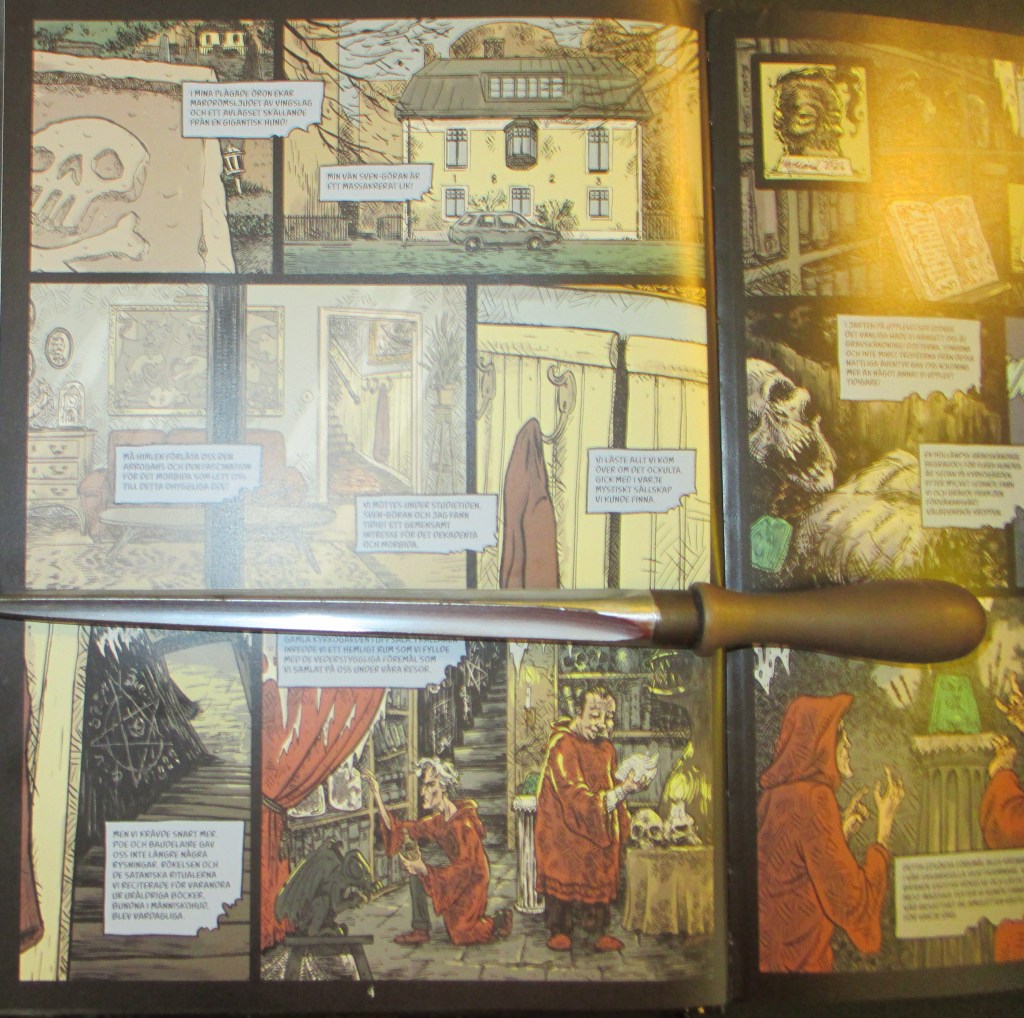
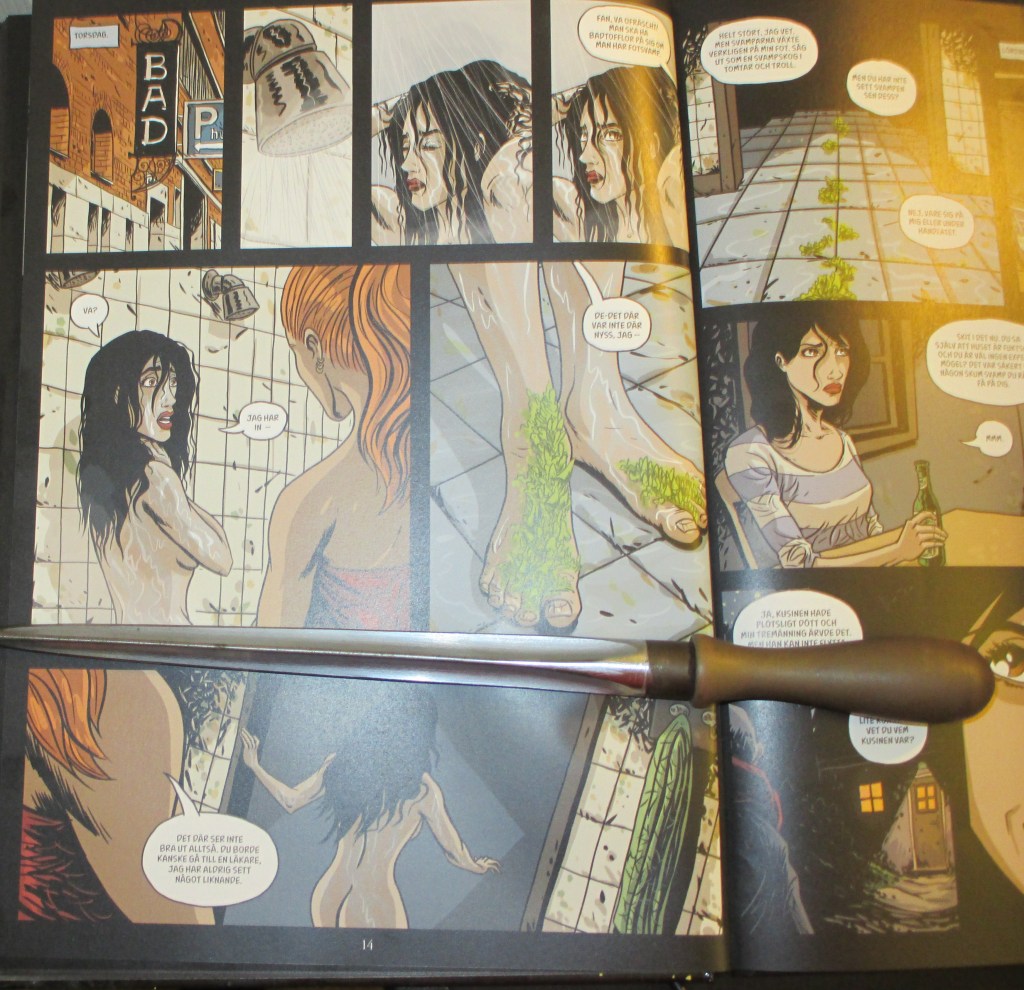
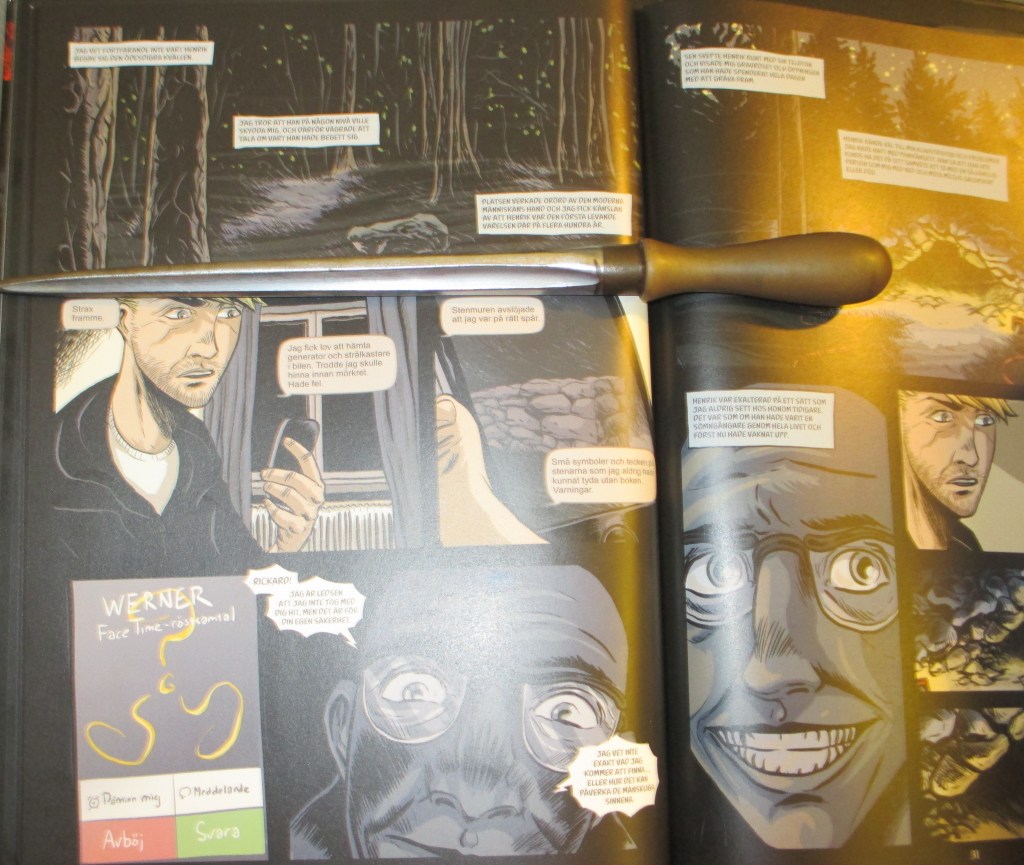


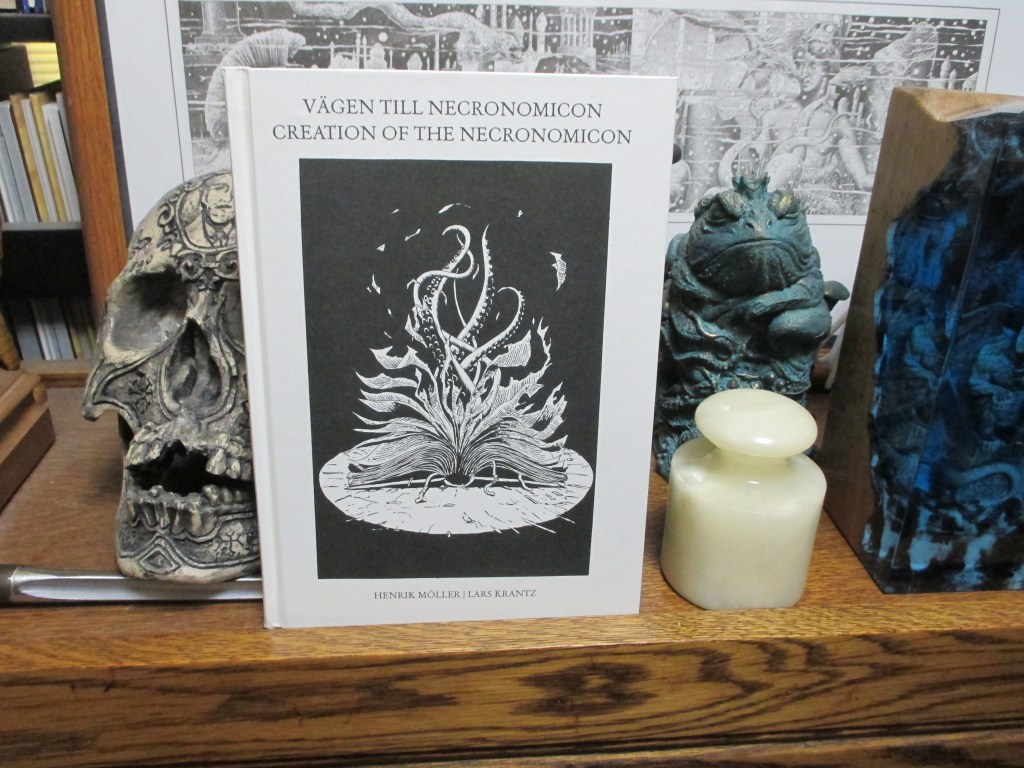
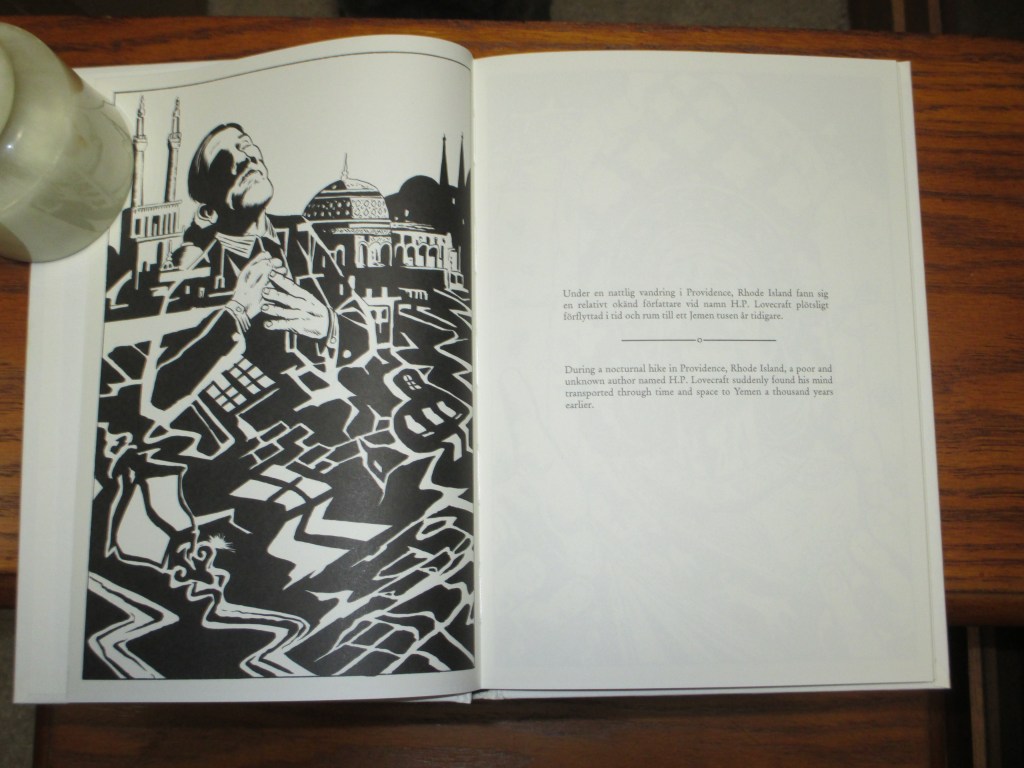
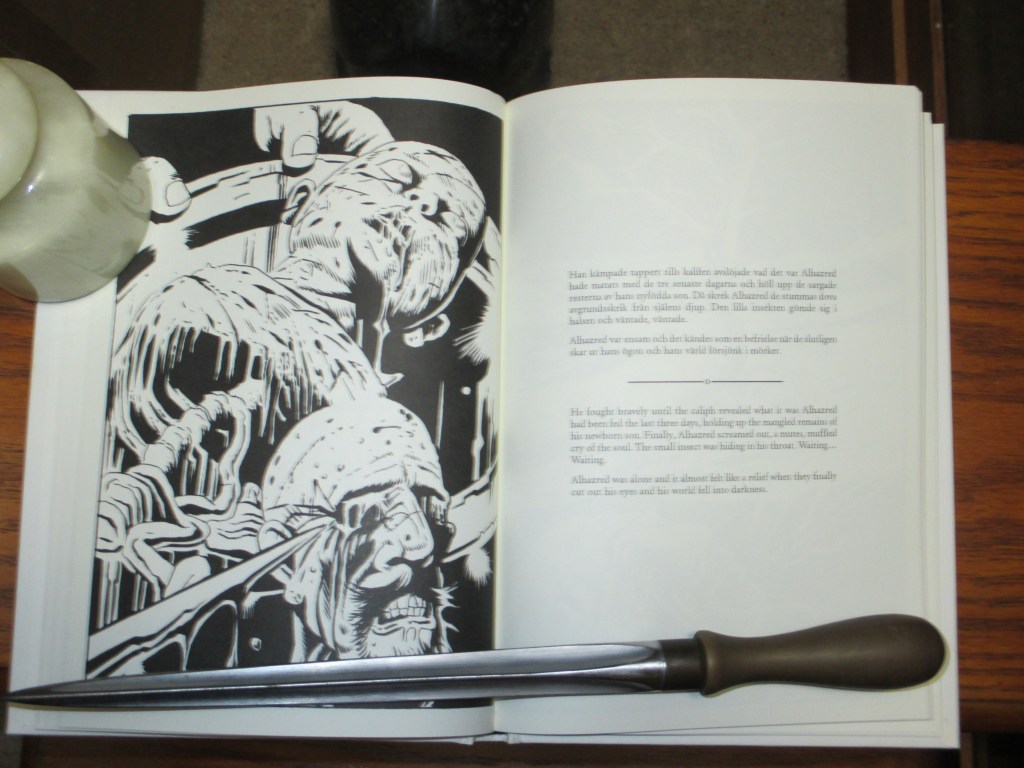
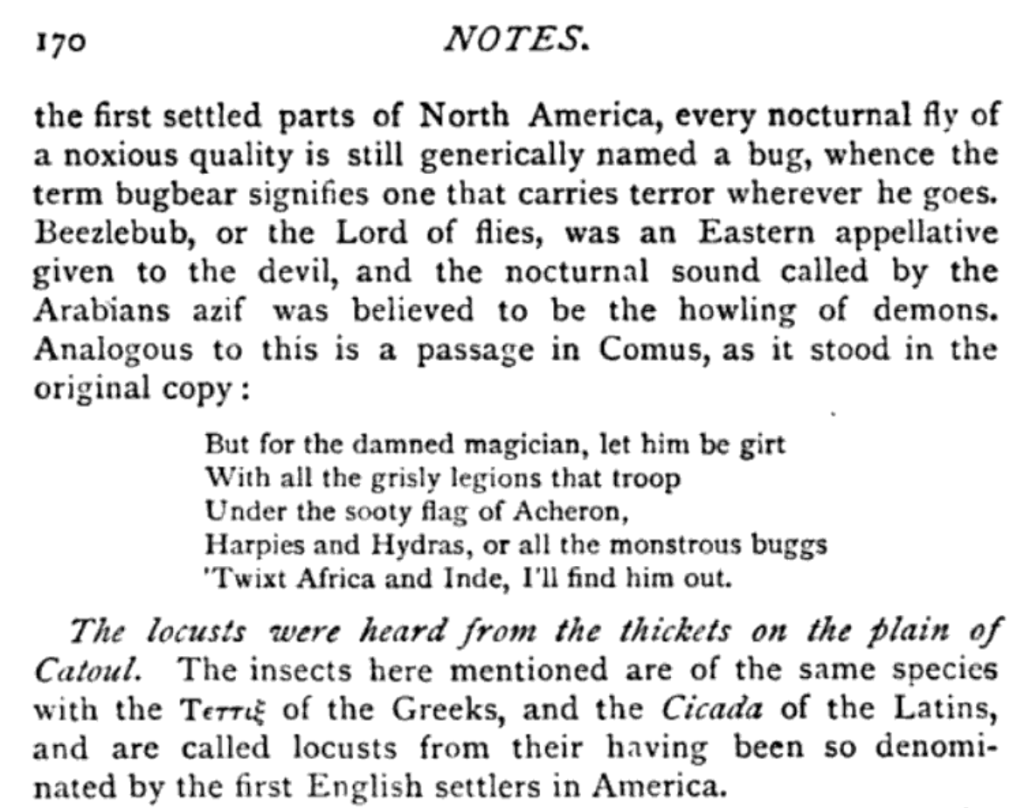
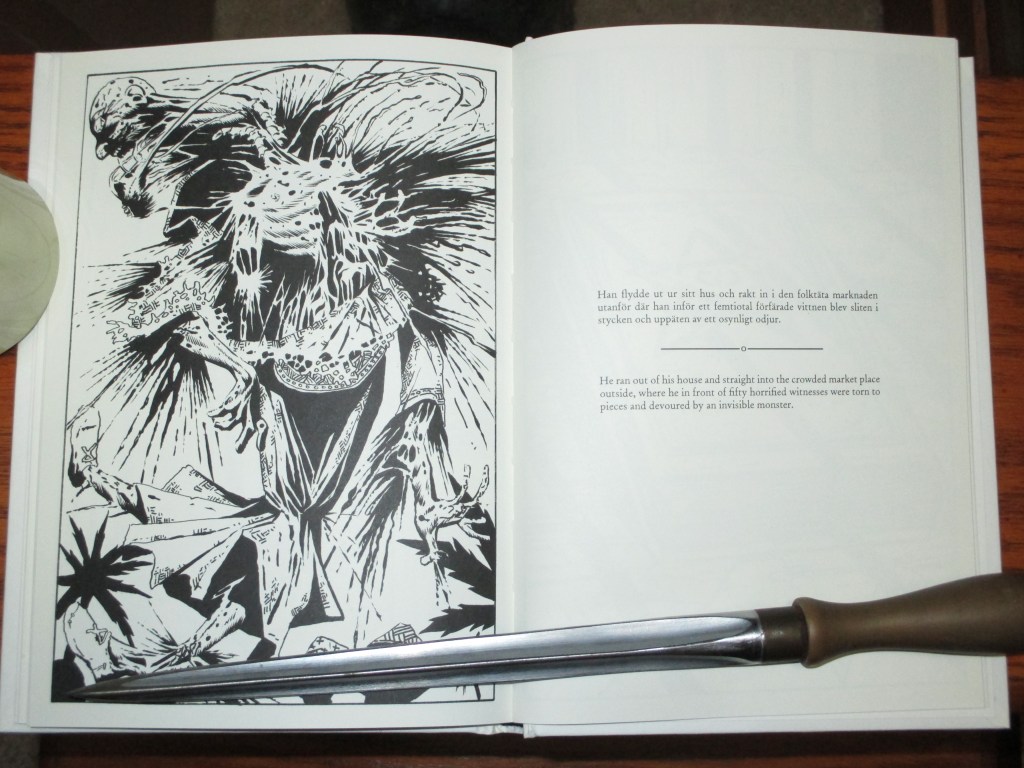
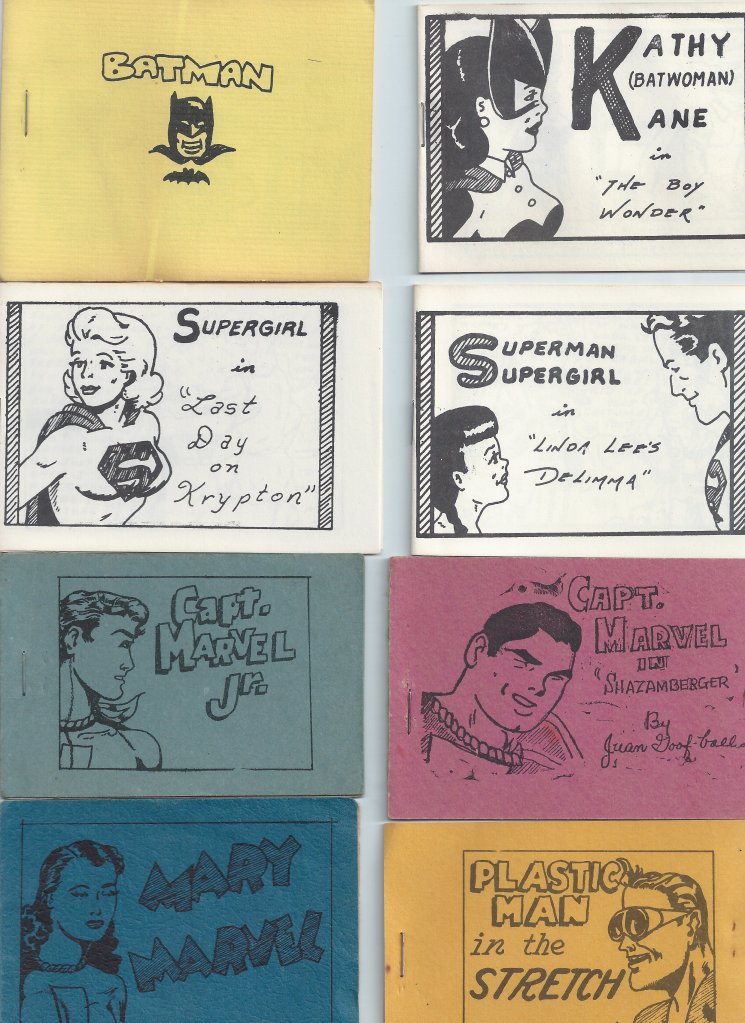
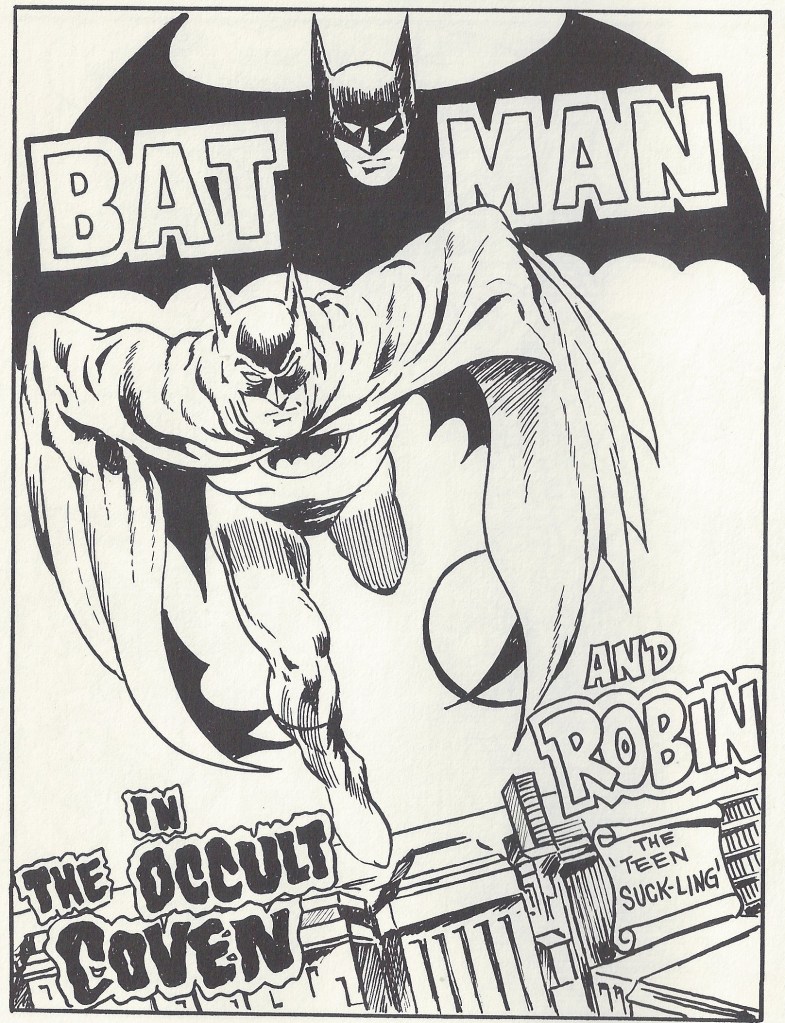
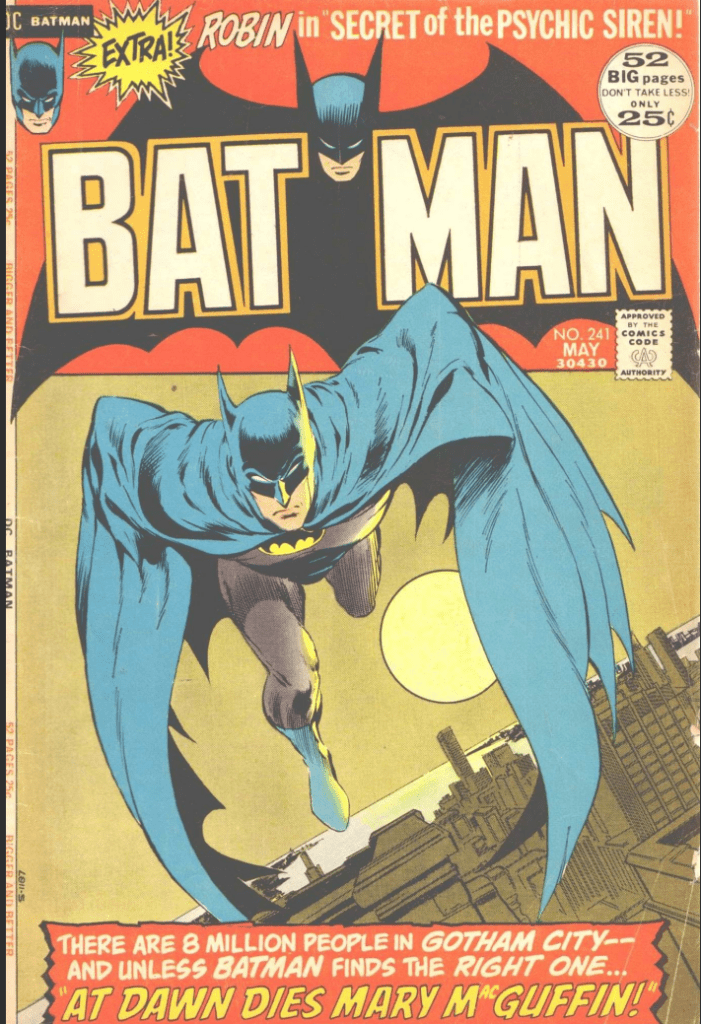
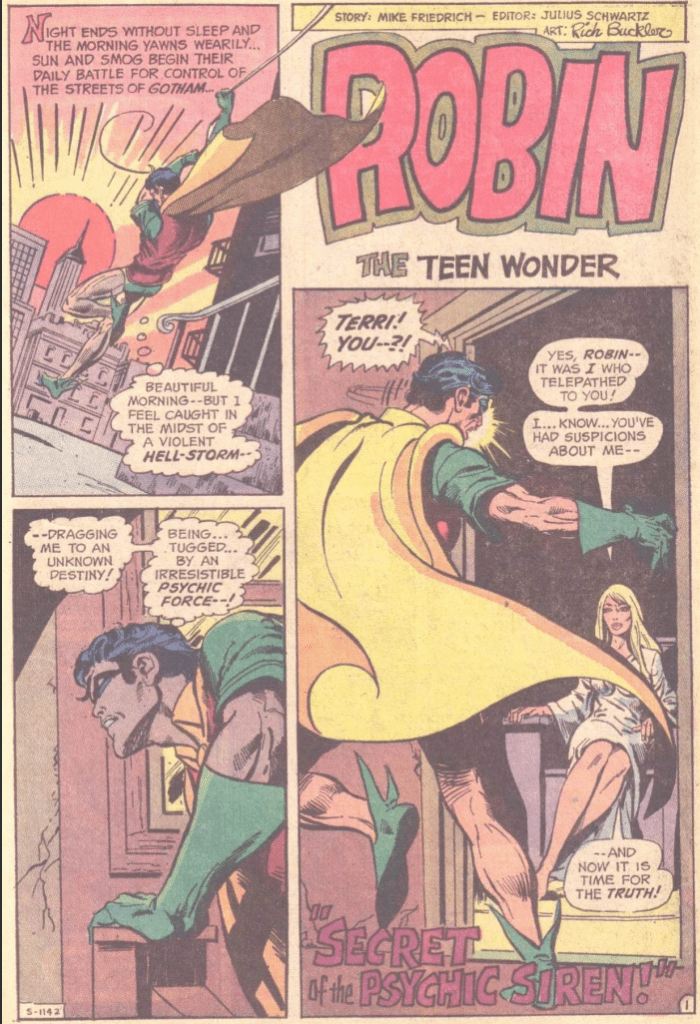
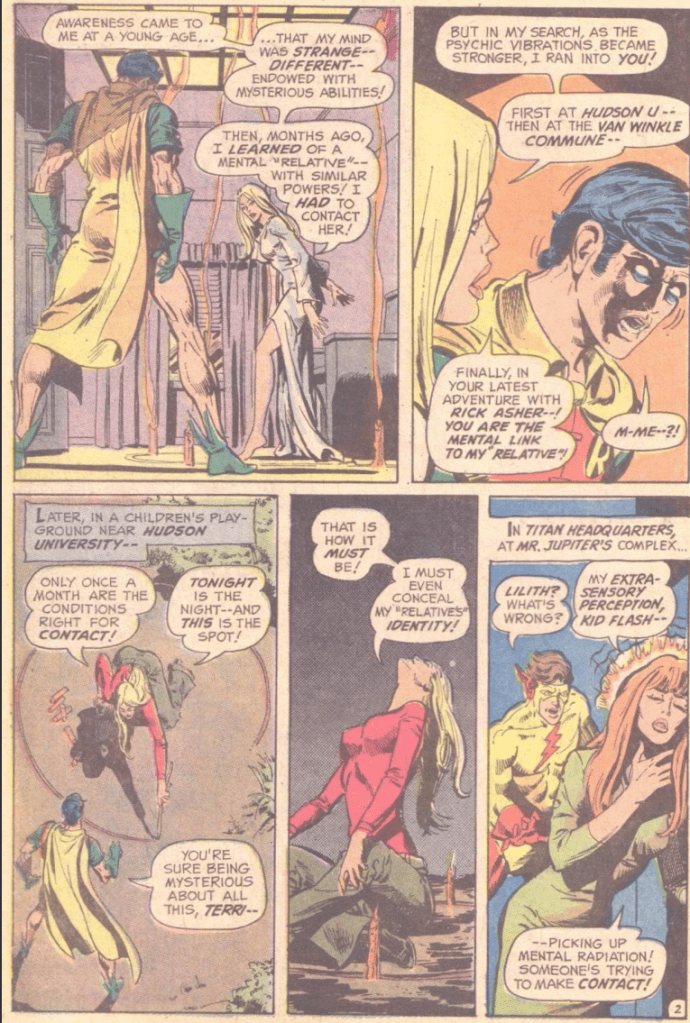
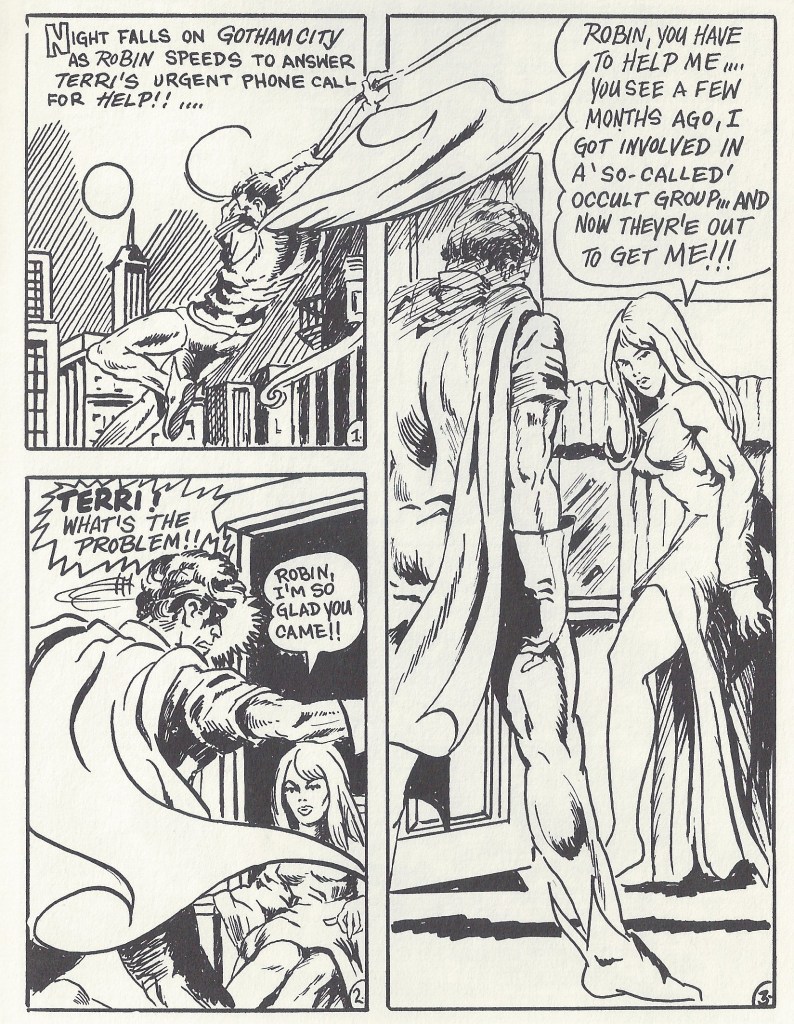
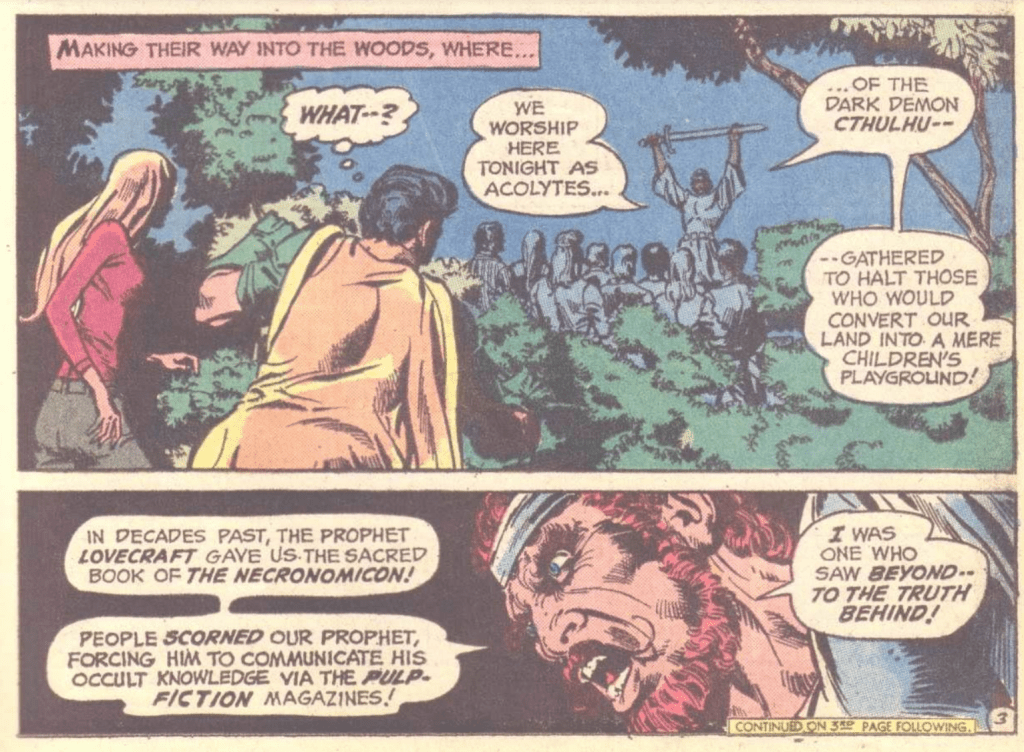
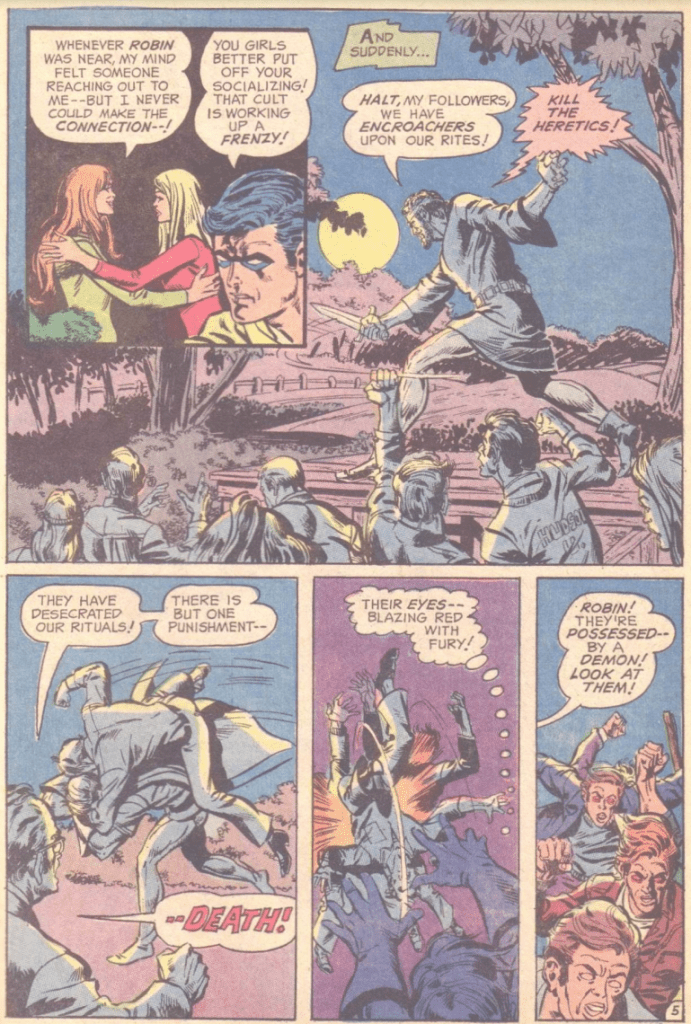
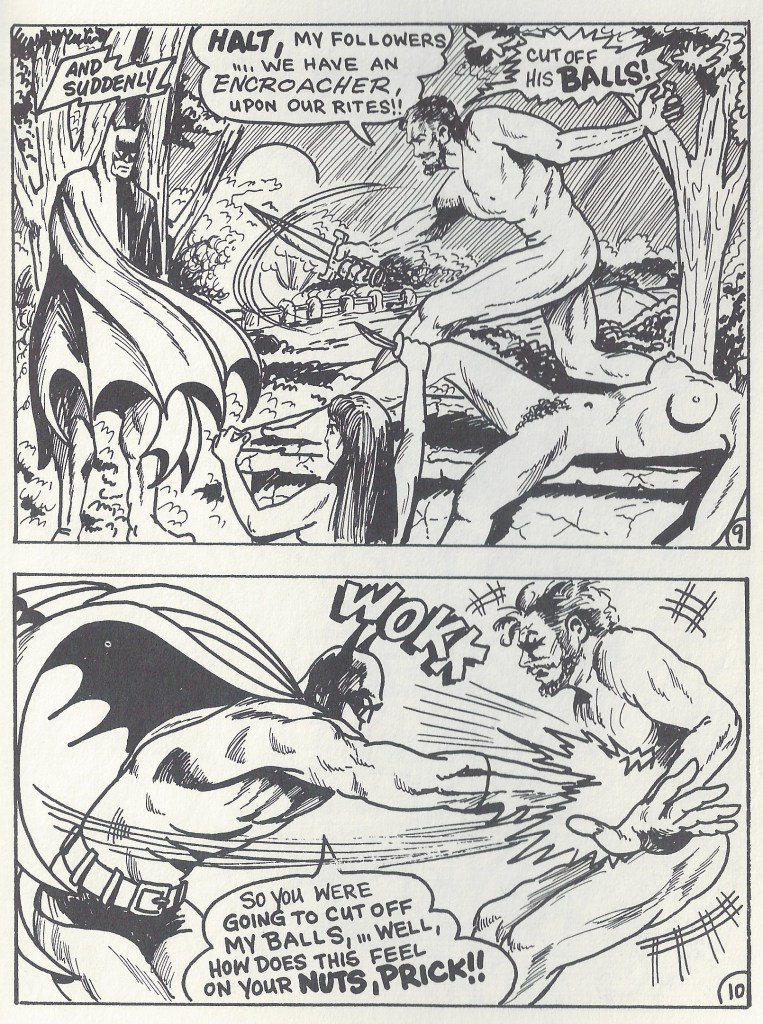


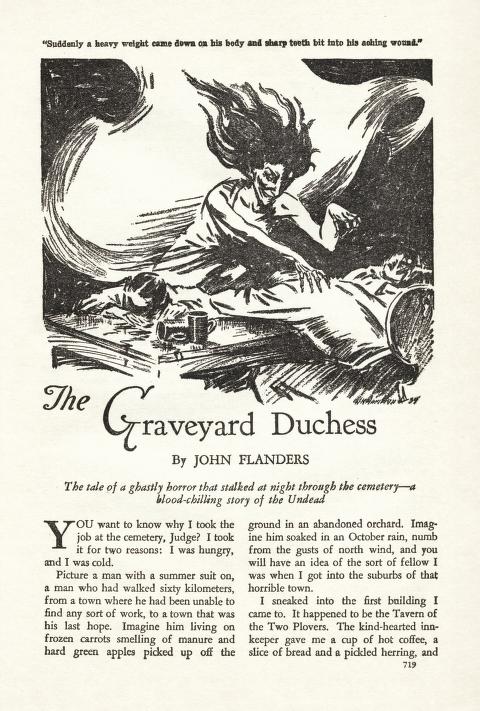
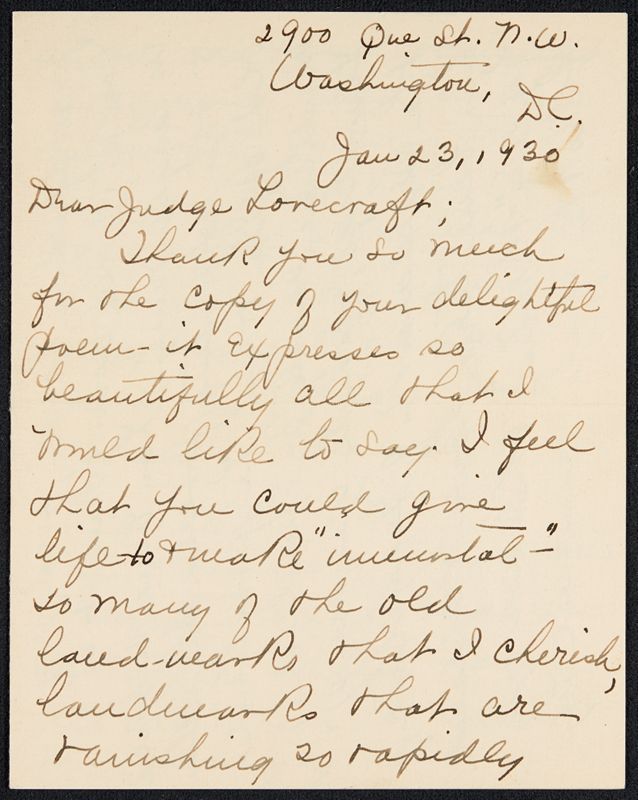
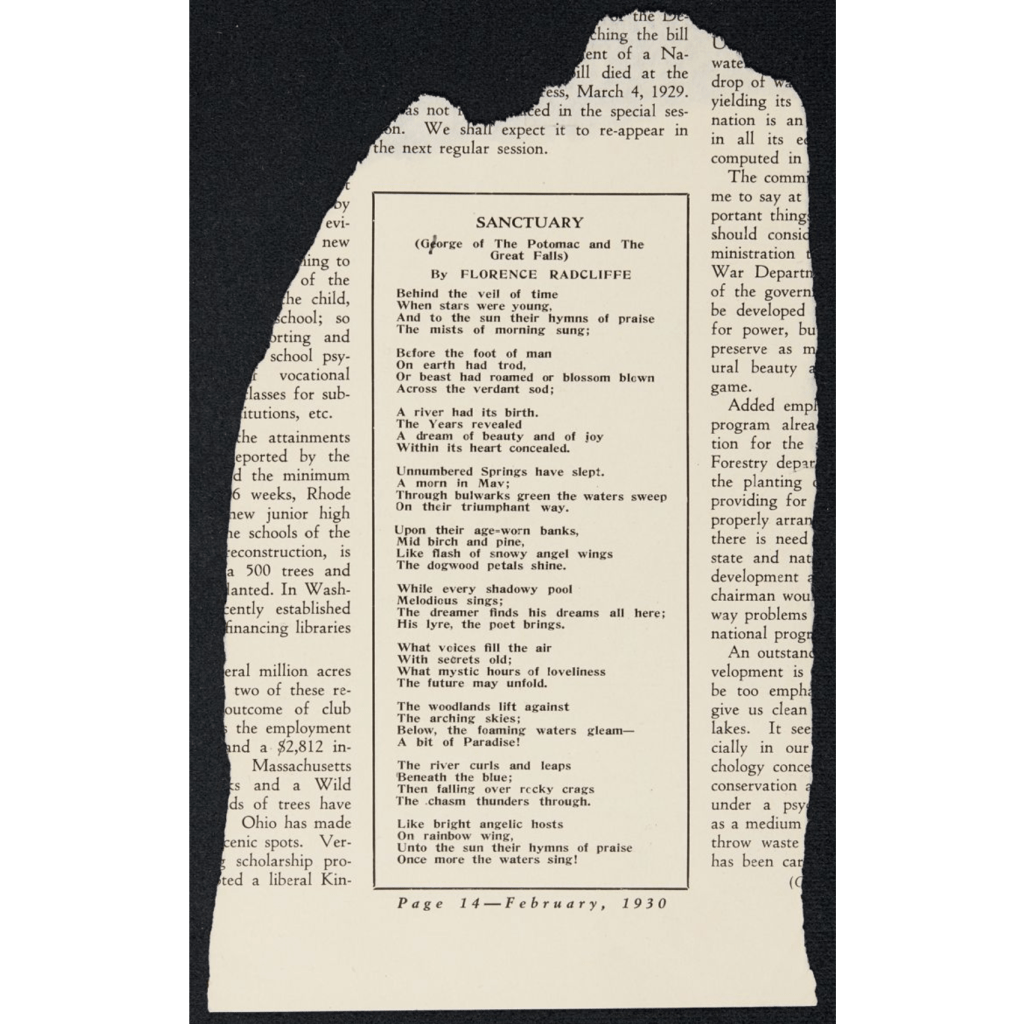
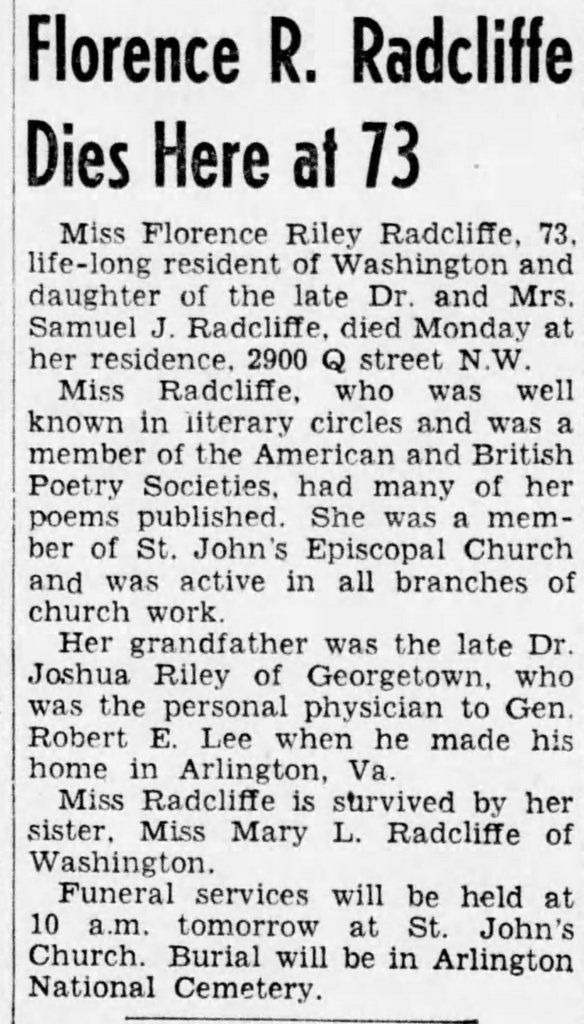


 Deep Cuts in a Lovecraftian Vein