Becoming a Cthulhuian Overlord (成为克苏鲁神主) began as a novel by Yi Jian San Lian (一键三连) published on China Literature, which was then adapted in 2020 into a manhua by An Zhu (渚谙, writing) and Na Ti Maeo (拿铁猫, illustration), produced by Kaite Dongman(凯特动漫, Cat Comics), which has been translated into English by Sangria and is now being serialized online at Tapas.
This serial work falls into the genre of isekai: a very broad and currently popular genre in many media that involves an individual who becomes displaced from the real world to another world. The nature of the displacement and the other world are major flavors for the genre; the protagonist might die, for example, and be reincarnated into a fantasy world that follows rules like a tabletop roleplaying game such as Dungeons & Dragons or an equivalent video game like World of Warcraft. Or they might fall through a portal and be lost in the distant past, transported to an alien world, etc.
If this sounds a bit overbroad, it’s because isekai is a term for a mode of fantasy fiction that existed long before the term itself existed. In A Connecticut Yankee in King Arthur’s Court (1889), a blow to the head sends the Boss back to the Dark Ages Europe; in A Princess of Mars(1912) former Confederate soldier John Carter is transported bodily to a fantastic version of Mars. Lovecraft, Robert E. Howard, and others were familiar with the basic idea; one might consider The Dream-Quest of Unknown Kadatha kind of isekai, and in “The Challenge from Beyond” George Campbell is transposed into the body of an alien worm—and decides to conquer the alien planet, which is a very appropriate approach for a typical isekai protagonist. These portal fantasies bridge a gap between low fantasy (fantasy fiction set in the mundane world or realistic setting) and high fantasy (fantasy fiction set in a world separate from the real world).
Which is all meat for argument for those who like to argue labels. In Becoming a Cthulhuian Overlord, the premise is that the unnamed protagonist dies in a car accident with his pregnant wife, and has a mysterious supernatural encounter with a certain messenger…
…and reincarnates as Qi Su, an orphaned high school student in Lua City, which superficially looks much like the mundane world. Except now he can see a variety of shadowy and horrific phantoms that he has to pretend not to see, or else they’ll eat him.
If that doesn’t sound very Lovecraftian—it is not, at least at first. Serialized graphic fiction are often paced relatively slowly at first, and this has all the hallmarks of a slow-burn comic. There isn’t a lot of exposition to begin with, and a great deal of the storytelling takes place through the art, which takes advantage of the format to do long-scrolling dynamic shots in odd perspectives. Some of the art is quite effective, even if it obviously draws inspiration from works like Parasyte.
The odd tentacled entity aside, the first few chapters of Becoming a Cthulhuian Overlord are very by-the-numbers stuff, drawing strongly on the basic ideas of Yu Yu Hakusho and similar works, riffing off of Buddhism and traditional exorcism practices, with a few twists and turns. Our protagonist is back in high school, dealing with supernatural threats, teenage romances, etc. However, Qi Su doesn’t know the rules of this new world, and that ignorance helps to build a bit of tension as he learns the ropes.
Readers expecting something more overtly Lovecraftian from the title should pause and reconsider their assumptions. Just as many American and European writers attempt to assimilate the Cthulhu Mythos into a fundamentally Christian worldview, associating Cthulhu and co. with Satanism, non-Western cultures tend to fold the Mythos into their own mythopoetic framework. So for Ultraman Tiga, Ghatanathoa is interpreted as a kaiju of great power; for Soul Eater, the Great Old Ones are extremely powerful beings of madness with great spiritual powers. Becoming a Cthulhuian Overlord, working as it does within a very broadly Buddhist and Chinese folk religion framework, is centered around ghosts and exorcism, with the ghosts tending to have a particular Lovecraftian flavor…but it also develops its own unique metaphysics on top of that, tossing in pop culture borrowings to create a kind of a la carte occultism.
For example, in chapter 13 Qi Su gets Gordon Freeman‘s crowbar.
Which is a long way to say: don’t get too hung up on how Lovecraft wrote things. Different creators incorporate or reference his material differently, and sometimes in minimal or unexpected ways.
John Constantine makes an unofficial cameo in Episode 12!
As of the time of this writing, the whole manhua (over 200 episodes) has not yet been translated and released in English, so it continues to be a very slow burn, building up its world, introducing new characters, etc. Hopefully, the translation will actually be completed; some translations of serial works tend to stop before the end if the interest isn’t there for it, leaving the work incomplete, as happened with Apocalypse Zero.
For readers interested, the first chapters are free to read on Tapas, with updates every Monday.
The novel The Cthulhu Helix (2023) by Umehara Katsufumi (梅原克文) was originally published in Japanese in 1993 as 二重螺旋の悪魔 (“Double Helix Devil”); it has been translated into English by Jim Hubbert and published by Kurodahan Press, whose other publications include the Lairs of the Hidden Gods series of Japanese Cthulhu Mythos short fiction translated into English and West of Innsmouth: A Cthulhu Western (2021) by Kikuchi Hideyuki (菊地 秀行).
When H. P. Lovecraft wrote weird fiction in the 1920s and 1930s, the walls between science fiction and fantasy were practically non-existent. While a few arch-fans like Forrest J. Ackermann argued the point, in practice the supernatural and super-science were, from a narrative perspective, utterly interchangeable and compatible. C. L. Moore’s Northwest Smith fought alien gods on Mars; Robert E. Howard’s Conan wandered through ancient cities lit by radium-lamps; and H. P. Lovecraft’s Fungi from Yuggoth raised their buzzing voices in worship to Shub-Niggurath and the Black Goat of the Woods. There is no hard delineation between Lovecraft’s fantasy and science fiction stories.
If viewed through the lens of pulp fiction of his day, the science fiction elements in Lovecraft’s stories are exactly in tune with the kinds of pulp sci fi that showed up in Weird Tales. “From Beyond” is ultimately a gadget story and a gland story, brain-stealing crustacean aliens featured in Edmond Hamilton’s “The Shot from Saturn” (WT October 1931) not long after Lovecraft’s own “The Whisperer in Darkness” (WT August 1931) introduced the Mi-Go and their brain canisters. What differed with Lovecraft was his approach—Hamilton leaned into the adventurous interpretation of an alien invasion from another planet, but Lovecraft’s extraterrestrials were profoundly weirder, less explicable, not exactly less hostile but less prone to the even-then hackneyed tropes which H. G. Wells had covered so well with The War of the Worlds (1898).
Post-Lovecraft, science fiction and fantasy continued to grow and diversify, sometimes locking themselves into genre cages and sometimes breaking out. The early ideas of science fiction as gadget stories and space opera—The Gernsback Continuum as William Gibson put it—gave way over time to different ideas. Science-fantasies like the Star Wars and Star Trek novels and the Man-Kzin Wars anthologies played with psychic powers in far futures and galaxies far away where space travel was the norm and multiple intelligent species and cultures interacted in an intergalactic community; others focused on sociological changes, dystopic futures, future wars. The science may have been hard or soft, but the emphasis generally shifted from bright shiny new tech and worn old plots to more human stories on the effects of technology on people, the social impact and implications of new ways to communicate and interact, the question of what it was to be human.
Which, in the late 80s, gelled into Cyberpunk—the ultimate forebear of all the dizzying array of “-punk” suffixes which would be affixed to many speculative fictions to come. Broadly, cyberpunk was high tech and low life, continuing many of the same fundamental speculative technologies and advancements that came out of previous science fiction, but seen through the lens of contemporary societal issues—megacorporations, pollution, the alienation that came with technology and greater bureaucratic control of life, global computer networks, personal augmentation with cyberware raising the question of what it meant to be human, etc.
H. P. Lovecraft had written about what might, in hindsight, be called a megacorp in “In the Walls of Eryx” with Kenneth Sterling, but there was no down-and-out protagonist, no career criminals, no street to find its own uses for things. The Mi-Go perfected putting a brain in a canister, but there was no global Matrix to plug those brains into, to play out the games of the Matrix films. The ingredients for cyberpunk fiction using elements of the Mythos were there from the start—but it took a while for Cthulhupunk to manifest itself.
The Cthulhu Helix is one of the first Cthulhu Mythos biopunk novels (The Queen of K’n-yan (2008) by Asamatsu Ken (朝松健) was published around the same time in Japan, but made it into English translation first). It is very much a 90s product: fast-paced, set in a near future where corporate greed overcomes moral considerations, with a strong militaristic sci-fi undercurrent, and media-savvy some otaku-grade Easter eggs in reference to popular culture:
Things got weird. The monkey started ripping the cage apart. There was s ound of metal tearing. The Star of the show uttered a strange cry. His hairy body was channeling the spirit of Hercules.
“What the hell did you do to him?”
“That lead in the back of his skull is an on/off switch. The main players are micro-robots implanted in his hypothalamus. NCS-131 microbots.” She pointed to the macaque. “His name is Son Goku.”
Umehara Katsufumi (梅原克文), trans. Jim Hubbard, The Cthulhu Helix (2023) 125
The media-savviness is at the heart of the novel. While the aesthetic is something like Resident Evil (1996) or anime like Lily C.A.T. (1987), the Lovecraftian flavor is consciously a metaphor for the horror that’s been uncovered lurking in human DNA. There are no Necronomicons for these territories, just an awareness of the tropes as they are being applied:
Until now we’d been using C—for Cthulhu—as a basket term for all of these monsters. But we’d been getting flak about the single letter, so they’d decided to switch to what everyone else was using: Great Old Ones. GO1 for short. Bureau C was still Bureau C. C for clean, as we told people who didn’t have clearance.
There was another new term for the Cthulhu mythos, for a new entity: the Elder God. Lovecraft’s Elder Gods have been the lords of the Great Old Ones. They had imprisoned the Great Old Ones in this and other dimensions after they rebelled against their masters.
Lovecraft’s characters were not what we were facing. The Cthulhu Mythos was fiction, and any resemblance between it and the creatures we were battling was coincidence. No one knew anything about DNA or the intron regions in Lovecraft’s day. Still, he would’ve been astonished if he had known how close to reality his stories had come.
Umehara Katsufumi (梅原克文), trans. Jim Hubbard, The Cthulhu Helix (2023) 112-113
Using Lovecraft’s terminology and ideas without making his stories canon opened up a world of possibilities to reimagine and rework Lovecraft’s ideas into a contemporary syntax. In his day, Lovecraft had government agents raid Innsmouth, but 70+ years later the government response needed to shift to meet the needs and expectations of a new generation. Bureau C parallels the development of Delta Green for the Call of Cthulhu Roleplaying Game, the Laundry from Charles Stross’ The Laundry Files, and the Agency in Agents of Dreamland (2017) by Caitlín R. Kiernan and the rest of her Tinfoil Dossier series.
Which is why The Cthulhu Helix works as a Lovecraftian novel. The characters are all conscious of Lovecraft’s legacy, but for them it’s all shorthand and metaphor, a way to frame and discuss these complex ideas and relationships without getting bogged down in Elder Signs and other minutiae. The particular approach Umehara took is fairly Derlethian, but that’s not surprising considering when and where it was published.
A word on the translation: Jim Hubbert has done great service here in rendering very smoothly-flowing prose. It’s not always easy to keep a narrative comprehensible and moving in translation, but this reads very well, especially considering the occasional breaks in format and the potential for alphabet soup. Kudos on a job well done.
I meant to write Howard, but got interrupted, as happens. When I came back ‘How’ looked just fine on the page. it summed us up. Like: How did we ever get married? Blame the words, what we said and wrote to each other, the only thing we had in common. How did we ever think we would work it out? Those words again, mixed with pure blind optimism. How did we part? Without pain, as it should be.
I meant to write you before my news, but time just runs away sometimes. You did file the divorce papers? [crossed through]. I am now Mrs Doctor Nathaniel Davis.
She was born Sonia Haft Shafirkin to a Jewish couple in 1883 in the Russian Empire, modern-day Ukraine. At the age of 7, she immigrated to the United States of America. At age 16, she married another immigrant, Samuel Seckendorff, who changed his last name to Greene. By 1920 she was divorced, her first husband dead; she had given birth to a daughter and a son, the latter who died in infancy. Skill and hard work brought her success in her business, and amateur journalism had become a hobby and a way to improve her mind. In 1921, Sonia H. Greene met H. P. Lovecraft at an amateur journalist convention in Boston. Contact sparked correspondence, further meetings, collaboration on stories and amateur journals, and then, in 1924, she married again.
The Lovecrafts’ marriage did not last long, and only Sonia gives a full account of their relationship. They separated, and finally filed for divorce…though Howard did not sign the papers in the end, either out of ignorance or some other unguessed reason, so that when Sonia married for a third time, to Dr. Nathaniel Davis in 1936, she thought she was free to do so.
Sonia’s marriage to H. P. Lovecraft has become part of his myth. It was during a brief but incredibly formative and important part of his life, and he spoke so little of her afterward that knowledge of his marriage was scanty among many of his correspondents. Details about their married life, and the mysterious Mrs. Lovecraft, did not begin to emerge into the public consciousness until many years after his death, when journalist Winfield Townley Scott finally made contact with her after publishing a lengthy biographical piece on Lovecraft.
The life story of Sonia H. Davis neither began nor ended with H. P. Lovecraft; and her full life story is given in her own words in her forthcoming autobiography Two Hearts That Beat As One, edited by Monica Wasserman. Yet the relative lack of information on her, the focus on her marriage with Lovecraft, and the way biographers like L. Sprague de Camp have presented Sonia in their works on Lovecraft have strongly skewed the image of who Sonia was as a person.
Arcade #3 (Fall 1975) – George Kuchar
In Arcade #3 (Fall 1975) for example, George Kuchar’s biographical comic on Sonia drew heavily on L. Sprague de Camp’s Lovecraft: A Biography (19750. Sonia’s portrayal shows her as sexually aggressive compared to the timid Lovecraft, obsessed with money, a brief whirlwind romance in the life a neurotic and impractical horror-writer. While Kuchar is conscientious to reproduce some of Lovecraft’s words and feelings, with Sonia he takes more liberties, putting words and ideas into her mouth she never uttered.
Very few writers think to present matters from Sonia’s point of view.
In this tradition, “Wife of Mr. Lovecraft” by Lucy Essex is a bit different than most. The short story takes the form of a series of postcards Sonia sent to her ex-husband while on a cruise (no dates are given, but we can assume this was meant to be a honeymoon trip to the South Pacific that never happened in real life). Told from Sonia’s perspective, it shows more than a modicum of research, even with the occasional touch of invention and the odd omission or two. The story is more wistful than weird, although it flirts with weirdness.
It had tentacles, or stubs of limbs, and one staring gold eye, with a slot of a pupil, like a goat’s. […] There was something weirdly cute about it, like you get with kittens or pups. When I thought that, I remembered our baby, that story we wrote together, about horror on Martin’s Beach. I said: “Throw it back, it’s a juvenile.”
Many writers and artists have portrayed Sonia in one form or another. Nearly every biographical comic of Lovecraft includes her at some point, and some biographical stories written after her memoir of their marriage came out, like Lovecraft’s Book (1985) by Richard Lupoff, include her as a character. Yet rarely is Sonia fleshed out. Relateable. There’s something refreshing about the portrayal of Sonia as someone…human.
Not a stereotype of a Jewish emigre or domineering wife, nor a fantastic succubus out to drain Lovecraft dry. Not someone defined by Lovecraft at all. Sonia had her own life, before and after Lovecraft, and she lived that life. The tide of their lives drew them together, and eventually bore them apart. Sussex seeks a kind of closure here which we mere readers never really got. After Sonia returned from Europe, the references in Lovecraft’s letters just peter out…and Sonia’s own account of events after that has long been unpublished. The publication of Sonia’s autobiography will, hopefully, go a long way to rectify that oversight.
“Wife to Mr. Lovecraft” by Lucy Sussex was published in Cthulhu Deep Down Under Vol. 1 (2017). It has not yet been reprinted.
She was born Edna Freida von der Heide in Manhattan on 15 September 1891, to Edward and Freida (Schler) von der Heide; her sister Eleanor came along two years later. By the time of the 1900 Federal census, her father was dead. By 1910, the small family had moved in with their uncle and aunt, William and Caroline Sprouls. It is not clear if Edna completed high school (later census records indicate only three years of high school), and at 18 she was already working as a “typewriter” (later census records gave her profession as typographer or stenographer) and she began what would be a decades-long career as an amateur journalist, publishing her own amateur journals such as Inspiration.
Edna von der Heide could write. She appears to have been recruited for amateur journalism in 1909, and for the next five decades won a bouquet of laureateships and held most of the offices at the National Amateur Press Association. In 1914 she was appointed as Official Editor for NAPA, only the third woman to hold that office, and was elected to that office in 1915; although she resigned almost immediately, details unclear as to why—amateur politics tend to be opaque from a distance of years.
In 1917, the United States declared war against Germany; a wave of anti-German sentiment swept the United States. Perhaps prudently, Edna and Eleanor changed their names from von der Heide to a more English-sounding “Hyde.” Friends in amateur journalism, however, continued to refer to Edna affectionately as “Vondy” until the end of her days.
By the way–I haven’t any feud with her, as you seem to have gathered. Whatever strafing there is, is all on her side—she cherishes a subtle dislike based on antipathetical temperament. I ceased hostilities when political expediency forced her to apologise for the nasty digs in Giddy Gazette & Inspiration. Her verse is, as you say, very good—though it isn’t the sort that interests me.
In 1921, Edna Hyde ran for President of the National Amateur Press Association against Elsie Dorothy Grant, Lovecraft’s preferred candidate; Edna and her faction lost. To Lovecraft, Edna was his “literary enemy” (LFF 1.139), but in all of his mentions of Vondy in his letters or editorials in amateur journals, there tended to be a great deal more respect than there was animosity.
Incidentally—the work of “Vondy” is of vastly greater merit; many of the lyrics in her book being as close to poetry as anything published in amateurdom. The trouble with her in old amateur days was that she published so much casual & mediocre verse in addition to the solid body of poignant specimens. Many critics—including myself—saw so much of these trivial items that they tended to underestimate her general output.
Miss Hyde’s reputation as a poet has caused her few stories to receive less attention than they deserve. In point of fact, they are among the best in the amateur press—the supply never being abundant. In this particular story the realism is the salient thing.
H. P. Lovecraft, “The Vivisector” in Wolverine #9 (March 1921), Collected Essays 1.275
On Hallowe’en 1924, Edna married fellow amateur Philip B. McDonald, and was known thereafter as Edna Hyde McDonald. They lived in the Bronx, at first on their own, and then later Eleanor joined them. Lovecraft and his wife Sonia may have seen them socially during the brief few years that they lived in New York together, at amateur gatherings or Blue Pencil Club meetings, but the evidence is a bit scanty.
In fact, there is relatively little information about Lovecraft and Vondy corresponding directly with one another, though we know they must have, either in public capacity when each held offices at NAPA, or conducting private amateur business like arranging memorial issues for fallen amateur journalists. However, there are two bits of data that support there was a correspondence.
The first is a quote from a letter from Lovecraft to Edna Hyde, undated but probably circa 1924:
Albert [Sandusky] has taken the trouble to dig out Lovecraft. And he has made me jealous of his findings. And to have Howard Lovecraft write me and say ‘Bless the child. He wields a curious influence over me, for who else could have taught me to chant with jocose abandon, the contemporary shortage of the noble banana’, is to have an admission of the feat that Albert has achieved with natural-selfness, what the rest of us have never taken trouble to attempt.
Lovecraft was referring to the popular song “Yes! We Have No Bananas” (1922), which he famously tried to play on the pipe organ at the First Baptist Church of America in Providence. So that is one instance where Vondy claimed Lovecraft wrote to her, but later on she would add that they carried on an entire correspondence.
This was one of several notes from the amateur journal Belette, where Vondy quipped and ruminated on memorials for her dead frenemy. This and much more on Vondy’s life, as well as some of her laureate-winning poetry and fiction, can be read in The Fossil #333, a special issue dedicated to her memory and with considerable research by Ken Faig, Jr. into her life and work. You can really see why Lovecraft was taken by some of her work, even if her poetry wasn’t always in his line.
That is, unfortunately, “it” as far as the Lovecraft-Vondy correspondence is concerned. No actual letters between the two are known to survive, there are almost no direct references to letters to Edna in Lovecraft’s published letters, and her address is not listed in Lovecraft’s 1937 diary. So we are left with Vondy’s own insistence that they did write to one another…and there’s not really any reason to doubt her word on the matter. As much as we may wish it, Lovecraft didn’t keep every scrap of paper that came his way, and rarely spoke of his correspondence with amateurs to his pulp friends, and vice versa, except in the rare instances when someone showed an interest. Edna herself fell into that category once…
I duly received the envelope which you forwarded from Mrs. McDonald, & which contained a cutting from the N. Y. World in which teh celebrated William Bolitho, discussing the cheap “pulp” magazines, chanced to allude to my W.T. effusions in not too patronising a manner. It was kind of Mrs. M. to send the thing—but I can’t resist enclosing the note which accompanied it, & which wound up with the perfect Hydeian touch of brooding hostility!
The piece was “Pulp Magazines” in the New York World (4 January 1930); Edna had recognized Lovecraft’s name and forwarded it on through Morton because she lacked Lovecraft’s address in Providence, but apparently couldn’t resist a witty note to go along with it. This might encapsulate the nature of their correspondence as it probably was: intermittent over the years, a combination of mutual respect and good-natured ribbing. Whatever else she was in her life, Edna was one of Lovecraft’s peers in amateur journalism—and they both knew it.
Addendum: Sean Donnelly, with access to Edna’s surviving correspondence, has uncovered more about her correspondence and relationship with Lovecraft: Edna Hyde McDonald: Her last letter to Lovecraft.
Jewish characters were rare in Weird Tales. While there were some stories with Jewish characters, such as “The Devil’s Pool” (1932) by Greye La Spina, that is the exception rather than the rule. Whether this was a reflection of the stories submitted or editorial fiat is impossible to determine; we know Jean Ray’s stories in Weird Taleshad the antisemitism removed before they were published in the magazine, and that might have been part of an unofficial policy…or just good business. After all many readers, writers, artists, and publishers in the pulp field were Jewish. No need to antagonize folks, even during an era when antisemitism was rife in the United States.
If Jewish characters were rare, Jewish culture was rarer. H. P. Lovecraft was dimly aware that Judaism was not a monolithic religion or heterogenous ethnic group, that there were sectarian differences and distinctions between populations, even if he was ignorant of the exact nature of those differences. For many folks reading Weird Tales, however, the ignorance would have been more profound. White, Anglo-American, Protestant Christian would have been the default cultural syntax for most, and the vast majority of weird fiction from the early 20th century was written from, and read in, that context.
So it isn’t terribly surprising that Lovecraft didn’t include many Jewish characters in his fiction—really, only a bookseller in “The Descendent”—and most of his contemporaries likewise didn’t do much with them (though see Conan and the Shemites: Robert E. Howard and Antisemitism). Thus, the first generation of Mythos fiction was both largely devoid of Jewish representation and of Jewish stereotypes and antisemitism. This absence tended to repeat itself in later generations: there are relatively few stories that are distinctly Mythos and also prominently feature Jewish characters or cultures. There are a number of Jewish authors of Cthulhu Mythos and Lovecraftian fiction, but almost no Jewish Cthulhu Mythos stories to speak of.
(Although I would be remiss if I failed to mention Edward M. Ederlac’s Merkabah Rider series, where an Hasidic gunslinger deals with Mythos threats in the Old West. Those are just plain fun.)
[“]They said if I took another oath, I would be able to understand all that gibbering, but I didn’t.”
“Jew aren’t supposed to take oaths,” I told him. “They’re too powerful. Always say, ‘Maybe, maybe, maybe.'”
So what would happen if a Jew came to Innsmouth? And not just any Jew, but an Orthodox Hasidic Jew of the Chabad movement—a traditionalist bringing Judaism to other Jewish people, a young rabbi dedicated to cultural outreach? It is an interesting setup, because Jewish religion and culture is such an absolute lacuna in Lovecraft’s “The Shadow over Innsmouth.” The Esoteric Order of Dagon has an absolute Old Testament flavor (“Dagon an’ Ashtoreth—Belial an’ Beëlzebub—Golden Caff an’ the idols o’ Canaan an’ the Philistines—Babylonish abominations—Mene, mene, tekel, upharsin—”), but in Lovecraft’s Innsmouth before the coming of the Deep Ones there was only a Baptist church, a Methodist church, a Congregationalist church, and a group of Freemasons; no Catholic church, no African-American Methodist-Episcopalian church, no synogogue. The Deep Ones moved in on the prototypical WASP space, but with no real indication of how or why they might interact with Jews or anyone else.
Which means that Marsha Morman had pretty much a blank slate when writing “The Chabad of Innsmouth.” Return to Innsmouth stories tend to be a bit frayed and outworn, like a familiar shirt worn until threadbare—if the reader has read Lovecraft’s original, they know most of the things that the protagonist is about to discover—and there’s certainly a good bit of that shmatte feeling here. The Cthulhu Mythos aspects of it in particular are so utterly familiar that they’re almost hackneyed; not really much innovation on Lovecraft’s original in that sense.
What works is the novel approach itself. Innsmouth, eighty-odd years after the event’s of Lovecraft’s story, has a new rabbi, trying to serve a small community, and…it’s nice to see that different perspective.
It was unwholesome to find someone so visually repellant. I was taught to look to the neshama—soul—of every person instead of their outsides. I was very ashamed as we hurried back to the car, Pavel’s smelly set of keys in hand.
Judaism and the Esoteric Order of Dagon are so alien to one another that there isn’t a lot of real interaction. The rabbi and his charges, ironically, can only really categorize the cult through the lens of Christian saints, Satanic cults, and finally the stories of the old Philistine god from the tanakh. We never get the Dagonite perspective on the Chabad house at all, except as outsiders intruding into business they don’t understand. The cultural clash and failure of understanding on both sides is a bit fascinating, and it would have been nice to see more details on that…but that might have killed the pacing. The darker elements of the plot are reminicent of “Mail Order Bride” (1999) by Ann K. Schwader, and “The Chabad of Innsmouth” slides surprisingly well into the broader cycle of Innsmouth stories.
Not everything works. The ending feels more than a bit rushed, and the geography is also a bit ludicrous; Lovecraft put Innsmouth in Essex County, north of Boston, while Morman puts it south of Boston, somewhere around Cape Cod, but that’s a quibble. A few entries from the perspective of the protagonist’s wife, the shalucha, detailing her experience of Innsmouth, might have gone a long way to develop the atmosphere. It’s not really a horror story, or at least the rabbi doesn’t know they’ve stumbled into a horror story, until near the very end, so there is less tension built up before the climax than maybe there should be.
Overall, however, Marsha Morman definitely fulfilled the premise. Readers get something that they rarely, if ever, get anywhere else; the Mythos expands a little, takes on a new dimension, and maybe a new perspective gets placed on an old story. Most intruiging of all, this is ultimately the story about new beginnings, not endings. The chabad house in Innsmouth is still standing at the end, the small community is still there…and the door is open for more stories.
“The Chabad of Innsmouth” by Martha Morman was published in King David and the Spiders from Mars (2014, Dybbuk Press). It has not yet been reprinted.
Have you ever heard of the Necronomicon? No? That’s probably because you’ve led a normal life…a life in which that dreaded encyclopedia of evil has never entered…
1953. The war was over. On the magazine racks, brightly-colored comic books, eager to catch the eye and earn the dimes of children and adults alike. Romances, westerns, a scattering of super-heroes, crime, science fiction, and horror. The pulp magazines are dying, fewer of them on the stands every month, but the comic books are lurid and varied, each outfit competing with the other.
Charlton Comics was a latecomer to the field of horror comics. Their most notable entry was The Thing, a horror anthology comic consciously modeled on EC’s Tales from the Crypt, launched in February 1952 and lasted 17 issues, ending in November 1954; today most notable for the artistic talents of a young Steve Ditko in the later issues. Under the editorship of Al Fago, The Thing sought to distinguish itself in a crowded field with low page rates and relatively lax editorial oversight, with the hope this artistic freedom would provide solid stories and provocative artwork—and unfortunately for them, they succeeded in drawing attention to themselves, though not the kind they wanted. (The Charlton Companion48, 52-4)
In The Thing #11, released in November 1953. “Beyond the Past” was a short comic in the middle of the issue, only 4 pages. Artist Lou Morales signed the first page, but the writer, letterer, etc. are uncredited, which was typical. Comics in the 50s were often churned out swiftly, in workshop fashion, and individual creators were not always credited. The other stories in the issue (and many issues before and after) were written by Carl Memling, and he may be responsible for the script on “Beyond the Past” as well.
The story itself is relatively direct and minor: an old professor studies the Necronomicon, mumbles an incantation (“Xnapantha..xnapnatha..Chrtlu..xmondii…”), and accidentally calls up that which he cannot put down. Lovecraft had many fans among the early horror comics, as evidenced by “Baby… It’s Cold Inside!” in Vault of Horror #17 (1951), and “Portrait of Death” (1952) in Weird Terror #1 (1952). For the most part, this would be classed as forgettable filler, but for two things.
For one, “Beyond the Past” is an early appearance of the Necronomicon in a comic book. For two, it caught the attention of Fredric Wertham, and became a footnote in the moral panic that led, ultimately, to the institution of the Comics Code Authority and the vanishing of horror comics from the shelves in the United States and other countries.
The Thing, No. 11. Two young people cook and eat an old woman. . . a man hears his own limbs being wrenched from his body by a 30ft. octopus . . a creature called a Necronomicon drinks a man’s blood and devours his flesh.
Keith Waterhouse focused on imported American horror comics and described a handful of issues in a sensationalist style. Never mind the issues he rants about had likely been off the stands (in the United States, at least) for months; and that he could hardly have read them very carefully if he mistook the Necronomicon for the blood-thirsty monster Xnapantha the professor had summoned. No one was likely to fact-check him.
Someone in the United States, however, also read Waterhouse’s article.
Do you know what a necronomicon is? Probably not. But for thousands of children this is part of their education. They know that a necronomicon is a creature that, of course, drinks people’s blood and eats their flesh.
By 1955, Wertham had won. In April 1954 his book Seduction of the Innocent had stirred a moral panic in the United States and abroad to the highest level, he testified before the Senate Subcommittee on Juvenile Delinquency in April and June, and in September the collective comic book publishers in the United States formed the Comics Code Authority, censoring themselves to stave off government interference. Crime and horror comics vanished from the newsstands, and would have a ripple effect around the world, starting similar moral panics in the United Kingdom and other countries.
Yet Wertham continued to campaign against the deleterious influence of comic books on the youth. Thanks to the research of Carol Tilley, we now know that Wertham faked his research, distorted facts and figures to match his narrative. What most folks don’t acknowledge is that Wertham didn’t stop. He certainly wasn’t above reusing Waterhouse’s garbled idea of what a Necronomicon was to his own benefit.
Wertham used the leading question about the Necronomicon more than once; a 1954 article titled “The curse of the comic books” appeared in the journal Religious Education Vol. 49, No. 6 a few months prior with essentially the same opening, and Wertham may have reused it elsewhere.
There is no surprise in this case that Wertham got the details wrong; there are numerous examples in Seduction of the Innocent where his apparent encyclopedic knowledge of comic characters and plots is shown to be superficial at best. What’s surprising is how he got ahold of a British newspaper article—possibly through a clipping service—and how swiftly and avidly he seized on the word Necronomicon, apparently in complete ignorance of its provenance.
Like a weird game of telephone, the misconception about the Necronomicon, now totally separated from its source material, continued to promulgate through the web of concerned citizens.
Dear Parents: “Do you know what a necronomicon is? Probably not.[“]
Buckley depended on Wertham’s integrity as a scholar; she took his article as fact as she clutched her metaphorical pearls and told parents to worry about what their kids might pick up down at the corner drug store or newspaper stand. Wertham depended on Waterhouse’s journalistic integrity, that the reporter had gotten his facts correct. Neither of them bothered to investigate for themselves, any more than Lou Morales picked up an Arkham House book to confirm whether it was supposed to be “Chrtlu” or “Cthulhu” in the incantation.
Alas, Wertham’s error would remain largely unknown outside of fannish circles.
“Beyond the Past,” like many of the stories from The Thing, has relished in relative obscurity. Now in the public domain, it was finally reprinted in Haunted Horror #25 (2016, IDW), and in rougher form in The Giant Readers Thing (2019, Gwandanaland Comics), but the whole story can be read for free at Comic Book Plus.
Addendum: A sharp-eyed reader pointed out that while this might be one of the earliest comic appearances of the Necronomicon by name, the story “Dr. Styx” in Treasure Comics #2 (Aug 1945) includes the writings of the mad Arab Abdul Alhazred. Read G. W. Thomas’ article on the story here. The Necronomicon also featured in “The Black Arts” in Weird Fantasy #14 (Jul-Aug 1950).
This review deals with a work of pornography, and the history of erotic art and writing. As part of this review, selected images with depictions of genitalia and/or sexually explicit contact will be displayed. As such, please be advised before reading further.
John Cleland, immersed in the clutches of the law, under circumstances which would have extinguished the fire of genius in any ordinary man, wrote himself out of the poor debtor’s prison and into everlasting fame through his immortal romance The Memoirs of Fanny Hill.
Its extraordinary success brought the attention of the authorities to his work and while condemning it for distribution, they recognized its merit, by granting Cleland a pension, stipulating however that the payment of the pension would cease should he produce any other work of the free nature of Fanny Hill.
These circumstances being of common knowledge, few except the indefatigable bibliophile have attempted to seek out and preserve other works than the romance.
It is however a fact that he did write other works and one of his best The Amatory Adventures of a Surgeon has survived the vandalism of the censor.
In this work Cleland shows himself as the pioneer in the realms of psychology and his keen interpretation of the real impulses of the human mind, prompted all its actions as it is by the sex urge, was one of the early incentives which led to the dvelopment of the present school of writers on the sexual question.
He was one of the first to recognize the value of De Sade in the study of mental vagaries and his reference to Justine or the Misfortune of Virtue in this work, led to the first English translation and general interst afterwards awakened in Sadism.
The text in this edition follows exactly the edition of Rotterdam which is a precise reprint of the original.
A. Machen, “Introduction” in The Amatory Experiences of a Surgeon (undated edition)
John Cleland was the 18th century English novelist who famously wrote Fanny Hill: or, the Memoirs of a Woman of Pleasure (1748). The author of The Amatory Experiences of a Surgeon, however, was James Campbell Reddie, a 19th-century Scottish writer of pornography, who used the pseudonym “James Campbell.” In the 1800s, the appetite for sexually-explicit media was no less than today, but the consequences of its production and sale were more severe; pseudonyms were not unknown, and doctoring up a pornographic work as by someone else far away was a reasonable effort to throw off the police.
So why is the book attributed to John Cleland?
While the title page says “experiences,” the actual cover of the book says “experience.” A quirk of this edition.
Cleland’s notoriety as the author of Fanny Hill would seem to be one reason why he was attributed as the author; presumably an ignorant buyer might recognize that name more readily than “James Campbell.” Likewise, Fanny Hill had at least a modicum of literary cachet, so attributing the work to Cleland might have been an obtuse effort to bypass censorship, at least for those who read no further than the introduction.
So who is “A. Machen,” who learnedly pretends that this is a genuine example of erotic art and literature, rather than a literary hoax-cum-masturbation fodder?
Who it is not is Arthur Machen, the Welsh journalist, thespian, and master of the weird tale who so influenced H. P. Lovecraft, Robert E. Howard, and generations of aficionados of the fantastic literature. Whoever wrote this—and it is not clear exactly when it became appended onto the many illicit reprints of The Amatory Experience of a Surgeon—was trying to do for a new generation what Readie was trying to for his original audience in the 1880s: convince them that some notable literary figure had blessed this work by association.
Arthur Machen, you see, had a reputation.
Before Machen made his name as a weird fictioneer proper, his primary fame lay in a series of translations of European slightly risque or ribald stories into English. These were not erotic works in any strict sense of the term; but classical novels and collections of short stories which were slightly more daring or concerns subjects slightly inappropriate for Victorian British society. In the late 19th century rising literacy rates, British classism, public prudery, and private decadence, combined to form discrete levels of erotic content.
Readers who wished to read the 1,001 Nights in English, for example, their options might include Edward William Lane’s expurgated and bowdlerized Arabian Nights Entertainment (1848/1853), suitable for all ages and available relatively cheaply in bookstores or through libraries, or Sir Richard Francis Burton’s uncensored, unexpurgated, scholarly translation A Plain and Literal Translation of the Arabian Nights’ Entertainments, Now Entituled The Book of The Thousand Nights and a Night which was published in 10 volumes from 1885 to 1888 by private subscription, and to which Burton famously tacked on a 10,000-word essay on pederasty.
Scholarship and academic interest in subjects like medicine, psychology, anthropology, art, and history gave a veneer of acceptability to works about sexuality or the nude form; money for private editions gave access to works not fit for the hoi polloi. Yet these works were neither hardcore erotica or complete shams, though both abounded for the unwary buyer. Rather, there was an appetite at the time that wanted something that was both of literary quality and not censored and expurgated to death. A very fine line for a translator to walk, and the end product might be politely known as curiosa or gallantia.
Machen’s first work was The Heptameron (1886), a 16th-century collection of stories from Marguerite of Navarre modeled on the 14th-century The Decameron of Giovanni Boccaccio. As Machen later described his translation, which sought to preserve something of the style of the early modern prose:
A graceful book, but, as it strikes me now, a little faded. The Heptameron always reminds me of some embroidered, silken dress that has lain in a dark chest for many long years. It is still beautiful; but the embroidered roses have grown somewhat dim.
Arthur Machen in Arthur Machen: A Bibliography (1923) 6
An amended version of this book was issued a year later as The Fortunate Lovers (1887), and was followed up by The Chronicle of Clemendy (1888), which was a collection of tales after the medieval pattern and strongly reminiscent of Balzac and Rabelais; and Fantastic Tales or The Way to Attain (1890), translated from Le Moyen de Parvenir (1617) of Béroalde de Verville. In 1894, the same year Machen published his infamous weird tale “The Great God Pan,” he also published the full twelve-volume Memoirs of Jacques Casanova (Giacomo Girolamo Casanova). If the association with the Yellow Book hadn’t sealed Machen’s reputation, Casanova probably did. Not because any of these works themselves were sexually explicit, but because they had the reputation of being books about sex—which they were, in a sense.
It’s easier to illustrate the point with an example:
In the harbour of Coulon, hard by Niort, there lived a boat-woman, who, by day and night, carried people across the ferry. And it came ot pass that two Grey Friars of the aforesaid Niort were crossing over by themselves in her boat, whereupon, seeing that the passage is one of the longest in France, they began to crave love-dalliance, to which entreaties she gave the answer that became her. But they, who for all their journeying were not aweary, nor by reason of the water were acold, nor by her rfusal ashamed, determined to have her by force, and if she made an outcry to throw her into the river. And she, whose wit was as good and sharp as their was gross and evil, said to them: “I have not so hard a heart as I seam to have, but I entreat you to grant me two things, and then you shall preceive that I am readier to obey than you to command.” So the two Grey Friars swore by St. Francis that she should ask nothing of them that they would not grant, so long as she did them the pleasure they desired. “In the first place, then,” said she, “I require of you that you advertise no man of this matter.” This they promised with great willingness. “And in second place,” she went on, “that you have your pleasure of me by turns, for this would be too great shame to have to do with the one before the face of the other. Determine, then, which shall first enjoy me.” This likewise they deemed a reasonable thing, and the younger of the two granted his companion the prerogative. So when they drew near a small island she said to the former: “Holy father, do you tell your beads and tarry here, while I am gone with your companion to yonder island, and if, when he returns, he gives a good account of me, we will lleave him, and you and I will go apart together.” The young friar leapt on to the island, and awaited there his comrade’s return, whom the baotwoman took off to another island. And when they had come alongside, the woman, making pretence to fasten her boat to a tree, said to him: “Do you go, sweetheart, and look for a place where we may dispose ourselves.” The holy man got on to the island and searched about for some nook fit for the purpose; but no sooner did she seem him on firm gorund than she pushed off, and made for open water, leaving these two holy fathers to their deservings, for all the clamour they made to her. “Wait patiently, good sirs,” said she, “for an angel to come and console you, for to-day you willhave of me no pleasuance.”
The Heptameron novel V, trans. Arthur Machen, 1924 edition.
The 1880s and 1890s editions of Machen’s translations were often issued by private subscription in small numbers; their more wider influence came during the “Machen Boom” of the 1920s, when Machen’s works were reprinted in the United States by Alfred Knopf and Vincent Starrett. While it is difficult to judge when exactly the “A. Machen” introduction was affixed onto reprints of The Amatory Experiences of a Surgeon, it would not be strange if the resurgence of Machen’s popularity in the 1920s had something to do with it. The Ethnological and Cultural Studies of the Sex Life in England(1934) makes no mention of Machen’s introduction in discussing the text, but then it’s easy to miss clandestine editions.
The reason why it is difficult to say more with any certainty is simply the nature of the reprints of The Amatory Experiences of a Surgeon. Being an obscene work by the standards of the 1880s, it was never copyrighted, and relatively easy to pirate; the pirated editions were themselves often later pirated, so that anyone interested in owning a copy will find a delirious range of editions in everything from fine bindings to cheap stapled reprints to print-on-demand editions. Many editions bear fictitious information about their printing, claiming to have been published (in English!) in Moscow or Paris. Some are illustrated, and some are xeroxed and stapled together crudely.
All we know for absolute certain is that some copies of The Amatory Experiences of a Surgeon have an introduction by “A. Machen,” some do not. Those that have the introduction we might say are of the “Machenian textual tradition,” because obviously later publishers copied the text of the Machen introduction from an earlier work, to some hypothetical first publisher who thought it would be clever, or have retail value. In circumstances such as these, each book becomes an artifact. There are several hallmarks of this particular edition, besides the size and binding:
The introduction by “A. Machen” that attributes the book to John Cleland.
While that 1925 edition had three erotic engravings, this booklet is illustrated by black-and-white sexually explicit photos which are difficult to date, but probably from the 1940s or 50s.
So the surmise is that at some point in the 20s or 30s, a publisher printed a private edition of The Amatory Experiences of a Surgeon with a spurious introduction by the then-popular Machen and an attribution to John Cleland as a way to drum up sales. Sometime in the 40s or 50s, a clandestine publisher photo-offset the text of that edition, and added a few exciting pictures, resulting in the underground copy above.
The 40s and 50s make sense in context because in 1952 Odalisque Press released an edition of The Amatory Experiences of a Surgeon which was attributed to James Campbell, lacked the Machen introduction, and was clearly marked with Odalisque’s name and the date of publication. In other words, we now have the start of an actual datable, traceable series of publications from various publishers who decided to print this work, now in the public domain, for an audience eager for the now-scarce erotica and curiosa of yesteryear.
If there are professionally published copies of the book available, who needs cheaply-made, badly illustrated copies produced by some guy in his basement, or in a print shop after hours? As the end of Prohibition signaled the return of good liquor over bathtub gin, the loosening of obscenity standards as applied to literature made sexually explicit material more readily available through legal means. As more established publishers moved into this market, they pushed out the little guys producing crummy booklets to the edges of the marketplace.
Booklets like this, crudely conceived and executed, have become the target of collectors and scholars where once they might have been sold under-the-counter in bookstores or by shady mail-order catalogs, more important for their representation of an earlier time than their literary content. It took a certain cultural context to make it feasible and desirable to put a book like this together—and it is, if nothing else, a testament to a very odd reputation that haunted Arthur Machen, though his fantastic fiction has come to overshadow his earlier writings.
If you were thumbing through Mitchell’s excellent filmography, this dismissive reference to a film named Necronomicon – Geträumte Sünden(Necronomicon – Dreamt Sins) by Jesús Franco may catch your eye and cause a moment of pause. The film does not often appear on lists of Lovecraftian cinema, did not make an appearance in that valuable tome The Lurker in the Lobby: A Guide to the Cinema of H. P. Lovecraft, and generally gets short shrift in Lovecraftian cinematic scholarship. There are good reasons for this, but the lack of attention hides an interesting story.
The film’s title wasn’t Necronomicon. It was Green Eyes of the Devil.
Jesús “Jess” Franco (1930 – 2013) began making films in Spain, under Gen. Francisco Franco’s tyrannical regime. Talented, adaptable, versatile, and rebellious, Jess Franco’s film career began in the 1950s, doing black-and-white films, comedies, documentaries, and musicals. Censorship dogged Franco’s early films; the conservative Spanish regime was wary of sex or anything that could be construed as a political message.
Inspired by the British film company Hammer’s Gothic horrors such as Brides of Dracula (1960) and the success of the French horror film Les yeux sans visage (1960, Eyes Without A Face), Franco’s made the pivot to horror. His earliest horror films, Gritos en la noche (1961, translated as The Awful Dr. Orloff in English), La mano de un hombre muerto (1962, The Sadistic Baron Von Klaus), Gritos, El secreto del Dr. Orloff (1964, Dr. Orloff’s Monster), and Miss Muerte (1965, The Diabolical Dr. Z) combine a mixture of medical horror, Gothic sensibility, and a voyeuristic approach to sadism. Franco exploited the marketability of sex and violence while keeping the films from being explicitly gory or pornographic. Yet Franco still had difficulty with Spanish censors.
The key to artistic freedom was international financing. In 1966, Franco came in touch with West German production manager Karl-Heiz Mannchen.
After producing the fast-pased comic srip concotion Lucky, el intrépido (Lucky, the Inscrutable) in 1967, Franco came to Mannchen with an eight-page script for a proposed erotic horror feature that would go on to be considered one of his finest films, Necronomicon.
The 2006 Blue Underground release of the film includes “From Necronomicon to Succubus: Interview with Jess Franco” by David Gregory and Bill Lustig which delves into the development of the film. Shipka quotes from the interview:
“I started scouting locations in Spain and Belin and it’s there I met my second co-producer of the film because my partner was Adrian Hoven, but he had an associate a co-producer named Pier Maria Caminnecci. He was very rich, the main stockholder in Siemens. So he had quite a bit of money. And he had a magnificent house. And on his bookshelf, I discovered a book entitled Necronomicon.” Looking for ideas, Franco found a short story in the book that he felt could be translated to film. The problem was the story was only three pages long. Fusing it with a script from a horror movie he’d previously written, Franco came up with a complete screenplay.
There are issues with this narrative. For one, the actual interview on the DVD tells a different and much more involved story about the Necronomicon being an actual book published by the University of Vienna based on an ancient fragment by an Arab named Al Azrad. Weird Tales: Jess Franco meets the Elder Gods describes this as “bullshitting on a heroic scale,” which seems correct. Shipka was paraphrasing and left out all the blatantly myth-making bits. But assuming there is a core of truth there, what book, exactly, could Franco have supposedly found in Caminnecci’s library?
Arkham House had begun to promote translations of Lovecraft’s fiction in languages other than English after World War II; collections appeared in French in the 1950s, and in German, Italian, and Spanish in the mid-1960s (although as a caveat, it should be noted unauthorized translations of English-language Weird Tales were appearing in South America in the late 1930s and 1940s, such as the Argentinian pulp magazine Narraciones Terrorificas). The problem is that none of these collections used the title Necronomicon. Indeed, this was before the rise of the hoax Necronomicons. L. Sprague de Camp’s hoax Al Azif was published in 1973; Schlangekraft would not publish the Simon Necronomiconuntil 1977; The Necronomicon: The Book of Dead Namesedited by George Hay appeared in 1978, a full decade after Franco’s film. H. R. Giger’s artbook Necronomicon would also not be published until 1977.
A clue to the puzzle may lie in the story mentioned. Based on length and relevance, the most likely piece would be Lovecraft’s “History of the Necronomicon.” In the mid-1960s, that work was relatively obscure; while it had first seen print as a fan-made pamphlet in 1937, Arkham House did not publish it in book form until Miscellaneous Writingsin 1995, and it isn’t listed in any of the non-English collections or anthologies during the time when Franco might have seen it. However—in 1967, Mark Owings of Mirage Associates published The Necronomicon: A Study, an oversized chapbook that collected what was known about the Necronomicon from what had been published up to that point, including Lovecraft’s “History of the Necronomicon.”
However, there is no occult grimoire to be seen in Franco’s Necronomicon, nor is one referred to in the script. No omniscient narrator conveys the action as if it were some forbidden text, magickal lore plays no part in the story, and there are no Arabs screaming curses to ward off daemonic other-dimensional monstrosities. Essentially, Franco just loved the word, although he did claim that he based the story on a genuine grimoire called “The Necronomicon” discovered in fragmentary form and kept by the University of Vienna! Some observers may put this down to Franco’s taste for teasing reviewers, or his dedication to blurring the line between fact and fiction. If it’s the latter, it’s entirely in keeping with the theme of the film, which is precisely the permeable membrane between reality and fantasy.
Thrower points to why Jess Franco’s Necronomicon is something of a black sheep of Lovecraftian cinema: regardless of where Franco picked up the name, like the hoax grimoires and Giger’s artbook listed about, it is a Necronomicon in name only. There is nothing Lovecraftian in its cinematic DNA.
Except… for about a decade or so, this was the only Necronomicon widely available. It was certainly the only film with the title until the 1993 film Necronomicon: Book of the Dead. However, this is a legacy that might easily be lost on English audiences. In the United States, the film was cut by Terry Van Tell for Titan Productions, Inc., and aside from numerous differences from Franco’s cut of the film, it was also retitled to the much more generic Succubus, negating even the label of a Lovecraftian connection.
Then Ameerican International, who bought the film for the US, Canada, and other territories wanted to change the title. They explained the title Necronomicon was not commercial enough in the US because no one knows what it means. So they adopted the title Succubus. That’s even more bizarre than the original title.
Necronomicon – Geträumte Sünden helped make Jess Franco’s reputation, both in terms of controversy and appeal. Franco had successfully “dragged up” an erotic film into something like mainstream prominence by making it a nightmarish art house horror film; a water mark in the emergence of sexploitation cinema that would lead to what has been called Eurotrash or Eurosleaze in the 1970s…and, perhaps Franco’s eventual devolution, his artistic sensibilities increasingly spent low-budget and quasi-pornographic or outright pornographic efforts. While Franco would never revisit Necronomicon directly, he would sometimes reference it in later films.
In Jess Franco’s Lust for Frankenstein (1998), actress Lina Romay wears a Necronomicon t-shirt in the early part of the film. Draculina magazine published a photo-comic adaptation of the film in 1999.
Franco’s Necronomicon was ahead of the curve in another way, which doesn’t get discussed much: the 1960s was a time when Lovecraft cinema was focused on adaptations of existing works like The Shuttered Room (1966). The tangential Lovecraftian tie-in film, the kind that may have only a trivial connection to Lovecraft or his works—but whose connections, however brief and overlooked, are sometimes tantalizing—basically didn’t exist on the big screen until Franco’s Necronomicon was released. While some folks claim Caltiki, The Immortal Monster(1959) or The Quatermass Xperiment(1955) as Lovecraftian films, they speak of themes or vibes, not even a vague connection like a Necronomicon prop-book.
So Franco’s Necronomicon stands as at least a spiritual forebear to works like Italian filmmaker Lucio Fulci’s “Gates of Hell” trilogy: Paura nella città dei morti viventi (1980, City of the Living Dead), …E tu vivrai nel terrore! L’aldil (1981, The Beyond), and Quella villa accanto al cimitero (1981, The House by the Cemetery). These films have, in turn, inspired others, some without Lovecraft connections such as Saint Ange(2004, House of Voices) to those that are explicitly Lovecraftian such as L’altrove (2000, Darkness Beyond) and Maelstrom – Il figlio dell’altrove (2001, Unknown Beyond). Fulci’s films have also inspired literature like “Phantasmagore” (2021) by H. K. Lovejoy.
That is the nature of influence: an insidious chain of connections; ripples in a pond that echo out far beyond the sight or control of whoever or whatever stirred the waters in the first place. Jess Franco’s Necronomicon may not be Lovecraft’s Necronomicon—but Franco’s Necronomicon is also no less the Necronomicon than Simon’s or H. R. Giger’s, and if it hasn’t quite spawned the cult following as some of the other Necronomicons, it is no less a testament to the enduring influence of Lovecraft’s work, in all of its unexpected permutations.
In Sex & the Cthulhu Mythos, there is a section of about 11 pages tracing the thematic history of tentacles and erotica as it applies to the development of weird fiction. For those curious, go read it. There are citations for those who wish further reading and scholarly sources.
For the purposes of this review, it suffices to say that tentacles have been associated with weird fiction in general since around the turn of the century, and with the Mythos in particular since the days of H. P. Lovecraft, Robert E. Howard, Clark Ashton Smith, C. L. Moore, and August Derleth. Tentacles were depicted as alien and unnatural…especially when, as the popularity of Japanese anime and manga boomed in the 1980s and 1990s in the United States and other markets, tentacle erotica became increasingly more available and conspicuously a part of the erotic vernacular lexicon, even if it remained a niche interest.
Tentacle erotica is often mentioned with an expression of disgust, perversion, and transgression against the natural order, and the beings equipped with tentacles are typically inhuman, malign, and rapacious. Quite literally; “tentacle rape” has become a byword for the whole mode of tentacle erotica. It’s become almost a farcical joke: Tentacle Grape soda is a product that uses the nod-and-wink toward the trope of sexual violation by faceless phallic feelers as a selling point. Many later works have leaned into this and begun to play it for sexual titillation or laughs, as in Booty Call of Cthulhu (2012) by Dalia Daudelin or “Le Pornomicon” (2005) by Logan Kowalsky.
Yet what you don’t often see is a sex-positive take on tentacle sex.
Tentacles and Wedding Bells(2022) by Margaret L. Carter is a combination of two light-hearted and sexy novelettes that had previously been published at Ellora’s Cave, an early 2000s ebook publisher that focused on romance and erotica, and which shut down in 2016. While some might cheer Amazon’s dominant share of the market, this does come at the cost of less variety from smaller independent publishers like Ellora’s Cove. Yet now, they are available once again, this time collected together.
“Tentacles of Love” (2007) focuses on a wedding, where protagonist Lauren meets her future husband Blake’s family—a Mythos-inflected version of the Addams family or the Munsters, with Uncle Dexter from Innsmouth, Aunt Lavinia from Dunwich, Great-Aunt Asenath from Arkham, and of course, her fiancé’s twin brother Wilbur in the attic.
A translucent mound of rainbow-colored bubbles filled the space, emitting blue and violet sparks whenever its surface rippled. A pseudopod oozed outward for a second, then withdrew into the mass, leaving a glittery trail on the floorboards.
Wilbur, it turns out, is a shy, introverted soul who lives on the internet, listens to jazz, and enjoys Japanese anime (“Especially the giant robots and the creatures with tentacles.”) Pretty much like any NEET twenty-something. And Wilbur isn’t the only one with tentacles, as his brother soon reveals. For fans of “The Dunwich Horror” who have guessed at the purpose of Wilbur Whateley’s odd anatomy, M. L. Carter has the answers to your questions.
“Weird Wedding Guest” (2013) is the direct sequel; it’s Lauren and Blake’s wedding, and Wilbur meets bridesmaid Roxanne, who had been corresponding with Wilbur over email. In the dim and distant past of 2013 there was no internet dating service for the spawn of Yog-Sothoth, so the meet-cute is a little awkward…but it works.
Okay, so my email pal is half alien. He’s not really scary when you get past that fact.
There are two reasons that these stories work. First, Margaret L. Carter knows her Lovecraft, and all the in-jokes and even the lore is spot-on. Fans of the Mythos will enjoy the Easter eggs and attention to detail, and the imagination at play. Second, the stories are played straight as spicy romance stories with women protagonists. These aren’t Derlethian pastiches, nor outright farces. These are women who take a great deal of weirdness in stride, and slowly come to explore some novel erotic circumstances…and their emotional attachment to their odd-looking but loveable paramours grows deeper. It’s a familiar story; like Beauty and the Beast, but more domestic.
Yet that’s why it works. Carter plays the tropes of the spicy romance off of the Lovecraftian callbacks beautifully. The sex scenes are creative and original, but more important than that they feel earned. This isn’t a story of sexual assault by eldritch entities, but a sex-positive exploration of new sensations between two willing and considerate partners.
Tentacle and Wedding Bells isn’t cosmic horror, but it is fun and intelligent. Carter is very deliberately subverting expectations in this story; the references to Wilbur’s interest in tentacle porn make a lot of sense for unstable congeries of iridescent bubbles that can exude pseudopods that double as genitalia.
It is nice, after all these years, to see both parts of Tentacles and Wedding Bells (2023) together at last and relatively available, either through Amazon or other retailers.
Alice Marion Hamlet was born 24 April 1897, the only child of Lanna and Grace Hamlet, in Boston, Massachusetts, where she would live most of her life. Most of her life was devoted to music; she was a graduate of the New England Conservatory of Music, where she also did advanced studies. U.S. Federal census records for 1930, 1940, and 1950 list her profession as “music teacher” or “piano teacher,” and the newspapers in Massachusetts, New York, and New Hampshire are dotted with notices for her students’ recitals and other notices. Her obituary showed she worked as a music teacher for some 60 years, and never married or had children.
What the census and newspaper data does not show is the other side of Alice M. Hamlet. The literary side of her which found expression in amateur journalism, the reader of fantasy who became a critical influence on H. P. Lovecraft, with whom she corresponded for some years. Exact details of this side of Alice Hamlet are sketchy; none of her letters to Lovecraft or from Lovecraft to her are known to survive, so we are left with a very incomplete picture of their relationship. Yet what we can piece together, through references in Lovecraft’s correspondence and essays, paints a picture of two people who found common interests and enthusiasms.
The first notice we have of Alice M. Hamlet in Lovecraft’s works is a note in the United Amateur for March 1917:
“Pioneers of New England”, an article by Alice M. Hamlet, gives much interesting information concerning the sturdy settlers of New Hampshire and Vermont. In the unyielding struggles of these unsung heroes against the sting of hardship and the asperity of primeval Nature, we may discern more than a trace of that divine fire of conquest which has made the Anglo-Saxon the empire builder of all the ages. […]
[145] “To a Friend”, by Alice M. Hamlet, is particularly pleasing through the hint of the old school technique which its well-ordered phrases convey. The one weak point is the employment of thy, a singular expression, in connexion with several objects; namely, “paper, pen, and ready hand”. Your should have been used. The metre is excellent throughout, and the whole piece displays a gratifying skill on its author’s part.
H. P. Lovecraft, “Department of Public Criticism” in United Amateur 16, No. 7 (Mar 1917), Collected Essays1.141, 145
Lovecraft had been elected president of the United Amateur Press Association in 1917; based on these comments Alice M. Hamlet was already a member of the United, although David Whittier later claimed to have recruited her in 1919 (see Lovecraft and Lord Dunsany). The comments on her poetry are typical for Lovecraft of the period; he was a stickler for metrical regularity and language, but less expressive of the content of poetry. Perhaps this notice started their correspondence, perhaps that came later.
It interests me to hear of your first perusal of “A Dreamer’s Tales.” Mine was in the fall of 1919, when I had never read anything of Dunsany’s, though knowing of him by reputation. The book had been recommended to me by one whose judgment I did not highly esteem, & it was with some dubiousness that I began reading “Poltarnees—Beholder of Ocean.” The first paragraph arrests me as with an electric shock, & I had not read two pages before I became a Dunsany devotee for life.
By the fall of 1919, Hamlet and Lovecraft were apparently corresponding and such good friends that she began to recommend or lend books to him. An envelope from Hamlet to Lovecraft postmarked 12 October 1919 survives, which attests to the correspondence. Perhaps it was that letter when she informed him that Lord Dunsany was coming to Boston, and invited Lovecraft to come hear him speak.
Lovecraft would recount the adventure in some detail in a letter:
At 7:00 a party consisting of Miss H., her aunt, young Lee, & L. Theobald set out for the great event. Arriving early at the Copley-Plaza, we obtained front seats; so that during the address I sat directly opposite the speaker, not ten feet from him. Dunsany entered late, accompanied & introduced by Prof. George Baker of Harvard. […]
[146] Egged on by her aunt, Miss Hamlet almost mustered up courage enough to ask for an autograph, but weakened at the last moment. Of this more anon. For mine own part, I did not seek a signature; for I detest fawning upon the great. […] Of course, I could have taken the Prov. train at the adjacent Back Bay, but I hate that bleak barn, & wished to get in the train as soon as it was made up; enhancing myself in a seat & beginning to read Dunsany’s “The Gods of Pegãna”, which Miss H. had kindly lent me. The H.’s invited me to stay all night, but I am a home-seeking soul & the hour was not late. […]
[147] The one sequel to the lecture does not concern me, but deserves narration (an unconsciously egotistical sentence!). Mss H. could not quite give up the idea of an autograph, so on the following day wrote a letter to Dunsany, enclosing several tokens of esteem for him & for his wife; the greatest of which was a genuine autograph letter of Abraham Lincoln. Soon afterward she received a most courteous reply from His Lordship, written personally with his celebrated quill, & containing a pleasant enclosed note from Lady Dunsany! Of this letters from so great an author, Miss H. is justly proud in the extreme; & she will doubtless retain it as a treasure of priceless worth. I will here present a verbatim transcription!
“My dear Miss Hamlet:—
Thank you very much for your kind letter & present, & for the charming little presents to my wife. I had not seen the Lincoln letter before, & I am very glad to have it. It is a stately letter, & above all, it is full of human kindness; & I doubt if any of us by any means can achieve anything better than that.
The aunt was Eva Thompson, who lived with Alice and her parents in Dorchester; “young Lee” is unidentified; and “L. Theobald” was one of Lovecraft’s pseudonyms. As well as the Lincoln letter, Alice M. Hamlet had sent Dunsany a copy of the Tryout (Nov 1919) that contained Lovecraft’s poem “To Edward John Moreton Drax Plunkett, 18th Baron Dunsany.” Dunsany replied graciously to this poetic dedication with a letter that was published in the Tryout (Dec 1919). The episode also produced an unexpected sequel:
Well, I got news this trip, fellas! EDWARD JOHN MORETON DRAX PLUNKETT, 18th BARON DUNSANY, is the 1920 Laureate Judge of Poetry for the United Amaeur Press Association! Yep—’s true! I thought of the thing a month or two ago, but did not dare write Ed. THen I decided that he might prove kind if he letter came from one with whom he had previously corresponded, so I asked Miss Hamlet to write him, which she did ℅ the J. B. Pond Lyceum Bureau. For a long time no answer came, and we gave him up for lost. Miss Durr asked asked me to find another judge, and I wrote a Capt. Fielding-Reid of Baltimore, one of the Bookfellows. But Friday Miss Hamlet received a telegram from Ed accepting the post!!!
Miss Durr is Mary Faye Durr, president of the UAPA for the 1919-1920 term. Alice Hamlet later gave her impressions of Lovecraft and the Dunsany lecture:
From then on I was one of the “amateurs”. Eventually I put out a little mimeographed paper in conjunction with a John Smith of Orondo, Washington. It was probably through that little literary effort that Mr. Lovecraft became interested in my work. He was very helpful and friendly in his criticisms and suggestions and I greatly appreciated it. But on to Mr. Lovecraft himself: As I remember him he was tall and large-boned—with a long jaw—or perhaps I should say chin—from the lower lip downward. He was rather dark complexioned and was extremely pale. Evidently he was not in very good health. He had severe headaches and never was known to go far from his home—except to hear Lord Dunsany at my invitation. Mr. Lovecraft’s style of writing was highly imaginative as was Dunsany’s and I thought Mr. Lovecraft would greatly enjoy hearing the Irish poet. There was this difference between the writers’ literary output—Lovecraft resembled Edgar Allan Poe, with his stark and wild imaginings: Dunsany wrote in almost Biblical style, with prose that was almost poetry. Mr. Lovecraft’s vocabulary was very extensive, at times Johnsonian, and his letters were long and examples of a skilled writer who knew what he wanted to say and how to say it. The attendance at the Dunsany lecture was surely a milestone in his life—and a great inspiration to me and one of my treasured memories. The young man who went with us was Ed Lee. He was not “literary” and probably Mr. Lovecraft and I were both a sort of gentle amusement to him!
As far as I can remember, he (Lovecraft) went back to Providence the night of the Dunsany lecture. He was immensely impressed and I can well imagine the occasion was a spur to his writing professionally. I never considered Mr. Lovecraft handsome and I am sure he was never interested in me as a girl! We merely had similar tastes which made for a congenial acquaintance. He was always courteous—“the old school gentleman”—although he must have been in the early thirties (his age) when I knew him.
This lecture and its aftermath were not the end of Lovecraft and Hamlet’s association, which continued through their mutual involvement in the United. Hamlet herself was one of the manuscript managers for the association, along with Olga Zeeb. When Lovecraft addressed a recruit to the amateur organization, he wrote:
I trust you will call upon our MS. Managers, Misses Hamlet & Zeeb, whenever you need copy.
The culmination of their growing friendship occurred 4-5 July 1920, when Lovecraft came to Boston to attend a gathering of amateurs who could not attend that year’s national convention in Cleveland. It was the first time since 1901 that he had slept under someone else’s roof away from home (LWH49-50)—as a guest of Alice M. Hamlet (chaperoned by her aunt); Edith Miniter amusingly referred to the arrangement in her coverage of the get-together:
I was tucked up in my crib hours before the house was still. Mrs. THompson and her niece, Miss Hamlet, took Mr. Lovecraf with them to Dorchester, ’cause he said he’d just go[t] to have a “quiet room to himself,” and there’s no such thing here, though there’s 18 rooms and 6 halls in this establishment.
Edith Miniter, “Epgephi Maisuings” in Epgephi (Sep 1920)
Perhaps the book was a gift on this occasion, or soon after as thanks for her hospitality. By the end of the year, Lovecraft noted:
Our new Second Vice-President, Miss Alice M. Hamlet, is taking a post-graduate course at the New England Conservatory of Music, and bids fair to become one of Boston’s most accomplished musical instructors.
H. P. Lovecraft, “News Notes” in United Amateur 20, No. 2 (November 1920), Collected Essays 1.264
Despite her studies, Hamlet was apparently still active in amateur journalism, and even worked to recruit new members such as Myrta Alice Little, who would also become one of Lovecraft’s correspondents.
For securing Miss Little as a member, credit is due to our energetic Second Vice-President, Alice M. Hamlet.
H. P. Lovecraft, “News Notes” in United Amateur 20, No. 3 (January 1921), Collected Essays1.268
On 17 August 1921, Lovecraft made another trip to Boston to visit his amateur friends. At this point, political divisions between the United and National Amateur Press Associations had risen (and within the United itself), which made for a bit of awkwardness when visiting. Lovecraft wrote of the trip:
The Hub Club meeting was yesterday, but on account of the increasing political gap betwen the (Nationalite) Hub element & the United, she set Wednesday as the day for conferring at length with the United element—W. V. Jackson, Miss Hamlet, Mrs. McMullen, &c. Naturally, the United Day was my day! The conference was to be held at 3 p.m. at the Curry School of Expression on Huntington Ave. near the village square—just across the street from Mr. Copley Plaza’s boarding house where I heard Dunsany lecture in 1919. This hour would have been very convenient for me; but Miss Hamlet, who had also been notified, asked me to precede the event with a Dorchester call—since she did not care to attend the session for fear of meeting some of the National members whom she detests so thoroughly. Alas for the complexity of local feuds! […]
Reaching Back Bay at 1:44, I proceeded to Dorchester for a brief call of courtesy—when lo! I found that my tardiness had set awry a disconcerting amount of preparation which had been made, all unknown to me, in my honour. It seems that the Hamlets had arranged a flying motor trip to Quincy to see poor Mrs. Bell the impoverished invalid, & that they had waited for me until just six minutes before my belated arrival; finally departing lest they disappoint their aged hostess. As a matter of prosaic fact, my loss of this trip caused me no very profound grief; but the Dorcastrians seemed amazingly disappointed. The aunt, Mrs. Thompson, insisted on calling up Miss H. at the Quincy City Home, & Miss H. appeared to view the exploded schedule as little short of calamitious. Considering my insignificance, such concern was of course flattering—but I could not politely leave the telephone & proceed to Copley Square till I had consumed to make another Boston trip before Labour Day, for which the Hamlets wish to prepare some picnic or special event to make up for the present fiasco. Such super-hospitality is very pleasingvbut it does not pay any railway fares! Incidentally—Miss H. has taken upon herself the humane task of trying to rescue Mrs Bell from the institution which so humiliates her. She is trying to look up Bell relatives—the family is old & prominent—& to interest the Uniterian church to which Mrs. B. belongs. A worthy task, though possibly a futile one.
Lovecraft did manage to visit the Hamlets later on the trip:
And speaking of bores—as I puffed out of Haverhill the Hamlet call still lay ahead of me. I had given a forewarning that I might be “unavoidably” delayed till evening, and hoped my prospective hosts would not do anything elaborate—but Gawd ‘elp us! When I finally reached there via B. & M., elevated, and surface car, I found that they had a near-conventions tagged for me! There was an ambitious dinner of lamb and sundry fixings, and many reproaches at my “unavoidable” tardiness. As a local delegate Miss Hamlet had unearthed a literary proteged of hers—the Mildred LaVoie whose name has lingered inactively on our lists since 1916, and who is a young person of undistinguished aspect and ancestry; not uncomely, but more suggestive of the artless nymph than of the fictional titan. This quiet and unassuming individual writes stories, but is afraid to send them anywhere—even to TRYOUT—for publication; hence has remained an amateur nonentity for five years despite the efforts of Miss Hamlet to bring her genius to the world’s notice. I was not vey enthusiastic about the process of LaVoian assimilation till after the maid in question had departed, and Miss H. produced a story of hers which she had secured surreptitiously. Then I perceived that the work was not half bad in its way—shewing at least clear observation, command of detail, and a keener picture of the subject matter than mere words. It is surely with printing, and I shall accommodate Miss Hamlet by placing it somewhere where its appearance will duly surprise its over-modest creator—Lawson’s WOLVERINE ought to stand for it. But after all, I was paid for my politeness in making the Dorcastrian detour. Just before I beat it for the 11:45 I was given the loan of a new book which I am told is the msot horrible collection of short stories recently issued! It is called “The Song of the Sirens” [1919], and is by one Edward Lucas White, who claims he dreamed all the ghoulish things described.
No overnight stay this time around—and this was effectively the final direct reference to Alice M. Hamlet in Lovecraft’s letters, though there are a few oblique references to her having introduced him to the works of Lord Dunsany. Why their friendship seems to peter out at this point is uncertain, although it has to be pointed out that Lovecraft met his future wife Sonia H. Greene at an amateur convention in Boston in 1921, and the rise of that relationship seemed to spell the dwindling of Lovecraft’s connections with women amateur journalists such as Winifred Virginia Jackson.
Rumors have connected Lovecraft romantically to nearly every female amateur journalist of approximately his own age he ever interacted with, but Alice M. Hamlet’s connections with him have been too vague to suggest anything concrete in that direction. They must, at the least, have appreciated one another, as the exchange of books showed a remarkable taste for fantasy and weird fiction, rare enough in amateur circles. Whether the friendship continued in letters for a while, or drifted apart as their lives took different directions, we just don’t know.
It is difficult to overstate the impact Hamlet had on Lovecraft, however unintentionally: Lord Dunsany was a powerful and formative influence on his fiction, one which Lovecraft would emulate, and then work diligently to not emulate and find his own voice, throughout his life. She helped draw him further out of his reclusive shell that he had fallen into after his failure to attend college or find a job as an adult. Amateur journalism put him in touch with people he had never met, exposed him to ideas he had never heard of, challenged his views in many ways—and Alice M. Hamlet was a part of that. With that experience, with that encouragement, Lovecraft would ultimately travel further, experience more, think harder, and write better than he ever had before.
Alas, there is too little to say much more about their friendship. The letters are lost to us.
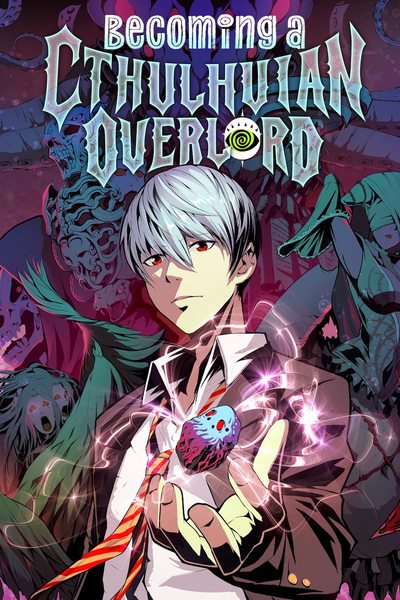
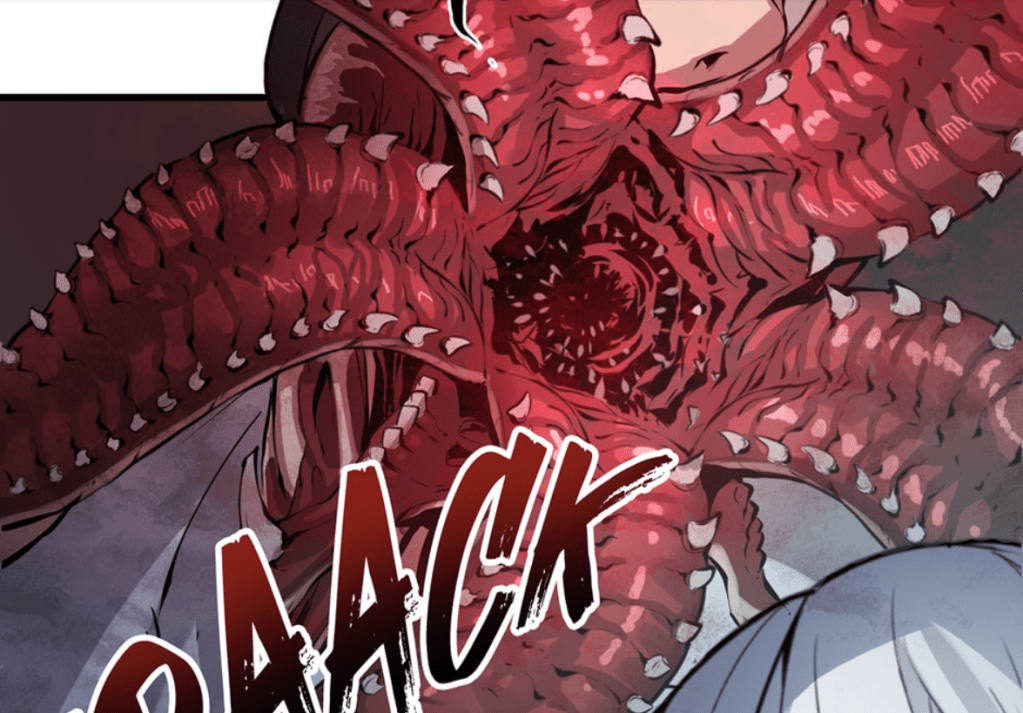


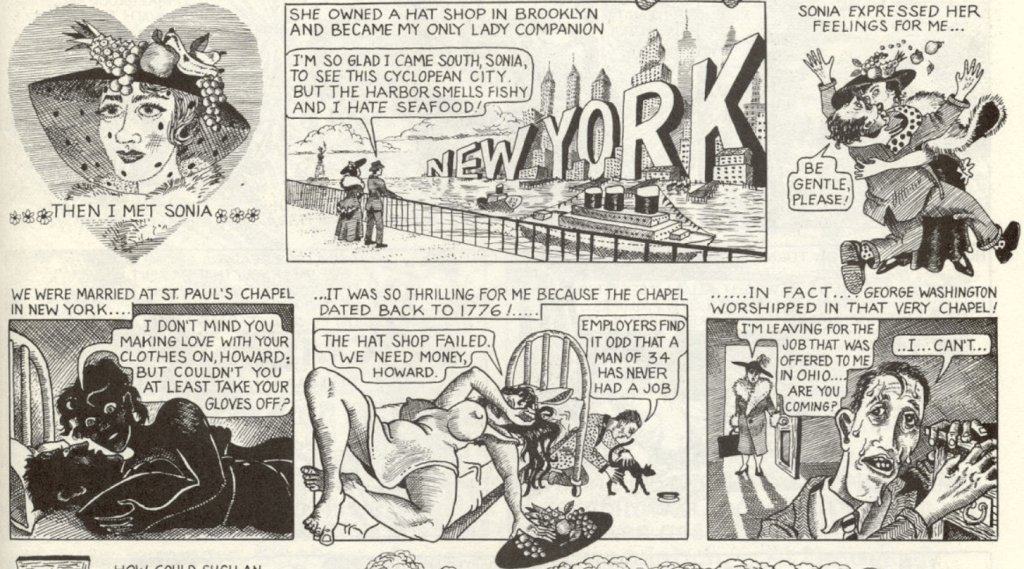
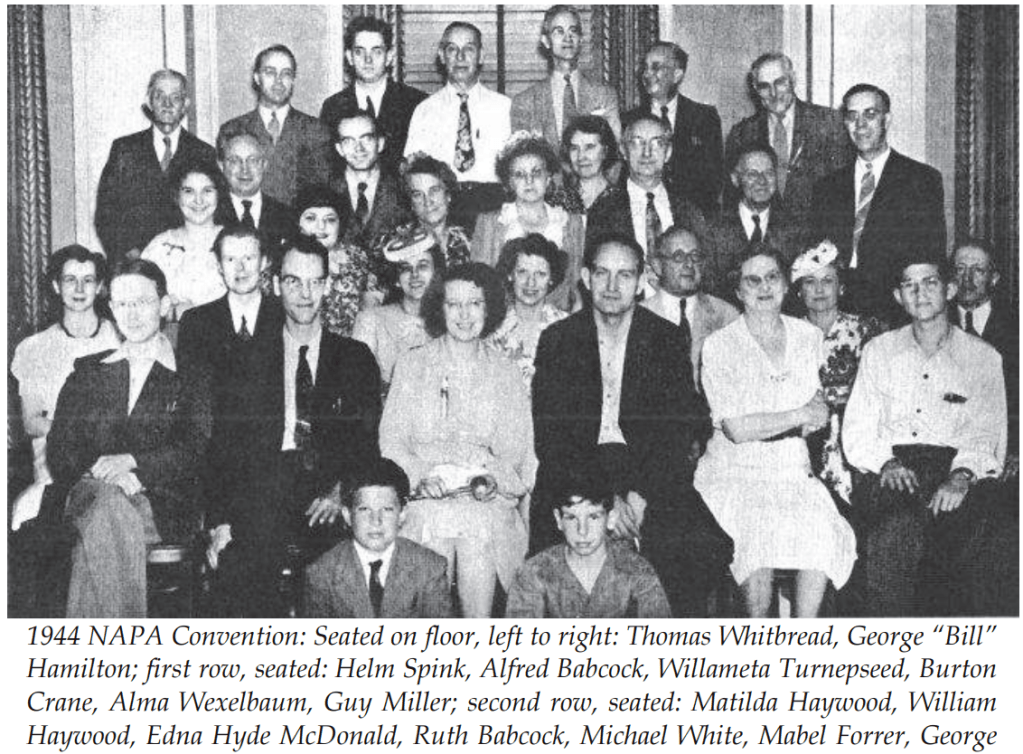
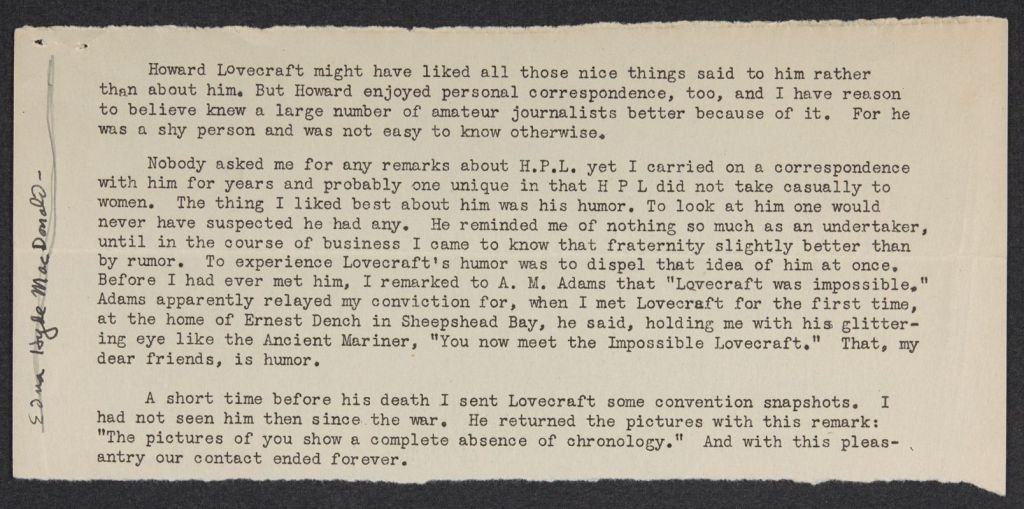
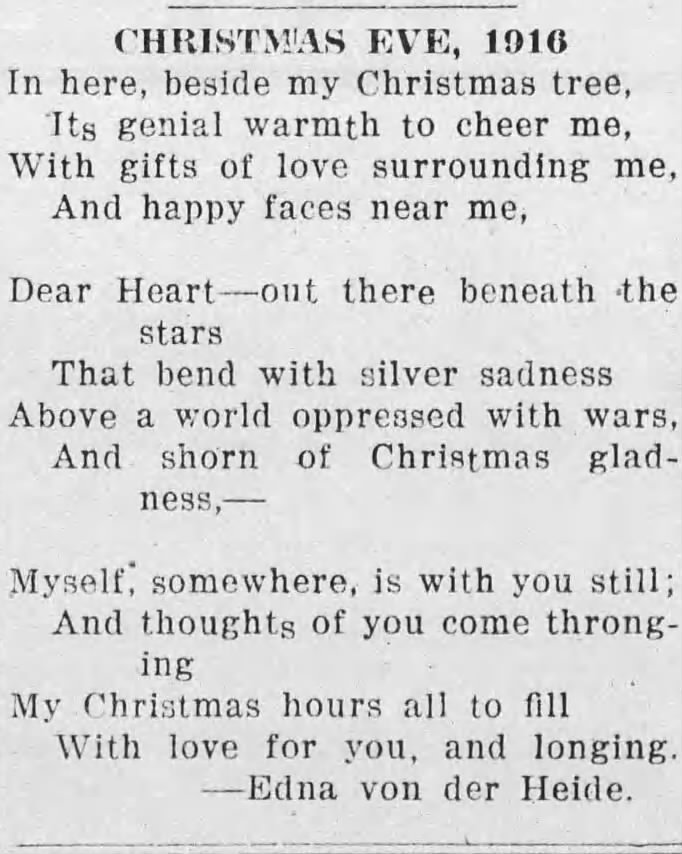
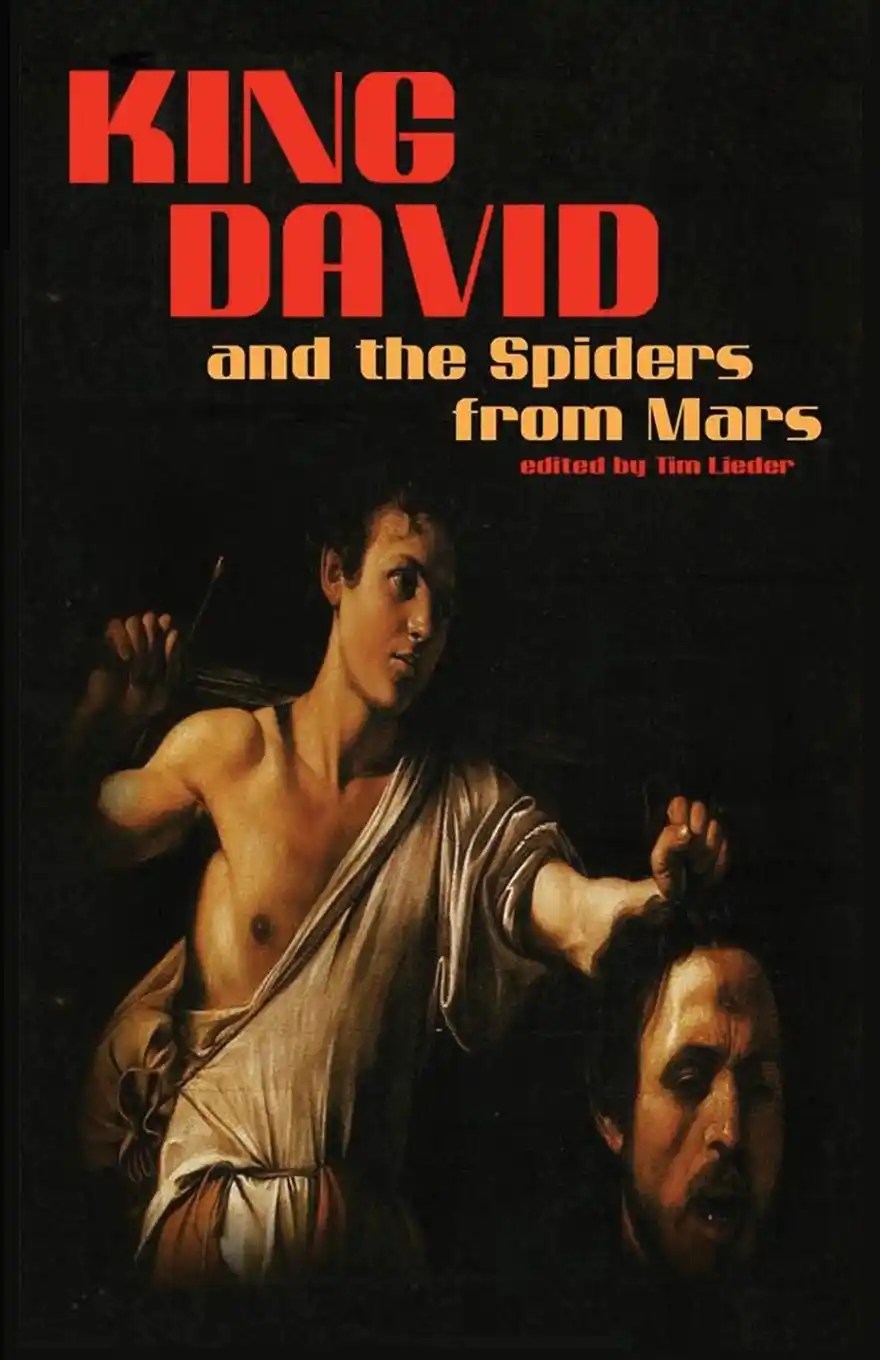
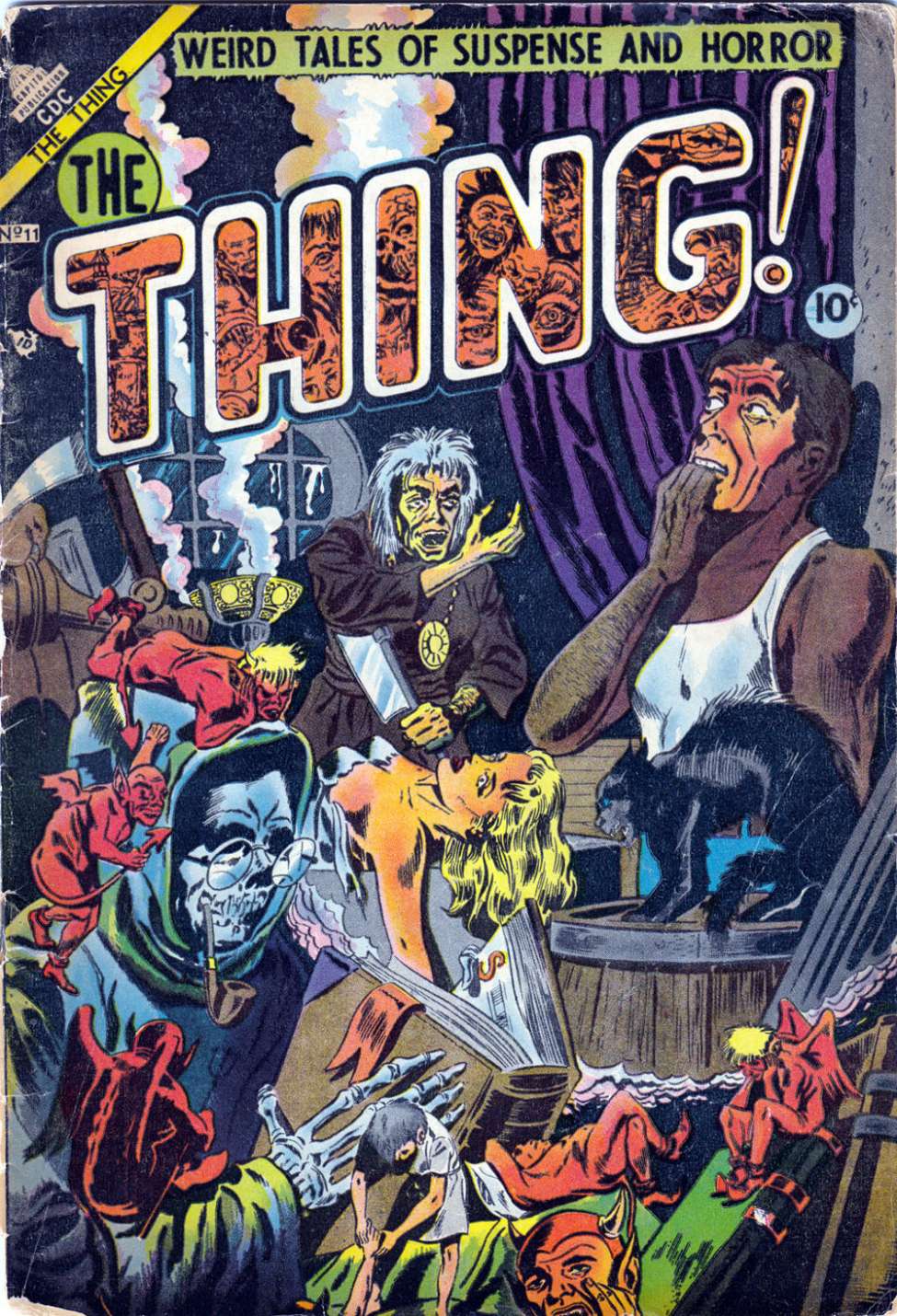
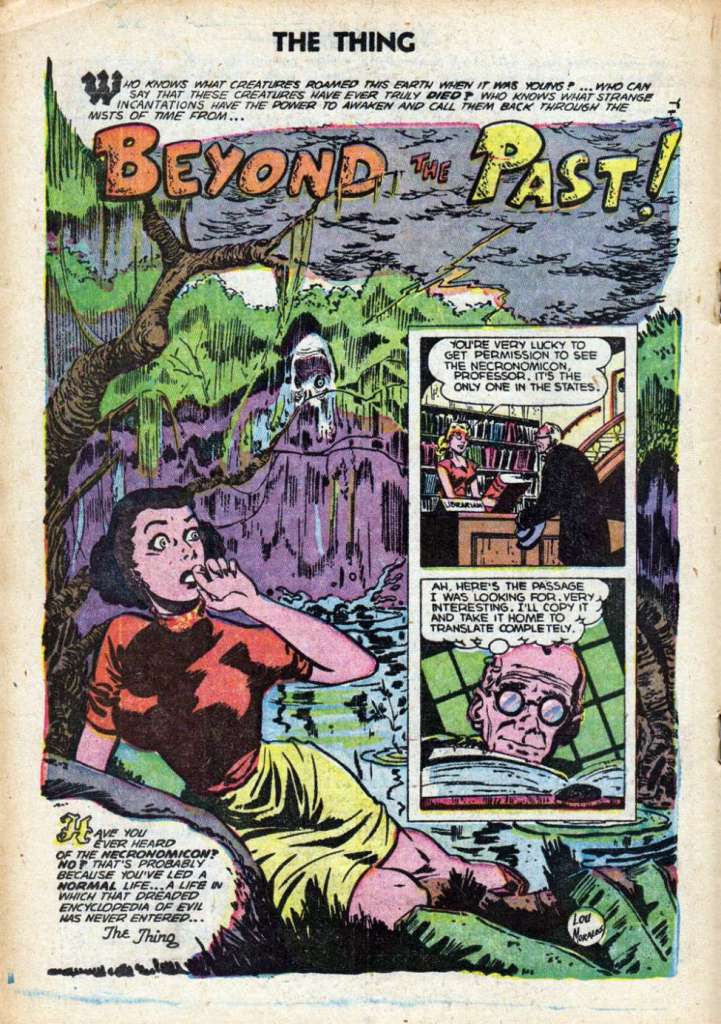
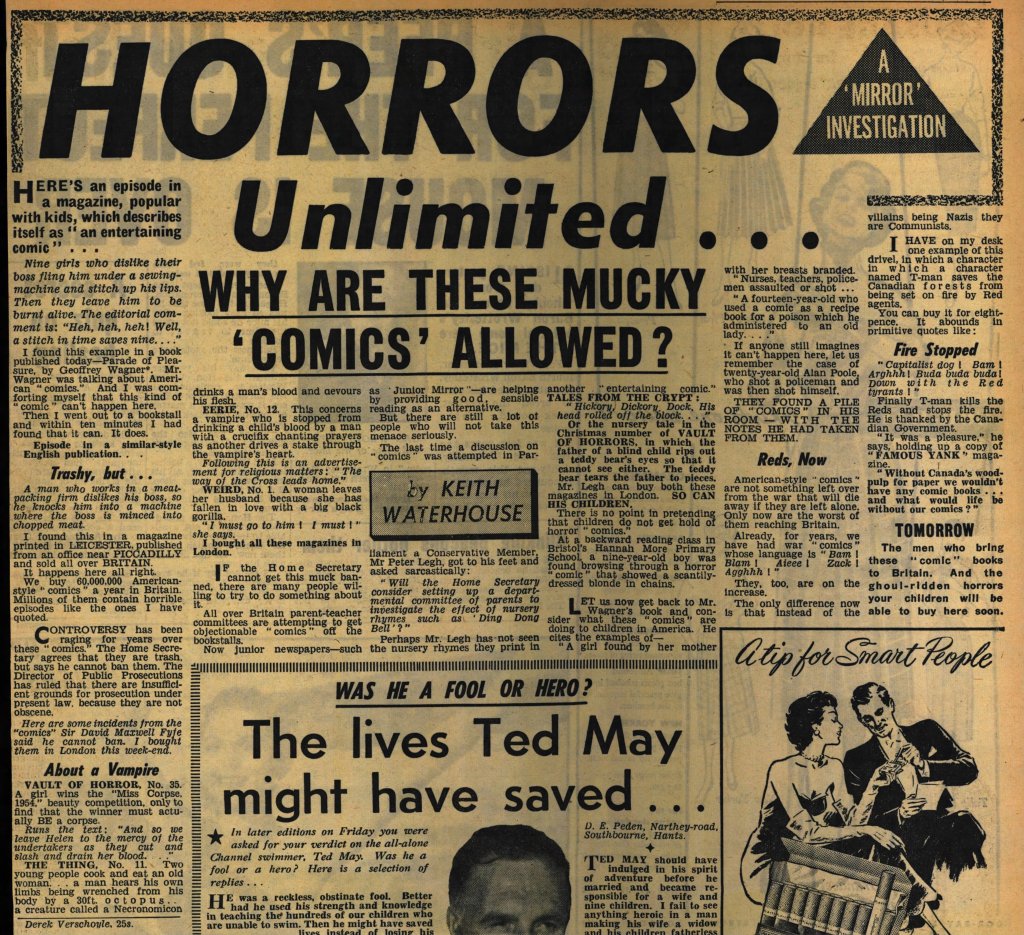
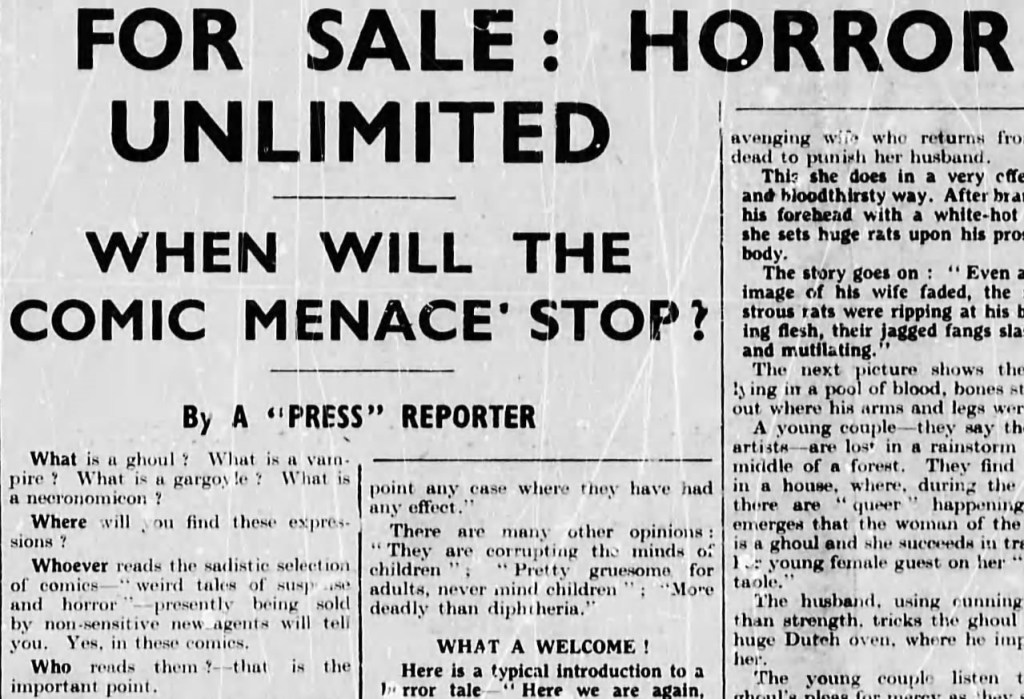
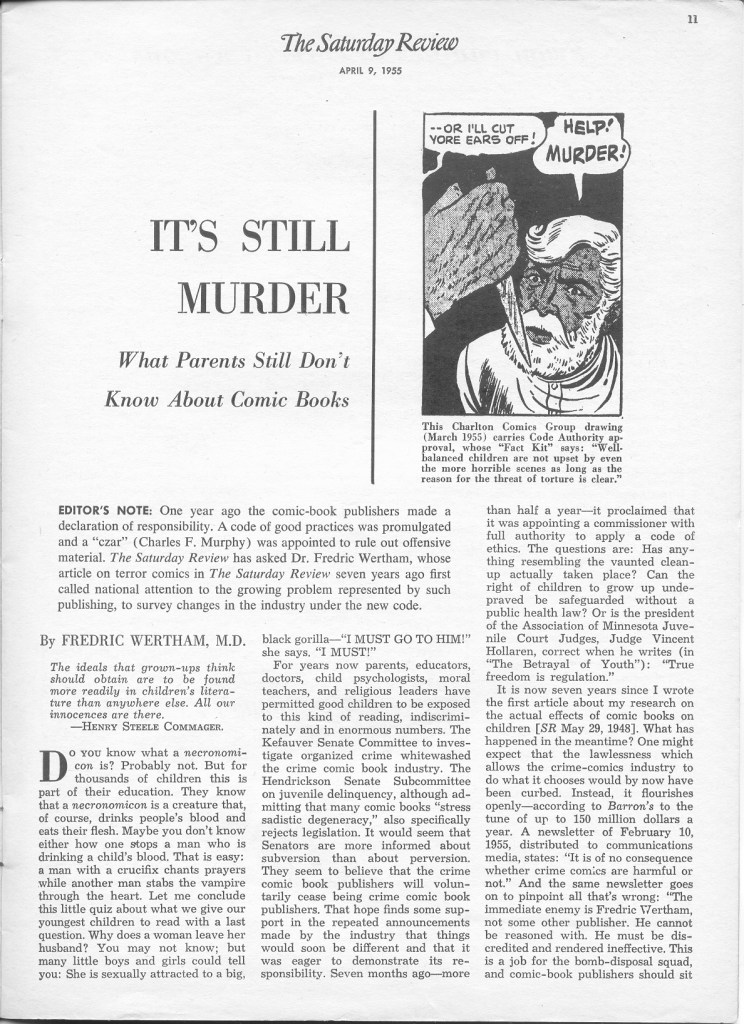
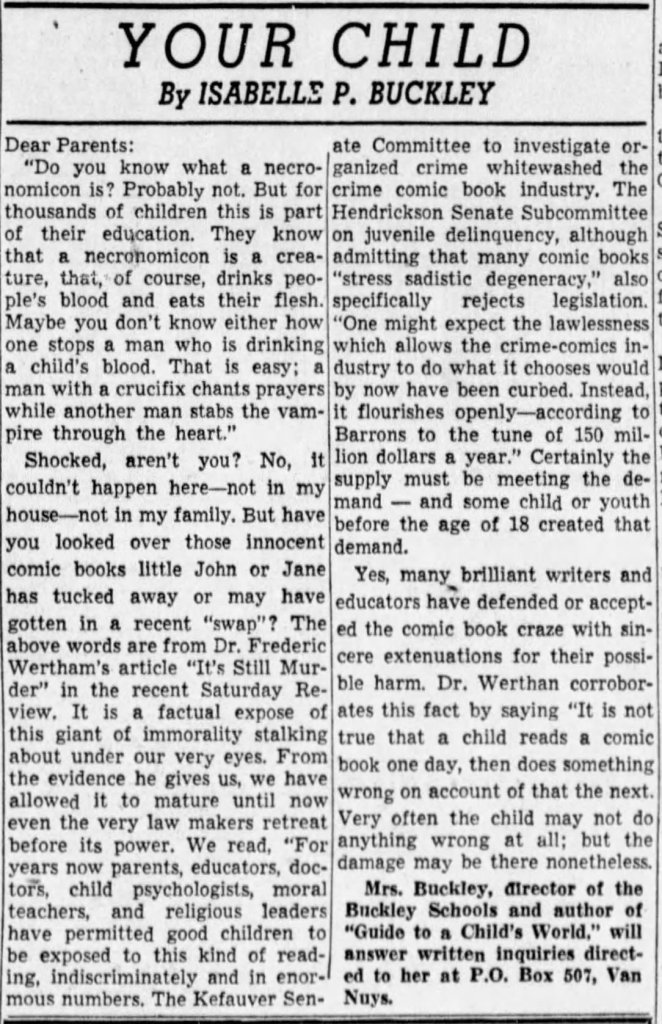

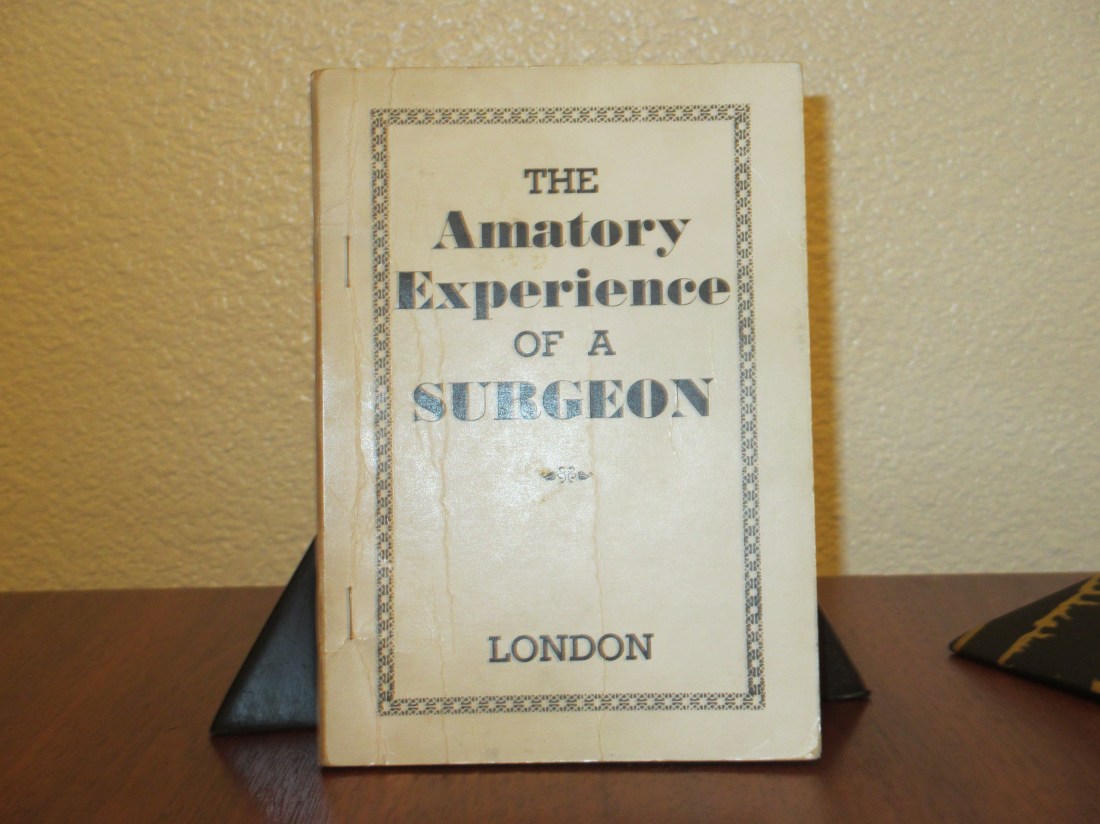


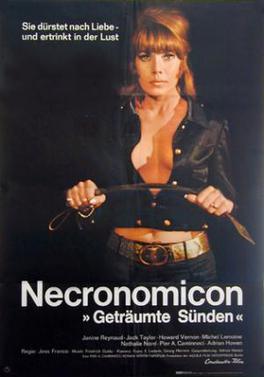
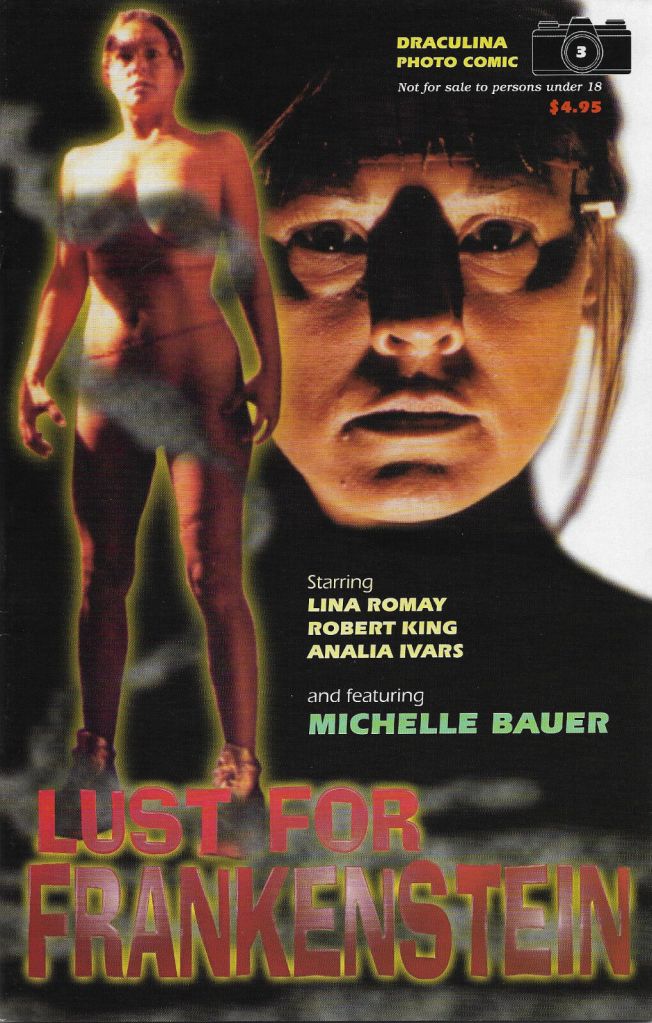
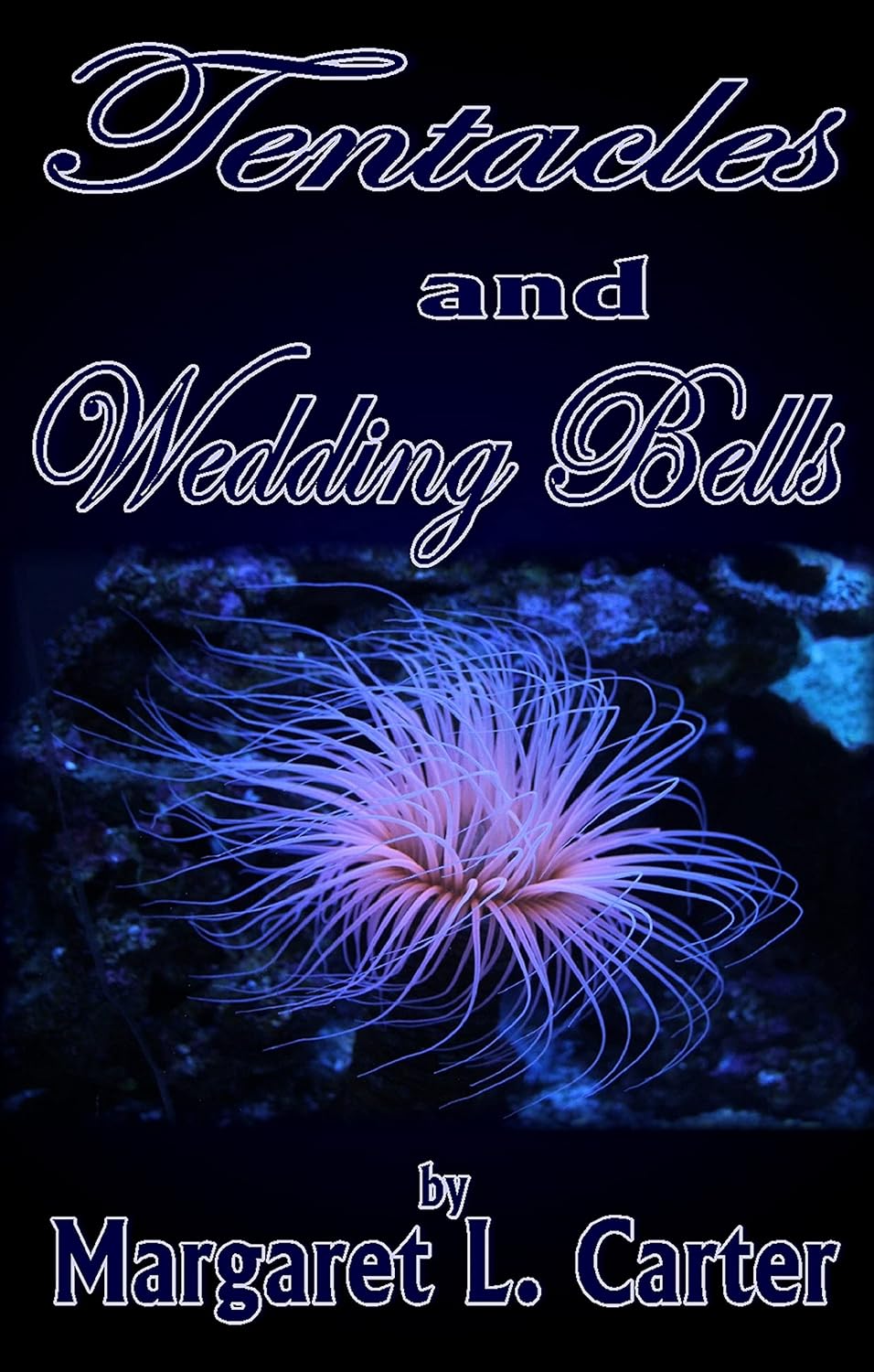
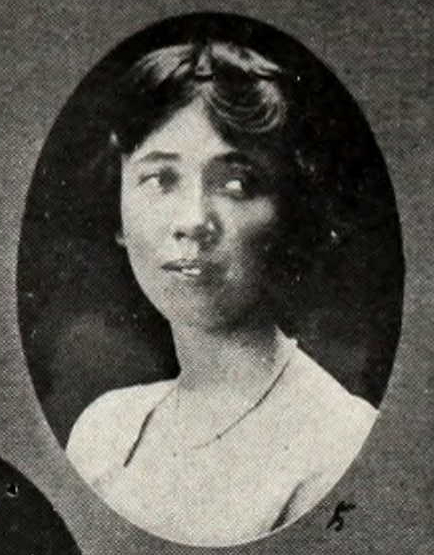
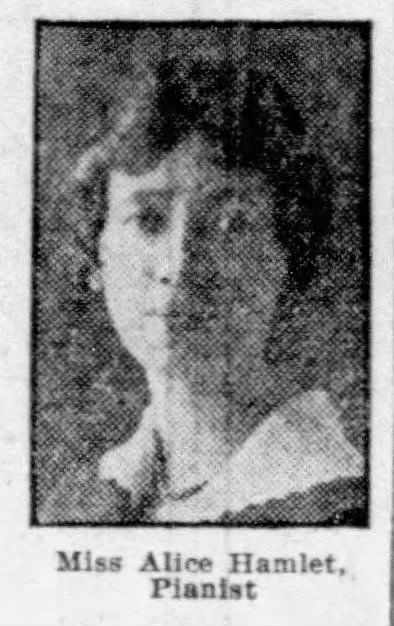
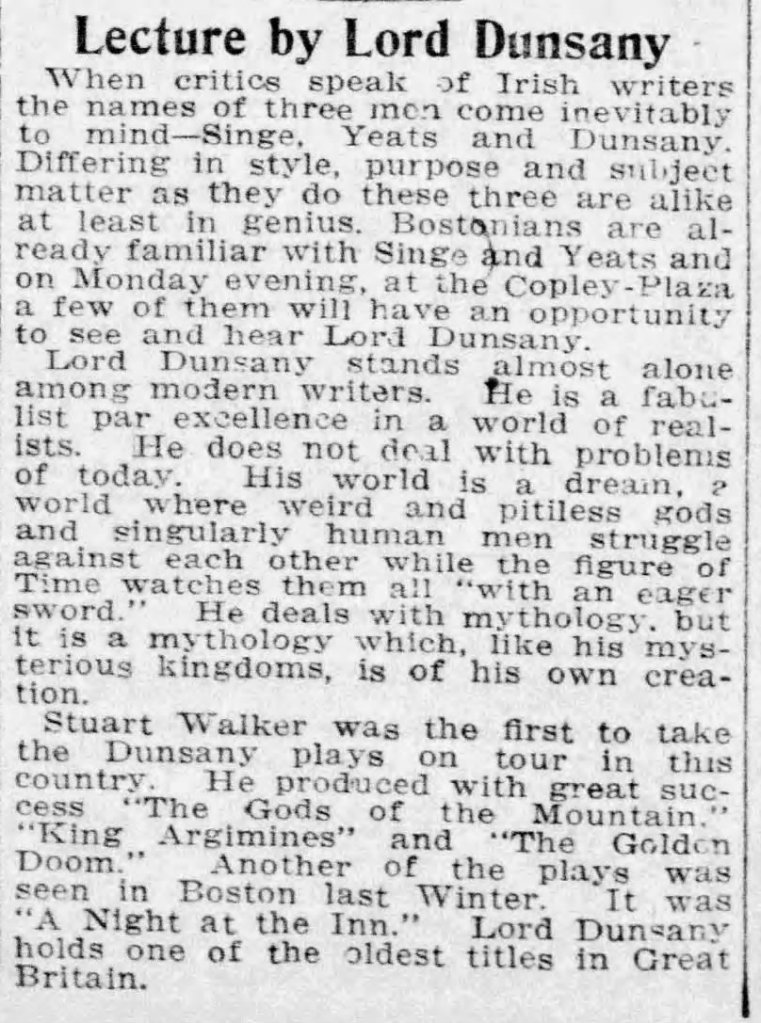
 Deep Cuts in a Lovecraftian Vein