Picture Australia, with its unfamiliar names and strange, fascinating animals; the unique culture that is not British or American but parallels both in its own way. As with the United States, there is a limit to Australian history, a beginning; the cities are new places, and before the first Europeans came is a vast and sketchy pre-history belonging to the Native Australians. No Gothic castles, no crumbling Roman ruin; Lovecraft made do with standing stones and secret caverns in the United States, and in Australia, Janeen Webb’s eponymous old woman finds a cave in the swamp, with native paintings adorning its walls.
“The Lady of the Swamp” is like “Red Goat, Black Goat” (2010) by Nadia Bulkin in that it is not explicitly a story of the Mythos; there are no familiar names invoked here, only themes and tropes. It is Mythos-by-association, in that it was published in the collection Cthulhu: Deep Down Under (2015), and there are definite shades of Lovecraft twisted throughout the narrative: the dark crystal so reminiscent of the Shining Trapezohedron, yet another curious cosmic rape, impregnation, and birth like so many other Mythos tales. The tale is told through diaries, a callback to yesteryear, the determined investigator sorting through the documentary pieces of a life, trying to resolve the mystery in their own minds. Very Lovecraftian.
Yet H. P. Lovecraft knew nothing of fracking. The mundane horror of a nameless Company driving a road through a swamp, threatening the life of a poor and lonely woman living out of a broken caravan, is at best tangential to the themes he liked to employ—of people on the edge of things, where civilization ends and slick citydwellers come only rarely and without real understanding. Webb’s story is part ecopunk, part adult fears: people falling out of society, migrating to the edges, only for their solitude to be rudely interrupted. The uncaring tentacles of the Company ripping apart the fragile tissue of a life are meaner than those of Cthulhu, but only because the hands that drive the bulldozer are ultimately human.
The disconnect between the two themes, of the eldritch evil which rapes the old woman at the beginning of the story and the studied ignorance and lack of empathy of the Company men and reporters in the second half, feels like cognitive dissonance. The narrative distance between the two portions of her diary are immense; the unnatural sexual congress and birth are less intrusive than that of the callous “scientists” and reports that studiously ignore and belittle her, trespassing on her home.
It is the latter which ultimately cuts more deeply; the child of their union is, however unnatural the conception, little different from the other young creatures she has nurtured. She may have stumbled across an eldritch evil in a forgotten cave, but it did not seek her out or harass her beyond that, whereas the company is coming into her home, threatening her life.
The confrontation is easy to see looming.
And when the lady of the swamp is given the choice between the mundane horrors of “progress” and the bloody price extracted by eldritch horror of her swamp…well, it isn’t much of a choice at all, really. People fight with the weapons they have, and the lesser evil is sometimes a nameless thing of darkness. At least the eldritch evil probably won’t kill all the wombats.
“The Lady of the Swamp” first appeared in Webb’s collection Death at the Blue Elephant(2014), and was reprinted in the hardback Cthulhu: Deep Down Under (2015) and The Year’s Best Australian Fantasy and Horror 2014(2015). The story was not republished in the paperback collection Cthulhu Deep Down Under: Volume 1 (2017), but was replaced by another of Webb’s stories, “A Pearl Beyond Price.”
For the next few years I saw Mrs. Miniter quite often at meetings and festivals of the Hub Club, and always admired the effectiveness with which she devised entertainment and maintained interest. In April, 1921, her quaintly named and edited paper The Muffin Mancontained a highly amusing parody of one of my weird fictional attempts… “Falco Ossifracus, by Mr. Goodguile”…thought it was not of a nature to arouse hostility.
—H. P. Lovecraft, “Mrs. Miniter—Estimates and Recollections” (1938) in the Collected Essays of H. P. Lovecraft1.381
Edith Dowe Miniter was a professional journalist during the 1880s to 1900s, writing both articles and perceptive stories that dealt often with the perspective of women in New England; her sole published novel was Our Natpuski Neighbors (1916), chronicling the experience of an immigrant Polish family to Massachusetts—and the townfolks’ not always positive reaction to their new neighbors.
Along with professional journalism, Edith Miniter was a powerful voice in amateur journalism, a leading voice of the Hub Amateur Journalism Club in Boston. An idealist, she was not one for compromise and engaged in fierce battles over the administration of the National Amateur Press Association, which caused one friend to write:
In spite of unusual difficulties and unforseeable betrayals, her administration was able and efficient; and it ended forever the tradition that the highest official position within out gift was earmarked “For Men Only.”
—James F. Morton, “Some Thoughts on Edith Miniter” in Dead Houses and Other Works79
In 1920, she met the young amateur Howard Phillips Lovecraft, and they became good friends through her final years, with a visit to her home in 1928 providing some of the details to “The Dunwich Horror.” For all that Miniter and Lovecraft were friends, their tastes did not all run in the same line. Lovecraft reported that:
Mrs. Miniter did not care for stories of a macabre or supernatural cast; regarding them as hopelessly extravagant and unrepresentative of life. —H. P. Lovecraft, Collected Essays of H. P. Lovecraft1.381
At the time, Lovecraft was publishing little else. His published fiction in amateur periodicals in 1921 included “Beyond the Wall of Sleep” (1919), “Dagon” (1919), “The White Ship” (1919), “The Statement of Randolph Carter” (1920), “The Doom that Came to Sarnath” (1920), “The Cats of Ulthar” (1920), “Nyarlathotep” (1920), and “Polaris” (1920). It was in this spirit that Miniter chose to tweak her younger friend’s nose with one of the first parodies of his style. In her epigraph to the story, Miniter wrote:
It pleasures us exceedingly to offer our readers a condensed novel by the renowned Mr. Goodguile. Why pursue the works of this author throught Tryouts, Vagrants and National Amateurs, as yet in press, when here is the quintessence? Similar attention is promised later to such of our eminent fictionists as merit it.
—Edith Miniter, Dead Houses and Other Works117
The Tryout, Vagrant, and National Amateur well all amateur journalism magazines where Lovecraft’s work had appeared; the name “Goodguile” (aside from being an obvious play on Lovecraft), was a jab at Lovecraft’s love of pseudonyms during this period, as was used in “Poetry and the Gods” (1920) by Anna Helen Crofts & H. P. Lovecraft and “The Crawling Chaos” (1921) by Winifred Virginia Jackson & H. P. Lovecraft. In this, Miniter was unknowingly anticipating the work of pasticheurs and parodists of several generations in the future, such as “I Wore the Brassiere of Doom!” (1986) by “Sally Theobald” (Robert M. Price).
The primary inspiration for Miniter’s parody appears to be “The Statement of Randolph Carter,” at least so far as the protagonist is their with his close male associate in a graveyard echoes some of the essentials of that story. Lovecraft had not yet written “The Unnameable” or “The Hound,” but the fact that those stories hit so close to the same formula shows how squarely Miniter’s critique hit home.
Other shots followed, and ones Lovecraft and their mutual friends could hardly miss:
“Your pal,” came the response, “Iacchus Smithsonia,” the name was originally John Smith, but it is always my will that my friends bear a name of my choosing and as cumbersome a one as possible, “is cleaning out Tomb 268.” (ibid, 118)
This is a jab at Lovecraft’s habit of doing exactly this with friends, addressing them by nicknames in letters and sometimes other places; famously this was adopted by his circle of pulp friends so that Clark Ashton Smith became Klarkash-Ton, and Robert E. Howard was Two-Gun Bob, but it was applied to many as a sign of affection. In her surviving letters to Lovecraft, Miniter addresses him as “Mr. Goodguile.” (ibid. 46)
A little farther down, she takes a shot at Lovecraft’s occasionally ultraviolet prose and fondness for obscure, archaic, or technical terminology:
“I am really sorry to have to ask you to absquatulate,” he said, employing the chaice diction which is so peculiar to we of the educated aristocracy, “but this ain’ no place for a feller with cold feet.” (ibid.)
As parodies go, Miniter’s “Falco Ossifracus” probably hits home a little less to contemporary readers than The Adventures of Samurai Cat(1984) by Mark E. Rogers or “Nautical-Looking Negroes” (1996) by Peter Cannon & Robert M. Price. Lovecraft’s mythos had not strictly been put to paper yet, as the first tale in the Arkham cycle, “The Picture in the House” was written in December 1920 but not published until the summer of 1921, so Miniter had no such target to purposefully aim for.
Yet if it lacks for not being a true pastiche, or for going after what today might seem to be obvious targets, there is no doubt that the good-natured shots aimed at Lovecraft must have hit home. The well-intentioned roasting was likewise received with good humor considering they were still subsequently on good terms.
“Falco Ossifracus” first appeared in The Muffin Man (Apr 1921), and has been reprinted by Kenneth W. Faig, Jr. in Going Home and Other Amateur Writings (1995) and Dead Houses and Other Works (2008).
“The Goat is our real mother! She is everyone’s real mother!”
—Nadia Bulkin, “Red Goat, Black Goat”
From the 1930s on, fans and writers have tried to give shape and order to the Mythos. It is a participatory ritual: the reader’s understanding is always unique, built and shaped by what they have read, what connections their intellect has made, how their imagination fills in the blanks. There is no one canon. There are only possibilities.
In “Red Goat, Black Goat” Nadia Bulkin cracks opens up a new possibility.
Bulkin carves her own bit of lore, with the bloody skill of an Indonesian horror film. The setting is not played up as some exotic bit of the “mysterious Orient” as it might have been in Lovecraft’s day. She grounds and develops the setting as Lovecraft did Dunwich, the characters an organic part of the whole so that none of the non-English terminology that peppers their thoughts and speech seems false or unnecessary.
At the same time, “Red Goat, Black Goat” partakes of the essence of the Mythos. The Goat is something outside the system of superstition that the characters know; it exists beyond their framework of understanding. Aspects of it echo themes developed by other writers; the terrible all-mother Cybele of “The Rats in the Walls,” or “Koenigsberg’s Model” (2011) by Peter Tupper, but it is far less defined than even those incarnations.
Nor is the story leavened by any real attempt at humor, wry or otherwise; there is gore, but not the microscopic dwelling in viscera that is splatterpunk. Bulkin moves quick, lest the tale be bogged down in dirty details. Her horrors are passing, visceral images that build shortly toward mini-climaxes, her pacing cinematic as the narrative moves swiftly toward a point of finality—not the ending of a story, but the closing of one chapter.
It’s a good story that leaves you wanting more; Bulkin could have written “Red Goat, Black Goat” out as a Javanese Gothic novel and it wouldn’t have seemed out of place. There are no answers, really, and that’s okay. Readers will fit this into their own personal understanding of the Mythos just fine; one more incarnation of Shub-Niggurath, one more thread in the endless tapestry. It’s a story that should be part of more reader’s personal Mythos.
It should be noted that this tale attempts a new stage of the evolution of Mythos fiction. It has been justly said that much Mythos fiction fails for its redundancy: the same thing happens that happened in Arkham House books of fifty years ago. Once we read certain book titles or demonic names we know what will happen. The story reduces to the collection of names, almost as if that were all most readers were looking for anyway. For new Mythos fiction to have any chance of being effective perhaps it must be scrupulously spare in its referenced to the received lore.
—Robert M. Price, The Shub-Niggurath Cycle187
This story can be read as one of the most homophobic stories in the Cthulhu Mythos. That in itself might explain why this first collaboration between Robert M. Price & Peter Cannon is a bit of an orphan. It has been published only twice, first in the ‘zine Grimoire Vol. 1, # 1 (Spring 1993), and in The Shub-Niggurath Cycle (1994), a volume edited by Price as part of the Chaosium Call of Cthulhu Fiction line. Neither Price nor Cannon has seen fit to reprint it in any of their subsequent collections, nor written much about it; though it is clear from Price’s editorial comments that Cannon probably wrote the bulk of it, attempting to emulate the style of M. R. James, and that Price supplied much of the theological background. It is therefore feasible that this collaboration operated similar to their later story “Nautical-Looking Negroes” (1996).
The Jamesian atmosphere may have suggested the religious theme, which is Dr. Price’s special area of expertise; the setting is Temphill, part of the Severn Valley setting created by Ramsey Campbell for his own Mythos stories. Campbell might be credited with one of the first overt references to homosexuality in Mythos fiction with his short story “Cold Print” (1969), though whether that was any inspiration on “The Curate of Temphill” or simply coincidence is unclear—James was British, and Campbell’s Severn Valley is the most prominent and memorable British setting for the Mythos outside of Exham Priory (“The Rats in the Walls”). The name itself recalls the Templars…and if one traces that line of thought, perhaps leads us to the inspiration for this story.
There are certain relatively obscure elements of homosexuality in the demi-monde of legend surrounding Christianity, if you look for it. One of these is the charge at their trials that the Knights Templar practiced sodomy; another is the Secret Gospel of Mark, an apocryphal text which reads in part:
And after six days Jesus told him what to do and in the evening the youth comes to him, wearing a linen cloth over his naked body. And he remained with him that night, for Jesus taught him the mystery of the kingdom of God…naked man with naked man…
—”The Curate of Temphill” in The Shub-Niggurath Cycle196
Price & Cannon quote this material almost verbatim from the original source; what the authors are doing here is taking known elements from Christian scholarship and weaving them together to form the Mythos “lore” that the protagonist, Rev. Morgan Ackerley, slowly uncovers. It is a genuine Lovecraftian approach, developing the “secret history” of the story with all the care and attention of a good hoax, only with very unconventional (for the Mythos) source materials; readers might compare it to how Dan Brown’s The Da Vinci Code(2003)created a narrative based on the remixed history, legend, and conspiracy theories of The Holy Blood and the Holy Grail(1982).
Where it gets problematic in the story is specific applications. One of the most prominent:
Shortly after deciding the vandalism episode was too trivial to report to the secular authorities, he received a solemn summons to the hospital in Brichester, where Ms. Radclyffe lay in a coma, the victim of violent rape. She expired before his arrival, never regaining consciousness.
—”The Curate of Temphill” in The Shub-Niggurath Cycle198
While the matter is treated by suggestion and implication rather than outright stated, Vita Radclyffe was a lesbian—unmarried, living with her “companion” Florence Trefusis, reading the lesbian novel The Well of Loneliness(1928) by Radclyffe Hall, and opposed to the domination of the local church by the previous curate, who had preached “You know, the woman shalt be subservient to her lord and master, her husband—obsolete rot like that.” (ibid 190) Her death by sexual assault is treated as horrific, but the why of it is hauntingly unclear…as with much in this story.
A large part of the mystery is on purpose. M. R. James was careful to leave much of the detail to the reader’s imagination, so certain mysteries would always remain. Readers might well argue that since Radclyffe had opposed the old curate, she would also oppose the new one, and so her death would benefit the conspiracy surrounding Temphill.
That doesn’t explain why Radclyffe was either a lesbian or specifically raped to death. Neither aspect of the character is a necessary detail for the purposes of her role in the story, but the fact that both were included strongly suggests that to the authors they were. The implications are therefore nasty: Radclyffe was included in the story because it needed a female antagonist to oppose a cabal of chauvinistic men, who were preaching the strong patriarchal version of the Bible; her opposition to this patriarchal slant would be stronger if she were a feminist—and disinterested in men generally, hence a lesbian; her death would be all the more horrific if it came about by the very thing she opposed, hence the rape.
Horror exists for violating taboos; the thrill of crossing a boundary, be it social, sexual, legal, religious, even geographic or physical is real. Rape and violent death are a part of that, and many slasher films eagerly combine sex and death, race and death, etc. Characters are introduced as predestined victims, with the only question being not if they will survive but how they will die. It is still an ugly thing to introduce a woman to the plot specifically for her to be raped to death a few pages later, but it is not beyond the pale: H. P. Lovecraft & Zealia Bishop story “The Curse of Yig” is built around a supernatural sexual assault.
The rape in “The Curate of Temphill” in nasty in part because of the ideology behind the attack. Would a man who opposed the group be raped to death? The new curate isn’t; he is instead initiated. Would a woman who was not a lesbian be raped to death? The option is not explored, and that in itself is a bit damning. The story, as brief as it is, only gives hints and suggestions to the actual nature of beliefs held by the old curate and his group…and this is where the homophobia really starts in the story.
In Ramsey Campbell’s “Cold Print,” homosexuality is a secondary aspect of the main character’s sexuality, which is primarily tied up with discipline, spanking, and sadomasochism in the grand tradition of British private schools, or at least the fetishistic pornographic depiction of the same, with hints of pedophilia—all appropriate for the character Campbell was developing. Price & Cannon seem to have taken their inspiration from “Secret Mark” and the implication that Jesus Christ’s hidden teachings involved a pedophilic encounter with a young boy—and perhaps by extension touching on general allegations of pedophilia and inappropriate sexual contact on the part of Catholic and Anglican priests, accounts of which have become much more public in the past several decades.
All of which Price & Cannon bring together in their finale, where they hint strongly at this turn of events with:
His parishioner had subsequently invited h im to a special meeting of select members of the Temphill and Goatswood youth groups, where certain wondrous ceremonies would be performed.
—”The Curate of Temphill” in The Shub-Niggurath Cycle200
Basically, there is no male homosexual in “The Curate of Temphill” who is not also implicitly a pedophile. This might not have been the intended depiction, but the story is short and the cast is small: we aren’t given any other details to go by. It should be mentioned that this conflation of homosexuality and pedophilia is not pursued by Price or Cannon in any other story. Maybe it was just the pursuit of this one set of ideas as a connecting theme—homosexual Templars, a gospel that preaches homosexual pedophilia, the prevalence of homosexual pedophilia among some priests—that suggested the story.
Yet each of those individual elements also embodies homophobia: the Templars were charged with sodomy because homosexuality was a sin; Secret Mark is blasphemous because it suggests Jesus had gay sex with a young boy; the most popular depiction of sexual assault by priests against youth is that they targeted altar boys for abuse, with the homosexual element heightening the scandal for churches that still often disapprove of homosexuality. All of that plus the ultimately needless death-by-rape of Vita Radclyffe makes this a short story with a lot of issues.
Readers at this point might ask “How does all this relate to Shub-Niggurath?”—and it does not, directly. Shub-Niggurath is associated with Campbell’s Severn Valley setting via nearby Goatswood and its inhabitants in “The Moon-Lens” (1964). The Templars were accused of worshiping Baphomet, who in turn was famously depicted as the Satanic Goat by Eliphas Levi, and Price in his introduction to The Shub-Niggurath Cycle thematically connected this figure with “The Black Goat of the Woods,” often taken as a title for Shub-Niggurath. It is implied that the entity that raped and killed Vita Radclyffe was a satyresque figure, which would make this a rare masculine depiction of Shub-Niggurath, comparable to that in “The Thing from Lover’s Lane” (1996) by Nancy A. Collins.
The impact of female editors of pulp magazines is not always acknowledged, and this is especially true when considering the legacy of H. P. Lovecraft and Mythos fiction. Three of these women stand out: Dorothy McIlwraith, the editor of Weird Tales (1940-1954); Mary Gnaedinger, editor of Famous Fantastic Mysteries (1939-1953); and Cele Goldsmith Lalli, editor of Fantastic (1958-1965). Together, these three women would essentially bridge the gap, accounting for most Mythos magazine fiction that was published between 1940 and 1965.
Dorothy McIlwraith
Dorothy McIlwraith
After his death on 15 March 1937, Lovecraft’s literary legacy continued in Weird Tales, which had been the home to most of his professional fiction and continued to be the mainstay of his most devoted fans. Editor Farnsworth Wright published at least one Lovecraft item, be it a story or verse, in nearly every issue for the next three years—including collaborations with Hazel Heald and Zealia Bishop, stories which Wright had previously rejected, and material from amateur publications.
In late 1938, Weird Tales was sold to William Delaney, owner of Short Stories, Inc. and publisher of the successful Short Stories pulp magazine, which was edited by Dorothy McIlwraith, a Canadian woman of Scottish descent. (What About Dorothy McIlwraith?) The Weird Tales offices were moved to New York City in November of that year, with editor Farnsworth Wright moving his family from Chicago for the transition. Beginning with the December 1938 issue, Weird Tales officially listed its offices in New York. Robert Weinberg claimed that McIlwraith was made associate editor of Weird Tales at this point, but if so she was never listed as such in the magazine itself. (The Weird Tales Story6)
Farnsworth Wright had been suffering from progressive Parkinson’s disease for years, and the finances for Weird Tales continued to worsen. In part this may have been due to the death of prominent writers like Henry S. Whitehead (1932), Robert E. Howard (1936), and H. P. Lovecraft (1937), but it was also due in part to new competition. While Weird Tales had been the predominant purveyor of fantastic fiction in the pulp field since its inception in 1923, outlasting rivals such as Ghost Stories (1926-1932), Tales of Magic and Mystery (1927-1928), and Strange Tales (1931-1933), but in 1939 several strong competitors emerged, including Strange Stories (1939-1941), Unknown (1939-1943), Famous Fantastic Mysteries (1939-1953), Fantastic Adventures (1939-1953), Planet Stories (1939-1955), and Startling Stories (1939-1955).
Added to these woes, New York Mayor Fiorello La Guardia began cracking down on nude covers on the newstands; while aimed at the weird terror or “shudder” pulps, the ban also caught Weird Tales, which had been using nudes from Chicago artist Margaret Brundage for the cover, to both fan appreciation and consternation. In addition, Brundage was unable to move to New York and found shipping her delicate pastels economically unfeasible—especially when publisher Bill Delaney cut payment rates for artists. (Alluring Art of Margaret Brundage32) Delany also tried other changes to reduce costs and increase sales:
Delaney was more concerned than Henneberger or Cornelius in turning the pulp into a paying, profit-making proposition. His first idea was to increase the page count from 128 to 160 pages. He also used a cheaper quality of paper, making the issue look even thicker than before. The first of these thick issues appeared in February 1939. However, the idea did not catch on and sales dropped steadily. Another of Delaney’s ideas was to cut rates, both to artists and authors. the policy showed as quality quickly dropped. In another effort to boost sales, the size was cut to 128 pages in September 1939 and the price was dropped to 15 cents. The magazine still did not sell. (The Weird Tales Story6)
In January 1940, Farnsworth Wright left Weird Tales; the magazine by this point had gone to a bimonthly schedule, and his final issue as editor was March of that year. While some sources claim Wright retired or resigned, firsthand accounts suggest he was fired:
I am no longer connected with Weird Tales. Miss McIlwraith has taken over the editorship. The publisher was losing too heavily, and he figured that the elimination of my salary would help to cut down the deficit.
—Farnsworth Wright to Virgil Finlay, 17 Jan 1940, BOK 66
The magazine has two stories and four poems of mine (accepted by Farnsworth Wright) still unpublished, but I think seriously of withdrawing these, even though I need the money like hell and am not likely to find another market for these particular items. Wright was let out by the publishers to cut down expenses, and W.T.is now being edited by a woman, who also edits Strange Stories. [sic] It is to be hoped that Wright will soon secure another editorship, or perhaps even start a rival magazine himself. In the meanwhile, W.T.‘s best contributors are sticking with him, in the belief that he has had a raw deal.
Wright was cold-bloodedly fired from Weird Tales, because of circulation drop. It’s being carried on by McIlwraith. Wright is hit pretty hard, and our gang has pledged to boycott the mag. If Wright succeeds in getting another publisher interested in backing a new weird mag, we’ll submit only to him. It’s all we can do for one of the best and most liked editors in our field. With Wellman, Kuttner, Hamilton, Quinn, Williamson, and others not submitting to Weird, I’m thinking McIlwraith will have to print blank pages.
When he was dismissed because of physical disabilities, many of the younger contributors to W.T. emoted all over the place, and waged a campaign to boycott the magazine. I did not join in this piece of juvenile idiocy. To expect a publisher to retain an editor incapable of coming to work was unrealism beyond the norm, even for youth! Finally, Wright’s successor, Dorothy McIlwraith, certainly was not responsible for his having been relieved of duty. As editor of Short Stories, her position was far more important than was the editorship of W.T. All she could gain was extra work, a bonus of headaches. Why penalize her by depriving her of desirable contributors?
None of these loyal nit-wits realize that the publisher scrapped Wright’s long established editorial policies, and told Dorothy what to do, and how to do it. As an employee, she had to obey orders, or, bail out. Anyone who ever knew the magazine business was aware that her leading magazine, Short Stories, was for a readership far more discriminating and mature than that of the W.T. fanciers. —Price, Book of the Dead: Friends of Yesteryear: Fictioneers & Others112
After Wright left WEIRD TALES (banished into outer space, is the way he wrote me about it), I happened to be in New York. I found out that he was living out at Jackson Heights, so I went out to see him, and was always glad I did, for he died only a few weeks later.
—Edmond Hamilton, “He That Hath Words,” Deeper Than You Think#2, Jul 1968, 12
Farnsworth Wright died on 12 June 1940. Dorothy McIlwraith took up the editorship with the May 1940 issue of Weird Tales, while simultaneously editing Short Stories, and would remain at the helm of both until Delaney sold the business in 1954. Assisting her was Lamont Buchanan, credited as the associate editor and referred to as the art editor.
Having inherited a magazine that was bleeding readers and in the shadow of Wright’s departure, McIlwraith’s tenure in what turned out to be Weird Tales’ waning days is often overlooked or mischaracterized. Robert Weinberg’s comments echo those of many critics down the years:
As an editor, Ms. McIlwraith was a competent craftsman but was not on the same level as Farnsworth Wright. She was a veteran pulp editor and handled the magazine as best she could. Her biggest trouble was that she was not as familiar with weird fiction as her predecessor. Another problem was that her ideas on what Weird Talesshould be were somewhat narrower in scope than the beliefs Wright worked by. A publisher who did not let her run the magazine with as free a hand was no help. She did the best she could. (The Weird Tales Story43)
This is damning with faint praise; while Wright was a personable and intelligent editor, he was also notoriously indecisive, rejecting some of the best work of H. P. Lovecraft, Robert E. Howard, Clark Ashton Smith, and other writers; and Weird Tales under his watch was often characterized by wide variety as Wright chased the readers in the next pulp over with planetary science fiction by Edmond Hamilton & Otis Adelbert Kline, shudder pulps or detective pulps with Seabury Quinn, Robert E. Howard’s bloody historical adventures, hero pulps with Paul Ernst’s abominable Doctor Satan series—and that leaves out such ambitious botches as The Moon Terror and Other Stories (1927), Oriental Stories/The Magic Carpet Magazine (1930-1934), the short-lived third pulp Strange Stories (c.1930), and Wright’s Shakespeare Library (1935), all of which ultimately failed and drew resources away from Weird Tales.
McIlwraith & Delaney faced a crowded market, and yet they were still paying the lowest rate of the fantasy pulps, 1 cent per word. Changes were made: the popular “Weird Tales Reprint” feature which Wright had instituted was dropped, as were serials, with the magazine promising “All Stories Complete” and “All Stories New—No Reprints.” McIlwraith convinced several of her most prominent authors at Short Stories to submit material for Weird Tales, including H. Bedford Jones, “The King of the Pulps.” While she couldn’t always afford to keep them, Weird Tales under McIlwraith’s direction continued to use the talents of some of the greatest artists and writers of the 40s and 50s: Ray Bradbury, Greye Le Spina, Robert Bloch, Margaret St. Clair, Manly Wade Wellman, Mary Elizabeth Counselman, Joseph Payne Brennan, Robert Barbour Johnson, Fritz Leiber, Virgil Finlay, Hannes Bok, and Kelly Freas, to name a few.
One valid criticism of McIlwraith’s tenure is general failure to engage with writers, artists, or fans on the same level as Wright. Under her editorship, the letter-column “The Eyrie” ceased to be a fan-forum, but a place where authors could expand on the background of their stories. In its place was started “The Weird Tales Club”—those who wrote in received a free membership card and had their names and addresses posted and encouraged to write to each other, but there was no apparent effort to generate an official fan club newsletter or real organization. Remembrances of McIlwraith are far fewer and less personal. Still, not all commentary on McIlwraith is negative:
But a magazine can’t survive by living off the past. It has to grow and change, like a living thing. Dorothy McIlwraith’s Weird tales did grow and change in several ways. there was a subtle difference in the whole attitude of the magazine. […] If anything, the new editor was more artistically minded than her predecessor. The glaringly trashy covers (imitative of the more successful sex and sadism pulps like Terror Tales and Horror Stories) and occasionally godawful formula story, which Wright seemed to regard as good business practices, disappeared. —Darrel Schweitzer, “What About Dorothy McIlwraith?” in WT50: A Tribute to Weird Tales95
Actually, I think she’s been far too neglected; I can’t dismiss anyone who published Bradbury, Sturgeon, Brown and other top talents. And I think she would have published more, had she been given the budget to compete with Unknown Worlds, F&SFand the other comparable markets. But that lousy 1 cent a word—and sometimes bimonthly publication—induced few writers to remain in WT once better rates were obtainable elsewhere.
While McIlwraith courted new and old authors, and was restricted in reprints for the first few years by policy, Lovecraft and the nascent Cthulhu Mythos were far from neglected—but there was a shortage of material. Lovecraft & Robert E. Howard were dead and with most of their Mythos-fiction already published in Weird Tales, Clark Ashton Smith largely alienated from fiction-writing (although he would contribute “The Enchantress of Sylaire” (Jul 1941), “The Master of the Crabs” (Mar 1948), and”Morthylla” (May 1953)), and after Lovecraft’s death few of his immediate circle such as Frank Belknap Long, Henry Kuttner, or Robert Bloch seemed interested in continuing the shared mythology…but there was August Derleth.
We plan to use “The Sandwin Compact” in the next issue which will be made up—that is, November, published September first
Arkham House, founded by August Derleth & Howard Wandrei after the death of Lovecraft explicitly to publish his fiction, had done just that in 1939 with The Outsider & Others—and much of their catalog for the next ten years would include reprints of stories that had first appeared in Weird Tales, and Arkham House would take out full-page advertisements in the pulp for their books. Derleth, a tireless promoter of Lovecraft’s work and a frequent contributor to the magazine as a writer, began to develop a series of original Mythos fiction in the magazine, beginning with “The Sandwin Compact” (Jan 1941) and “Beyond the Threshold” (Sep 1941).
Derleth had also become the de facto literary executor of Lovecraft’s fiction, and as material was uncovered that had not previously appeared in Weird Tales, sold it to McIlwraith for Weird Tales; this included “The Mound” by Zealia Bishop & H. P. Lovecraft (Jan 1941), The Case of Charles Dexter Ward (May & Jul 1941), “The Shadow over Innsmouth” (Jan 1942, with its classic illustration by Hannes Bok), and “Herbert West—Reanimator” by H. P. Lovecraft (May, July, Sep, Nov 1942; Sep, Nov 1943). The Dream-Quest of Unknown Kadath was also uncovered from Lovecraft’s files during this period, but if Derleth offered it to McIlwraith, she turned it down—as she did sword & sorcery fiction like Fritz Leiber’s “Fahfrd & Grey Mouser” series, which appeared in Unknown.
Wartime paper rationing and lackluster sales still hit hard, however. Weird Tales dropped to 112 pages in 1943, and the ban on reprints was dropped; Lovecraft’s “Fungi from Yuggoth” sonnets would be reprinted (May 1944; Jan, Sep 1946; Jan, Mar 1947), as well as “The City” (Jul 1950), “The Horror at Red Hook” (Mar 1952), and “Hallowe’en in a Suburb” by H. P. Lovecraft (Sep 1952). Eager for a new attraction, McIlwraith also looked for a series character from a promising regular:
John Thunstone first appeared in 1943, after Wright retired as editor of Weird Tales and was succeeded by Dorothy McIlwraith. She and her associate, Lamont Buchanan, sat down with me for several careful discussions of how Thunstone might act and look, and what he might find to do.
Wellman’s occult detective was a success, and he would tip his hat to Lovecraft by including the Necronomicon in the Thunstone story “Letters of Cold Fire” (May 1944)—the same issue where the page count was reduced to 96 pages. The success of Lovecraft’s fiction and Derleth’s pastiches apparently encouraged McIlwraith and Derleth to mine this vein a little deeper:
I too have had a good many letters through the Arkham House clientele, if they respond as well to ‘The Dweller in Darkness’ I’ll no doubt have to do other stories in the same Lovecraftian vein—though I’ll wait for the green light from you before going ahead.”
McIlwraith published “The Trail of Cthulhu” (Mar 1944), “The Dweller in Darkness” (Nov 1944), and “The Watcher from the Sky” (Jul 1945). In the September, the world war ended with the use of atomic weapons against Hiroshima and Nagasaki; a science fiction weapon from the pulps becoming a terrible and deadly reality at last.
Derleth also took advantage of the new reprint feature by agenting weird stories from English authors like William Hope Hodgson that Arkham House was publishing. With Derleth’s regular contributions (sometimes published under the pseudonym Stephen Grendon), reprint material he was supplying, and his original Mythos fiction, something had to give…and did:
Sorry I forgot to mention The Lurker on[sic] the Threshold. I just don’t see how we could manage it for Weird. I don’t feel serials in an every other month magazine are good, anyway, and such long installments are out for the duration—[because] of the paper restrictions.
We have Grendon’s “Mr. George,” “The Hog” by Hodgson as well as several other novelettes from other sources […] and now you send along “Boyd”…Frankly, we like this Cthulhu the least of all our problem material, so it would seem logical to pass it up for Weird Tales —Dorothy McIlwraith to August Derleth, 30 July 1946, A Look Behind the Derleth Mythos151
The Lurker at the Threshold was the first of Derleth’s “posthumous collaborations” with Lovecraft, although it was written almost entirely by Derleth, based around two brief fragments of Lovecraft; Arkham House later published the book the same year. McIlwraith also rejected the first submission of “The Testament of Claiborne Boyd,” part of the series that Derleth would collect as the stitch-up novel The Trail of Cthulhu. These decisions, as much as anything, show that McIlwraith was not simply cashing in on Lovecraft or the Mythos.
What did happen is that someone not connected with Derleth or Lovecraft tried their hand at pastiche. McIlwraith published C. Hall Thompson‘s “Spawn of the Green Abyss” (Nov 1946) and “The Will of Claude Asher” (Jul 1947), probably seeing them as no more than superior Lovecraft pastiches. Derleth, who felt Lovecraft’s work belonged to Arkham House, responded:
Yes, I know of C. Hall Thompson. He borrowed flagrantly from HPL’s work, and we stopped it by writing to his editors pointing out his invasion of prorpietary interests, though we would probably have given him the green signal to go ahead if he had submitted his work to us first. this he did not do; so it had to stop. —August Derleth to Ramsey Campbell, 6 Aug 1964, A Look Behind the Derleth Mythos267-268
No more pastiches were published by Thompson in Weird Tales. Whether she believed Derleth’s legal bluster or simply didn’t wish to alienate such a regular contributor and advertiser is unclear, but there are signs that Weird Tales was still in financial trouble. With the September 1947 issue, WT raised the price from 15 to 20 cents per issue, while retaining the reduced page count. Three more of Derleth’s tales appeared in the following years: “Something in Wood” (Mar 1948), “The Whippoorwills in the Hills” (Sep 1948), and the formerly-rejected “The Testament of Clairborne Boyd” (Mar 1949). With the next issue, May 1949, the price was increased again to 25 cents per issue. Derleth would manage to land more stories: “Something From Out There” (Jan 1951), “The Keeper of the Key” (May 1951), “The Black Island” (Jan 1952), which featured the use of atomic weapons against Cthulhu.
Derleth was the most prominent Mythos writer in Weird Tales during McIlwraith’s editorship, but arguably the best one was Robert Bloch, who published the third in his triptych with Lovecraft, “The Shadow from the Steeple” (Sep 1950), and the highly acclaimed “Notebook Found In A Deserted House” (May 1951). Among the reprints, McIlwraith chose Robert E. Howard’s “The Black Stone” (Nov 1953).
In September 1953, adapting to market pressure, Weird Tales became a digest. McIlwraith apparently asked Derleth for more Mythos/Lovecraftian material, probably in a last-ditch effort to spur readership. He responded with “posthumous collaborations” that Derleth had written based on some fragment of Lovecraft’s text or ideas in his commonplace book:
You already have “The Survivor,” which I hope can appear in the July or September issue. Three others are now ready—
“Wentworth’s Day,” at 4500 words
“The Gable Window,” at 7500 words
“The Peabody Heritage,” at 7500 words
There will be at least two more—or enough for an entire year of Weird Tales. And we might be able to turn up more thereafter, if the use of them has any noticeable effect on the sales of the magazine.
“The Survivor” appeared in the July 1954 issue, the last of the Derleth Mythos contributions. She wrote to him:
I have here: “The Gable Window,” “The Ancestor,” “Wentworth’s Day,” “The Peabody Heritage,” “Hallowe’en for Mr. Faulkner,” also “The Seal of R’lyeh.” It might be that whoever takes over WT might see the value of the Lovecraft tie-in, but I don’t know…
Weird Tales folded with the September 1954 issue; both it and Short Stories were sold, and McIlwraith moved on. The various Derleth Mythos stories would see print elsewhere, and be collected and printed in book form. So too, Arkham House would collect and publish many stories and authors from McIlwraith’s period of editorship during the following decades.
We do not have any extensive memoirs from McIlwraith, and most of what she has written about weird fiction are restricted to editorial comments in “The Eyrie”—but in 1954 she weighed in on H. P. Lovecraft and Weird Tales:
Although the first all-science-fiction magazine did not appear until 1926, Weird Talesmagazine with its very first issue inaugurated a policy of devoting some portion of its contents to science fiction and has continued that policy from March of 1923 to date. There was always some conflict between those readers who wanted more space devoted to straight weird material—i.e., fantasy—as opposed to those who would have preferred additional science fiction. The man who helped reconcile those two elements was H. P. Lovecraft, who in his own popular fashion blended weird and horror elements into a credible scientific background to come up with a combination which satisfied all readers. Lovecraft influenced a great many of the younger writers […] —Dorothy McIlwraith, Editor’s Choice in Science Fiction185
She was not wrong, especially on the final point.
In evaluating Dorothy McIlwraith’s role with regard to Lovecraft and the Mythos, it is difficult not to consider the symbiotic role played by Derleth and Arkham House in the pulp’s final 14 years. While many of its stories were selected for reprint in anthologies long before this was the norm for science fiction, Weird Tales never issued a successful anthology of its own material—Arkham House largely fulfilled that role during McIlwraith’s time. By the same token, Weird Tales was exactly the market that Arkham House & August Derleth needed. Without McIlwraith, it seems unlikely that Derleth would have written Trail of Cthulhu, Mask of Cthulhu, or many of his posthumous collaborations—and whatever else may be thought of those works, as well as those of Bloch, Wellman, and Thompson, they helped keep the memory of Lovecraft alive for a new generation of readers.
But in this, Dorothy McIlwraith was not alone…
Mary Gnaedinger
Mary Gnaedinger
The Munsey Company practically invented the pulp magazine, with highly successful titles like Argosy going back to the turn of the century. With this large stock of stories, in 1939 they launched Famous Fantastic Mysteries primarily as a title to reprint them. The editor selected was Mary Gnaedinger, who also edited Fantastic Novels (1940-1941) and A. Merritt’s Fantasy Magazine (1949-1950).
Gnaedinger and McIlwraith were technically rivals, but since Weird Tales initially offered no reprints and Famous Fantastic Mysteries no original material, they seemed at least at first more complementary than anything—at least to contemporary eyes. FFM, however, paid better, so Gnaedinger was able to snatch away Virgil Finlay, one of the finest artists working in the pulps. She was also much more attentive to the growing science fiction and fantasy fandom, and catered the content of the magazine to the stories they wanted to read, republishing many now-classic works by Robert W. Chambers, A. Merritt, Arthur Machen, Ray Cummings…and even Weird Tales regulars.
Lovecraft was not initially on the menu; though Gnaedinger managed to reprint “The Colour Out of Space” (Oct 1941), supplemented with the poem “For H. P. Lovecraft” by Robert A. Lowndes. In 1943, Munsey sold Famous Fantastic Mysteries to All-Fiction Field, who retained Gnaedinger as editor and loosened her restrictions, allowing her to publish more original material. (Sisters of Tomorrow293) Gnaedinger took advantage of this by making arrangements with Arkham House, with whom she had some dealings, to reprint some of Lovecraft’s fiction:
The Lurker on[sic] the Thresholdis an excellent fantastic story, but I regret to say that we have decided it is too specialized for the ordinary readers who undoubtedly form a large cross-section of our public. A great part of the story is written for the initiated fantasy fan, and cutting would spoil it. Not that I think you would want to see it cut. —Mary Gnaedinger to Derleth, 6 Feb 1945, A Look Behind the Derleth Mythos191
Ironically, this was the same general rejection that McIlwraith had given Derleth when he pitched the idea of serializing The Lurker at the Threshold in Weird Tales. However, Gnaedinger was open to reprinting shorter works, and so in due course Famous Fantastic Mysteries hosted “The Outsider” (Jun 1950), “The Music of Erich Zann” (Mar 1951), and “Pickman’s Model” (Dec 1951), all “Published by permission of Arkham House.”
Fan-scholars and poets like Virginia “Nanek” Anderson also made their appearance in FFM. Two pieces in particular stand out: “Masters of Fantasy: Howard Phillips Lovecraft – The Outsider” (Aug 1947) and “Masters of Fantasy: Arthur Machen: Inspirator of Lovecraft” (Dec 1948); while credited as to Neil Austin, it has been suggested these pieces were actually written by arch-fan Forrest J. Ackermann.
There is a little mystery to the Famous Fantastic Mystery reprints, with the main one being: Why FFM? In 1941, Weird Tales wasn’t publishing reprints, so the reprint of “The Colour Out of Space” isn’t exactly cutting into their market; but in the 1950s it seems unusual that Derleth would offer reprints to FFM when Weird Tales was an open market—unless either McIlwraith had already turned him down, or Gnaedinger offered more money. Either seems a likely possibility, but the details to the deal have not come to light.
Near the end of its run, Gnaedinger also published a few works by Robert E. Howard with connections to the Mythos, notably “Skull-Face” (Dec 1952)—whose villain Kathulos was once feverishly debated to have a connection to Cthulhu by the fans of Weird Tales—and “Worms of the Earth” (Jun 1953), which appeared in the final issue.
Famous Fantastic Mysteries folded the year before Weird Tales; while it had a good 14-year run, the pulp market was largely collapsing in on itself, competing both with comic books and the burgeoning paperback, which offered another cheap way to reprint fiction. Mary Gnaedinger continued to keep in close touch with fans, and while she may have published little original Mythos fiction, she was a sensitive barometer to what the fans wanted—and strove to give it to them. In the early 1950s, that was more Lovecraft.
Cele Goldsmith Lalli
Science fiction magazines weathered the collapse of the pulps a little better than most, and writers that had cut their teeth at Weird Tales and Unknown would go on to find success in the 60s with The Magazine of Fantasy & Science Fiction, Galaxy Science Fiction, and Analog Science Fiction and Fact (which evolved from Astounding). It was in this Cold War/Space Race atmosphere that Cele Goldsmith (later Cele Goldsmith Lalli) became editor of both Amazing Stories and its companion Fantastic from 1958-1965, when the magazines were sold.
Cele Goldsmith combined the approaches of both McIlwraith and Gnaedinger: she listened to the fans, and she was willing to give them both original fiction and classic reprints. In the May 1960 issue of Fantastic she republished “The Challenge From Beyond”, but paired it with fan-scholar Sam Moskowitz’ essay “A Study in Horror: The Eerie Life of H. P. Lovecraft.” Two years later, she published Derleth’s posthumous collaboration “The Shadow out of Space” (Dec 1962), which had appeared a few years earlier in the Arkham House volume The Survivor and Others (1957), which volume contained Derleth’s posthumous collaborations from Weird Tales.
Finally, in Goldsmith published two new Mythos stories, and from an author that wasn’t part of the Arkham House stable—although if Derleth ever caused a stink about it like C. Hall Thompson, it has never come to light. The stories were “The Dunstable Horror” (Apr 1964) and “The Crib of Hell” (May 1965), both by “Arthur Pendragon”—thought to possibly be the pen-name of well-known Fantastic contributor Arthur Porges. While it was still rare for Mythos fiction to be published outside the aegis of Arkham House, Derleth could not police every magazine forever.
Arthur Porges (left) & Cele Goldsmith Lalli (right)
What these three women accomplished, from 1939-1965, was essentially to help keep the Mythos alive in the pulps. Because of the controlling nature that Arkham House had on Lovecraft’s material, and Derleth’s production of additional Mythos material, a sizable amount of what they published came from Derleth or went through him—but not all of it. These editors held authority over their own magazines, and while they might pay Derleth for a story, what they published was ultimately their own decision. What we get, in their magazines, are the inklings of original Mythos material outside of what August Derleth approved to be printed, and this in professional magazines, not just the fanzines.
Maybe that is a small thing, in the great scheme of the universe. None of these editors appear to have been particular devotees of Lovecraft or the Mythos…but neither were they ignorant of it. They knew their business, and Lovecraft and the writers he inspired was a part of that.
The next January gossips were mildly interested in the fact that “Lavinny’s black brat” had commenced to talk, and at the age of only eleven months.
—H. P. Lovecraft, “The Dunwich Horror”
In many ways a spiritual precursor to “The Ballad of Black Tom” (2016) by Victor LaValle and “Herbert West in Love” (2012) by Molly Tanzer, “The Black Brat of Dunwich” is one of Stanley C. Sargent’s most reprinted stories—and one of his most radical. It is a story which emerged from many of the ideas of Lovecraft scholarship at the time of its writing: Donald Burleson’s characterization of the Whateley twins fulfilling Joseph Campbell’s heroic monomyth, as detailed in Disturbing The Universe (1990); the tracing of autobiographical elements from Lovecraft’s life in “The Dunwich Horror” which Sargent would later expand on in the essay “Howard Phillips Whateley, An Observation” (1999, rev. 2002).
“The Black Brat of Dunwich” is a deliberate subversion of Lovecraft’s original narrative, a sort of critical reading re-cast as fiction, a different point of view where the real antagonist of the original story is not Wilbur Whateley. It is the kind of story that reflects the reality of biographical research, where scholars have to sift through different anecdotes and memoirs, trying to reconcile contradictory accounts and arrive at the truth—and the same game can be played by fans of the Mythos, as they attempt to reconcile different stories written by different authors, to arrive at some coherent understanding of the shared artificial mythology.
Part of the story is thus a very deliberate attempt to confirm certain long-held fan-theories, even while recasting the traditional Lovecraftian narrative. For example:
“Did Wilbur explain how Lavinia had a child by this non-material being?” Jeffrey asked.
Gavin chuckled. “I’d of thought you boys would be smart enough to figure that one out for yourselves! Seems self-evident to me that Wizard Whateley allowed himself to be possessed for an incestuous encounter with his daughter. You’ve read Armitage’s account, don’t you recall that Curtis Whateley described the giant face on top of the monster as being the unmistakable likeness to Wizard Whateley?
—Stanley C. Sargent, “The Black Brat of Dunwich” in The Taint of Lovecraft54
This was probably the inspiration for the scene regarding the conception of the Whateley twins in Alan Moore & Jacen Burrows’ graphic novel Providence.
While writers like Sargent & LaValle have played free with the interpretation of events and characters in Lovecraft’s stories, they have still largely bound themselves to the general sequence of those events and their outcomes—so in “The Black Brat of Dunwich” Lavinia Whateley still gets shut out from her pagan celebrations on Sentinel Hill, and still comes to the same end, just as in “The Dunwich Horror.” The difference in Sargent’s recension is the more sympathetic take on her as a character, showing her as more simple-minded than Lovecraft had and with Wilbur showing real affection for his mother, and going into more detail about her inevitable death.
Inadvertently, this treatment of Lavinia Whateley as a lonely, uneducated woman who is the mere pawn of the men in her life gives her even less agency as a character, but that is a common issue with many re-tellings of “The Dunwich Horror.” Lovecraft’s narrative doesn’t provide much of a role for Lavinia beyond mother and victim, and any narrative that sticks close to the events of that story will have trouble expanding her story much beyond that. The death of Lavinia becomes not an ominous mystery, but a tragedy unfolding.
One open question left by the story involves a particular scene which blurs the line between homosocial and homosexual. The narrator is aware that Wilbur Whateley is self-conscious of his appearance, and:
“I tried to get him over it, show him it didn’t matter to me. I even kept talking to him on a couple occasions to keep him in the room while I took a bath, figuring he’d eventually loosen up, seeing as how I was no Adonis myself, but it didn’t work. He just sat there staring at me all over, like he was studying me as an example of how folks are supposed to look. I just wanted him to accept himself for who he was and stop worrying about what anyone else thought.” He stared directly at James. “You’d best get that disgusted look off your face damn quick, young man, or I’m done talking.”
—Stanley C. Sargent, “The Black Brat of Dunwich” in The Taint of Lovecraft 50
Keeping in mind that while appearing full-grown, Wilbur Whateley was only about six years old in this scene, which makes this feel more than a little like indecent exposure, and recalls some of the problematic issues with “The Devil’s Hop Yard” (1978) by Richard Lupoff. The whole tone of Sargent’s appeal likely echoes strongly with those who have had difficulties coming to grips with either their sexuality or body image, with it being remembered that Stanley C. Sargent put forth one of the most elegant arguments for why Lovecraft may have been a closeted homosexual in an interview with Peter A. Worthy (1998). Wilbur, like Lovecraft, is presented in this story as an outsider.
It is perhaps appropriate then that Sargent dedicated this story to his friend Wilum H. Pugmire, a Mythos author who also identified with the Outsider—but had embraced that identity and relished it.
“The Black Brat of Dunwich” was first published in the Esoteric Order of Dagon amateur press association mailing #97 and Cthulhu Codex #10 (1997); it has subsequently been reprinted many times, in The Ancient Track (Oct 1998), The Taint of Lovecraft (2002), The Black Book #2 (2002), Tales Out of Dunwich (2005), The Book of Cthulhu II (2012), and A Mountain Walked (2014).
“Of Herbert West, who was my friend in college and in after life, I can speak only with extreme terror. This terror is not due altogether to the sinister manner of his recent disappearance, but was engendered by the whole nature of his life-work, and first gained its acute form more than seventeen years ago, when we were in the third year of our course at the Miskatonic University Medical School in Arkham. While he was with me, the wonder and diabolism of his experiments fascinated me utterly, and I was his closest companion.”
—H. P. Lovecraft, “Herbert West—Reanimator”
“Knew you faggots were faggots,” he said smugly. “Going on a date? To a party? I’m not surprised you suck dick by choice, West, but you, Langbroek? You might actually get a girl to look at you! That is, if you weren’t so busy sucking dick. By choice,” he added, and then laughed loudly, hurr hurr hurr.
—Molly Tanzer, “Herbert West in Love”
Readings of homosexual subtext in Lovecraft’s fiction rarely give way to text—critics are more comfortable noting the possible allegories and ambiguity of language than they are exploring those themes in a work of fiction. There are some who do have the courage and insight to go into such uncharted territories, including the graphic novel Providence (2015-2017) by Alan Moore & Jacen Burrows, “Herburt East: Refuckinator” (2012) by Lula Lisbon, and “Herbert West in Love” (2012) by Molly Tanzer. While Lisbon focuses on eroticism, Tanzer addresses the more complex social and emotional issues surrounding the realities of homosexuality in the early part of the 20th century…when gay men could often face violence and legal penalties as well as social ostracism.
Tanzer’s story works because of how well she develops the characters of the story. As a prequel to Lovecraft’s tale, it beautifully sets up a number of scenes, with a great deal of attention to little details of Lovecraftian lore in the name of streets and Miskatonic University faculty—but all of this is dressing for the main question: who or what is Herbert West in love with?
Tristan almost slipped on a patch of ice when West grabbed him by the hand and pulled him down into a kiss, right there in the snowy brightness under the lamppost, but West’s grip was like iron, and it kept Tristan steady on his feet.
—Molly Tanzer, “Herbert West in Love”
It feels like a question that shouldn’t need to be asked, that doesn’t matter, certainly not in Lovecraft’s narrative and most of the stories that follow it. Lovecraft, uninterested in romance, never gave West any romantic partners; it was a rare author that followed that did. The intensity of West’s focus on reanimation often makes him an essentially asexual character, all of his passion devoted to his work. Yet that is the crux of Tanzer’s narrative.
It isn’t a question of whether or not West is homosexual or bisexual; Tanzer and Lovecraft never get inside West’s head on the matter of his sexuality. West is only seen through the eyes of his associates, with their own emotions and prejudices coloring their perceptions. The degree of manipulation that the young reanimator shows make all of his actions suspect. We never know if West is truly attracted to his fellow student, or if sex is one more weapon that West will use to achieve his goal.
Pete Rawlik, who has carved something of a niche in this particular corner of the Mythos, described “Herbert West in Love” as “subversive” in his introduction to Legacy of the Reanimator (2015)—which it is, in a certain sense. The reader is not presented with any definitive statements on West’s sexuality, but his actions in the story frame two possibilities: either West is open to sexual encounters with men, and thus subverting the asexual character created by the largely homophobic Lovecraft; or West is far more treacherous and alien than even Lovecraft portrayed him, willing to feign homosexuality, even with all its attendant potential consequences in the early 20th century, if that will successfully manipulate his assistant.
Either reading changes our perspective on West, and how we read the reanimator from that point on.
Romantic young devil, too—full of high notions—you’d call ’em Victorian, now—
—H. P. Lovecraft & Zealia Brown Reed Bishop, Medusa’s Coil
Sex is an intimate aspect of racial prejudice and stereotyping in the United States. The word in Lovecraft’s day for interracial sexual relationships was miscegenation; in many parts of the country during the 1930s interracial marriages were illegal and socially taboo. Charges of rape against white women spurred outrage in high-profile cases like the Massie trial and Scottsboro Boys; an attempted sexual assault by a black man is one of the key elements of Thomas F. Dixon, Jr.’s The Clansman: An Historical Romance of the Ku Klux Klan (1905), which was adapted into a play and then the film The Birth of a Nation (1915), which in turn led to the re-formation of the Ku Klux Klan.
Lovecraft had seen the play and the film; he would discuss the Massie and Scottsboro Boys trials with correspondents like Robert E. Howard and J. Vernon Shea. Given his prejudices, it is not surprising that sex across the colour line rarely finds an explicit reference in Lovecraft’s fiction, except in some individual of mixed race heritage—although many readers find allegorical examples in “Facts in the Case of Arthur Jermyn and His Family” or “The Shadow over Innsmouth.” Even in subsequent works by other authors working in the Mythos it is uncommon to find interracial couples. While less taboo today than in the 1930s, the taboo remains powerful.
The power of the interracial taboo, however, makes it very attractive for erotic literature. The kink has been approached any number of ways by different authors, playing up to racial stereotypes of sexual attitudes, genitalia size, and behavior to fantasy scenarios based on historical stereotypes. Visually, the contrast between the actors can often be distinct and dramatic, but the real eroticism is often based on the centuries of emotion and social mores built into the culture—sometimes playing to these prejudices via depicting rape, slavery, degradation, or going against these prejudices by depicting positive interracial relationships that nonetheless emphasize cultural and physical differences between the players involved.
Lovecraftian erotica very rarely takes on the issue of race, but there are at least two notable exceptions: “Koenigsberg’s Model” (2011) by Peter Tupper, and “The Ape in Me: A Tale of Lovecraftian Lust!” (2016) by Raine Roka. The difference in their approach highlight aspects of both Lovecraft’s prejudices in his life and the Mythos, and make for an interesting comparison and contrast.
“Koenigsberg’s Model” is Tupper’s love letter to Jack Kirby, Joe Shuster, and H. P. Lovecraft, more or less in that order. Comic books were the direct heirs of pulp fiction, often sharing many of the same writers and artists, and just as pulpsters wrote for the Spicy pulps to get paid, several notable comic book artists moonlit creating erotic drawings and comic books—as chronicled in Secret Identity: The Fetish Art of Superman’s Co-Creator Joe Shuster. Tupper’s protagonist, Miskatonic graduate student Rick, is on the hunt for exactly this kind of secret smut for his thesis…and finds more than he bargained for in the notebook of comic book artist Jozsef Koenigsberg (Jack “King” Kirby’s original name was Jacob Kurtzburg; “König” is German for “King.”)
Tupper has fun in the story mixing history and pseudohistory; like many of the best Mythos stories, “Koenigsberg’s Model” has all the attention to detail of a good hoax, dropping the titles of real-life historical volumes of erotica along with Mythos tomes like Nameless Cults. His research shifts to Koenigsberg’s sketch of a beautiful black woman, and ultimately the eponymous model.
Everywhere Rick went in Koenigsberg’s prodigious imagination, there was an enigmatic, dark woman, remote yet seductive, a dispenser of cryptic knowledge, taller than most men, with the same sly Mona Lisa smile and all-knowing eyes looking out of the page. Regardless of genre, Koenigsberg always invested his considerable talents in conveying the woman’s sensuality and charisma. Free Agent of the New Pantheon was guided by a black giantess named No-Sys. Hardboiled detective Johnny Grace matched wits with a dark-haired femme fatale named Jette savvee. Even the downtown Kids took advice from the spooky Widow Sable in Harlem.
—Peter Tupper, “Koenigsberg’s Model”
The turn, as in a good deal of Lovecraftian erotica, brings not just revelation but sexual release. Koenigsberg’s Model is someone more than Rick’s fantasies of curvaceous, imposing black women with hourglass hips…and while many stories end there, Tupper goes a little further beyond that first revelation, drawing Rick a little deeper into his studies and holding up his racial fetishization as if it was a jewel to be examined in the light from different angles, touching on early imprinting, differences in size, shifting from being sexually dominant to submissive…and, by contrast, with how others approach the same material:
A tall, thin man with an elongated face huddled in the gap in the wall, curled up in a fetal ball. “We are not pure, we are born of things from beyond the stars, the crawling chaos…” he muttered.
—Peter Tupper, “Koenigsberg’s Model”
What marks Tupper’s story out as exceptional is that it goes beyond being just erotica; it is an onion of secrets, peeled back one layer at a time, challenging what Rick—and the readers—think they know about themselves. In this sense, the interracial aspect is something of a red herring or a white lie, the first step toward a deeper understanding. The focus on race by Rick an unforced error, an artifact of not being able to see the world as it really is…and that in itself might be a quiet commentary on racism and prejudice.
“The Ape in Me: A Tale of Lovecraftian Lust!” by Raine Roka takes a different tack. Essentially a sequel to Lovecraft’s “Facts in the Case of Arthur Jermyn and His Family” and part of a brief trend among ebook erotica focusing on ape-men, in Roka’s story African-American anthropologist Dr. Amanda Carey meets Sir Mark Jermyn, last descendant of the infamous family that was not extinguished at the conclusion of Lovecraft’s tale. She’s arrived to do research on British colonialism and its effects on the world…and ends up studying the strapping, tall, ape-like baronet.
Lovecraft’s original tale of a British explorer who finds and weds a “white ape” princess in Africa borrows more than a little from Edgar Rice Burroughs’ Tarzan stories and La of Opar, albeit with a more visceral, tragic twist. Allegorical readings of the tale can get complicated: following the idea that apes were less evolved than human beings, many white supremacists during the 1920s—including Lovecraft—described or compared black people to apes to emphasize their “primitiveness,” so the overall idea of a wife from Africa and children who show ape-like traits can be taken as an horrific fable of miscegenation…if you ignore Tarzan angle, and the fact that these are white apes.
What Lovecraft appears to be suggesting is that the inahbitants of the primeval African city of “white apes” are not only the “missing link” between ape and human but also the ulimate source for all white civilization. The entire white race is derived from this primal race in Africa, a race that had corrupted itself by intermingling with apes. This is the only explanation for the narrator’s opening statement, “If we knew what we are, we should do as Sir Arthur Jermyn did [i.e., commit suicide]”: we may not have a white ape in our immediate ancestry, but we are all the products of an ultimate miscengeation.
—S. T. Joshi, The Call of Cthulhu and Other Weird Stories365
Joshi’s basic idea had been developed in fiction in stories like “Magna Mater” (2015) by Arinn Dembo. Roka’s approach to the material echoes Tupper in that there is a focus on the real-world beliefs that underwrote Lovecraft’s original story, name-dropping Lord Monboddo and Thomas Love Peacock for their early thoughts on evolution and the relations of humans and apes, but there are other readings that go into “The Ape in Me” as well.
Mark Jermyn might be the descendent of an ape princess, but he is still explicitly white and a member of the British peerage, while Dr. Carey is not, preserving the explicit difference between the players, but while there is mutual attraction neither Carey or Jermyn has an explicit racial fetish—that’s for the audience to project. Tupper presents Koeningsberg’s model as a figure of mystery, but Wade’s heritage makes him almost a figure of monstrous deformity and pity, “privileged but outcast.” The nature of his heritage allows a writer to use terms to describe him that would be racist if applied to a black man.
Unlike Tupper, there is more focus on actual sex than revelation-that-happens-to-be-sexual; while Roka touches on some of colonialism and racism, the main thrust of the story is the two ending up in bed. Even if Roka’s approach is somewhat more superficial, there is one final statement that might strike home for readers:
The contrast between his pale skin and my light-brown flesh is rather fetching. Imagine the gossip in the village, all that looking askance, if I were to become the next Lady Jermyn! Well,s tranger things have happened, and we are both of African descent, albeit by different and rather tortuous paths.
—Raine Roka, “The Ape in Me: A Tale of Lovecraftian Lust!”
The Out-of-Africa Theory is at the crux of racial prejudice surrounding evolution; ultimately all human beings are the same species descended from a common ancestor, and the biological variations which scientific racialists tried to codify in Lovecraft’s day are largely cosmetic. The idea that all humans are essentially the same undercuts racial prejudice; the horror of miscegenation and the sexual thrill of racial fetishization are based on social conceptions of race, not biological ones. The two states of excitement are closely intertwined, and while Lovecraft plays with the horror of facing “the Other” in this way, Roka plays with the sensuality of it.
Tupper and Roka are ultimately playing with related themes, albeit both are taking off from Lovecraft in very different directions. Race in their stories serves as a complication to their character’s relationships with other characters, and during the course of the stories these characters come to face their own conceptions of race, and to some degree how that conception defines or re-defines their idea of humanity.
For H. P. Lovecraft, with all my conflicted feelings.
—Victor LaValle, dedication to The Ballad of Black Tom
Harlem is no longer terra incognita for the Cthulhu Mythos. Harlem Unbound (2017) details the historical Harlem of the 20s and 30s for the Call of Cthulhu Roleplaying Game, writers like Peter Cannon feature in briefly in fiction such as “Nautical-Looking Negroes” (1996) by Peter Cannon. But when Lovecraft lived in New York and wrote “The Horror at Red Hook,” inspired by the slums of Brooklyn where he found himself, alone in a single apartment in 1925, he only mentions Harlem in his letters—he did not try to set fiction there, did not try to put himself in the shoes of a black man in New York City.
Victor LaValle’s novella The Ballad of Black Tom goes where Lovecraft did not go, and explores the viewpoints that the man from Providence did not. The plot is as straightforward and deceptively simple as it ambitious: to take a story where Lovecraft vents his spleen against the city of immigrants he found himself in, and look at it from another point of view. A basic premise that conceals a thousand little complications…
Like many authors who have elaborated on Lovecraft’s Mythos, LaValle cannot help adding his own little contribution: Zig zag zig, the Supreme Alphabet. This is part of the doctrine of the Five-Percent Nation, an offshoot of the Nation of Islam that was founded in Harlem in 1964. The name comes from the idea that ten percent of the world knows the truth, and keeps eighty-five percent of the world ignorant; only five percent know the truth and work to enlighten the rest. Its presence in 1925 might be an anachronism, but the Five-Percenter-based mysticism integrates well with the Mythos on this point; certainly no worse than the Jewish Cabbala does in Lovecraft’s original story.
In addressing Lovecraft’s original narrative, LaValle keeps the basic timeline and series of events—even incorporating bits and pieces of Lovecraft’s original, distinct language, putting them into the mouths of characters like Suydam and Det. Malone, who are both retained. What he jettisons are the worst of Lovecraft’s racism and mythology.
“The Horror at Red Hook” was written before “The Call of Cthulhu,” and in place of Lovecraft’s Mythos is a confused mishmash borrowed from articles on the occult and demonology from the Encyclopedia Britannica. LaValle’s tying together of “Red Hook” with the later mythology actually strengthens the story considerably from Lovecraft’s original.
The xenophobia and bigotry of Lovecraft’s original is muted, seen through a different lens. The Ballad of Black Tom is a black man’s story, and the main character’s positive relations with Black British immigrants from the Caribbean, the cosmopolitan mixing-pot of the Victoria Society, is emphasized.
If there is one criticism for the story, it is embodied in a single character:
“I felt in danger for my life,” Mr. Howard said. “I emptied my revolver. Then I reloaded and did it again.”
—Victor LaValle, The Ballad of Black Tom 65
“Ervin Howard” is the private detective that murders Otis Tester. A “lawman down in Texas long ago” (ibid. 81), he is an out-an-out bigot, violent, unscrupulous. The kind of man that could get away with killing a black man with impunity in the 1920s—and does. The violence and the bigotry are not reasons to criticize the character; Howard is pivotal to LaValle’s narrative as the catalyst for Black Tom’s transformation. The name is the thing.
Robert Ervin Howard was a pulp writer from Cross Plains, Texas—he would turn 19 years old in 1925, and his first story in Weird Tales would be published in that year. In 1930, Howard would begin a correspondence with H. P. Lovecraft that would last the rest of his life. The Texan would commit suicide in 1936, after creating a number of popular serial characters including Solomon Kane, King Kull, and Conan the Cimmerian, all of whom would go on to enjoy literary and cinematic afterlives.
The choice to use Howard as a kind of rotten Easter Egg in The Ballad of Black Tom is a strange one. Certainly, Lovecraft and Howard were both racists and white supremacists; their shared correspondence published as A Means to Freedomillustrates the commonality of prejudice from men living in very disparate parts of the United States during the 1930s. But Howard had nothing to do with “The Horror at Red Hook,” though he had read the story when it appeared in Weird Tales and praised Lovecraft for it. So the choice of name seems odd, and perhaps a bit needless.
The character, however, is essential.
Those six men fired fifty-seven rounds at Black Tom.
—Victor LaValle, The Ballad of Black Tom 134
Injustice is the central theme of the African-American narrative in the United States. From slavery to segregation, from the struggle for civil rights to Black Lives Matter, both the black population as a whole and the individual have struggled as the eternal underdogs, a minority population that faces naked prejudice, misrepresentation, and institutional inequality. In the 1920s, Jim Crow was the law of the land. In 2014, Michael Brown was fatally shot by a white police officer, nominally in self-defense. Same story, different decade. In LaValle’s narrative, it is this injustice which fuels Tommy Tester’s transformation into Black Tom. The cruelty of the world drives him to the kind of misanthropy which marked Lovecraft’s own darkest narratives.
It would be a misrepresentation to say that in the narrative of The Ballad of Black Tom, it is ultimately Tommy Tester’s interaction with white people (and, by extension, the police) that drives the whole story. That would imply that Tester was at fault, that if he had only stayed in his place, all would be well. Yet is that the case? The murder of Tester’s father at the hands of Howard is presented as business-as-usual; the impact of the event is not so much that it happened as that the systems of justice meant to prevent it from happening don’t apply to black people. The system was broken, long before Tommy Tester appeared in it; if it had not been Howard that shot his father, it might have been another white man on another day—and the result would be the same.
The second half of the narrative belongs to Det. Thomas J. Malone—here, treated much less sympathetically in Lovecraft’s narrative. Malone’s prejudices are less explicit than Howard’s, but he watches and does nothing, gives orders and expects to be obeyed. Malone is sympathetic to Suydam, because he can relate to him; the detective never expresses the same sympathies to Tommy Tester. The supreme shock to Malone’s system is the eye-opening experience when he realizes that “The Horror at Red Hook” is really Black Tom’s story, not Suydam’s. As revelations go, it’s a good one.
A man originally from Rhode Island but now living in Brooklyn with his wife proved so persistent a pair of officers was sent to the man’s place to make clear he wasn’t welcome in New York. Perhaps his constitution was better suited to Providence. The man left the city soon afterward, never to return.
—Victor LaValle, The Ballad of Black Tom 136
This is the final knowing-wink that LaValle gives to the reader, and not without reason.
H. P. Lovecraft married his wife and moved to Flatbush in Brooklyn in May 1924; in December of that year he would move into a room in Brooklyn Heights, his wife traveling to work and visiting him only periodically. It was during the following 15 month interval of living alone in New York City that Lovecraft wrote “The Shunned House,” “The Horror at Red Hook,” “He,” “In the Vault,” and “Cool Air,” and began the research and writing of his seminal essay Supernatural Horror in Literature; “The Call of Cthulhu” was conceived during this period, but not written until after he returned to Providence in 1926. He would return to New York many times before his death in 1937, but only for visits with friends or his wife, never to live there again.
The shadow of H. P. Lovecraft hangs over The Ballad of Black Tom, and to an extent the entire Mythos. Writers who seek to explore his works look for the bits unwritten—and Victor LaValle found one, a rich country which Lovecraft had, deliberately or not, overlooked as he sought to realize the horrors of New York City in the 1920s. The success of The Ballad of Black Tom lies not so much in writing a Mythos novel set in Harlem, but in bringing the feel and flavor of Harlem, and what it meant to be a black man in Lovecraft’s New York, to readers who had never considered that before—and while it may not have redeemed “The Horror at Red Hook,” LaValle offers readers a new and powerful perspective on the story.
The movie missed some stuff. It didn’t mention the Old Ones or Cthulhu or the shoggoths. You hardly ever see Maine in books, unless they’re Stephen King books.
—Cynthia Ward, “Ancient Astronauts” in Weirdbook Annual 2: Cthulhu, 24
Meddling kids didn’t show up much in the pages of Weird Tales. The period of extended adolescence which would define “teenagers” as separate from children was just beginning in the 1920s and 30s, when the Hardy Boys and Nancy Drew made their debut. It was and is something of a rare Mythos story to focus on the younger point of view, such as Arthur Machen’s “The White People” (1904), Robert Bloch’s “Notebook Found In A Deserted House” (1951), “The Thing from Lover’s Lane” (1996) by Nancy A. Collins, and “Lilloth” (2006) by Susan McAdam.
The teenage perspective is an interesting one for a Mythos tale. They are innocent of the world, although not necessarily in all the ways that grown-ups think. Cynthia Ward’s Joanna, Mike, and Bradley are boiling over with hormones, insecure about their place in the world, trapped in their small town lives, limited in their ability to go and do anything.
Ward’s kids can be gullible and insightful, precocious and hard-headed. They sit out at night listening to the horror-host on the radio, talking about ancient astronauts and how nothing ever happens in Maine, Joanna waiting for Mike to get a clue and see her as more than “Just one of the guys.” But there are stranger things afoot than unrequited crushes.
Technically, “Ancient Astronauts” is a much-delayed sequel to Lovecraft’s “The Thing on the Doorstep.” Things are moving again in Maine, decades after Ephraim/Asenath Waite finally shuffled bodies one time too many and was pushed off this mortal coil. Old white men in robes, up at the standing stones in gray robes and waving daggers, and the kids are there to meddle with it. Yet—there’s a little more to it than that. Joanna and Mike only have their limited perspective; they don’t understand half of what they see, and what they do see they interpret through their own lens.
For Joanna, it’s “Ancient Astronauts.” Which is rather fitting. Lovecraft placed the standing stones atop Sentinel Hill in “The Dunwich Horror” and “The Thing on the Doorstep” long before Erich von Däniken wrote Chariots of the Gods?(1968); which ignited the contemporary phase of the whole “ancient astronauts” line of thought. Jason Colavito actually traced Däniken’s thesis back to Lovecraft in The Cult of Alien Gods: H. P. Lovecraft and Extraterrestrial Pop Culture(2005). More soberly, Dave Goudsward goes back to Lovecraft and examines his inspiration for putting ancient American megaliths in the Mythos in Lovecraft and the Great Altar Stones of New England(2016).
Which all runs into a familiar problem: Joanna knows about Old Ones and shoggoths, ancient astronauts and Stephen King; how can she live in a world which doesn’t seem very different than our own if so much of it must be different? Her world is a setting where Lovecraft and his fiction existed, but none of the fiction was fictional—there really is or was an Innsmouth, and people that come from there are different. There really is a pit up in Maine, with stairs descending into the lightless depths…and at the bottom? Well, no-one’s come back. So how did Lovecraft know, to write it in his story?
This isn’t a plot hole, at least not more so than any other story which puts Lovecraft’s fiction and his Mythos together. It is how Cynthia Ward frames the story: through the eyes of meddling kids who have grown up on a diet of ancient astronauts and Stephen King. That is how they see things. It is only the readers, as more widely-read adults, who recognize the different things that are going on in the story—both in terms of Mythos shenanigans and teenage crushes.

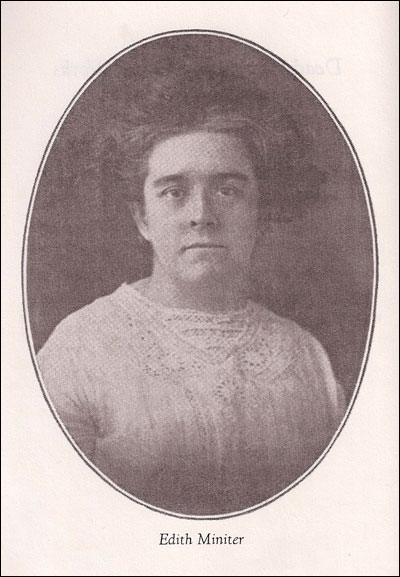

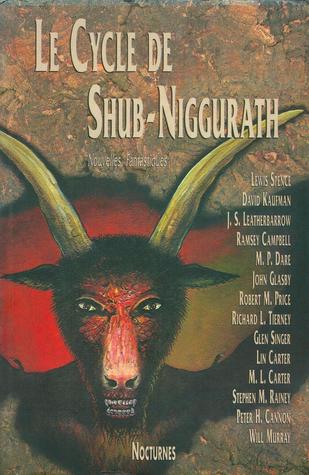
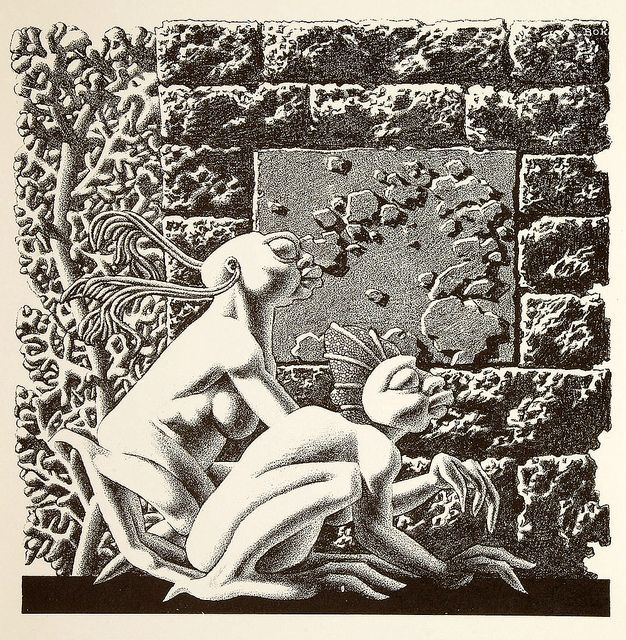
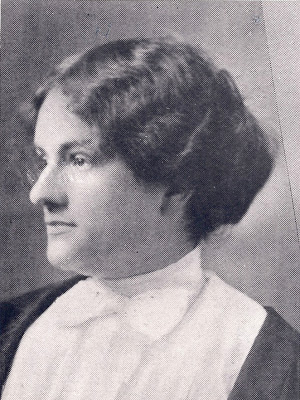







 Deep Cuts in a Lovecraftian Vein