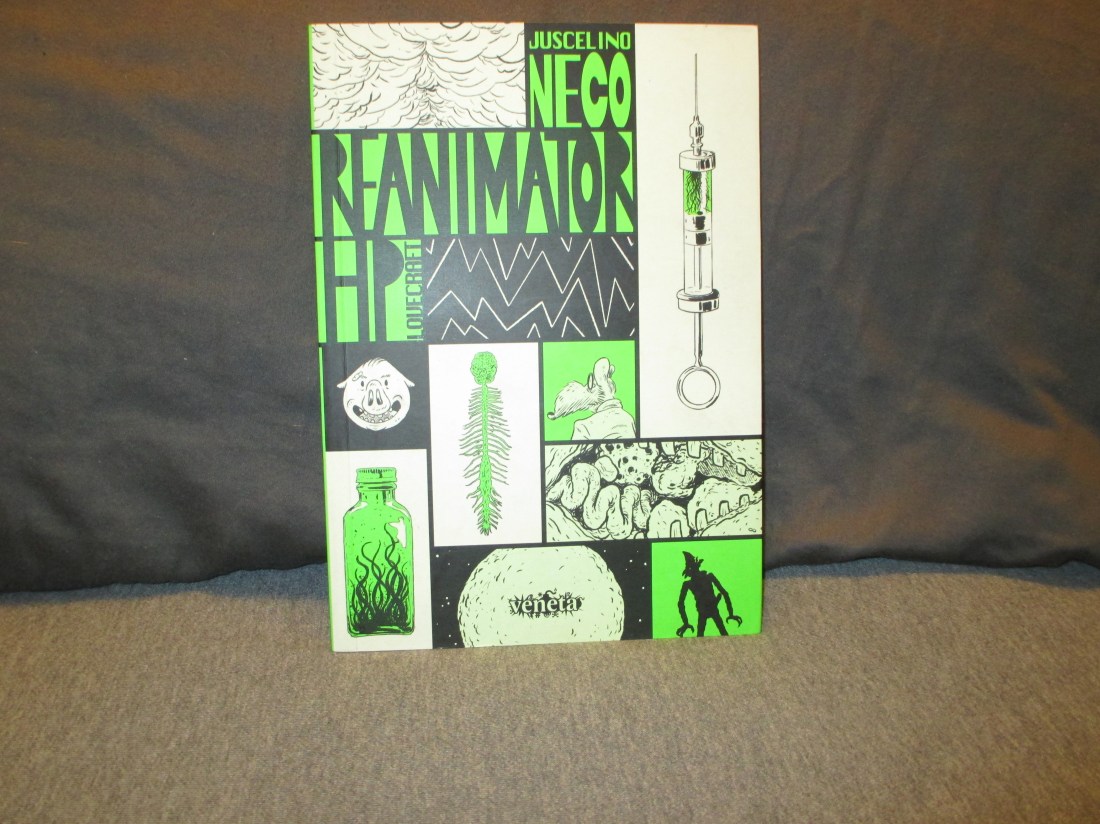
Reanimator (2020) by Juscelino Neco & H. P. Lovecraft

Eldritch Fappenings
This review deals with a work that contains excessive cartoon violence and sexuality. Selected images with cartoon depictions of body horror, violence, genitalia and/or sexually explicit contact will be displayed.
As such, please be advised before reading further.


Lovecraft não era sequer um grande astesão, mas is so também não importa, como o rock e, mais que ele, o punk rock, provou inúmeras vezes. Um artista menos dotado é perfeitamente capaz de Fazer uma obra mais oportuna, historicamente falando, do que um virtuose incapaz de pensar sua própria profissão em termos amplos. Mas isso também não era o caso de Lovecraft, um artesão obviamente limitado e um artista incapaz de seguir as veredas que ele mesmo abria a golpes desajeitados de marreta. Sua dificuldade técnica fica ainda mais evidente em Reanimator, uma de suas obras menos felizes, mas capaz de gerar tantas pérolas pelas mãos de artists mais dotados que o próprio, como o quadrinista Juscelino Neco.Lovecraft wasn’t even a great artist, but that doesn’t matter either, as rock and, more than that, punk rock, have proven time and time again. A less gifted artist is perfectly capable of making a more timely work, historically speaking, than a virtuoso incapable of thinking about his own profession in broad terms. But that wasn’t the case with Lovecraft either, an obviously limited craftsman and an artist incapable of following the paths he himself opened up with clumsy sledgehammer blows. His technical difficulty is even more evident in Reanimator, one of his less successful works, but capable of generating so many pearls in the hands of artists more gifted than himself, such as the comic artist Juscelino Neco.
Rafael Campos Rocha, foreword to Reanimator (2020)English translation

Rocha’s introduction to Juscelino Neco’s Reanimator (2020) is irreverent toward Howard Phillips Lovecraft. Yet irreverence has ironically been the cornerstone to the posthumous success of “Herbert West—Reanimator.” This minor tale of Lovecraft’s, his first commercial effort at horror fiction, has been adapted, expanded upon, reimagined, and incorporated into other works innumerable times since its first publication—something that has only been possible because artists have been free to do what they like with this story and its setting and characters, to freely distort and play with tone, characterization, and events as they see fit. To turn the grue-filled six episodes into dark comedies, zombie gorefests, introspective reflections on sexuality, and the mechanistic nature of life…all to entertain, explore, and reexamine what Lovecraft did and did not do.

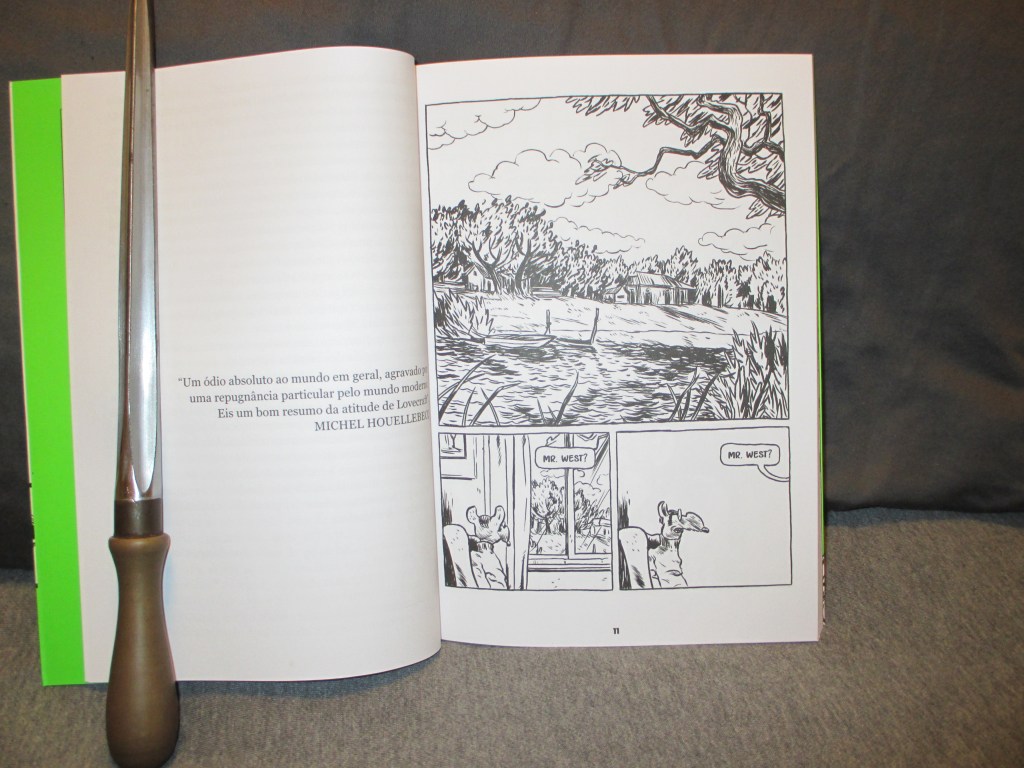
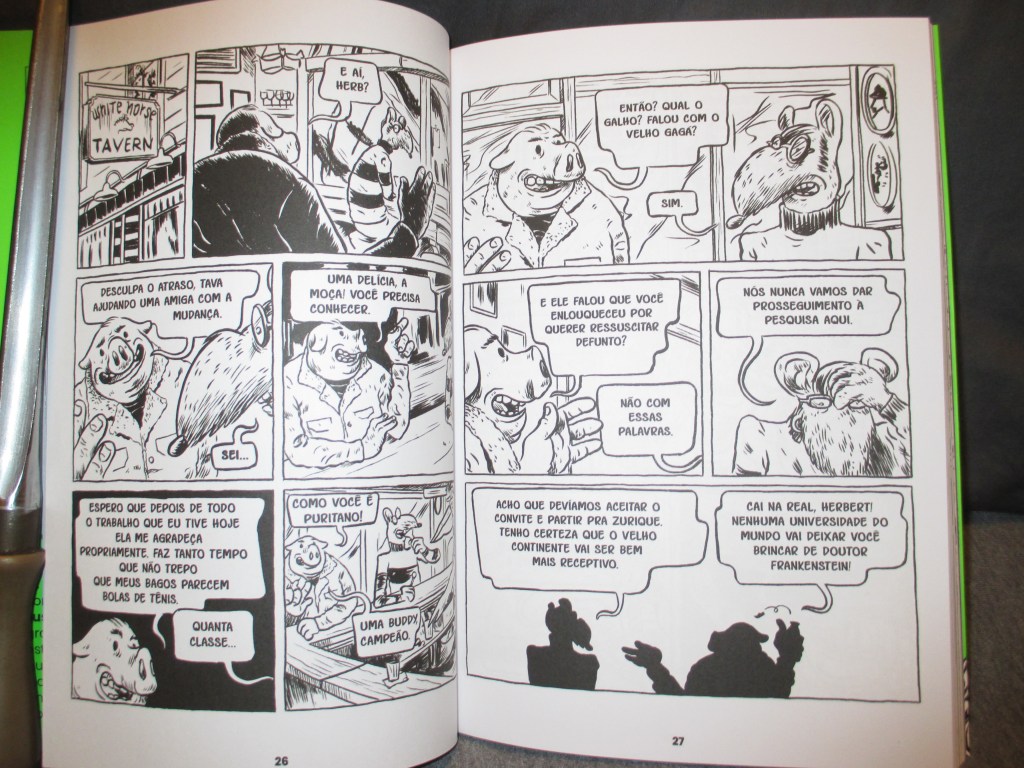
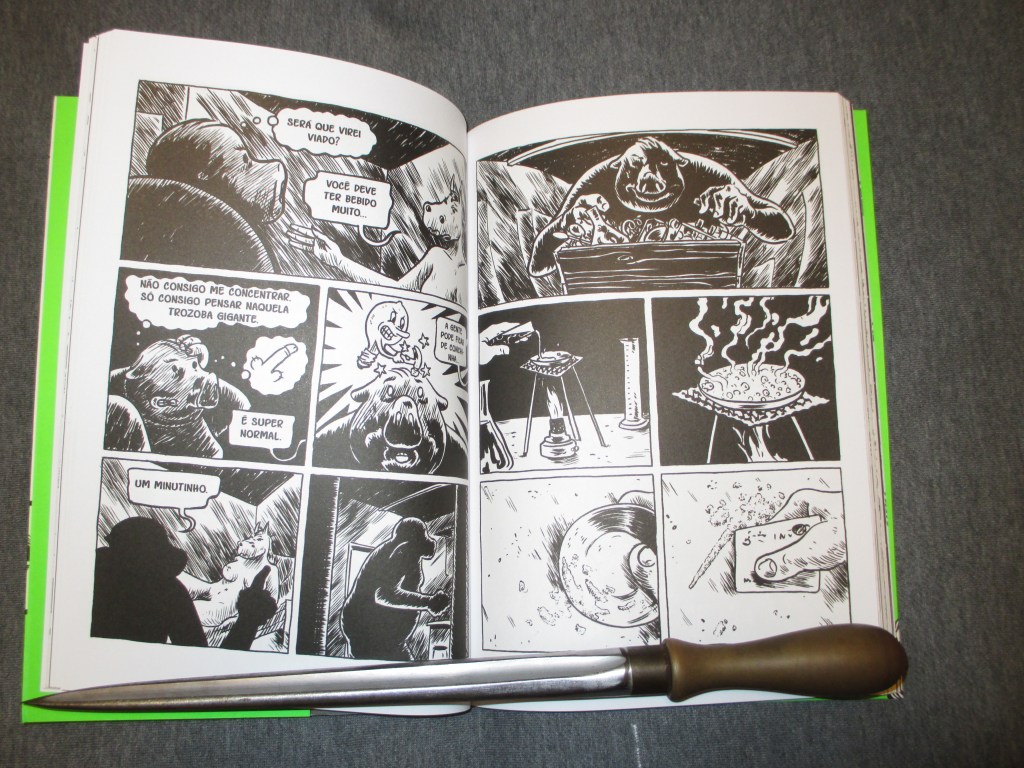
What Brazilian comic creator Juscelino Neco did was to approach “Herbert West—Reanimator” through the lens of 1960s underground comix. Herbert West and the other characters are cast as anthropomorphic animals, the grungy cousins of Mickey Mouse and Bugs Bunny, and their adventures are sexually explicit, violent, and drug-fueled. Neco put on the page everything that Lovecraft left off the page—and added a few other details of his own along the way.

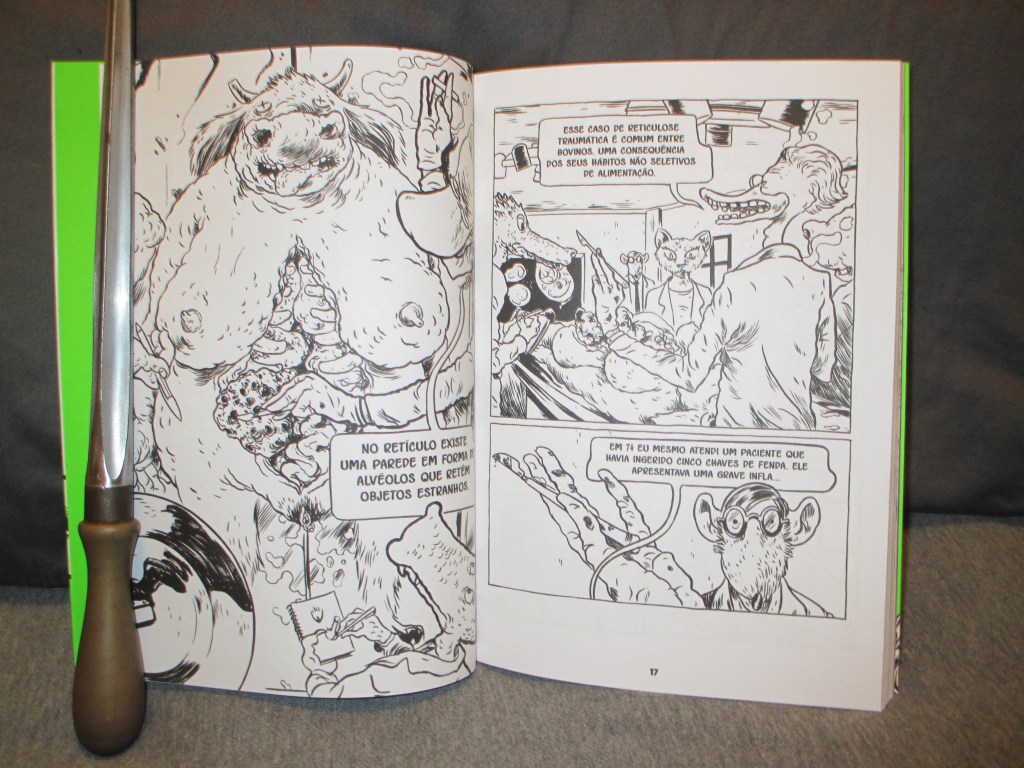
The beginning is relatively restrained, Herbert West is in medical school. The broad outline of the first portion of Neco’s graphic novel follows the opening episode of Lovecraft’s story, although Neco takes many liberties with the framing of characters and events. As well as making the most of the opportunity to add a little gross-out imagery, such as a full-page pin-up of an autopsy in progress.

A vida não e um filme de terror barato.Life is not a cheap horror movie.
Reanimator p23English translation

It is difficult to express how emotive the combination of art and text can be. The instinctive comparison is something like Art Spiegelman’s Maus, but the over-the-top black humor characteristic of the film Re-Animator (1985) is still there. There will be a page of dark panels where West laments the unimaginative bureaucracy that refuses to entertain his ideas about reanimation—and then you turn the page and its West talking to himself while being the bottom in a graphically-portrayed homosexual BDSM scene.

Then West gets an assistant. Someone to help him out.

In Neco’s Reanimator, the porcine assistant is no passive observer of events, but an active partner in West’s operations. They enable West’s experiments, but also his worst impulses. Together the two secure their first victim/experimental subject—and this is where things start to get a little more punk rock. The presence of drugs and the necessity of violence start to ramp up swiftly.

Until, while with a prostitute, the assistant cooks up some reanimation agent like its crack cocaine and injects himself. It does provide new life for spent flesh, but is also suggests a new sideline for West and his friend as drug dealers.

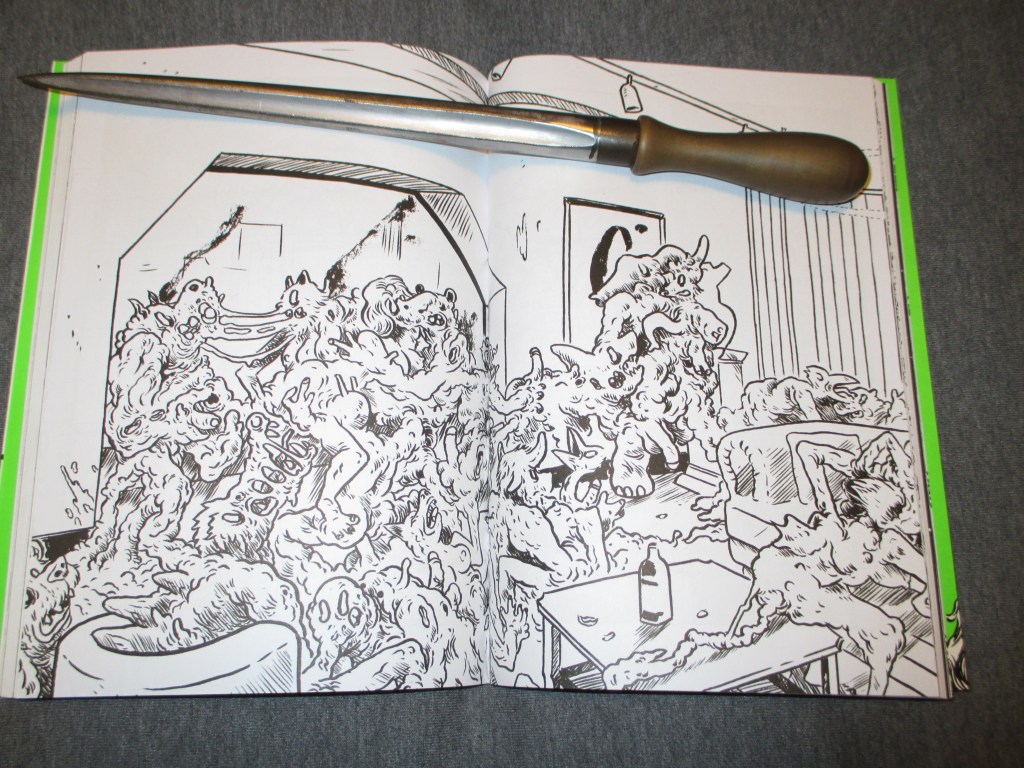
At this point, Neco’s Reanimator has completely abandoned Lovecraft’s narrative for a literal orgy of sex and violence. One that continues to try and outdo itself with almost every turn of the page. There is one scene at a reanimation drug-fueled party that is reminiscent of something like the end of Brian Yuzna’s Society (1989), where the individual ceases to exist.

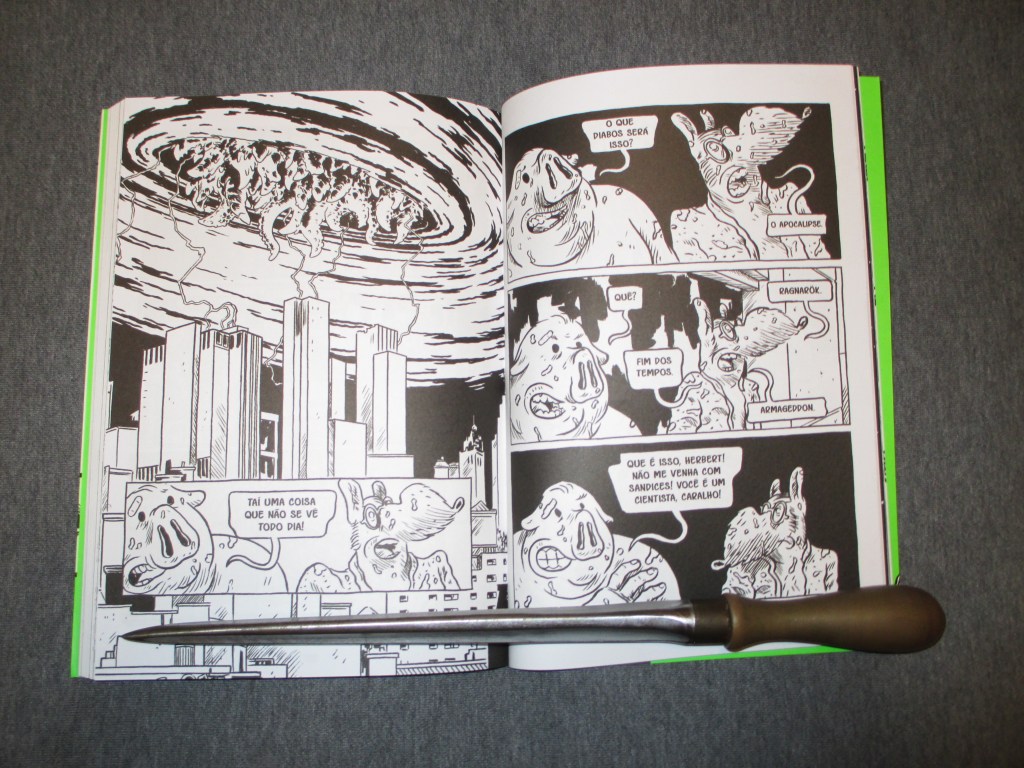
From there, Neco goes full eldritch, bringing in some of Lovecraft’s other ideas while retaining the same ’60s underground comix shock mentality.

It is never clear, at the end, whether this is something Herbert West and his friend have caused by defying the laws of nature, or just a coincidental apocalypse. In a way, it doesn’t matter. Something fundamental has changed, the scientific genie has been let loose from the bottle and they can’t put it back. The world ends…and Neco doesn’t stop there. The world is fucked. Quite literally.

What stands out about Reanimator (2020) is how fully Neco embraces the remit. Critics have read a homosexual subtext in Lovecraft’s original story, some works like “Herbert West in Love” (2012) by Molly Tanzer and “(UN)Bury Your Gays: A Queering of Herbert West – Reanimator by H.P. Lovecraft” by Clinton W. Waters have made that more explicit, but here West’s sexuality is embraced and depicted as an open part of his character. The sex and violence are over-the-top and cartoonish, but that stands in stark contrast to efforts at more realistic portrayal like Reanimator (2008) by Florent Calvez and Herbert West: Carne Fresca (2021) by Luciano Saracino & Rodrigo López.

Reanimator (2020) by Juscelino Neco works on its own terms. It’s fun, disgusting, ribald, edgy, slightly ridiculous, and in the end cosmic in its scope. Readers are left without all the answers, but there’s the impression that one man’s obsession, with the aid and assistance of a friend, has led to the destruction of an entire world. That isn’t how Lovecraft ended the story, but that is the point. To do what Lovecraft would not have done, to use his fiction as a springboard, not to limit creators to only aping what he wrote forever.


Bobby Derie is the author of Weird Talers: Essays on Robert E. Howard and Others and Sex and the Cthulhu Mythos.

Deep Cuts in a Lovecraftian Vein uses Amazon Associate links. As an Amazon Associate I earn from qualifying purchases.
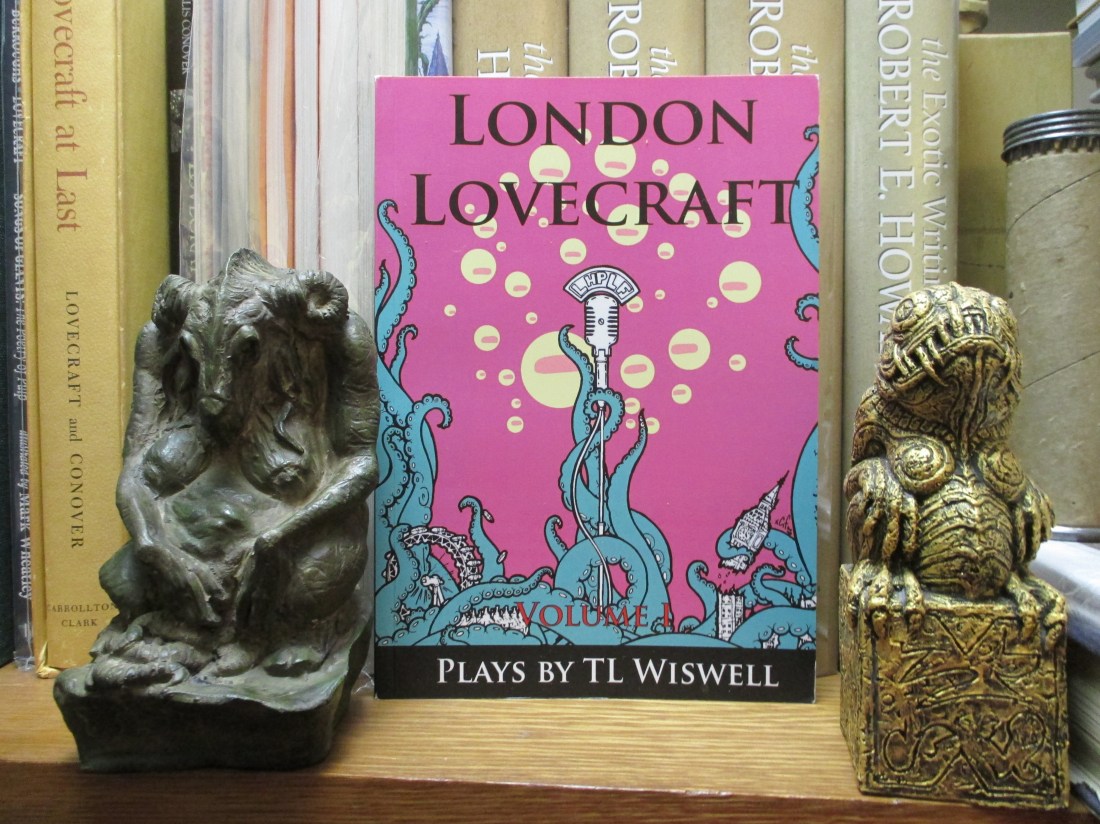
London Lovecraft: Volume I (2023) by TL Wiswell

Festival shows are, sadly, an ephemeral lot. While some lead to full length plays, TV shows, or even films, most of them rise and fall with their creators, and said creators’ energy and willingness to sacrifice time and money getting their works on stage. This is especially sad for fans of Lovecraft, who are most receptive to works that expand the canon. It is hoped that this slim book of scripts can in some way help these plays reach a larger audience that they were able to when they were originally performed.
—Introduction, London Lovecraft: Volume I, 4

The London Lovecraft Festival has been running since 2018, though the annual festivities were interrupted by the Covid 19 pandemic. A key part of the festivities are the dramatic or theatrical presentations, which expand on or re-cast Lovecraft’s familiar works in a new light. In 2023, four of these brief plays by LLF founding producer TL Wiswell were collected into an independently-published book by Vulcanello Productions.

Each of the four works is a specific riff off a familiar Lovecraft story, condensed and adapted into short plays with typically 2 or 3 main characters. The connecting theme is that the stories are altered to focus on the female characters, either expanding on the roles and thoughts of existing characters or by gender-flipping characters (so Herbert West may become Albertina, for example).

Other writers have had similar ideas, such as in HPL 1920 (2020) by Nick O’Gorman & Tales from the Cthulhuverse #1 (2020) by Zee Romero & Luca Cicognola, but the play as a format shifts how a story can be told, and tends to zero in on the relationship between the characters portrayed by the actors. It actually works rather well for Lovecraft’s fiction as passages of expository narration in his work can be just that, whereas in comics or film they tend to cutaway into flashbacks.

Much of the stories also have to be removed, the plot boiled down and simplified to what can feasibly be acted or narrated on a small stage at a budget. That kind of condensation is an art unto itself, and as adaptations go, Wiswell treads the fine line between faithfulness, practicality, and originality.

Mountains of Madness

CHARACTERS:
Dr Willa Dyer – Geologist
Dr Pomona Peabodie – Engineering
Frances Danforth – graduate student, engineering

Setting: 1928. A lecture hall at Miskatonic University, set up with a film projector and a gramophone. WILLA DYER is behind the podium addressing the audience as if they are the audience of her lecture. All people referred to are substantially only present in her memories: Peabodie is dead; Danforth has gone mad.
—Introduction, London Lovecraft: Volume I, 10

The Miskatonic University expedition to Antarctica in Lovecraft’s At the Mountains of Madness was implicitly all white men; the reimagined expedition of Wiswell’s play took place in the decade prior. The all-female expedition raises no more comment than the all-male one did for the bulk of readers. Much of the grand cosmic backstory of the Old Ones is truncated in summation—as it would be, during a lecture—and neatly bypassed Dyer’s exclamation “They were men!” in Lovecraft’s version.

Much of this short play consists of long monologues by Dyer and Peabodie, with brief interjections by Danforth; shifts in light and focus emphasize when one character is speaking from the past (as when a recording of the dead Peabodie “plays” on the gramophone). It is an effective truncation, and shows how gender need not shape every role in one of Lovecraft’s stories.

Asenath’s Tale

CHARACTERS:
Viola Danforth
Asenath Waite Derby

Setting: New England, 1962

Suggested stage setup: two armchairs with a table between them, upon which rests a phone.
—Introduction, London Lovecraft: Volume I, 28

“The Thing on the Doorstep” features one of the more famous of Lovecraft’s women characters, Asenath Waite—but the depiction is somewhat married because of the unique gender dynamics of Waite in that story, as discussed by Joe Koch in Must I Wear This Corpse For You?: H. P. Lovecraft’s “The Thing on the Doorstep” (1937), among others. Wiswell doesn’t shy away from this; rather, she puts Asenath’s identity as a woman, and her friendship with Viola Danforth, at the center of the story.

Reading about Asenath Waite as a child in Innsmouth, her relationship with her father and with the other children, an insight into her heritage in Innsmouth, provides a humanizing perspective that is completely absent in Lovecraft’s story—where the reader never “meets” Asenath as she was in youth, but only later, as an adult, with all that implies. Wiswell makes the most of the sexism expressed by Ephraim Waite in Lovecraft’s story to frame a contentious relationship between father and daughter that goes all too badly wrong.

There is something more poignant about “Asenath’s Tale” than “The Thing on the Doorstep.” Edward Derby is almost a born victim in Lovecraft’s story, and his final act of rebellion is late in the game. Wiswell’s story with its light-hearted banter becomes something more like a tragedy; the events unfold, unstoppable, and though the players on the stage can only read their parts, those who know in the audience can see their brief, fleeting happiness and friendship for what it is: the prelude to horror.

Albertina West: Reanimator

CHARACTERS:
Dr Albertina West
Dr Isabel Milburn
The Undead: The animated corpses of Major Sir Eric Moreland Clapham-Lee and others.

All scenes set in a laboratory with a dissecting table and a sitting room in front, in Scotland and France (or maybe Belgium)

Time: 1890-1922
—Introduction, London Lovecraft: Volume I, 50

From a narrative standpoint, “Herbert West—Reanimator” is really six brief episodes strung out like an old film serial; it’s why each individual episode ends with a mini-climax, and might be separated by months or years in time. Adapting that to the stage or screen is tricky; when Dennis Paoli, William J. Norris, and Stuart Gordon put together the screenplay for Re-Animator (1985), they ended up jettisoning entire episodes while burning through the plot to fit a tightly-paced 86-minute runtime.

Wiswell’s approach rearranges the episodes in favor of focusing on a narrower thread of plot: the friendship of West and her assistant Milburn, and reanimation of Major Sir Eric Moreland Clapham-Lee during World War I, and the aftermath. Zeroing-in on this particular plotline has a lot of benefit, because it gives West an effective antagonist to play against, a monster of her own creation, not unlike Frankenstein‘s Adam.

More than that, though, it gives Bertie West’s usually nameless, gormless, and racist assistant (and the narrator of the story in Lovecraft’s version) an identity. The fact that they’re women medical doctors during the late 19th and early 20th century actually gets a bit of attention, which is nice; while these are stories to address the gender gap in Lovecraft rather than historical societal trends to misogyny as a whole, Bertie’s nod to the National Society for Women’s Suffrage and the restrictions of women in higher education and medical practice is appropriate for the character and the setting.

Period prejudice with regard to race, on the other hand, is out. Much as with “Kanye West—Reanimator” (2015) by Joshua Chaplinsky vs. “Herburt East: Refuckinator” (2012) by Lula Lisbon, we get a version of the seen of a reanimated corpse with a baby’s arm dangling out of its mouth, but the race of the reanimated is not explicitly mentioned. Horror is mixed with bathos at this point, as Milburn and West trade quips and bon mots in a style that owes a bit more to a deranged P. G. Wodehouse than H. P. Lovecraft.

More than pretty much any other of Lovecraft’s stories “Herbert West—Reanimator” seems hard to play straight; the potential for over-the-top gore and dark humor has been made too apparent.

The Dreamquest of Unknown Kadath

Unlike the others, this adaptation of Lovecraft’s The Dream-Quest of Unknown Kadath was done in collaboration with experimental musician Shivers (Sam Enthoven) and takes the form of a puppet show, narrated and accompanied by music. An audio production of the production is available on Bandcamp.

Randolph Carter has become Miranda Carter, but the gist of the plot and the character are the same as in Lovecraft’s story—albeit with a little more humor.

As she turned to go, Carter wondered why the Zoogs had stopped pursuing her. Then she noticed all the complacent cats of Ulthar licking their chops. She recalled, too, the hungry way a young Zoog had regarded a small black kitten in the street outside. And because she loved nothing on Earth more than small black kittens, she did not mourn the Zoogs.
London Lovecraft: Volume I, 68

Puppetry, especially shadow puppetry, can be singularly evocative; action that could not be feasibly acted out can be implied, with the audience’s imagination filling in the gaps. As with most of the other stories, Carter’s gender plays little role in how the events play out; it’s a change of face, but the core of Lovecraft’s tale and characterization remains intact.

While all of these plays are competently written and I’d like to see them performed sometime, the best are doubtless “Asenath’s Tale” and “Albertina West: Reanimator” specifically because those are the two stories that diverge most from Lovecraft’s characterization, while keeping true to his plots, and thus add some new dimension to the old stories.

At the moment there does not appear to be any way to purchase copies of London Lovecraft: Volume I (2023) except directly from the author. TL Wiswell was kind enough to sell me a copy during their visit to NecronomiCon Providence 2024, and I appreciate the chance to add to my small store of Lovecraftian plays, alongside works like Lovecraft’s Follies (1971).


Bobby Derie is the author of Weird Talers: Essays on Robert E. Howard and Others and Sex and the Cthulhu Mythos.

Deep Cuts in a Lovecraftian Vein uses Amazon Associate links. As an Amazon Associate I earn from qualifying purchases.
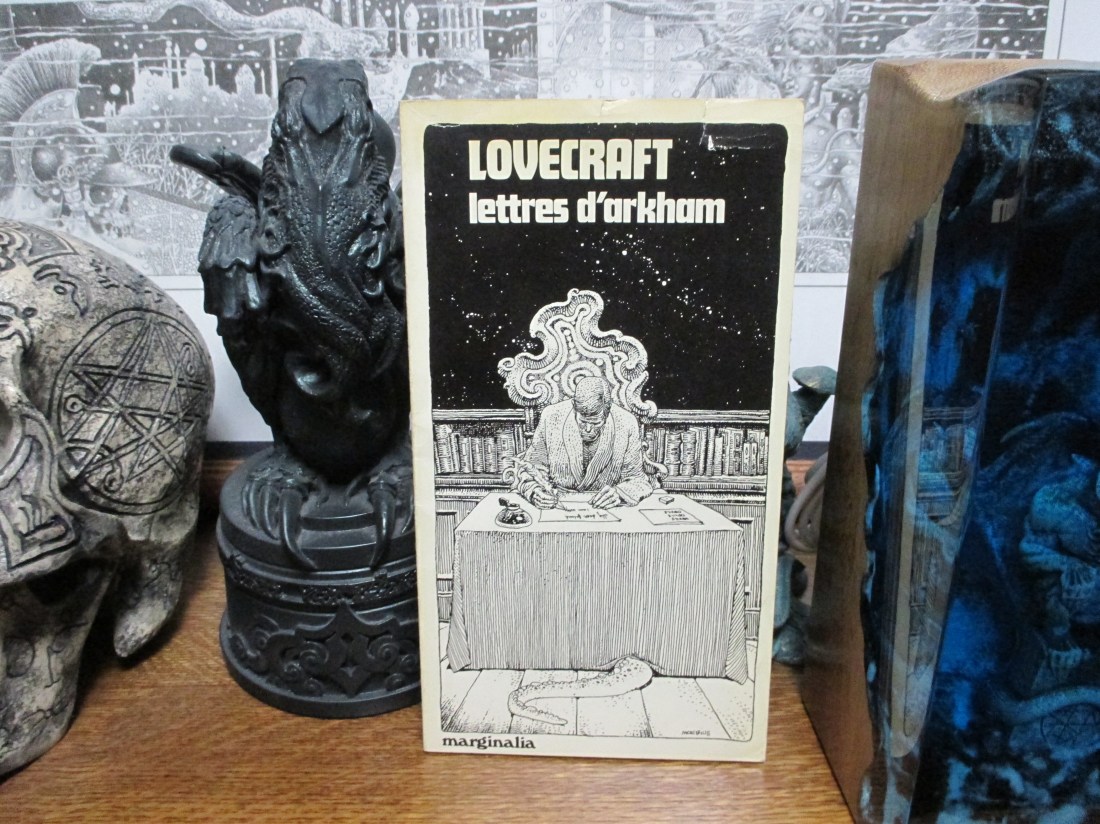
Lettres d’Arkham (1975) by H. P. Lovecraft & François Rivière

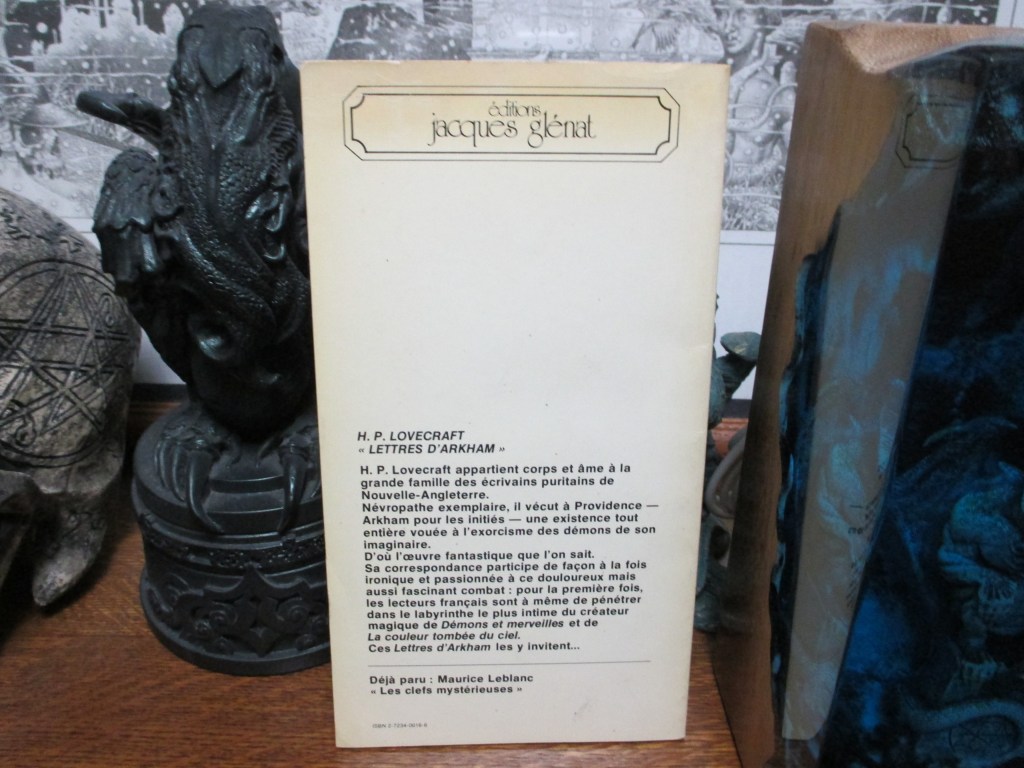
H. P. Lovecraft appartient corps et âme à la grande familie des écrivains puritans de Nouvelle-Angleterre.

Névropathe exemplaire, il vécut à Providence—Arkham pour tes initiés—une existence tout entière vouée à l’exorcisme des démons de son imaginaire.

D’où l’œuvre fantastique que l’on sait.

Sa correspondance participle de façon à la fois ironique et passionnée à ce douloureux mais aussi fascinant combat : pour la première fois, les lecteurs français sont à même de pénetrer dans le labyrinthe le plus intime du créateur magique de Démons et merveilles et di La coouleur tombée du ciel.

Ces Lettres d’Arkham les y invitent…
H. P. Lovecraft belongs body and soul to the great family of New England Puritan writers.

Exemplary neurotic, he lived in Providence—Arkham for the initiates—a life entirely devoted to exorcising the demons of his imagination.

Hence the fantastic work we all know.

His correspondence is an ironic and passionate contribution to this painful but fascinating struggle: for the first time, French readers are able to penetrate the most intimate labyrinth of the magical creator of Démons et merveilles and La coouleur tombée du ciel.

These Letters from Arkham invite them to do so…
Back cover copyEnglish translation

French audiences may have been aware of H. P. Lovecraft as early as the 1930s, when English-language books and periodicals made it to European shores; Jacques Bergier even claimed to have carried on a brief correspondence with Lovecraft, and he certainly had two letters published in the pages of Weird Tales despite living in France at the time.

Lovecraft’s major introduction to French audiences came in the 1950s with collections like La couleur tombée du ciel (“The Color from the sky”/”The Colour Out of Space”) [1954, Denoël], and Démons et merveilles (“Demons and Marvels”) [1955, Deux Rives] that translated Lovecraft’s prose into French. Both of included introductions from Bergier, who provided many readers with their first insight into Lovecraft himself—who he was, and where he came from. Both books went through many reprints and editions.

In 1964, Arkham House published the first volume of Lovecraft’s Selected Letters. This project had begun shortly after Lovecraft’s death in 1937, as August Derleth and Donald Wandrei had begun contacting Lovecraft’s correspondents and requesting letters to transcribe for future publication. The scope and cost of the project soon made actual publication of the Arkham House Transcripts—at least in their entirety—impractical; war time paper rationing and rising post-war costs delayed the project further. The first three volumes, released under the editorship of Derleth and Wandrei, represent a compromise to their original vision—but also a tremendous effort, and one nearly unique.

Lovecraft had died broke and was far from a popular or mainstream author; the publication of his letters not only kick-started real Lovecraft biographical scholarship and literary criticism, but it helped center Lovecraft himself as an individual worth reading. More of Lovecraft’s letters would be published than those of Ernest Hemingway, Dashiell Hammett, or dozens of other much more popular authors.

Of course the French had to get in on the action.

Early translations of Lovecraft’s letters into French began piecemeal, in literary and fan periodicals; the biography is a bit opaque to English-language readers living in the United States, but a special issue of L’Herne dedicated to Lovecraft in 1969 stands out for translating a few letters, amid a mass of literary and biographical material that marks the first major critical publication on Lovecraft in any language. The 1970s in France would see growing interest in Lovecraft, especially in the field of Franco-Belgian comics; the contributors of Metal Hurlant (“Howling Metal,” translated into English markets as Heavy Metal magazine), which began in 1974, was founded by Jean Giraud (Mœbius) and Philippe Druillet, both of whom would go on to fame…and through Metal Hurlant, many graphic adaptations of Lovecraft’s stories, and stories inspired by Lovecraft and his creations, would be published in the pages of Metal Hurlant and Heavy Metal, to audiences around the world.

Lettres d’Arkham (1975, Jacques Glénat), translated by François Rivière, is a slim booklet of 80 pages, counting all the introductory material. The cover is by Mœbius, and plays to Lovecraft’s legend: seated at a table, writing with a quill pen, a row of antique volumes behind him, against a starry landscape, a tail or tentacle discreetly emerging from beneath the table cloth.

Jacques Glénat had founded Glénat Éditions in 1972; it is now a major publisher of bandes dessinées, and also publishes French translations of manga and nonfiction periodicals. But this was early days, and Lettres d’Arkham was the second entry in a series titled Marginalia; the first was a reprint of Les clefs mystérieuses (“The Mysterious Keys”) by Maurice Leblanc, the creator of Arsène Lupin. This was apparently an experiment in shorter-form material, mostly fiction reprints, with Rivière as overall editor of the series. Lettres d’Arkham appears to be the sole non-fiction entry.

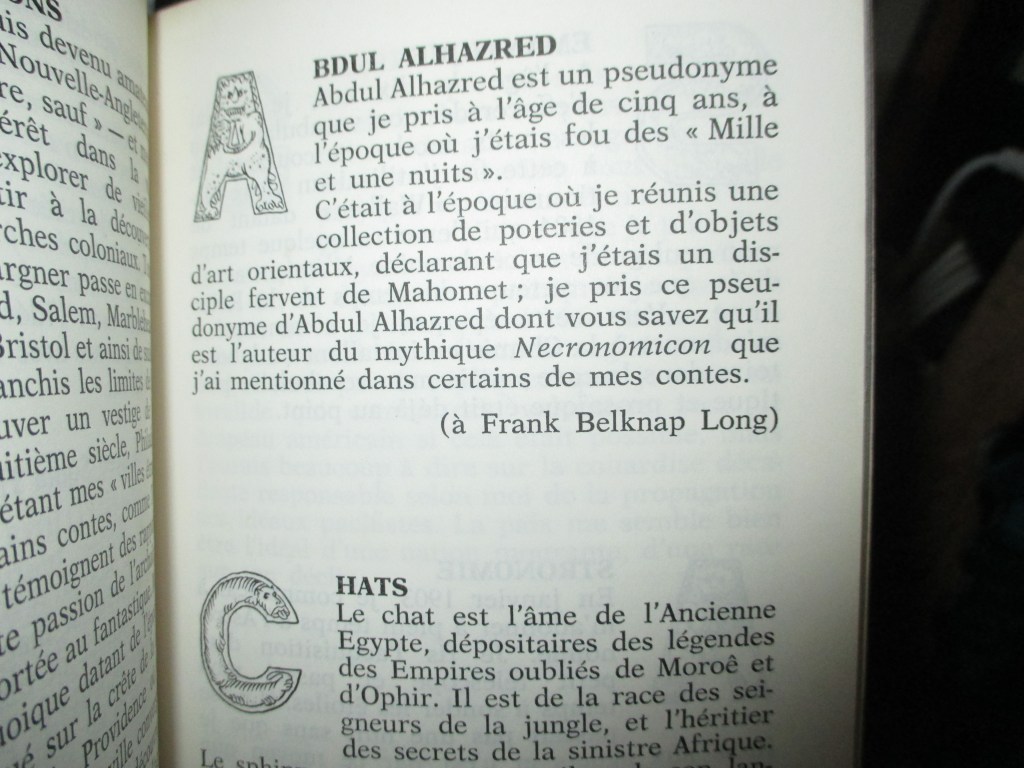
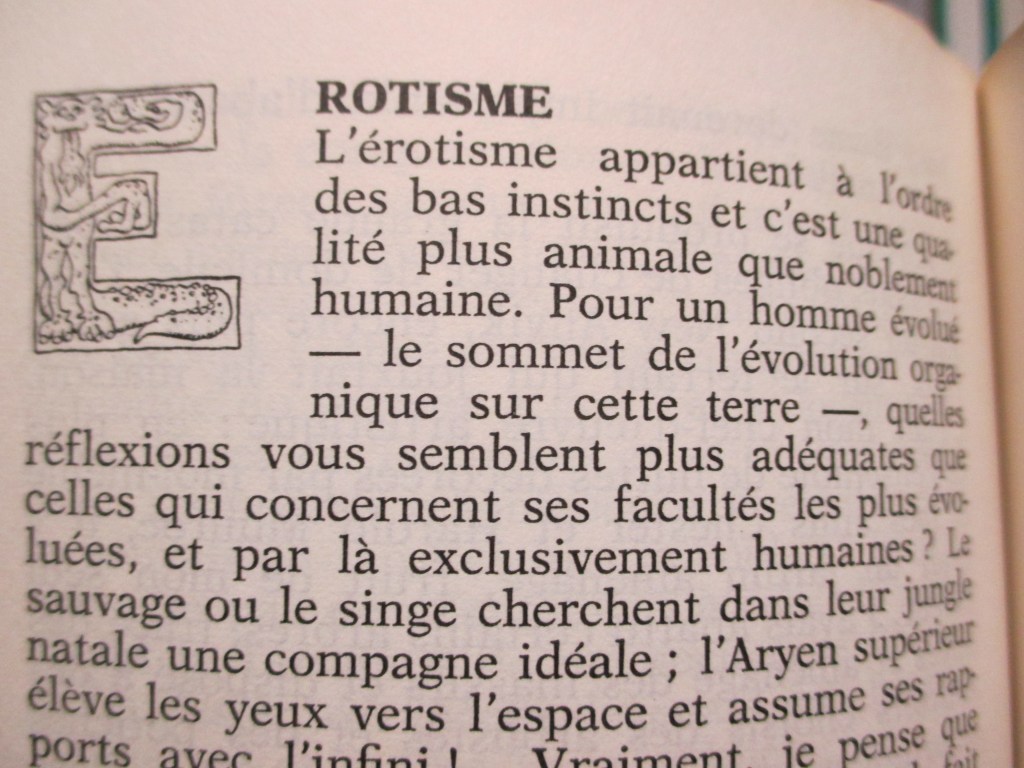
Given the short format, Yves Rivière apparently opted against trying to translate entire letters. Instead, after a brief initial essay (“Lovecraft, un cauchemar Américan”/”Lovecraft, an American nightmare”) and chronology of his life, Rivière presents a series of excerpts from the first two volumes of the Selected Letters, divided into individual topics.

The initial letters, reminiscent of illuminated manuscripts, were created by the artist Floc’h (Jean-Claude Floch), who would become known for his many collaborations with François Rivière.

Most of the translations don’t specify date or even the recipient of the letter, so from a scholastic viewpoint Lettres d’Arkham wasn’t ideal—but translating one of Lovecraft’s letters is more difficult than translating one of his stories or poems. There is no guiding narrative, the letters are full of quirky language, obscure topical and geographic references, callbacks to previous correspondence. Even though Derleth and Wandrei had already edited and censored Lovecraft’s letters to give the excerpts in the Selected Letters volumes better readability (and to remove or downplay some of Lovecraft’s more racist sentiments), Rivière was trying to translate some pretty tricky material for an entirely new audience.

Generally speaking, Rivière seems to have done a pretty decent job of the translations. The most egregious errors are (and this might be expected), geographical. For example, the entry for Salem places it in New York instead of Massachusetts. Still, for a Lovecraft fan in 1970s France, how else were you going to read any of Lovecraft’s letters at all?

For francophone readers, that is still an issue. The vast majority of Lovecraft’s letters have never been translated into French, and might never be (one can only imagine the difficulty of trying to translate some of Lovecraft’s slang-filled letters or stream-of-consciousness sections into French). Some further attempts have been made to present a part of Lovecraft’s correspondence to a French audiences: in 1978 there was Lettres Tome 1 (1914-1936), translated by Jacques Parson, for example, but there was no Lettres 2 forthcoming. Several other collections of part of Lovecraft’s letters have been published, especially in recent years, much of the correspondence from Lovecraft’s later years, and with friends like Clark Ashton Smith, August Derleth, C. L. Moore, Fritz Leiber, E. Hoffmann Price, and Robert E. Howard, remains untranslated.

There are people working on that last one, however. A translation of the correspondence of Robert E. Howard and H. P. Lovecraft into French by David Camus and Patrice Louinet was successfully crowdfunded, and although health issues have delayed the project, it still looks fantastic.

It has to be emphasized what a labor of love translation is; it is never simply a matter of translating word-for-word, but always trying to capture the essence of what is being communicated. English-language readers have an advantage over the French in that we have practically every word that Lovecraft has written published, but as he wrote them; French readers and scholars face not only a limited amount of such material, but have to deal with multiple translations of those same stories and letters in various formats.

Considering that the whole of Arkham House’s Selected Letters has never been translated, much less any of the later, more complete volumes of letters by Necronomicon Press or Hippocampus Press, Lettres d’Arkham remained relevant in France long past the point where most Lovecraft scholarship had superseded the Arkham House Selected Letters.


Bobby Derie is the author of Weird Talers: Essays on Robert E. Howard & Others (2019) and Sex and the Cthulhu Mythos (2014).

“Message in Stone” (1956) by Muriel E. Eddy

His funeral was held at High Noon at a funeral home, and, though the little gods of fate seemed to will that we should arrive there too late for the services, we did visit Swan Point Cemetery, with its many tombs, winding lanes and exquisite monuments—and did I imagine it, or did the spirit of our late beloved friend and fellow-writer hover over us as we bowed our heads in reverence and respect to the memory of one of the finest men—yes, and greatest geniuses, who ever walked this earth? A man little-known, perhaps, by the majority, but a man who, to those who came in more than casual contact with him, exemplified all that is fine and good in a fellow human being.
Muriel E. Eddy, “Howard Phillips Lovecraft” in Rhode Island on Lovecraft (1945) 21-22

From the very first, Muriel E. Eddy’s memoirs of H. P. Lovecraft were fairly rose-tinted—and, occasionally, given to flights of imaginative fantasy like the above. The Eddys did not make it on time to Lovecraft’s funeral; such things happen, but they did apparently visit his grave periodically. Lovecraft’s grave, initially unmarked, was not the point of pilgrimage for fans and admirers that it is today; but he had long known and expected this to be the resting place for his mortal remains, in the family plot, and it is clear from Lovecraft’s letters to the Eddys that they were well aware of that.

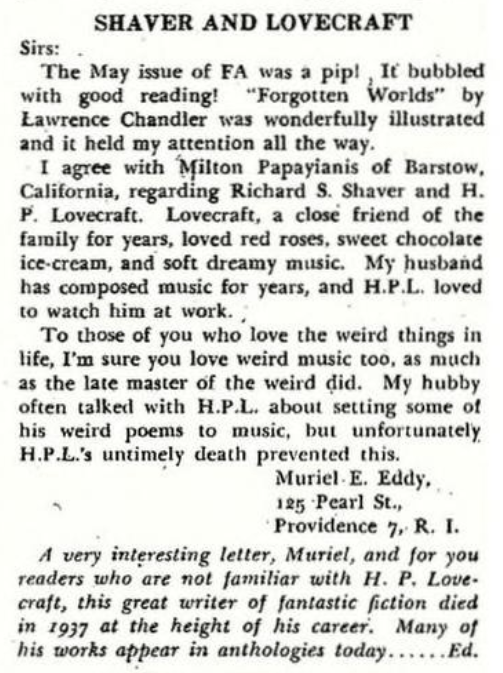
H. P. Lovecraft was an atheist and materialist; he had no expectations for survival of consciousness after death. His afterlife, as it is, lay in the publication of his work, the memories of his friends, and increasingly his appearance as a fictionalized character in various works. Muriel E. Eddy was, apparently, not a materialist, and was at least open to the idea of ghosts or consciousness that survived after death. At least, she was willing to write about it for Fate Magazine, which offered $5 for tales of evidence of existence after death. This was not exactly new territory for Muriel, who had sold a “psychic experience” to The Occult Digest in 1939. So it was that in the October 1956 issue of Fate, “Message in Stone” appeared.


Message in Stone

We were greatly saddened when Howard Phillips Lovecraft, the famous Rhode Island writer of weird and uncanny tales of the unknown, died in March, 1937. Mr. Lovecraft had been a friend of the family for years. He often had brought his weird writings, still in manuscript form, to our house, reading them aloud in his sepulchral voice and awaiting our approval or disapproval. He considered the Eddy family “good critics.” I still can see him, sitting in our humble abode and reading his famous horror tale, “The Rats in the Walls,” which has been reprinted frequently since his untimely demise.

We often discussed the mystery of death and one night Lovecraft expressed the opinion that the human brain was practically indestructible. He believed that, whether or not his body was embalmed, his brain would continue to function. He said that if his brain continued to “work,” as he believed it would after death, he would send a message in some material form that we could understand.

At that time he was in excellent health and death seemed distant. However, shortly afterward Howard Phillips Lovecraft suddenly became seriously I’ll and died in Jane Brown Hospital in Providence, R.I., in March, 1937. He was only 47 years old.

After the funeral I often visited his grave and placed floral offerings there. The grave is in Swan Point Cemetery and is marked by a tall granite shaft.

One night in September, 1937, I had a very vivid dream about Howard Phillips Lovecraft. In my dream I visited his grave, now covered thickly with grass, and was on my knees, parting the grass as I hunted for something.

My dreams haunted me and early the next day, a Sunday, I drove out to the cemetery. I felt driven by an invisible force.

As I stood beside Lovecraft’s grave, I seemed to hear his sepulchral voice again, intoning the words, “If my theory is correct, if my brain continues to function after my death, I will send you a message in some material form that you can understand.”

My eyes scanned the grass on the burial plot, still wet with dew, and then I glimpsed something white shining on Lovecraft’s grave. Stooping, I parted the heavy growth with my hands and picked up a heart-shaped stone, as smooth as satin and about two inches across. It was milky white and looked oddly like a quarried stone of the translucent variety. I recalled that Lovecraft’s grandparents, long dead, had owned a stone quarry in East Providence.

How the stone happened to be lying on Lovecraft’s grave may be only a matter of conjecture. However, he had known that I collected odd-shaped natural specimens, such as unusual shells, odd bits of wood and minerals, especially stones and rocks of unusual formation.

I could find no stone in the cemetery that resembled even remotely the one I found on Lovecraft’s grave. —Providence, R. I.

[Fate Magazine (Oct 1956), 103-105


Some of the details in the piece are correct, others likely honest mistakes. The description of the grave is accurate; at the time, there was no individual marker for HPL, only the granite shaft for the family plot. Lovecraft was 46 at the time of his death, but if Muriel E. Eddy was counting by year, it’s an easy mistake to make. The Phillips did not own a quarry in Providence, but they owned a small mortgage on such a quarry, and in Lovecraft’s letters he talks about sometimes getting mineral samples from there for his friend James F. Morton, who was curator of a museum of geology in New Jersey.

As for the more imaginative part of the Fate piece—there is no account in Lovecraft’s letters or other memories of him hoping for the functioning of his brain after death. However, it is notable that several of his stories for Hazel Heald, notably “Out of the Æons” (1935) and “The Horror in the Burying-Ground” (1937) both deal with a kind of living death, with the mind functioning in a paralyzed or petrified body. Muriel E. Eddy claims to have introduced Heald to Lovecraft, and Heald features prominently in Eddy’s later memoirs, so possibly she remembered either the stories or Lovecraft writing or talking about the stories.

Another likely influence on “Message in Stone” is the magician Houdini, whom both Lovecraft and her husband C. M. Eddy, Jr. had worked with:

I remember Mr. Eddy’s painstaking revision of Houdini’s “Thoughts and Feelings of a Head Cut Off”….an experience which the master magician had undergone in his youth. Harry Houdini said in his story that somewhere in his travels he came across an ancient supersitition that if a head was severed quickly and unexpectedly from a body, the brain in the head kept on thinking for several seconds! […]

I am quite sure this story was never offered for sale by Harry Houdini, as it lacked the ring of veracity . . . perhaps it was somewhat exaggerated! When we told H.P.L. about it, he exclaimed, “Oh, what I could have done with that story, but perhaps Houdini wouldn’t have liked it if I’d changed it too much. I took a lot of liberties with his ‘Pharaoh’ story and he seemed satisfied, but this one!” And a far-away look was in his eyes. . . .

Later on, were were discussing the possibility of the truth of a brain functioning after death, and Lovecraft averred that perhaps the brain did function . . . for a few minutes after the death of one’s body. It was a weird subject, and there I ended! I sometimes wondered what Lovecraft’s true feelings regarding this matter really were. […]

My husband spent some time investigating Spiritualism at Lake Pleasant, Massachusetts, for Harry Houdini, and when he returned home with much data about some of the mediums he’d met, Lovecraft came over to see us and seemed much interested in the subject. He scoffed at the idea of communion with the dead, and said that, in his opinion, death was the absolute end.
—Muriel E. Eddy, “A Gentleman from Angell Street” (1961) in A Gentleman from Angell Street 20-21

The Harry Houdini Circumstantial Evidence blog relates a possible manuscript related to this story, titled “Thoughts and Visions of a Head Cut Off.” Houdini is an important connection as well because of a tradition that began after his death; his wife Bess began to hold séances annually on Hallowe’en, in an attempt to contact her husband’s spirit. Muriel was aware of this:

By the way, Houdini’s last desire was that on every Hallowe’en his resting-place should be visited by friends to see if his (Harry Houdini’s) ghost appeared. . . . he made light of ghosts and Spiritualism, you jnow. As Lovecraft was a “ghost-writer” also for Harry Houdini . . . . . . well! Mrs. Harry Houdini . . . and Harry’s brother Hardeen . . . have joined the ranks of every human’s ultimate glory . . . . could not supervise the weird visition at Houdini’s grave this Hallowe’en. I supose that trek will now be abandoned . . . . Houdini proved his own point . . . he STAYED dead! Somtimes, in a joking mood, Lovecraft used to say that . . . . . PERHAPS . . . . the human brain NEVER stopped functioning . . . . . even after death. A weird thought, and, visiting H. P. L.’s grave one day recently . . . . . your friends the Eddys . . wondered . . . just vaguely. But OF COURSE H.P.L. was just joking!
—Muriel E. Eddy to Winfield Townley Scott, 2 Nov 1945, MSS. Brown Digital Repository

Muriel’s information was a little out of date; while Bess Houdini died in 1943 and Theodore Hardeen in 1945, Bess had passed the séance tradition on to Walter B. Gibson in 1936, who in turn would ask Doroth Dietrich to carry on the tradition, which is still ongoing.

Something said in jest would definitely be more in keeping with what we know about Lovecraft, and of course Muriel E. Eddy would have had to play up the belief in his posthumous existence to get published in FATE Magazine. Her account, minor enough as it is, caught the attention of at least one journalist, who distilled it for a fluff piece to fill a few column inches:

The Register, Santa Ana, CA, 11 Oct 1956, p50
This item was reprinted in other papers as well.

“Message in Stone” was never republished, and the whole incident is largely ignored in Muriel E. Eddy’s most well-known memories. Yet in H.P.L.: The Man and The Image (1969), she ends a rambling collection of memories with the note:

On one of my visits to H.P.L.’s grave, I found a heart-shaped stone. I wondered if he had seen it there, what type of storey might have been concocted by his fertile brain.


Bobby Derie is the author of  Weird Talers: Essays on Robert E. Howard and Others  and  Sex and the Cthulhu Mythos .

Deep Cuts in a Lovecraftian Vein uses Amazon Associate links. As an Amazon Associate I earn from qualifying purchases.
Her Letters To Lovecraft: Muriel E. Eddy

Muriel E. (Gammons) Eddy was born in Taunton, Massachusetts in 1896. She started to write poetry and fiction at a very early age. Muriel was educated in Attleboro Falls, Massachusetts; Redlands, California; and the Horace Mann School in San Jose, California, where she lived during her early teen years. Her father owned a movie theatre during that time, and it was there that she would spend many hours watching the motion picture shows, and writing stories and poems. Upon returning to Massachusetts, much of her poetry was published in her hometown newspaper, The Attleboro Sun.

Being the avid reader that she was, Muriel read all that she could, including the various magazines sold at the local newsstands. One of these held a letter to the editor from Clifford Eddy, Jr. Muriel wrote a letter to him and a correspondence ensued; they were both twenty-one. At the time, the two found they had many common interests: their love for writing, reading habits, their fertile imagination, and their almost twin birthdays (his, January 18, 1896; hers, January 19, 1896). They married the following year on February 10, 1918, eventually settling in Providence, Rhode Island.

Muriel continued writing, all the while raising three children. Her short stories in many different genres including romance, mystery, personal adventure, and suspense were published in the various magazines of the day such as Ghost Stories, Scarlet Adventuress, Complete Detective Novel Magazine, True Confessions, Midnight Magazine, and The Occult Digest. […]

Muriel and Clifford met H. P. Lovecraft and maintained a close friendship with him until his death in 1937.
—Jim Dyer, “Introduction” in In the Gray of the Dusk i-ii

A few letters from Lovecraft to Muriel, and to her husband C. M. Eddy, Jr., survive; so there is no doubt that they did correspond. Beyond that bald fact, the correspondence of Muriel E. Eddy and H. P. Lovecraft gets complicated.

The difficulty comes from the fact that Muriel, more than most of Lovecraft’s friends, memorialized her and her husband’s relationship with Lovecraft. While her major memoir is “The Gentleman from Angell Street” (1961), she also published “Howard Phillips Lovecraft” in Rhode Island on Lovecraft (1945), “Message in Stone” in Fate Magazine (Oct 1956), “Memories of H. P. L.” in The Magazine of Horror (Winter 1965-1966), “Lovecraft’s Marriage and Divorce” in Haunted (Jun 1968), and H. P. L. “The Man and the Image” (1969) (also partially reprinted as “Lovecraft: Among the Demons”), not to mention miscellaneous letters, notes, and probably a few reprints under different titles.

While that sounds substantial, most of these are relatively minor pieces, largely repetitious or filled with Muriel’s own speculation. Digging into the minutiae of what Muriel wrote and when, and trying to cross-reference her statements made through several decades versus the facts given in Lovecraft’s letters and other sources, reveals a great deal of omission, correction, and even contradictions.

To give an example, take this snippet from one of her later, self-published memoirs:

One day he walked all the way up to the top of the First Baptist Metting House in Benefit Street to sign his name in the guest book. He wrote, “H. P. Lovecraft, Esq., Gentleman.” He signed many of his letters to my husband and me with that phrase, and also “your obedient servant.”

*********

Our friendship with Howard began with letter writing, although we also lived in Providence – because he hated to use the telephone or any other mechanical device such as the typewriter. He always wrote in longhand, and later I was to type many of his manuscripts.

We wanted very much to meet him in person, and he finally came to our house one afternoon in August, 1923.
—Muriel E. Eddy, H. P. L. “The Man and the Image” (1969) 3

There is no doubt that Lovecraft did often sign his letters in just this way; we have numerous surviving examples to attest to that. So far, so good. Several of Lovecraft’s letters also attest to how much he detested typing, and his penchant for writing longhand; this is also verified by surviving manuscripts in Lovecraft’s writing. How much Muriel E. Eddy did typing for Lovecraft is more debatable; we cannot point to a typescript and say “Yes, Muriel typed this for Lovecraft.” We do have letters from Lovecraft where he mentions that C. M. Eddy, Jr. typed for him:

I gotta new way to get all my old manuscripts retyped in double-spacing, too. It’s the new local boy Eddy, what I was tellin’ ya about. I revise his stuff; and for every story I jazz up, he types one for me.
—H. P. Lovecraft to Maurice W. Moe, 19 Oct 1924, Letters to Maurice W. Moe 139

Does this mean Muriel E. Eddy didn’t type Lovecraft’s manuscripts? No. But it also means that without supporting evidence, we’re left to take her word on the matter. This becomes important because some of the most interesting and critical points in Muriel Eddy’s memoirs of her friendship and correspondence with H. P. Lovecraft are less well supported by outside evidence.

All of Muriel E. Eddy’s memoirs agree, for example, that Lovecraft first came to visit the Eddys—who lived in Providence, Rhode Island, just a couple of miles from Lovecraft’s front door—in 1923. However, according to Muriel, they actually came into contact years earlier.

Cliff and I met Howard Philips Lovecraft in 1923. We were introduced by their mothers, who were both active in the women’s suffrage movement.
— Muriel E. Eddy, “Introduction” in Exit to Eternity (1973) iii

The 19th amendment granting women’s suffrage in the United States passed in 1919, and Sarah Susan Phillips Lovecraft died in 1921, so this hypothetical first contact would have been c. 1918-1919. Yet there is no mention of the Eddys in Lovecraft’s correspondence before 1923, and the earliest surviving letters from Lovecraft to the Eddys dates to 1923. There is no reference in Lovecraft’s letters of his mother ever attending a suffragette meeting. However, Muriel expanded on this early contact:

Meeting Howard Phillips Lovecraft “in person” was the culmination of months of letter writing. Though we lived but a few miles apart, it had been necessary to contact H.P.L. (as we later learned to call him) by mail, during his mother’s lifetime. […] She said she preferred that we enter into correspondence with Howard, as generally speaking, he hated to talk over the ‘phone, not caring for modern-day inventions or mechanical instruments. […] So we wrote to H.P.L., and found him a willing and eager correspondent. Letters flew thick and fast between us, and he invited us to join the United Amateur Press Association, to which he belonged. He also sent us many copies of The Tryout, a small monthly booklet for amateur writers published by C. W. Smith up in New Hampshire, to which he was a faithful contributor, writing for it under various pen names, one of which was L. Theobald, Jr. We, too, were soon steady contributors to this small magazine.
— Muriel E. Eddy, “The Gentleman from Angell Street” (1961) in The Gentleman From Angell Street (2001), 3, 4-5

While there are no letters from this period to attest to a “thick and fast” correspondence, Lovecraft was definitely keen to recruit fellow-writers to amateur journalism, and the United Amateur Press Association was his personal preference. That being said, The Tryout was associated with the rival National Amateur Press Association, and I’ve yet to find either of the Eddys on the rolls of the UAPA or NAPA. However, in 1918 Muriel E. Eddy did publish a few poems in The Tryout. That much, at least, seems to suggest that they may really have been in contact with Lovecraft as early as 1918.

August Derleth, who presumably got the data directly from C. M. Eddy, Jr. or Muriel Eddy, wrote a slightly more detailed account of Lovecraft coming into correspondence with the Eddys:

By one of those coincidences that are found so frequently in life, however much their incidence may be ridiculed in fiction, Mrs. Sarah Lovecraft and Mrs. Grace Eddy, two ladies of Providence, Rhode Island, who were allied in interest in the movement for women’s suffrage early in this century, had sons who were bending their efforts toward success at writing. Early in 1918, during a lull in a telephone conversation about the goal toward which both worked, the disclosure of their sons’ spare time activity was made, though Clifford M. Eddy Jr. was then courting and shortly married another writer, Muriel Gammons, and it was not until September of that year that Muriel Eddy sent H. P. Lovecraft a note, enclosing a poem of her own and one of her husband’s. Lovecraft responded out of his enthusiasm for fellow writers— and amateur pressdom— as he did in many other cases— with an application blank for each inviting them to join the United Amateur Press Association, and signed his note, “H. P. Lovecraft, Director.” The Eddys accepted Lovecraft’s invitation to join the association, but they did not actually meet one another until the summer of 1923.
— August Derleth, The Dark Brotherhood and other pieces (1966), 97

Muriel went on to write:

All of his letters were interesting and instructive and helped us a great deal. Then the letters became fewer and fewer, and it was evident that Howard was under some sort of stress about which he preferred not to talk. Finally, we knew the reason. His mother had become a patient at Butler Hospital, and his two aunts had taken over the running of the Lovecraft household. […]  After her death, we began to hear from him again… and after over a year of intermittent writing back and forth, we had the temerity to invite him to visit us…never dreaming that he would accept the invitation!
— Muriel E. Eddy, “The Gentleman from Angell Street” (1961) in The Gentleman From Angell Street (2001), 5

Lovecraft’s letters after his mother’s death do show his great bereavement at her loss; at the same time, his involvement with amateur journalism and relationships with individuals like Winifred Virginia Jackson and Sonia H. Greene were undergoing a profound shift; it would not be unusual if a correspondence was allowed to lapse after a while, only to pick up again after things had settled for a period.

Two letters from H. P. Lovecraft to Muriel E. Eddy survive from this period, dated 5 September and 20 October 1923. Both of the Eddys were active writers during this period, though Muriel also had to keep house and watch the children (Clifford b. 1918, Fay b. 1920, and Ruth b. 1921—Muriel’s pregnancies might have been another reason the correspondence lapsed; it was a busy few years). C. M. Eddy, Jr. appears to have had at least occasional other employment as a theater promoter and other jobs. Still, money was obviously tight, and it was going to get tighter. There is evidence from city directories and other sources that the Eddys moved frequently in the 1920s.

The 5 September 1923 letter opens with Lovecraft enclosing several of his weird fiction manuscripts, and a discussion of the May 1923 issue of Weird Tales. This was obviously part of an ongoing discussion about pulps, because Lovecraft wrote:

I never saw The Thrill Book, & was distinctive tantalized by what you say of “The Sargasso Sea”.
—H. P. Lovecraft to Muriel E. Eddy, 5 Sep 1923, Miscellaneous Letters 156

Much of the letter is, unfortunately, not available; the partial transcription included in Miscellaneous Letters is taken from a dealer’s listing. The end of the letter, however, is a brief postscript that says simply: “P.S. Batch of new Tryouts just came—I’ll enclose a copy.” This would be another point in support of Muriel’s claim that Lovecraft had approached the Eddys about joining amateur journalism.

The 20 October 1923 letter opens “My dear Mrs. Eddy:—” and an enclosed story revision—”The Ghost-Eater” for C. M. Eddy, Jr. (which would be published in Weird Tales Apr 1924). The fact that Lovecraft is addressing this business matter through Muriel may suggest that she was the primary point of contact, at least at first, although as with the case of Fritz and Jonquil Leiber, perhaps Lovecraft alternated letters between the two, keeping up a parallel correspondence. The letter goes on to thank her for her comments related to The Poetical Works of Jonathan E. Hoag (1923), which Lovecraft had edited and written the critical preface to.

Taken together, these letters show an active and literary correspondence, mixed with a bit of revisory business. “The Ghost-Eater” is the earliest story of Eddy’s that Lovecraft is known to have touched-up, and might represent C. M. Eddy’s early attempt to crack Weird Tales as a market. Other stories Lovecraft had a greater or lesser hand in were “Ashes” (WT Mar 1924), “The Loved Dead” (WT May-Jun-Jul 1924), and “Deaf, Dumb, and Blind” (WT Apr 1925).

There is a gap in the extant Lovecraft-Eddy correspondence; this is no doubt due in part to Lovecraft’s elopement with Sonia H. Greene to New York in March 1924. Muriel wrote that she saw the announcement in the paper where Lovecraft advertised for the typescript of “Imprisoned with the Pharaohs” (for Harry Houdini), which he had lost on the trip:

I was so sorry for Lovecraft and so intrigued with the expected sight of the advertisement that, impetuously, I sat down, and clipping out the notice, I pasted it on a sheet of note-paper and drew a heavy black edge around it, writing underneath, “My deepest sympathy”.

In the very next mail came a printed announcement of Howard’s marriage to Sonia. They were married March 3, 1924, in St. Paul’s Church in New York City. Was my face red when that announcement arrived…after having just sent Lovecraft a note of sympathy! […]

[19] Lovecraft initially seemed overjoyed and exhilarated, sending us smiling snapshots of himself, also of Sonia, but not taken together. At first his letters were typical missives, then they dwindled, and finally, we did not hear from him at all.
— Muriel E. Eddy, “The Gentleman from Angell Street” (1961) in The Gentleman From Angell Street (2001), 15-16, 19

The Eddys were definitely included on the list of those to be sent the engraved wedding announcement:

About the announcements—the engraved cards ought to come today, and the envelopes are already here and addressed. Of Providentians I have remembered Harold, Ronald, and Eddy—the only ones I think would be really interested.
— H. P. Lovecraft to Lillian D. Clark, 18 Mar 1924, Letters to Family & Family Friends 1.113

The others mentioned are probably Harold Bateman Munroe and Ronald K. Upham.

We know that the correspondence with the Eddys continued during Lovecraft’s New York period (1924-1926), but also that there were gaps—understandable given Lovecraft’s often upset situation (and possibly the Eddys’ as well). For example, in his letters to his aunts, Lovecraft mentions:

I had a piquant note from Eddy today, and must answer it soon. My correspondence and amateur work, however, have had to be greatly neglected on account of this rush order for three chapters of a book of American superstition.
— H. P. Lovecraft to Lillian D. Clark, 30 Mar 1924, Letters to Family & Family Friends 1.131

And in the opening of a letter to C. M. Eddy, Jr., Lovecraft apologizes:

Once more a prodigal adopted grandfather sues for pardon anent epistolary delinquencies!
— H. P. Lovecraft to C. M. Eddy, Jr., 21 Jul 1924, Miscellaneous Letters 158

It is clear from the surviving letters that Lovecraft continued to have a relationship with the Eddys; after he left Providence, the Eddys’ absorbed some of Lovecraft’s furniture from his aunts (as well as dozens of postcards from Sonia H. Greene, which were sadly destroyed). Lovecraft wrote a letter of introduction for C. M. Eddy to Harry Houdini, and C. M. Eddy apparently did some work for Houdini. Lovecraft certainly helped revise or amend some of C. M. Eddy’s fiction for Weird Tales, and they were to collaborate on The Cancer of Superstition for Houdini, a project cut off by the magician’s untimely demise.

There is some indication that Lovecraft may have had a falling-out with, or at least frustration with, the Eddys in late 1925/early 1926. A pair of letters suggests frustration:

Strange case—but as I just wrote A E P G on a card, I’m through with freaks & paupers & plebeians & odd fish at last. It took a long time to shew me how profitless they all are—Arthur Fredlund, Herbert Benson, Eddy, &c—but I now see how asinine it is to bother with them. They give no pleasure in the end, & become an intolerable nuisance & parasitic pest.
— H. P. Lovecraft to Lillian D. Clark, 22 Dec 1925, Letters to Family & Family Friends 1.520

As for me, I’m sick of Bohemians, odds & ends, freaks, & plebeians—C. M. Eddys & satellites & miscellany &c. They amuse me for a while, but begin to after a time to get frightfully on one’s nerves. People get one one’s nerves when they harbour different kinds of memories & live by different kinds of standards& cherish different kinds of goals & ideas.
— H. P. Lovecraft to Lilian D. Clark, 11 Jan 1926, Letters to Family & Family Friends 2.536

Without the Eddys’ end of the correspondence, we don’t really have an idea of what the problem was, but given the general impression of poverty that surrounds the Eddys from Lovecraft’s other letters of the period, it probably has to do with the straitened circumstances of the little family.

One thing we don’t get from this period, or after, is a real sense of Lovecraft’s relationship or correspondence with Muriel E. Eddy. With three kids under ten years old, she certainly had her hands full, on top of whatever other efforts she made to support the family while C. M. Eddy, Jr. tried to alternately write and work odd jobs, so it would not be surprising if C. M. Eddy, Jr. took over the bulk of the correspondence chores. We get a picture of the Eddys as a couple in a few letters from Lovecraft:

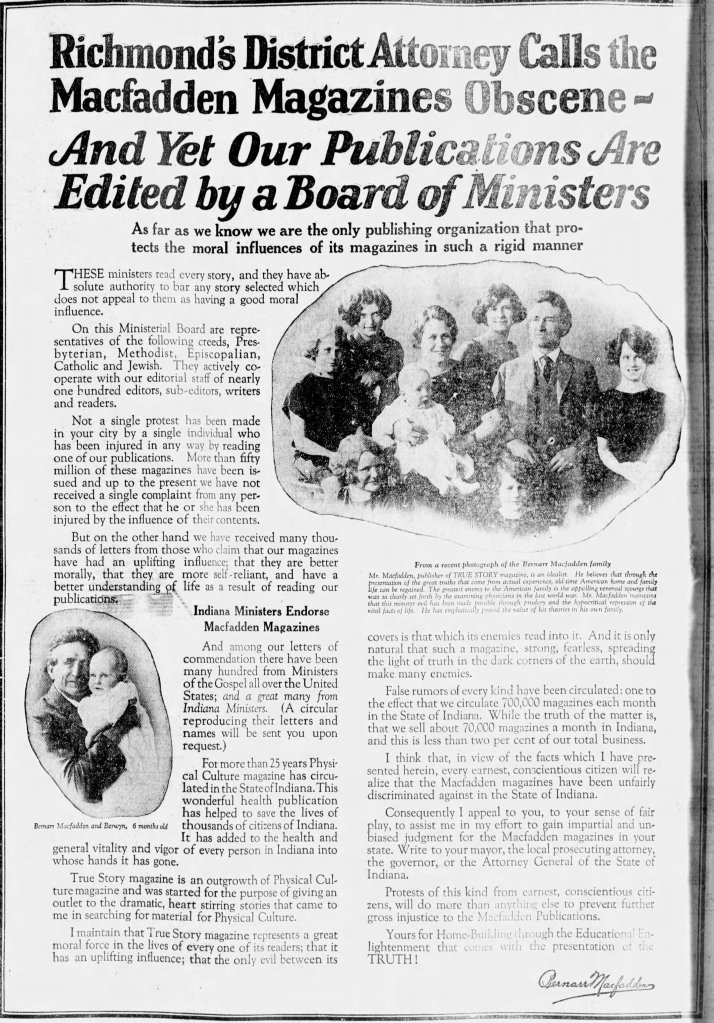
Orton is now attempting some writing—though of a popular & low-grade sort, for the Macfadden publications. (the same ones which honest Eddy’s wife writes for.)
— H. P. Lovecraft to Lillian D. Clark, 12 Apr 1929, Letters to Family & Family Friends 2.747

He has so far managed to keep meagrely afloat—with a wife & three children—by undertaking outside work of various sorts; but recent economic conditions have left him jobless & reduced him to such depths of want & peril that nothing short of a miracle—or a flood of fairly lucrative literary chores—can keep him & his flock from actual freezing, starvation, & eviction during the interval before he can again secure some industrial affiliation.
— H. P. Lovecraft to Zealia Brown Reed Bishop, 16 Jan 1930, Letters to Woodburn Harris & Others 429

I say the “House of Eddy” because C.M.E. Jr. made it clear last night that his wife does most of the adaptive revision in cases of this kind. He takes care of the grammatical & rhetorical side, while Mrs. Eddy supplies the “human-interest” hokum & blah for which the Macfadden editors are so avid. She, it seems, has produced much of this material, & has helped many beginners to develop into steady sellers. Her help, Eddy says, generally amounts to actual collaboration—although in your case, as I have just warned, you must not let it approach the status of instruction lest the results of Belknap’s lessons be undone. The rates charged by the Eddys for this collaborative revision of Macfaddenistic material would be very reasonable, & they would be glad to discuss the matter of placement with you whenever you wish to write.
— H. P. Lovecraft to Zealia Brown Reed Bishop, 29 Jan 1930, Letters to Woodburn Harris & Others 436-437

The last letter from Lovecraft to C. M. Eddy, Jr. is c. 1930, and mentions “The Mound” (1940) by Zealia Bishop. A checklist among Lovecraft’s papers suggest he was still in touch with the Eddys at least as late as 1934, as he apparently sent them postcards from St. Augustine, Charleston, and Nantucket, but these are not known to survive (Collected Essays 5. 267).

There is a notable gap in the correspondence, near the end of Lovecraft’s life. Muriel Eddy claimed that she was responsible for putting Lovecraft in contact with Hazel Heald, Lovecraft’s last major revision client. If Muriel E. Eddy did this by letter, those epistles do not appear to have survived and are not in evidence from what other correspondence we have. Then again, why would they be? Lovecraft seldom mentioned such correspondence to others.

How do we square this evidence for correspondence—solid (in the form of two letters to Muriel E. Eddy and ten to C. M. Eddy, Jr.) and circumstantial (references to the Eddys in Lovecraft’s other letters)—with Muriel’s own memoirs? Whether or not Muriel was misremembering or deliberately glossing over a few details, it seems clear that Lovecraft’s relationship with the Eddys was not quite as tight as she liked to present, and the impression given is of a friendship occasionally strained by time, distance, and business or financial matters, albeit not a friendship that was ever completely abandoned on either side.

Because so much of the surviving correspondence is between Lovecraft and her husband, it is difficult to get a bead on Muriel E. Eddy’s relationship with Lovecraft. There is a strong impression that at the beginning (c.1918-1924), Lovecraft was writing mostly to Muriel, as he would to any of a number of amateur journalists. As Lovecraft’s business with C. M. Eddy, Jr. waxes—first with revising his work and getting stuff typed, then the Houdini-stuff, and finally the Bishop revising/typing—we see less and less of Muriel.

While there are a few contradictory points in Muriel’s memoirs of Lovecraft, it’s important to point out that she was not necessarily dishonest—memory can get vague and fuzzy, and by the time Muriel was weighing in Lovecraft had been dead for years. As she told the stories over and over, they became more fixed, as evidenced by comparing the earlier memoirs to later ones; repeating narratives makes them clearer in the mind, but it also means a person teaches themself how to tell a story, sometimes adding or removing details, being informed by what other people wrote, etc. Most of Muriel’s comments on Lovecraft’s marriage, for example, are pure hearsay and speculation, and quite often wrong.

It is unfortunate that more of the Lovecraft/Eddy correspondence is not available. Muriel E. Eddy’s memoirs, even flawed, provide a fascinating insight into Lovecraft’s life and work, and also into her own life and that of her husband during this tumultuous but critical period. What drove a woman like Muriel E. Eddy to write to H. P. Lovecraft? What prompted him to write back? How long did they correspond, of and on? We do not have—will never have—all the pieces of the puzzle.

Imagine a young mother, bouncing a toddler on her knee, squinting at one of Lovecraft’s manuscripts and trying to type it out—or perhaps C. M. Eddy, Jr. was there, a rugrat at his foot, as he read aloud while she typed. Or that breathless expectation on a hot summer afternoon in Providence, as a tall man in a straw hat walked up to the door to introduce himself, with a name they had only read in letters up to that point…it’s easy to wax romantic about these relationships. Yet the whole point of tracing such correspondence and combing through these memoirs is to get a better sense of who these people were, and what their lives were like.

Thanks to Donovan Loucks for his help with this one.


Bobby Derie is the author of  Weird Talers: Essays on Robert E. Howard and Others  and  Sex and the Cthulhu Mythos .

Deep Cuts in a Lovecraftian Vein uses Amazon Associate links. As an Amazon Associate I earn from qualifying purchases.
Her Letters To Lovecraft: Laurie A. Sawyer

 All this rivalry, however, was conducted with the utmost good humour, Mrs. Sawyer, for the National, insisted that her society was larger and older—that the United was merely a smaller, later society. To this I replied that the analogy of organic nature held good—the National was the crude, primitive, coarsely organised monster of prehistoric times—the dinosaur or pterodactyl of amaterudom; gigantic in size and anterior in date, but forced in the course of evolution to give way to the later-comer of smaller size but incomparably greater intelligence—the United, corresponding to mankind. This bit of biological repartee seemed well received, judging from the hilarity it caused.
— H. P. Lovecraft to Sarah Susan Lovecraft, 24 Feb 1921, Letters to Family and Family Friends 1.28

According to the 1880 Federal census, she was born Laura Anna Moody in Massachusetts in May 1865, the youngest of three children of Nathaniel D. Moody and Eliza M. Moody; her older brothers were Everett E. Moody and John T. Moody. The family history is a bit vague; her father served for a month in the Union army in 1864, and by the time Laurie was 15 in 1880 the federal census lists her parents as running an alms-house. Later census records indicate that Laurie A. Moody graduated highschool, and a marriage is recorded 25 November 1885 with Charles Millet Sawyer, a salesman; from that point on, she was known as Laurie A. Sawyer.

The 1900 Federal census lists a child: Marshall M. Sawyer, age 8 (born 18 Jul 1891). However, the census also lists that Laurie bore two children; Lovecraft refers in one letter to “the eldest of the now grown, wedded, and departed Sawyer boys” (LFF 1.33), so there was another son the census lists failed to capture. A little digging revealed birth, baptism, and death records, and gravestone for Gerald Francis Sawyer (b. 10 Nov 1889, d. 13 Jun 1897); such childhood mortalities were all too common.

Her profession in 1900 and 1920 Federal censuses is given as “housewife,” while the 1910 Federal census lists Laurie as a bookkeeper at an electrician’s office, and 1930 Federal census lists her doing clerical work at Symphony Hall. She was, at any rate, literate, good with numbers, and had some talent for organization.

Mrs. Sawyer, though widely read, makes less claim to literary achievements than the others; being noted chiefly for a scintillant and inimitable humour which is employed on all occasions both in speech and on paper. Such a perpetual fountain of wit is quite remarkable, and is much more acceptable to amateurdom than the dull and heavy effusions of less gifted but more ambitious scribblers. […34] Subjects tended to change according to audience—thus Mrs. Miniter seemed mainly interested in the past history of amateurdom, Mrs. Sawyer in present amateur controversies, and Miss Jackson in general literary and poetical matters.
— H. P. Lovecraft to Sarah Susan Lovecraft, 24 Feb 1921, Letters to Family and Family Friends 1.33, 34

It is not clear when Laurie A. Sawyer began in amateur journalism. She is listed in 1909 as the final President of the Interstate Amateur Press Association, and newspaper accounts in 1916 list her among the attendees of the National Amateur Press Association. By the time Lovecraft met her at an amateur gathering in Boston in 1920, Sawyer was a staunch member of the Hub Club, associated with the NAPA, and her house at 20 Imrie Road in Allston, a suburb of Boston, was a gathering place where she hosted dinners. Sawyer’s correspondence with Lovecraft appears to date from after this meeting, as there is a brief reference to it in Lovecraft’s letters:

I have not heard from the Hubited—save the mimeographed Sept. meeting card—for a month or so; not since I sent Mrs. Sawyer those anti-National verses I quoted you.
— H. P. Lovecraft to Winifred Virginia Jackson, 7 Oct 1921, Letters to Rheinhart Kleiner & Others 335

Lack of further reference suggests that this correspondence was likely brief and impersonal, dealing with amateur affairs, submission and proofreading of poetry to be published in various amateur journals, etc. Which was apparently sufficient contact for her to be included among Lovecraft’s Christmas Greetings. How much they kept in touch is purely speculative, although they met at occasional amateur gatherings in Boston, there would have been a long gap during Lovecraft’s marriage and move to New York.

After the 1930 NAPA convention that they both attended, Sawyer published the one-shot amateur periodical Mrs. Dooley Attends The Convention (Aug 1930). “Mrs. Dooley” was a parody of the popular Mr. Dooley article series that ran in Chicago about a stereotypical Irishman; Sawyer wrote her with a thick brogue, and Lovecraft commented once on her “Dooley papers” which indicates a semi-regular series of such humorous productios (CE 1.296). She describes several of the attendees, including Lovecraft:

Mr. Lovecraft came up from Providence, the same fine lad as iver. Wan thing he did that no wan else has iver done at the Dooley house—he tamed the wild baste we have there that answers fer a cat. Shure she is a baste, she scratches an bites ivery wan what comes near her but he petted her fer a good half hour, while I meself just held me breath ivery minit, I was that scared.

This is a bit of fun—on his 1921 visit, Lovecraft also spent quite some time petting the Sawyer’s cat, which was named ‘Tat’ at that time. In his own account of the July 1930 convention, Lovecraft noted that:

The gathering on this occasion assumed an aspect of happy reincarnation of the Old days, beginning with one of Mrs. Sawyer’s old-fashioned New England bean suppers […] It was symbolic of the spirit of reincarnation and propitious Renaissance that the 1921 convention napkins, properly surcharged for 1930 purposes, were provided for use at this function.
—H. P. Lovecraft, “The Convention” in The Tryout (Jul 1930), in Collected Essays 1.363

However, 1930 would not be a happy year overall for Laurie A. Sawyer. On 11 November 1930, her husband Charles M. Sawyer passed away, two weeks to the day to what would have been their 45th wedding anniversary.

The next indication of further epistolary contact is over a decade later, with the death of Edith Dowe Miniter and the disposal of her mother’s cremains:

Regarding the logical person to visit the libitinarius & secure the cinerary reliques—I don’t see why Mrs. Sawyer is so necessarily such. She has (vide suam epist.) merely notified amateurdom of a condition, & left it up to others what to do about it. The only thing necessary in connexion with her is to thank her (which Culinarius can do) & assure her that something will be done. That would constitute no slight—in fact, I fancy she’d even prefer it, since she has plainly stated her inability to get about much now in cold weather (& how I sympathise!). Of course, if some sort of credentials were required to claim the urn, she could be called up or written—but that might not be needed. […] From the tone of Mrs. Sawyer’s letter I see no ground for Cook’s fear that she will obtrusively butt in.
— H. P. Lovecraft to Edward H. Cole, 11 Feb 1935, Letters to Alfred Galpin & Others 104

I enclose a letter received today from Laurie Sawyer. She acts very fine about the matter,—willing to help but no obtrusiveness. In fact, her idea is the same as yours and mine. If Cole will do this it will be a magnificent thing.

Hastily
Cook […]

The important thing, of course—as Mrs. Sawyer says—is to get the task performed . . .  no matter how or by whom!—W. Paul Cook to H. P. Lovecraft, H. P. Lovecraft to Edward H. Cole, 19 Feb 1935, Letters to Alfred Galpin & Others 105

The disposal of Mrs. Dowe’s ashes was a well-meant affair, probably made all the more difficult by having to arrange everything by letter and sorting out who had a sufficient family relationship to the deceased, geographic proximity, and willingness to take action. For more details, see Lovecraft’s correspondence with Mrs. C. H. Calkins. Laurie A. Sawyer is not known to be a relative, and appears to have merely brought the existence of the ashes and the question of their disposal to amateurdom’s attention. It is notable in the 1920 Federal census that there were several lodgers in the Sawyer house on Webster St., including the amateurs Winifred V. Jordan (living with her mother Myra Jackson) and Edith Miniter. That might have made it a convenient hub for amateur activities, and no doubt was a reason why Lovecraft visited Sawyer in 1920 and 1921, and such close proximity might explain how Sawyer knew of the ashes.

After this episode, there is no further mentions of Laurie A. Sawyer in Lovecraft’s letters, and no letters from her to Lovecraft (or vice versa) survive. Presumably, as Lovecraft’s involvement with the NAPA declined, so too did any reason for them to keep in touch.

The 1940 Federal census still lists Laurie A. Sawyer, now widowed, still alive at 74 and at her house on 20 Imrie Road where she had once entertained H. P. Lovecraft, Edith Miniter, and many other amateurs. A social security death index entry for Lauria A. Sawyer, born 3 May 1865, says she died in March 1965. We can only imagine what she might have thought of H. P. Lovecraft, her old associate in amateur journalism, whom she outlived by almost thirty years.


Bobby Derie is the author of Weird Talers: Essays on Robert E. Howard and Others and Sex and the Cthulhu Mythos.

Deep Cuts in a Lovecraftian Vein uses Amazon Associate links. As an Amazon Associate I earn from qualifying purchases.
Deeper Cut: E. Hoffmann Price’s Curry Recipe

Skip Straight To Recipe


The Story Behind The Curry

The notice of the Algiers restaurant is charming; but alas, they spoil it all by babbling of “plain, home cooked food.” Alas, alas—when I crave dishes neither home cooked nor plain, but poisonously spiced with saffron and cardamon [sic] and ginger and fenugreek and cumin and chilis and cayenne and coriander and pepper; when I crave a place serving curry and kous-kous and sheesh kabab and humus bi-tahhini and babaghanouge, tacos, enchiladas, tamales, and what have you, smoking, fuming, exhaling corrosive blasts of weird spices and foreign condiments! But the decorative scheme and the historical note is indeed appealing.
—E. Hoffmann Price to H. P. Lovecraft, postmarked 12 Sep 1934, MSS. Brown Digital Repository

Weird fiction and exoticism have long gone hand-in-hand; from the 1,001 Nights and William Beckford’s Vathek to when Farnsworth Wright launched Oriental Stories as a companion to Weird Tales, the weird and fantastic in Western literature has often included a fascination for other cultures, far places, the novelty of unfamiliar religions, folklore, art, music, and customs. At its worst, this tendency could lead to the promulgation of stereotypes and prejudice, Yellow Peril stories and Orientalism. Yet for many it represented an honest and active interest in other cultures, at a time when information on those cultures was often scarce and flawed.

Edgar Hoffmann Price (b. 3 Jul 1898, d. 18 Jun 1988) joined the army in 1917. As a private in the 15th Cavalry Regiment, he shipped out to Fort McKinley in the Phillippines with his unit. He passed through Honolulu in Hawaii, then a U.S. territory, to Manila. A few months later the unit returned to the continental U.S. from Manila via Nagasaki, Japan. Although his time in Asia was brief, Price soaked up the local color and remained for the rest of his life a devoted Asiaphile, fond of Turkish coffee, Persian carpets, Buddhism, Islam, and Asian food in general. His early pulp fiction in magazines like Weird Tales often featured Asian and Middle Eastern characters and settings, and his personal memoirs and letters include snatches of Arabic, personal anecdotes from his travels, affections such as signing his letters with a Chinese chop, and in making curry. When Lovecraft met Price for the first time, in New Orleans in 1932, Price reported:

When I mentioned my Indian curry recipe, he sighed. Not even he, with his love of spices from Araby and Ind, would be equal to a pot of curry—he had ingested quite too great a quantity of chili with beans.

Although HPL’s fame rests on his Olympic status in ice-cream eating, I remember him as one who found his peak in dishes featuring coriander, ginger, cardamom, fenugreek, cumin, oregano, tamarinds, and violent little peppers which tender-skinned folk should never touch until first putting on rubber gloves.

We agreed that when I visited him in Providence, Rhode Island, I would build an East Indian curry.
—E. Hoffmann Price, Book of the Dead: Friends of Yesteryear: Fictioneers & Others (2001), 45

In two letters to his friend H. P. Lovecraft, Price gives his recipe for “East Indian curry.” But what is curry?

In the 1930s, “India” and “East India” in common use were synonymous with what was called British India or the British Raj. In 1858, the United Kingdom had taken over direct rule of the territories controlled by the East India Company in the Indian subcontinent and Southeast Asia, which would persist until the partition of India in 1947. While the British governed and frequently thought of India as more-or-less a single political and economic unit (notwithstanding the several nominally independent states which administered themselves, though under British suzerainty), the idea of a singular cultural or geographic “India” is a bit of an anachronistic simplification—or, perhaps more accurately, a colonial ideology imposed on the colonized.

The region historically comprising contemporary India (historically referred to as “Hindustan” or “Hind” after the Indus River) was never one single historical state, ethnicity, or identity. Rather, the region has throughout history been a multicultural and multiethnic crossroads; sometimes parts of it have been unified politically, but the peoples and polities of India often remained distinct—and this diversity extended to their approach to food. There was no single national cuisine of India; every individual region had its own peculiarities based on available ingredients, food traditions, and the cultural, social, and religious preferences and mores of the local population.

From Persia came rosewater and saffron; from Afghanistan and Central Asia, almonds, pistachios, raisins and dried fruit; from the Middle East, sweet dishes and pastries. They introduced sherbets and other sweetened drinks; pulaos and biryanis, elaborate dishes of rice and cooked meat; samosa, a meat- or vegetable-filled pastry; dozens of varieties of grilled and roasted meats called kabobs; yakhni, a meat broth; dopiaza, meat slowly cooked with onions; korma, meat marinated in yogurt and simmered over a slow fire; khichri, a blend of rice and lentils; jalebi, coils of batter deep-fried and soaked in sugar syrup; and nans and other baked breads.
—Colleen Taylor Sen,Curry: A Global History (2009), 19

The European colonial period in India began with the arrival of the Portuguese in the late 15th century, and introduced new foods from both Europe and the Americas to India, such as chili peppers, potatoes, tomatoes, pumpkins, and turkeys. The Europeans brought along their own preferences and dietary habits, which were adapted to local conditions and ingredients. For example:

Vindaloo is normally regarded as an Indian curry, but in fact it is a Goan adaptation of the Portuguese dish carne de vinho e alhos, or meat cooked in wine vinegar and garlic. The name vindaloo is simply a garbled pronunciation of vinho e alhos. The Portuguese particularly savored the sour, but fruity, taste of meat marinated and cooked in wine vinegar. When they arrived in India, however, they found that Indians did not make vinegar, though a similar sour-hot taste was produced by south Indian cooks using a combination of tamarind and black pepper. Some ingenious Franciscan priests are said to have solved the problem by manufacturing vinegar from coconut toddy, the alcoholic drink fermented from the sap of the palm tree. This, combined with tamarind pulp and plenty of garlic, satisfied the Portuguese cooks. To this basic sauce they added a garam masala of black pepper, cinnamon, and cloves, some of the spices in search of which Vasco de Gama had made his way to the Malabar Coast in 1498. But the key ingredient, which gave bite to the granular sauce of vindaloo, was the chili. Like their Spanish counterparts in South America, the Portuguese in India had developed a liking for the fiery taste of the chili pepper and they used it in excessive quantities in a vindaloo. Some recipes call for as many as 20 red chilies.
—Lizzie Collingham, Curry: A Tale of Cooks and Conquerors (2006), 67

A masala refers to a pre-prepared mix of spices. While most cooking in India before refrigeration would have been done with fresh ingredients and fresh-ground herbs and spices, each added to the dish separately at the appropriate time, sometimes ground herbs and spices would be pre-mixed together for convenience—an idea universal to many cultures, from French quatre épices and Chinese five spice powder (五香粉) to the pumpkin spice and Italian seasoning blends found in many North American grocery stores. Garam masala is the most common such spice blend, although “common” is perhaps a misnomer, as the ingredients and proportions vary from region to region and taste to taste. Common ingredients include cumin, fenugreek, turmeric, and coriander; other typical ingredients may include cloves, cinnamon, cardamom, dried chilies, black pepper, mustard seeds, curry leaves, fennel, asafetida, and bay leaves, though rarely all of these, and often in varied proportion.

When Europeans began to transmit recipes from India back to their own countries in the 17th century, one of the defining characteristics was the mix of spices used. In The Art of Cookery Made Plain and Easy by Hannah Glasse, for instance, there is a recipe “To make a Currey the India[n] Way”:

Take two Fowls or Rabbits, cut them into ſmall Pieces, and three or four ſmall Onions, peeled and cut very ſmall, thirty Pepper Corns, and a large Spoonful of Rice, brown ſome Coriander Seeds over the Fire in a clean Shovel, and beat them to Powder, take a Tea Sponful of Salt, and mix all well together with the Meat, put all together into a Sauce-pan or Strew-pan, with a Pint of Water, let it ſtew ſoftly till the Meat is enough, then put in a Piece of Freſh Butter, about as big as a large Walnut, ſhake it well together, and when it is ſmooth and of a fine Thickneſs diſh it up, and ſend it to Table. If the Sauce be too thick, add a little more Water before it is done, and more Salt if it wants it. You are to obſerve the Sauce muſt be pretty thick.Take two ſmall Chickens, ſkin them and cut them as for a Fricaſey, waſh them clean, and ſtew them in about a Quart of Water, for about five Minutes, then ſtrain off the Liquor and put the Chickens in a clean Diſh; take three large Onions, chop them ſmall and fry them in about two Ounces of Butter, then put in the Chickens and fry them together till they are brown, take a quarter of an Ounce of Turmerick, a large Spoonful of Ginger and beaten Pepper together, and a little Salt to your Palate; ſtrew all theſe Ingredients over the Chickens whilſt it is frying, then pour in the Liquor, and let it ſtw about half an Hour, then put in a quarter of a Pint of Cream, and the Juice of two Lemons, and ſerve it up. The Ginger, Pepper, and Turmerick muſt be beat very fine.
1747 edition1775 edition

While Glasse uses European cooking terms like fricassee, fry, and stew, the process is reminiscent of an Indian cooking technique:

A common Indian cooking technique with no exact equivalent in the West is called in Hindi bhuna. Spices and a paste of garlic, onions, ginger and sometimes tomatoes are fried in a little oil until they soften. Pieces of meat, fish or vegetables are sautéed in this mixture. Small amounts of water, yogurt or other liquid are then added a little at a time. The amount of liquid added and the cooking time determines whether the dish will be wet or dry. This is the basic technique used in making the dishes called curries.
—Colleen Taylor Sen, Curry: A Global History (2009) 24-25

This was the first form of “curry” in English, and while the language is a bit antiquated and the recipe pretty simple and straightforward, the essential takeaway is a dish like a stew or ragout, with a thick, spicy sauce. In a very broad sense, that is the definition of curry as it is currently used today; although in the more British sense of the term “a curry” can be used to refer to almost any dish associated with any of the cuisines associated with India. As Collingham puts it:

The idea of a curry is, in fact, a concept that the Europeans imposed on India’s food culture. Indians referred to their different dishes by specific names and their servants would have served the British with dishes that they called, for example, rogan josh, dopiaza, or quarama. But the British lumped all these together under the heading of curry.
—Lizzie Collingham, Curry: A Tale of Cooks and Conquerors (2006), 114

The export food culture from India was (and is) a centuries-long process; new ingredients are swapped in and out, recipes simplified, translated, and transformed by different tastes. Islamic dietary laws are observed by Muslims in India, and similarly many Hindus are vegetarian; these aspects of culture and religion are reflected in their respective cuisines. By contrast, most Europeans did not have the same cultural mores against eating animals except in certain circumstances (such as Catholic fast days), so European curry recipes tend to reflect European eating habits with meat as a major ingredient.

As the British spread throughout India, the uniformity of British experience helped to transmit and to a degree unify disparate aspects of various regional cuisines, or at least to begin to export a version of those familiar dishes back to the United Kingdom and its colonies. It was the beginning of what would become a loose canon of “curry” dishes, including vindaloo, kedgeree, korma, mulligatawny soup, and kebabs/kabobs, but also a growing uniformity in how to prepare those dishes. These were dishes that came from all across India and its many food cultures, but were often transformed, simplified, and then formulated for easy preparation—often using curry powder.

Hannah Glasse in The Art of Cookery Made Plain and Easy provided instructions for the preparation of spice mixes, and so did many other recipe books. Those that were more accurate to indigenous Indian methods emphasized grinding your own spice pastes and powders, but the simplification and adaption of Indian food in Britain led to the commercialization of these masalas into pre-made curry pastes and powders. Curry powder, which often utilized similar ingredients to various Indian spice mixes, became a defining staple of the more Anglicized recipes, and through the British Empire spread the British idea of “curry from a can” around the world.

Which is about where curry lay in the Anglo-American world in the 1930s. The Immigration Acts of 1917 and 1924 prevented immigration from Asia, including British India, into the United States which limited the establishment of Indian restaurants during that period. Nevertheless:

By the end of the 1920s New York had half a dozen Indian restaurants known for their fiery curries, among them The Rajah on 44th Street, west of Broadway, and Ceylon India Inn on 49th Street, which operated until the mid-1960s. Thanks to racial exclusion laws, the country’s Indian population remained very small: only around 3,000 people in 1930, many of them students living in New York City.
—Colleen Taylor Sen, Curry: A Global History (2009), 57

While Lovecraft did broaden his culinary horizons in New York City in the 20s, getting his first taste of everything from spaghetti to goulash, apparently he did not visit any of these Indian restaurants. If he had, Lovecraft might have found something very different from what we think of as Indian fast food today. The Indian takeaway fast food revolution in the United Kingdom, which has redefined “a curry” for the 20th century, didn’t take place until after World War II—and many dishes like chicken tikka masala had not been invented yet. The curry tradition that E. Hoffmann Price was familiar with would have been any of dozens of variations of a stew or ragout with a thick, spicy gravy, often served on or alongside rice.

After Price and Lovecraft met in New Orleans in 1932, they continued to keep in touch by mail, and in one letter Lovecraft confessed:

Another bit of ignorance. I don’t think I’ve ever tasted East Indian curry—a delicacy so universal in Bayonne that you even feed it to the dogs around the city gate. But if it’s what I think it is, I’d like it—for as you know from my response to chili con carne, I’m all for high seasonings. I suppose the Hindoos go in for that kind of thing because they have a genial climate plus a lack of that refrigeration which makes unseasoned meats dependable. I believe Worcestershire sauce (a favourite with me) is based on some sort of East Indian recipe, is it not?
—H. P. Lovecraft to E. Hoffmann Price, postmarked 2 Mar 1933, Letters to E. Hoffmann Price 67

This admission of ignorance requires a bit of explanation. Bayonne in France was where Price was stationed during World War I; presumably Lovecraft’s comment on curry was in response to something Price had mentioned at some point, either in person or in a letter that does not survive. “Genial climate” is a discreet reference to the tropical heat of India, since Lovecraft was sensitive to cold and enjoyed semi-tropical climates like that of Florida; “lack of refrigeration” is a reference to the popular (though false) stereotype that Indian cookery used spices to cover up the taste of spoiled meats, which wouldn’t keep in the heat. The reference to Worcestershire sauce reflects a legend used to promote Lea & Perrins’ sauce:

Many years ago Mrs. Grey, author of ‘The Gambler’s Wife’ and other novels, well known in their day, was on a visit at Ombersley Court, when Lady Sandys chanced to remark that she wished she could get some very good curry-powder, which elicited from Mrs. Grey that she had in her desk an excellent recipe, which her uncle, Sir Charles, Chief-Justice of India, had brought thence and given her. Lady Sandys said that there were some clever chemists in Worcester, who perhaps might be able to make up the powder; at all events, when they drove in after luncheon they would see.

Messrs. Lea & Perrins looked at the recipe, doubted if they could procure all the ingredients, but said they would do their best, and in due time forwarded a packet of the powder. Subsequently the happy thought struck some one in the business that the powder might, in solution, make a good sauce. The experiment was made, and by degrees the thing took amazingly. All the world, to its remotest ends, now knows of Worcestershire sauce as an article of commerce; and, notwithstanding that, in common with most good things, it is terribly pirated, an enormous trade is done in it. The profits, I am told, amount to thousands of pounds a year, and I cannot but suppose that liberal checks, bearing the signature of Lea & Perrins, have passed from that firm to Mrs. Grey, to whom it is so indebted for its prosperity.
“History of Worcestershire sauce,” New York Times, 9 Feb 1884, quoted in History of Worcestershire Sauce (2012) by William Shurtleff and Akiko Aoyagi

Shurtleff and Aoyogi go on to quote Brian Koegh’s The Secret Sauce: A History of Lea & Perrins:

The section titled “The Sandy’s family” (p. 29-30) debunks the myth of an early and oft-repeated connection between “Lord Sandys” and the invention / discovery of Worcestershire sauce. It states: “… no Lord Sandys (either as Sandys of Hill) was ever a governor of Bengal, or as available records show, ever in India. The identity of the nobleman thus remains an intriguing mystery.”

While the Lea & Perrins legend was basically public relations and embellished over time, it struck a chord with consumers (like Lovecraft), and there is probably a note of truth in it insofar as the original recipe derived from soy sauce, catsups, and Indian spice mixes, tweaked for British tastes.

Which is a long way to say that Lovecraft was effectively ignorant of Indian food except that it was supposed to be spicy. E. Hoffmann Price decided to educate his friend by sending him a recipe for a curry:

East Indian Curry: a dish prepared perfectly in but 2 places holy Shamballah, and the Throne Room.

Directions: Into a small pot put a tablespoon of butter, brown a finely minced, small onion, then a finely minced clove of garlic; add sliced mutton (raw or roasted) veal, chicken, as you wish; add suitable amount of curry powder (conglomerate of from 5 to 10 spices—coriander, turmeric, ginger, cardamon [sic], cloves, pepper, god knows what, including fenugreek) and sauté the meat (if raw, until done; if previously cooked or roasted, until permeated with the fragrance of spices) then add 4 cloves, a cup of soup stock, let simmer 20-30 minutes, then add cup of cream or evaporated milk, thickened with spoonful dissolved cornstarch; stirr [sic] smooth, and when well wobbled around, you are ready to serve, by dumping the tawny, golden curry into the center of a fortress of cooked rice, which forms a parapet about the edge of a platter. May be garnished with sliced, cooked eggs.

Curry may be made, substituting cooked eggs for meat.

A glass of sherry may be added just before serving. Optional.

Lemon rind may be grated into the simmering hell brew. Optional.

It is a dish for gods and demons, and for men also. Oh, divine Curry! It is the peer of dishes, and withal simple.

Get a 15¢ can of curry and try it. Cross[e] & Blackwell has a very good powder, uniform of strength, excellent of flavor, but it costs about 50¢ (though the bottle hold more than a small spice can.
—E. Hoffmann Price to H. P. Lovecraft, postmarked 10 Mar 1933, MSS. Brown Digital Repository

Crosse & Blackwell produced one of the first British commercial curry powders, and helped define the taste of Anglo-Indian curry. The pre-mixed spice was ideal for feeding masses of troops, and was adopted by the British Navy for that purpose, which introduced it to Japan. C&B curry powder became the standard for Japanese curry in the early 20th century, until the curry scandal of 1931, when it was found that many of the curry powders sold in Japan were local mixes being sold fraudulently under the C&B brand. Since then, Japan has embraced many different curry powders, and the C&B brand has now been sold and resold. The old jars of vibrant yellow powder are no longer for sale, although the curry powder itself continues to be produced for the Japanese market.

Tracing Price’s recipe back to an original source is tricky. It contains similar elements to several contemporary recipes, and it has features of a number of Anglicized Indian foods, including the inclusion of sliced hard boiled eggs and fried onion (common garnishes), the use of lemon rind (in place of tamarind) to add a note of sour. Curry powder instead of individual spices is highly characteristic of British curries, but unusually Price does not use the curry powder with flour to form a roux, which is also a common attribute of early 20th century recipes. The use of evaporated milk and cornstarch to thicken the gravy seems characteristic of an early 20th-century recipe, since evaporated milk became widely available commercially in the 1920s. While stewing meat in wine harks back to the Portuguese tradition, the addition of sherry “just before serving” seems more like Price’s personal taste. Perhaps like many cooks he simply adjusted the recipe to taste and available ingredients over time; he notably doesn’t give any directions for the soup stock.

Lovecraft was delighted:

Your explanation of the inward nature of curry is surely a tantalisation of the palate! I must sample this gift of the Djinns, in all its perfection, either at the Peacock Thone or in the Citadel of Holy Shamballah, before I make the final incantation precipitating me into Avichi. In the interim, if I can find any 15¢ cans (what’s the make?) I shall make this one of my regular dietary items in place of Campbell’s soups & Heinz’s beans & spaghetti. We shall see . . . . but I won’t make the mistake of confounding any base commercial imitation with the real thing, as prepared according to the precepts in the Book of Dzyan.
—H. P. Lovecraft to E. Hoffmann Price, postmarked 24 Mar 1933, Letters to E. Hoffmann Price 73

References to Shamballah, Avichi, and the Book of Dzyan reflect the fact that Lovecraft and Price had been discussing Theosophy, a new religion which drew in part on Eastern esoteric religion for its lore and trappings. The “Peacock Throne” would be Price’s own home; Price had made a habit of reference to Tawûsî Melek (rendered as Malik Taus and variations), the “Peacock Angel” of Yazidi religion, in several of his stories, and Lovecraft had made it a nickname for Price himself.

Lovecraft, like many men during the 1920s and 30s, was raised completely ignorant of cooking. He learned during his brief marriage and years of bachelordom to produce some simple meals so as not to be eating out for every meal, but even these were largely based around pre-packaged or canned foodstuffs, such as the increasingly popular canned spaghetti dinners. This also suited Lovecraft’s pocketbook, since canned goods were generally relatively cheap and kept for long periods of time.

Price, unfortunately, appears to have lost Lovecraft’s question on curry brands in a flurry of short responses on postcards (and Lovecraft appears to have misunderstood that Price was talking about canned curry powder, not a meal-in-a-can). When E. Hoffmann Price made it to Providence in late June 1933, he made his curry for Lovecraft and his friend Harry K. Brobst. In his memoir, Price recalls:

The curry and its preparation fascinated HPL, all the more so because of our discussions of it by mail. At last, he was observing the process, sampling from time to time, as I developed the sauce in which cubes of mutton would simmer.

“By building it up gradually,” I told him, “I’ll get exactly to your taste. At the moment, we have something for women and children, and the American public—a pallid, gutless gravy. Yes, the odor is delightful, but—”

“Bland,” he conceded, as did Harry, after sampling.

I added more spice. After this has blended into the sauce, I asked, “Still more chemicals and acids?”

“Savoury. By no means lacking in fire, but this is not the blighting, blasting, searing mixture you described. Harry?”

“I’m still with you.”

More spicings, more samplings.

Finally HPL said, “To assert that this would raise blisters on a cordovan bot would be poetic exaggeration. Another increment of spices would make your description a statement of fact. If Harry agrees, be pleased to serve us this ambrosia and nectar.”

—E. Hoffmann Price, Book of the Dead: Friends of Yesteryear: Fictioneers & Others (2001), 51

A few decades later, Brobst remembered the event but had little to add:

We made some Indian curry, and we had some beer—we had a pleasant evening.
—Will Murray, “An Interview with Harry K. Brobst” in Ave Atque Vale 322

Price went on to add that Lovecraft relished the curry and rice. This may be why soon after the visit that Price repeated a slightly simplified version of this recipe was later included in another letter:

Indian Curry: In a small pot dump some butter, and brown therein minced onions (1/2 a small onion); when beginning to brown, it is desirable but not necessary to add a clove of minced garlic, & brown. Add 1 cup of thinly sliced veal, lamb, mutton, or chicken—either fresh or previously roasted or cooked. In either case, add 2 teaspoons of curry powder, and let the mixture simmer until, in the case of raw meat, it is done, or if roasted meat is used, until well saturated by the fragrant spices. Then add 1 cup of soup stock or lacking that, a cup of bouillion [sic] made of beef cubes. Let simmer 10 minutes; add 2/3 cup evaporated milk or cream, which has been thickened with teaspoonful cornstarch, and heat until sauce is smooth & thick. Serve with cooked rice. An egg Curry is made as above except that in lieu of meat being sauté[e]d, a curry flavored gravy is prepared & thickened, and into it hard cooked eggs are sliced—and served as noted.
—E. Hoffmann Price to H. P. Lovecraft, 15 Jul 1933, MSS. Brown Digital Repository

Lovecraft duly responded:

Thanks abundantly for the mystical curry formula. I’ll certainly have some adept prepare a brazier full before long, to offer up to the gods of Shalmali & Shamballah
—H. P. Lovecraft to E. Hoffmann Price, 19 Jul 1933, Letters to E. Hoffmann Price 88

Taken together, these recipes and descriptions should be enough to make a reasonable approximation of Price’s dish.

An Interpretation of E. Hoffmann Price’s Curry

1 tbsp. [14 g] butter*
1/2 small onion [~60-65 g], minced
1 clove garlic, minced
1 cup [340 g] meat (veal, lamb, mutton, or chicken), thinly sliced**
2 tsp. [10-12 g] curry powder***
4 whole cloves
1 cup [340 g] soup stock****
2/3 cup [115 g] evaporated milk
1 tsp. [5-6 g] cornstarch; stir this into the milk before cooking
3 hardboiled eggs, peeled and sliced
1-2 cups [340-780 g] rice*****
2 tbsp [28-30 g] sherry******
1 tsp. [5-6 g] grated lemon rind

* Many traditional Indian dishes call for ghee (clarified butter), and if you have that, use it. Price would probably have been using regular salted butter from the supermarket. Almost any other cooking oils (e.g. coconut, olive, avocado, lard, schmaltz, etc.) can work, just avoid ones with a low smoke point (e.g. salad oils, etc.).
** Price doesn’t specify the cut of meat, but generally you’ll want something without bones or excess fat (i.e. bacon is going to make a quite greasy curry). If it’s a very tough piece of meat like beef brisket, marinate it in yogurt overnight. Price specified “raw or roasted,” and the recipe works whether the meat is pre-cooked or raw, but if the meat is uncooked it will need to cook longer in the pan. Remember to wash your hands & cooking area after handling raw meat!
*** Crosse & Blackwell curry powder is still available in Japan, and possibly on the international market. In a pinch, S&B Oriental Curry Powder is generally much more available and has a very similar flavor.
**** You can purchase stock or bouillon or make your own (handy 1926 recipe for go-getters); ideally, the stock should complement the meat (e.g. beef stock for veal, chicken stock for chicken, etc.) Prepare the stock before you begin cooking your curry.
***** Price doesn’t specify the amount or type of rice or how he cooks it, so it’s up to you. Electric rice cookers were first introduced in 1923, so feel free to use one, but Price would have boiled his rice in a pot on the stovetop. While any rice you like will do, Price probably would have reached for Basmati rice if it was available. Rinse the rice to remove any powder that will make it extra sticky, and remember to add a pinch of salt and a tsp. [5-6 g] of butter or oil per cup of rice to the water when cooking.
****** Price does not specify the type of sherry (a fortified wine traditionally made in Spain’s Jerez de la Frontera region), and maybe didn’t know the difference between cooking sherry and a drinking sherry like Amontillado. Use a cooking sherry or a dry drinking sherry like Fino. Price specified “a glass” (~4 ounces/113-115 g), but that’s probably excessive if you’re just looking to add the flavor of the wine. If you don’t drink alcohol, skip this, or use 1 tbsp [14-15 g] of white wine vinegar, just to get some of the flavor. Price would have left this out when making curry for Lovecraft, who was a teetotal.

0) Prepare the rice and boil the eggs. When finished cooking, toss the rice to fluff it up, then keep the dish covered.

1) In a medium sauce pan, place the heat on medium high, melt the butter, and sauté the onion and garlic for 3-4 minutes, but don’t let it brown. Then lower the heat.

2) Add in the curry powder—the oils will accentuate the flavor of the spices—and stir until the powder is absorbed by the liquid; let it cook for 1-2 minutes. If you burn the curry powder (you should be able to smell it before you see it blacken if you do), rinse out the pan and start over with fresh ingredients at a lower heat.

3) Add the meat. Toss lightly, so that the meat is evenly coated, then let it cook. Eating raw or undercooked meat is dangerous, so make sure the meat is cooked thoroughly, which should take 8-10 minutes depending on the thickness. Stir to keep anything from sticking to the bottom of the pan, and so the meat cooks through. For thicker cuts of meat, cook longer. If something starts to burn, you’ve gone too far; take it off the heat for a minute, add a little water, and stir, then move it back onto the heat and keep an eye on it. Repeat as needed.

4) Toss in the whole cloves and add the soup stock; try to avoid anything sticking to the bottom of the pan. Wait for the stock to begin to simmer.

5) Stir in the milk and cornstarch slurry. Adding colder liquid will lower the heat of the whole sauce, so do it gradually and try and keep it simmering.

6) Stir until the color is and consistency is even—probably a bright yellow or brown; there might be pools of oil on the surface, that’s fine, the rice will soak it up. Let it simmer and reduce until the gravy is thick enough for your liking, stirring occasionally.

7) Sample the curry and add spice to taste. If you’re adding in the sherry, do it now, stirring constantly, but don’t let it continue to cook for more than 3-4 minutes.

8) When everything is simmering, consistent in color, and hot enough for your taste, turn off the heat, and pour or ladle the curry onto the serving-dish with the rice. Price and many others liked to have the rice around the edges of the serving-dish.

9) Add sliced hardboiled eggs and sprinkle on the lemon rind just before serving.

For the example dish above, I cut up a lamb chop (the bones are in the pot in the back burner, to make stock). I used S&B curry powder and bismati rice, but left out the sherry. No points for presentation.

The resulting mix isn’t hot in terms of Scoville ratings; the spice blend in commercial curry powder tends to be stale and can be a bit bland for those used to cooking with fresh spices and whole chilies. However, if it doesn’t make your tongue burn it is pleasantly aromatic and piquant, and goes well with fluffy rice. Price’s curry is a long way from the actual Indian dishes that inspired it.

Yet once you appreciate the basic nature of the recipe, you can also see how flexible and easy it was to tweak to individual tastes. Chicken on sale at the supermarket? Make a chicken curry. Leftover turkey from Thanksgiving dinner? Turkey curry. Vegetarian? No problem; switch out the meat for your mixed vegetables of choice and the meat stock for vegetable stock. Allergic to dairy? Swap out the butter for coconut oil and thicken the sauce with an equal amount of coconut milk or almond flour instead of evaporated milk. Not hot enough? Add more spice. Fresh spices, different spices. Want to throw some sultanas or chutney in there? No one can stop you. Price himself often varied things a little:

Kiki & Potlikker have licked the East Indian curry from a plate, and seem to relish it. Potlikker’s 1st experience at curry. This was a blighting, blasting, devastating curry of intolerable power. It was worthy to be served in Malayan or Javanese style—with 5 servants to approach with trays of “sanbals” or relishes—embalmed Chinese eggs; mangoes; minced coconut; pickled walnuts; slices of pineapples; chutney; dried Bengal fish, faintly suggestive in odor of zoological specimens not thoroughly preserved; and numerous other relishes. 40 assorted “sanbals” is adequate; but I had to content myself with pickled beets & cauliflower.
—E. Hoffmann Price to H. P. Lovecraft, postmarked 23 Oct 1936, MSS. Brown Digital Repository

Kiki and Potlikker were two of Price’s cats; the word he’s looking for is usually rendered in Latin characters as sambal, which refers to a spicy Indonesian chili sauce or paste, or a dish that uses sambal as an ingredient. While European food culture typically serves food in courses, Indian and Southeast Asian food cultures tend to present all the food at once at the beginning of the meal. Thus, a diner at a formal or elaborate meal might be confronted with a table covered with many bowls or plates, with a number of differently-compounded dishes, relishes, and condiments to try. Many of the items Price lists are part of authentic Indian dishes, and might easily find themselves in an Anglo-Indian curry, or accompanying one.

Curry in Context

“Authenticity” is a bit of an odd concept when talking about something practically unrecognizable compared to its source. While Price may have thought he was making an authentic Indian dish, what he was actually making was a translated, redefined Anglo-Indian fusion cuisine dish—and if you look at it as an example of that tradition, it is as authentic as any other curry descended from Hannah Glasse’s The Art of Cookery Made Plain and Easy and its many culinary literature cousins.

To E. Hoffmann Price and H. P. Lovecraft, curry was an exotic food item, a literal taste of a distant culture that they had read about all their lives but had never—and would never—experience for themselves. Their reactions to Anglo-Indian food in their letters are rife with ignorance, stereotypes, and an Orientalism verging on mysticism, but also enthusiasm to try new things and appreciation for something different from their standard bill of fare. In an era when there was so little Indian food made in the United States, where legal barriers prevented immigration and discriminated against immigrants—this little home-cooked meal was almost as close as they could get to a taste of India.

Price was one of the few pulpsters who had met Lovecraft and his contemporaries in person, and over the long decades of his life, he became something of a memoirist, writing the stories of his visits with friends long dead. The tale of that pot of curry was told and retold, over and over. To give a taste:

But in other fields we see each other eye to eye: blistering hot and blighting chili con carne, East Indian curry that would raise welts on a pack saddle, and devastating coffee, night-black and strong enough to tan an ox-hide, are among his greatest gustatory delights.
—E. Hoffmann Price, “The Sage of College Street” in Amateur Correspondent (May-June 1937)

He relished highly spiced dishes; and when, a year or so later, I saw him in Rhode Island, he asked me to make him the Indian Curry I had described. The spices—coriander, ginger, cardamon, fenugreek, pepper, Lord alone knows what else—caught his ear, and the blistering, blasting sauce tickled his palate.
—E. Hoffmann Price, “Howard Phillips Lovecraft” in The Acolyte (Fall 1944)

While Harry was getting the six-pack, I was making the curry, and HPL was sampling it.

“Is it hot enough for you?”

“Ah, a few more spices from Araby and the Indies would help.”

So I dumped in more curry powder, and yet more. When it was hot enough to raise blisters on a pack saddle, he said, “It is just about right.”
—E. Hoffmann Price, “Reminiscences of HPL” in HPL (1971)

In this way, Price’s curry has become a small part of the myth and legend of H. P. Lovecraft.


Bobby Derie is the author of  Weird Talers: Essays on Robert E. Howard and Others  and  Sex and the Cthulhu Mythos .

Deep Cuts in a Lovecraftian Vein uses Amazon Associate links. As an Amazon Associate I earn from qualifying purchases.
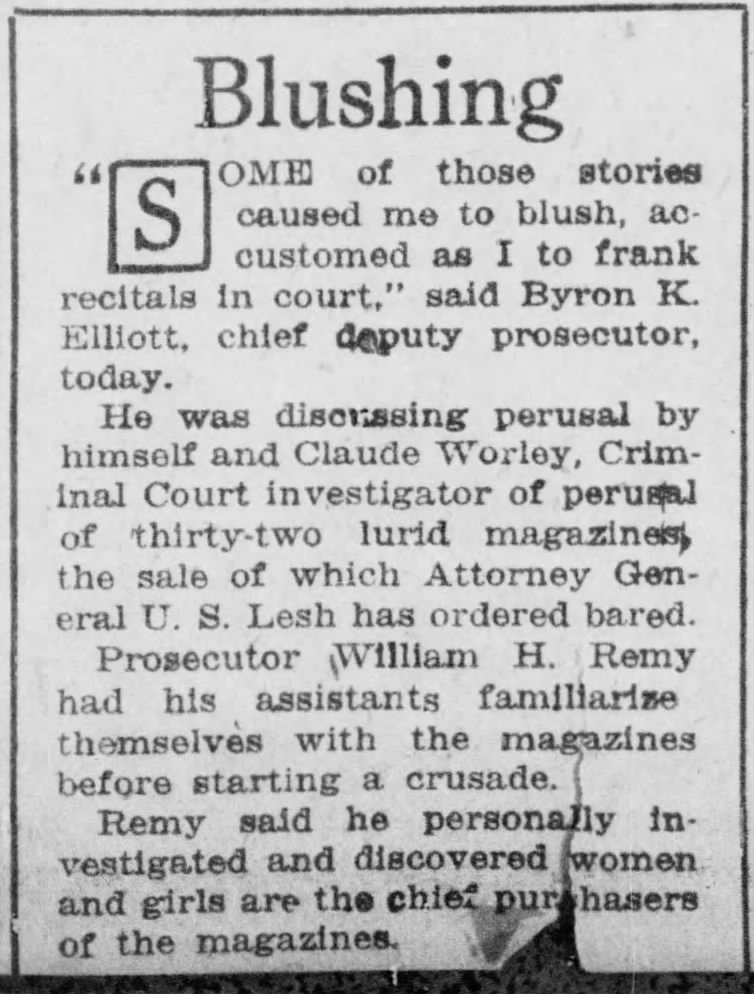
“La Maldición del Amuleto” (1985) by Joan Boix & H. P. Lovecraft

Hay quienes consideran el género de TERROR como un subproductio. Es cierto que, como en todo, a veces domina una calidad ínfirma, pero no sólo en los Comics. También en cinema, televisión, literature…

Tal vez porque el tema se ha explotado a fondo con abusos commerciales aprovechando que a la gente le gustan las emociones fuertes y muchos, sin saberlo, las utilizan para liberarse de sus propios miedos. Pero también es cierto que otros se han servido de sus miedos para expresar sus sentimientos y emociones segun su condición psicológica dando lugar a las mejores obras del género. Tal as el caso de POE, LOVECRAFT, KAFKA, y muchos más.

El experto en la materia no dejará nunca de reconocer que el TERROR es un tema de gran interés que además nos revela la personalidad más intrínseca de sus autores. Por eso, repito, el TERROR no se debe subestimar a la ligera sin un previo análisis.

Conociendo lo suficiente (presumo) sobre la vida atormentada y la obra de Los maestros del terror, he seleccionado una serie de relations pasándolos al Comic, Bien adaptando fielmente algunos, Bien dando mi toque personal a otros.

Y aquí está el resultado: Este libro con el que deseo rendir homenaje a los «GRANDES DE LO MACABRO».

Espero que lo pasen de miedo.
There are those who consider the TERROR genre as a by-product. It is true that, as in everything, sometimes a low quality dominates, but not only in Comics. Also in cinema, television, literature…

Perhaps because the topic has been thoroughly exploited with commercial abuse, taking advantage of the fact that people like strong emotions and many, without knowing it, use them to free themselves from their own fears. But it is also true that others have used their fears to express their feelings and emotions according to their psychological condition, giving rise to the best works of the genre. Such is the case of POE, LOVECRAFT, KAFKA, and many more.

The expert on the subject will never fail to recognize that TERROR is a topic of great interest that also reveals the most intrinsic personality of its authors. Therefore, I repeat, TERROR should not be underestimated lightly without prior analysis.

Knowing enough (I presume) about the tormented life and work of The Masters of Terror, I have selected a series of relations, transferring them to the Comic, either faithfully adapting some, or giving my personal touch to others.

And here is the result: This book with which I wish to pay tribute to the “GREAT OF THE MACABRE.”

I hope you have a scary time.
Introduction to Homenaje: Grandes de Los Macabro (1985)English translation

Joan Boix (born Juan Boix Sola Segales in Badalona, Spain) is not well-known to English-reading audiences, although he has had a long career both in Spain and internationally, able to turn his hand from everything from romance comics in the 1960s to being one of the artists that drew The Phantom comic strip in the 1990s. Yet for those who appreciate horror comics, Joan Boix holds a special place for his work in that field. Even there, in English his work is a bit of a footnote: a story in Marvel’s Monsters Unleashed #5 (1974), which was reprinted in the Monsters Unleashed Annual (1975). Yet his Spanish-language work, never translated into English, is his best. And in 1985 he published a collection of adaptations of classic horror fiction: Homenaje: Grandes de Los Macabro (Tribute: Greats of the Macabre).

“La Maldicion del Amuleto” is an adaption of H. P. Lovecraft’s “The Hound.” In Spanish, the story is typically translated as “El Sabueso,” and while there are many words for dog in Spanish (perro, can or canino, cacharro (“puppy”), chandoso, etc.) “sabueso” has the specific meaning of a hunting dog; we might even say “bloodhound” in English. Which is a nice shade of meaning, given the context.

Boix’s tastes in terms of illustration are gloriously Gothic, redolent of an 18th-century macabre that recalls the horror films of Hammer Films in Britain and Profilmes in Spain. There’s that sense that Peter Cushing, Christopher Lee, or Paul Naschy could step onto the panel at any time, and be right at home.

The starkness of the black-and-white works to Boix’s advantage; there are single panels that could be glorious two-page spreads, with a lot of detail that might have been muddied by a careless colorist. The chiaroscuro effect is glorious, the kind of deep shadows that drink in the light which would inspire the likes of Mike Mignola’s signature aesthetic.

It is always tempting, when reviewing one of these adaptations of Lovecraft, to compare it against all the other adaptations. Jack “Jaxon” Jackson in Skull Comix #4 (1972), Stuart Gordon and Tula Lotay in The Thought Bubble Anthology #1 (2011), Chad Fifer and Bryan Baugh in The Lovecraft Anthology: Volume II (2012), Tanabe Gou in H. P. Lovecraft’s The Hound and Other Stories (2017)—and all of these have their charms and advantages, their different takes and take-offs on the material.

For sheer joie de morte, however, Boix’s tendency to revel in a single panel is hard to top. It’s a world where the moon is always full and glaring like the eye of some forgotten God, where every tombstone is encrusted with grave-mould, and the collection of the pair of necrophiles would put Hammer’s prop department into giddy ecstasies of macabre delight.

As horror comics have gained new appreciation, so too has awareness of Joan Boix’s work begun to grow, with new critical editions in Spanish like Grandes de la Macabro (2021), and Joan Boix. Antología: Relatos pasados, recuerdos presentes, maestría absolute (2022). Very fortunately for English-reading audiences, for the first time ever his horror comics have been translated into English: Terror! The Horror Comics Genius of Joan Boix (2022).


Bobby Derie is the author of  Weird Talers: Essays on Robert E. Howard and Others  and  Sex and the Cthulhu Mythos .

Deep Cuts in a Lovecraftian Vein uses Amazon Associate links. As an Amazon Associate I earn from qualifying purchases.

Her Letters To Lovecraft: S. Lilian McMullen

S. Lilian Middleton-McMullen, whose works are now distinguished by publication in poetry magazines all over the country, is a discovery of Winifred V. Jackson’s, and an added plume in the cap of that noted poetess. She is a native of Ireland, of a loyal British Unionist family, and inherits a trace of French blood through a great-grandmother. In her heredity there is a definitely artistic element, as shewn by the fact that both her mother and sister are poets of no mean skill.

Mrs. McMullen was educated in English private schools, and originally specialised in music; being a violoncellist and pianiste of great ability, and to some degree a composer. At an early age she was given to the writing of verse, but these older specimens are notable only for grace and correctness. Amateurdom has seen two of them—“Late Autumn” in The Tryout, and “The ‘Cellist” in The United Co-operative. They are, quite obviously, juvenalia; though of unusual merit for such work.
—H. P. Lovecraft, “The Poetry of Lilian Middleton” dated 14 January 1922, Collected Essays 2.51-52

Susan Lilian Smith was born in Ireland on 18 February 1886. According to the 1910 Federal census, she emigrated to the United States in 1909; as did Michael J. McMullen (b. 1883). The Massachusetts Marriage Index records a wedding in 1910 in Somerville; their first child, Kenneth Barry McMullen, was born on 16 March 1910. The young family are recorded in the Bronx, New York City, with Michael J. McMullen listed as overseer of a drug warehouse. A second son, Edwin Robinson “Robin” McMullen, followed on 10 July 1913.

By the time of the 1920 Federal census, the family was situated in Newton, Massachusetts, about 7 miles from downtown Boston, in their own home on Morton Street; Michael J. McMullen is listed as a broker. By this time, Susan Lilian McMullen and her sister had already been recruited for amateur journalism, and H. P. Lovecraft took notice of her.

The Silver Clarion for February is of ample size and ample merit. Opening the issue is an excellent poem in heroic couplets by Mrs. Stella L. Tully of Mountmellick, Ireland, a new member of the United. Mrs. Tully, whose best work is in a lyric and religious vein, is one endowed with heriditary or family genius; as the Association no doubt appreciated when reading the poetry of her gifted sister, Mrs. S. Lilian McMullen of Newton Centre, in the preceding issue of The United Amateur.
—H. P. Lovecraft, “Department of Public Criticism” (Mar 1919), United Amateur, Collected Essays 1.225

One of the editors of The Silver Clarion was Winifred Virginia Jackson, and Mrs. McMullen and Mrs. Tully were apparently two of her recruits for the United Amateur Press Association. Lovecraft mentions her poetry a few times in his editorials, and it was generally positive. At this stage in his life, Lovecraft was getting out and meeting amateurs more often with occasional trips to Boston, and it was on one such trip he met S. Lilian McMullen in the flesh:

Mrs. McMullen was present, & prepared to argue over a criticism I had recently applied to one of her verses; but I quickly ended the argument by calling in as my ally the omniscient James Ferdinand [Morton], from whose decisions there is no appeal. (The question had to do with the use of “mirror” as an intransitive verb. Such usage is incorrect.)[…]The best feature was Mrs. McMullen’s pathetic poem “Desiree Logier”, which is to appear in the July United Amateur. (I tried to get that poem on the front page, but Mrs. Renshaw overruled me.)
—H. P. Lovecraft to Rheinhart Kleiner, 10 Sep 1920, Letters to Rheinhart Kleiner 172

While a full record of her amateur and on-amateur writing isn’t available, it seems at some point between 1920 and 1921 she began to sometimes use the pseudonym Lilian Middleton. Her interests ran strongly to poetry and music, and she wrote both; Lovecraft noted:

The United takes pride in the new laurels of its scintillant and versatile members, Mrs. S. Lilian McMullen (Lilian Middleton), who is now writing songs for professional publication with the music of Ernest Harry Adams. The latest of these to appear is “The Bumble Fairy”, a dreamily exquisite piece already sung by several vocalists of note. […]

The Boston Amateur Conference of February 22, held at the Quincy House, was successful from every point of view […] A musical programme featuring Mrs. McMullen’s “Bumble Fairy” proved a delightful interlude.
—H. P. Lovecraft, “News Notes” (Jan 1921), United Amateur, Collected Essays 1.269

Lovecraft would write at rather more length about the conference in a letter to his mother, which reads in part:

Samuel Loveman’s paper was very poetic—he had asked me to read it, but Mrs. Miniter (in charge of the programme) thought she had better assign it to Mrs. McMullen, who had not felt equal to preparing a paper of her own. Mrs. McM. read it with great success—but not without having to ask me beforehand how to pronounce the name of the neo-Platonic philosopher Plotinus! […] Following this, a musical programme was rendered with great success, the chief ingredient being the McMullen-Adams song, “The Bumble Fairy”, which you played the other day. Mrs. McM was reluctant to sing it, not possessing a voice quite up to her own standard of excellence; but her scruples were entirely unnecessary, since the rendition proved phenomenally pleasing. I was immensely glad to hear the piece played properly, and found that in my own crude picking out I had not correctly interpreted the time. This Ernest H. Adams is certainly a composer of the greatest possible ability, and I think Mrs. McM is singularly fortunate in her opportunity to write words for his airs. Neither suffers by comparison with the other—it is an ideal “team.”

[27] Mrs. McMullen was very glad to hear that you liked “The Bumble Fairy”, and bade me thank you for your favourable opinion. It appears to me that she is destined for professional prominence at an early date—sooner perhaps than many amateurs of even greater genius, such as Winifred V. Jackson and Samuel Loveman. […] The overwhelming majority were adherents of the rival on National Association (which is, of course, now friendly with the United), but the Jackson–McMullen–Theobald group formed a compact minority of purely United enthusiasts.
—H. P. Lovecraft to Sarah Susan Lovecraft, 24 Feb 1921, Letters to Family and Family Friends 1.26, 27

Lovecraft and McMullen were, despite any disagreement over metrical regularities, apparently on friendly terms. It is difficult to say when exactly they began to correspond, what prompted the correspondence, how extensive it was or what subjects they covered. None of their letters survive, and we have fewer hints in Lovecraft’s essays and correspondence than usual. We know that Lovecraft included her among his Christmas greetings, and we know that her poem “The Crock of Gold” appeared in his own amateur journal The Conservative (Mar 1921), which suggests she mailed it to him, unless she handed it to him in person at one of the amateur gatherings.

Yet the relationship was probably cordial, not close.

In August 1921, Lovecraft attended an amateur gathering in Boston at the McMullen’s house on Morton St.; McMullen had won the poetry laureateship for 1921:

The Hub Club meeting was yesterday, but on account of the increasing political gap between the (Nationalite) Hub element & the United, [Edith Miniter] set Wednesday as the day for conferring at length with the United element—W. V. Jackson, Miss Hamlet, Mrs. McMullen, &c. […]

[39] After a short argument at this temporary halting-place, the expedition proceeded to 53 Morton St., which I have of course seen before. Here I met Mrs. McMullen, & had the honour of breaking to her the pleasing news that she has won the United’s 1921 Poet-Laureateship. […] After this non-esssential digression the evening assumed more of the aspect of an ordinary amateur gathering, the company being augmented by the arrival of W. V. J., Miss Crist, Mrs. Wurtz, & a neighbour of Mrs. McMullen’s whose name has slipped my memory but who ought to be remembered for the menagerie which she brought with her—two large collie dogs, & the most exquisite kitten I have beheld in aeons. Mrs. McMullen averred that the latter small gentleman was brought especially in my honour, my liking for the feline species being well known in amateurdom. […] Mrs. McMullen played & sang her “Bumble Fairy”, & Mrs. Renshaw sang two songs (of which she wrote the words) in an excellent contralto, with Miss Crist as accompanist. I inflexibly refused all requests for song, & categorically denied the accusation of W. V. J., Mrs. Miniter, & Mrs. McMullen that I could sing. […] So I let mesdames Renshaw & McMullen bear off all the honours. […] Pure literature, grammar, technique, ancient balladry, & the Irish situation (the McMullens are loyal British subjects & Protestants from Ireland) all received attention; & even D. V. Bush & remunerative endeavour were discussed.
—H. P. Lovecraft to Annie Gamwell, 19 Aug 1921, Letters to Family and Family Friends 1.38, 39, 40

The Irish War of Independence (1919-1921) was a point of contention for Lovecraft, who was a lifelong Anglophile and was in favor of the British in the conflict. This put him at odds with anti-British, pro-independence amateur journalists like the Irish immigrant John Dunn, and exacerbated anti-Irish (and in a general sense, anti-Celtic/Gaelic) and anti-Catholic sentiments in Lovecraft. That the McMullens were both loyalists and protestants were both definite points in their favor as far as Lovecraft (and presumably his aunts) were concerned.

A few more notes on S. Lilian McMullen/Lilian Middleton appear in Lovecraft’s editorials. Later in 1921 he noted:

The continued successes of our Poet-Laureate, Mrs. S. Lilian McMullen (Lilian Middleton), cast additional lustre on the United as amateurdom’s chief source of authentic creative artists. Poetry by Mrs. McMullen appeared on the editorial page of the New York Times for October 15; a distinction which can be appreciated by those familiar with the standards of that celebrated publication. […303] Honours come rapidly to our poets. On November 5 The Literary Digest reprinted a poem of Mrs. McMullens’ from the New York Times […]
—H. P. Lovecraft, “News Notes,” Nov 1921, United Amateur, Collected Essays 1.302-303

The poem was reprinted in the Literary Digest and several other newspapers.

In late 1921 or early 1922, Lovecraft wrote “The Poetry of Lilian Middleton”, the draft is dated 14 Jan 1922. It is not clear where this was intended to be published, but an abbreviated version of it was published in “The Vivisector” column in March 1922 (CE 1.315-316). How much contact Lovecraft had with S. Lilian McMullen after that is doubtful, one of his last words on her from this period was:

A special word is due the excellent portraits of eminent amateurs, among which is the first likeness of our poet-laureate, Mrs. S. Lilian McMullen (Lilian Middleton) ever published in Amateur Journalism.
—H. P. Lovecraft, “News Notes” (May 1922), United Amateur, CE 1.317

This was in reference to The Rainbow Vol. II, No. 2 (May 1922), which was edited by Sonia H. Greene, and is the only photo of S. Lilian McMullen I’ve found. Readers who turn to read Lovecraft’s “Celephaïs” in that issue may have wondered who that woman was, whose portrait and poem graced the page immediately proceeding Lovecraft’s. Now they do. Her work in that journal suggests that she and Lovecraft may have been in contact at least briefly in early 1922…but after that their relationship seems to break off, or at least the references in editorial and letters dwindle to nothing.

We can only speculate as to the reasons. It seems likely that McMullen and Lovecraft’s friendship was largely based on their common friendship with Winifred Virginia Jackson, and his relationship with Jackson cooled off after Lovecraft met Sonia H. Greene (his future wife) at that August convention in 1921. So too, the McMullens may have experienced difficulties of their own that limited S Lilian McMullen’s further participation in amateur journalism.

The Boston Globe, 21 Aug 1925, p.9
The Boston Globe, 8 Dec 1925, p.19

Taken together, these two snippets paint a picture of strained finances, and perhaps a strained marriage. Michael J. McMullen’s business either failed or his debts grew too much; the wife and children were sent out of the country while he tried to settle affairs, which probably included the selling of or foreclosure on the house at 53 Morton St. What happened to Michael J. McMullen between 1925 and 1930 is unknown; in the 1930 Federal census, S. Lilian McMullen is listed as “widowed,” and she and her sons were renting at Crafts St. in Newton.

Despite this hardship, S. Lilian McMullen persevered. She was naturalized a citizen of the United States of America on 5 April 1954, and according to her obituary finally passed away in 1981 at the age of 95, with 4 grandchildren and 8 great-grandchildren, and interred in Chatham, Mass (Findagrave).

Who was H. P. Lovecraft to S. Lilian McMullen? Like so many women who interacted with Lovecraft, there is no record in their own words to guide us. Their paths crossed just a few times in the early 1920s, and she made enough of an impression that he wrote in praise of her poetry and songs. We have, for the most part, only Lovecraft’s own sparse comments to guide us. Their legacies are different: Lovecraft’s legacy was literary, and his heirs are his readers; hers was her children, and grandchildren, and their children and grandchildren. It would be interesting to know if any of her family were aware of her connection with Lovecraft…or if they still have any or her songs and poetry to remember her by.


Bobby Derie is the author of  Weird Talers: Essays on Robert E. Howard and Others  and  Sex and the Cthulhu Mythos .

Deep Cuts in a Lovecraftian Vein uses Amazon Associate links. As an Amazon Associate I earn from qualifying purchases.

Skinny Dipper (2023) by Sex and Monsters

Eldritch Fappenings

This review deals with a work of art that includes nudity. As part of this review, selected images with nudity will be displayed. As such, please be advised before reading further.


It was many and many a year ago,
   In a kingdom by the sea,
That a maiden there lived whom you may know
   By the name of Annabel Lee;
And this maiden she lived with no other thought
   Than to love and be loved by me.
—Edgar Allan Poe, “Annabel Lee” (1849)

Skinny Dipper was a successfully crowdfunded multimedia project by Sex and Monsters, who are best known for their retro chic combinations of horror, pulp fiction, and tiki culture to produce works like the comic/cocktail booklet Tiki Surf Witches Want Blood.

The form of this particular project is a 32-page mixed-media comic ‘zine that remixes Poe’s “Annabel Lee” and “The Night Ocean” (1936) by R. H. Barlow with H. P. Lovecraft, re-imagining them against a palette of mixed comic and photographic work by Emily Roberts, April Snellings, Jelena Đorđević, May Nguyen, Dennis Swiatkowski, Sam McKenzie, Slime Sunday, Brite Lite Tribe, and Will Penny; and a 7″ vinyl record by Nite Jewel that contains a soundtrack to accompany the piece. Various Kickstarter bonuses to the campaign add decals, instant film shots of May Nguyen, and other goodies.
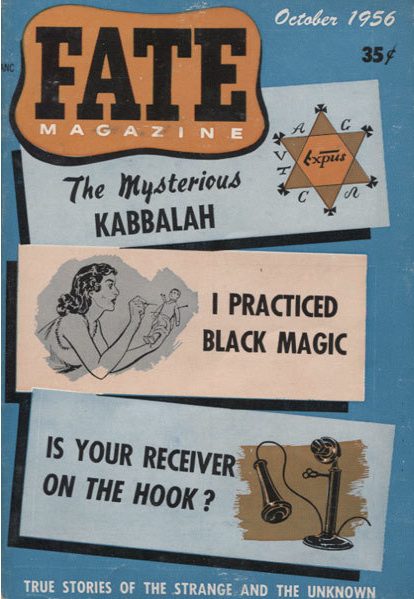
The crux of the re-imagining is model May Nguyen, who appears both in photographs and as the character model for the character of Annabel Lee in the story. Told in sparse, evocative images, Annabel Lee shifts from the bright and crowded daylit beach to a lonely moonlit scene, to go skinny dipping alone in the night ocean.

Chunks of Poe’s and Barlow and Lovecraft’s texts are taken out of context and reframed as poetry. The artists are each distinctive in their style and approach to the material; the center black-lettering on black-pages at the center of the story is incredibly evocative of the dark abysses hinted at in poem and short story, here rendered visually—and the combination of Poe’s verse and select snippets from Barlow and Lovecraft work well together with the visuals, terribly suggestive of far more than appears on the page.

Kitsch is a dirty word, but in this case the artists are trying to recapture specific moods and art styles, from the Charles Atlas bully-kicks-sand-in-your-face comics of the 50s to 80s glossy magazine photo spreads that are terribly suggestive of exotic vacations, where the sea foom can lap at your feet as you read and relax on holiday. It is a deliberate effort to reproduce an aesthetic that existed, even if that exact place never did.

One thing that both “Annabel Lee” and “The Night Ocean” capture is a sense of loneliness and longing; that may be why giving Annabel in Skinny Dipper such a distinctive face adds something to the text. May Nguyen provides a sense of reality that might have been missing if this a more traditionally-made comic book; there’s a fotonovella-style sense that these could be stills to some ancient straight-to-video movie that graced the shelves of mom & pop video stories.
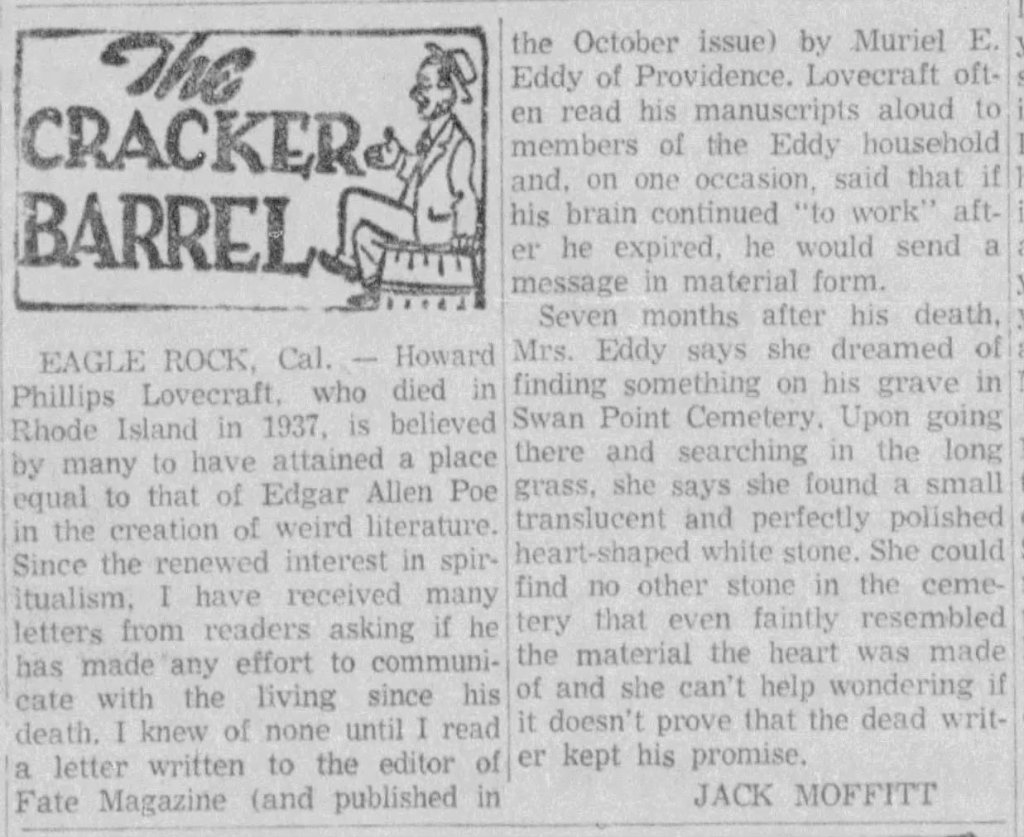
It is not horror in any strict sense; not int he bloody bones and a shark coughing up a limb. It’s closer to a vacation where all the time away reminds you that the one thing ou can’t get a vacation from is yourself, can’t get out of your own head. That loneliness and the endless, ageless warm waters of the ocean might swallow you up forever, given half a chance.
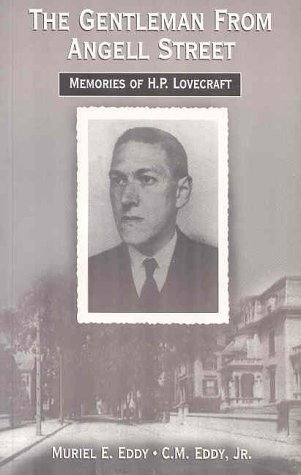
Nite Jewel’s Skinny Dipper single is a soundtrack to the story; I’d call it synthwave or retrowave, while the tags for the album on call it chillwave and hypnogogic pop. Combined with the stylistic flourishes of the comic, it grounds the reader in that almost-never-when promised in a thousand 80s and early 90s magazines, comics, films, and music videos. The idea of the beach as this place of escape, the music a poppy invitation that’s a bit more upbeat than tiki exotica, but holds many of the same audio cues, just for a later generation.

At this time of writing, the album is the only thing available for direct purchase, although many stills and videos associated with the project are located on Sex and Monsters’ Facebook page.

Skinny Dipper is an interesting collaboration, one that showcases the abilities and visions of the individual artists that went into it. Copies are still available through the Kickstarter store (click “Order Now”), and will hopefully receive a wider release in the near future.


Bobby Derie is the author of  Weird Talers: Essays on Robert E. Howard and Others  and  Sex and the Cthulhu Mythos .

Deep Cuts in a Lovecraftian Vein uses Amazon Associate links. As an Amazon Associate I earn from qualifying purchases.