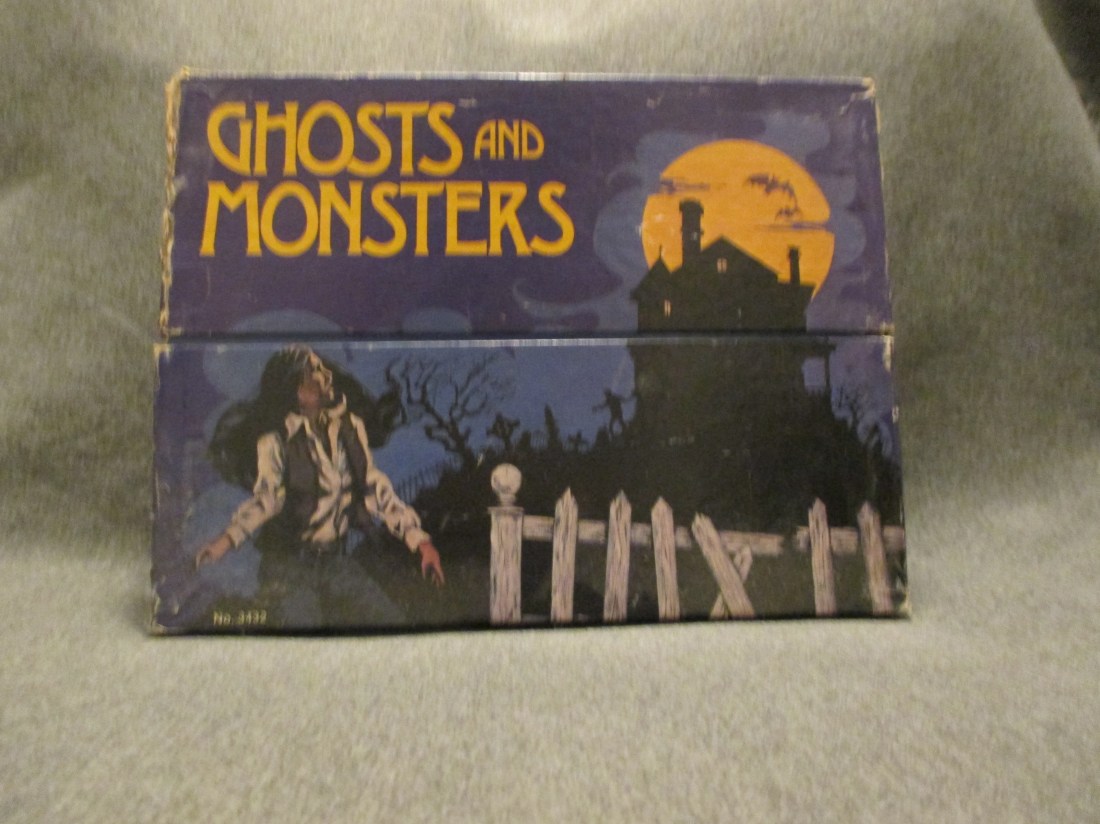
Ghosts and monsters have long been favorite topics for many children, so this Getting Into Literature set has a real built-in motivation factor. The art aids understanding, and the text is set in type (rather than hand-lettered in the traditional comic-book style). These features make GHOSTS AND MONSTERS enjoyable and easy to read.
—Teacher’s Guide: Ghosts and Monsters
Imagine yourself in a public middle school in the United States of America, circa the 1980s or early 1990s. A genuine chalk board, rows of desks, an old-style projector. It’s the fall; leaves are falling from the trees, t-shirts are giving way to long sleeves and jackets. The classroom might be decorated with black and orange chains of paper, a cut-out of a witch, a pumpkin with a crooked smile drawn on in sharpie. The teacher passes out a stack of worksheets—but what is this? Comics? Horror comics?
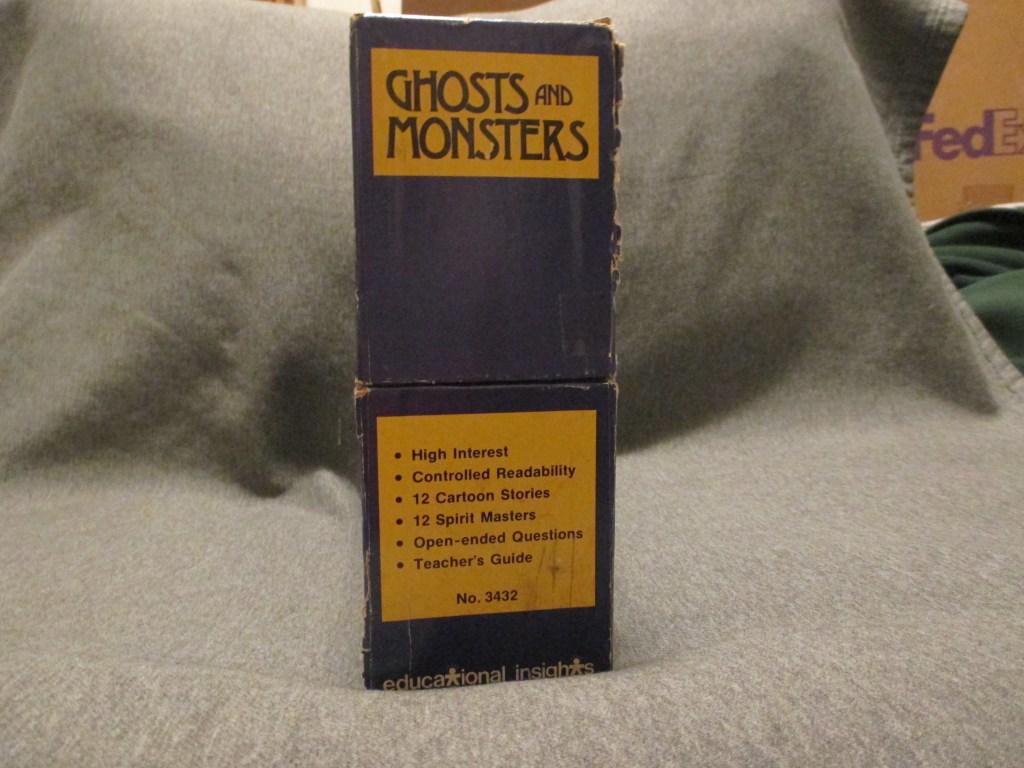
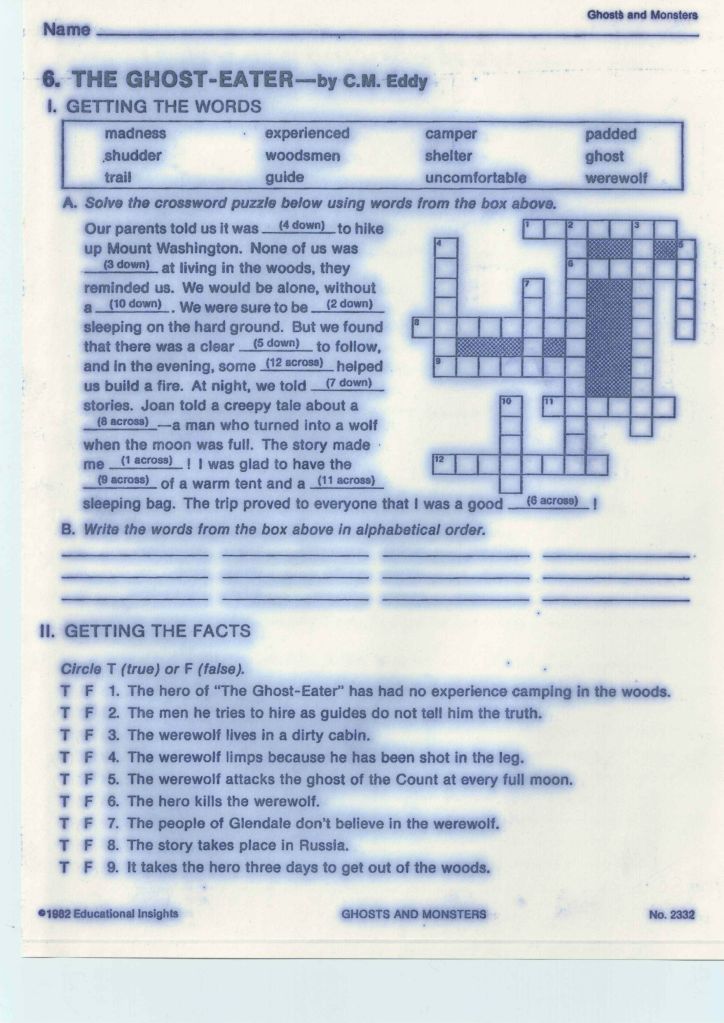
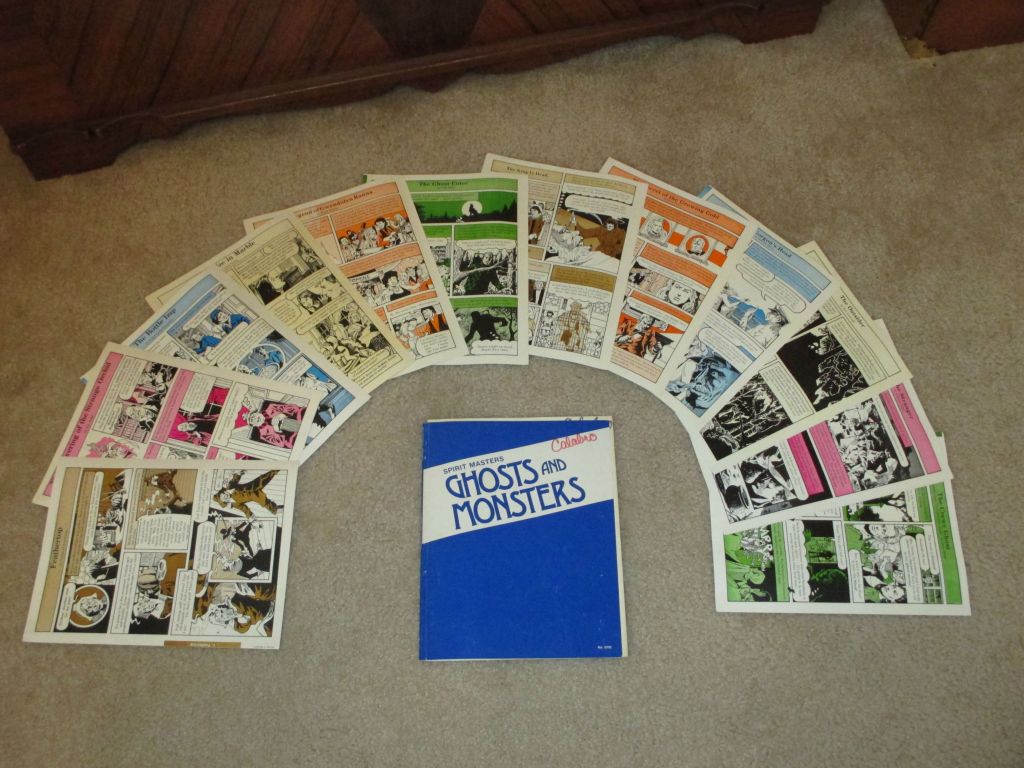
Ghosts and Monsters was published by Educational Insights in 1982. The kind of boxed set of teaching materials that found there way easily into hundreds or thousands of classrooms across the country. The contents were pretty basic: a book of spirit masters for duplicating worksheets (crosswords, etc.) in an age before photocopying became ubiquitous; a brief teacher’s guide with suggested questions and activities; and a package of comic booklets which adapted a dozen tales of horror and weird fiction to comics:
- “Feathertop” (1852) by Nathaniel Hawthorne
- “The Flowering of the Strange Orchid” (1894) by H. G. Wells
- “The Bottle Imp” (1891) by Robert Louis Stevenson
- “Man-Size in Marble” (1887) by Edith Nesbit
- “The Legend of Gwendolyn Ranna” (1982?) by Frank Maltesi
- “The Ghost-Eater” (1924) by C. M. Eddy
- “The King is Dead, Long Live the King” (1928) by Mary Coleridge
- “The Secret of the Growing Gold” (1892) by Bram Stoker
- “The Gorgon’s Head” (1899) by Gertrude Bacon
- “The Outsider” (1926) by H. P. Lovecraft
- “The Stranger” (1909) by Ambrose Bierce
- “The Crewe Ghost” after Oscar Wilde [based on “The Canterville Ghost” (1887)]
It’s an odd mix. Many of these works were in the public domain, while the others were largely drawn from the pulps or (more likely) horror anthologies. “The Legend of Gwendolyn Ranna” by Frank Maltesi is a bit of an enigma, though the name is associated with several other brief legendary tales that have popped up in other educational materials; this may well be its first (and only) publication.
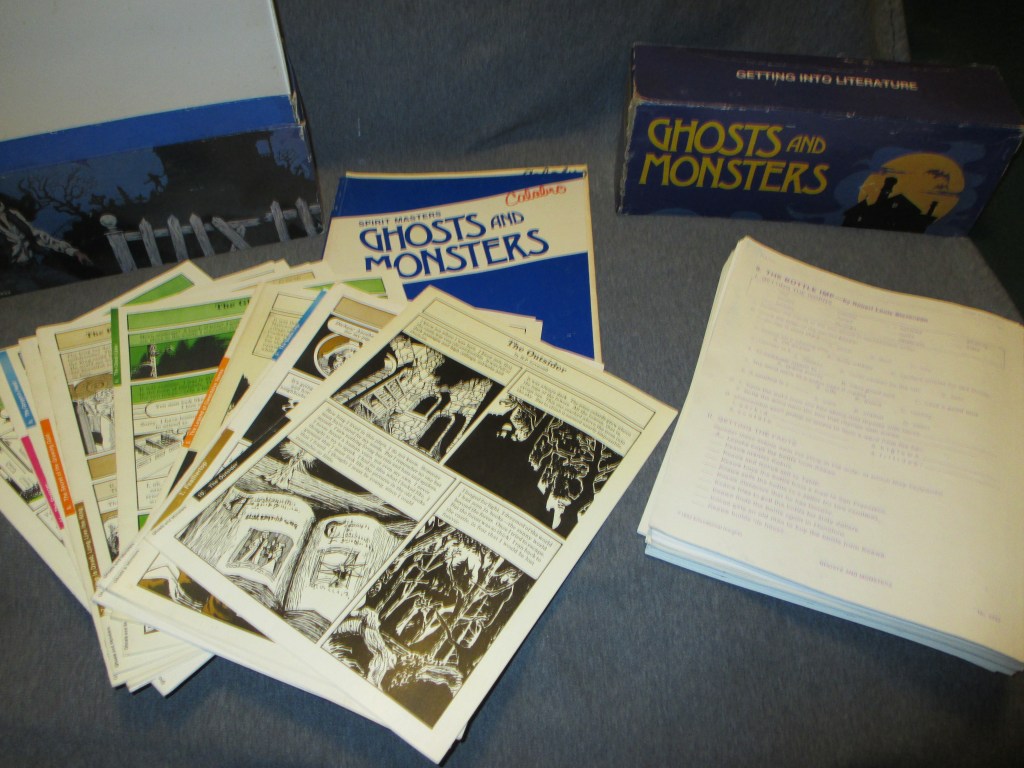
Most of the interest is on the comics themselves. The Teacher’s Guide credits Mark Falstein (well-known author of fiction for young adults) for selection and adaptation, and freelance artist Tony Gleeson for the illustrations. Each comic booklet is basically one large folded page, which gives four pages to tell and illustrate a complete story—a not-inconsiderable task!
The results tend to less grue and taboo than young horror fans might hope for. These were the last generation of “monster kids” that might pick up Famous Monsters of Filmland (1958-1983) on the stand, but they might still find a Helen Hoke-edited horror anthology in the school library, or pick up something from Scholastic involving vampires, werewolves, or bug-eyed aliens at the school book fair. Yet I have to wonder how many kids sat down one day and read Lovecraft for the first time as part of a school assignment—
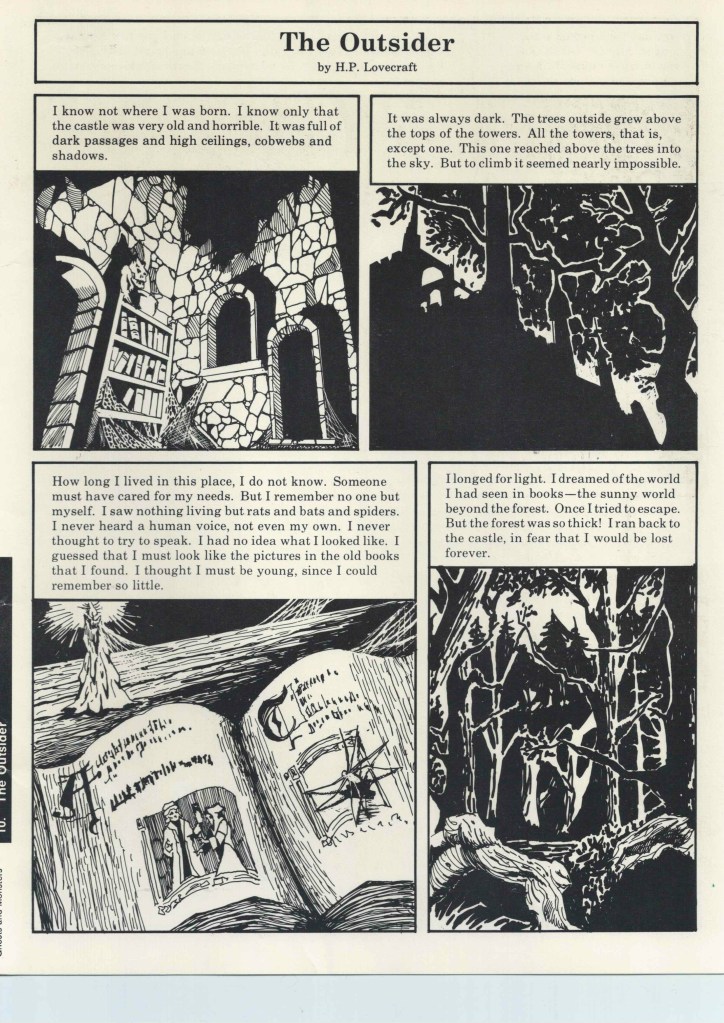
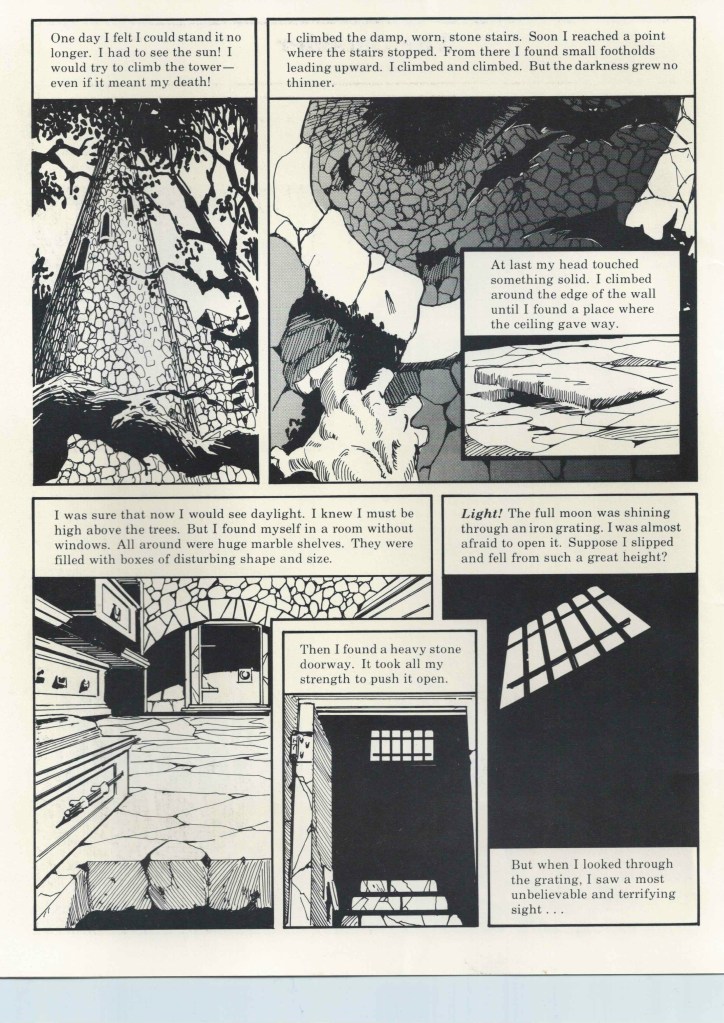
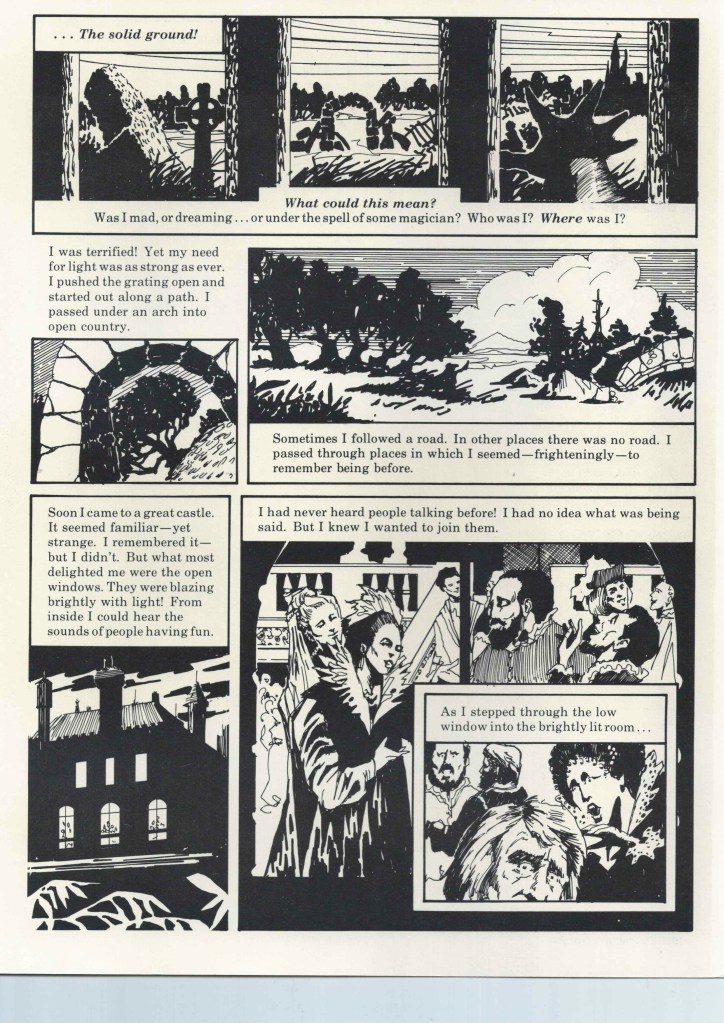
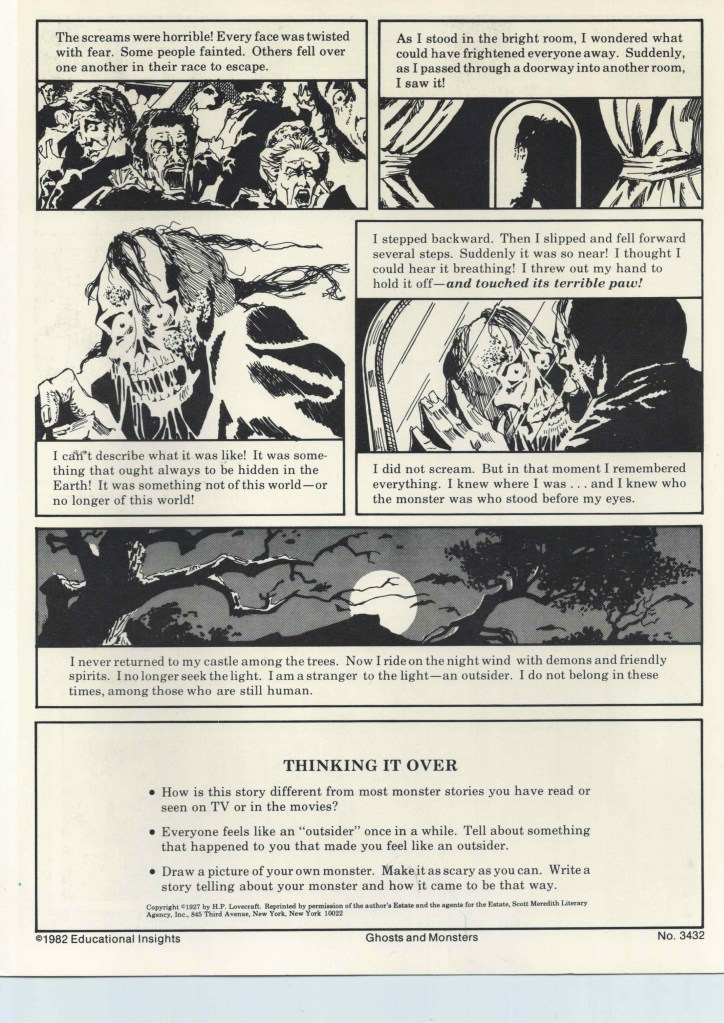
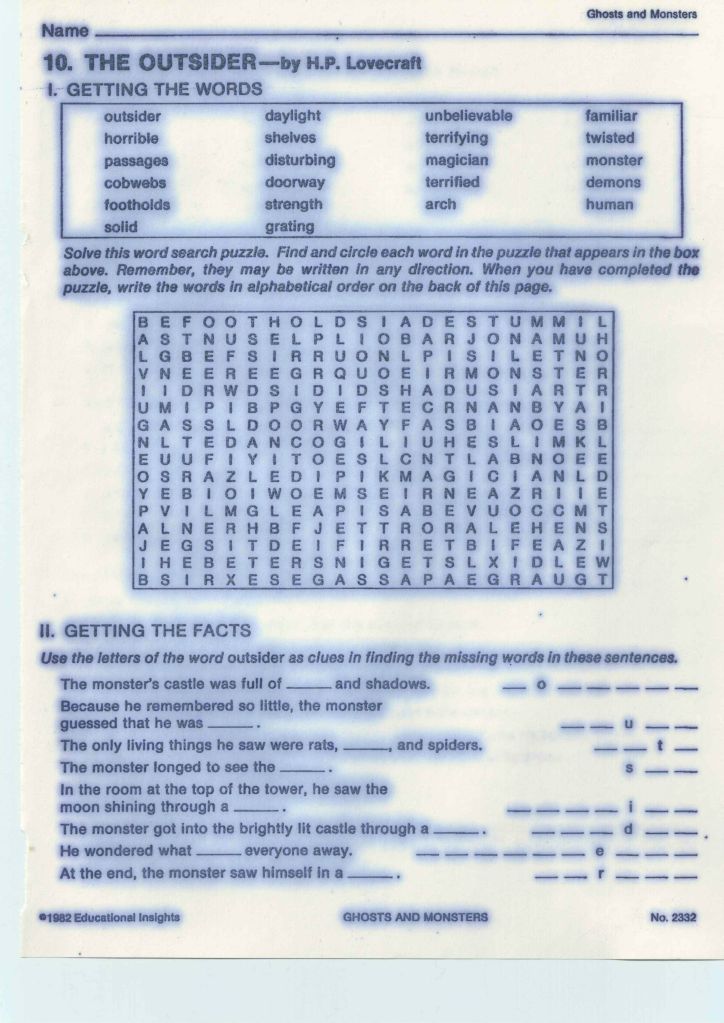
And then fill out the worksheet afterwards!
Actually, there were two bits of Lovecraft tucked away in this package. C. M. Eddy, Jr.’s “The Ghost-Eater” (Weird Tales Apr 1924) was one of the stories that Lovecraft had somewhat revised for Eddy, and sold to Weird Tales editor Edwin Baird. As Lovecraft put it:
I have, I may remark, been able to secure Mr. Baird’s acceptance of two tales by my adopted son Eddy, which he had before rejected. Upon my correcting them, he profest himself willing to pint them in early issues; they being intitul’d respectively “Ashes”, and “The Ghost-Eater”.
—H. P. Lovecraft to James F. Morton, 28 Oct 1923, Letters to James F. Morton 57
How much of it Lovecraft actually wrote is a matter for debate; S. T. Joshi in Revisions and Collaborations notes the plot and some of the dialogue seems very typical of Eddy, while much of the prose reads like Lovecraft. In any event, it’s a genuine rarity. While many of Lovecraft’s tales have been adapted to comics, his revisions and collaborations are much less likely to receive the same treatment. This is certainly the first, and possibly the only adaptation of “The Ghost-Eater” to comics.
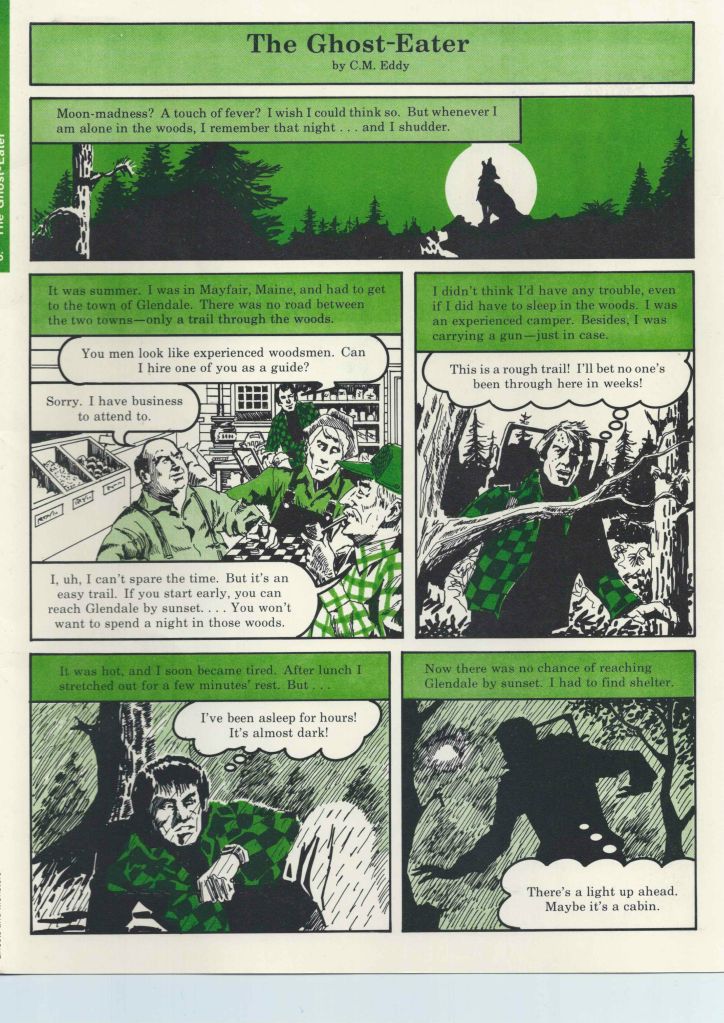
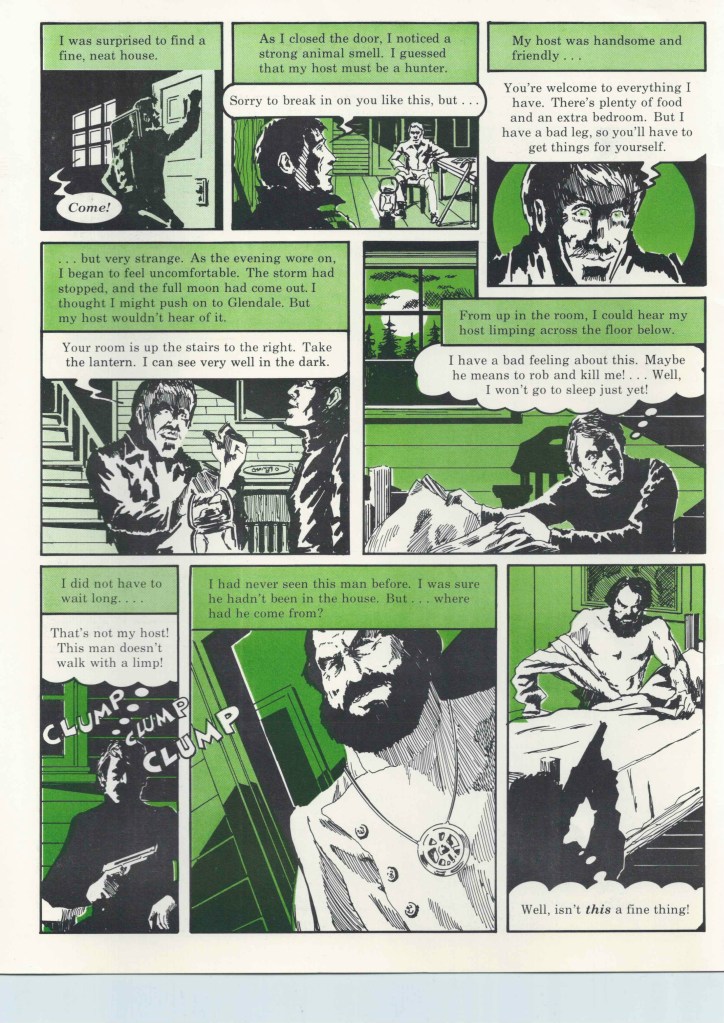
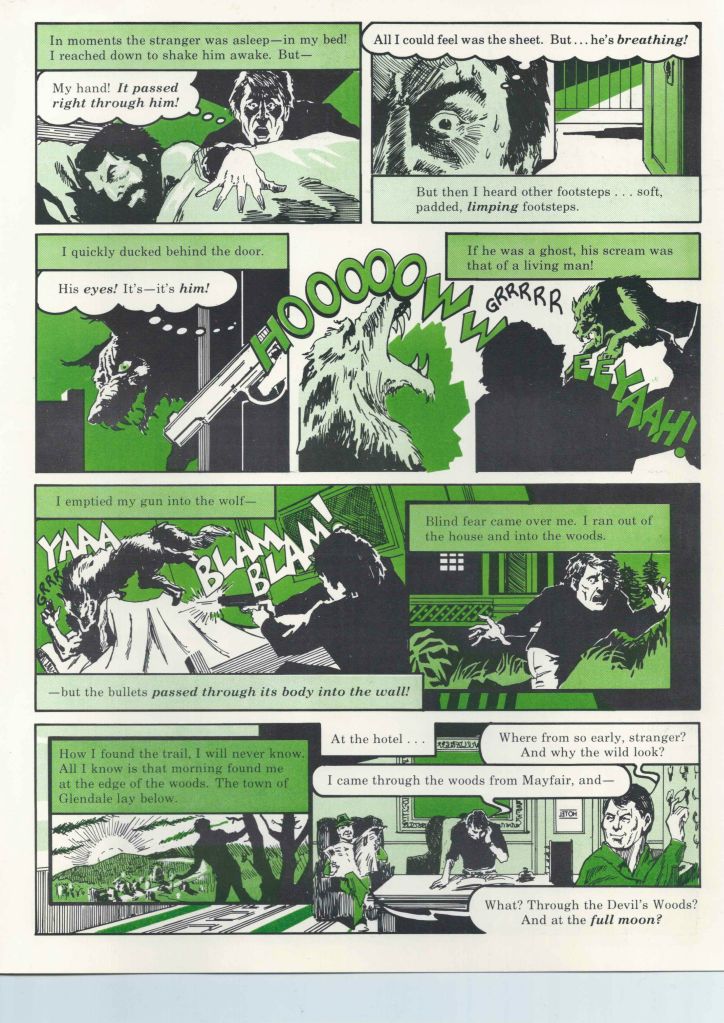
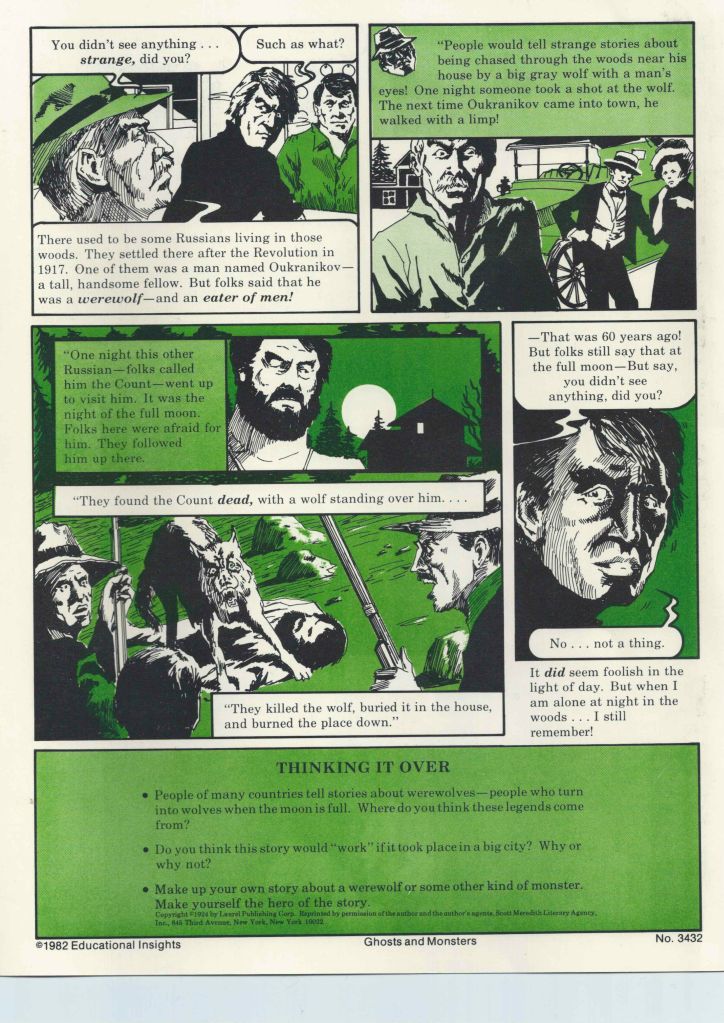
Given the limitations of space, the monochromatic printing, and the incredibly tight scripts, credit has to be given to Tony Gleeson for doing a very decent job on the art. Stuck with a very boxy framing setup, he nevertheless manages to use perspective shots and shadowed silhouettes to hint and convey something of a horror-mood. While the Teacher’s Guide suggests that the typeset text will make it easier to read, I suspect the real issue was that the budget for this project didn’t extend to hiring a letterer.
When we consider Lovecraft as something more than a cult figure, but as a writer who has entered the canon of world literature—this is a good example of what that looks like. Not necessarily fancy, expensive editions that can only be seen and enjoyed by a few, but stories that penetrate into common educational materials, hitting the masses when they’re young and becoming part of the foundation of reading. Ghosts and Monsters is a core sample of how Lovecraft came to the masses.
It’s a bit of history easily overlooked and easily lost. These were sold for classroom use, not to the public, and not preserved in libraries. How many classes went through Ghosts and Monsters before the comics were too worn for further use, or lost and displaced? Who preserves old worksheets from childhood days? These are deliberately ephemeral products, designed to last a few seasons and then be replaced as educational guidelines shift or a company needs to sell a new product. Edutainment marches on.
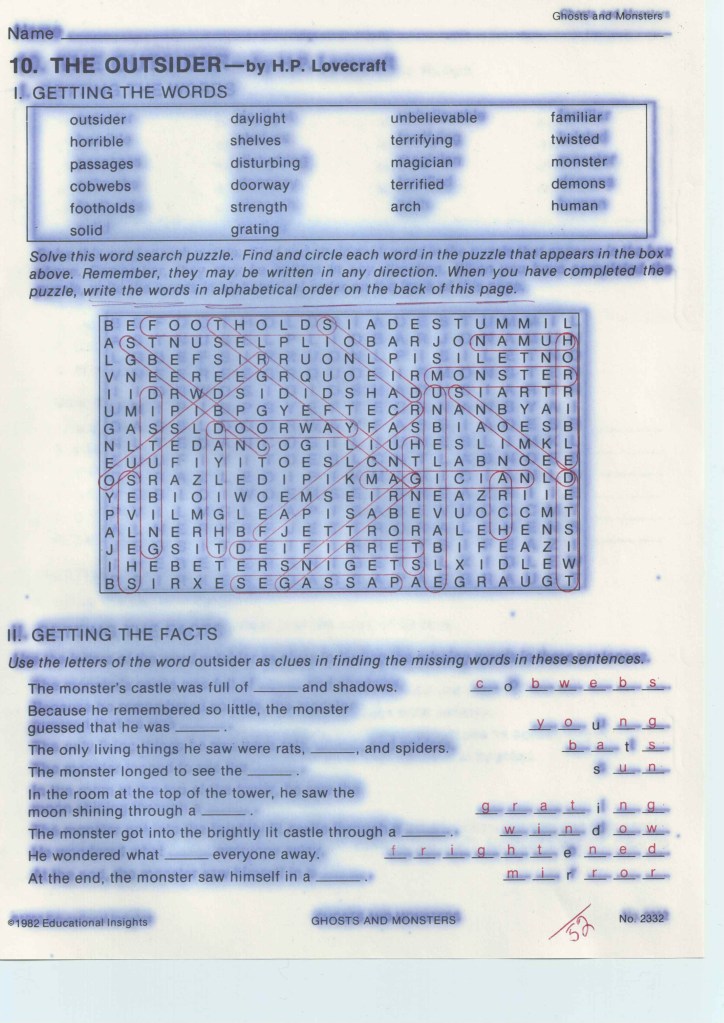
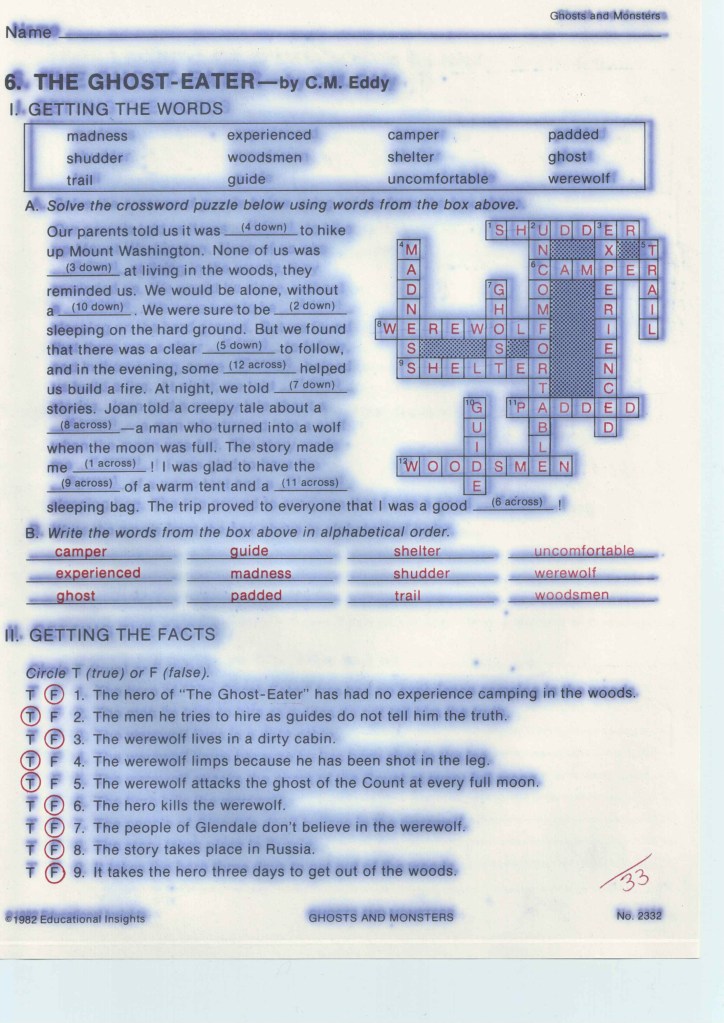
(Here are the answer keys to the worksheets if you need them.)
Bobby Derie is the author of Weird Talers: Essays on Robert E. Howard and Others and Sex and the Cthulhu Mythos.
Deep Cuts in a Lovecraftian Vein uses Amazon Associate links. As an Amazon Associate I earn from qualifying purchases.


 (2014)
 Deep Cuts in a Lovecraftian Vein