“The Horror at Martin’s Beach” (1923) by Sonia H. Greene & H. P. Lovecraft

While visiting Magnolia, that beautiful, exclusive summer resort on the north shore of Massachusetts, we often walked to Gloucester, which was a distance of about four miles. On our way we passed a beautiful esplanade. One evening while walking along this esplanade, the full moon reflecting its light in the water, a peculiar and unusual noise heard at a distance as of a loud snorting and grunting, the shimmering light forming a moon-path on the water, the round tops of the submerged piles in the water exposed a rope connecting them like a huge spider’s guy-line, gave the vivid imagination full play for an interesting weird tale. “Oh, Howard,” I exclaimed, “here you have the setting for a real strange and mysterious story.” Said he, “Go ahead, and write it.” “Oh, no, I couldn’t do it justice,” I answered. “Try it. Tell me what the scene pictures to your imagination.” And as we walked along we neared the edge of the water. Here I described my interpretation of the scene and the noises. His encouragement was so enthusiastic and sincere that when we parted for the night, I sat up and wrote the general outline which he later revised and edited. His continued enthusiasm the next day was so genuine and sincere that in appreciation I surprised and shocked him right then and there by kissing him. He was so flustered that he blushed, then he turned pale. When I chaffed him about it he said he had not been kissed since he was a very small child and that he was never kissed by any woman, not even by his mother or aunts, since he grew to manhood, and that he would probably never be kissed again. (But I fooled him.)
—Sonia H. Davis, The Private Life of H. P. Lovecraft 19

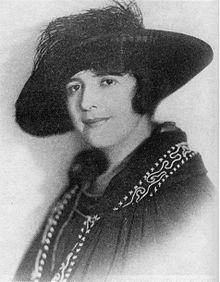
Born Sonia Haft Shafirkin to a Jewish family in the Russian Empire (modern Ukraine), by the time that Lovecraft and Sonia met she had been living in the United States some 20 years, had married and outlived her first husband (Samuel Greene), and had an adult daughter (Carol Weld) from that union. Sonia was a successful, highly-paid milliner in New York City, and had gotten involved in amateur journalism. Lovecraft met her at an amateur press convention in 1921, shortly after the death of Lovecraft’s mother, and the two began a correspondence that turned into a rather surprising courtship-in-letters. They would marry quickly and unexpected in 1924…but before that, they wrote this tale together.

There is no reason to doubt Sonia’s own account of the story’s genesis, and this makes it difficult to distinguish her prose from Lovecraft’s. The issue is exacerbated because little of Sonia’s own work has been published—her other two known fictional efforts, “Four O’Clock” and the play Alcestis both show evidence of being “touched up” by Lovecraft.  Joshi in volume 4 of the variorum edition of the collected fiction of H. P. Lovecraft notes: “One supposes that Lovecraft retained a certain amount of prose by Greene.” Her image of the moon-path in particular is a recurring motif:

It was in the twilight, when grey sea-birds hovered low near the shore and a rising moon began to make a glittering path across the waters. The scene is important to remember, for every impression counts. On the beach were several strollers and a few late bathers; stragglers from the distant cottage colony that rose modestly on a green hill to the north, or from the adjacent cliff-perched Inn whose imposing towers proclaimed its allegiance to wealth and grandeur. […]

Minutes seemed lengthened into hours, and still that human snake of swaying torsos was seen above the fast rising tide. rhythmically it undulated; slowly, horribly, with the seal of doom upon it. thicker clouds now passed over the ascending moon, and the glittering path on the waters faded nearly out. […]

There was no line of bobbing heads now. The waters were calm and deserted, and broken only by the fading ripples of what seemed to be a whirlpool far out in the path of the moonlight whence the strange cry had first come. But as I looked along that treacherous lane of silvery sheen, with fancy fevered and senses overwrought, there trickled upon my ears from some abysmal sunken waste the faint and sinister echoes of a laugh.
—Greene & Lovecraft, “The Horror at Martin’s Beach”

It is an atypical tale by Lovecraft’s standards, much like his earlier collaborations “Poetry and the Gods” (1920) with Anna Helen Crofts and “The Crawling Chaos” (1921) with Winifred Virginia Jackson. Like those stories, it is not a Mythos tale per se, although it seems likely that Lovecraft is behind the name of “Capt. Orne,” which is the name of one of the families he would later associate with Innsmouth. It has more plot than those dream-tales. The mocking laughter at the end and the strange inevitability of the victims’ doom is closer to a conte cruel than Lovecraft’s other efforts…but the real difference between this collaboration and previous efforts is its fate.

The story was written in 1922, during or shortly after the Magnolia visit (26 June – 5 July); and Lovecraft wrote on 11 Sep 1922 that at a party attended by several amateur journalism folk:

I read my “Doom that Came to Sarnath” & “The Tree”, Belknap read his “Eye Above the Mantel”, Mrs. Greene read her “Four o’Clock” & one of the other Magnolia horror-tales not yet revised […]
—Lovecraft to Anne Gamwell, 9-11 Sep 1922, Letters from New York 21

At this point, Sonia appears to have titled the story “The Nameless Monster” (Selected Letters 1.303). However, in March 1923 a new pulp appeared on the stands: Weird Tales. Lovecraft successfully submitted several stories to this magazine—including “The Nameless Monster,” which he had re=titled as “The Horror at Martin’s Beach.” To Lovecraft’s chagrin, the editor re-titled the piece again, and it appeared as “The Invisible Monster” by Sonia H. Greene in the November 1923 issue. This was, then, Lovecraft’s first commercial collaboration, and Sonia’s only known professional publication during Lovecraft’s lifetime.

This is one of the stories that marked the transition from Lovecraft as an amateur to a professional writer—and perhaps it is notable that it was Sonia who partnered with him in that, as she did later in their brief marriage. She was in many ways the catalyst for bringing Lovecraft to New York, which while painful for the man from Providence also led to much personal growth.


Bobby Derie is the author of Weird Talers: Essays on Robert E. Howard & Others and Sex and the Cthulhu Mythos (2014).
“The Crawling Chaos” (1921) by Winifred Virginia Jackson & H. P. Lovecraft

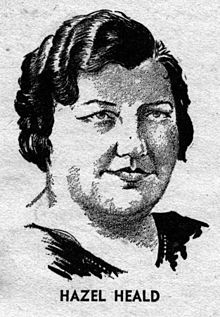
The “Elizabeth Berkeley” of “The Crawling Chaos” is Winifred Virginia Jackson—a now fairly well known poetess, formerly active in amateur journalism. The sketch (it is scarcely a story) is based on a curious dream of hers—which formed a sort of continuation of a previous dream of my own which I had related to her. I put the whole business in my own language, & tacked on a sort of aftermath in the Dunsanian style—for the thing dates from my most intensively Dunsanian period. It was my second & final collaboration with Miss Jackson, the first being “The Green Meadow” […] I took the title C. C. from my Nyarlathotep sketch (now repudiated) because I liked the sound of it.
—H. P. Lovecraft to R. H. Barlow, 1 Dec 1934, O Fortunate Floridian! 191

In 1919, Winifred Virginia Jordan was an active contributor to amateur journalism, and had been associated with H. P. Lovecraft in that regard for some years. Lovecraft published her “Song of the North Wind” in his own amateur journal, The Conservative (vol. I, no. IV, 1916); Lovecraft may have had a hand in revising this and subsequent poems of hers in his amateur journals.

In the following years they would share editorial duties on amateur journals, and struck up a correspondence which led to two prose collaborations: “The Green Meadow” (eventually published in The Vagrant, Spring 1927) and “The Crawling Chaos” (The United Co-operative, Apr 1921). Both used pseudonyms for these stories: Jordan was “Elizabeth Berkeley,” and Lovecraft was “Lewis Theobald, Jun.” Despite the pseudonyms, the writing team was apparently an open secret; Lovecraft’s friend Alfred Galpin identified them by name in a review of the story in The United Amateur (Nov 1921).

Lovecraft describes the process of their collaboration in some subsequent letters:

Of genuinely fantastic dreamers, I have discovered but one in amateurdom—this being Mrs. Jordan. I will enclose—subject to return—an account of a Jordanian dream which occurred in the early part of 1919, & which I am some time going to weave into a horror story, as I did “The Green Meadow” dream of earlier state, which I think I once hewed you. That earlier dream was exceptionally singular in that I had one exactly like it myself—save that mind did not extend o far. It was only when I had relate my dream that Miss J. related the similar & more fully developed one. […] The more recent Jordan dream is very vivid, but peters out miserably. I shall use it only as far the point where the narrator reaches the palm tree. The narrator will be a neurotic youth of the Roderick Usher type.
—H. P. Lovecraft to Rheinhart Kleiner, 5 Nov 1920, Letters to Rheinhart Kleiner 190

The enclosed fragment of a Jacksonian letter, written late 1918 or early 1919, is the nucleus of the story. As you will perceive, the whole bizarre setting comes from an actual dream of the poetess whilst in the clutches of influenza. This element of illness may account for much of the fantastic colouring, though in actual truth no drug was administered. I have, I think, mentioned before, that the genius of W. V. J. can produce hideous conceptions far outdoing any of mine, and remaining ineffective solely because of their creator’s singular helplessness in prose.  […] I kept this dream outline a long time without utilising it—for being basically egotistical, I put mine own work first. Finally, last December, the authoress became impatient about it, so I threw the story together in a hurry. The colouring impressed me as opiate, so I supplies the dopy prologue. Then in analysing the nature of the dream, I found that the dominant points were a hellish pounding and an encroachment of the sea upon the land. Using these two latter “starters”, the denouement was fairly inevitable tome; so that although everything after the ninth line of page five in the printed version is my own, it is only broadly so; the impulse having been supplied by the original data. When I sent the finished story to W. V. J. I was amused by her idea that I must have actually seen the same supernal sights that he saw in the dream. Her overpowering imagination, conjoined to very scanty scientific attainments, makes her vaguely credulous of the supernatural and she cannot get rid of the notion that there may be an actual region o dream and vision which can be independently and objectively seen by different individuals. In this case she declared that I had described details of the strange interior, and of the architecture of the dream-house, which she had plainly noticed but had not described to me; which to her is proof that a common dream experience must underlie the work of both collaborators. […] frankly, I didn’t think the “Crawling Chaos” would going to make such a hit that anyone would notice it.
H. P. Lovecraft to the Gallomo, 12 Sep 1921, Letters to Alfred Galpin 108-109

The influenza epidemic swept the globe during the final stages of the First World War in 1918. In 1919 Winifred was living and working in Boston, putting out her own amateur journal The Bonnet. She had married Horace Jordan in 1915, and in 1919 they were divorced; she resumed her maiden name of Jackson around 1920 or 1921. It was in this fertile period, 1919-1920, that Lovecraft and Jackson shared their dreams and wrote their collaborationLovecraft borrowing the title from his prose poem “Nyarlathotep” (The United Amateur, Nov 1920) which begins “Nyarlathotep…the crawling chaos…”

Wetzel & Everts claim in Winifred Virginia Jackson—Lovecraft’s Lost Romance that at this point Winifred V. Jackson was at this point already the mistress of the famed Black editor and poet William Stanley Braithwaite. Whether or not this was the case, they were involved in the foundation of the B. J. Brimmer Publishing Co. in 1921, which Jackson would buy when it went bankrupt in 1927. Braithwaite would publish several of her poems in his anthologies, which would also include poets from the Harlem Renaissance. Lovecraft himself was not aware of Braithwaite’s race until 1918, when he wrote a vituperative, racist diatribe upon discovering the influential editor Braithwaite had been awarded the Springarn Medal by the National Association for the Advancement of Colored People (LRK 137-138). Despite this, in 1930 Lovecraft and Braithwaite apparently had a brief correspondence. Jackson herself has been speculated to be of mixed race; as she was included among “Colored” writers in William Henry Harrison, Jr.’s Colored Girls and Boys’ Inspiring United States History, and A Heart to Heart Talk About White Folks (1921), but her genealogy does not appear to support this, and Harrison may have been in error.

It is an open question as to whether Lovecraft was aware of the details of Winifred’s personal life; he makes no mention of her marriage or any association with Braithwaite in his published letters or his essays “Winifred Virginia Jordan: Associate Editor” (Silver Clarion Apr 1919) or “Winifred Virginia Jackson: A ‘Different’ Poetess” (The United Amateur Mar 1921), although he was, from the name change, apparently very aware of her change in marital status.

Everts & Wetzel record the rumor that Jackson and Lovecraft were romantically inclined, or at least perceived to be by amateur journalism, but there is little evidence for this. The collaborators continued to associate until 1921, after which they appear to have gone their separate ways, Lovecraft rarely referring to Jackson in his subsequent letters—according to Everts, Lovecraft’s wife Sonia H. Greene would claim in a 1967 interview that: “I stole HPL away from Winifred Jackson.”

The speculation of an personal relationship between Jackson and Lovecraft, especially given his racism and her interracial marriage, tends to draw attention away from “The Crawling Chaos” as a work of fiction. Despite the title, the work does not feature Nyarlathotep and has no direct connection to Lovecraft’s Mythos. In the context that Lovecraft gives for Jackson’s portion it is possible to see there an echo of the plague that swept the world in 1918:

Of the future I had no heed; to escape, whether by cure, unconsciousness, or death, was all that concerned me. I was partly delirious, so that it is hard to place the exact moment of transition, but I think the effect must have begun shortly before the pounding ceased to be painful. […] The sensation of falling, curiously dissociated from the idea of gravity or direction, was paramount; though there was a subsidiary impression of unseen throngs in incalculable profusion, throngs of infinitely diverse nature, but all more or less related to me. Sometimes it seemed less as though I were falling, than as though the universe or the ages were falling past me. Suddenly my pain ceased, and I began to associate the pounding with an external rather than internal force. The falling had ceased also, giving place to a sensation of uneasy, temporary rest; and when I listened closely, I fancied the pounding was that of the vast, inscrutable sea as its sinister, colossal breakers lacerated some desolate shore after a storm of titanic magnitude. Then I opened my eyes.

If there is an image from the dream-portion that stands out, however, it is this:

Almost at the limit of vision was a colossal palm tree which seemed to fascinate and beckon me.

Palm trees are not normal for Massachusetts. It is an artifact of the exotic and unreal, intruding on the familiar. The palm tree, as much as anything, says that the narrator is in a different place from the one they know. It is the kind of image that might occur in a fever dream, the out-of-place element excepted through dream-logic.

The origin of the story in a dream echoed Lovecraft’s other collaboration from this period, “Poetry and the Gods” (1920) with Anna Helen Crofts, and several of Lovecraft’s own tales that had their origins in dreams and nightmares; they parallel his fascination with Dunsany’s dreamland in “Idle Days on the Yann.” It was a period when Lovecraft, in the throes of amateur journalism, was sharing his dreams with others and putting them into proseand Winifred Virginia Jackson was one of those who shared their dreams with Lovecraft.

After her association with Lovecraft ended in 1921, Jackson continued to pursue her own writing and publishing, although this resulted in only two books: Backwoods; Maine Narratives, with Lyrics (1927) and Selected Poems (1944).


Bobby Derie is the author of Weird Talers: Essays on Robert E. Howard & Others and Sex and the Cthulhu Mythos (2014).
“Poetry and the Gods” (1920) by Anna Helen Crofts & H. P. Lovecraft

Moon over Japan,
White butterfly moon!
Where the heavy-lidded Buddhas dream
To the sound of the cuckoo’s call. . . .
The white wings of moon-butterflies
Flicker down the streets of the city,
Blushing into silence the useless wicks of round lanterns in the hands of girls.
—Anna Helen Crofts & H. P. Lovecraft, “Poetry & the Gods” (1920)

“Poetry and the Gods” was first published in the United Amateur (Sep 1920). It is a collaborative effort between Anna Helen Crofts and  H. P. Lovecraft (who used the pen-name H. Paget-Lowe). Crofts and Lovecraft were both members and officials of the United Amateur Press Association, which set the stage for their collaboration. Little else is known about the creative affair, however: there are no references to “Poetry and the Gods” or Crofts in any of Lovecraft’s published correspondence; it is included on none of his own lists of his fiction, and was discovered and published by Lovecraft scholar George T. Wetzel in the 1950; in his Collected Essays, Lovecraft mentions Crofts only once, in the editorial “News Notes” (July 1921) (CE1.293):

Miss Anna H. Crofts is taking a summer course at Columbia University, where she is delving deeply into the technical secrets of pedagogy.

Anastasia Helen Crofts was a public school teacher for most of her life, retiring from teaching in 1942; according to “Anna Helen Crofts—The Rest of the Story” she married Joseph B. McCuen and passed away in Williamstown in 1975. “Poetry and the Gods” and another story, “Life” (United Amateur Jun 1921) are her only known published fiction.

The exact contribution of the co-authors to the final product is likewise a matter of speculation, as no manuscript or drafts survive. S. T. Joshi & David E. Schultz in An H. P. Lovecraft Encyclopedia (209) once conjectured:

Probably the impetus of the story came from Crofts; she may also have written the tidbit of free verse in the story, since HPL despised free verse […] The prose of the rest of the story appears to be HPL’s.

Ken W. Faig, Jr. in “The Strange Story of “Poetry and the Gods'” (PDF) however discovered that the free verse was borrowed from “Sky Lotus” by Elizabeth J. Coatsworth, published in the July 1919 issue of Asia. In Faig’s estimation:

If his coauthoress Miss Crofts was responsible for the initial draft of their collaboration, I suspect that the introductory paragraphs concluding with the citation of the enchanting blank verse are most of what remains of her work. Perhaps the basic idea of the six divine bards encountered in Marcia’s dream and the ending scene with Marcia admiring the work of the latest messenger-poet sent by the Gods were also Crofts’─she may also have chosen the quotations from Shakespeare, Milton and Keats. But the richness of classical reference which one finds in the dream sequence certainly owes much to Lovecraft’s collaboration.

Whatever the exact contributions by the respective authors, there is no question that for Lovecraft this was a very unusual story. In the 1919-1920 period he was writing stories like “The Doom that Came to Sarnath,” “The Statement of Randolph Carter,” “The Street,” “The Terrible Old Man,” “The Cats of Ulthar,” and “The Tree”—most scholars find it difficult to believe that Lovecraft wrote:

Attired simply, in a low-cut evening dress of black, she appeared outwardly a typical product of modern civilisation; but tonight she felt the immeasurable gulf that separated her soul from all her prosaic surroundings.

Given that Lovecraft is not known elsewhere to describe décolletage, this may be a fair assessment, albeit a superficial one. Certainly the choice of a female protagonist is unusual for Lovecraft, although he would do so again in other stories written in collaboration with female friends and clients, such as “The Curse of Yig” and “The Horror in the Burying-Ground.” Much of the mood and ideas expressed in the later part of the piece echo elements of Lovecraft’s own personal philosophy and which echo somewhat his more famous conceptions:

In thy yearning has thou divined what no mortal else, saving only a few whom the world rejects, remembereth: that the Gods were never dead, but only sleeping the sleep and dreaming the dreams of Gods in lotos-filled Hesperian gardens beyond the golden sunset.

This is reminiscent both of Cthulhu (“In his house at R’lyeh dead Cthulhu waits dreaming.” /“That is not dead which can eternal lie, And with strange aeons even death may die.”) and a possible inspiration from reading Lord Dunsany. Yet is it not also appropriate for a young schoolteacher, whose only escape some days from prosaic life might be to dip into Milton and Keats, to dream of old gods and lose herself for a time in poetry? Lovecraft, it appears, could certainly relate to that.

Of their “hidden collaborator” Elizabeth Jane Coatsworth, not much needs be said; the striking imagery of her poetry certainly helps set the tone of the story. The general surmise among scholars is that if the free verse was part of Crofts contribution, so too was her failure to properly cite Coatsworth. Whether Lovecraft ever caught the uncredited quotation is, like much of the story, unknown. Certainly, it is interesting to think that Coatsworth, who is best known for his series of children’s books, inadvertently shared a collaboration with Lovecraft.

“Poetry and the Gods” was not the first time a woman writer would collaborate with Lovecraft, nor the last. It was the first of such collaborative efforts that was published, and in many ways it sets the stage for Lovecraft’s future collaborations, where the exact details of contribution are unknown, and the only thing sure is that on this one, Lovecraft did not go it alone.


Thanks and appreciation to Dave Goudsward for his help with this article.

Bobby Derie is the author of Weird Talers: Essays on Robert E. Howard & Others and Sex and the Cthulhu Mythos (2014).
 

“Variations on Lovecraftian Themes” (2016) by Veronica Schanoes

Though I can’t deny that Lovecraft has influenced my work, I couldn’t relate to the exalted place he seemed to occupy, and wondered if the difference could be ascribed to gender. More to the point, I made a sweeping generalization rather off-handedly: “Lovecraft does nothing for me,” I said. “That wasn’t the horror the girls were passing around in fifth grade. V. C. Andrews is to girls what Lovecraft is to boys.”

Of course, I was wrong—plenty of women have found Lovecraft very important indeed—but I don’t think I was entirely wrong.
—Veronica Schanoes, The Mammoth Book of Cthulhu 460

The degree to which H. P. Lovecraft has become a character as enthralling to fans as any of his creations is evident in the body of fiction that has developed around him. Works like Grant Morrison’s “Lovecraft in Heaven” (1994) and Alan Moore’s “Recognition” (1995) focus on aspects of his life story—his death by cancer, his syphilitic father—and ruminate and expand on the mind of the man who created Cthulhu. Veronica Schanoes in “Variations on Lovecraftian Themes” adds to this body of work. In her own words:

In this piece, I wonder about Lovecraft’s own monstrous generation; about the racist horrors that founded the United States and what they mean to someone who saw himself as an avatar of eighteenth-century America; the horror of the Other that took the form of Lovecraft’s anti-Semitism, and what that means to me, a twenty-first-century Jew in New York City.
—Veronica Schanoes, The Mammoth Book of Cthulhu 460

While this is a work of fiction, Schanoes takes her impetus from fact: her building-up of the story piece by piece is done with all the care and attention of a hoax—and indeed, her skill is such that if the initial section (“Monstrous Generation”) was published as non-fiction, it would probably be convincing to many. Victoria Nelson’s essay “H. P. Lovecraft and the Great Heresies” (1996) made similar suggestive claims that Lovecraft inherited congenital syphilis from his father—but where Nelson was perhaps unaware that Lovecraft’s medical records indicated he did not have the disease (Price, “Did Lovecraft Have Syphilis?” in Crypt of Cthulhu #53, 1988), Schanoes’ artfully insinuations are a stepping stone to more profound revelations.

The true threat is never external—it’s not the dreadful non-Aryan immigrants flooding into the United States; it’s not the inhuman alien beings, worshipped as gods, who would barely notice humanity as they crushed it. The true threat always comes from the inside, the self rising up beyond all reason, beyond even survival. In the end, the most monstrous growth is always already one’s own.
—Veronica Schanoes, “Variations on Lovecraftian Things” in ibid. 465

The great insight that Schanoes shows in this piece is to take the common and oft-repeated themes of Lovecraft’s life and literature and to look at them from another angle. Lovecraft declared, on his return to this city of his birth after failing to make it in New York City, “I Am Providence”—which S. T. Joshi took for the title of his mammoth biography. Yet it is Schanoes, here, who takes Lovecraft literally and digs into the history of old Providence; and nothing gets very old without having a multitude of sins.

I write and publish about Jews. Most of my protagonists, unless otherwise specified, are Ashkenazi Jews. Well, why should the goyim have all the fantastic, the speculative, the future imperfect? My editors have mostly been Jewish, too.
—Veronica Schanoes, “Variations on Lovecraftian Things” in ibid. 469

When addressing Lovecraft’s antisemitism, Schanoes’ perspective shifts. She addresses the audience directly, personally. Why should she not? Lovecraft’s antisemitism is a subject that affects her personally—not so much because he personally can discriminate against her, since he has been safely dead for several decades, but his words and influence still survive as something Schanoes has to deal with.

Which is almost a microcosm of the subject of Lovecraft’s discrimination itself. Why does it matter, when Lovecraft is dead and gone? Because he isn’t gone, not entirely. His work lives on. For those whose grandparents survived the Holocaust—and remembered relatives that would not—Lovecraft’s remarks in the 1920s and 30s carry an edge today that people who cannot relate directly do not feel.

I do not like H. P. Lovecraft, and I doubt he would have liked me.
—Veronica Schanoes, “Variations on Lovecraftian Things” in ibid. 469

It would be unfair to point out gaps in Schanoes’ narrative, argue over her presentation of the facts, or suggest nuance to her conclusions. It would also be missing the point. While she quotes accurately from Lovecraft’s letters and the memoir of his wife (Sonia Haft Greene) about his life, this is still a work of fiction, not a polemic essay or hit piece.

What it is is a reflection of Lovecraft from an angle that readers are not used to seeing. Lovecraft scholars and biographers such as S. T. Joshi have not ignored his antisemitism in the least—without their work in publishing Lovecraft’s letters, Schanoes would not have had the raw material for her piece—but none of them can present Lovecraft as seen through the eyes of a contemporary Jewish woman. The mirror that Schanoes holds up may be a funhouse one, with its little distortions for rhetorical and narrative effect, but it works precisely because the subject is still recognizable.

Veronica Schanoes’ “Variations on Lovecraftian Themes” was published in The Mammoth Book of Cthulhu (2016). It has not yet been reprinted.


Bobby Derie is the author of Sex and the Cthulhu Mythos (2014)

Editor Spotlight: Joyce Carol Oates

When I was eleven or twelve years old, I discovered H. P. Lovecraft in the Lockport Public Library, in upstate New York—the collection of Lovecraft stories was large and unwieldy with a distinctive font, which I can “see” vividly if I shut my eyes. The stories that riveted me immediately were “The Rats in the Walls” and “The Dunwich Horror.” At once I fell under the Lovecraftian spell—subsequently I have reprinted Lovecraft tales in anthologies of “literary” stories in the hope of breaking down the artificial barriers and unfortunate prejudices between genres.
—Joyce Carol Oates, Lovecraft Unbound 

H. P. Lovecraft took time to find his place in the American canon. He died practically in poverty, his work published in pulp magazines, amateur journals, and fanzines. The few attempts at publishing his fiction in hardback were marred by failure. Literary recognition and mass popularity would not come for decades. It was a slow process, and many editors, scholars, fans, and writers helped along the way.

Joyce Carol Oates is the one who crowned him The King of the Weird in a review of S. T. Joshi’s 1996 biography H. P. Lovecraft: A Life.

As an editor, Oates has curated several works featuring Lovecrafts works: American Gothic Tales (1996), Tales of H. P. Lovecraft (1997), Telling Stories: An Anthology for Writers (1998), and The Oxford Book of American Short Stories 2nd Ed. (2013). These works are not exceptional from a strictly bibliographic point of view: there are no lost fragments published for the first time, no rarities reprinted after years or decades. What makes them special is the company that Lovecraft keeps: Oates puts him on the page between Sherwood Anderson and William Faulkner, sharing space with Edith Wharton and Shirley Jackson. Oates put Lovecraft among the great voices of American fiction.

If there is a single gothic-grotestque writer of the American twentieth century to be compared with Poe, it is H. P. Lovecraft, born in 1890. […] Long a revered cult figure to admirers of “weird fiction” (Lovecraft’s own, somewhat deprecatory term for his art), Lovecraft is associated with crude, obsessive, rawly sensationalist and overwrought prose in the service of naming the unnameable. […] Lovecraft’s influence upon twentieth-century horror writers has been incalculable, and in certain quarters he is prized for the very traits (lurid excess, overstatement, fantastical and repetitive contrivance) for which, in more “literary” quarters, he is despised. The gothic imagination melds the sacred and the profane in startling and original ways, suggesting its close kinship with the religious imagination […] Lovecraft is a hybrid of the traditional gothic and “science fiction” but his temperament is clearly gothic. his “science” is never future-oriented but a mystic’s minute, compulsive scrutinizing of the inner self or soul.
—Joyce Carol Oates, American Gothic Fiction, 6-7

Her choice for the volume was “The Outsider”, which is closer to Poe than Ray Bradbury in the blend of gothic and science fiction. For Oates, Lovecraft is the transition point in the American Gothic, the fulcrum point at which she tips from “gothic” writers to “just writers” (ibid., 7). Weird fiction is where genres break down, but the gothic vision retains power and influence.

In 1997, Oates curated Tales of H. P. Lovecraft, selecting a collection from his major works and adding an introduction (a slightly edited version of her review of S. T. Joshi’s biography). Taking up her previous cue, Oates approach in the Lovecraft is to present Lovecraft as a writer of the American Gothic, fused with science fiction—but also focuses on his life, dreams (“night-gaunts”), use of setting (“like photographs just perceptibly blurred”), fascination with time, the few women in his stories, and the interconnections between his tales. Her brief survey is told in expressive language and with the occasional wry observation; for “The Dreams in the Witch House”:

Lovecraft seems to have taken for granted that Salem “witches” existed, not considering if perhaps they were simply victims of others’ malevolent misuse of power.
—Joyce Carol Oates, Tales of H. P. Lovecraft ix

Lovecraft wasn’t exactly forgotten in 1997; Ballantine, Carroll & Graf, Creation Press, and Dell were all bringing his work out in affordable trade paperback editions, and many of their books would go through multiple printings. What Oates brought to the table was herself: a respected literary writer who didn’t stoop to praise genre fiction, a person who could appreciate Lovecraft for his merits—and encourage readers to appreciate him too.

Telling Stories: An Anthology for Writers (1998) brought Lovecraft into the classroom; drawing on her seminars at Princeton, Oates presented the text and notes for dozens of influential stories, including H. P. Lovecraft’s “The Rats in the Walls.” If her previous efforts presented Lovecraft as a part of the American tradition, this was to make him part of the American syllabus. “Rats” would also feature in the second edition of The Oxford Book of American Short Stories (2013); Oates had edited the first edition of this work in 1992 without including Lovecraft, but she added him to the updated edition, with an abbreviated set of notes that observed:

In 2005 the Library of America issue H. P. Lovecraft, a selection of Lovecraft’s tales, giving the outcast writer, in effect, the imprimatur of American classic. By this time Lovecraft’s weird tales had found a wide and enthusiastic readership of a kind the luckless author could hardly have envisioned during his lifetime.
—Joyce Carol Oates, The Oxford Book of American Short Stories 2nd Ed. 297

Unlike Ellen Datlow, Paula Guran, Silvia Moreno-Garcia, & Paula R. Stiles, the importance of Joyce Carol Oates as an editor is not in publishing collections of Mythos stories or discovering new Mythos writers, but in helping to propagate Lovecraft outside weird fiction fandom—in her lifetime she had participated in the process that brought him into the greater awareness not only of literary academia but the general audience for American fiction.


Bobby Derie is the author of Weird Talers: Essays on Robert E. Howard & Others (2019) and Sex and the Cthulhu Mythos (2014).

“Mail Order Bride” (1999) by Ann K. Schwader

Obed finally got her married off by a trick to an Arkham feller as didn’t suspect nothin’. But nobody aoutside’ll hev nothin’ to do with Innsmouth folks naow.
—H. P. Lovecraft, “The Shadow over Innsmouth”

A significant but often understated plot point of “The Shadow over Innsmouth” is the focus on a rather conservative human courtship traditions. The Deep One hybrids of Innsmouth want to spread and breed—marry and have children—and do so within the context and framework of human marriage as understood in the late-19th/early-20th century United States. Alternative arrangements like polygamy or group marriage do not appear in Lovecraft’s story; children (and sex!) out of wedlock are just not under consideration in the story itself, even if they were realities of life in the 1920s.

This focus on rather conventional human marriage brings in to Innsmouth stories an element of domestic drama, as exemplified in stories like “A Coven in Essex County” (2016) by J. M. Yales, but it also allows writers to explore this aspect of the Mythos through the permutations in human experience…all the weird ways people find to have relationships, just add Deep Ones. Except there is always more to it than that when dealing with Ann K. Schwader.

The premise of “Mail Order Bride” by Ann K. Schwader is right in the title: lonely men like George, Phil, Art, and Tony pay the Island Love Introduction Agency, hoping for quiet Filipina wives to cook and clean and keep the beer cold—but Lupe, Tia, Inez and the other women they marry are from a very different island culture. Part of the craft of the story is the Stepford Wives-esque othering of the Innsmouth brides, the subtle exaggeration of the normal difficulties experienced by couples in these situations: differences in language, culture, whether or not to have kids, staying together.

Robert M. Price in Tales out of Innsmouth and Kevin L. O’Brien in Eldritch Blue: Love and Sex in the Cthulhu Mythos both considered this story an update on the Innsmouth theme “of race-mixing, especially with Asians” (Price), referencing Captain Obed Marsh bringing home a Polynesian wife, and that “the miscegenation is still present, since the women are Deep Ones as well as Filipinos” (O’Brien). While the misidentification of the brides as Filipinas by their husbands is present, the racial politics Price and O’Brien read into the story are a red herring. The brides’ characterization as foreign is a cover for their much deeper alienation from their husbands, a layer of the mystery for the brides’ spouses to peel back, revealing a much more disturbing reality.

Procreation, which is the ultimate apparent goal of the mail-order brides in this story, is a Mythos theme examined in many stories—“The Thing from Lover’s Lane” (1996) by Nancy A. Collins“The Devil’s Hop Yard” (1978) by Richard Lupoff & “The Cry in the Darkness” (2011) by Richard Baron“Prey of the Goat” (1994) by Margaret L. Carter“In His Daughter’s Darkling Womb” (1997) by Tina L. Jens and more—but Lovecraft’s racism and views on real-world mixed race unions casts a shadow on the much weirder cosmic miscegenation which is a hallmark of “The Shadow over Innsmouth” and its literary descendants. Schwader is accurate to Lovecraft’s overall themes, right down to the idea of using interracial unions as a cover for marriages between human and not-human. Unfortunately, enough old prejudices are still extant that her effort to portray a transposition in gender roles has been mistaken for a regurgitation of racial politics.

It’s gender politics at play in the story…and that goes for the Mythos aspects as well:

This is also one of the few stories where Mother Hydra occupies the stage alone rather than sharing it with Father Dagon, or for that matter being consigned to the wings as is usually the case. This reflects the feminist tone of the story, which is a departure form the way that the creation of human/Deep One hybrids are usually created. The precedent, established by H. P. Lovecraft in “The Shadow Over Innsmouth”, is that human males mated with Deep One females, though it can be assumed that Deep One males got it on with human females as well. The point is that it was the males of either species which initiated the contact. While this is understandable, considering the aggressiveness of the males of both species and that both cultures tend to be male-dominated, it also reinforces the role of the female as the passive victim. In this story these roles are reversed: it is the females, led by a female deity, who initiate the contact and the men who are the passive victims.
—Robert M. Price, Strange Stars & Alien Shadows 128

This is ground that Schwanger would revisit in stories like “Objects From the Gilman-Waite Collection” (2003), and it adds another layer to what is already a compellingly-told role-reversal story. A subtle expansion and re-casting of the Mythos, with Mother Hydra as fertility deity, and the female Deep One hybrids as part of an all-female coven has overtones of Wicca and Goddess-worship, and the cohesiveness of the women is another point of alienation from the male characters in the story.


Bobby Derie is the author of Sex and the Cthulhu Mythos (2014)


“Dreams of a Thousand Young” (2014) by Jennifer Brozek

Visit Assam, India, where a British dilettante wakes up one morning covered in bruises and welts, with a dead man in her bed and o memory of what happened in the last 24 hours. Her only clue is a trashed invitation to the exclusive Black Ram Club.
—back cover, Jazz Age Cthulhu (2014)

Jennifer Brozek knew what the readers wanted, and determined to give it to them, good and hard. Mythos fiction as a self-defined genre may be something that Lovecraft and his contemporaries created in the 1920s and 30s, but generations of fans have read through everything they could get their hands on and still clamored for more. The form and tropes of the fiction have progressed, passing through pastiche into a rarified species of fiction—one with its own language of tropes, intimations, and old familiar horrors. Such is “Dreams of a Thousand Young.”

Brozek’s novelette reads like an adventure for the Call of Cthulhu Roleplaying Game, too pulpish for real horror but hitting its marks. Attention is paid to the accuracy of the setting, the characterization of the British Colonial atmosphere, marked with the unsubtle distinctions of class and ethnicity. There is action and excitement, a new cult and and an old favorite horror, a bloody-minded nun and a penchant for Elder Signs as prophylactic device that August Derleth would have approved of. And there is a beautiful woman who was at the center of a ritual and who may now be quietly gestating something inhuman.

As with “The Thing from Lover’s Lane” (1996) by Nancy A. Collins, Brozek’s achievement is one of execution and characterization. Lady Helen Keeling is the viewpoint character, and the story rises and falls on how believable and compelling her views are. Rather than the fainting Gothic heroine or the prim and virginal British lady, Keeling is…complicated. Not a slut, but far from innocent; genuinely a victim, but determined not to play the victim; born along by the course of events, but taking her own active role in things as well.

“Dreams of a Thousand Young” is reminiscent of “ALL THIS for the GREATER GLORY of the 7th and 329th CHILDREN of the BLACK GOAT of the WOODS” (2012) by Molly Tanzer; not because of any inspiration Brozek took, but simply because both authors were working from similar sources. The cults and mythologies of Lovecraft and his contemporaries were often ambiguous, tenuous, sometimes contradicting. Cults didn’t always have names, robes and hoods were optional and often absent; sorcery, sacrifices, and summonings were undefined in capabilities and requirements. The roleplaying game was always much more concrete, defining spells and the names of critters—it is no surprise that the Dark Young of Shub-Niggurath which appear in both stories are strongly inspired both in name and appearance by the critter of the same variety in the game.

It is very weird to consider that today some writers are drawing on, not the original fiction by Lovecraft and his contemporaries or even the second wave of fiction by the next generation of writers like Ramsey Campbell or Brian Lumley, but from reference materials derived from those previous works. When writers don’t go straight for Lovecraft and Derleth, but reach for The Cthulhu Mythos Encyclopedia or S. Petersen’s Field Guide to Lovecraftian Horrors, the stories that result are no longer pastiche in any real sense; the stylistic aspects of the individual original authors is lost. The material has been through too many hands and minds, a lot of the odd details are smoothed out, and the result is strangely—consistent.

Which is what many readers want from their Mythos fiction.

So Jennifer Brozek gave it to them, with skill and craft.

“Dreams of a Thousand Young” was first published in Jazz Age Cthulhu (2014). It has not been reprinted.


Bobby Derie is the author of Weird Talers: Essays on Robert E. Howard and Others and Sex and the Cthulhu Mythos.

“The Thing from Lover’s Lane” (1996) by Nancy A. Collins

Lovers’ Lane was really an old logging road on the side of Goat Hill, which overlooked Misty Valley. On a clear night, you could look out and see the entire valley spread out, with the lights of the town reflected in the Miskatonic River, which wound through the center of the village like a dark ribbon.
—Nancy A. Collins, “The Thing from Lover’s Lane” in Tales Out of Dunwich 163

The Dunwich Horror took place in 1928. H. P. Lovecraft never lived to see the decades tick by, highways springing up, World War II, rock & roll, young men with greased-back hair and black leather jackets taking cheerleaders in bobby socks up to Lover’s Lane…

“The Thing from Lover’s Lane” is a projection of Lovecraft’s Mythos into those decades he never lived to see, and is pitch-perfect in how the characters react, their views and voices in terms of the era. The plot itself is straightforward, almost familiar in its beats. How many times have readers come across a Mythos-related pregnancy? “The Dunwich Horror” by H. P. Lovecraft, “In His Daughter’s Darkling Womb” (1997) by Tina L. Jens“Prey of the Goat” (1994) by Margaret L. Carter“The Devil’s Hop Yard” (1978) by Richard Lupoff & “The Cry in the Darkness” (2011) by Richard Baron—and so many others. Female characters have been impregnated by Mythos entities almost since there was a Mythos—before that even, if you count Arthur Machen’s “The Novel of the Black Seal”. Yet old familiar themes can still be potent, in the right hands.

The novelty may have worn off, but Nancy Collins handles the execution with characteristic skill. How would a 1950s community respond to such an event?

Principal Strickland says that having a girl in—well, in your condition, is bad for morale. Carol Anne—you’re the Homecoming Queen! What kind of standard are you folding up to the other girls? If you keep the baby, I’m afraid you won’t be allowed back into class come the new school year!
—”The Thing from Lover’s Lane” 178

The desire to save face—either through a “therapeutic abortion” or discreetly sending Carol Anne off to a home for unwed mothers where she can give birth and put the child up for adoption—is almost comic compared to the reality of the situation. Carol Anne’s own agency in the matter is strong (“I don’t care! I’m not giving up my baby!”) despite her mother’s pleadings (“Carol Anne—what will people think?“)…or is it?

It wants you to think I’m the father! That way it’s safe for it to be born!
—”The Thing from Lover’s Lane” 180

Most Mythos stories don’t discuss the ugly details of these sexual encounters with Mythos entities, much less their aftermath. Rape is not pleasant, and was not for Carol Anne; humans have had means for dealing with unwanted pregnancies and children for thousands of years, and in recent decades knowledge of and access to birth control and abortion have become more widespread. Collins, working in a contemporary setting, had to acknowledge that Carol Anne had options—and she did.

Narrative impetus in this case is that Shub-Niggurath’s thousand-and-first young must be borne. So Carol Anne’s agency had to be subverted, and her victimization in this story is one of the nastier cases in any Mythos story. All she wanted was to have a little fun at Lover’s Lane with her boyfriend, and because of that she was raped, knocked up, faced the social stigma of being an unwed teenage mother in ’50s America…and, ultimately, died giving birth. The story is almost a 1950s fable, to scare girls away from following in her footsteps. Collins goes into far greater detail about the horror Carol Anne suffers at each step, leaving only the erotic details off the page.

Maybe that’s a good thing.

Sex and horror go together; titillation and terror are both states of excitement, and sex elicits a thrill to many readers. Pregnancy especially has its place in the horrors that women feel—and for many Mythos stories the result is almost routine: of course sex leads to pregnancy. Maybe the mother will die in childbirth, or maybe it’ll only be the spawn that the heroes have to deal with. The mother herself rarely gets much attention. Here, at least, Nancy Collins does not ignore or downplay the suffering of Carol Anne, nor does she seek to make it erotic. “The Thing from Lover’s Lane” is determined to retain the horror of the events, above all else…and it does it well.

Nancy Collins’ “The Thing from Lover’s Lane” was first published in It Came from the Drive-In (1996), and nominated for a Bram Stoker Award, but did not win. The story was republished in the author’s collection Avenue X and Other Dark Streets (2000), and Tales out of Dunwich (2005). It has also been released as an ebook: “The Thing from Lover’s Lane: A Mythos Tale” (2012).


Bobby Derie is the author of Sex and the Cthulhu Mythos

“My Boat” (1976) by Joanna Russ

I’d always thought Alan was pretty much a fruitcake himself—remember, Milty, this is 1952—because he used to read all that crazy stuff, The Cult of Cthulhu, Dagon Calls, The Horror Men of Lengyeah, I remember that H. P. Lovecraft flick you got ten percent on for Hollywood and TV and reruns—but what did we know?
Joanna Russ, “My Boat” in Tales of the Cthulhu Mythos (1990) 360

The trick of “My Boat” is that Joanna Russ is not telling the same story. The frame is a kind of confession, Hollywood pitch-patter, cynical and jaded and full of bad taste. The confession itself opens as a kind of bildungsroman, focused on the integration of a handful of black teenagers into a rich, all-white highschool, and one drama club kid tagging along. Then there’s the twist, with the title-drop, into straight fantasy; shades of magical realism, skirting the edges of the Dreamlandsbut the narrator isn’t ready. Scoot ahead twenty years, 1972, and it’s a story about regret, missed opportunities realized at lastand the frame comes back around around, past catching up to the present.

It’s a story about lost youth. Intimately, if not directly, it’s a story about H. P. Lovecraft.

H. P. Lovecraft’s novel The Dream-Quest of Unknown Kadath was never published during his lifetime. Lovecraft who was inspired by his dreams to write some of his most famous stories. Who took inspiration from Lord Dunsany’s “Idle Days on the Yann” and built up his own cycle of stories set in a mythical Dreamlands—”The Cats of Ulthar,” “Celephaïs,” “The White Ship,” etc.—which tied back around and into his “Arkham Cycle,” stories like “The Call of Cthulhu” and At the Mountains of Madness. Yet there is a sequel to “Idle Days on the Yann,” which is echoed in Lovecraft as well:

For I thought never again to see the tide of Yann, but when I gave up politics not long ago the wings of my fancy strengthened, though they had erstwhile drooped, and I had hopes of coming behind the East once more where Yann like a proud white war-horse goes through the Lands of Dream. Yet I had forgotten the way to those little cottages on the edge of the fields we know whose upper windows, though dim with antique cobwebs, look out on the fields we know not and are the starting-point of all adventure in all the Lands of Dream.
—Lord Dunsany, “A Shop in Go-By Street”

When Randolph Carter was thirty he lost the key of the gate of dreams. Prior to that time he had made up for the prosiness of life by nightly excursions to strange and ancient cities beyond space, and lovely, unbelievable garden lands across ethereal seas; but as middle age hardened upon him he felt these liberties slipping away little by little, until at last he was cut off altogether. No more could his galleys sail up the river Oukranos past the gilded spires of Thran, or his elephant caravans tramp through perfumed jungles in Kled, where forgotten palaces with veined ivory columns sleep lovely and unbroken under the moon.
—H. P. Lovecraft, “The Silver Key”

“My Boat” is a sequel to the idea of those stories, Lovecraft and Dunsany. Like Russ’ earlier story “I Had Vacantly Crumpled It into My Pocket … But By God, Eliot, It Was a Photograph from Life!” (1964) it is also self-referential. Lovecraft lived, wrote some fiction, and died. The characters are familiar with his works, at least in passing. The Dream-Quest of Unknown Kadath is just a weird novel, to a kid in 1952. A fantasy. A dream that teenagers grow out of… and that grown people might try to reclaim, once they’re older and wise enough to realize what they’d missed.

I think Cissie knew what I expected her mamma to be and what a damned fool I was, even considering your run-of-the-mill, seventeen-year-old white liberal racist, and that’s why she didn’t take me along.
Joanna Russ, “My Boat” in Tales of the Cthulhu Mythos (1990) 369

Russ was a woman and a feminist; she was a science fiction fan and writer in a period when the majority of the writers, audience, and editors were white menand for good measure, most of the protagonists too; their love-interests tended to blonde, whether Terran or Martian. She was a perceptive enough critic to know that, and to be able to use it. The race and gender of her small cast of characters says a lot about them, with no apologies.

Jim, the narrator, is a cutting depiction of a young white man who isn’t aware enough of his own prejudices to know that stereotypes aren’t true; Cecilia “Cessie” Jackson doesn’t have that luxury. We don’t get to see Jim grow up, exactly, but hearing his 37-year-old self talk about his 17-year-old self, we see the older Jim is wise enough to be honest and cynical about how wrong he was then. And we get to see a young black woman, mentally scarred by the traumatic murder of her father, not needing any white man to help or heal her.

This is a story that would have been difficult to write before the death of August Derleth in 1970. It’s not just that it references the integration of schools, segregation being officially outlawed by the Civil Rights Act of 1964, or Malcolm X who was assassinated in 1965. It’s a Mythos story that lives in the shadow of the Civil Rights movement, but which looks back at an earlier decade with jaded eyes, looking for what it missed the first time around.

In a Lovecraftian sense, Cessie Jackson is a very different kind of dreamer. Randolph Carter lost the key to the Dreamlands; Dunsany’s unnamed narrator could no longer sail on the River Yann. They both became too mired in mundane life and realitybut not her. Jim is the Lovecraftian protagonist, and Cessie Jackson initiates him into a world he had not even guessed at…and then she makes the transition that Jim is afraid to make. That’s the key and the catalyst to the plot, what drives the older Jim in the final act. How vapid and empty is the agent’s pitch for the “beautiful blonde girl Martian” compared to the strange reality that was Cessie Jackson, the plain-looking black girl with natural hair?

It took fourteen years for “My Boat” to find its way into a Mythos anthology, the revised edition of Tales of the Cthulhu Mythos (1990). That is perhaps less surprising when you look at the kinds of Mythos anthologies being publishedup until Derleth’s death, Arkham House had an effective monopoly, interspersing Lovecraft stories with contemporary works, pastiches, posthumous collaborations, culminating in the original Tales of the Cthulhu Mythos (1969). “My Boat” is an odd fit if filed next to 1930s pulp reprints or pastiches of the same; forty years on Joanna Russ’ still feels relevant and timely today.


Bobby Derie is the author of Sex and the Cthulhu Mythos (2014)

Editor Spotlight: Silvia Moreno-Garcia & Paula R. Stiles

Q: Describe what you do in 25 characters or less.

A: Lovecraft, Mythos, horror.

—Paula R. Stiles, Editor Interview: Innsmouth Free Press (5 Sep 2011)

Innsmouth Free Press was founded by Silvia Moreno-Garcia, with Paula R. Stiles as her editor-in-chief. The initial website ran from 2009-2011, and as the founder describes it:

Innsmouth came to be because of a conversation I was having with Paula R.Stiles, who is our editor-in-chief. I told her I wished there was a TV series set in Innsmouth, with weird stuff happening every week. We convinced each other we should launch a zine and it should be horror-themed. We would publish Lovecraftian fiction three times a year and daily non-fiction. We’d also have sporadic meta-fiction masquerading as “news” items from Innsmouth.
—Silvia Moreno-Garcia, Interview—Silvia Moreno-Garcia (4 Oct 2010)

This graduated into a full-fledged micropress with a schedule of both print and electronic publications: the anthologies edited by Moreno-Garcia & Stiles and published through Innsmouth Free Press are Historical Lovecraft: Tales of Terror Through Time (2011), Future Lovecraft (2011), Sword & Mythos (2014), and She Walks in Shadows (2015) which won the World Fantasy Award for best anthology; an American edition of the latter was published as Cthulhu’s Daughters: Stories of Lovecraftian Horror (2016). Their other publications include Innsmouth Magazine, which ran for 15 issues from 2012-2014, a series of anthologies co-edited by Moreno-Garcia & Stiles, and publications including the anthology Fungi (2012), Nick Mamatas’ collection The Nickronomicon (2014) and  Jazz Age Cthulhu (2014).

What set Moreno-Garcia & Stiles apart from the beginning is both initiative and a focus on diversity. While Ellen Datlow and Paula Garan‘s editorial voices and choices were focused primarily on publishing the best of contemporary Mythos fiction, name authors, and non-pastiche works, the Innsmouth Free Press anthologies are dominated by fresh voices, many of whom have never published Mythos fiction before, although many of them like Molly Tanzer and Orrin Grey have since become much more well-known in fiction circles—including a surprising number of women and non-American writers as well, with some stories being translated from French and Spanish into English.

Their first two anthologies Historical Lovecraft and Future Lovecraft deserve to be considered together. They are in a sense the most “typical” titles, collections of Mythos and Lovecraftian fiction united by a simple theme, in the same vein as Chaosium’s numerous “Cycles” and the innumerable small press efforts, which proliferated in the late 2000s as desktop publishing became ever more accessible to editors on a budget. Moreno-Garcia & Stiles’ Historical Future Lovecraft are both competent examples of this work and complementary, showcasing their willingness to think outside the Lovecraftian box both in terms of contents and authors.

Q: What sets your publication apart from others that publish similar material?

A: We are separate from other Lovecraft/Mythos publications in two important ways. First, for our zine and micropress anthologies, we intentionally look for fiction from all over the world, featuring a variety of cultures. Lovecraft, for all his fears and xenophobia, frequently referenced other cultures and set his stories in other countries. You’d be surprised how many non-Americans are writing Mythos. We also like to foster women writers and we look for a variety of protagonists–including women, people of colour, and members of the LGBT community.

—Paula R. Stiles, Editor Interview: Innsmouth Free Press (5 Sep 2011)

More than that, these anthologies showcase a personal interest in the subject—in history, science fiction, and H. P. Lovecraft—and how they combine. Historical & Future Lovecraft are more than an effort to make some money, and this too sets a trend for Moreno-Garcia & Stiles’ later editorial work.

We might have titled this anthology When Lovecraft Met Howard and Moore. But we didn’t. Because we didn’t think that sounded too sophisticated. But that is the impetus of this book—to united two pulp sub-genres. Not that they haven’t been united before.
—Silvia Moreno-Garcia & Paula R. Stiles, introduction to Sword & Mythos (2014) 7

Sword & Mythos showcases further initiative on the part of Innsmouth Free Press. While individual authors had worked to bring together elements of Lovecraftian horror and sword & sorcery, going all the way back to H. P. Lovecraft’s contemporaries Robert E. Howard, Clark Ashton Smith, and Catherine Lucille Moore, Sword & Mythos might be the first dedicated anthology to look at pushing that meeting of the genres—as opposed to individual Sword & Sorcery anthologies like Flashing Swords! or collections like Richard Tierney’s Scroll of Thoth.

In working this genreblending Moreno-Garcia & Stiles were also very aware of the historical racism present in some of the work of Lovecraft, Robert E. Howard, etc. and chose to address this directly:

Lovecraft and Howard’s views of people of color are well known and there is no denying their visions can be highly problematic in this regard. […] The question then becomes: Can we and should we continue to access these pulp visions? The answer, we think, is yes. Though that does not mean that our visions have to be the same as the ones prevalent in Lovecraft and Howard’s era. Wile hardly a woman might have made it into Lovecraft’s short stories, and while Howard might not have featured many a person of color in a lead role, we are not the same writers they were. […] our speculative fiction is changing and will continue to change. The boundaries and heroes of yore are different, as are the stories.
—Silvia Moreno-Garcia & Paula R. Stiles, introduction to Sword & Mythos (2014) 9

This determination to not just reflect on the issue of race in Lovecraftian/Howardian fiction but to do something about it is, really, no more or less courageous than their publication of Mythos fiction from African authors like Ezeiyoke Chukwunonso or Mexican writers like Nelly Geraldine García-Rosas–and this ability to not just perceive a gap in Mythos voices but work to do something about it led directly to their award-winning anthology She Walks In Shadows:

There was a Facebook discussion where someone asked “Do girls just not like to play with squids?” By squids the person meant Lovecraftian stories, there was the assumption there are no women writing it because it doesn’t interest them. There was a long discussion about this on several spaces. At some point someone said women were incapable of writing Lovecraftiana and at another point someone said if you want something different, why don’t you do it yourself. So we did. Of course then some people got mad that we actually were action-oriented and not just talk, but that’s another story.
—Silvia Moreno-Garcia, An Interview With Silvia Moreno-Garcia (16 Oct 2015)

In their introduction to She Walks In Shadows, Moreno-Garcia and Stiles sketch a brief outline of women in Lovecraft’s fiction—and of women writing Mythos fiction, taking part in the adaptation and spread of the Mythos in art, film, etc. And they add:

Yet, the perception that women are not inclined towards Weird or Lovecraftian fiction seems to persist. We hope this anthology will help to dispel such notions. We also hope it will provide fresh takes on a number of characters and creatures from Lovecraft’s stories, and add some completely new element to the Mythos. Most of all, we hope it will inspire new creations and inspire more women to write Weird and Lovecraftian tales.
—Silvia Moreno-Garcia & Paula R. Stiles, She Walks in Shadows (2015) 10

If the editors had set out to do nothing more than prove women could write Mythos fiction, they have done that—and more than that. She Walks in Shadows a solid Mythos anthology by any measure, one that follows through on a single theme, exploring not just the role of female authors in writing Mythos fiction, but of women in the Mythos: the stories interrogate, expand upon, and re-imagine the female characters in Lovecraft’s body of work…and that has never been done before, not on this scale or addressed this directly.

The lack of women in the Mythos is an issue worth addressing.

It is not a problem solved by a single book, although it may be no surprise that She Walks in Shadows is definitely a step forward in raising the profile of both female Mythos authors and female characters in the Mythos—and the editors are aware that this is the beginning of recognition, not the end:

In the horror genre, and that includes Weird fiction, women don’t seem to get much attention. Whenever there are lists of Top Ten Horror Writers people remember to include folks like King, Lovecraft, yet even figures as crucial as Jackson can slip through the cracks and be ignored. Some anthologies routinely used to include only all men in their TOCs, I’m thinking of several Lovecraftian books which did this not even five years ago. So, there’s a complex problem. Yes, there are less women horror writers than men. But the ones we have can have a hard time drawing attention. And how do we get more women interested in the genre? In creating and consuming and being part of it, that’s not an easy thing to do but part of it must be visibility. Anthologies can help highlight the work of women which we don’t see, but I should say it’s not the only way this should be done, nor is it an instant solution to get more women interested in the field.
—Silvia Moreno-Garcia, “An Interview with Silvia Moreno-Garcia” (16 Oct 2015)

The publication of She Walks in Shadows also carried with it a degree of backlash from the fan community, proof if any was required that gender discrimination is alive and out for blood in the field of fantastic fiction. Silvia Moreno-Garcia mentioned a bit of the feedback from the book’s publication and what followed:

Well, when io9 did an article on She Walks in Shadows I got some angry comments and a memorable e-mail saying we were menstruating all over Lovecraft and tainting his legacy.
—Silvia Moreno-Garcia, Women in Horror Month – Interview with Silvia Moreno-Garcia (3 Feb 2016)

Some white supremacists seemed upset when they viewed a panel on racism and Lovecraft I was in, which was posted on YouTube. Some people are upset we did an all woman anthology. But ultimately Lovecraft does not belong to me or you or anyone. Writers can respond to him in their own way and that’s the beauty of it. We have more than half a dozen POC writers in this anthology writing their version of cosmic horror, of Lovecraft’s Mythos, of Weird fiction. I think that’s awesome.
—Silvia Moreno-Garcia, Women Write Lovecraft: An Interview With Editors Silvia Moreno-Garcia and Paula R. Stiles (6 Oct 2015)

While Moreno-Garcia & Stiles were resourceful and intrepid to get She Walks in Shadows edited and published, they were also on the front lines to receive all the negativity that came from readers upset at the all the often-unspoken issues that underlay why their publication of a diverse set of writers was so important in the first place. That kind of hate understandably takes its toll:

I’m not very comfortable in the Lovecraft community right now. There are things that are said that rub me like a little grain of sand. Only I’m not an oyster so I don’t produce a pearl as a result. It just rubs and rubs and leaves you raw.

I have abandoned most of the Lovecraft groups and communities I used to be a member of. I was just too tired.
—Silvia Moreno-Garcia, It’s Your Birthday H. P. Lovecraft (20 Aug 2014)

Paula R. Stiles & Silvia Moreno-Garcia have not completely abandoned all things Lovecraftian; Moreno-Garcia’s masters thesis was Magna Mater: Women and Eugenic Thought in the work of H. P. Lovecraft (2016) and Paula R. Stiles continues to publish Mythos fiction such as “Light a Candle, Curse the Darkness” (2017)—but Innsmouth Free Press is at the moment in abeyance. No more Innsmouth Magazine. No more anthologies, at least for right now.

It is important to emphasize the chances taken by Moreno-Garcia & Stiles. With every unknown writer, with translating work from French and Spanish for an English-speaking audience, in choosing to address issues of historical racism & contemporary misogyny—in not just giving voice to their principles but actually publishing books that show to the world “We are here, right now, writing in the tradition of H. Lovecraft”—they show their quality to the world. Because they could have gone on publishing themed anthologies, or stuck to “safe” material by known writers…and instead, they chose to take a shot at doing something new. Despite the jeers of the world. That’s courage.

Women have emerged from the shadows to claim the night. We welcome them gladly.
—Silvia Moreno-Garcia & Paula R. Stiles, introduction to She Walks in Shadows 10


Bobby Derie is the author of Sex and the Cthulhu Mythos (2014)