I wasn’t afraid of the storms or earthquakes that visited the bay. I wasn’t afraid of the depths of the sea or the dark things that swam there. The shadows in our house made me anxious. They came out of the corners when my mother sang and knit, and flew across her face and hands. She sang about shepherds and Hastur and the sweet smell of lemon trees at night.
One of my favorite early pieces of Lovecraft criticism is the very brief essay “Cosmic Horror” (1945) by Dorothy Tilden Spoerl, who discovered that knitting was a cure to the eldritch horrors of H. P. Lovecraft. Amelia Gorman has taken that idea and inverted it: instead of exorcism, an invocation.
As a story, there is a vast amount that remains unsaid. The core is as perfectly beautiful and simple as Arthur C. Clarke’s “The Nine Billion Names of God” (1952), but it is framed through women’s history. Knitting was often relegated to women’s work. So was computing. As Margot Lee Shetterly wrote about in Hidden Figures (2016), it was women at NASA who checked and double-checked the calculations and code for the early space missions. You the reader don’t need to know that to understand the story, but it may deepen their appreciation to know that this isn’t some random programmer; this is a story implicitly set in that point of history where women’s work was transitioning outside the home or the factory and into government offices and research labs. Education was becoming more available, and while glass ceilings and discrimination still existed, the women were in the workforce to stay after World War II, as old trades died away and new careers in computing were just beginning to take shape.
The Mythos elements in this piece are few. Hastur’s appearance is an old, old call back to an often-forgotten aspect of his artificial mythology. Before August Derleth made him a counterpart to Cthulhu; before Robert W. Chamber’s borrowed some names for The King in Yellow(1895), Hastur was a god of shepherds in Ambrose Bierce’s “Haïta the Shepherd” (1891). Shepherds have sheep, sheep make wool. It is the kind of idea so obvious you might wonder why nobody thought to put the pieces together before.
Drawing down the moon is a Wiccan practice. Witchcraft was often seen as the domain of women as well…and while the unnamed protagonist and her mother are not skinning down to dance around outside, or making candles of unbaptized baby fat, there is a current of witchy thought to the whole story. The way that women of two different generations finally learn to communicate, despite the disconnect between their lives; the passing on of secret knowledge, the suggestion of how this knowledge and power can be used against those who discriminate against them because of their gender, all partake of the idea of witchcraft without breaking out a broomstick or pointy hat or Book of Shadows.
It’s a story that works on so many different levels, but perhaps most surprisingly, it’s a story that only really works because it’s told from a woman’s perspective. A young man working as a programmer at NASA talking to his father about weaving fishing nets isn’t facing the same prejudices, the same societal expectations; “the context wouldn’t work nearly so well.
“Bring the Moon to Me” by Amelia Gorman was published in She Walks in Shadows(2015) and its paperback reprints; it was adapted as an audiobook on PseudoPod #538 in 2016.
H. P. Lovecraft’s mother is part of the myth. Like Igraine, who bore the boy that would grow up to be King Arthur, she plays her essential role—but there are relatively few stories of her. Unlike Lovecraft’s thousands of letters, little of Sarah Susan Phillips Lovecraft survives, and she was not treated kindly by biographers. Art and fiction have seldom been more beneficent.
The Mythos has permeated H. P. Lovecraft’s biography to such an extent that in fiction it bleeds out into everything else. His conception, birth, upbringing, adolescence, and early adulthood—all aspects of his life that Susie played an active part in—have been re-cast by authors as supernatural terrors that cast a long shadow on the impressionable young lad, and inspired what he wrote. As if a writer of horror could not simply put their imagination to work. That there had to be some reality behind it.
Susie’s part in these little reality plays is often unpleasant. When they re-tell the story of the hallucinations her husband Winfield S. Lovecraft supposedly suffered before he was put away in a sanitarium, such as “Recognition” by Alan Moore, her fictional alter-ego is raped. She may go mad and die insane in the same sanitarium after reading the Necronomicon, as in Lovecraft by Hans Rodionoff, Keith Griffen, and Enrique Breccia. What little facts we have tend to mingle with the distorted ideas of biographies, and then fantasy makes of Susie Lovecraft a caricature, more false face than real.
There is, often enough, very little sympathy for a single mother left alone to raise her son. Even before the shoggoths are brought into the business.
So when a reader turns the page and begins to read Penelope Love’s “Turn Out The Light,” the thing that jumps off the page immediately is empathy. It is not the most accurate, or even the most sympathetic, portrayal of Susie Lovecraft to be published. There is nothing in the limited biographical information we have to suggest that Susie did or thought some of the things that Love suggests she may have, in this story. For example:
In her traveling salesman husband’s absence—philanderer, snob, spineless, whore—her father had spoiled his grandson, told him stories, given the boy the black cat, then given it such a vulgar name.
She had never liked that cat. The one blessing out of all that loss was that the rooming house would not let them keep it. She arranged for it to be drowned, although she told her son it ran off.
This is pure invention. We don’t know what Susie actually thought of Lovecraft’s pet cat with the unfortunate name, there’s no indication she was behind it’s disappearance. Yet that is rather the point: in the absence of hard data, Penelope Love has tried to get inside Susie’s head, to provide a point of view for her. It may not be entirely accurate (her brother Edwin Phillips and sister Annie Gamwell are not mentioned at all), but it isn’t just regurgitating the same old stories either.
Even so, there are parallels between “Turn Out The Light” and works like “Night-Gaunts” (2017) by Joyce Carol Oates. Natural parallels because they are, in a real sense, both working from the same material in similar lines of thought. Retreading the grounds of Lovecraft’s childhood, his fiction; drawing lines and linkages between later works and earlier events and persons. Creating variations on the same myth, like villages in Greece that each have slightly different stories of Herakles. Love’s version of events is a little more subtle, a little less overtly fantastic, and her depiction of Susie Lovecraft a bit more real, though nowhere as sympathetic as “Wife to Mr. Lovecraft” (2017) by Lucy Sussex.
Yet Susie Lovecraft could use a little empathy. She may have born H. P. Lovecraft into the world, but she died just as he began to flower with his stories of the Dreamlands and Randolph Carter, but before Weird Tales came into being. “Turn Out The Light” captures some of the tragedy that is often unspoken about Susie’s relationship with her son. The reason why he did not visit her at the hospital during her last illness is one of those mysteries that will never be revealed, as Lovecraft did not write of such a personal matter, yet it evokes pathos when she begs him not to let them turn out the light…and there is one more thing.
“If I should die, please mark the symbols on the front steps here as you did for your grandfather—and the cat. I know it is nonsense. Just do this for me, please. I would like to think that I could follow the straight line between the stars and come back.”
Some people find immortality of a sorts through their children. Others, through their works. Their name and memory is kept alive. Susie Lovecraft is remembered today through her son, and a tenuous, ghostly, and distorted as that memory may be through the lens of biographers and the liberties of writers and artists—H. P. Lovecraft has secured at least that much for her. With her paintings lost, and no heirs to her body, works like this are the only offerings likely to be made to her memory, to keep it evergreen and safe from final oblivion.
“Turn Out The Light” by Penelope Love was first published in She Walks In Shadows (2015). It has not been republished, except in the paperback editions of that book.
This is the second story in this collection that takes place in Boulder; it is also the second appearance of Ann’s Great Old One Ammutseba. The first was in the poem “The Coming of Ammutseba”, which will be published in the forthcoming anthology From Kadath to Carcosa, by Mythos Books. Ann describes Ammutseba as “a very dark version/perversion of the Egyptian skygoddess Nut.” She also blames Joseph Pulber for encouraging her to create her own Mythos “book and beastie”. Her tome is included in this story as well: The Gate of All Lost Stars, the quotes from which are Ann’s own corruption of The Book of the Dead. Ann further informs me that the Obscura Gallery in the story is based on a real establishment, though it doesn’t have quite the same name, and it isn’t located in Boulder. She also did a great deal of research for this story, much of which came from Stanley C. Sargent, whose knowledge of Egyptology is simply phenomenal.
Ammutseba is one of only a handful of female Mythos deities. Most are simply mentioned; only five others have actually appeared in stories: Shub-Niggurath, Yidhra, Cthylla, Hydra, and Coatlicue. This may be due, at least in part, to the unspoken chauvinism that has pervaded the Mythos; it may also be due in part to the patriarchal nature of the existing pantheon. Whatever the reasons, however, Ammutseba is a most welcome addition (what am I saying?!) and I personally would like to see more of her.
Taken together, we might call “Lost Stars,” “The Coming of Ammutseba,” and “Ammutseba Rising” as the Ammutseba Cycle, or possibly the Devourer of Stars Mythos. Relatively late additions to the wider body of Lovecraftian fiction, plagued by publishing delays, and currently not collected together—but such small details have hardly mattered.
Ammutseba exists…and in the days of the internet, has proliferated in odd ways. David Conyers refers to Ammutseba in the Call of Cthulhu roleplaying book Secrets of Kenya (2007); a Finnish metal guitarist has adopted her name, and so did a Maltese metal band (they later changed their name to Nokturnal Void), while there is an Amnutseba in France; J. Nathaniel Corres borrowed the name for an independently published space opera/Mythos novel, Elder Offensive: The Ammutseba Protocol (2018), Ed Russo borrows Ammutseba for his novel The Nameless Monster(2019). DeviantArt and other online galleries include plentiful fanart, some of it not even algorithmically generated.
In the spirit of the game that Mythos authors play, most of these later borrowings are at best impolite. Ammutseba is not in the public domain, as is the case of Lovecraft, whose Cthulhu and Necronomicon and whatnot are acknowledged as communal property. Back when most Mythos authors knew each other, it would be expected that at least some sort of permission would be asked and given first. This probably isn’t the case for most of the above. It is the nature of the internet that it makes it very easy to share information, but also very easy to steal ideas, intentionally or not.
It is easy to lose sight of Ammutseba as Schwader first depicted her—in part because there is no single consolidated source, no Bullfinch’s Mythology for these territories. In large part, this is because the Mythos is still living, growing, and evolving. Physical encyclopedias go out of date, online wikis and websites succumb to too many hands, or web rot as sites are abandoned, not backed up, and finally lost. Such things have happened before.
The eldritch entity Rhogog supposedly first appeared in the story “Sacristans of Rhogog” by Michael Saint-Paul. Call of Cthulhu roleplaying game writer Scott David Aniolowski liked the idea so much he worked it into a scenario, and from there Rhogog has proliferated. Unfortunately, that original story only appeared on a blog in the 1990s, never in print, and the blog long ago disappeared. As of this writing, no one has been able to find the original story or its author.
There is something terribly appropriate in having “Ammutseba Rising” open She Walks in Shadows. The idea of a goddess who bucks the patriarchy of cultists and eldritch entities, whose cosmic horrors can also connect, so very intimately, with the horror and experiences so unique to women, as Schwader demonstrated in “Lost Stars.” A Mythos entity that does not deserve to be forgotten, or misremembered.
“Ammutseba Rising” by Ann K. Schwader was first published in She Walks in Shadows (2015) and reprinted in Schwader’s collection Dark Energies(2015).
In November 1930, Fawcett Publications released a new pulp: Mystic Magazine. This lavishly illustrated, large-size pulp covered all manner of mystical phenomena, from seances to mediumship, palmistry to graphology, astrology to vampirism. In content, Mystic Magazine was a mix of nonfiction articles and the occasional story, written in the confessional style of Ghost Stories. In tone, the pulp seemed to cater more toward women—there was a kind of spiritualist lonely hearts column, regular features about what numerology or astrology said about your husband or love prospects, and the stories tended to have a romantic bent.
The pulp ran for four issues. With the fifth issue, Fawcett changed the title and approach; it became True Mystic Crimes (April 1931), adding in sensationalist material about Chinese tongs in San Francisco, murders caused by cults or solved by dreams or clairvoyance, zombies in Haiti, and all that sort of thing. Complete as the change was, the pulp still failed to find an audience among the crowded newsstands. The pulp ended there, to be no more than a rare collectible for pulp aficionados.
August Derleth earned his Bachelor of Arts from the University of Wisconsin in 1930. Derleth’s earliest letters from Clark Ashton Smith, addressed to him in Milwaukee in November 1930, occasionally touch on Mystic Magazine. Despite not being listed on the masthead, Derleth was an associate editor for the magazine, and published at least three stories and articles in Mystic under the byline “Tally Mason.” Still, the writing for the pulp was on the wall:
Dear Smith. In view of the fact the Fawcetts have discontinued Mystic together with its editor, my address after 17 February will be Sauk City, Wisconsin.
Back in his native Sauk City, August Derleth would begin writing for a pulp magazine titled Weird Tales. The date of his departure suggests the Fawcetts might have let him go before the transition to True Mystic Crimes—but that issue still contained two pieces from “Tally Mason,” whose manuscripts still survive among Derleth’s papers at the Wisconsin Historical Society. Both pieces were nominally nonfiction articles; “Your Picture Can Be Your Death Warrant” was about how images could contain a mystical link to their original subject, citing The Portrait of Dorian Gray as one example; the second, “This Great Lover Won Women by Magic Powers” was about the 18th-century occultist Alessandro Cagliostro, whose reputation and infamy has, over the centuries, become the stuff of legend and a great deal of fiction.
Yet “This Great Lover Won Women by Magic Powers” is interesting because of one particular thread that Derleth wove into the mix of facts and fiction:
But Cagliostro’s coming to Paris had been heralded also by the quickening of many feminine hearts, for not only was he known as a seer, but also as one of the greatest of lovers.
First to fling herself at him was the young and beautiful Countess de Beauregard, who asked the seer to conduct a séance at her home. This he did. The countess, who did not really believe that Cagliostro could invoke the dead, began making overtures in the seer’s direction. Cagliostro discreetly edged toward a mirror, and suddenly the astounded Countess saw the reflection of the dead count, her husband, looking ruefully at her from the glass.
Certain that a trick had been played on her, the countess began to deride Cagliostro. Her sister, the countess Micheline D’erlette, fell in with her plan to trap the seer, but one day while visiting Cagliostro, herself fell in love with him.
This she could, of course, never tell her sister, and in consequence, she was put to the necessity of paying private visits to Cagliostro, ostensibly for psychic aid.
The Countess de Beauregard finally saw that her sister had no intention of helping her trap the seer, and in anger she went to the Count d’Erlette, whose jealousy was very easily aroused.
One night his sister-in-law sent a message to the Count saying that his wife was closeted with Cagliostro. As it happened, the Countess d’Erlette had gone to the seer, but it was solely to ascertain the whereabouts of an old lover, all traces of whom had been lost. This her husband could not know, and, suspecting her of a liason with the seer, he set out in anger for Cagliostro’s house.
Madame Cagliostro told him that she herself had seen her husband go toward the poorer districts with the Countess d’Erlette. Distraught, the Count followed.
After diligent search, he came upon Cagliostro walking with a woman in a street near to the house later identified as that of Dr. Guillotin, inventor of the instrument that bears his name. The woman certainly looked like his wife, and no sooner had Cagliostro seen his pursuer, however, than something happened to the nobleman.
“I was making great haste after him,” he told later, “when suddenly there came between us a black cloud, and I was forced to halt in my tracks, for fear of stumbling out into the roadway and being run over by passing vehicles.
“In a moment this cloud passed, and again I saw the seer before me. but this time, he had no woman with him. Instead, I saw by his side, a small black spaniel, whose eyes were fixed on me!
“Cagliostro had turned, the dog with him, and he now passed into an alley, the dog still following. I was astounded, for I thought I had seen my wife at his side. So certain was I of this, that I went to the alley and peered in, but there was no one in sight.
“Later, when I had convinced myself that this illusion had been brought on me by the seer’s mystic power, I went home, and there found my wife.
“To my surprise, she was waiting for me, told me of her encounter with Cagliostro, and of what she had learned regarding our future, every word of which came true.
“She then added gently that Cagliostro did not like interference of any kind when he was doing a lady a service. I did not know quite how this was meant, but I knew when I got back to my own room.
“For there on my bed lay a ring I had dropped in my excitement on seeing the black dog with Cagliostro, and could not find again, no matter how much I had sought after it.
“Then I remembered dimly that the dog had snapped at something as the seer passed me!”
The young Count d’Erlette subsequently confronted Cagliostro with this evidence, but the seer only shrugged his shoulders and said, “The ways of the powers are many, and it is not for such as you to question them!“
A sequel to this episode quickly followed, on the occasion of Cagliostro giving a dinner-party after the Affair of the Diamond Necklace, just before leaving France for England. Once again, the Count d’Erlette featured prominently:
[Cagliostro] followed this prediction with that of the fall of the great French prison, the Bastille, and the creation of July 14 as National Day.
At this point, the Count d’Erlette asked rather scoffingly whether Cagliostro could see into his future and tell him what would become of the house of Erlette in the Revolution.
Cagliostro nodded and replied, “First, I see your father dead in this bed of heart failure at the same time that the mob is clamoring at the gates of your house in Paris.
“Then, I see the lovely Countess, your wife, killed by order of the provisionary government.”
“And me?” Asked the Count jovially. “What is to become of me?”
“You will flee with your son, Michel, but not before you have seen your younger brother, Auguste, killed by the mob. You will go to the German countries; I see you in Bavaria. Only for a short time will you be there. Your son will wed, and in turn have a son named Michel. Both you and your son will return to Paris during the time of Napoleon, but your grandson will remain in Bavaria.
“The House of Erlette will come to being once more during a decade many years from now, but the line that you represent will never again return to Paris. Your grandson, Michel, will go to America, and his sons will Iive there for all time. I see your grandson buried near the great American river called ‘Father of the Waters!'”
This Count d’Erlette ridiculed word for word, but every pronouncement came to pass, and even to this day the grave of Michel, the grandson, may be seen in a small town in southern Wisconsin.
For readers familiar with Mythos fiction, the name “d’Erlette” might ring a bell.
Only a wizard would possess those mouldering, maggoty volumes of monstrous and fantastic lore; only a thaumaturgical adept would date the darker mysteries of the Necronomicon, Ludvig Prinn’s Mysteries of the Worm, the Black Rites of Luveh-Keraph, priest of Bast, or Comte d’Erlette’s ghastly Cultes des Goules.
Lovecraft would shed some light on this little mystery in a letter:
Comte d’Erlette’s Cultes des Goules? An invention of Bloch’s. The name Comte d’Erlette, however, represents an actual (& harmless) ancestor of August W. Derleth’s, who was a royalist emigré from France in 1792 & became naturalized in Germany under the slightly Teutonised name of Derleth. His son, emigrating to Wisconsin in 1835, was the founder of the Derleth line in America.
The letter in which August Derleth revealed this heritage to Lovecraft does not appear to survive, but in their correspondence, Lovecraft begins to refer to him as “Auguste-Guillaume, Comte d’Erlette” (ES 2.455) in February 1932, so the subject probably came up in early 1932 or late 1931. Lovecraft would refer to Derleth as the “Comte d’Erlette” in his letters occasionally from then on, and the Cultes des Goules was added to the shelf of eldritch tomes that appear in his stories, and that of their contemporaries and literary heirs, though Bloch’s choice of attributing the volume to d’Erlette sometimes led to some confusion as to who actually invented it.
Derleth himself never chose to expand on his fictional ancestor in any of his Mythos fiction, though in his Solar Pons story “The Adventure of the Six Silver Spiders” (1950), the premise of the story is a Mythos red herring involving the sale of the private library of Paul Guillaume, the Comte d’Erlette, which reads in part:
I glanced at several of the other titles listed—d’Erlette, Paul Henri, Comte de: Cultes des Goules, Rouen, 1737; Prinn, Ludvig: De Vermis Mysteriis, Prague, 1807; Liber Ivonis (Author Unknown), Rome, 1662;—all manifestly occult literature.
August Derleth, “The Adventure of the Six Silver Spiders,” The Solar Pons Omnibus 2.848
Solar Pons is quick to point out to his companion Parker that the whole catalogue is a hoax.
“But the Count d’Erlette?”
“Erlette is a provincial name in France. The family existed in some numbers before the Revolution, but the last member to carry a title died in 1919.[“]
August Derleth, “The Adventure of the Six Silver Spiders,” The Solar Pons Omnibus 2.849
Derleth was not the only one to have a bit of fun with his fictitious ancestor, as many subsequent writers did write about the author of Cultes des Goules and his family.
It is not too much to say that “Tally Mason’s” article on Cagliostro is part of the secret history of the Mythos—not a direct part of the web of interconnecting stories that Lovecraft & Co. wrote, but a precursor and bit of background. One has to wonder if Derleth ever showed the piece to Lovecraft.
Weird Tales was not far from the sole source of weird and fantasy fiction available to readers in the 1920s and 30s. In many ways, weird pulp fiction—and reprints of the same like Christine Campbell Thomson’s Not at Night series—were seen as the lower end of popular fiction publishing. Yet there were anthologies that were often considered of a higher standard. It is notable that two of the leading editors for this sort of anthology were women, Cynthia Asquith (1887-1960) and Dorothy L. Sayers (1893-1957).
H. P. Lovecraft and his contemporaries, aficionados of weird fiction that they were and on the hunt for top-class fiction, read several of Asquith’s and Sayers’ anthologies and commented on them in their letters. These were not the most detailed reviews, and that sort of reflects the spirit of the anthologies and how they were received. The idea of a collection of weird stories wasn’t new, but neither Asquith nor Sayers had set out to try and define or redefine a theory of weird fiction. These were editors who were obviously intimately familiar with the genre, but by and large were content to let their selections speak for them—with the notable exception of Sayers’ introduction to The Omnibus of Crime (1929), which may be read as a detective-fiction parallel to Lovecraft’s “Supernatural Horror in Literature”—especially the section on “Tales of Mystery and Horror,” within which she lumps many works that Lovecraft recognizes as weird fiction.
Cynthia Asquith and Dorothy L. Sayers were creating anthologies with staying power, the influential building blocks of many libraries of weird fiction, far beyond whatever influence they had on Lovecraft and his contemporaries; that influence should not be overlooked or forgotten. These women editors helped define the weird fiction landscape during the heyday of Weird Tales and beyond.
Cynthia Asquith
My next addition to my library is to be Niccolo Machiavelli’s THE PRINCE. After that follows THE GHOST BOOK (Machen, Blackwood, Bierce, de la Mare, and others) edited by M. Asquith.
British aristocrat Cynthia Asquith was educated, erudite, creative, and connected. When she compiled The Ghost Book in 1926, she brought together what might arguably be called the cream of the crop for contemporary British weird fiction, including Algernon Blackwood, Oliver Onions, Arthur Machen, Walter de la Mare, and L. P. Hartley—and perhaps reflecting the prominence of women ghost story writers or her own tastes, has a higher-than-average number of women contributors—including one of her own stories, “The Corner Shop,” published under the pseudonym C. L. Ray.
“The Ghost Book” sounds alluring—are the stories very new, or do they contain any familiar ones? Of course the well-known names argue semi-classics. Which of De la Mare’s is represented?
The Ghost Book provided all-new stories by “name” authors, not reprints from pulp magazines by virtual unknowns—and perhaps because of that, it charged more for the higher quality. At a time when More Not at Night (1926) was retailing for 2/- (two shillings, pre-decimalization, or about 50¢ in 1926 US dollars), The Ghost Book went for 7/6 (seven shillings, six pence; about US$1.82).
I’m on the Asquith anthology of ghost tales now—the best things in it so far being Blackwood’s “Chemical”, L. P. Hartley’s “Visitor from Down Under”, Walpole’s “Mrs. Lunt”, & De la Mare’s “A Recluse”.
All of these stories were included in Lovecraft’s list “Books to mention in the new edition of weird article” (CE5.234), and worked into “Supernatural Horror in Literature.”
Lovecraft appears to have missed Asquith’s next editorial effort The Black Cap: New Stories of Murder and Mystery (1927), though it contains stories by Walpole, Hartley, D. H. Lawrence, and Marie Belloc Lowndes, who had stories in The Ghost Book. In 1929, however, Asquith returned with another premier collection of supernatural fiction: Shudders: A Collection of New Nightmare Tales, published by Hutchinson.
That new Hutchinson anthology sounds good—wonder if the firm is going to specialise in the weird?
H. P. Lovecraft to August Derleth, 26 Sep 1929, Essential Solitude 1.216
We can only wonder if Lovecraft’s idle comment inspired Derleth a decade later to co-found Arkham House, as a publisher specializing in weird fiction. There are no other references to Shudders in Lovecraft’s letters, so it isn’t clear if he managed to read that anthology. However, it’s clear that Lovecraft and Derleth were excited when Asquith’s third effort at a purely weird anthology, When Churchyards Yawn (1931):
By the way, before I forget it, Lady Cynthia Asquith has just brought out WHEN CHURCHYARDS YAWN, a new anthology of new ghost and weird stoies, by Walpole, Maugham, Onions, Chesterton, and the usual group, excepting only, I think, M. R. James. I have it on order, will let you know how it is as soon as I get it. It is not yet printed in the U.S.
August Derleth to H. P. Lovecraft, 2 Nov 1931, Essential Solitude 1.402-403
I’ll be glad to hear your report on “When Churchyards Yawn”. These anthologies come thick & fast, & some of them are excellent.
The point about When Churchyards Yawn is that all the tales are new, haven’t even seen magazine printing before, and all by masters of writing. I order such a book posthaste without any further notice.
Keep in mind that unless a book was picked up by a US publisher and issued in a local edition, the cost of the importation would be added to the cover cost, which with an already higher-than-average book could become expensive. This is likely one of the reasons Lovecraft didn’t read more of Asquith’s anthologies.
I sent today for When Churchyards Yawn, the anthology of brand new tales by Asquith, which has just reached Chicago from England. I will let you have the report on this as soon as it reached me and I have read it through.
August Derleth to H. P. lovecraft, 17 Nov 1931, Essential Solitude 1.412
I shall welcome your report on “When Churchyards Yawn”. The first Asquith anthology had some good stuff in it.
H. P. Lovecraft to August Derleth, 20 Nov 1931, Essential Solitude 1.416
Derleth’s report does not survive, but in Lovecraft’s next letter we read that Derleth was less than impressed:
Sorry the new Asquith anthology doesn’t equal the first—but would give a good deal to see that new Machen tale!
H. P. Lovecraft to August Derleth, 25 Nov 1931, Essential Solitude 1.418
Perhaps because of Derleth’s report, or lack of cash, or simply lack of opportunity to pick up the book, Lovecraft didn’t read When Churchyards Yawn until 1934, when a friend lent him a copy:
Had an interesting shipment of loaned books from Koenig during my absence—before he learned I was in his town. Baring-Gould’s werewolf volume (which I’ve always wanted to see), the second & latest Asquith anthology “When Churchyards Yawn”, & a small book of short tales by Francis C. Prevot entitled “Ghosties & Ghoulies”. Hope I can get at reading them before long—though at present I am utterly submerged in the mass of accumulated work & correspondence which I found on my return. The Asquith book contains Machen & Blackwood tales which I’ve never read–though they may be old.
H. C. Koenig was a fan who opened his library to Lovecraft for borrowing, including the works of William Hope Hodgson. Lovecraft’s assessment of the new book was muted:
The Asquith anthology was fair—Blackwood’s contribution being the best.
Lovecraft also wrote of his intention to borrow Shudders from Koenig, but there is no evidence that he did so. Lady Cynthia Asquith edited no more anthologies during Lovecraft’s lifetime (he did read My Grimmest Nightmare, 1935, which is commonly though erroneously credited to Asquith), but she did not cease, following up The Ghost Book (1926) with The Second Ghost Book (1952) and The Third Ghost Book (1955). While the British Not at Night and Creeps series would be remembered as cheap, garish, and as close as one could get to pulp between hard covers (which, to be fair, is what they were), Asquith’s collections were as respectable as weird fiction could get in the 1920s and 1930s, and would be reprinted many times in various editions, ensuring a large influence on subsequent decades.
Dorothy L. Sayers
In nothing is individual fancy so varied and capricious as in its perception of the horrible.
Dorothy L. Sayers, “Introduction” in The Omnibus of Crime (1929), 45
In the 1920s, the distinction between crime, mystery, horror, and supernatural fiction was murky. While pulp magazines did a great deal to differentiate genres in popular literature, carving out sometimes incredibly narrow niches as evidence by pulps like Range Romances and Zeppelin Stories. Yet the roots of weird fiction, going back at least to Edgar Allan Poe and his detective C. Auguste Dupin, are tied up in mystery and detective fiction; through the 1930s there would be considerable overlap between detective fiction, weird crime, supernatural fantasy, and horror fiction—and it was that ambiguity and versatility of approach that defined Weird Tales and his primary contributors, including H. P. Lovecraft.
Dorothy L. Sayers was British, well-educated, and had practical experience as a novelist and copywriter, and specialized in detective fiction. In 1928, Sayers edited Great Short Stories of Detection, Mystery and Horror. This was a massive book (1,229 pages), prefaced by a long and thorough introductory essay, designed to take the reader through the whole history of detective and mystery fiction up to this point. Nor did Sayers neglect the supernatural horror side of the field, M. R. James, Oliver Onions, Sax Rhomer, Arthur Machen, Ambrose Bierce, Robert Louis Stevenson, Majorie Bowen, May Sinclair, A. M. Burrage, Walter de la Mare, and H. G. Well, among many others. If Sayers was influenced by gender or fame, it isn’t immediately obvious; while there are many famous names among the contents, there are also stories that are rarely commented on today, like Bram Stoker’s “The Squaw” and “Proof” by Naomi Royde-Smith.
In 1929, US publishers Harcourt, Brace, & Co. brought out an American edition titled The Omnibus of Crime.
This “Omnibus of Crime” volume sounds rather good, & I find I have no read half of the items listed. I shall surely try to get hold of it. Thanks exceedingly for quoting the contents.
H. P. Lovecraft to August Derleth, 20 Aug 1929, Essential Solitude 1.208
There is some excellent weird stuff—standard material reprinted—in the second half of the anthology called “The Omnibus of Crime”, which has lately been reprinted in a dollar edition. But perhaps you are already familiar with this.
H. P. Lovecraft to R. H. Barlow, 4 Nov 1931, O Fortunate Floridian 13
I intend to get “The Omnibus of Crime” (whose second half you described to me) now that it is issued for a dollar.
I have not found a dollar edition of TheOmnibus of Crime (whose normal list price was $3.00); it may be that this was a marked-down remainder price, as other writers like Clark Ashton Smith write of buying the book at a steep discount (EID 91). Lovecraft did finally get the loan of a copy of the book from his friend, W. Paul Cook:
I at last have the “Omnibus”, & have read “Green Tea.” It is certainly better than anything else of Le Fanu’s that I have ever seen, though I’d hardly put it in the Poe-Blackwood-Machen class. There are many other items in the book that I am particularly glad to have on hand—indeed, it is really one of the best of all recent anthologies.
“Green Tea” was one of Lovecraft’s unicorns; when he wrote “Supernatural Horror in Literature,” the story was out-of-print and relatively scarce. Lovecraft noted to a friend:
I now have the first one, & have read “Green Tea.” The latter isn’t at all bad, & I would probably have spoken less lightly about Le Fanu had I previously read it.
Ironically, Weird Tales would publish it as part of its weird fiction classics reprint series in the July 1933 issue.
Smith himself was more critical than Lovecraft in his assessment of the anthology:
I’ve been reading The Omnibus of Crime, which has some excellent weird stories in the latter section (I can’t read detective tales, to which the major part of the book is given.) Le Fanu’s Green Tea, Hichens’ How Love Came to Professor Guildea, The Novel of the Black Seal, Metcalf’s Bad Lands, White’s Lukundoo, and one or two others were enough to give me my money’s worth and more. I can’t see though why Bierce and M. R. James were so weretchedly represented in this collection. Moxon’s Master by the former is so obviously mediocre in comparison to real stuff such as The Death of Halpin Frayser; and almost anything of James that I remember reading would have been preferable to the somewhat tedious Martin’s Close. But I suppose my criticism proves nothing–except that Dorothy Sayers and I have different taste.
Dorothy L. Sayers did not rest on her laurels. Great Short Stories of Detection, Mystery and Horror (1928) was followed up by Great Short Stories of Detection, Mystery and Horror, Second Series (1931).
I have greatly enjoyed the “Omnibus”, & hope the second one (just announced by booksellers) is of comparable quality. Like you, though, I don’t care especially for the first or “deteckatiff” half of the book.
This second selection lacked the introductory material of the first, and when it was released in the United States as The Second Omnibus of Crime (1932), some of the weird contents were cut out of the American edition (the page count went down from 1,147 in the UK edition to 855 in the US edition, and that’s not because they printed it in a smaller font!) Unfortunately, it doesn’t appear that Lovecraft read The Second Omnibus of Crime, although others in his correspondence did. Derleth judgment was fierce:
I’ve just finished the new Omnibus of Crime; Sayer[s]’s weird tale choice is abominable.
The Second Omnibus of Crime gave way to a third in 1935, though there is no reference to it in Lovecraft’s letters. As with the second omnibus, the contents of the US edition are cut down from the British, although the US publishers added A. Merritt’s “The People of the Pit” and “The Head” by Manuel Komroff. Whether Lovecraft missed hearing about this book, or simply lacked the cash to pick up a copy or the time to read it, we don’t know. Given the relatively high price, the lack of interest in the non-weird material in each anthology, and considering that some of those weird stories were reprinted from author collections Lovecraft & Co. already had or read…it wouldn’t be hard to see why The Third Omnibus of Crime failed to gather significant attention.
The major importance of Sayers’ anthologies to Lovecraft & Co. was as a common touchstone; that is what omnibus editions are ideal for, providing a single book reprinting enough tales to serve as a common reference point for other authors. Yet more important perhaps was what these books represented to Weird Tales authors: a proof of the commercial viability of their work:
If there were only one or two more editors in the market for that sort of thing, I believe I could sell nearly all my weirds: Individual taste differs more in regard to horror and fantasy, as Dorothy Sayers observes, than in regard to anything else.
In this, Smith was unknowingly predicting the future of speculative fiction, as anthologies would eventually overtake magazines as the primary market for weird fiction. Yet the time for cheap mass-market paperback anthologies wasn’t yet; weird anthologies were a growing field, but still predominantly hardback, expensive, and dominated by reprints rather than the first appearance of stories.
Looking at Lady Cynthia Asquith and Dorothy L. Sayers in the context of their time, outside of the particular comments and concerns of Lovecraft and his circle of correspondents, these anthologies, as well as those edited by Christine Campbell Thomson and others, showed there was a potential market for weird fiction in anthology form. Each of these women was very much experimenting with the form, and in the Americanized versions probably dealing with local publisher interference, but there was a definite inching toward the kind of anthology that editors like Ellen Datlow and Silvia Moreno-Garcia and Paula R. Stiles would be able to put together: thematically focused, expressive of the editor’s own attitudes to define the scope of the anthology as well as its contents. To make something more than the sum of its parts by giving their work a unified aesthetic or historical context.
For Lovecraft and Co., they were reading these books both as average consumers (with all their own opinions on what was fit to print or re-print), and as writers of weird fiction who were beginning to be conscious of the fact that “Hey, if there were more of these things, I bet I could sell stories to them…” Alas, it didn’t quite work out that way for Lovecraft, though he did see some of his stories reprinted in anthologies; the market just wasn’t there yet. One day, it would be; and it may be that August Derleth, who became an anthologist of note, took a few lessons from what he saw Asquith and Sayers do and not do in their books.
Greetings—& a thousand thanks for the delightful mortuary relique! It arrived, thanks to the careful packing, in what was probably very much its condition when shipped—the upper part in two large & joinable sections, a third large section, & a sizeable array of smaller fragments. I shall have an interesting time trying to piece the latter together—a sort of picture puzzle de luxe—& wish I had the aid of a clever reconstructive expert like Barlow . . . who last summer completely reassembled & restored a cherished Chinese vase which I broke. This will certainly form a most delightful & appropriate embellishment for my ghoulish lair, & I surely appreciate your thoughtfulness ins dending it. I presume you were assisted by Howard the Baby Ghoul in excavating it—& must congratulate him on his keen scent for good specimens!
Although he did not darken the door of any church in Providence for midnight mass on Christmas Eve; and would most likely have been happier reading a scary ghost story while huddled near the steam vents, there can be little doubt that H. P. Lovecraft enjoyed Christmas. There was no religious element to this ritual, and probably it owed much to the Christmases of his boyhood years, which were remembered and recounted well into adulthood, when his mother and grandparents were alive, when the whole household (including the servants) would gather to sing songs, and the black kitten would purr as it chased chestnuts from the fire.
Such celebrations stopped with the death of Lovecraft’s grandfather. The household was broken up, and Lovecraft’s Christmases during his teenage years were likely smaller, more intimate affairs, perhaps with only his mother, or gathering together with his aunts for a meal and exchange of presents. As the family resources spread thin, and Lovecraft traveled further afield, even these gatherings might have been briefer and less formal affairs. We know that the family did not always have a tree for Christmas, but when at last his elder aunt Lillian Clark died, financial circumstances forced Lovecraft and his surviving aunt Annie Gamwell to move in together at 66 College Street, for a few Christmases at least they did have a tree.
Such was the case for Lovecraft’s last Christmas in 1936 as well.
Our Christmas here was commendably festive—including a tree, as in ‘34 & ‘35.
As in previous years, Lovecraft sent out a stack of Christmas greetings to friends, and a scattering of cards and gifts must have arrived by post from the far-flung corners of his correspondence. At this late stage in his life, Lovecraft’s correspondence was voluminous, with regular letters to dozens of people, and probably less frequent missives and postcards to dozens more. Writing swiftly as he did and conveying much the same news, Lovecraft often took to copying the same accounts of events nearly verbatim. So we have about a dozen versions of his 1936 Christmas, many almost identical. The following may be taken as exemplary:
Our Yule in general was commendably festive—including a turkey dinner over at Spotty’s house with our hostess meandering among the tables & finally jumping-up on the window-seat for a nap. We had a tree in front of the hearth in my aunt’s living-room—its verdant boughs thickly festooned with a tinsel imitation of Volusia County’s best Spanish moss, & its outlines emphasised by a not ungraceful lighting system. Around its base were ranged the Saturnalian gifts—which (on my side) included a hassock tall enough to let me reach the top shelves of my bookcases, & (on my aunt’s side) a cabinet of odds & ends, not unlike my own filing cabinets, but of more ladylike arrangement & aspect. Of outside gifts—apart from our somnolent household panther—the most disintctive was perhaps that which came quite unexpectedly from young Conover, the editor of the new fan magazine (which is, by the way, about to absorb Leedle Shoolie’s Fantasy) in Cambridge, Maryland . . . down de Eastern Sho’. For lo! when I had removed numberless layers of corrugated paper & excelsior, what should I find before me but the yellowed & crumbling fragments of a long-interred human skull! Verily, a fitting gift from an infant ghoul to one of the hoary elders of the necropolitan clan! The sightlessly staring monument of mortality came from an Indian mound—apparently even more fruitful than those of Cassia & New Sum-myrna—not far from the sender’s home; a place distinguished by many archaeological exploits on the part of the enterprising editor & his young friends. Its condition is such as to make its reassembling a somewhat ticklish task—so that I may reserve it for the ministrations of an expert vase & calendar-stone mender upon the occasion of his next visit! Viewing this shattered yield of the ossuary, the reflective fancy strives to evoke the image of him to whom it once belonged. Was it some feathered chieftain who in his day oft ululated in triumph as he counted the tufted scalps sliced from coppery or colonist foes? Or some crafty shaman who with masque & drum called forth from the Great Abyss those shadowy Things where were better left uncalled? This we may never know—unless perchance some incantationd roned out of the pages of the Necronomicon will have power to draw strange emanations from the lifeles & centuries clay, & raise up amidst the cobwebs of my ancient study a shimmering mist not without power to speak. In such a case, the revelation might be such that no man hearing it could any longer live save as one of those hapless entities ‘who laugh, but smile no more’!
“Spotty” was Spotty Perkins, a female cat that belonged to the boarding house across the courtyard from where Lovecraft and his aunt stayed, where they sometimes took their meals. Spotty was noted as the mother of several other cats in the neighborhood, including those Lovecraft named Sam and John Perkins, and the “Earl of Minto.” For more on the boarding house and its inhabitants, see Ken Faig Jr.’s excellent book Lovecraftian People and Places.
Willis Conover Jr. (1920-1996) was all of sixteen years old, one of a number of precocious science fiction fans who had written to Lovecraft, and fell into correspondence with the writer when he wrote back. The discovery of Native American remains in the Cambridge, Maryland area is not terribly surprising: the area has been noted for its ossuaries by archaeologists, and contemporary newspaper accounts about looting of Native American burials and monuments are common, e.g.:
The cavalier and disrespectful treatment of indigenous remains by average folk has to be seen as the flip side of the coin to the cavalier and disrespectful treatment of indigenous remains by scientists and museums, who often had little respect for non-white peoples and cultures when it came to the disinterment, removal, and display of remains. Lovecraft would have seen Native American remains before—in museums in New York, Boston, and Washington, D.C., and the newly-excavated gravesite in St. Augustine. Yet Lovecraft never actually broke into any mounds—the ones mentioned in Cassia and New Smyrna, Florida, near where R. H. Barlow lived in DeLand, were apparently shell-middens—nor did he show any inclination to do so.
Typical tourist postcard
Period photograph shows the remains as Lovecraft would have seen them.
Lovecraft himself would touch on this morbid penchant for display in “Out of the Æons” (1935), and noted in passing the naked commercial trade in indigenous remains that museums engaged in, without respect to the local cultures or the wishes and beliefs of the descendants of the bodies they exhumed and made off with. Many years later, when relaying his side of this incident, Conover would reflect:
For centuries, beyond doubt, the skull and leg-bones had marked time in the ferrous soil of Sandy Hill. If I had been older and more sensible of their origin I should not have removed them. At fifteen, however, I thought of them as no more than stage-properties.
Atop my bookcase now, the transient pieces added rusty-beige to the colors of my magazines.
A few days before Christmas, while addressing prints of a card I had designed, I happened to glance at the bookcase.
On an impulse, I took down the skull, put it in a pasteboard box, and mailed it to HPL.
Lovecraft received the memento mori with grace, and wrote back to Conover to thank him for the gift:
Yours of Dec. 26 arrived while I was still admiring, with all the zest of fresh acquisition, the gruesome loot of Howard the Infant Ghoul. Don’t worry about the fractures—I’m sure a little Duco cement will work wonders when the proper skill is applied. Certainly, Chief Thunder-Under-the-Ground isn’t going into any ash-can, by a long shot! As for one of the Chief’s legs—thanks for the idea of sending it, although the dome itself forms a pretty generous quota. If any other logical claimants exist, you might supply them in preference. Otherwise, I’m sure I’d keenly appreciate such a monument of mortality at some time when its sending might prove convenient. I shall keep a careful watch on the Chief’s cranium, & will let you know of any curious agitations occasioned by resentment at the various indignities accorded his disject membra. At the moment, he seems singularly—perhaps deceptively—peaceful. Meanwhile let me thank you afresh for what is certainly my most distinctive Yuletide gift of recent years!
“Chief Thunder-Under-the-Ground” appears to be the name Lovecraft settled on for the skull, as it appears in other letters, e.g:
Haven’t yet tried to piece together Big Chief Thunder-Under-the Ground’s skull—indeed, I guess I’d better wait for your next providential sojourn & let you try your luck. Meanwhile the amiable donor offers me in addition one of the big chief’s legs—the other being promised to a local friend. Apparently quite a bit of the old boy turned up after all his centuries of repose! Alas, poor Yorick! Well—the noble sachem’s dome will always be regard with veneration around here!
While this basic account was copied almost verbatim, or briefly abridged, in many letters to Lovecraft’s varied correspondents, it was also his nature to tweak and individualize the contents to their respective recipients. So for example, when it came to Robert Bloch, creator of De Vermis Mysteriis:
[…] This we may never know—unless perchance some incantation droned out of the pages of old Ludvig Prinn’s De Vermis Mysteriis will have power to draw strang emantions from the lifeless & centuried clay, & raise up amidst the cobwebs of my ancient study a shimmering mist not without power to speak. In such a case, the revelation might be such that no man hearing it could any longer live save as one of those hapless entities ‘who laugh, but smile no more’!
And to Clark Ashton Smith, who created The Book of Eibon:
[…] This we may never know—unless perchance some incantation droned out of the Book of Eibon will have power to draw strang emantions from the lifeless & centuried clay, & raise up amidst the cobwebs of my ancient study a shimmering mist not without power to speak. In such a case, the revelation might be such that no man hearing it could any longer live save as one of those hapless entities ‘who laugh, but smile no more’!
And to Richard F. Searight, who created the Eltdown Shards:
[…] This we may never know—unless perchance some incantation droned out of the pages of the Necronomicon, or from the most feared of the Eltdown Shards, will have power to draw strang emantions from the lifeless & centuried clay, & raise up amidst the cobwebs of my ancient study a shimmering mist not without power to speak. In such a case, the revelation might be such that no man hearing it could any longer live save as one of those hapless entities ‘who laugh, but smile no more’!
And to August Derleth, with whom Lovecraft had just been discussing the telepathic experiments of J. B. Rhone, who had established the Duke University Parapsychology Laboratory in 1935 for the scientific study of psychic phenomena:
[…] This we may never know—unless perchance some incantation droned out of the pages of the Necronomicon will have power to draw strang emantions from the lifeless & centuried clay, & raise up amidst the cobwebs of my ancient study a shimmering mist not without power to speak . . . or to communicate ideas after the fashion of our friend Prof. Rhine. In such a case, the revelation might be such that no man hearing it could any longer live save as one of those hapless entities ‘who laugh, but smile no more’!
H. P. Lovecraft to August Derleth, 17 Jan 1937, Essential Solitude 2.764
It was a mild winter in Providence, for the most part; and the trip to the boarding-house for a hot meal would not have been far for either Lovecraft or his aged aunt. Neither of them knew it would be their last Christmas feast together—but though his letters were generally cheerful, Lovecraft knew he was not well.
Since Yuletide, my annals are largely the quiet chronicles of infirmity. Despite the general mildness of the winter, I was caught in the cold two or three times in early December—& as a result have had some of my old-time foot & ankle swelling, which occasionally forces me to wear an old pair of cut & stretched shoes. This won’t wholly go until I’ve had a week or two of eighty degree weather to be outdoors & active in.. And on top of this came the pervasive & enervating malady (probably some form of intestinal grippe) which has forced me on a diet & sapped my strength to a minum. My programme, as you may well imagine, has greatly suffered—but so far I haven’t been forced wholly off my feet. Indeed, on warm days I totter forth in the afternoon for air & exercise. Were the winter so cold as to prevent these modest airings, I should be much worse off.
The extreme sensitivity to cold which caused swelling in the extremities (edema), and in one case caused him to pass out, was a condition that Lovecraft had dealt with for years; possibly Raynaud syndrome. The digestion issues, however, weren’t a case of stomach flu (grippe), but cancer. Within months, possibly weeks, of writing those words, Lovecraft was dead.
There is no record of what happened to that skull, one of Lovecraft’s last Christmas presents. R. H. Barlow may have taken it with him when, soon after Lovecraft’s death, he arrived to help Annie Gamwell put her nephew’s affairs in order. Or perhaps the shards of bone were swept into a box and passed down to some distant cousin when Annie herself died in 1941. Most likely they were simply discarded, and like most refuse of the era tossed into an incinerator—the “ash can” that Lovecraft had hoped to save it from.
Like many little mysteries about Lovecraft’s life, and the afterlife of his belongings, we don’t know.
When we look at and discuss Lovecraft’s life from a holistic view—even zoomed in close to a single event, like an exchange of presents on Christmas Eve—there is no moral here, no dark and supernatural terror. Lovecraft did not die of cancer in 1937 because he received a looted Native American skull as a gift from a well-meaning if slightly ghoulish teenage fan (who, despite this youthful bit of desecration, would go on to a long and successful life), or because he was an atheist that did not darken the door of a church on the anniversary of Christ’s birth. Lovecraft was not rewarded with this morbid token because he was particularly racist against Native Americans, whom he had rarely met and often regarded more as historical than contemporary figures.
Lovecraft spent the better part of his life looking back at what was, to him, self-evidently better times. A childhood surrounded by family, with the comforts that wealth and affluence could bring. To see his family circle shrink one by one, until only he and his aunt were left. See money and comforts slowly diminish, year after year. Feel the flagging of his strength and the pains in his stomach, and not know what exactly was wrong with him. It is easy, despite his many faults and prejudices, to see Lovecraft as a pitiable figure.
Yet what simple joys there were, Lovecraft did enjoy. To share a holiday and a meal with a loved one, to make an event out of it, to exchange gifts, and to make a few memories. It was in every sense his final Christmas, his final holiday, the last little ritual of tradition that linked him with those Christmases of years past. The few months that were left to him would increasingly be spent in pain and infirmity, with little respite. Not because of any particular evil Lovecraft had done in his life, not because he was a racist or an atheist, but because he was human, and to be human is to die. The one universal truth of human existence.
Before Lovecraft died, he lived. His last Christmas was a celebration of that life, with the aunt he loved, with the friends he wanted to share that with, writing about it in his letters and greeting cards. Their appreciation of Lovecraft is why we still know about his Christmas today, when so many holidays of so many have been lost to time and memory forever.
In the years before Seduction of the Innocent and the rise of the Comics Code Authority (1954), there was an age undreamed of… Garish four-color comics of crime, horror, science fiction, the occult, and the weird filled the newsstands. The comic book had emerged as a definitive form in 1934, at first reprinting newspaper comic strips, but soon comic magazines emerged featuring original material. While the Golden Age of Comic Books is usually said to have begun with the advent of Superman in Action Comics #1 (18 April 1938), the lucrative field swiftly diversified into many different genres, not just superheroes. In the 1940s and 50s, one of the most notable and notorious genres was the horror comic.
Early comic books shared a great deal of crossover with the pulp magazines, including artists, writers, editors, and even publishers. Harry Donenfeld was the entrepreneur behind the Spicy pulp magazines that published Robert E. Howard and E. Hoffman Price—and the same magazines also published comic strips such as Olga Mesmer, The Girl with the X-Ray Eyes; Sally the Sleuth; and Polly of the Plains. Donenfeld would later expand his enterprises into the burgeoning field of comics in the mid-30s with Detective Comics, Inc.—known better today as DC Comics.
Around the same time, future Marvel Comics publisher Martin Goodman edited horror pulps. Julius Schwartz, the science fiction fan who acted as Lovecraft’s agent for At the Mountains of Madness and The Shadow Out of Time, became an editor for DC; Weird Tales writers Frank Belknap Long, Jr., Otto Binder, and Manly Wade Wellman, among others, all wrote comic book scripts. Weird Tales artists Virgil Finlay, Matt Fox, and Frank Kelly Freas worked in comics too. So when it came time to bring their skills to comics, many of the people involved with horror comics turned to horror pulps for inspiration.
Sometimes more than inspiration:
The one instance I remember was a very awkward one. It’s curious that I remember the name of the author who complained. It was August Derleth, a well-known horror writer. It was a story in one of our magazines, called “The Ornalean Clock,” and it involved the other staff writer. Mr. Derleth wrote in (it surprised me that he was reading these comic books) and sent us the story that he wrote which was about an Ornalean clock It was clear that it had been plagiarized.
It was very awkward. Richard [Hughes] confronted the writer, who did what plagiarists always do—that is, claimed he must have dipped into his unconscious, he wasn’t aware of it, and so forth. And perhaps the only defense he had was that it was so blatant!
Derleth’s story was “The Ormolu Clock” in Weird Tales January 1950. Derleth’s friend Frank Belknap Long, Jr. had written the first issue of Adventures into the Unknown, the first ongoing horror comic, published by the American Comics Group. Derleth was well-known for his love of comic strips, and no doubt spotted the plagiarism because he followed the horror comics after Long had brought them to his attention. Ironically, it was Derleth who would write a letter to editor Richard Hughes encouraging them to continue to publish horror comics instead of canceling the series (Forbidden Adventures 110-111).
If ongoing horror comics began in 1948 with Adventures into the Unknown, the horror comics craze was kicked off by Crypt of Terror #17 (April/May 1950) from EC Comics—better known today under its later title, Tales from the Crypt. EC’s comic stories were, for the time, often well-written and well-illustrated; they often had a moral, but they could also feature darker twist endings, and a bit of grue. The many imitators of EC were not often as conscientious in their writing or art; much like the pulp magazines, the newcomers often leaned into gore, mutilations, eye gouging, drug abuse, and nasty ends where criminals get away with their crimes.
While individual comic book publishers had their own internal codes of censorship, there was no industry-wide limitation on content except for general statutes on obscenity. So while explicit sex and nudity were largely the province of Tijuana bibles, comic books on the stand could easily present gore, mutilations, dark and mature storylines, mouldering skeletons, vampires, voodoo, cannibalism, and all the rest. Plagiarism, either of published stories or swipes from other artists, was rife. Yet the period ended swiftly.
In 1954, a moral panic swept the United States (and was echoed in the United Kingdom and other countries around the world), spurred on by Frederic Wertham’s Seduction of the Innocent, his many articles in newspapers and magazines, and his testimony before the Senate Subcommittee on Juvenile Delinquency. Other pearl-clutchers and parents groups added their voices, and federal oversight seemed a real possibility—so the major comic publishers came together and formed the Comics Code Authority, whose Seal of Approval would mark approved comics. Not approved? Horror.
The formation of the CCA effectively ended most horror comics publishing in the United States for a generation, and had a chilling effect on comics intended for mature audiences. They would come back—the underground comix of the 1960s and 70s especially paid tribute to EC’s horror comics, and raised a general middle finger to the censorship of the CCA, while major publishers like Marvel and DC would push back little by little with their own horror comics in the 1960s, sometimes sidestepping the CCA by publishing full-sized comic magazines. This would lead to a great flowering of horror comics magazines from publishers like Warren and Skywald in the 1970s and 80s, and lay the groundwork for comics like Heavy Metal Magazine (originally a translation of the French magazine Metal Hurlant).
Ironically, in 1954 Weird Tales also ceased publication, one of the last of the old-time pulp magazines to give up the ghost, unable to compete either against science-fiction digests or the coming men’s adventure pulps that flourished in the postwar era. An entire sub-industry was gutted almost overnight. Former pulp writers and artists who had known, talked, and corresponded to H. P. Lovecraft, who might have adapted his work to a new medium, never got that chance…well, except during the period before 1954.
While there are thousands of pre-Code comic books, there are only a handful of comics that can be positively said to be “Lovecraftian horror,” either because they directly adapt a Lovecraft story or explicitly make reference to Lovecraft’s Mythos. If one were to include other early Mythos writers like Robert E. Howard, the list would be a little longer—“Skull of Doom” in Voodoo Comics #12 (1953), for example, seems to be an adaptation of Howard’s “Old Garfield’s Heart.” But for the sake of keeping this list manageable, here are some positively identified pre-Code Lovecraftian horror comics, many of which are in the public domain and can be read for free.
A Note: Many of these early comics were completed in small studios by teams of writers and artists, working for low rates, and often without credit. As such it is not always clear who exactly worked on many of these comics, but as far as it can be determined, the names of the writers, artists, letterers, etc. will be included below.
Published in Captain Marvel Adventures #1 (Fawcett Publications), this 16-page story of Captain Marvel (now often known as Shazam) was penciled by Jack Kirby and inked by Dick Briefer. The mystic hero finds himself up against one of the undead, and to better understand his foe and their weaknesses, a librarian hands him The Vampire Legend by H. P. Lovecraft. An unlikely title, but a neat homage to Lovecraft!
“Dr. Styx” (August 1945)
Published in Treasure Comics #2 (American Boys Comics Inc.), this uncredited 8-page comic presents an occult thriller whose eponymous hero is an unsung prototype to Doctor Fate, Doctor Strange, The Phantom Stranger, and John Constantine. Whoever the writer was, they must have read more than a little of the Mythos to cite Ludvig Prinn (created by Robert Bloch), Cthulhu, Abdul Alhazred, and the Necronomicon (however misspelled).
Red Dragon (Feb-Mar-Apr 1946)
Red Dragon was a mystic superhero character whose adventures ran as a back-up feature in Super-Magician Comics published by Street & Smith, better known for their pulp magazines. Whereas most of Super-Magician Comics featured stories with the fantastic adventures of real magicians like Houdini, Red Dragon could perform acts of genuine magic by reciting the mystic words of power “Po She Lo” and a bit of doggerel rhyme. Red Dragon was accompanied on his adventures by a Chinese companion, Ching Foo, and a komodo dragon.
In a three-act adventure (“The Kingdom of Evil!” v.4 #10 Feb 1946, 8 pages; “Where Time Is Not” v.4 #11 Mar 1946, 8 pages; and “End of Evil!” v.4 #12 Apr 1946, 8 pages), Red Dragon and his companions run afoul of a cult of fish-men who worship Dagon and “Chthtlu”—an entity who dwells outside of normal space and time and is a giant green malevolent interdimensional worm with a humanoid face, a bit reminiscent of Mister Mind, and possibly inspired by him. The Lovecraftian influence is scant but noticeable. Sadly, no writer or artist is credited.
“The Book of Doom” (Oct-Nov 1948)
Red Dragon lent his name to two short series by Street & Smith in the 1940s. Like Super-Magician Comics, these were a mix of illusionism, mystery, and supernatural adventure. In Red Dragon #5 (Oct-Nov 1948), psychic investigator Dr. Savant tells the tale of a man who inherited an occult library—including a copy of the Necronmicon—and sought to raise the devil. Dr. Savant was suspicious (and he was right). The Lovecraftian elements are little more than trappings. This story ran for 8 pages; no artist or writer is credited.
“The Thing At Chugamung Cove!” (May 1949)
Marvel Comics’ first foray into horror was Amazing Mysteries #32 (May 1949), which continued on the numbering from Sub-Mariner Comics #31, and the first story in that issue was “The Thing at Chugamung Cove!” (11 pages)—which is, in effect, a highly abridged and transformed version of Lovecraft’s “The Shadow over Innsmouth,” where a writer goes to the legendary deserted town and uncovers some frightful family history. No artist or writer is credited for this adaptation.
“Experiment … In Death” (May-June 1950)
Published in Weird Science #12 (EC Comics), this 6-page story co-scripted by Bill Gaines and Al Feldstein, and illustrated by Jack Kamen with letters by Jim Wroten, is clearly strongly inspired by H. P. Lovecraft’s “Herbert West—Reanimator”; but the lengthy six-part narrative has been largely scrapped to get at the core idea of a reagent that reanimates the dead, two doctors performing experiments to do just that, and how the degradation of the brain renders them violent. In ditching the plot, so too is ditched most of the gore, making this more of an intellectual horror.
“The Black Arts” (July-August 1950)
Published in Weird Fantasy #14 (EC Comics), this 7-page story by written and inked Harry Harrison, penciled by Wally Wood, and lettered by Jim Wroten is a fairly generic tale of a young man that uses a recipe for a love potion from the Necronomicon to get a young woman to fall in love with him. Nice guys don’t use the black arts to date-rape young women, so the hint of a grisly comeuppance looks like karmic justice. The standout character here is the Necronomicon itself; which features prominently in the story.
“Fitting Punishment” (December-January 1951)
Published in The Vault of Horror #16 (EC Comics), this 7-page uncredited adaptation of H. P. Lovecraft’s “In the Vault” was written by Al Feldstein, penciled and inked by Graham Ingels, and lettered by Jim Wroten. While stripped of much of Lovecraft’s prose and compressed to its bare essentials, Feldstein and Ingels manage to capture the essence of this very Poe-esque tale, whose climactic ending offers a vivid visual little less gruesome than Lovecraft’s original.
“Baby…It’s Cold Inside” (February-March 1951)
Published in The Vault of Horror #17 (EC Comics), this 7-page uncredited adaptation of Lovecraft’s “Cool Air” was co-written by Al Feldstein and Bill Gaines, penciled and inked by Graham Ingels, and lettered by Jim Wroten. As with “Fitting Punishment,” this isn’t a Mythos story and is very much in the Edgar Allan Poe vein, but even stripped bare to the essentials it gets the message across. “Cool Air” has been one of the more popular of Lovecraft’s stories to adapt to comics, having been adapted at least five times over the decades, perhaps because of its rather straightforward plot—and the gruesome climax.
“Prisoner on Charon’s Ferry” (March 1952)
Published in Whiz Comics #143 (Fawcett Comics), this 6-page comic of Ibis the Invicible briefly features a grimoire called the Necromicon as a prop during a lecture, which an unscrupulous attendee uses to summon Charon (and later, a vulture). No artist or writer is credited, though the Grand Comic Book Database credits Bill Woolfolk with the script.
Published in Weird Terror #1 (Comic Media), this 7-page uncredited adaptation of Lovecraft’s “Pickman’s Model” was illustrated by Rudy Palais. As an adaptation, it’s interesting to compare “Portrait of Death” to “Fitting Punishment” and “Baby…It’s Cold Inside!” The line work and anatomy is a little cruder, the coloring a bit sloppier, and the writing takes many more liberties with the source material. Yet it is very much in the same spirit as the EC Comics adaptations.
Published in Web of Evil #2(Quality) this 6-page story is largely adapted from Clark Ashton Smith’s “The Return of the Sorcerer,” though the eponymous sorcerer is not dismembered and the unnamed grimoire is in Sanskrit rather than the Arabic of the Necronomicon. The story was re-worked for Eerie Publications in the 1970s.
Published in The Thing #11 (Charlton Comics) this brief 4-page original story illustrated by Lou Morales is a definite homage to Lovecraft and the Necronomicon, albeit slightly garbled. The story had an odd afterlife, as newspapers—and then Frederic Wertham himself—mixed up the plot and thought that the Necronomicon a blood-drinking monster, not a tome of eldritch lore!
“Invitation to Your Wake” (December 1953)
Published in The Hand of Fate #21 (Ace Magazines), this 7-page original story has no credits, although the Grand Comics Database suggests it was penciled and inked by Sy Grudko, probably because of similarities of style. Like EC’s Tales from the Crypt and Vault of Horror, the stories in The Hand of Fate are narrated by a mysterious cloaked figure—by the stories tend to be more serious and less darkly humorous. Once again, the major Lovecraftian element is the appearance of the “Necromonicon,” as the rest of the monsters in this story are typical vampires, werewolves, etc.
There are no doubt many more pre-Code Lovecraftian horror comics out there—for a certain value of Lovecraftian. For example in “The Fish-Men of Nyarl-Amen” in More Fun Comics #65 (DC, March 1941) by Gardner Fox (writer) and Hal Sherman (art), mystic hero Doctor Fate defeats an army of prehistoric fish-men from beneath the sea. Chris Murray in Kevin Corstorphine in “Co(s)mic Horror” in New Critical Essays on Lovecraft argue this is a definite Lovecraftian influence:
The similarity to stories such as “The Call of Cthulhu,” with the sunken city of R’lyeth [sic], and also the Deep Ones who appear in “Dagon” and “The Shadow over Innsmouth” (1931) is obvious. Indeed, the name Nyarl-Amen seems reminiscent of Y’Ha-nthlei, the name of the undersea cyclopean city referred to in “The Shadow over Innsmouth,” and is certainly related to Nyarlathotep. However, the potential for horror in the tale is undercut, as is so often the case in comics of the time, by some rather clunky dialogue.
Is it really? Hard to say. Gardner Fox in particular was well-known for riffing off of material from Weird Tales, both in prose and comics. Robert E. Howard’s Conan the Cimmerian was a definite influence on Fox’s character Crom the Barbarian who debuted in Out of this World #1(Avon, June 1950), and Fox’s Kothar the Barbarian Swordsman novels (some of which were later adapted into Conan comics by Marvel!) So it wouldn’t be surprising if Fox was riffing off of Lovecraft in the 1940s. Yet, at the same time, Lovecraft didn’t hold a monopoly on fish-people either.
Another edge case is “The Last of Mr. Mordeaux,” penciled and inked by Joe Sinnott, which ran in Astonishing #11(Atlas, Spring 1952). The 5-page story definitely seems to have taken inspiration from Lovecraft’s “The Lurking Fear” and “The Shadow over Innsmouth”: to prove his aristocratic lineage, the American Mr. Mordeaux travels to his ancestral castle in Hungary, and finds the remains of his family—driven underground centuries ago and degenerated into reptilian creatures, yet still bearing the hallmark bulging eyes and lack of eyebrows that Mr. Mordeaux still bears. Is this any looser of an adaptation than the other pre-Code horrors listed above? Where does the line fall between inspired-by and loose adaptation? In part, “Mordeaux” seems inspired-by because the premise is so broadly evocative of Lovecraft’s stories, but not directly evocative of any particular story. “The Lurking Fear” comes closest, but even that is a loose fit.
We get into the perennial question of: “What does Lovecraftian even mean, anyway?” Defined broadly enough, any terrible entity with tentacles or dark cult might look like stepped-on Lovecraft. In some cases, that’s probably true. With the publication of Lovecraft’s stories in hardback starting in 1939 by Arkham House, and the paperback editions that followed—including an Armed Services edition during World War II—Lovecraft’s fiction was more available than many of his contemporary pulp writers. Still, the Necronomicon didn’t appear in hundreds or even dozens of comics during these decades. It was an in-joke for dedicated fans—and perhaps that is how pre-Code Lovecraftian horror should best be understood. Something for the weird connoisseurs of the horror comic book and weird fiction.
The influence of Weird Tales and its circle of writers and artists on the early comic book industry could be a book in itself, ranging from Manly Wade Wellman’s work on Will Eisner’s The Spirit to the absolute sensation that was (and is) Robert E. Howard’s Conan the Cimmerian. Yet there was a certain magic to that Wild West period before the Code came down like a heavy lid, shutting down entire comic lines. While the Lovecraftian comics above aren’t particularly gruesome even by today’s standards, certainly not among the most notorious offenders of the 1940s and 50s, they were lost to time…and while the EC Comics have been collected and reprinted, many of the others remain virtually unknown.
With the arrival of the Comics Code Authority, comic books in the United States shifted ever more toward a younger audience, and toward superheroes. Unable to publish explicit horror comics, it may be unsurprising that the next Lovecraftian comics published were superhero comics like Justice League of America #10 (DC, March 1962), where the Necronomicon makes an appearance—but that would change. Underground comix creators, Marvel’s 1960s horror comics adaptations, the success of Conan the Barbarian (1970), Warren’s horror comics magazines, and Metal Hurlant’s Lovecraft special issue in 1979—the world of Lovecraftian horror comics was only groing to grow bigger and weirder.
Yet it started here, with a handful of pre-Code horror comics, many of which have never been reprinted. While these might not be the roots from which later Lovecraftian comics would grow, they were definitely precursors, part of that flood of sometimes dark, gory, and trashy four-color horror that scared parents and publishers into censorship. The first faltering steps to bring Lovecraft and Lovecraftian horror into a new medium.
I’ve always loved horror, particularly eldritch horror. Despite the deeply racist and misogynistic roots of these works, primarily the violent xenophobia of its creators, there’s an existential understanding of what it feels like to be powerless. While these men grappled with the horror of an uncaring universe, marginalized individuals grapple with the horror of a system specifically designed not to care about us. We are born into something larger, something malevolent, something we have no power to stop. Similarly, in The King in Yellow itself, there is no reason why our unfortunate narrators are chosen.
On 15 December 1973, the American Psychological Association removed homosexuality from its list of mental illnesses. This reversed a course of accepted practice that had run through the 19th and 20th centuries, including during the lives of H. P. Lovecraft, Robert E. Howard, Robert W. Chambers, and other formative voices in what has come to be known as eldritch or cosmic horror. Popular understanding of mental illness and sexuality would take a few decades to catch up; some roleplaying games in the 1980s still listed homosexuality among the mental illnesses a character could have.
To say that Lovecraft et al. were products of their time is not an excuse for their bigotries and prejudices, yet it must be at least an explanation for some of the attributes of their lives and fiction. Lovecraft lived and died in an era when combat-related trauma was categorized as shell shock; the term Post Traumatic Stress Disorder wasn’t coined until 1980. It would be inaccurate to fault Lovecraft and company for working within the limits of knowledge of their own time—and even then, Mythos fiction often treats mental health with more of a Gothic, Victorian, or pulp sensibility. Lovecraft speaks of alienists more often than psychologists, and those who experience breaks from reality or accepted behavior (such as Nathan Peaslee in The Shadow Out of Time, or Delapore in “The Rats in the Walls”), or simple physical or mental abnormality (the errant cousin in “The Shadow over Innsmouth”) are more likely to be institutionalized than diagnosed and treated.
Sanity often seems a fragile, precarious state to many of these characters.
Despite the prevalence of talk of mental health in the works of Lovecraft and co., relatively few of the stories experience sharp breaks with reality—the infamous snap of the last thread that sends them from rationality into incoherence. The sight of Cthulhu in “The Call of Cthulhu” is a terrible shock, but very few characters in the works of Lovecraft or his contemporaries go mad just from the sight of an eldritch entity. More than a few characters who read from the Necronomicon do not lose touch with reality from the revelations therein. Even in Robert W. Chambers’ The King in Yellow, the eponymous play acts more as a catalyst for mental illness than a source of it.
Which is a long way to get to the point: as our cultural and scientific understanding of mental health changes, so too must the literature of horror shift to reflex that new syntax. What Lovecraft and Chambers wrote made sense within their context, but today we look on mental health very differently. This doesn’t invalidate the older stories, but it does open up vast new realms of possibility for new ones. With new understanding comes new ways to think about the Mythos.
Where Black Stars Rise (2022) by Nadia Shammas (script) and Marie Enger (art) is a graphic novel focused on mental health and the King in Yellow, the eponymous play that acts as a metatextual touchstone for the first half of Robert W. Chambers’ 1895 collection of the same name. In the course of dealing with her own life issues and mental health, therapist Amal Robardin loses a patient—and goes to find her. The journey takes her over the metatextual threshold to Carcosa itself, led by a changeling psychopomp that alternately takes on aspects of Ambrose Bierce, Robert W. Chambers, and H. P. Lovecraft (August Derleth and D. J. Tyrer, perhaps fortunately, didn’t make the cut).
If there’s a point of criticism, it might be in casting those three as the closest thing the story has to a villain—Lovecraft barely used The King in Yellow or its mythos in his work, and Bierce’s original creation bears little resemblance to what Chambers made of it—but having a straw man psychopomp is barely a speed bump in the enjoyment of a dream quest re-cast in terms of therapy.
…you’re wrong
I’m deserving of love. I’m capable of love without fear, and of doing better.
I am capable of more than this. I’m not a monster, and I’m no lost cause.
One of the benefits of eldritch horror is that, very often, there is an external force involved in whatever the characters are dealing with. Dealing with mental health is often a long and involved process, and individuals are rarely “cured” in the sense that a broken bone heals or an infection runs its course. Nor can people overcome trauma or brain chemistry issues simply by lying on the couch and talking about their dreams. You might not be able to punch Cthulhu in his stupid face, but at least you know Cthulhu exists and isn’t just a figment of your imagination. Flip Cthulhu off if it makes you feel better.
There is a moment, after the visual climax, when it looks like Where Black Stars Rise is going to go the full John Milton (“The mind is its own place, and in it self Can make a Heav’n of Hell, a Hell of Heav’n.”) It is to the credit of the creators that the story steps away from this, to something sadder, perhaps more horrific, yet ultimately more real, more in line with “The Book of Fhtagn” (2021) by Jamie Lackey. Happily ever afters are for fairy tales; in the real world, not everyone can be saved, or wants to be. Sometimes you have to respect that.
For this graphic novel, Marie Enger presents a somewhat grungy, Mike Mignola-esque style. Stark shadows and bright yellows, stipple give more of the texture than hatching; there’s a lovely clutter to some scenes, and others where the curtain is dropped for effect; and the lettering and framing both fit the mood. Like the eponymous play, the graphic narrative is split into two acts, the first relatively normal and almost banal, while the second act is where things go fantastic and metaphysical.
Shammas and Enger’s work makes for an interesting contrast with I. N. J. Culbard’s graphic adaptation of The King in Yellow. Culbard is at pains to be accurate to Chambers’ original story, but as with his Lovecraft graphic adaptations, his restrained style and dedication to the original often misses the opportunity to do something extraordinary, to go beyond the text. That’s not meant as a knock on Culbard, who is meticulous with regard to authenticity, but it illustrates some of the possibilities of reworking old ideas in a new context, of offering up details the original authors had not given, of going beyond traditional interpretations and lore.
The graphic realization of Shammas’ story is a true collaboration, Enger’s art complements and expands on the text, and vice versa. Without the words, Where Black Stars Rise would still work, like Masreel or Lynd Ward’s novels in woodcuts; without art, Shammas’ script would still be a good story. Together, the result is a gem of a graphic novel, reminiscent of Black Stars Above (2019) by Lonnie Nadler & Jenna Cha but representing a distinct and novel approach to the material.
A look at the King in Yellow and its themes from a very different perspective. Not that of a white, heterosexual Anglo-American who grapple with an uncaring universe with outmoded ideas of sanity and madness; but from marginalized folks for whom an uncaring universe is something they deal with on a daily basis.
Where Black Stars Rise by Nadia Shammas and Marie Enger was published in 2022 by Tom Doherty Associates, and won the Ignyte Award for best comics team.
The following article deals explicitly with antisemitism in a historical context. Frank discussion of these matters requires the reproduction of at least some samples of antisemitic speech from historical sources (e.g. Lovecraft’s letters). As such, please be advised before reading further.
In early May of 1934, H. P. Lovecraft was in DeLand, Florida, soaking up the sunshine. His young friend and correspondent R. H. Barlow had invited Lovecraft to stay with his family for a few weeks—and after Lovecraft had overcome his shock at finding out that Barlow was only a teenager, he had enjoyed the generous hospitality of the host family. One day, Lovecraft and Barlow were driven into town and took in a new film playing at the Athens Theatre: The House of Rothschild.
Advertisement in the DeLand News, 5 May 1934
Adolf Hitler had come to power in Germany in 1933 and immediately moved to put his antisemitic rhetoric into effect. Hollywood’s response was slow; antisemitism was rife in the United States as well, and any film dealing with Jewish subjects risked censure from the Anti-Defamation League on one hand, and feeding fuel to bigots on the other. It was in this atmosphere that The House of Rothschild began production. For more details on the background of the film, check out The American Jewish Story Through Cinema.
Screenwriter Nunnally Johnson adopted George Hembert Westley’s play of the same name, interjecting the Prussian Count Ledrantz (played by Boris Karloff) into the picture to give a face to the antisemitic bigotry that the Rothschilds would contend with. George Arliss, in the lead roles of Mayer Rothschild and Nathan Rothschild, had already played prominent Jewish characters such as Benjamin Disraeli in the play Disraeli and the 1921 silent film of the same name. The result was that the 1934 film, while definitely cinema, had a strong theatricality to the staging, shooting, and performances. In 1935, looking back at the films he had seen over the last year, Lovecraft noted:
I saw the Rothschild film—which was smooth, but obviously theatrical.
Lovecraft had a noted fondness for historical dramas, and while he did not address the issue in his letters, likely appreciated the attention to detail in historical costumes and settings. Likewise, Lovecraft did not comment on one of the technical achievements of the film: while most of it is shot in black-and-white, the final scenes were shot in Technicolor, rendering a vibrant finish to culminate with the Rothschild’s triumph over adversity.
One detail that Lovecraft did notice was an odd emblem mounted on the wall outside the door of the Rothschild house, which each member would touch as they come in or leave throughout the film. Neither he nor Barlow knew what this was, but back in Providence Lovecraft’s aunt took it upon herself to find out, and so Lovecraft wrote back to his young friend:
Also—to be returned—an echo from the recent past in the form of an explanation of that queer door-post thing that the Jews kissed in the Rothschild cinema. My aunt saw the film & was as curious as we were—& at her request a friend connected with the public library looked it up (& had a helluva time finding it!) & made a transcript of the information for her. So here you have it all at your finger-tips…mezuzah….sounds like a name out of Klakaksh-Ton!
The mezuzah is a parchment with verses from the Torah, affixed to the doorposts of homes in Rabbinical Judaism. One can imagine a rather confused Providence librarian, working only from a description of something half-glimpsed on screen, consulting the 12-volume Jewish Encyclopedia or equivalent source and copying out the relevant article.
The House of Rothschild (1934); the mezuzah is first seen a little over five minutes into the film.
The film was a commercial and critical success. While it did not shake the stereotype of “the Greedy Jew,” it was generally received as a positive portrayal with an emphasis on the discrimination that the Rothschilds and other Jews in the film had suffered. It emphasized that even relatively wealthy and successful Jews were, at best, pariah capitalists whose wealth could be taken away because of prejudicial laws, and emphasized the threat of violence that all Jews lived under. A timely message considering Nazi Germany’s enactment of antisemitic laws, pushing Jews out of various occupations, stripping them of rights and citizenship, and finally coming for their lives and property, had just begun.
The ambiguity of The House of Rothschild—the way it both plays to the stereotypes of Jewish greed and financial influence and to the real discrimination that Jews faced in Europe—and its critical and commercial success left it open to exploitation. Director Fritz Hippler and Nazi propaganda minister Josef Goebbels pirated two scenes from The House of Rothschild in the antisemitic Nazi propaganda film Der ewige Jude (“The Eternal Jew,” 1940), co-opting the same imagery presented in The House of Rothschild to deliver the entirely opposite message. The Nazis also made their own, openly antisemitic version of the story as Die Rothschilds (“The Rothschilds,” 1940).
By the time The Eternal Jew came out, Lovecraft was long dead, so it cannot be said whether he would have recognized the scenes that the Nazis stole from The House of Rothschild. It can be said with some certainty that Lovecraft would have recognized the stereotypes of Jewish prejudice that the Nazis presented. This can be said because Lovecraft’s letters give a fairly detailed account of his own antisemitic prejudices and how they changed over time; he even recorded encounters with Jewish media such as The Dybbuk (1925) by S. Ansky and Jewish characters and themes in fiction such as The Golem (1928) by Gustav Meyrink.
What Lovecraft’s letters do not show, perhaps surprisingly, is any specific prejudice against the Rothschild family, or any general belief in Jewish conspiracy theories. The fabricated text of The Protocols of the Elders of Zion(1903) and related conspiratorial works find no mention in Lovecraft’s letters, even during those letters where Lovecraft wanders into the idea of Jewish control of newspapers in New York City, e.g.:
I didn’t say that Jews own all the papers, but merely that they control their policies through economic channels. The one great lever, of course, is advertising. Virtually all the great department stores of New York (except Wanamaker’s) are solidly Jewish even when they deceptively retain the names of earlier Aryan owners; & a clear majority of the large shops of other sorts are, as well. These Semitic merchants are clannish & touchy to the very limit, & will arrange to withdraw all their advertising at once whenever a newspaper displeases them. And, as Mencken has pointed out, their grounds of displeasure are limitless. They even resent the frequent use of the word “Jew” in the news, so that papers speak of “East Side agitators”, “Bronx merchants”, “Russian immigrants” &c. Let any N. Y. paper try to refer to these people in the frank, impartial, objective way a Providence or Pittsburgh or Richmond paper would, & the whole pack of synagogue-hounds is after it—calling down the vengeance of heaven, withdrawing advertising, & cancelling subscriptions—the latter a big item in a town where 1/3 of the population is Semitic in origin & feelings. The result is, that not a paper in New York dares to call its soul its own in dealing with the Jews & with social & political questions affecting them. The whole press is absolutely enslaved in that direction, so that on the whole length & breadth of the city it is impossible to secure any public American utterance—any frank expression of the typical mind & opinions of the actual American people—on a fairly wide & potentially important range of topics. [(in margin:) P.S. Better not quote any of this to Bloch (who I discover is of Jewish extraction). While of course this question does not involve any aspersion on the Jewish heritage as a whole, it nevertheless makes embarrassing reading for anybody having more than an academic connexion with Semitism. One would handle it differently with a Jewish correspondent.] Only by reading the outside press & the national magazines can New Yorkers get any idea of how Americans feel regarding such things as Nazism, the Palestine question (in which, by every decent standard, the Arabs are dead right & both England & the Jews intolerably wrong), the American immigration policy, & so on. This is what I mean by Jewish control, & I’m damned if it doesn’t make me see red—in a city which was once a part of the real American fabric, & which still exerts a disproportionately large influence on that fabric through its psychologically impressive size & its dominance both in finance & in various opinion-forming channels (drama, publishing, criticism &c.). Gawd knows I have no wish to injure any race under the sun, but I do think that something ought to be done to free American expression from the control of any element which seeks to curtail it, distort it, or remodel it in any direction other than its natural course. As a matter of fact, I don’t blame the Jews at all. Hell, what can we expect after letting them in & telling them they can do as they please? It is perfectly natural for them to make everything as favourable for themselves as they can, & to feel as they do.
This is about as close as Lovecraft gets to outright Jewish conspiracy theories in his letters. Lovecraft’s particular prejudice in this instance is colored by his antipathy toward New York City in general, which he had left seven years prior, to return to his native Providence.
The sticky question: is this absence of evidence or evidence of absence? It is entirely possible that in some lost letter that has not come down to us, Lovecraft went all-in on some antisemitic tirade that recapitulated Nazi propaganda wholesale. When Robert E. Howard made a few dog whistles about “international capital” causing wars for profit (MF 2.819), we don’t know what Lovecraft’s response was because his next letter is non-extant. On the other hand, there are hundreds of letters where, even when airing his worst antisemitic prejudices, Lovecraft never brings up the issue. Hugo Gernsback, for instance, is never depicted as part of a conspiracy. So it is not entirely clear if Lovecraft had heard of these conspiracy theories and did not credit them, or if he did credit them but we simply don’t have those letters anymore.
Since we know that Lovecraft saw The House of Rothschild (1934), we can definitely say that Lovecraft was at least introduced to the idea of the influence of Jewish bankers and financiers, and their influence on European conflicts. We also know that in the limited context of New York newspapers, Lovecraft felt Jewish economic influence amounted to suppression of speech on certain topics. Yet for all that, Lovecraft’s prejudices do not seem to have extended so far as to believe wholesale in conspiracy theories about Jews. Even considering how much Nazi propaganda Lovecraft did swallow, several points of Nazi antisemitism went too far even for Lovecraft:
It is amusing to think of the thoroughly Aryan people who would be placed outside as aliens if the strict Nazi test were made worldwide. Palgrave, compiler of the Gold Treasury (whose sire was born Cohen), the present Lord Rosebery (whose mother was a Rothschild), the aristocratic Belmont family of America (whose forebear change his name from Schönberg), the Hamiltons of Philadelphia (Andrew Hamilton, the lawyer famous in the Zenger freedom-of-the-press case of 1735 & the designer of Independence Hall, married a Jewess named Franks) & so on! Indeed—since the Nazi ban is not merely on Jews but on all non-Aryans, it would come down heavily upon all who bear a trace of Indian blood—such as the descendants of Pocahontas, famous throughout Virginia & including men as eminent as John Randolph of Roanoke! Plainly, then, the present attitude of the Nazis on this point is an extreme & unscientific one….. although, as I have said, I certainly believe that actual members of the Jewish culture-group ought to be kept from securing a grip on the legal, educational, artistic, & intellectual life of any Aryan nation. They had gone too far in Germany, & they have gone too far in America—where so much literary & critical material is either of Semitic origin or (through Jew-owned publishing houses) Semitic selection. It is certainly time that the Aryan people everywhere made sure that they are not being led by fundamentally antipathetic aliens, & that they are not permitting such aliens to serve as their mouthpieces of opinion.
Prejudice has to be seen as a spectrum of ignorance and discrimination; while it is common to label historical figures as antisemitic or not, the truth tends to be more nuanced. Antisemitic stereotypes were common in the United States in the 1930s, but it does not follow that every antisemite believed exactly the same things, or even agreed with one another on the exact details of their prejudices.
How much of the message of The House of Rothschild did Lovecraft actually take in? Films are both a product of their time and actors in it; they present ideas that already exist and they also shape them. It does not seem likely that Lovecraft’s beliefs in Jewish conspiracies were strengthened by watching George Aldiss on screen say: “Money is the only weapon that the Jew has to defend himself with.” Yet we have to wonder if he was at all moved by the sentiment: “To trade with dignity, to live with dignity, to walk the world with dignity.”
Again, we have no evidence either way. Certainly, Lovecraft was not often driven by sentiment in his arguments. It cannot be said with any certainty that Lovecraft’s slow turn against the Nazis in his letters was driven, at least in small part, by popular media that depicted the historical persecutions of Jews. Yet we cannot say that didn’t play its part either. On the balance, we are left only with Lovecraft’s two neutral comments on the film, and an awareness of the social and historical context in which he watched it. Lovecraft and Barlow sat in that darkened theater and saw on screen the naked prejudice which was being enacted half a world away in Nazi Germany…and came out, no doubt, blinking in the Florida sunlight, with some questions about what they saw.
Beyond that, we can only reflect on what The House of Rothschild means for us today, as a piece of cinematic history. It is worth watching.
H. P. Lovecraft spent most of his adult life in genteel poverty, slowly diminishing the modest inheritance that had come down to him from his parents and grandparents. He had no cash to spare on expensive gifts for his many friends and loved ones. So Lovecraft was generous with what he had—time, energy, and creativity. While not religious or given to mawkish displays, when it came to Christmas, Lovecraft poured his time and energies into writing small verses to his many correspondents, a body of poems collectively known as his “Christmas Greetings.”
Yesterday I wrote fifty Christmas cards—stamping & mailing them before midnight. Only a few, of course, had verses—& these were all brief and not brilliant.
Most of these verses do not survive. They would have been written on cheap Christmas cards, which were seldom preserved. Those that survive are mostly attested in drafts that survive among Lovecraft’s papers, or more rarely in a letter where he copied a few verses to share with someone else (LFF 1.511-515). Most of them are not pro forma verses, the same rhyme copied for each recipient, but are uniquely tailored for their recipient, a reflection of their shared history and correspondence with Lovecraft.
In looking at Lovecraft’s Christmas Greetings to his women correspondents, we catch a glimpse at Lovecraft’s thoughtfulness. Their response, unfortunately, is often lost to us; though some few of them certainly responded in kind. We know Elizabeth Toldridge, for example, wrote her own Christmas poems to Lovecraft, because at least one survives.
Six poems to Lovecraft’s elder aunt survive. Probably he began writing these to her as a child. Probably too this was one of the later verses, when an adult Lovecraft spent Christmases in New York, and his Christmas greetings would be sent by mail instead of delivered by hand. Though Lovecraft might travel as widely as his finances permitted, and visit friends far away, yet his heart was ever in Providence, Rhode Island—and his family there.
One poem survives to Mary Faye Durr, president of the United Amateur Press Association for the 1919-1920 term, and refers to amateur journalism affairs. The “knave” in this case was E.E. Ericson of Elroy, Wisconsin, who was the Official Printer for the United.
One poem survives to the Eddys. They were friends from Providence before Lovecraft eloped to New York in 1924, and Lovecraft would revise or collaborate with Clifford Martin Eddy, Jr., and his wife Muriel E. Eddy would write several memoirs of Lovecraft in later years, chiefly The Gentleman from Angell Street (2001). While it isn’t certain, this letter probably refers to C. M. Eddy, Jr.’s efforts to embark on a career as a writer (“the letter’d path”).
Five poems survive to Lovecraft’s younger aunt, of which this is the longest—a Christmas greeting sent from New York, because Lovecraft was not in Providence to spend Christmas with her. The reference to “Daytona” references Anne Gamwell’s own trips to Florida.
Four poems to Sonia H. Greene, who in 1924 became Lovecraft’s wife, survive. This one dates from after their marriage, but during a period when they were separated and unable to have Christmas together (“Thy roving footsteps now inclin’d”). Broke (“his purse be bare”), Lovecraft offers the only thing to Sonia he can: his love.
Three poems to Lovecraft’s fellow-amateur journalist Alice M. Hamlet survive. She is best-known for introducing H. P. Lovecraft to the works of Lord Dunsany, and this Christmas Greeting contains explicit references to Dunsany’s novel The King of Elfland’s Daughter (1924), such as the witch Ziroonderel and the land of Erl—and there is a slight joke comparing Santa in this context, as Clement Clarke Moore had famously described him as “a right jolly old elf” in “A Visit from St. Nicholas” (1823).
Two poems to Winifred Virginia Jackson, Lovecraft’s fellow amateur-journalism and literary collaborator, survive. The Aonian was an amateur journal, while Lovecraft was serving as head of the department of public criticism.
Not every Christmas Greeting was unique; in some cases Lovecraft sent identical (or near-identical) verses to multiple correspondents. So for Myrta Alice Little only one Christmas greeting survives, which was also sent to Winifred Virginia Jackson, Verna McGeoch, and Alfred Galpin—and the sentiments echo the opening to “The Festival,” where Lovecraft is less interested in the Christian ideology than the pagan roots of the holiday.
One Christmas poem to Lovecraft’s mother survives, though there are other examples of poetry he wrote to her on other occasions. These were likely some of his earliest Christmas Greetings, written during childhood and early adulthood, until his mother’s passing in 1921.
Two poems survive to Verna McGeoch, who was Official Editor of the United Amateur Press Association during Lovecraft’s term as president (1917-1918). The 1920 census shows McGeoch lived in St. Petersburg, Florida (“a fairer, flowing clime”), while Lovecraft froze in Providence. We know this poem was sent before 1921, because in the autumn of that year, Verna married James Chauncey Murch of Pennsylvania, and thus became Mrs. Murch and moved to that state.
One poem to Susan Lilian McMullen survives; she also published poetry under the pseudonym Lilian Middleton. A prominent poet in amateur journalism, Lovecraft wrote an essay praising her work, “The Poetry of Lilian Middleton” (CE 2.51-56), which would not be published during his lifetime. The two met at a gathering of amateurs in 1921. Their relations appear to have been cordial, though tempered by some of his criticisms of her poetry, and their correspondence was likely slight.
Five Christmas poems survive from Lovecraft to Edith Miniter, the grand dame of Boston’s amateur journalists. Miniter, among all of Lovecraft’s correspondents and fellow amateurs, was able and willing to take the piss a little with him, and wrote the first Lovecraftian parody, “Falco Ossifracus” (1921)—hence Lovecraft’s adoption of her nickname “Goodguile” for him.
Two poems survive to Anne Tillery Renshaw, teacher, editor, and amateur journalist. Lovecraft’s sign-off as “the Copy-Reviser” suggests their positions in amateur journalism at that time; Lovecraft had a tendency to correct metrical irregularities in poems of amateur journals he edited, and sometimes worked to revise the poetry of others. A Christmas card from Renshaw to Lovecraft survives.
A single poem survives to amateur journalist Laurie A. Sawyer, whom Lovecraft described as “Amateurdom’s premier humourist” (CE 1.258). Sawyer was also president of the Interstate Amateur Press Association in 1909, and a leading figure of the Hub Club in Boston, moving in the same circles as Edith Miniter. She is known to have met Lovecraft at amateur conventions in Boston, and she helped issue the Edith Miniter memorial issue of The Tryout (Sep 1934).
A single poem survives to amateur journalist and poet L. Evelyn Schump. She graduated from Ohio State University in 1915 and apparently took up the teaching profession in Ohio. The Church of Latter-Day Saints was established in Kirkland, Ohio during the 1830s until major schisms rent the church, whose members moved on to Missouri. Presumably there is some correspondence, now lost, behind this reference. Given how lightly Lovecraft touches on the issue of polygamy (officially rescinded in 1904), it isn’t likely she was a member of the congregation. As an amateur journalist, Lovecraft called her “a light essayist of unusual power and grace” (CE 1.224).
There are undoubtedly many Christmas Greetings that have been lost over the years, and what remains is little more than a sample of the whole. Yet it is clear that Lovecraft put his time and effort into crafting these verses, no matter how slight or silly, and even if he could afford no more than a card and a stamp, perhaps they spread a little cheer on long winter nights.
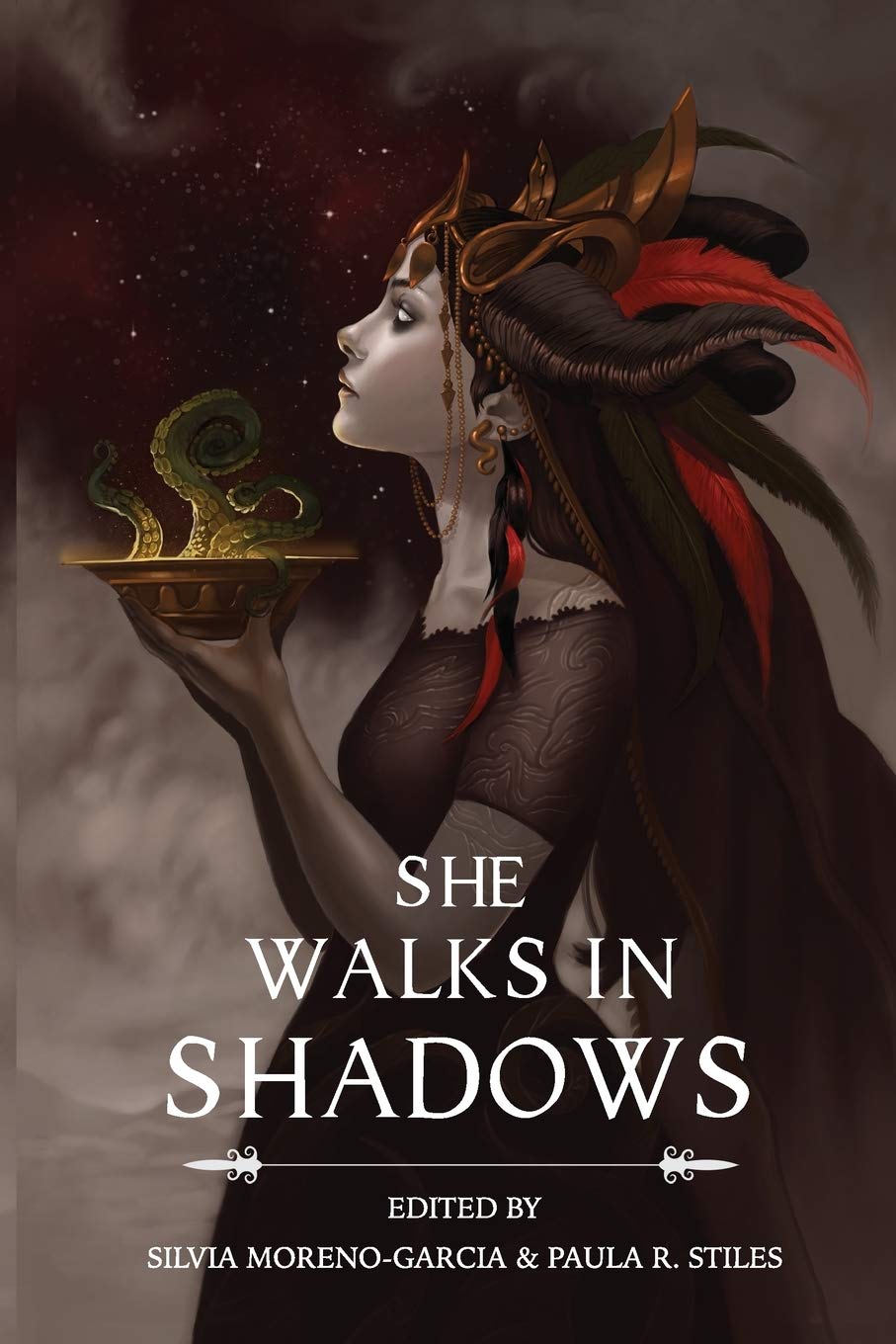

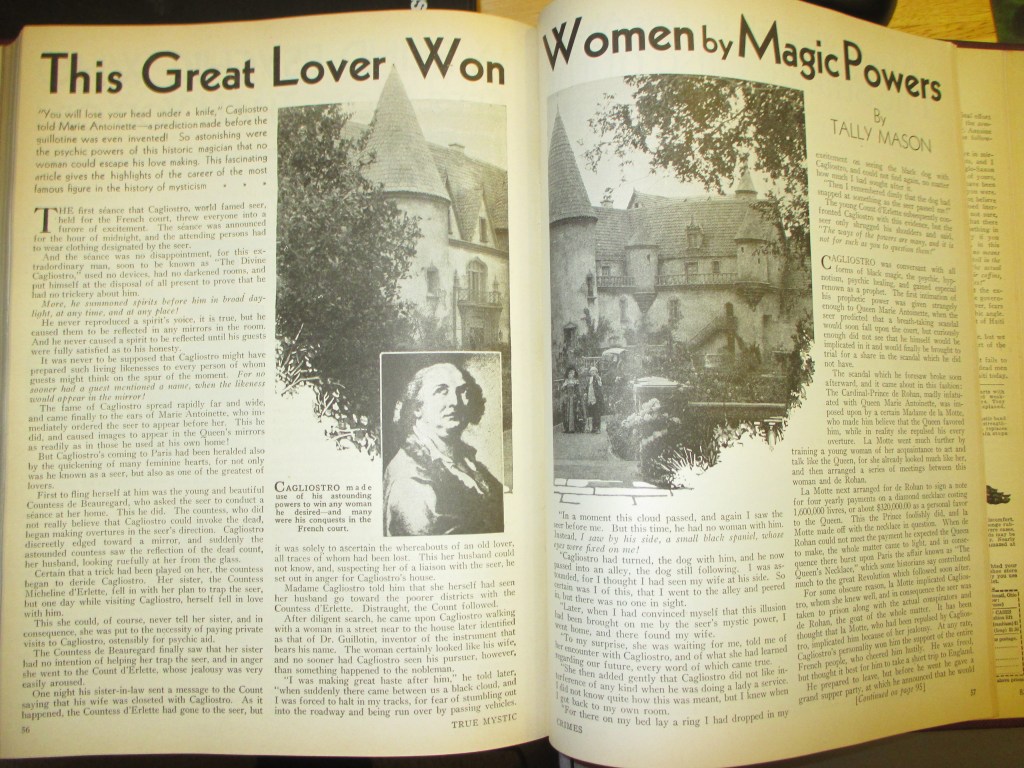
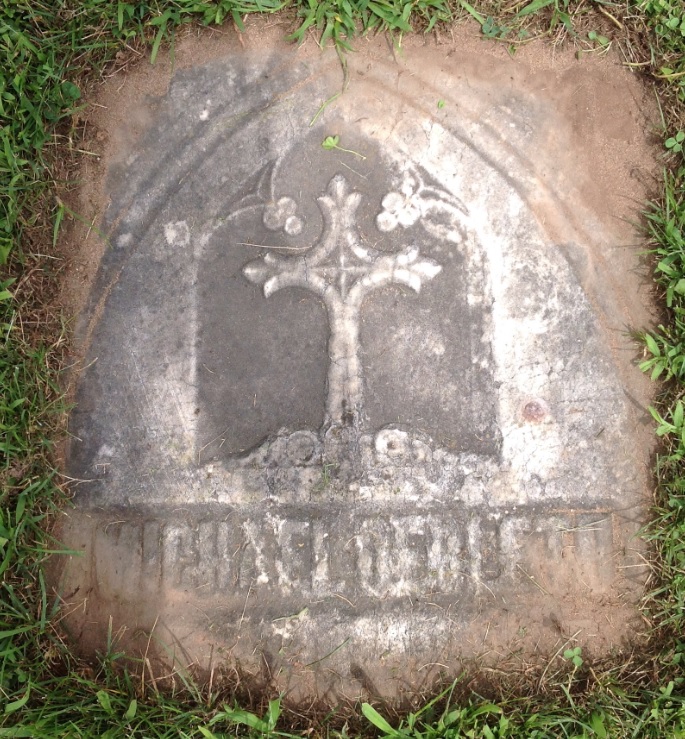
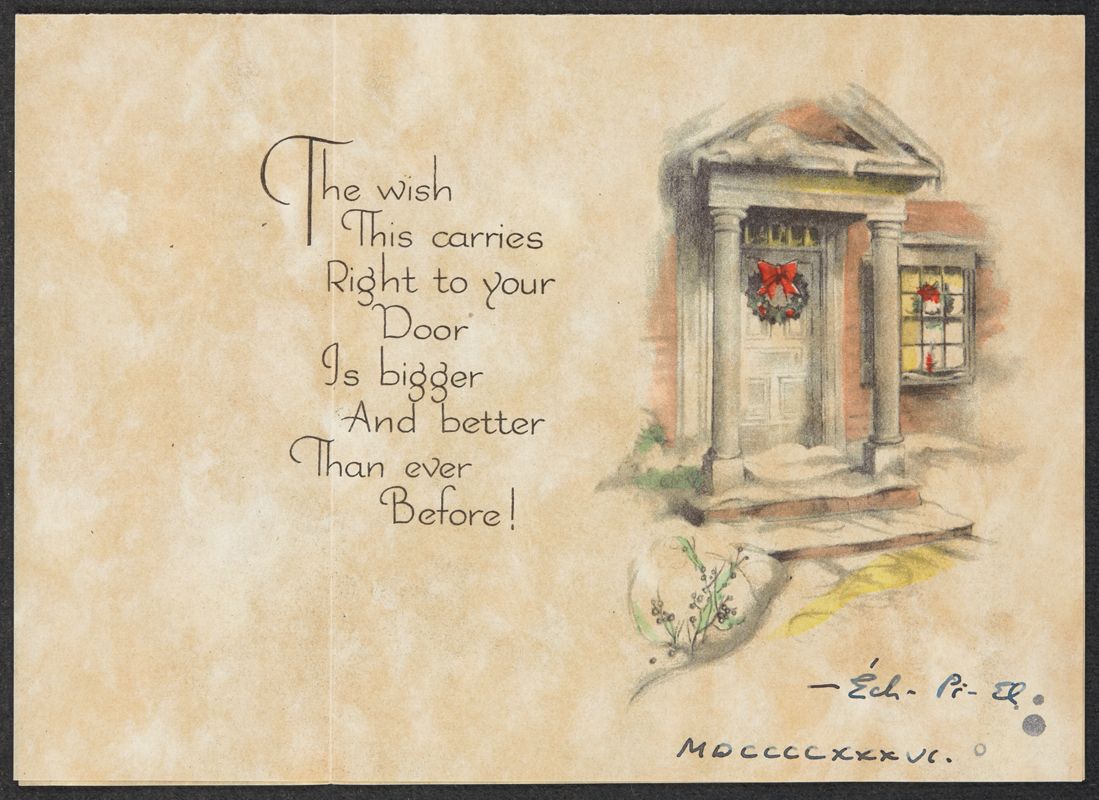

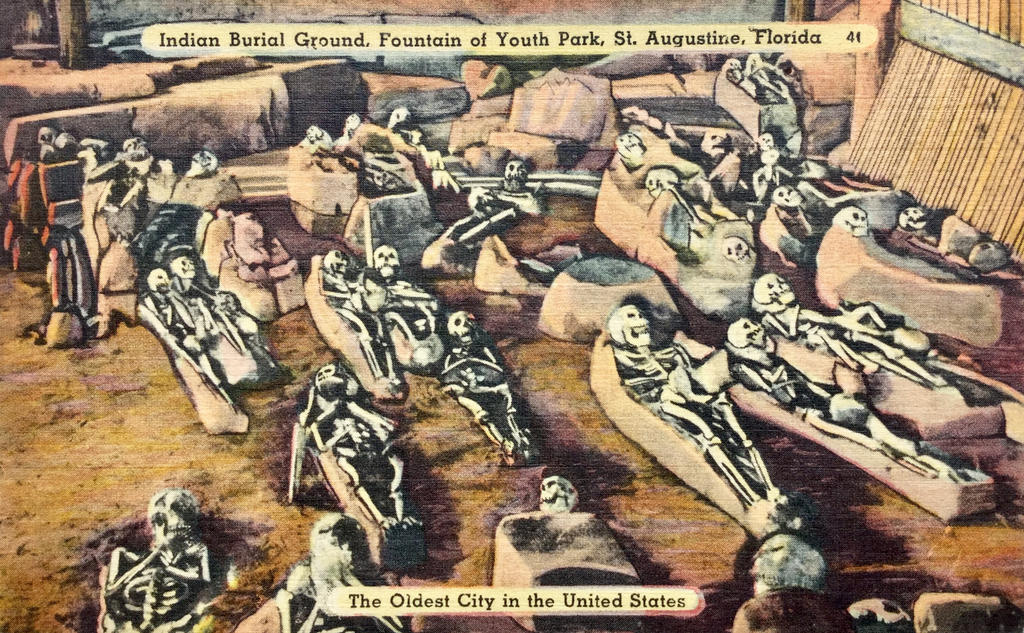

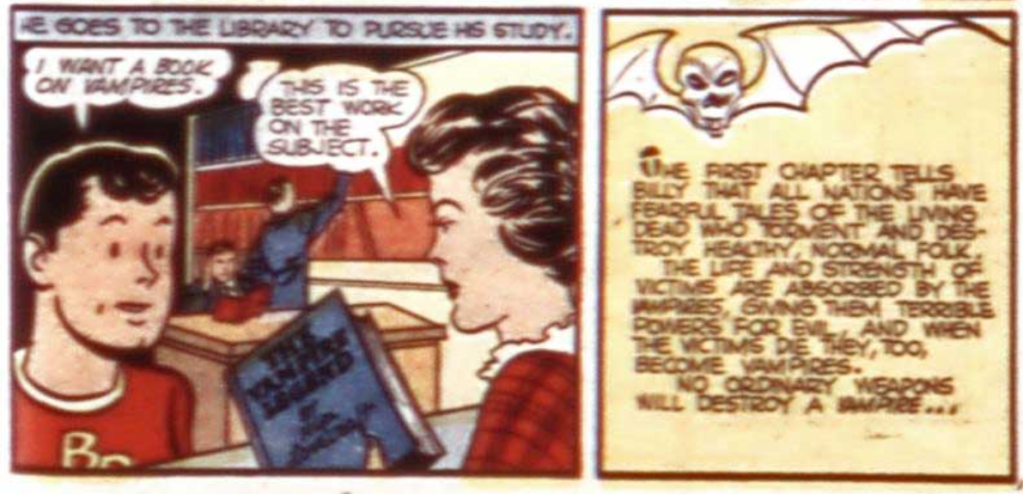
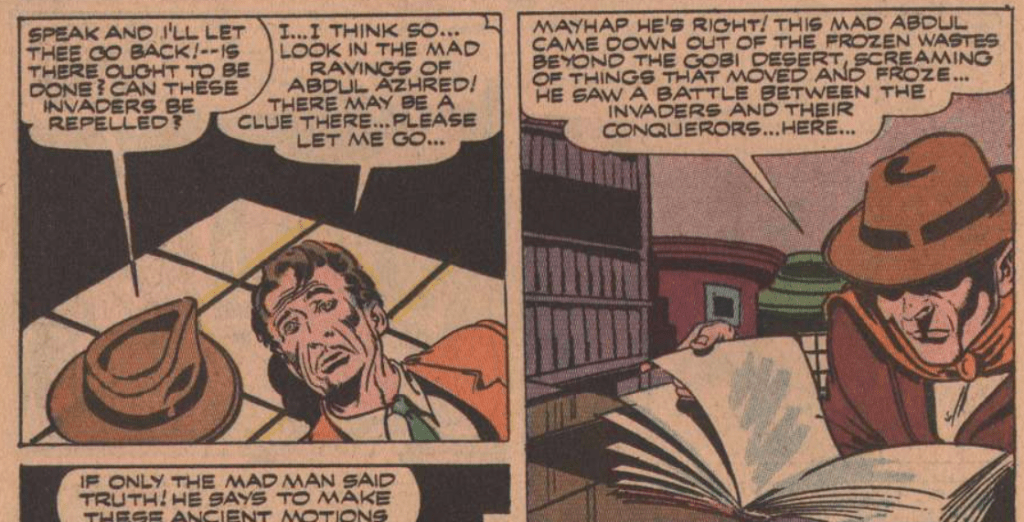
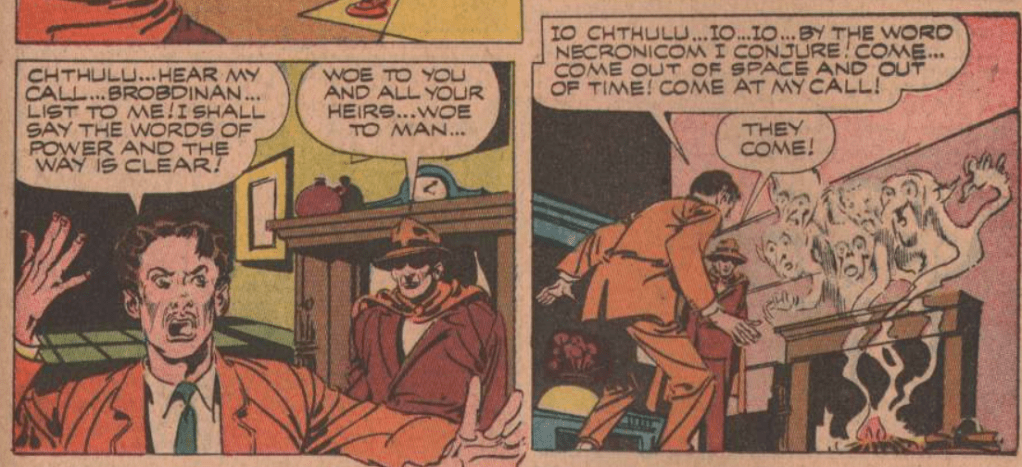


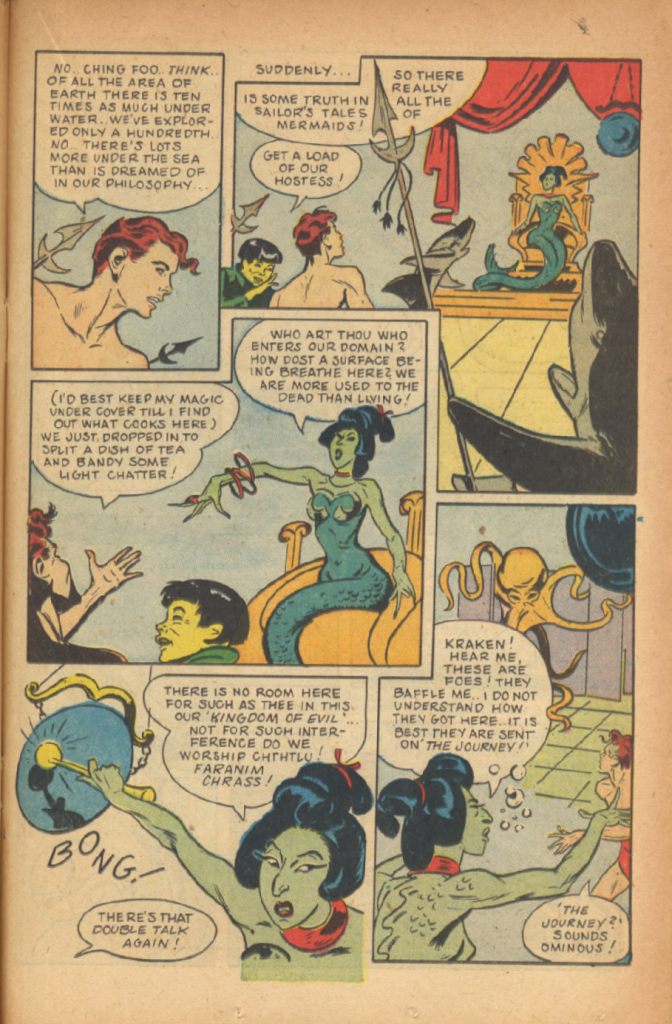
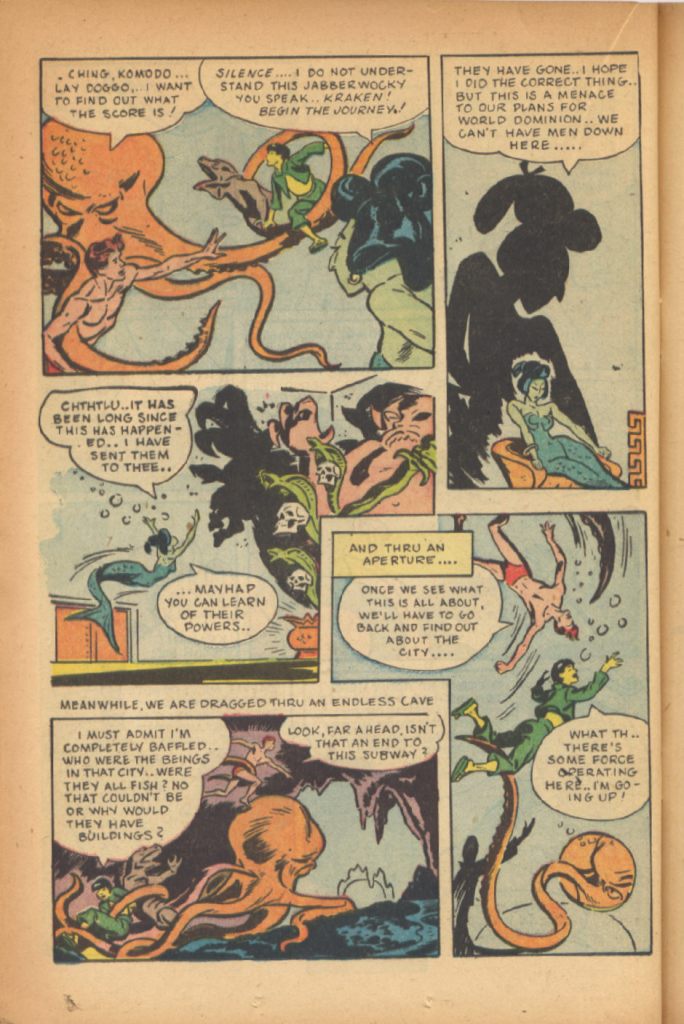
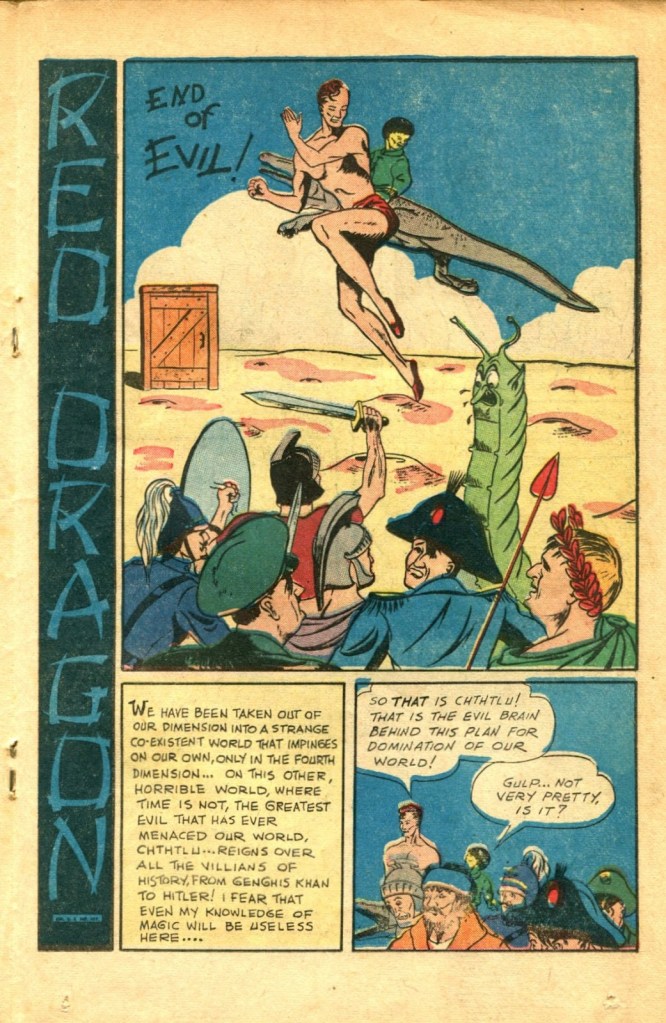
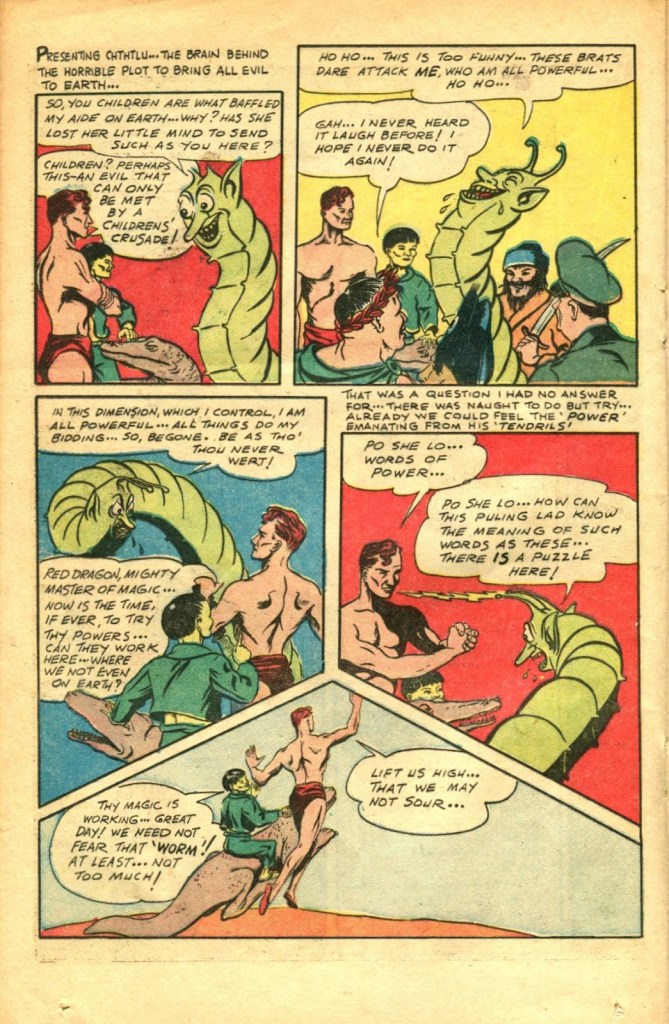
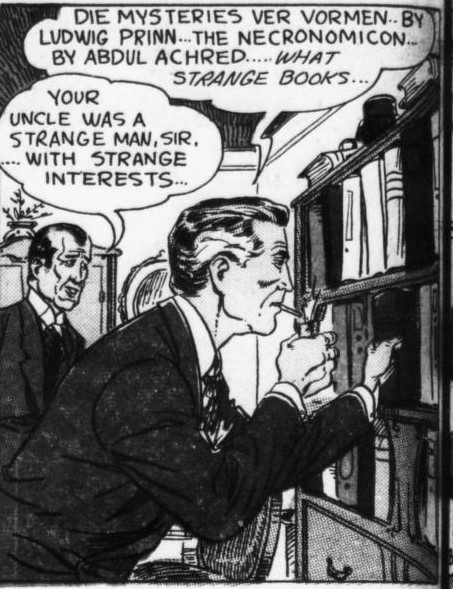
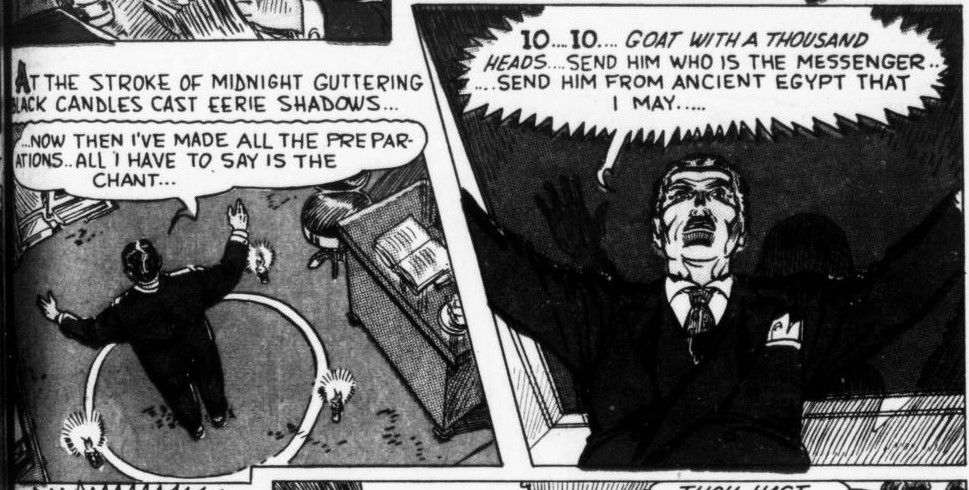
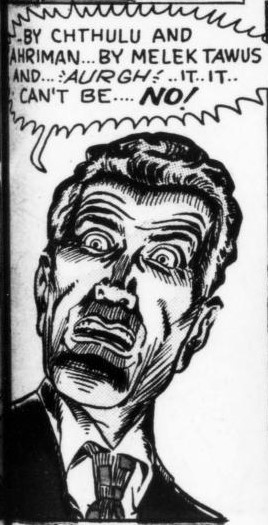

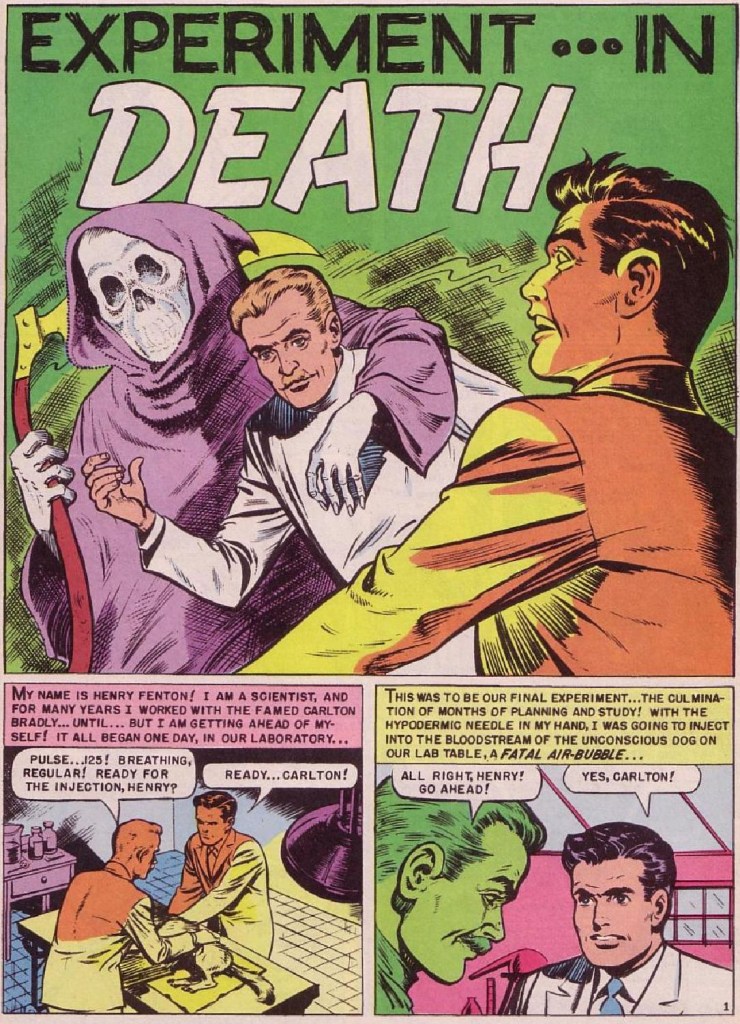
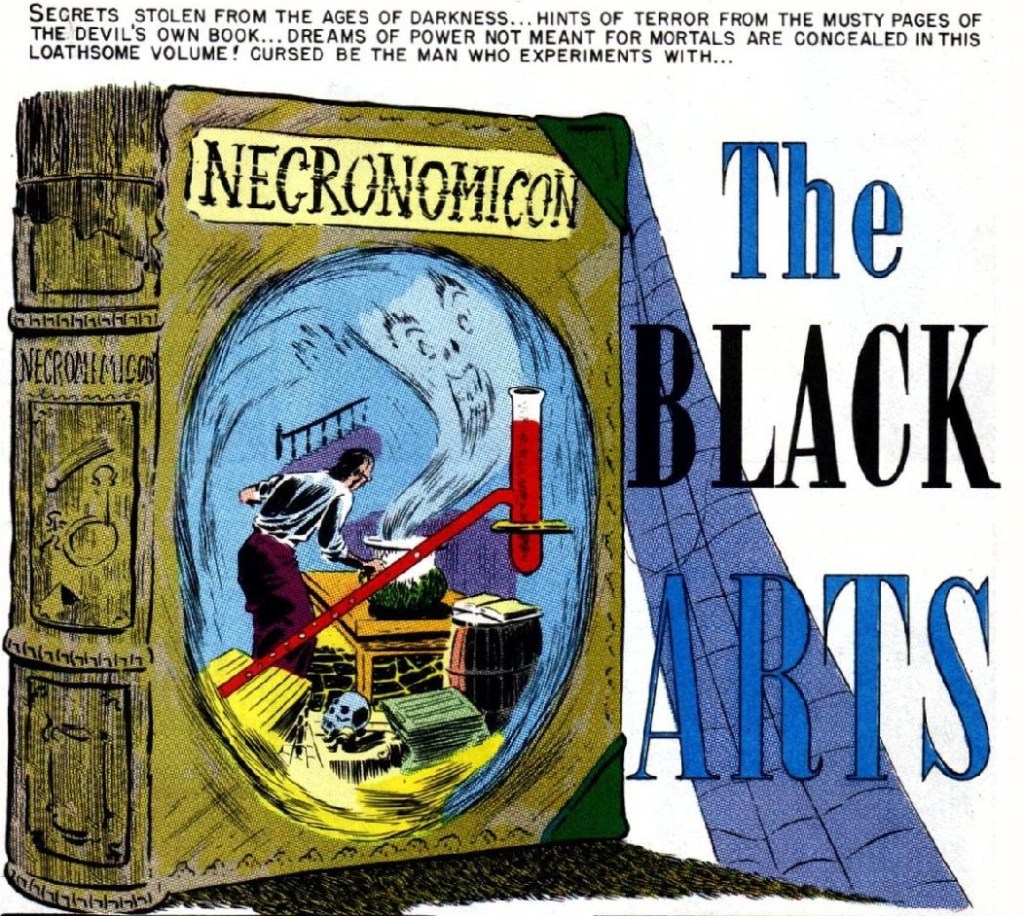
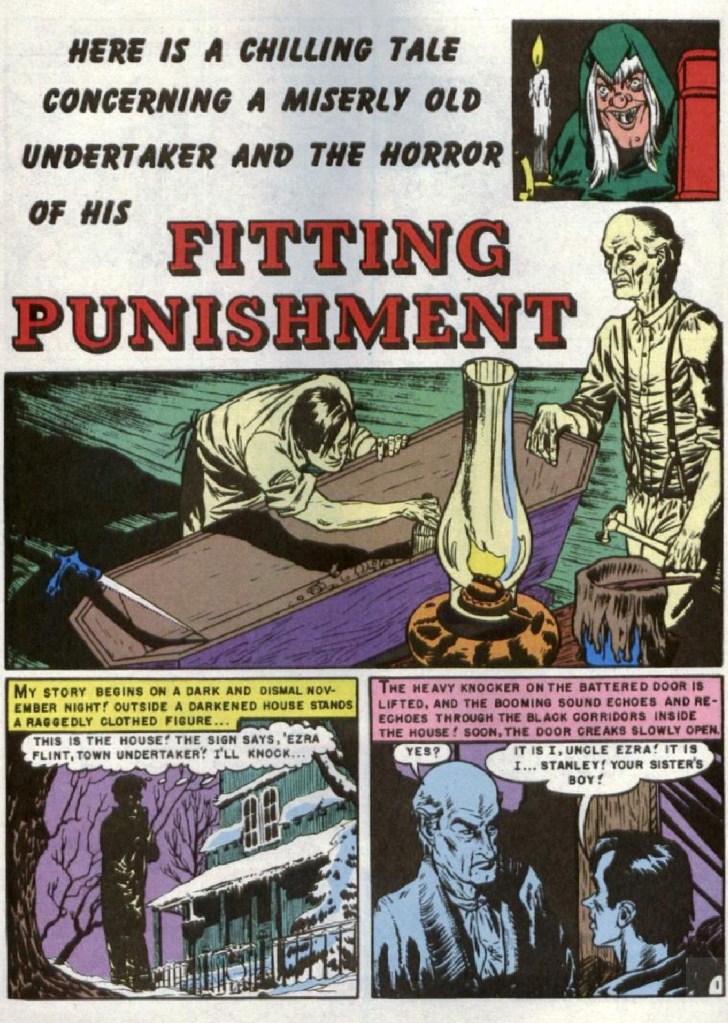
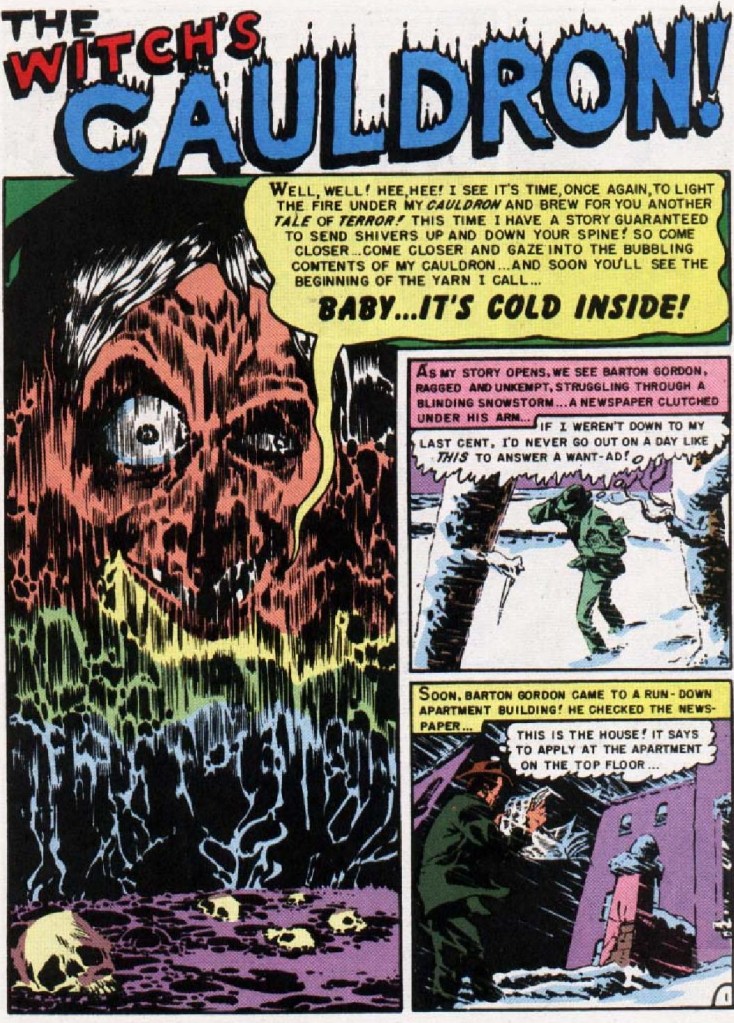
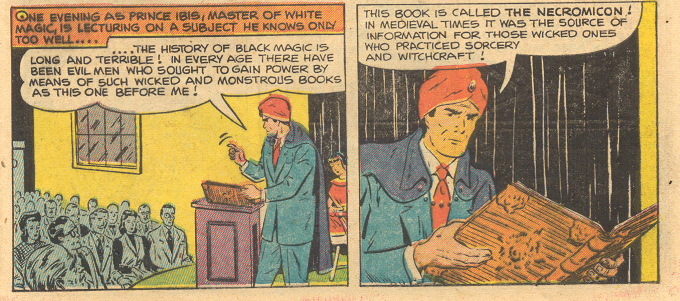
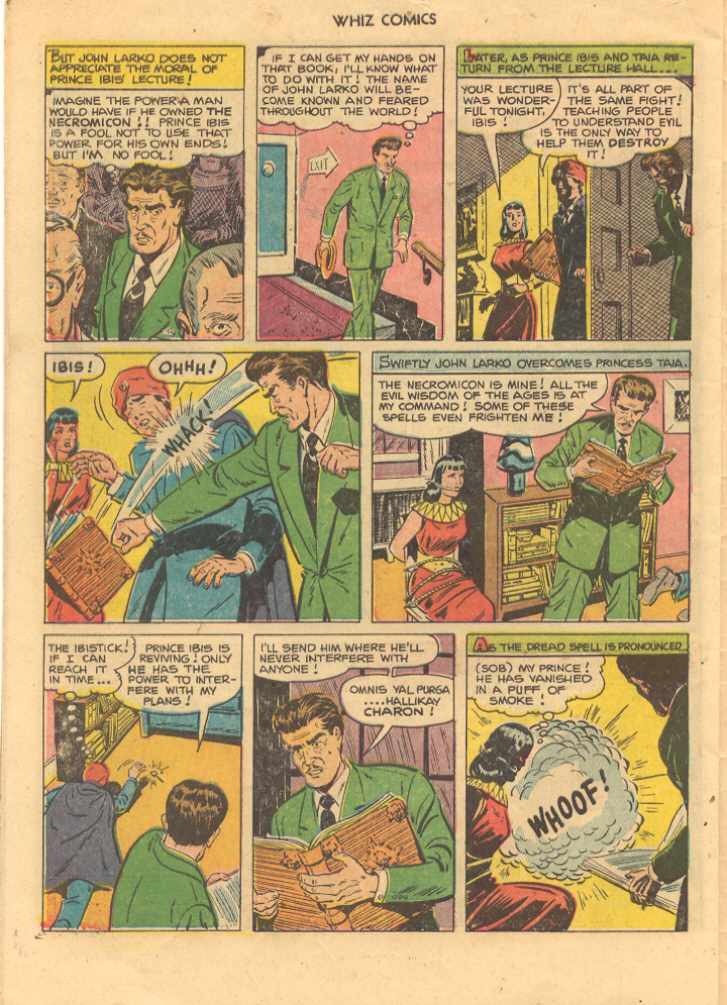

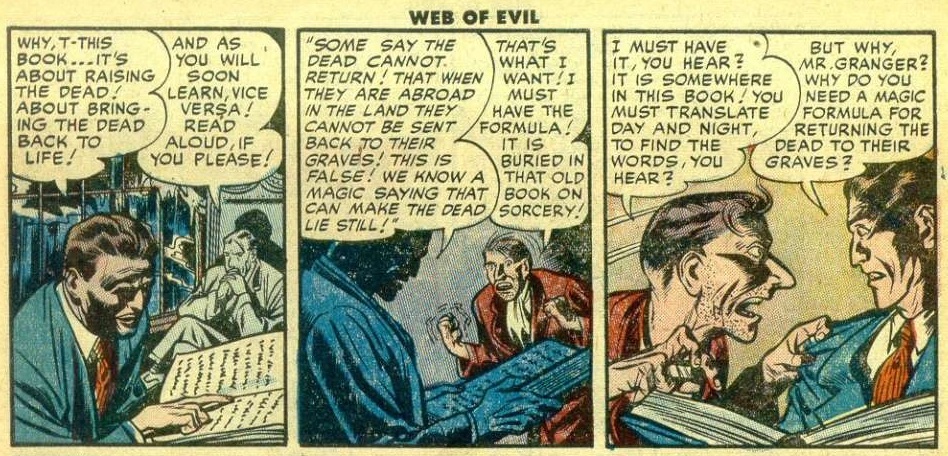
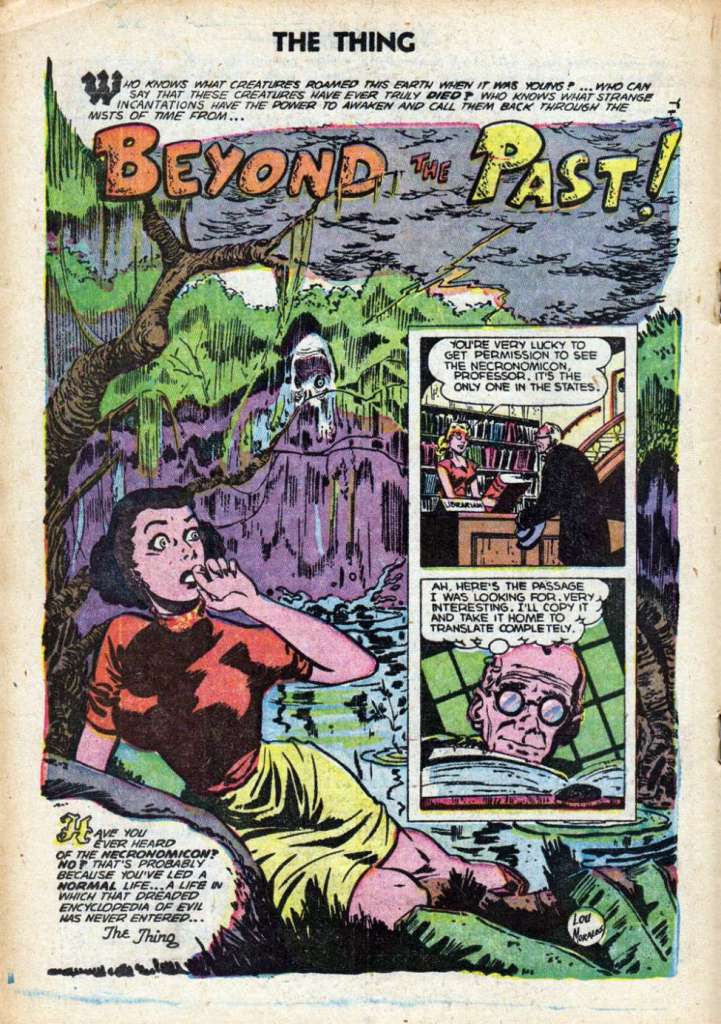
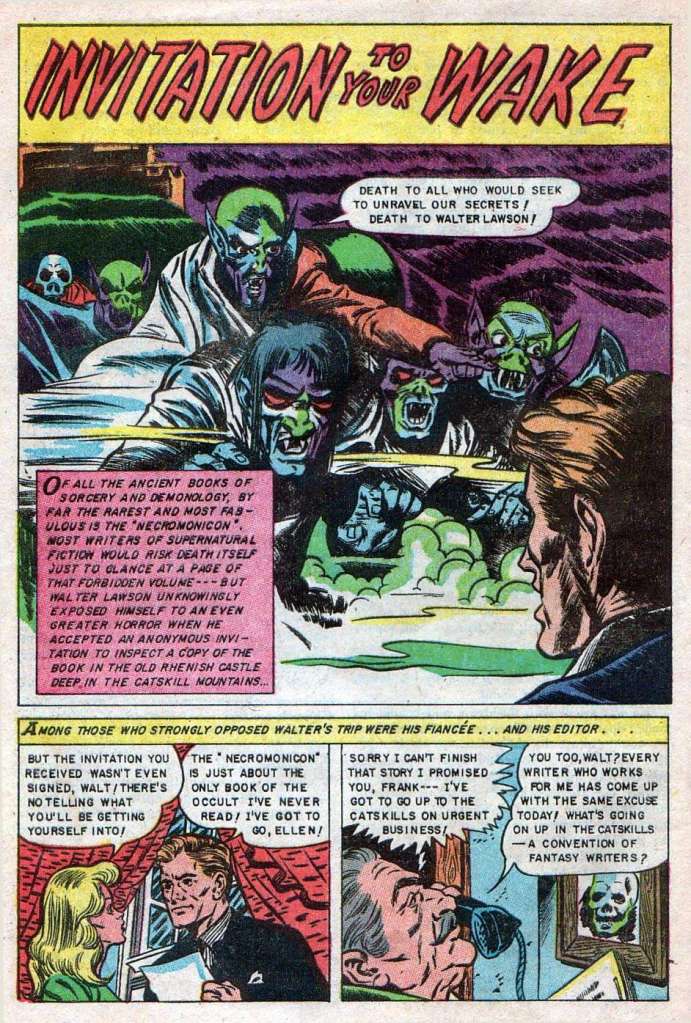
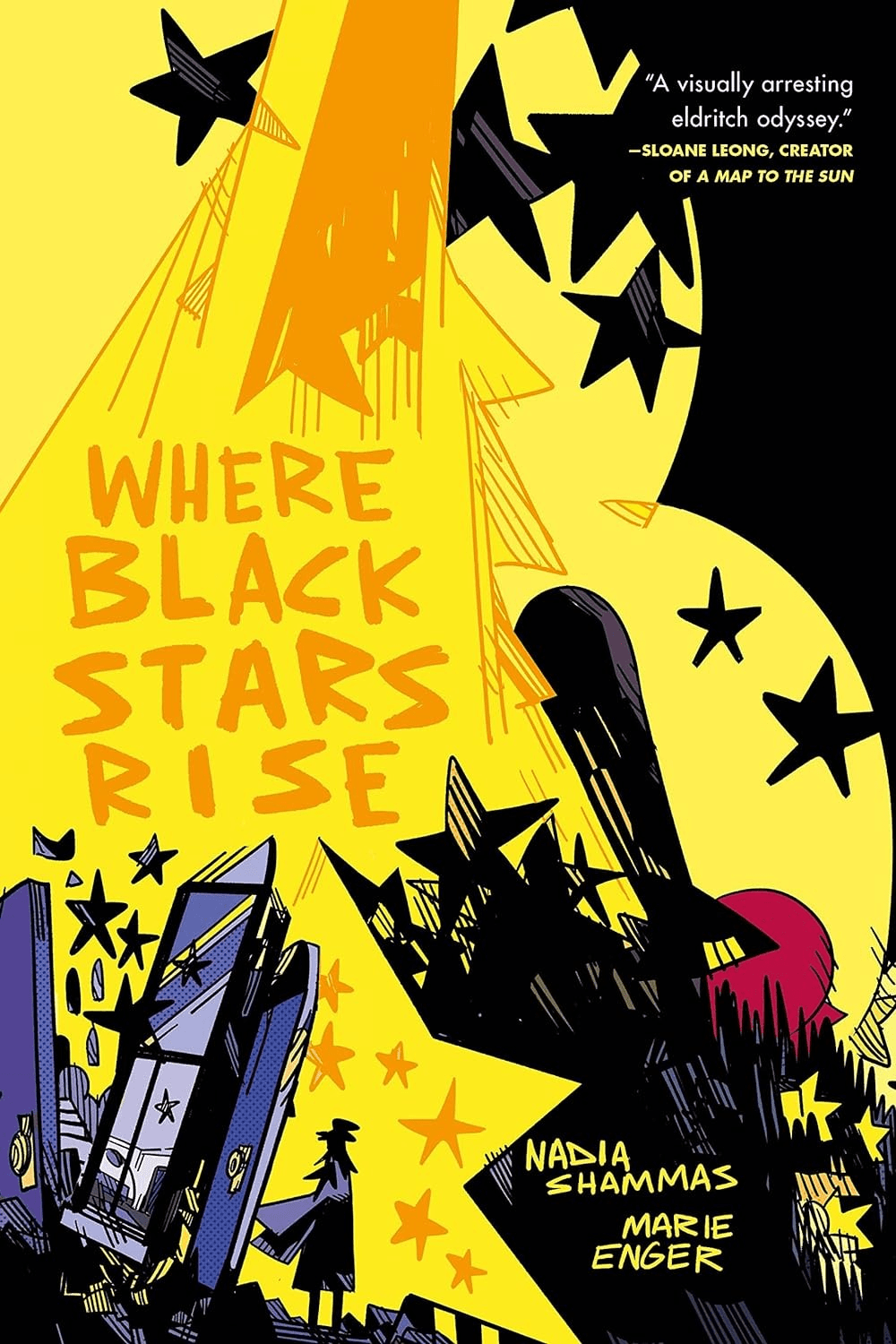
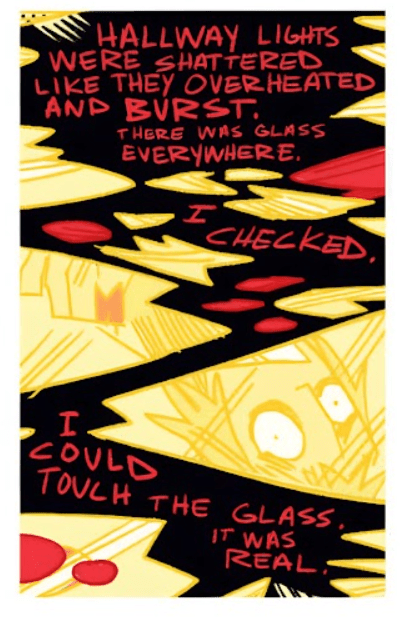
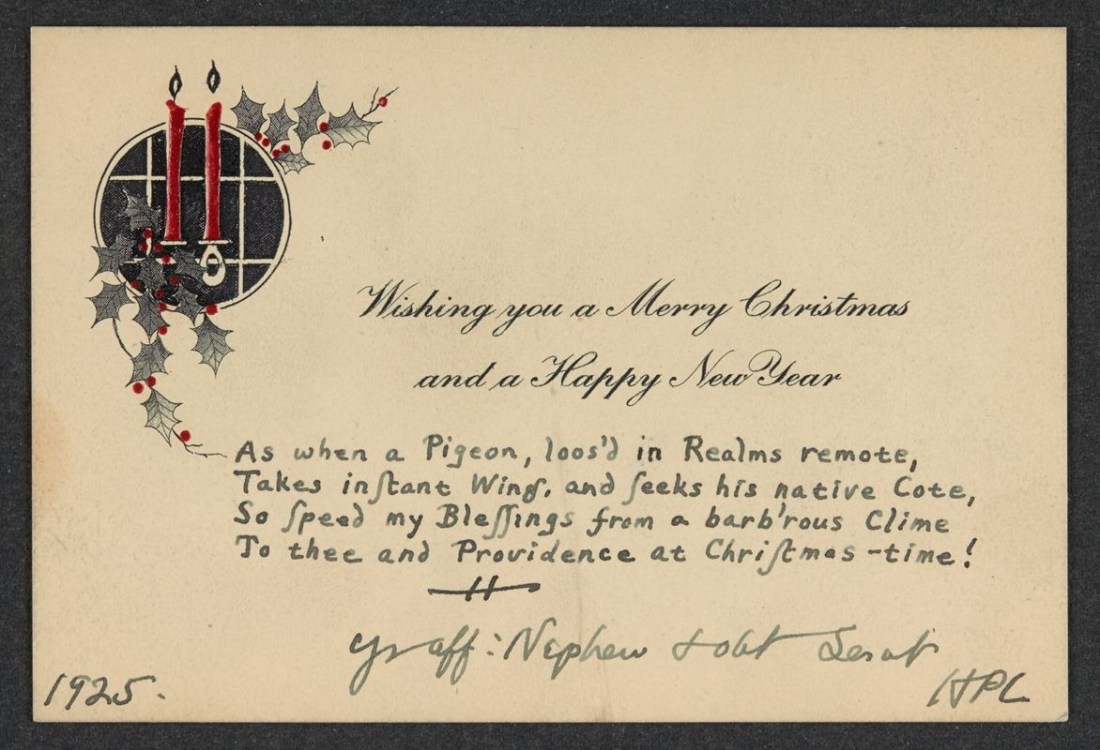
 Deep Cuts in a Lovecraftian Vein