Posts

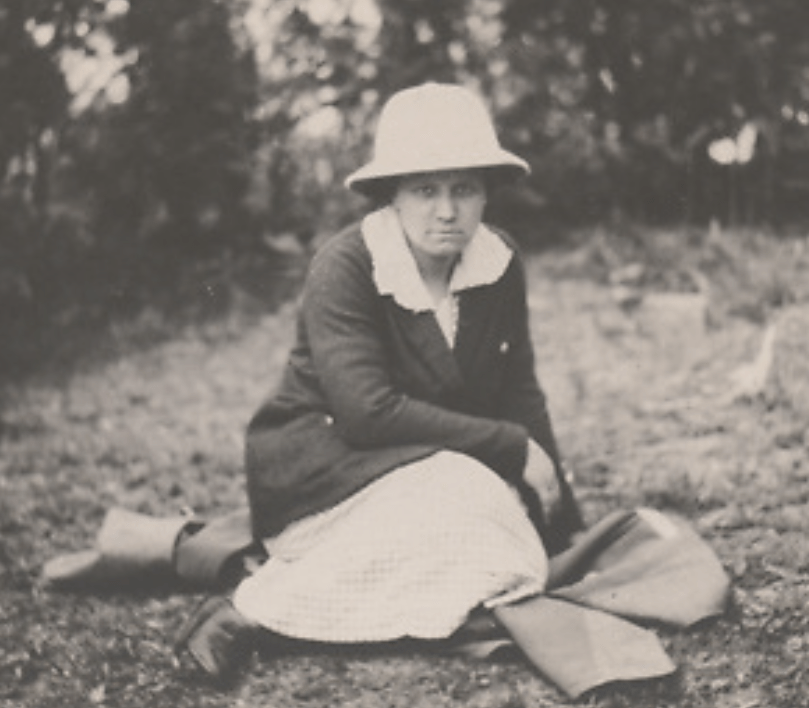
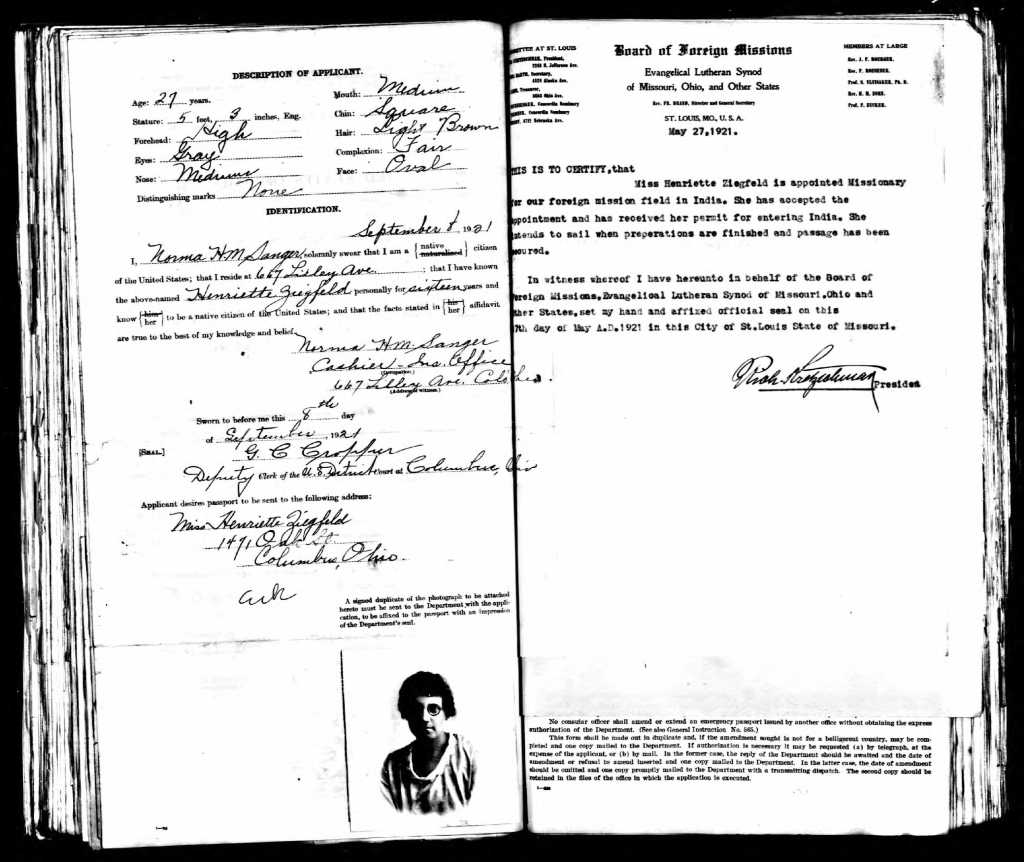
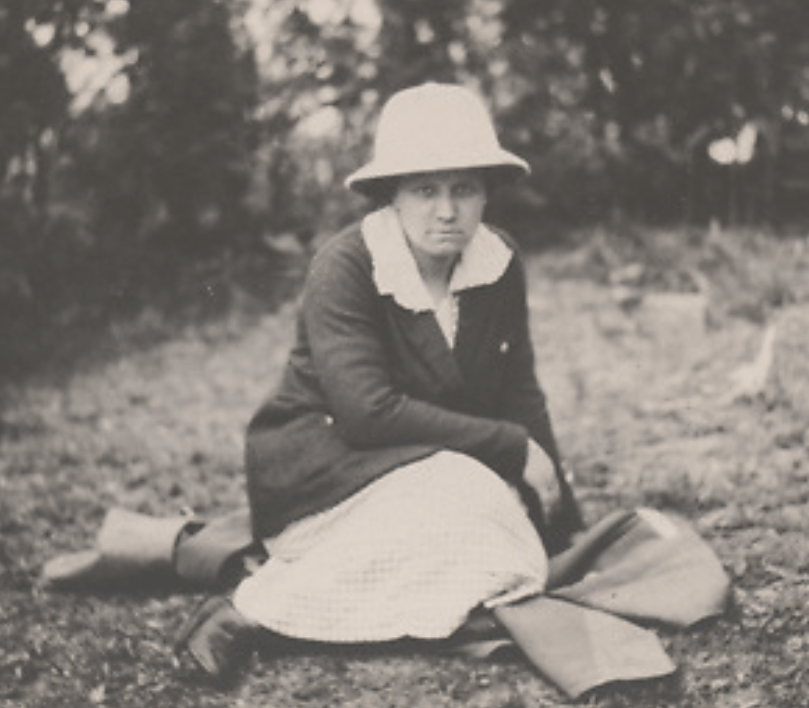
Her Letters To Lovecraft: Bernice Nette (Leach) Barlow

The present household consists of Barlow & his mother; & of a mother & son named Johnston, from Virginia, who keep house & attend to various duties.

H. P. Lovecraft to Duane W. Rimel, 13 May 1934, Letters to F. Lee Baldwin &c. 171

On the second of May 1934, a little after noon, H. P. Lovecraft stepped off the bus into the Florida afternoon sunshine. He was met there by Robert H. Barlow—a young correspondent whose letters had first reached him via Weird Tales three years earlier. Lovecraft was shocked to find his friend, with whom he would be staying for several weeks during his Florida vacation, to be only 16 years old.

No account is given, in letters or memoir, of Lovecraft meeting his teenage friend’s mother, Bernice Barlow. That is rather typical for everyone involved; she was there—cooking meals, driving the car, and no doubt a million other things—but during his two trips to DeLand in 1934 and 1935, Lovecraft’s letters focused on his adventures with Bobby Barlow, and R. H. Barlow’s memoirs of the time focus on Lovecraft. Little interest was given to the woman who quietly held everything together.

She was born Bernice Leach in Leavenworth, Kansas on 12 May 1884. Her father Adoniram (“Nide”) Bostwick Leach was a schoolteacher associated with the Leavenworth Business College; her mother Myrtilla Emlin (Parker) Leach appears to have been a homemaker. Bernice was the third of five children, with her older sisters Mabel (b. 1877) and Minnie (b. 1879), and younger brothers Parker (b. 1888) and Elwood (b. 1889). Absent any biographies, much of her life has to be pieced together with census data and newspaper accounts.

Bernice graduated high school and continued to live with her parents. At about age 20 or 21, she met Lt. Everett Darius Barlow (b. 1881), who was stationed at Fort Leavenworth. Newspaper accounts report on the visits of Everett and his brother Warren with the family. In 1905, it was announced that Everett and Bernice were engaged; on 21 December 1907, after he returned from his first stint in the Philippines, they were married. About ten months later, their son Everett Wayne Barlow was born, on 10 October 1908.

Life for a military wife is hard, and hardly documented. Census data shows that in the ensuing ten years the family moved from one posting to the next. When E. D. Barlow shipped out to France in April 1918, Bernice was heavily pregnant with their second child. She would be with relatives in Kansas when Robert Hayward Barlow was born on 18 May 1918. We can only guess at the unspoken decade between children—miscarriages, stillbirths, long absences from home might have all played their part.

When E. D. Barlow returned from the Great War, he was not the same. Without his medical records it can be difficult to get at the heart of the matter, but there are suggestions that he suffered from post-traumatic stress disorder, which made family life difficult. Lovecraft, whose own mother had suffered a breakdown before her death in 1921, was sympathetic:

Glad to hear your father is somewhat improved, & hope he can arrange to make his gains permanent. These nervous breakdowns are no joke; no matter how much they may inconvenience & depress the bystanders, they are a damned sight worse for the victim himself.

H. P. Lovecraft to R. H. Barlow, 19 Mar 1934, O Fortunate Floridian 114-115

In 1934 when Bernice Barlow and H. P. Lovecraft met they had been living pillar-to-post for about twenty-six years. With E. D. Barlow’s retirement at the rank of Lieutenant Colonel, the family ended up in rural Deland, Florida, far from family and friends. The house they built was named Dunrovin, and when Lovecraft arrived it was not quite finished. E. D. Barlow was up north, seeking medical treatment; Wayne Barlow had joined the army. So Bernice was on her own, with her precocious teenage son, and the Johnstons to help her out around the house. There is only one real anecdote about Lovecraft and Bernice from this period, but it bears repeating:

We had been in the habit of gathering blueberries beyond a shallow creek running between the swamp. Now HPL was no woodsman, as may be seen, and it was always perilous to trust his poor sight and lack of horse-sense. […] A series of recent rains had rendered the land very muddy, and the creek-channel had far overflowed, elaving a widespread thin puddle through which we had no choice but to wade. At the deeper creek had been placed a board to serve as bridge; and this was crossed without mishap. We spent some time gathering berries, but were through long before his dim eyes had attained even a half-basket. So we helped him filled it, and then all started home (Lovecraft, [Johnston], and myself). He lingered for possible other berried, and fearing just such a mishap, I stood uponthe makeshift bridge and called out its location to HPL.

[…] although I missed the scene myself (meeting him upstairs later) mother said he came in, soaking wet, and with most of his berries gone. In the God-awful rig he must have appeared very comical, thought it had also a tragic air about it. Promptly he said to mother, “I really must apologize!” She, amazed by this vision of a thoroughly wet HPL, said in surprise, “What for?”

He went on to explain he had been homeward bound when he came to the creek. Not seeing the board, he was abruptly pitched up to his neck into cold water. The berries were flung up and upset, most of them going on the slight current.

R. H. Barlow, “Memories of Lovecraft (1934)” in O Fortunate Floridian 406-407

The first visit lasted until 21 June 1934, about six weeks. Once in St. Augustine, Lovecraft posted a card to his gracious host:

It surely seems odd, after so many weeks of enjoyment of the Villa Barlovia’s hospitality, to be absent from the familiar table’s west end, & to forego the evening promenades on the moonlit Cassia road! I scarcely need reiterate how keen a delight my protracted visit gave me—& how profoundly I hope that I did not occasion any gortesque extremes of inconvenience with my wild hours & habitual absences from scnes of constructive endeavour.

H. P. Lovecraft to Bernice Barlow, postmarked 21 Jun 1934, O Fortunate Floridian 140

This is, as far as survives, the only piece of correspondence directly between Lovecraft and Bernice Barlow. No doubt any important news would have been shared through Lovecraft’s continuing correspondence with her son; there is a note on the envelope of one letter (“No news—Mother” O Fortunate Floridian 351) which may or may not be intended for HPL. Yet for the most part, Lovecraft seems to have quickly and firmly settled in as a family friend. On his 1935 visit, Lovecraft met Everett and Wayne Barlow and got along well with both of them.

Lovecraft did not write about the invisible stresses in the family—between husband and wife, father and son. R. H. Barlow would leave Florida for Kansas and the Kansas City Art Institute; Bernice and Everett would divorce in 1941. Yet Bernice was a survivor…she would continue to rebuild her life, and would eventually outlive her younger son. Perhaps in her waning years, back in Florida, she would remember the strange man who came to stay with them, how he would talk and the incident with the berries…and the card he sent, which she had kept for many years before it was donated with so many other documents of Lovecraft’s life to the John Hay Library.

The full text of Lovecraft’s postcard to Bernice Barlow is published in O Fortunate Floridian.


Bobby Derie is the author of Weird Talers: Essays on Robert E. Howard and Others and Sex and the Cthulhu Mythos.

Deep Cuts in a Lovecraftian Vein uses Amazon Associate links. As an Amazon Associate I earn from qualifying purchases.

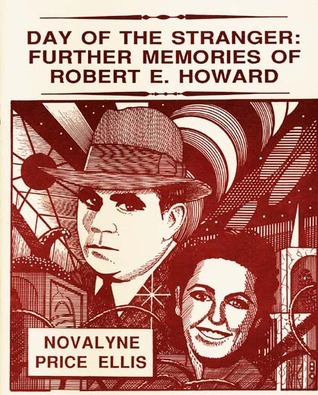
“The Day of the Stranger” (1947) by Novalyne Price Ellis

A couple of years after Bob’s death, I was standing on a street corner in Houston and I saw a man coming across the street that looked exactly like Bob. The incident stayed with me for several years. Finally, it wrote itself when I needed to hand in a radio script at LSU. I like the script, and it has briefly, some of the things we talked about almost as we talked them.

Novalyne Price Ellis to L. Sprague & Catherine Crook de Camp, 8 Jun 1978

Every biography ends the same way. A person dies, and whatever is left of them in this world is in the memories of those who knew them. A very few, however, take the next step. From memory to myth, from reality to fiction. Today, Robert E. Howard is as much a literary character as his creations and has appeared as versions of himself in stories (“Far Babylon” (1976) by L. Sprague de Camp, “Gilgamesh in the Outback” (1986) by Robert Silverberg), novels (Lovecraft’s Book (1985) by Richard Lupoff, Shadows Bend (2000) by David Barbour), comic books & graphic novels (The Adventures of Two-Gun Bob (2007) by Jim & Ruth Keegan), and even films (The Whole Wide World (2006), portrayed by Vincent D’Onofrio)—and that only begins to scratch the surface of Robert E. Howard’s many posthumous incarnations.

Though those characters shared Howard’s name, their characters differed. None of the writers knew Bob Howard; they had to work from letters and memoirs, biographies and anecdotes. Yet one of the earliest, if not the first, fictional character based on Robert E. Howard was drawn from the memory of one who knew him well: the eponymous stranger in Novalyne Price Ellis’ radio play “The Day of the Stranger.”

In 1947, my husband [William W. Ellis] and I were attending LSU, and my professor in radio assigned a script to be written and handed in for a semester’s grade. While I was trying to think what to write about, I remembered that incident (seeing Bob Howard get on the bus in Houston, when he’d been dead two years […]). I wrote it up as if it happened in New Orleans, got my grade, directed it for the school radio program, and sold it to a group producing amateur radio scripts.

It was copyrighted in 1949 by J. Weston Walch—Publisher of Portland, aine. I’m not sure he’s still publishing things. He published it in a book called Radio Player’s Scriptbook. It was for amateurs looking for scripts to produce. . . . The Stranger is Bob and it was as much of his regular talk as I could get it. The cry in Jeanne’s heart for a second chance was my cry. Jerry was Truett [Vinson]. The girls in the drug store were just necessary character to help put the story across.

THey changed my original title, which I thought was good. However, at that time, they were afraid that to say ‘New Orleans’ would be to give it a regional slant, and so they changed ‘New Orleans’ to ‘This.’ I’m sure they wouldn’t change it now, and I prefer the use of the city’s name.

Novalyne Price Ellis to Rusty Burke, Day of the Strange: Further Memories of Robert E. Howard (1989), 31

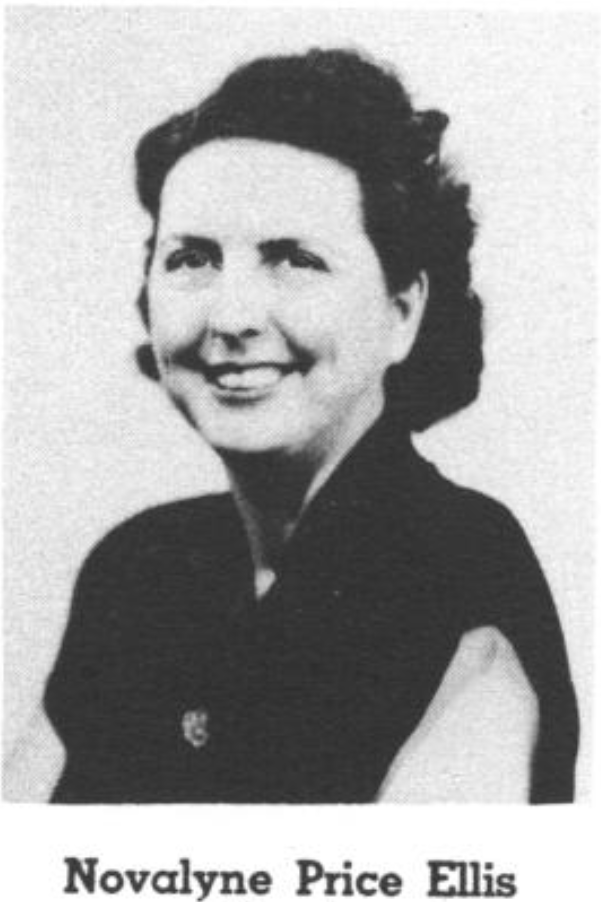
In 1936 when Robert E. Howard died, his sometime girlfriend Novalyne Price was attending school at Louisiana State University. She returned to Cross Plains to teach school, and for much of the next decade she continued teaching and attending courses in Texas and Louisiana. Novalyne had planned to write about Howard’s life, using her journals as material for the book—but life always got in the way. By the time of her marriage to William W. Ellis in 1947, Novalyne had extensive experience with drama, and even radio plays (“Daniel Baker College To Offer Enlarged Speech Program,” The Commanche Chief, 24 Aug 1945). “The Day of the Stranger” would be, in a sense, an early effort to capture some of the words and tone of Robert E. Howard’s character, decades before she could complete her book One Who Walked Alone (1986).

In an interview with Howard scholar Rusty Burke, she went into more detail about the play and the experience that inspired it:

BURKE: A lot of people who may read this interview may not know that there are other things you’ve written about Bob. In fact, a number [of] years ago you wrote a play in which Bob is a character, called “Day of the Stranger”. One of the things the stranger does is that, when he sees someone, he begins telling you what the person is like, what’s on his mind as he sits on the streetcar, and what he’s thinking about. Did Bob do that kind of thing?

ELLIS: All the time. That was his interest in people. Oh, ys. Fantastic stories. I remember very vividly one time, we passed a man—there was a very cold norther blowing—and we passed a man on a horse, riding along, and the man was all humped up over the saddle, trying to get away from the cold—you can imagine sitting ona saddle in a Texas norther—(shivers)—cold, yes—well, I don’t remember the story, but I remember that it was a fantastic story—pretty soon I knew everything that man thought. “Day of the Stranger” was the first thing that I had been able to write about him. I had to hand in a radio script, and all of a sudden it occurred to me. It came from an incident that had happened to me in Houston about two years after Bob’s death. It was a cold, rainy, drizzly day, and I had gone to Houston with some of my teacher friends. I was supposed to meet them somewhere, I’ve forgotten where, but it was in downtown Houston. It was time to go meet my friends. I was standing on the sidewalk waiting to cross a street, ready to step down off the crub. I looked up and there came Bob! Dressed in his brown suit with that tan hat—big man, heavy-set—and I couldn’t cross the street. There was Bob coming toward me! I’m sure, from the way people looked at me, that I made some kind of sound. But I backed up all the way across the sidewalk against a store window, and stood there until the man crossed the street. He stood on the edge of the sidewalk about 8 or 10 feet from me, and I still couldn’t get away from the fact that this was Bob. He turned around and looked at me, and I told myself I could see differences, but I couldn’t. That was Bob. He looked at me for a few minutes—I don’t know whether I was making a sound or not. Then he turned around, turned his back on me, and looked down the street. In just a moment his bus came down the street. Came down, stopped at the corner, and he got on the bus. I watched it. I watched as it went on, and I saw him take his money out and put it in the slot for the fare, and start toward the back of the bus. Then the bus moved on further. I watched it till it was out of sight. I stood there for a few minutes until I could get myself together. Then I went over and met my friends. That was a very vivid incident!

BURKE: That would certainly shock a person.

ELLIS: It shocked me! As I think about it now, I’m shocked by it, I can remember the strange feeling I had. TO see somebody coming across the street that you know has been dead about two years! When I got ready to write my play, I thought about that. I wrote “Day of the Stranger” in order to say some of the things I was still worried about—in order to get some of the old frustrations out of my mind. You say, “Now, in 1947 you were happily married and you had one beautiful child”—I just hadn’t gotten over the feeling of guilt. It’s a feeling that I think everybody who knows a friend or a family member who commits suicide feels. The feeling of guilt has this to do with it—you say, “If I hadn’t said thus-and-so, if i’d been more sympathetic, if I hadn’t sent that book back to Bob, if I’d gone by that morning, if I’d answered his letter”—all these things that you say. It doesn’t matter that maybe your reasoning mind can tell you “Oh, well, this would not have done it”—you still think it. I wrote that play to relieve my own heart. I used that play myself. It was produced a good many places, but after writing it, I felt better. After you were here earlier I read it again, while making the copy; I hadn’t written nearly as much about his Egyptian beliefs as I thought it had.

Day of the Strange: Further Memories of Robert E. Howard (1989), 19-20

At least by 1956, Novalyne had adapted the radio play into a script for a one-act play or dramatic reading suitable for high school dramatics:

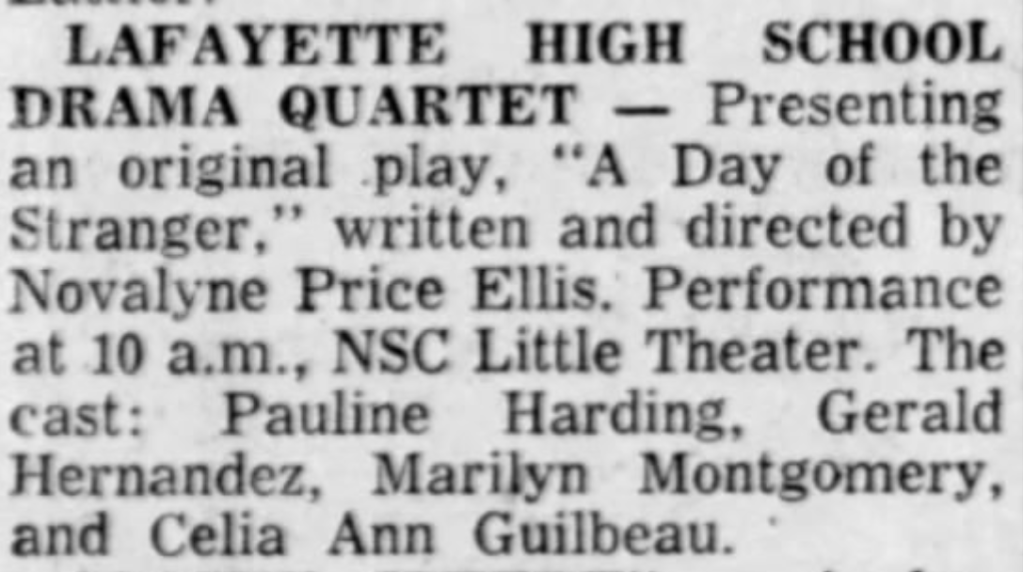
Lafayette High School’s Dramatics department has been experimenting with the “Readers’ Theatre” technique since the 1956-57 school year. That year they presented a drama quartet called “The Day of the Stranger,” a radio play written and adapted to the new medium by Novalyne Price Ellis. The quartet, composed of Celia Guilbeaux, Marilyn Montgomery, Gerald Hernandez, and Pauline Harding, performed for the Louisiana State University Workshop in drama and interpretation and at the Northwestern Theatre Festival at Natchitoches.

“Lafayette Drama Class To Present Five Readings,” The Daily Advertizer, Lafeyette, LA, 15 Nov 1966

At least one dramatic reading was directed by her husband William Ellis (The Daily Iberian, New Iberia, LA, 18 Nov 1957), and it it is likely there were several more, either carried out by the Ellises over the years or various amateur groups using the script in Walch’s book.

The script itself is very brief, for five characters with some bit parts and direction for music, appropriate for dramatic radio production. The crux of Novalyne’s eerie experience is retained, but the scene was shifted to a drug store on Canal Street in New Orleans. The character based on Novalyne was named Jeanne, the Robert E. Howard equivalent in the story was named Craig Blair…although it is only the Stranger who gives his voice.

MARY: Why, early this morning when there weren’t many customers in here, I was getting a chocolate malt ready for a fellow. I had my back to the bar. (SOMEWHAT DRAMATIC) Then all of a sudden a voice said: “Hey, my little bunch of onion tops, give me a cup of black coffee, the blacker and stronger the better.” (POINTED) WEll, you know who’d say it like that, don’t you?

JEANNE: (SUDDENLY ALARMED) No. No. I don’t.(t)

MARY: Well, honey, you could have knocked me over with your little finger because when I turned around…well, Craig Blair was sitting in that chair.

JEANNE: (EMOTIONAL) That’s not true. You know that’s not true.

Day of the Strange: Further Memories of Robert E. Howard (1989), 34

The real Robert E. Howard didn’t drink coffee, generally; but the line about “my little bunch of onion tops” could have come straight from his letters to Novalyne Price. Fact and fiction are thus mixed together in this scenario, but readers familiar with Novalyne’s later One Who Walked Alone or the film The Whole Wide World based on it can see many parallels between things the Stranger says in the play. For another example:

JEANNE: (WONDERINGLY) So you still think people live more than one life?(t)

STRANGER: (LAUGHS) Oh, well, I’ve always thought it was possible, if that’s what you mean. Who knows for sure? NOw, I didn’t go to school much—just to the eighth grade, but I’ve read a lot. The Egyptians used to believe you kept being born over and over until you got all your hopes and desires attended to. Pretty confusing thought, I think.

JEANNE: That’s a crazy thing to think, and you don’t really believe. You used… (CONFUSED) …that is… Craig Blair used to say the same thing, but he didn’t believe it. People talk and talk, and they never believe half of the things they say. I think—

Day of the Strange: Further Memories of Robert E. Howard (1989), 36

Robert E. Howard wrote many stories about reincarnation and past lives, from the James Allison tales like “The Valley of the Worm” and “The Garden of Fear” to the Conan the Reaver story “The People of the Dark.” How much he himself believed in reincarnation has always been and probably always shall be an open question. Novalyne Price Ellis would interpret such ideas through her own experiences.

ELLIS: TO me, what Bob said about that was just a fascinating idea. Just another fantastic story to weave. I was down in the dumps. So he says, “Now here I was in Brownwood. I met this man, and we disliked each other the minute we saw each other. Maybe way back yonder somewhere, maybe he stole my woman or the bear I’d killed for food”—which was the most important to him I don’t remember. How could anybody take him seriously? I mean, that was spur-of-the-moment.

Day of the Strange: Further Memories of Robert E. Howard (1989), 21

Whether or not the Stranger is the ghost or reincarnation of Robert E. Howard—or Craig Blair in the setting of the play—it is indubitably an effort to capture something of Howard’s character and mannerisms.

As a piece of drama, “The Day of the Stranger” has legs: the identity of the “stranger” is never revealed, and all of the conflict is in Jeanne’s head, the tumult of emotions as she is torn between the memory of a dead man and the more unimaginative man she’s dating now. Yet on another level, for those familiar with the outlines of Novalyne and Bob’s relationship, it reads as a kind of catharsis—a way for her to work out many of the lingering emotions she might have had, to put a sense of closure on a relationship which ended on an unresolved chord.


Bobby Derie is the author of Weird Talers: Essays on Robert E. Howard and Others and Sex and the Cthulhu Mythos.

Deep Cuts in a Lovecraftian Vein uses Amazon Associate links. As an Amazon Associate I earn from qualifying purchases.

Deeper Cut: Spirits of Bigotry Past & Present: H. P. Lovecraft & J. K. Rowling

The main points of concern for the journalists seem to be the same as those of the bloggers; first and foremost they feel the need to express that Rowling is wrong and transphobic, but they also want to present their views on the debate of whether liking Harry Potter is still justifiable. The separating the art from the artist discussion is a crucial part of the majority of these articles. Several of the authors mention other controversial artists such as H.P. Lovecraft and analyse how these situations were handled.

Fleur Heiltjes, Alive but #Cancelled? The Public’s Response to the Controversial Author (2021) 31

In 1967, Roland Barthes published his essay “La Mort de l’Auteur” (“The Death of the Author”). This influential work of literary criticism examined the relationship between the author and their work; interest in a work often extends to interest in the author, and what we know about the author informs how we read a work. Many literary critics of H. P. Lovecraft have read elements from his own life in his fiction. Sometimes these readings are supported by primary evidence. Lovecraft himself noted in his letters that real-world personal experiences and places he had visited sometimes informed his fiction. For example:

[…] am now on the 22nd manuscript page of a long short story to be called “The Dunwich Horror”. The action takes place amongst the wild domed hills of the upper Miskatonic Valley, far northwest of Arkham, & is based on several old New England legends—one of which I heard only last month during my sojourn in Wilbraham.

H. P. Lovecraft to August Derleth, 4 Aug 1928, Essential Solitude 1.151

While evidence from Lovecraft’s letters has led to deeper insight into his life, his writing process, and his fiction, their wider publication beginning with the Selected Letters of H. P. Lovecraft from Arkham House also led to wider awareness of his personal prejudices. While many readers would have already picked up touches of early 20th-century prejudices in Lovecraft’s fiction and poetry, Lovecraft’s growing reputation as a writer, this reputation always cared with it the unpleasant reality that Lovecraft was racist, an antisemite, homophobic, etc. As his fame spread and his works entered the public domain, that same public—which has grown ever more diverse—has re-evaluated both Lovecraft and his work.

Lovecraft’s prejudices have become part of his legend. For many, they have become his defining feature: a popular image that is easy to turn to caricature and resistant to nuance and complexity. H. P. Lovecraft has become the ghost of a bigoted past who continues to haunt the readers of today. Unfortunately, the present is haunted by its own bigoted spirits.

Prejudice has become almost as indelible a part of the legend of British writer J. K. Rowling over the last few years as Lovecraft—and this has drawn comparison between the two. However, there are many important differences between the two writers, both in their specific circumstances and how they are read and interpreted by today’s audiences. Comparing two bigoted authors is fundamentally different from comparing apples to oranges…because to torture a metaphor, we have to take into account not just the fruit, but the trees they grow from, the orchard, the terroir: the historical context in which a living author and a dead one lived and worked.

H. P. Lovecraft, Spirit of a Bigoted Past

Howard Phillips Lovecraft (1890-1937) was a pulp writer and amateur journalist. Born into a moderately affluent white family in Providence, Rhode Island, a series of deaths in the family greatly reduced its fortunes. Lacking strong financial acumen or prospects, and with limited education, Lovecraft lived much of his life in genteel poverty, largely unknown outside of a small but ardent circle of admirers of pulp magazines such as Weird Tales, where many of his stories have published. After his death, his friends and fans continued to promote and publish his work, to expand and elaborate on the shared universe known as the Cthulhu Mythos he had devised, and to study his life and letters. Lovecraft’s fame is largely posthumous: he died a relatively obscure pulp author and reaped few financial rewards from his work. Awareness of his racism began to grow in the public consciousness after the publication of his Selected Letters (1965-1976) and especially Lovecraft: A Biography (1975) by L. Sprague de Camp, which not only emphasized his prejudices but contained the first widespread publication of the poem “On the Creation of Niggers,” which along with his childhood pet, the black cat Nigger-man, has become part of his legend, and usually the first things cited as examples of his racism.

It is not unusual that a white man in the early 20th century United States of America might be anti-immigrant, racist, homophobic, and misogynist: this was the era of the second Ku Klux Klan, Jim Crow, and the rise of the Nazi party. Women did not have the right to vote in the US until 18 August 1920, two days before Lovecraft’s thirtieth birthday. Lovecraft would never live to see the Holocaust, the Stonewall Riots, or the Civil Rights Movement. His prejudices reflect the period he lived in, and were widespread.

That is an explanation, not an excuse. Lovecraft may not have known better as a child or young adult, but as he entered his twenties he learned not everyone shared his bigotry. Relatively early in his writing career, Lovecraft received public pushback against his prejudices (“Not All Anglo-Saxons” (1911) by Herbert O’Hara Molineux, “Concerning the Conservative” (1915) by Charles D. Isaacson). After this censure, Lovecraft did not assay such public prejudice again, but kept his comments largely to himself and his close friends and family. While Lovecraft’s fiction shows the definite prejudices of his period, what we know of Lovecraft’s own prejudices comes almost exclusively from his thousands of letters and the memoirs of his friends and family, including his wife Sonia (The Private Life of H. P. Lovecraft (1985) by Sonia H. Davis, Her Letters To Lovecraft: Sonia H. Greene). Through his letters, we see Lovecraft at his best and worst, in his travels (Deeper Cut: Lovecraft in Chinatown, Deeper Cut: Lovecraft in Harlem) and in those he met and interacted with (Deeper Cut: Elsa Gidlow & Les Mouches Fantastiques, Deeper Cut: William Stanley Braithwaite).

While Lovecraft’s views on race were not static throughout his life, and were strongly influenced by his travels and meeting different people, he never overcame the prejudices of his earlier life.

Lovecraft’s influence on contemporary genre fiction cannot be overstated. He was a friend and encouragement to Robert E. Howard, Clark Ashton Smith, Robert Bloch, C. L. Moore, August Derleth, Donald A. Wollheim, James Blish, and many more; his fiction, down to the most obscure fragment, has been published and republished. The shared universe he created and encouraged has been enthusiastically embraced by fans, writers, artists, and game designers for decades, all the more so since his fiction has entered the public domain. Despite Lovecraft’s personal prejudices, his work has been embraced by and re-imagined by generations of women, BIPOC, and LGBTQ+ folk. Many works today specifically address the complex issues of Lovecraft’s personal prejudices (“The Ballad of Black Tom” (2016) by Victor LaValle, The City We Became (2020) by N. K. Jemisin)—Lovecraft has become a public domain character as much as Cthulhu, the spirit of a bigoted past who continues to haunt the present.

J. K. Rowling, Spirit of a Bigoted Present

Joanne Rowling (1965- ) was born in Yate, Gloucestershire, in the United Kingdom. From a fairly stolid middle-class background, she matriculated to university, graduated with a B.A. in French from the University of Exeter. Her first young adult novel Harry Potter and the Philosopher’s Stone (1997) reached widespread acclaim on publication, would be followed by more books, a series of critical and commercially successful films, merchandise, licensing deals, etc. Millions of copies of her books sold, and Rowling herself became a multimillionaire. With newfound wealth came both adulation and expectations: Rowling came under the public spotlight, her social media presence the subject of constant attention and criticism.

In the late 2010s, Rowling’s opposition to gender transition and transgender individuals have come increasingly to public attention and received commensurate criticism. (“JK Rowling criticised over ‘transphobic’ tweet about menstruation”). While Rowling attempted to justify her views with a self-serving essay (“J. K. Rowling Writes about Her Reasons for Speaking out on Sex and Gender Issues”), she has neither apologized nor corrected her views. Instead, Rowling doubled down on her prejudices and has used her wealth and public position to continue to discriminate against transgender individuals and support anti-trans activists (GLAAD Accountability Project: J. K. Rowling).

Rowling’s social media presence and the huge footprint of the Harry Potter media empire have led to swift and tremendous public awareness of her anti-trans prejudices. Individual friends and public figures, including those involved with the Harry Potter films, have variously distanced themselves from her views (Every Harry Potter actor who’s spoken out against J.K. Rowling) or supported her despite her prejudices (Ralph Fiennes defends JK Rowling). Her wealth and, perhaps, her ego have largely sheltered her from consequences: despite substantial efforts to publicly educate her on the realities of the discrimination that transgender people face, Rowling has doubled down on her beliefs in the face of criticism and opposition—and there isn’t much anyone can do about it.

There is a timing aspect to the rapid death spiral of Rowling’s reputation: her initial displays of transphobia have come at a time of increased awareness and vocal support from transgender people in the face of a rising of toxic political rhetoric against transgender people, especially in the United Kingdom (The Growth of the Anti-Transgender Movement in the United Kingdom, The Roots of Anti-Trans Feminism in the U.K.), but also internationally. The backlash against and support for Rowling and her transphobia have a strong partisan bias, even if that puts Rowling into proximity with individuals she herself wouldn’t want to be associated with (Putin cites J.K. Rowling as proof of West’s ‘cancel culture’) and her prejudices have had real-world consequences (How J. K. Rowling helped kill a proposed American LGBTQ civil rights law).

That’s the explanation, not an excuse. The terminal online nature of media in the 2010s and 2020s has made Rowling’s tweets a feeding frenzy of takes, trolls, and political posturing for those eager to stake out their space in the culture wars, but when you cut through the clickbait ledes, the facts are pretty straightforward. LGBTQ+ people in the United Kingdom had been fighting for and winning equal rights throughout Rowling’s life (Timeline of LGBT history in the United Kingdom). This isn’t a case where Rowling was raised a bigot in a terminally transphobic society and is repeating popular prejudices. Rowling’s transphobia is a marginal, reactionary pushback against legal recognition and protections that have taken LGBTQ folks decades of organized effort to secure. Instead of supporting the rights of women or working to protect the transgender fans of the Harry Potter series who have quite literally enriched her, Rowling has become one of the gilded bogeymen of Twitter, using her wealth and privilege to promote her agenda (If J. K. Rowling’s Women’s Shelter Turns Away Trans Women, Then It Isn’t Helping Women).

Comparison

When taken into comparison like that, the differences between Lovecraft and Rowling may seem a bit stark—but context is important. Lovecraft doesn’t get a pass just because his bigotry was commonplace while Rowling’s is marginal—but the fact that they had such different life experiences and reactions when confronted on their prejudice is in large part due to the 80-odd years between Lovecraft’s death and Rowling first hitting “like” on a transphobe’s tweet. We can only imagine what Lovecraft might have been like had he had Twitter, but we cannot know. As it is, lacking a broad public forum or the desire to push his prejudices in such a way, Lovecraft’s prejudices were kept mostly private until his death. The spotlight never shown on Lovecraft in that way during his life, except for the very briefest of moments; by the time fans could seriously react to his bigotry, Lovecraft was dead.

Rowling has the benefit of many things that never came to Lovecraft during his life—a university education, fame & fortune during her lifetime—but not a filter. Fame comes at its own cost, both in terms of loss of privacy and dealing with toxic fandom, but twenty-plus years since Harry Potter and the Philosopher’s Stone hit shelves, any sympathy for the online hate Rowling deals with has to be balanced against the fact that she’s had decades to manage and shape her media presence. When Rowling responded to allegations in 2020, she made a clear statement that she was not playing the victim:

I haven’t written this essay in the hope that anybody will get out a violin for me, not even a teeny-weeny one. I’m extraordinarily fortunate; I’m a survivor, certainly not a victim. I’ve only mentioned my past because, like every other human being on this planet, I have a complex backstory, which shapes my fears, my interests and my opinions. I never forget that inner complexity when I’m creating a fictional character and I certainly never forget it when it comes to trans people.

All I’m asking – all I want – is for similar empathy, similar understanding, to be extended to the many millions of women whose sole crime is wanting their concerns to be heard without receiving threats and abuse.

J.K. Rowling Writes about Her Reasons for Speaking out on Sex and Gender Issues

Rowling went on to oppose Scotland’s Gender Recognition Reform bill; apparently she supports every trans person’s right to live in any way that feels authentic and comfortable them as long as it doesn’t involve the right for trans women to call themselves women. Which is a step further than Lovecraft went. While it may be damning with faint praise to say Lovecraft never joined the KKK or participated in a lynching, the only physical act of discrimination Lovecraft’s ever performed was riding on a segregated bus. Then again, Lovecraft had no money. We have no idea what he would have done, if had the means to do it. Discrimination is a matter of means and opportunity as much as motivation.

Which is why comparison between H. P. Lovecraft and J. K. Rowling sort of falls apart. Both were and are prejudiced, respectively. Their exact prejudices are different (transgender identities was not understood in the same way during Lovecraft’s lifetime, see Deeper Cut: The Hormonal Lovecraft), as were the forms their discrimination took, and the arc of their reputation. It was shaped by the context of their lives and careers; if Lovecraft had been successful, perhaps he would have faced more backlash during his lifetime, if Rowling had died in poverty and Harry Potter kept alive by an ardent circle of fans, her tweets only published decades later, we wouldn’t be hearing about her transphobia until then. For want a nail, the main thing that Rowling and Lovecraft have in common, if you ignore all their circumstances, is that they were both bigoted.

So why compare Lovecraft & Rowling? Why not Rowling & Ernest Hemingway? In truth, Rowling has been compared to many other bigoted authors—and as with Lovecraft, the comparisons tend to be pretty superficial. When you get down to the level of what exactly people believed and how they expressed their discrimination, the divide between historical racism and contemporary racism, between letters in amateur journals which get seen by tens of people months later versus tweets that are seen by thousands of people in seconds—it gets difficult to make meaningful comparisons.

J. K. Rowling is no H. P. Lovecraft, and vice versa. Nor do we read them quite the same.

How We Read Bigoted Authors

Barthe’s “death of the author” is metaphorical as much as it is literal: while it might be polite to wait until the author is dead and can no longer comment on their work, in a broader perspective the point of “death of the author” is that the reader can engage with the text without knowing anything about the author, or without reference to the author’s comments and other writings outside of the text. For writers that might still have a pulse and some brain activity, it might be better to think of it in terms of “ignoring the author”—not with the intention of trying to enjoy an author with disagreeable views, but as a technique of literary criticism.

What readers generally can’t ignore is what they themselves bring to the text. Readers today don’t need to know anything about H. P. Lovecraft to figure out he was influenced by early 20th century views of race in stories like “Facts concerning the Late Arthur Jermyn and His Family.” However, readers today will also generally have very different interpretations of the concentration camps in “The Shadow over Innsmouth” than someone reading the story in the 1920s and 30s, and are more likely to draw comparisons with the Nazis and the Holocaust than with the enemy alien camps of World War I which Lovecraft was familiar with (“The Doom That Came to Innsmouth” (1999) by Brian McNaughton & “The Litany of Earth” (2014) by Ruthanna Emrys).

This is part of the reason Lovecraft’s reputation as a racist is so pronounced: if someone had a black cat named after a racial slur for Black people today, as Lovecraft did as a child, it would be so far beyond the pale of what is acceptable today that there would be accurately labeled as a terrible bigot. At the time when Lovecraft owned the cat, that wasn’t an uncommon name for a black pet. It is still an example of Lovecraft’s racism, but in context it is more accurately seen as part of a wider cultural trend in a society that is much more openly racist than today’s, not Lovecraft being uniquely racist. Which is generally why historical context is important when looking at dead authors and their fiction: looking at the past solely through the lens of contemporary experience often leads to misunderstanding and misrepresentation (presentism).

Given how prevalent racism, antisemitism, homophobia, sexism, etc. were in the past, it should come as no surprise that there were a lot of bigoted authors. With the combination of social progress and increases in scientific knowledge, it’s not surprising that there are a lot of authors who end up on the wrong side of history—and many of them, like Lovecraft, were fairly conservative or reactionary even with respect to the politics and social views of their own time. Even then, humans tend to be rather complex: for example, Lovecraft was a bigot in terms of race, but he was progressive in other areas such as opposition to censorship, support for women writers, and New Deal-style socialism.

Not that you would really know that from reading his stories. Those are aspects of Lovecraft’s personality and life that never found expression in his fiction. Readers who approach Lovecraft’s fiction with a “death of the author” perspective would be totally ignorant of anything except what is in the stories themselves. Which is why “death of the author” is a tool in the literary criticism toolbox, but not the only technique or approach that can or should be used to evaluate a work or body of work.

In practice, most readers bring something of their understanding of an author to the work when they read it. After the revelation of Marion Zimmer Bradley’s child sexual abuse, for instance, it can be very difficult not to look at her fiction through the lens of this knowledge (“Doom of the Thrice-Cursed” (1997) by Marion Zimmer Bradley). Readers aware of Lovecraft’s racism will tend to read his stories with an eye toward finding expressions of his racism in those stories—and they will find it, although their understanding may be imperfect without a broader understanding of the historical context of Lovecraft’s life and how and when and why he wrote the story.

Before the internet, it might have been said that posterity would probably not be kind to J. K. Rowling…but things are faster now, and Rowling is a bigger target. It took decades after he was dead for Lovecraft to become big enough to attract serious scholarship and opprobrium for his racism Fans, literary critics, and scholars were already combing over Rowling’s every word before she liked her first tweet. Unlike Lovecraft, Rowling is alive as the vultures pick her literary bones and the scholars root through her tweets like diviners making note of lesions on a bird’s liver. Rowling has a voice to push back against her critics in a way that Lovecraft can’t. She also has a possibility of redemption that Lovecraft will never have.

Cancel Culture

Minus some required reading for school or work, nobody has to read H. P. Lovecraft or J. K. Rowling. Their literary status is due to popularity, but there’s no compulsion behind it in the sense of the Nazis handing out copies of Mein Kampf. If you don’t want to read about Cthulhu or Harry Potter…why not change the channel, return the library book, block the tweets? Read or watch or listen to something else. Don’t give then your precious attention or your dollars.

For all the hyperbole that pundits, politicians, and celebrities have given to “cancel culture” and the terrible consequences that folks can suffer if held to account for being racist or sexist or anything else, the fundamental idea behind it is essentially laissez faire: you the consumer get to decide what to buy, what to read, etc. While social media can drum up semi-organized boycotts, share information about the intended subject of ostracism, or rally signatures for specific projects, for most people it’s a decision as simple, straightforward, and personal as putting an aluminum can in the recycling bin instead of the trash. The individual effort involved is generally minimal. It is only the net effect of thousands of potential customers en masse exercising their right to not buy what someone else is selling that has real impact on the bottom line.

In this way, cancel culture combines two effective techniques: social ostracism and economic impact. The massed body of the public cannot issue fines or enforce social mores, but they can refuse to buy Rowling’s books or ignore her until she either goes away or decides to act right. The latter is, perhaps, what a lot of people hope for: that an author who has said something stupid, bigoted, and offensive will realize the error of their ways, learn better, apologize, grow as a person, and make amends. Many fans want the moral values of the creator to match their content; there is a collective guilt that can be experienced in continuing to enjoy and support an author with bigoted views.

After all, the dollars, euros, and pounds spent on Harry Potter books, films, games, and merchandise are ultimately ending up in J. K. Rowling’s pocket…which she will then dip into to continue to support anti-LGBTQ+ legislation, or fund shelters that discriminate against trans women, or a shiny new smartphone to tweet with. Most readers don’t like to be complicit in supporting those authors who actively support their oppressors. When they are made aware of it, anyway.

The major problem of cancel culture is that the economic impact often has minimal visible effect, at least not for individuals as wealthy as J. K. Rowling is. She has already made her money, she’s already won. If nobody spent a penny on any Harry Potteriana for the rest of her life and she was stuck self-publishing verbose crime thrillers, she’s probably still set for life. Rowling’s wealth insulates her from pretty much any sort of collective economic action. If readers hope Rowling will one day shift her views and come to accept that trans women are women, it probably won’t be because there’s an economic impetus driving the decision.

H. P. Lovecraft cannot be canceled.

If nobody buys Lovecraft’s books, the text of them is still free on the internet. Lovecraft, for the most part, is in the public domain. Like it or not, he belongs to all of us now, and there is no way to stop people from using Lovecraft’s texts and his Mythos in pretty much any way they see fit. If the economic carrot-and-stick of cancel culture doesn’t work on Rowling because she’s too rich to care, it doesn’t work on Lovecraft because he’s broke and dead. No matter what nasty names Lovecraft is called on the internet, his moldering bones in Swan Point Cemetery, Providence, R.I. won’t rotate even a quarter-turn. No amount of urine on his grave can change his mind.

At least none of the money is going to benefit the prejudices Lovecraft had while he was alive.

The Two-Headed Ghost

Lovecraft cannot be canceled, but his legend continues—and his position in the literary firmament continues to be evaluated, debated, argued, as when his image was removed from the World Fantasy Award in 2015. Which is as it should be. While many readers identify strongly with works of fiction, the characters inside, and values they espouse—while many readers may idolize the creators of their favorite book, comic, game, or film—at the end of the day, H. P. Lovecraft and J. K. Rowling are just people. Very flawed, very complex human beings, not secular saints, and deserving of praise and sanction in response to their actions the same as anybody else.

Bigotry is a two-headed ghost. Janus-like, it stares into both the past and the future. Readers cannot escape the reality of historical racism, they can only choose how they themselves will approach the material and authors. If you as a reader cannot see past H. P. Lovecraft as anything but a bigot, cannot stand to read him, don’t want to hear about historical context or anything else that smacks of an excuse for racism, homophobia, antisemitism, etc.

Then don’t read him. Nobody can force you to. That’s your right. If you ever change your mind, Lovecraft will still be there. The dead cannot be hurt, only forgotten and misremembered.

Readers can also choose not to endorse and support bigots in the present. Unlike Lovecraft, J. K. Rowling can still change, can still look to the future—and she can already see, in the scholarly articles, the heartfelt fan letters, the opportunistic political punditry—what her legacy is shaping up to be. People may or may not read Harry Potter in a hundred years, but the question Rowling faces is how she herself will be remembered.

As long as an author breathes, they have a chance to change, to grow, to redeem themselves, at least a little. Lovecraft didn’t live long enough to do that; perhaps most don’t. The tide of history is relentless, and no one can see perfectly either where it came from or where it is going…nor force anyone else to change their minds. In the final analysis, all readers are faced with Barthes’ choice: how do they choose to approach the authors and their work? Because it is up to the readers to decide who they read, and how and why they read them. Whether to ignore their faults, or to accept them.


Bobby Derie is the author of Weird Talers: Essays on Robert E. Howard and Others and Sex and the Cthulhu Mythos.

Deep Cuts in a Lovecraftian Vein uses Amazon Associate links. As an Amazon Associate I earn from qualifying purchases.

“Last Rites for a Dead Druid” (1972) by Alvin Sapinsley

The 26th of January, 1972. Seventeen episodes into the second season of Rod Serling’s Night Gallery, the latest horror-anthology show from the acclaimed creator of The Twilight Zone (1959-1964). Already, this new Night Gallery series had proved a surprise for Lovecraft fans—while there was nothing Lovecraftian about “Miss Lovecraft Sent Me” in the first episode, viewers would be amused by the short burlesque “Professor Peabody’s Last Lecture” in episode 8, as well as serious adaptations of “Pickman’s Model” (episode 11) and “Cool Air” (episode 12). There were other adaptations from the Weird Tales too…Seabury Quinn’s “The Phantom Farmhouse,” a favorite of Lovecraft’s, was adapted in episode 5 and Manly Wade Wellman’s “The Devil Is Not Mocked” in episode 6, along with stories from August Derleth, Robert Bloch, Fritz Leiber, Margaret St. Clair, and others.

Yet if a viewer was tuning in on that particular January night, the eighteenth episode of the season, they would watch “The Waiting Room” and “Last Rites of a Dead Druid”—paired together because each episode featured one of the stars of the recently-canceled Beverly Hillbillies—and probably never guessed that in the latter they were warching yet another Lovecraft adaptation…albeit one so completely twisted by Hollywood as to be basically unidentifiable to Lovecraft fans. How it got that way is a bit of a story unto itself.

Scouring his shelves, [producer Jack] Laird was often guided in spirit by the hand of tireless anthologist August Derleth. His 1946 collection Who Knocks? produced “The Phantom Farmhouse” and “The Dear Departed,” and the original stories from which were adapted “The Painted Mirror,” “Death on a Barge,” and “Last Rites for a Dead Druid” came from a 1947 August Derleth anthology, The Sleeping and the Dead.

Scott Skelton & Jim Benson, Rod Serling’s Night Gallery An After-Hours Tour 92

No story “Last Rites for a Dead Druid” appeared by that title in The Sleeping and the Dead, but the book did include “Out of the Æons” (1935) by Hazel Heald & H. P. Lovecraft. Hazel Heald and August Derleth were both dead by 1971, so it isn’t clear who was paid for the rights to the story, but when it came time to adapt the story for television the producers of Night Gallery turned to a reliable name: Robert Bloch.

“LARSON/72: What screenplays have you done for NIGHT GALLERY?

BLOCH: I did two things; adaptations of “Logoda’s Heads (Derleth) and “Out of the Eons” (Heald). “Logoda’s Heads” was broadcast last season and apparently came over quite well, although I was unable to see it. “Out of the Eons” was broadcast under a new title (“Last Rites for a Dead Druid”), and with a new story which bears not the slightest resemblance to Hazel Heald’s—or mine; something about a Druid statue in Santa Monica!”

Randall D. Larson interviewing Robert Bloch, The Robert Bloch Companion 126-127

In discussing how he had adapted Derleth’s “Logoda’s Heads,” Bloch explained:

I tried to stick as closely as I possibly could to the original […] because I know very well from first-hand experience how authors resent having their material drastically changed.

Scott Skelton & Jim Benson, Rod Serling’s Night Gallery An After-Hours Tour 240

If Bloch tried the same thing with “Out of the Æons,” the resultant teleplay may well not have worked for the producers of Night Gallery. Budgets and shooting schedules were tight in the second season, with many episodes using borrowed sets from other productions and minimal special effects. The productions made do, or tried to, with good actors, excellent camerawork, and tightly-written scripts that packed the maximum tension into the allotted minutes…

…or played it all for laughs. One of the noted shortcomings of the second season of Night Gallery was Jack Laird’s efforts to inject humor into the dramatic series, most notably the short vignettes featuring classic monsters which he tended to place in between longer dramatic segments. In a post-The Munsters era, these efforts at levity were stale and trite, but there were more subtle and sardonic uses of humor in the series too. In “Professor Peabody’s Last Lecture” for example, the eponymous professor is lecturing on the Cthulhu Mythos—and the eager students are named August Derleth, Robert Bloch, and H. P. Lovecraft! Hazel Heald was supposed to appear too, but she was trimmed from the final cut.

In any event, Bloch’s script was given to Alvin Sapinsley, who had written for the show before. Sapinsley stripped out everything except the most basic idea of the story, and in his own words:

I tried to insert a little humor […] because, I must confess to you, there was not a great deal of humor in the people who ran the program—except Jack Laird, who can be a very funny man. […] It was called Out of the Eons. […] I forgot who wrote it, but my final version was so far removed from the original short story as to be unrecognizable. […] I used the statue I had at the bottom of my garden as a stepping-off point. […] In fact, the statue is still in my backyard.

Scott Skelton & Jim Benson, Rod Serling’s Night Gallery An After-Hours Tour 268, 269

There is a certain irony here: Hazel Heald’s original story, as submitted to Lovecraft, appeared to be about “the basic idea of a living brain discovered in an ancient mummy” (Dawnward Spire, Lonely Hill 603), from which Lovecraft expanded and wrote out his story of an antediluvian priest trapped in living death; Sapinsley, in adapting the story, did to Lovecraft what Lovecraft had done to Heald—and retained little more than Heald’s original idea in his rewriting. Sapinsley’s script was originally titled “Silent Partner,” but was eventually broadcast as “Last Rites for a Dead Druid”—and in that last ditching of subtlety, becomes almost the perfect example of how Hollywood can take a good story and turn it into something pretty much unrecognizable. If a reader didn’t know better, they might think it an adaptation of Seabury Quinn’s “The Stone Image” (1919)—about a wife who buys an ancient stone idol that torments her husband and moves at night—but given how obscure that story is, the parallels are probably coincidental.

“Last Rites for a Dead Druid” could stand as an archetype of the difficulties in tone that beset Night Gallery’s second season. It is a very Hollywood production: the dark druid is named Bruce the Black, like a four-color comic book character, and the scene has been shifted from Massachusetts in the 1930s to sunny suburban California in the 1970s, and in place of awesome antiquity the horrors being faced are marital infidelity and barbecuing cats. Horror and humor are so tightly intermingled that it’s obvious Sapinsley was writing very tongue-in-cheek.

Yet for all that, when considered on its own merits “Last Rites for a Dead Druid” isn’t bad television. While Sapinsley’s script has nothing on Heald & Lovecraft for cosmic horror, within the constraints of telling a slightly dark and twisted story in 22 minutes and 26 seconds under a tight budget, it is relatively effective. The most glaring fault—if fault it is—may be the ambiguity of character Mildred McVane (played by Donna Douglas), who appears at the beginning of the story to initiate the action, and is there at the ending in a Twilight Zone-esque twist. Sapinsley’s original title “Silent Partner” perhaps suggests that McVane was meant to be in league with the petrified druid…but the possibility is only raised, never made definite. Perhaps there was a key scene to this story that was excised at some point which would have tied up the loose ends.

For Lovecraftians, “Last Rites for a Dead Druid” represents a lost opportunity: what could have been another early Cthulhu Mythos adaptation becomes instead something of a footnote. In that sense, it greatly resembles The Shuttered Room (1966) by Julia Withers. One gets the impression that Hollywood simply didn’t know what to do with the Mythos at this period—for all that major films successfully incorporated bits and pieces of it, damn few Lovecraftian stories able to make it through the gauntlet of Hollywood producers and come out recognizable. Ironically, two of those were “Pickman’s Model” and “Cool Air” in Night Gallery…but not “Out of the Æons.”

As of this time of writing, episode 18 of Night Gallery is not legally available to stream, but the entire season is available on DVD.


Bobby Derie is the author of Weird Talers: Essays on Robert E. Howard and Others and Sex and the Cthulhu Mythos.

Deep Cuts in a Lovecraftian Vein uses Amazon Associate links. As an Amazon Associate I earn from qualifying purchases.

“Satan’s Servants” (1949) by Robert Bloch

As for young Bloch—give him plenty of time & leeway to fumble around & see what he really wants to do. He seems to want to do something, & there are many years ahead for him to develop in. His stories are of course imitative, overcoloured, & immature …. but what were most of the writers doing at 18?

H. P. Lovecraft to R. H. Barlow, [11? May 1935], O Fortunate Floridian 259

In 1949, Arkham House published Something About Cats and Other Pieces, an anthology that was the beginning of the scraping of what was then believed to be the bottom of the barrel of Lovecraftiana. Along with various essays, poems, and memoirs, the book also included several stories Lovecraft revised or ghostwrote, notably including “The Horror at Martin’s Beach” (1923) and “Four O’Clock” (1949) by Sonia H. Greene; “The Horror in the Burying-Ground” (1937) by Hazel Heald; “The Last Test” (1928) and “The Electric Executioner” (1930) by Adolphe de Castro, and almost as an afterthought, “Satan’s Servants” by Robert Bloch.

This was a decade before Bloch’s Psycho would be published; while a prolific pulp writer, he was not yet a household name, although his star was on the rise thanks to “Yours Truly, Jack the Ripper” (Weird Tales, July 1943), which was adapted for radio and broadcast nationally in 1944, and Arkham House had published his first hardcover collection The Opener of the Way in 1945. Bloch was in correspondence with Derleth, and Derleth was on the hunt for Lovecraftiana—including copies of Bloch’s letters from Lovecraft for the long-simmering Selected Letters project. Perhaps it was during that rummaging in the files that led Bloch to unearth something that was almost a Lovecraft collaboration—though not quite. As Bloch told the story:

Some while ago a statement appeared to the effect that there were “no more unpublished Lovecraft stories or collaborations.” While lamenting this pronouncement, I recalled that early in 1935 I had written and submitted a story entitled Satan’s Servants, which was rejected by Farnsworth Wright, then editor of Weird Tales on the grounds that the plot-structure was too flimsy for the extended length of the narrative.

At that time I was in constant correspondence with H. P. Lovecraft, and we frequently exchanged current manuscripts for suggestions and critical comment. Accordingly, I sent him my rejected sotry; and because the tale had a New England locale I made bold to ask if he would be interested in collaborating with me on a revision.

As the excerpts from his letter below will indicate, he refused a full-dress collaborative effort, but my manuscript came back copiously annotated and corrected, together with a lengthy and exhaustive list of suggestions for revision.

I placed the story in my files, fully intending to get at a new version when the time was right. Through the years the pages literally mouldered; I exhumed them from time to time when re-sorting material, moving, weeding out deadwood, and reviewing unpublished stories and outlines. Some years ago I utilized the name of the principal character, “Gideon Godfrey” when writing a tale in a modern setting. But Satan’s Servants gathered dust for fourteen long years until I fell to musing upon the sorry fact that there would be no more Lovecraft stories or stories inspired, revised, or partially-written.

Acting on impulse, I invaded the elephants’ graveyard at the bottom of my bureau and there, amidst a welter of outlines, novel fragments, radio scripts and assorted incunabula, I managed to disinter the yellowed pages of the original manuscript, with the marginalia in HPL’s familiar crabbed hand. I also unearthed Lovecraft’s lengthy letter in which he discussed the project of revision.

I determined to revise the tale forthwith, and spoke of my determination to August Derleth, Lovecraft’s biography, who suggested that I revise the story especially for the Arkham Sampler, and include a portion of the correspondence, plus some of the more pertinent critical commentary in the form of footnotes to the text of the tale. Excerpts from HPL’s letter accordingly follow, and the notes will be found at the conclusion of the story.

There is much to interest the student of Lovecraft’s work here; his comments mirror perfectly his own precise and erudite approach to his material. From the purely personal standpoint, I was often fascinated during the process of revision by the way in which certain interpolated sentences or phrases of Lovecraft’s seemed to dovetail with my own work–for in 1935 I was quite consciously a disciple of what has since come to be known as the “Lovecraft school” of weird fiction. I doubt greatly if even the self-professed “Lovecraft scholar” can pick out his actual verbal contributions to the finished tale; most of the passages which would be identified as “pure Lovecraft” are my work; all of the sentences and bridges he added are of an incidental nature and merely supplement the text. Certain major suggestions for plot-revision have been incorporated, but these in turn have been re-edited by a third party—myself, 1949 edition. For the Robert Bloch of 1935, as I painfully discovered during this revision process, is as dead as Howard Phillips Lovecraft is today. Peace to their mutual ashes!

Robert Bloch, Something About Cats 117-118

Versions of this anecdote were repeated by Bloch in interviews, his autobiography Once Around The Bloch, and a few other places; these various renditions are strongly consistent with one another, and what little evidence of the story there is in Lovecraft’s published Letters to Robert Bloch and Others corroborates the account. Bloch offers few additional details on “Satan’s Servants” and its creation—and why he let it molder for so long—but there are some pieces of information we can add to round out the story.

Bloch began submitting stories to Farnsworth Wright, editor of Weird Tales, in 1933 while still in high school. He didn’t receive an acceptance from Wright until after he graduated in June 1934, and his first publications were in fanzines like Marvel Tales, The Fantasy Fan, and Unusual Stories. When exactly “Satan’s Servants” was written and submitted isn’t exactly clear in the timeline of Bloch’s early fiction, but it may well have been one of his first attempts at novelette length (the finished product is ~11,500 words). Lovecraft’s first letter mentioning the story is believed to have been written in late February or early March of 1935, so the story may have been submitted to Weird Tales near the end of 1934.

The timing may be important: Bloch’s first professional publication was “The Feast in the Abbey” (Weird Tales Jan 1935), another story that deals with Satanism, and which perhaps borrows on or was inspired by Algernon Blackwood’s “Ancient Sorceries”—and in many respects, “Satan’s Servants” reads as though it might have been a more extended effort along this same theme, albeit transposed from the European setting to North America, and drawing a connection with the Salem Witch Trials. Too, it is important to note that this was just before Bloch’s proper “Lovecraftian phase” with stories like “The Suicide in the Study” (Weird Tales Jun 1935)—while Bloch was showing a bit of evidence of Lovecraft’s influence in his prose in terms of adjectivitis, there is no direct Mythos connection in the published version of the story, nor references to such in Lovecraft’s letters discussing the story, so it was probably not directly inspired by Lovecraft’s “The Dreams in the Witch-House” (Weird Tales Jul 1933) or any of his other references to a Salem diaspora as in “The Dunwich Horror,” The Case of Charles Dexter Ward, “The Festival,” etc.

Some reviewers, notably Evertt F. Bleiler in The Guide to Supernatural Fiction and Randall D. Larson in Robert Bloch Starmont Reader’s Guide 37, have drawn a connection between the Puritan protagonist Gideon Godfrey and Robert E. Howard’s Puritan adventurer Solomon Kane—and that is possible. In 1934, Bloch had publicly lambasted Howard’s Conan the Cimmerian in the pages of Weird Tales (see Fan Mail: Bloch vs. Conan), but Bloch’s denunciation of the barbarian did not extend to Kane. Certainly, Bloch took at least a little inspiration from Robert E. Howard at times, such as the reference to Set in “Mother of Serpents” (1936), and perhaps even in “The Black Lotus” (Unusual Stories Winter 1935). However, Bloch himself never drew this parallel, however, and the literal Bible-thumping Godfrey is far from the sword-wielding Solomon Kane.

When Bloch did finally resurrect this story from his files for August Derleth, he did so with extensive quotes from Lovecraft’s letter in reply to his collaboration suggestion. Since that time, the full contents of the letter have been published, including several bits that Bloch or Derleth mistranscribed or left out. Lovecraft’s fuller remarks on the story are as follows:

And now let me congratulate you most sincerely on the excellence of “Satan’s Servants”—which I read with keen pleasure & unflagging interest. Wright was an ass to reject it—for, as I have often pointed out, plot in the artificial sense has no place in a weird tale—which should be simply the reflection of a mood. I greatly appreciate the compliment of the intended dedication to me, & would have deemed it an honour to be mentioned in such a way.

Regarding the future treatment of the story—it certainly deserved touching up & further submission for publication. I have taken the liberty to add some marginal notes & made some changes which seemed necessary from an historical & geographical standpoint. Most of these explain themselves.

Roodford had to be outside the boundaries of teh Massachusetts Bay Colony, since the strict oversight prevailing within that rigid theocratic unit would never have suffered such a place to exist. Also–the location had to be shifted to some point on the coast where the settlement was not thick. Early New England was colonised with a rush, so that by 1690 the whole coastal region was dotted with thriving towns & almost continuous farmsteads. Two generations of settled life had removed every trace of the wilderness aspect, & (after King Phillip’s War in 1675-6) Indians were rarely seen. The only place in the coast where a village could exist relatively unknown, would be Maine—whose connexion with Mass. did not begin until 1663, & which was not an actual part of that province till July 1690. I have decided to locate Roodford between York & Wells if that is agreeable to you. Enclosed is a map of N.E. (which you can keep) shewing the new position. That any wilderness journey would have to start from Portsmouth & not Boston or Salem, will be obvious from an inspection of this chart. The narrative itself is splendidly vivid—my only criticism having to do with Gideon’s excessively quick discovery of the nature & horrors of Roodford. It would be much more powerful to have this revelation come with hideous gradualness, after days of hellish suspicion—as in Blackwood’s “Ancient Sorceries”. That is what I tried to do (though with a reduced time-scale) in “Innsmouth”. In going over the style, it would be well to be on guard against the tendency toward adjectival heaviness which besets both you & me. (In my present attempt I am pausing now & then to cut out bits of involuntary overcolouring which insist on creeping in—references to “monstrous & maddening arcana of daemoniac palaeogean horror” &c. &c.) Occasionally I have changed a word—either because of repetition or because of some doubtfulness in usage. If any such case seems unjustified, I’ll be glad to explain it—or the dictionary will shed light on most. Be very careful when representing archaic language—for the usual tendency is to overshoot the mark & make the diction too ancient. Study the spelling in actual specimens of 17th century printing. I’ve made a few changes in your principal sample—on page 1. Regarding Governor Phips—he was no witch-finder prior to 1692, but a voyager & soldier of fortune whose career makes interesting reading. Look up the long section devoted to him in Mather’s “Magnalia” (probably available at the public library), or read the interesting popular account in Hawthorne’s “Grandfather’s Chair”. At the end of the story I’ve brought up the point of whether you ought to have the action of the story take place before or after the 1692-3 Salem affair. Certainly, it ought to be afterward if you wish to convey the idea that this Roodford business ended witchcraft in New England. Byt the way—the leading wizard in the Salem trouble, Rev. George Burroughs, came from Wells, Maine, near the relocated site of Roodford. You could make something of that, perhaps, if you wished. Another thing—if you want Roodford farther removed from the outposts of civilisation—so that very little will be known about it—you could have it up some navigable river farther north in Maine. That would provide for a longer journey through the primal wilderness, & the dark charm of greater isolation. But it’s quite all right right as now relocated.

Now as to the idea of collaboration—this tale really tempts me more than any other I’ve seen lately, but I honestly don’t believe I could undertake any collaborative job at all at this time. Collaboration is for me the most difficult & exhausting of all work. It entails twice the labour of original writing, & tends to cut off original material which I would otherwise be producing. […] Under any circumstances collaboration is a harder task than original writing, & the only possible justification is that of wishing some idea to be properly developed which otherwise wouldn’t be. Now in the case of “Satan’s Servants”, I feel certain that you can develop the tale yourself just as well as I could—hence don’t feel guilty in suggesting that you try it. During recent months I have had to place a complete veto—sheer self-defense—on all collaboration projects. I have refused point-blank to do any more jobs for Mrs. Heald & old de Castro & others–& recently declined to collaborate with Price on a sequel to the “Gates of the Silver Key”. I simply can’t tackle so much when my time & nervous energy are so limited—& when so many stories of my own are veritably howling to be written.

But as I said before–in this case I feel sure that I’m not doing the tory any harm by staying out of it. It’s great stuff, & you can polish it up just as well as anybody else oculd. The descriptions of the Sabbat are splendid, & the climax is magnificent. The primary need is to make the traveller’s introduction to the horrors subtler & more gradual. One excellent story to follow as a guide is John Buchan’s novel “Witch Wood”—which you ought to be able to get at a library. I can lend you Blackwood’s “John Silence” (with “Ancient Sorceries”) if you like, but unfortunately I don’t own “Witch Wood.” If you want to introduce more events in the story, you could have Godfrey suspected by the evil folk before he unmasks. That episode of the stag could form a basis for such a development—Hell-Friar could come upon Gideon praying in the woods, or something like that. Or some lesser denizen (so as to save H. F. for the climax) could spy on Gideon, & be detected in so doing. Gid could shoot him (at a distance—across a river or something like that) & fail to find any body when he reaches the spot. There are all sorts of twists one could work in if necessary. But none of them is really needed. Just make the unveiling of the hellish conditions more gradual, & you’re all set! I surely hope the tale will achieve eventual placement–illustrations form your pen would make a mighty asset. Incidentally—I feel rather akin to Gideon, since I have an actual line of Godfrey ancestry. On Oct. 29, 1732, my ancestor Newman Perkins (b. 1711) was married to Mehitabel, daughter of John Godfrey of S. Kingston, R.I. We may well assume John to be Gid’s brother or nephew or cousin!

H. P. Lovecraft to Robert Bloch, [late Feb/early Mar 1935], Letters to Robert Bloch & Others 129-131

Some of these ideas Bloch clearly took to heart: the opening dedication to Lovecraft was replaced by a quote from Cotton Mather’s The Wonders of the Invisible World (1693). Readers might be surprised at Lovecraft’s caution against excessive color in the descriptions, but this is not that unusual—Lovecraft wrote something very similar when critiquing Henry Kuttner’s “The Salem Horror” the next year:

Another criticism I’d make is that the colour is laid on too thickly—strange things come too rapidly in succession, & with too great abruptness. In some cases there is not enough gradualness & emotional preparation. The best & most potent horror is the subtlest—what is vaguely hinted but never told. A certain kind of sensation of disquiet is usualy more effective than a scaly, tentacled monster—& in the greatest weird story ever written—Algernon Blackwood’s “The Willows”—virtually nothing visibly & openly happens.

H. P. Lovecraft to Henry Kuttner, 12 Mar 1936, Letters to C. L. Moore & Others 230

One has to wonder if Lovecraft recognized already that pasticheurs were distorting his style by accentuating the easily-imitatable bits while overlooking the underlying mood he intended to invoke in the reader.

In addition to these notes, Lovecraft had also sent back the annotated first draft and the map with Roodford marked on it; while the full extant of these notes is unclear, Bloch has given a bit of the flavor to them by including, as an appendix to the story, a set of 18 such notations. For example, the tale in Something About Cats opens:

It was quite evident that the inhabitants of Roodsford(1) did not come over in the Mayflower or any of her sister ships; that, indeed, they had not sailed from an English port at all.

Robert Bloch, Something About Cats 121

And the parallel footnote is:

(1) The original mss. Gives the name as Rood-ford. HPL suggests “Roodsford” saying, “The hyphenated place name would not have occurred in early New England.”

Something About Cats 146

Lovecraft’s letter clearly uses “Roodford” (no s), whether it was different in the annotation or if Bloch misread or mistranscribed those notes is impossible to say without the original—Bloch is otherwise very consistent in the name. Absent the original, the notes go to show the typical thought process which Lovecraft put into his own stories such as “The Shadow over Innsmouth,” with the great attention to detail and an eye toward historical accuracy, or at least as accurate as Lovecraft was aware of given his sources at the time. For example, another pair reads:

Again and again time was lost, till at length Gideon’s carefully arranged daylight travelling schedule seemed likely to prove of no avail. (7)

(7) The previous sentence was inserted by HPL with comment, “Travel was very slow in 1690.” And on the obverse side of the mss. Page, he lists four ferry passages by name, followed by such estimates as “On horseback—av. 5 MPH. With guides on foot—av. 3 MPH.Boston-Nemb.—40M. Newb.-Ports.—20 M. Ports-Roodf.—20 M. Tme from Ports to Roodf. Should be 8 or 9  h., allowing for rest, delays. Starting 6 AM, intending to arrive at 3 PM, delays adding 5 to 6 hours more—hence twilight or nocturnal advent would be correct.” This is an excellent example of HPL’s perfectionist approach to his own work.

Something About Cats 124 / 146

The question may well be asked at this point: to what degree does “Satan’s Servants” qualify as a revision or collaboration? Without the original version to compare, with or without Lovecraft’s annotations, it’s difficult to say with any exactitude how much Bloch took from Lovecraft. Certainly, Lovecraft gave notes to many young writers on their stories, some of which they accepted, but we would hardly claim that Fritz Leiber’s “Adepts Gambit” (1947) was a Lovecraft revision for all that he saw the first version and commented extensively on it, and some of those suggestions taken. Bloch himself was very careful to not call it full-on revision or collaboration, avoiding the kind of claim that August Derleth would make with stories like “The Murky Glass” (1957). Perhaps he had good reason to.

SCHWEITZER/75: Didn’t [Lovecraft] revise one of your stories?

BLOCH: That was a story called “Satan’s Servants” and he sent me a map locating my imaginary town of Roodsford, and he made several of these genealogical and historical references in the form of footnotes which I then incorporated into the sotry of referred to, but he did no actual rewriting of it whatsoever. I had written it, and Weird Tales wasn’t interested in it, so I put it away until August Derleth said, “Would you please let me print this?”

SCHWEITZER/75: Do you think that the fact that you did it yourself is the reason that of all the people Lovecraft did any revision for, you’re the only one who ever amounted to anything? For example, none of the heavy revision clients of his that you see in The Horror in the Museum ever sold anything by themselves or gained any reputation.

BLOCH: I think I was just lucky. I was fortunate to be able to break into print on my own, and there might be an element of learned the hard easy in the school of the Depression. You’ve got to do it on your own or else you have no inner security. If you have to rely on someone else, some exterior force, whether it’s a person or a talisman or a compulsive ritual that you have to indulge in before you can write, you’re really painting yourself into a corner. So I’ve tried to avoid those things.

Darrell Schweitzer, Interview with Robert Bloch, quoted in The Robert Bloch Companion 34

Although Bloch was probably ignorant of it, there was some rumination among the circle of Lovecraft’s former correspondents about how much Lovecraft had helped the young writer:

I cannot believe that Bloch had any outright jobs done for him by HPL, for the reason that Bloch is showing us all his letters from HPL, and they would reveal any such tinkerings. Bloch himself says he made changes on his first story—in which he killed HPL off—made suggestions on occasion, did no rewriting on any of his tales, says he never even saw The Manikin. Any proof of collaborations you have I shall be eager to examine; I know about Mrs. Heald’s work—she has forwarded a concise statement of his revisions for her.

August Derleth to R. H. Barlow, 5 Apr [n.d.; 1943?], MSS. Wisconsin Historical Society

You know about Heald. He rewrote Rimel until he was a new text, and I have a strong belief that he did Bloch. (Bloch is not necessarily sending you all letters, and anyway HP was very graceful about such things and might not make open statements. I’m indifferent to Bloch—not out to drag him down, but I think he gets unfair credit.) Belknap says that he is certain—on what grounds I don’t know—that HP wrote all of Bloch’s good stories.

R. H. Barlow to August Derleth, [n.d. 1943?], Wisconsin Historical Society

I’m sure that’s all wet about HPL writing Bloch’s earlier stories in toto. I saw some of the mss., and in spite of certain crudities and juvenilities, they had plenty of promise and did not need an unlimited amount of retouching. Bobby Barlow is full of prunes or tequila or something.

Clark Ashton Smith to August Derleth, 4 Jan 1944, Eccentric, Impractical Devils 344

Scuttlebutt and gossip. Ultimately, it is only of academic interest how much influence Lovecraft had on this particular story—Robert Bloch’s reputation does not rest on “Satan’s Servants,” nor did it ever. It would be of interest to unearth the original annotated manuscript, if it still exists—or perhaps that map that Lovecraft sent to Bloch still exists among his papers—but at the end of the day, taking the story on its own merits, the Lovecraftian connections are probably the most interesting thing about it.

Which may explain, in part, it’s rather limited publication history. After appearing in Something About Cats (1949), the story was reprinted in The Magazine of Horror #30 (Dec 1969) and Revelations from Yuggoth #2 (May 1988)…and that is it for English publications, although various non-English translations exist. “Satan’s Servants” never appeared in any collection of Bloch’s Mythos fiction, or in any ofhis collections of his early fiction. A letter preceeding the 1988 publication may explain things:

Dear Mr Ford:

Thanks for yours of the 13th—but it’s not proving to be a lucky number! I’ve already promised use of SATAN’S SERVANTS to someone else, and it will be appearing soon, I believe. Of course certain changes in the text—i.e. elimination of HPL’s comments—will be made, since Arkham House claims ownership of his literary estate and the original SOMETHING ABOUT CATS is copyrighted by Derleth, which further complicates matters. Sorry the timing of your request dodn’t work out—that all goes well with you!

Robert Bloch

Robert Bloch to Carl Ford, 28 Aug 1987, H. P. Lovecraft and His Legacy

If Derleth’s heirs were being tightfisted about the quotes from Lovecraft’s letters, that might account for the relative scarcity of “Satan’s Servants” in English.

“Satan’s Servants” is not some lost Lovecraftian masterpiece; it is a rather prosaic, even old-fashioned, tale of good-vs.-evil in a decidedly Christian mold. There is a bit of irony that a Jewish teenager might so successfully ape the tropes of the Christian fantasy story, but Bloch had attended the Methodist Church and was anyway quite familiar with the slant of Weird Tales, where it was not counted a sin to fight vampires with crucifixes and holy water, but which was notably short on dybbuks, golems, and other aspects of Jewish religion and folklore. It is, ultimately, a fairly minor early Bloch story, not one of his best and certainly not some of his worst writing for the period, and notable almost exclusively for the Lovecraft connection. For Bloch-heads and Lovecraftian completists, it is worth tracking down.


Bobby Derie is the author of Weird Talers: Essays on Robert E. Howard and Others and Sex and the Cthulhu Mythos.

Deep Cuts in a Lovecraftian Vein uses Amazon Associate links. As an Amazon Associate I earn from qualifying purchases.

An Asian Writer Looks At Lovecraft

An Asian Writer Looks Into Lovecraft
by Nicole Ortega

To me, “The Cats of Ulthar” is a wish-fulfillment story.

The story reads like a white community desperately wanting to get rid of poor immigrants in their neighborhoods. These neighbors kill cats and even dispatch their beloved pets. In real life, the local police would probably come and take away these cat killers; white people are known to love animals, especially their pets. There were no police and mobs but this town just sat in their fear of the cotter and his wife. I find it curious and baffling that they did nothing when the couple was isolated from the rest of the town and its people. I think of Lovecraft and his famous loathing for immigrants coming to his beloved town and contaminating the culture of white Protestantism that he wholeheartedly loves and seeing it from that viewpoint on the decision to do away with the repulsive cat-killing couple in Uther by another outsider; Menes from a traveling caravan.

The townspeople and the narrator feel helpless and unable to do anything about these notorious neighbors. Lovecraft renders his protagonists unable to confront the dangers of forces alien to them: 

In truth, much as the owners of cats hated these odd folk, they feared them more; and instead of berating them as brutal assassins, merely took care that no cherished pet or mouser should stray toward the remote hovel under the dark trees.

H. P. Lovecraft, “The Cats of Ulthar”

Lovecraft’s stories including “The Street,” “The Terrible Old Man,” “The Horror at Red Hook,” and “The Dreams in the Witch House” feature immigrants and place them as a central focus in the stories. Lovecraft clearly imbued his dual fear and disgust over immigrants in these stories. His fear of an outside force infecting and changing a wholesome white community is apparent in his letters and works of fiction.

Is this how Lovecraft felt in his personal life when people who do not belong to his accepted racial and cultural identity moved into his hometown of Providence? The cotter and his wife are symbols of Lovecraft and the white fear of the immigrant. In the story, when the cotter and his wife were suspected and witnessed by the town of catching and butchering cats, I feel that this was a reference to the racist stereotypes of foreigners; a marker of “othering” that is specifically designed to target Asians.

In the United States of America, there have been negative stereotypes of Asians as unhygienic and unsanitary.  Asian cuisine, notably Chinese cuisine, was derided as dirty and the meat was rumored to be made of dogs and cats. This was tied to when Chinese immigrants set up restaurants and food stalls and were popular in the U.S. and so racist propaganda against them was made up to sabotage their businesses.

There was no mention whether the couple ate the cats or just killed them but I believe that the mention of cats and their status in the community has made me see them as a placeholder for Asian immigrants to a white community. In the story, the couple lived in a hovel near dark wood. As an Asian and family who are immigrants, I believe that the hovel was in a rough part of town where immigrants who were mostly workers, lower class or living underneath the poverty line come from. Lovecraft mentioned these communities in his letters and looked down on them:

We walked—at my suggestion—in the middle of the street, for contact with the heterogenous sidewalk denizens, spilled out of their bulging brick kennels as if by a spawning beyond the capacity of the places, was not by any means to be sought. At times, though we struck peculiarly deserted areas—these swine have instinctive swarming movements, no doubt, which no ordinary biologist can fathom. Gawd knows what they are—Jew, Italian, separate or mixed, with possible touches of residual Irish and exotic hints of the Far East—a bastard mess of stewing mongrel flesh without intellect, repellent to eye, nose, and imagination—would to heaven a kindly gust of cyanogen could asphyxiate the whole gigantic abortion, end the misery, and clean out the place.

H. P. Lovecraft to Maurice W. Moe, May 1922, Letters to Maurice W. Moe 97

To the white gaze; there have been much discrimination and prejudice regarding Asians and the Oriental thinking of white people surrounding food and hygiene.

Racists in the beginning of the pandemic sadly stoked the fires of anti-Asian prejudice. Hate crimes have been rising ever since; the Trump campaign and administration have made white rage and racism their base and it was proven to be sadly so effective that even today the consequences of such rhetoric have manifested into the undue attacks on minorities especially Asians because of the connections racists like Trump has made to them with the pandemic. 

Donald Trump constantly referred to COVID-19 as the “Chinese Virus” even though experts said that this contributes significantly to anti-Asian sentiment. Racists connecting minority groups and diseases create pogroms. The elderly and/or women are the primary targets of anti-Asian sentiment. Attacks on Asians in public places and outright murder in chilling instances like the 2021 Atlanta Spa Shootings show how violence follows prejudice. Hate crimes against Asians have skyrocketed in the U.S. in the past year.

I am from one of those countries in Asia that rely on people going abroad where they are vulnerable to abuse and discrimination. There are many horror stories from migrant workers here about cruel employers and some even get trafficked as slaves. There is little to no protection offered by embassies or consulates because of the lack of resources and power of a government that is mostly apathetic. When Trump was elected, I feared for what would happen to Asians and other minorities and what happened was even worse than I could have imagined. Millions of people voted for this kind of administration and the support of white supremacist groups and ideology is ramping up even more.

It was fully a week before the villagers noticed that no lights were appearing at dusk in the windows of the cottage under the trees. Then the lean Nith remarked that no one had seen the old man or his wife since the night the cats were away. […] And when they had broken down the frail door they found only this: two cleanly picked human skeletons on the earthen floor, and a number of singular beetles crawling in the shadowy corners.

H. P. Lovecraft, “The Cats of Ulthar”

It is a very powerful and potent fear in the minds of white people to be displaced, subsumed —devoured by a strange and foreign culture. The feelings of intense revulsion and disgust the narrator and the townspeople of Ulthar can be likened to the white neighbour who complains too much about the immigrant neighbours. The town retains its innocence and the cotter and his wife are destroyed not by the town but another outsider. Revenge and murder are actions taken by both outsiders and not the white townspeople. Conflict is between different outside forces and not the good people of Ulthar. All is well in the end with the couple dead and Menes and the travelling caravan gone. A good ending is where no outsider lives among a white community. It is clear that the interaction of different groups of people brings discord, chaos and violence.

East versus West—they can talk for aeons without others knowing what the other really means. On our side there is a shuddering physical repugnance to most Semitic types, & when we try to be tolerant we are merely blind or hypocritical. Two elements so discordant can never build up one society—no feeling of real linkage can exist where so vast a disparity of ancestral memories is concerned—so that wherever the Wandering Jew wanders, he will have to content himself with his own society till he disappears or is killed off in some sudden outburst of mad physical loathing on our own part.

H. P. Lovecraft to Lillian D. Clark, 11 Jan 1926, Letters to Family and Family Friends 2.535

The townspeople didn’t try to reach out to the cotter and his wife and understand where they are coming from. Of course, they are butchering cats and all of them deem them really unpleasant but with the entirety of the town at odds with them, it is curious to see nothing to be done.  It feels like the town of Uthar has made them into something inhuman, something that cannot be reasoned with or something they themselves cannot stop.

In the story, Ulthar was rid of the cat-killing poor and unpleasant couple without having to do anything by themselves.  In the end, the orphan whose beloved pet was killed and who successfully did away with the perpetrator, did not come to live in Ulthar. Lovecraft believed that cultures in contact with one another have an inevitable way to be in conflict with one another and one dominant culture will surface with the other culture diminished or faded.  This is one of Lovecraft’s fears:

Racial admixture—all apart from the question of superiority, equality, or inferiority—is indubitably an influence adverse to cultural & environmental continuity. It weakens everything we really live for, & diminishes all the landmarks of familiarity—moods, accents, thoughts, customs, memories, folklore, perspectives, physiognomical types, &c.—which prevent us from going mad with homesickness, loneliness, & ancestral estrangement. Thus it is the duty of every self-respecting citizen to take a stand against large-scale racial amalgamation—whether with newly invading groups, or with differentiated groups anciently seated amongst us. Of course, I realise that “duty” in the sense of cosmic mandate is a myth—but what I mean is, that this is the course which will be followed by every normal American who wishes to avoid spiritual exile & agony for himself & his descendants, & whose eyes are not blinded by the abstract ethical sentimentalities surviving from a naiver period of our intellectual evolution. My own motto is, ‘life in a pure English nation or death’.

H. P. Lovecraft to James F. Morton, 29 Dec 1930, Letters to James F. Morton 260-261

The revenge of the foreign orphan and the cat-killing couple to me is one such clash. The Clash of Civilizations by Samuel P. Huntington posits a theory that civilizations or cultures are bound to clash with one another. The fear of the foreigner being a threat to white western culture is not new. Lovecraft was not unique in sharing this opinion. Look what Lovecraft talked about in his letters, he wanted cultures to be pure and find mixing of cultures to be a shame and a sort of destruction. The clash of cultures already exists at the beginning of “The Cats of Ulthar,” and at the end the town is “saved” from the presence of what I see as ethnic immigrants in a white town like Providence in which H.P. Lovecraft lived.

It is not explicitly stated anywhere that the cotter and his wife were Asians, but to me the descriptions and stereotype of killing cats and poor living conditions like hovels as described by letters of the author in which Asians are living in, I believe there is a hint of Asian identity to the characterization or the very least Lovecraft wanted to label them as “other.” Through the narrative and the character of the orphan, he got rid of the “other” by another outsider and thus bringing peace and stability to the community and in which the narrator and the townspeople need not have dirtied their hands or do any proactive role in trying to drive out the offending entities.

I believe this is Lovecraft wanting to maintain white innocence and zero culpability. We see this happening in real life: there is no reckoning on how white supremacy is coming back in full force because white feelings need to be coddled even at the expense of lives of minorities.

Even now, I am not comfortable traveling to the U.S. and other countries because of the reports of hate crimes and I have even asked my friend if I look “Asian.”  I wonder if I could “pass” as white and blend in to avoid getting targeted. These are the things I have to deal with because this is what the feelings of white people like Lovecraft have; they want their communities to be pure and untouched by people like me. I remembered feeling numb and shocked when Trump was elected. To think, millions of people voted for him, saw what he was saying about immigrants and foreigners, and supported him. It was eye-opening to see the reach and breadth of that kind of hateful rhetoric today. By giving white supremacists a major platform in society increases violence against minority groups and allows the state to harm them through its institutions and policies.

In Ulthar, there are no people who harm cats anymore. There are no strange people who catch cats and kill them. There are no outsiders who call on magic to exact revenge. There are just the townspeople and the narrator who live happily. I am not advocating for the killing of cats but the town of Uther seems to be intolerant and unwelcoming to foreigners. They did not thank Menes at all or even welcome him and the caravan after the whole fiasco. I believe if Menes and his caravan had not left, they too would be looked upon with fear and revulsion by the people of Uthar.


N.C. Ortega is a writer and artist from Cebu, Philippines. They love horror, sff and romance. Bouncing from one interest to another, they hope to maybe create games, comics, and stories in various mediums and formats in the future.

Twitter: @granadamoon

Copyright 2022 N.C. Ortega

Editor Spotlight: Interview with Lisa Morton

We were there from the start. […] Like all Lovecraftians, I’m interested in the past. In traditions. Women have their own literary tradition to reclaim in the Mythos, and I hope to see more of us doing so in future anthologies and collections.

Ann K. Schwader, “Reclaiming the Tradition,” Strange Shadows & Alien Stars vii-viii

Women have always been a part of the weird fiction tradition, a fact recognized by Lovecraft and his contemporaries, yet many of the authors of supernatural fiction of the 19th and early 20th century have been overlooked by anthologists and collectors. Two works that go a fair way to addressing that gap are Weird Women: Classic Supernatural Fiction by Groundbreaking Female Writers: 1852-1923 (2021) and its sequel Weird Women: Volume 2: 1840-1925 (2022), edited by Lisa Morton and Leslie Klinger. Together, these two volumes reprint works by women authors both popular and obscure—and represent the kind of weird works by women that Lovecraft and his contemporaries would have read.

Author and editor Lisa Morton has been good enough to answer a few questions regarding these books, how they came to be, and her thoughts of co-editing two volumes of Weird Women:

How did Weird Women come to be?

Lisa Morton: My editing partner Les Klinger and I had done one book together (Ghost Stories: Classic Tales of Horror and Suspense, published by Pegasus Books in 2019), and we were looking for a next book together. Les was traveling back east and met up with a friend who had recently curated a library exhibition called “Weird Women”, so he brought up the idea of us doing a book of that title. Needless to say, I was on board with that instantly!

What was the reaction to Weird Women? Was there any pushback about publishing an anthology of weird fiction by women?

LM: Thankfully, no. Our publisher (Pegasus again) loved the idea, and the reviews were wonderfully gratifying. It came out a short time after Lisa Kröger and Melanie R. Anderson’s Monster, She Wrote: The Women Who Pioneered Horror and Speculative Fiction, so it seemed like the time was ripe for readers to explore these authors who had been unjustly shoved to the back of the literary shelves.

In the introduction to the first volume of Weird Women, you noted that you could only publish “less than half of those we loved”—did the other half make it into the second volume, or was there a different selection process for the second volume?

LM: Yes, many of them did make it into that second volume! We continued to read for Volume 2, though, so I think there were a few that still didn’t make the cut as we found things we liked more. One we ended up not using after considering it for both volumes was “The Weird of the Walfords” by Louisa Baldwin; instead, we put it on our book’s website so we could still share it, with the caveat that it does indeed depend upon some…ahem…rather purple prose. It can be found here: https://lisamorton.com/blog/the-weird-of-the-walfords-by-louisa-baldwin/

Most of the selections for Weird Women and its sequel are from before 1923—which is when Weird Tales began publication. Was it a deliberate choice to exclude women pulp authors from consideration, or did they just not make the cut?

LM: Actually neither. It was instead a purely business/legal reason: we had no budget to pay for stories, so we used only works that we knew were in the public domain. However, Les—who is an attorney by profession and is knowledgeable about copyright issues—started researching the status of stories used in Weird Tales, and ended up finding out that many had fallen out of copyright. That revelation came too late for us to use any of those works in either of the Weird Women volumes, but we did use “The Laughing Thing” by G. G. Pendarves to close out our last book, Haunted Tales: Classic Stories of Ghosts and the Supernatural (which just came out in August of this year). 

When making selections for Weird Women, did you make a deliberate choice to avoid more popular stories? I notice “The Giant Wistaria” by Charlotte Perkins Gilman was selected rather than “The Yellow Wallpaper,” for instance.

LM: Yes. For all of our books, we have occasionally ruled out stories that we thought have been widely available in a variety of forms. “The Yellow Wallpaper” has really never gone out of print, and is widely taught in schools, so we thought many readers would already know it…but how many would know that the author wrote other works of horror as well? 

“Spunk” by Zora Neale Hurston is the only story by a woman of color in the two volumes; how do you feel race and gender intersect when it came to publishing weird fiction in the past?

LM: Les and I have often talked about how we would love to do an anthology gathering early weird fiction by diverse authors, but…it’s just simply not there. An argument could be made for some of the women we included in our books being LGBTQ+—the immensely popular Marie Corelli, for instance, spent most of her life living with a female companion who she even dedicated some of her books to—but of course very few LGBTQ+ persons were open about their sexuality back then, so we can’t even know for sure in those cases. We tried to find nineteenth-century Black writers of weird/supernatural work, and, although perhaps some wrote under pseudonyms, we just couldn’t come up with any. It’s not until the early twentieth century (“Spunk” was first published in 1925) that we start to see authors of color openly producing works of weird short fiction. 

In the introduction to the first volume of Weird Women, you mention Lovecraft’s “Supernatural Horror in Literature”—do you think his essay has strongly influenced how women weird fiction writers were read and received?

LM: It’s an undeniably influential piece on the genre as a whole. Although it wasn’t technically the first study of the genre, it’s the one that’s been reprinted the most and has led many readers to discover the works of the authors he discusses. I remember first reading it when I was a teenager, and I recall immediately seeking out a few of the authors (especially M. R. James) that Lovecraft writes about.

You partnered with Leslie Klinger to edit the two volumes of Weird Women. How would you describe your working relationship? What did you both bring to the task?

LM: Les and I have been friends for a long time—we both live in the Los Angeles area and we’ve both done a lot of work with the Horror Writers Association. We are also big fans of each other’s work. After I’d written my non-fiction book Ghosts: A Haunted History, we were having lunch or something one day when Les almost off-handedly brought up the idea that we should do an anthology of classic ghost stories together, and that was an easy “yes!” from me. We have a great deal of fun putting together these books; we both read like crazy and make lists of things we like and then talk them over. We occasionally go back and forth on which stories to include, but our tastes are similar enough that we usually come to an agreement quickly. I write the first draft of the main introduction, Les tends to write the first draft of a lot of the individual story introductions, we both take a pass on the annotations, and then we trade off and do our own passes on each other’s work. 

A few of the stories in Weird Women have Lovecraftian connections—Lovecraft had read and commented on “The Were-Wolf” by Clemence Housman and “The Wind in the Rose-Bush” by Mary E. Wilkins Freeman. Was this deliberate, or just coincidence?

LM: I think we found “The Were-Wolf” via Lovecraft, but otherwise it was coincidence. We actually read a number of stories by Mary E. Wilkins Freeman before deciding on “The Wind in the Rose-Bush.” I should perhaps mention another interesting connection Freeman has to Lovecraft: his first book publisher, Arkham House, also kept interest in Freeman’s work alive with their 1974 collection of her Collected Ghost Stories.

“They were writing tales of cosmic horror half a century before Lovecraft ever put pen to paper”—do you think Lovecraft’s prominence in weird fiction discourse has disguised the role women have played in the field?

LM: I suspect there are other reasons these women got lost. My own theory is that very few of the women authors of the nineteenth century wrote only in the supernatural/weird genre; back then genre wasn’t the marketing tool that it is now, and most authors wrote in a wide array of genres. What that means is that when these authors brought out collections, there might be one ghost story and a dozen non-horror pieces; compare that to, say, M. R. James, who could produce an entire collection of just ghost stories. We remember James in large part because of his seminal collection Ghost Stories of an Antiquary; but we’re less likely to know Dinah Mulock’s collection Nothing New, because it contains only one ghost story (“M. Anastasius”).

What is your opinion of women occultists who also wrote fiction like Dion Fortune and Helena Blavatsky?

LM: I confess to being not a huge fan of Blavatsky’s fiction. Fortune we never considered because her fiction is likely still under copyright (although I do enjoy her work). We did use fiction by a few Spiritualists—Marie Corelli and Florence Marryat come to mind immediately.

While not all of the stories in Weird Women have female protagonists, do you think these stories as a whole reflect women’s contemporary interests and concerns?

LM: Many absolutely do. One of my favorite stories in either volume is “The Dream Baby” by Olivia Howard Dunbar, which is about two women living together who end up centering their lives around a non-existent baby one of them dreams about nightly. The story, which dates to 1904, not only describes the pressures that single women experienced in those days, it also tells us how difficult other parts of life were then—it comes to a head during a heat wave, which of course in those days was a catastrophic event that led to many deaths. Many of the stories, in fact, deal with children in some way, because certainly children were a key part of the lives of women, whether they were mothers, nannies, or women who were defying society’s expectations of them. It’s also interesting how many of these stories show women in the role of domestic servant, something you don’t find often in weird fiction by men; being a domestic was one of the few occupations available to poorer, unmarried women in the nineteenth-century, after all. 

In the introduction to the second volume, it is noted “parts of these stories may be difficult for modern readers to swallow” because of depictions of prejudice, class consciousness, Colonialism, and misogyny—do you think a “warts and all” approach to historical fiction is necessary?

LM: Yes, I absolutely do. For one thing, reading the attitudes that we now consider ugly in these stories help us to understand the history that leads to where we are now. I don’t believe in censorship so I would never edit those uncomfortable parts out, but we can certainly annotate or comment on them in the text. 

There have been several other reprint anthologies lately focusing on women authors of weird fiction, including Women’s Weird (2019) and The Women of Weird Tales (2020)—do you think there’s an impetus now to rediscover women’s role in the history of weird fiction?

LM: I think there’s an impetus to discover the roles of all kinds of authors who were marginalized in the past, and that’s fantastic! 

Besides being an editor, you’ve written a good bit of Lovecraftian fiction yourself. What draws you to write it?

LM: I discovered Lovecraft as a teenager, and the best of his work was very influential on me. I loved not just the Mythos stories, but those odd little sketches like “The Picture in the House” and “The Outsider.” I think sometimes his skills for things like creating characters get lost in the analysis of his use of cosmic horror. He also crafted a very distinct version of New England that probably taught me a little about how to transform your home area into horror (I’ve used my native Southern California in many of my stories). 

In terms of me writing Lovecraftian fiction, I owe a considerable chunk of that to editor Stephen Jones, who invited me to contribute to the three “mosaic” novels in his series The Lovecraft Squad. I really enjoyed writing for that series, which forced me to study Lovecraft’s works and re-imagine them within the context of Steve’s series (which, for those who don’t know, proposed that Lovecraft was actually writing non-fiction and a secret division of the FBI was set up to monitor the activities of the Elder Gods). 

Has writing Lovecraftian fiction changed how you relate to Lovecraft and his fiction?

LM: It probably made me examine some of his techniques more closely, although I was already fairly knowledgeable about all that.

From your experience, do women who write weird fiction today face the same prejudices and difficulties as they have in the past?

LM: Welllll…first, I’ll offer up what might be a shocking opinion: women writers of the nineteenth century actually had one major advantage over contemporary writers in that they could make a living from writing just short stories. When we were putting Weird Women together and researching these writers, I was astonished to discover how many had turned to writing as a reasonable way to make a living, usually after a father or spouse had died and they had to support themselves and perhaps a family. I’m sure, of course, that there were plenty of women who tried writing as a vocation and did not succeed, but even so…can you imagine today suddenly being forced to support yourself and saying, “I’ll write short stories”? That also speaks to the fact that works by women back then were welcomed by most editors.

Compare that to when I first started writing fiction in the early 1990s; it wasn’t at all uncommon to see anthologies and magazines come out without a single female contributor, and that had been the case for a while. In the 1980s there some remarkable women authors who came into the horror field and led the way for the rest of us—Nancy Collins, Nancy Holder, Roberta Lannes, Elizabeth Massie, and of course Anne Rice all come immediately to mind. Now, since the 2000s arrived, it’s thankfully become that rare book that offers little or no work by women writers. 

And of course it would be disingenuous of me not to note that contemporary women writers certainly do have some obvious advantages over their peers of the past: they don’t have to add a “Mrs.” before their byline, for example, or publish anonymously…although I know many writers now who still prefer to employ gender-free initials for their name.

While editors don’t play favorites—what’s your favorite story from Weird Women and why?

LM: Oh my goodness…there are so many that I love for different reasons, whether it’s Harriet Beecher Stowe’s delicious use of folklore in “The Ghost in the Mill” or the rich southwestern desert setting of Mary Austin’s “The Pocket-Hunter’s Story” or the beautiful melancholy of the afore-mentioned “The Dream Baby” by Olivia Howard Dunbar…but in the end I think I have to go with Mary Elizabeth Braddon’s “Good Lady Ducayne.” I’ve become a real fan of Braddon’s work; her dialogue is often peppered with enough sass to make her characters easily relatable, and I really love all the interpersonal relationships in “Good Lady Ducayne,” especially that between the young heroine and the elderly woman she’s hired as a companion to. It also has a wonderful sense of building dread as the heroine begins to suffer a mysterious decline. 

Here’s a funny story about its appearance in Weird Women 2: we’d actually wanted to use it in the first volume, but it’s really a novella and was too long to fit. When we got the deal to do Volume 2, I think the first thing I said to Les was, “We’re using ‘Good Lady Ducayne’!”

Thank you Lisa Morton for answering these questions, and I hope we see more from you in the future.

To find more of her work, check out https://lisamorton.com/ and Lisa Morton’s author page on Amazon: https://www.amazon.com/Lisa-Morton/e/B001JRZ8NC


Bobby Derie is the author of Weird Talers: Essays on Robert E. Howard and Others and Sex and the Cthulhu Mythos.

Deep Cuts in a Lovecraftian Vein uses Amazon Associate links. As an Amazon Associate I earn from qualifying purchases.

Her Telegram To Lovecraft: Wilhelmina Beatrice “Bess” Houdini

It seems that once Houdini was in Cairo with his wife on a non-professional pleasure trip, when his Arab guide became involved in a street fight with another Arab.

H. P. Lovecraft to Frank Belknap Long, 14 Feb 1924, Selected Letters 1.311-312

In January, 1910, I had finished a professional engagement in England and signed a contract for a tour of Australian theatres. A liberal time being allowed for the trip, I determined to make the most of it in the sort of travel which chiefly interests me; so accompanied by my wife I drifted pleasantly down the Continent and embarked at Marseilles on the P. & O. Steamer Malwa, bound for Port Said. From that point I proposed to visit the principal historical localities of lower Egypt before leaving finally for Australia.

H. P. Lovecraft, “Under the Pyramids”

Most readers overlook the fact that Bess Houdini was briefly a Lovecraftian character—even if mentioned only briefly and in passing. Yet she was there from the beginning of Lovecraft’s relationship with Harry Houdini, and she would be there at the end, her final word a brief telegram.

Wilhelmina Beatrice Rahner was born in Brooklyn in 1876, the daughter of Roman Catholic German immigrants. Her father died when she was young, and she worked at a brother-in-law’s tailor shop, then as a seamstress in a traveling circus, where she joined a song-and-dance act called the Floral Sisters with the name Bess Raymond. In 1894, stage magician Theodore “Dash” Hardeen of the Brothers Houdini act, arranged a blind date with two of the sisters for himself and his brother Erich…better known by his stage name, Harry Houdini. After a very brief courtship, Bess and Harry would be married. From then on, she would be his partner and assistant in his magical act as well as his wife (The Secret Life of Houdini 30-31).

Bess was no doubt Houdini’s assistant when H. P. Lovecraft first saw the Handcuff King on stage circa 1898, and she would have been on stage 27 years later when Howard and Sonia Lovecraft saw them at the Hippodrome in New York in 1925 (Letters to Family & Family Friends 1.238). For thirty-one years she had accompanied Harry Houdini around the world and been his wife and partner. By 1925, their act would have been as smoothly polished as it would ever be, and Lovecraft appears to have appreciated it. While there is no account of H. P. Lovecraft meeting Bess at this time, he did meet her husband at the show and visited the Houdini house in New York (Letters to Family & Family Friends 1.249). If Bess was present at this meeting, Lovecraft makes no mention of it.

In October 1926, the Houdinis performed at the Providence Opera House. Lovecraft attended the show, and afterward had a meal with both Harry Houdini and Bess. It may well have been their only meeting. Muriel Eddy provided an account of the trip:

When Harry Houdini came to Providence for the last time, we made up a theater party and attended the performance. It was a big production, and his wife Beatrice assisted him in his magic tricks and illusions. A niece, Julia, also was an assistant on the stage.

After the show, Houdini suggested that we go to lunch at a Waldorf restaurant. It was very late, and at the midnight hour we sat at a long table together, with Beatrice Houdini’s pet parrot perched demurely on her shoulder. Lovecraft got quite a kick out of watching the parrot…named Lori…sip tea from a spoon and nibble daintly at toast held by his polite mistress!

I remember that H.P. L. ordered half a cantalope filled with vanilla ice cream, and a cup of coffee. He was in great spirits and bubbled over with good humor, talking a blue streak about everything under the sun. Harry Houdini gazed at him admiringly. I am sure he liked H.P.L. as much as almost everybody did who had a chance to study and know him.

Muriel E. Eddy, The Gentleman from Angell Street 21-22

Whether Lovecraft and Bess exchanged more than two words to each other, we may never know—but there was another consequence of that night:

Shortly after meeting with Eddy and Lovecraft, Bess was stricken with a non-specific form of poisoning, probably from food. Houdini immediately summoned Sophie Rosenblatt, a nurse who had worked fro the family previously; but by Friday, October 7, Bess’s condition had deteriorated so badly that Houdini stayed up all night comforting her. She improved a little the next day, which was the last day of the run, so Houdini arranged for her and Sophie to leave straight for Albany, the next tour stop, while he took a lat night train to New York, where he had meetings scheduled for Sunday.

William Kalush & Harry Sloman, The Secret Life of Houdini 502

At some point in October after he had met with the Houdinis, Lovecraft must have written to Harry Houdini in Detroit about a proposed work C. M. Eddy, Jr. and himself had been working on, The Cancer of Superstition. The answer, however, did not come via letter, not did it come from Harry Houdini himself.

DETROIT MICH 409P
H P LOVECRAFT
10 BARNES ST PROVIDENCE RI

HOUDINI SERIOUSLY ILL STOP PLEASE HOLD MANUSCRIPT UNTIL FURTHER NOTICE
STOP ADVISE EDDY STOP

MRS HARRY HOUDINI

Telegram from Bess Houdini to H. P. Lovecraft, 28 Oct 1926, Miscellaneous Letters 168
A photograph of this telegram is reproduced in The Cancer of Superstition (2025) 18

During his final days, Harry Houdini was still traveling and performing, but he was suffering from a broken ankle and acute appendicitis, which would swiftly prove fatal. Harry Houdini would die on 31 October 1926. As his widow, Bess was now in charge of Harry Houdini’s remaining business, which included unfinished work by C. M. Eddy, Jr.:

I haven’t yet attempted the task of convincing the Houdini heirs that the world needs his posthumous collected works in the best Georgian manner, but honest Eddy has gone the length of trying to collect the jack on an article for which the departed did not give his final & conclusive authorization, & which I consequently advised him not to write at the time! Well–I hope he gets it, for otherwise I shan’t feel justified in collecting the price–in typing labour–of my aid on the text in question.

H. P. Lovecraft to James F. Morton, 17 Nov 1926, Letters to James F. Morton 122

There is no record of Bess’s response, but given that nothing further appears to have come of this, it is clear that with Harry Houdini gone she declined to pursue the project. Lovecraft does not mention any further communication with Bess Houdini; while it is possible he sent her a note of condolence on her husband’s death, or that they exchanged a final note on The Cancer of Superstition, if that is the case those letters do not survive. All we have is a single telegram, the text of which is reproduced in Lovecraft’s Miscellaneous Letters.

For more on Harry Houdini’s relationship with H. P. Lovecraft, see Deeper Cut: Houdini & Weird Tales.


Bobby Derie is the author of Weird Talers: Essays on Robert E. Howard and Others and Sex and the Cthulhu Mythos.

Deep Cuts in a Lovecraftian Vein uses Amazon Associate links. As an Amazon Associate I earn from qualifying purchases.

Shoggoth Butt Invasion (2016) by Jason Wayne Allen

Eldritch Fappenings
This review deals with a work of erotica, and the history of erotic art and writing. As part of this review, selected passages involving sexually explicit activites will be included.
As such, please be advised before reading further.


Thus I am coming to be convinced that the erotic instinct is in the majority of mankind far stronger than I could ever imagine without wide reading & observation; that it relentlessly clutches the average person—even of the thinking classes—to a degree which makes its overthrow by higher interests impossible.

H. P. Lovecraft to Rheinhart Kleiner, 23 Apr 1921, Letters to Rheinhart Kleiner & Others 177

Shoggoth Butt Invasion (2016) by Jason Wayne Allen is a farcical sequel to At the Mountains of Madness by way of Debbie Does Dallas. The tone is very tentacle-in-cheek: sexually explicit, outrageously unrealistic, over-the-top, and surprisingly dedicated to wringing out jokes from Lovecraft’s Mythos with all the aplomb of an X-rated version of National Lampoon’s Bored of the Rings or Doon. It is gleefully and unapologetically taking the piss in a way that is rather rare even for most Mythos parodies such as “The Fluff at the Threshold” (1996) by Simon Leo Barber or “Kanye West—Reanimator” (2015) by Joshua Chaplinsky.

This is not unfamiliar territory for Jason Wayne Allen, whose other Mythos works include the Deep One erotic novella Ichthyic in the Afterglow (2015) and “The Horror at the Garrsmouth Orgy” in Strange Versus Lovecraft (2013). Drawing on both the surrealistic atmosphere of bizarro fiction and the rhetoric of gonzo pornography, Allen has crafted a nymphomaniac heroine who is utterly unfazed as one eldritch horror after another crawls out of—and into—her orifices.

Readers might be shocked and appalled at a character who embodies the sex-crazed vapid bimbo or nymphette, may be affronted by Allen’s mockery of the Mythos, even disgusted by crude language and scenes like this:

My legs in the stirrups, I watch the doctor’s head move between my knees. I wonder if the doctor likes the hair I keep down there, that orange patch matching the carpet to my fiery drapes. My hips slowly rise as I feel his latex fingers part my pussy lips. I come hard in the doctor’s chiseled face, and out with my juices comes the shoggoth.

Dr. Wadsworth is a skid mark on the floor of his examination room.

Jason Wayne Allen, Shoggoth Butt Invasion 7-8

Shocked, appalled, disgusted—and, hopefully, still turning the pages—is the point. A shoggoth emerging during a nonstandard vaginal exam and squishing the attending physician is played for erotic slapstick, not horror. The whole point of the exercise is to push the limits a little, to pile silly on silly, affront on affront, to say to hell with conventions and expectations and keep transgressing further and further…because it’s a fun ride. Disturbing in parts, borderline obscene in others, but that’s rather the point. If you’re not going push the limits of what the audience finds acceptable, the ne plus ultra, then why write a transgressive erotic Lovecraftian novella anyway?

There is one scene that tip-toes on the very borders of obscenity, if it doesn’t cross directly over it. It involves the mortal remains of Dr. Wadsworth, the gynecologist who was splattered by the shoggoth, reassembled with an aborted fetus and reanimated so that the Frankenstein’s Monster can give Beatrixxx one more going-over before the serum wears off. I’m not sure that one would pass the Miller Test.

In a sense, Shoggoth Butt Invasion is Mythos-as-exploitation. The erotic possibilities of Lovecraft’s Mythos may be theoretically infinite, but in practice most “Lovecraftian” erotica follows familiar beats. It’s a rare work that seeks to be as transgressive, weird, and offensive as most readers and critics imagine Lovecraftian erotica should be. Allen is more dedicated to explicitly Mythos erotica than Cthulhu Scat Hangover & The Innsmouth Porno VHS (2014) by Adolf Lovecraft, but doesn’t have the dedication to characterization, setting, and plot that are the hallmarks of Edward Lee’s “Hardcore Lovecraft” novels such as Trolley No. 1852 and The Dunwich Romance.

Cthulhu lets go another shriek. THis one warbles into almost a human moan.

“Fuck yeah! Iä! Iä Fhtagn that pussy, baby!

Jason Wayne Allen, Shoggoth Butt Invasion 42

Future generations will probably never read Shoggoth Butt Invasion. Released as an ebook via AmazonKindle and a slim print-on-demand paperback from CreateSpace, the book is no longer available for sale in either format. New Kink Books, the publisher, appears to be defunct. For all that POD publishing and digital publishing have opened up the marketplace to thousands of new titles for readers, it is a very fast-paced and fragile reading ecosystem. Books that don’t sell fall off the backlist as publishers crash or content managers find offense with them, and there are vanishingly few to filter down into the secondary market of used books. Libraries ignore them.

Sometime in the future, perhaps, if a cult following develops the few surviving copies might become collector’s items—or the files might crop up on some sharing site, helping to circulate those networks and hard drives too eventually crap out. Now, more than ever, books that are not read and appreciated in their time are likely destined to be forgotten utterly.

Does it matter? Is Shoggoth Butt Invasion worth preserving?

You’ll never know unless it is.


Bobby Derie is the author of Weird Talers: Essays on Robert E. Howard and Others and Sex and the Cthulhu Mythos.

Deep Cuts in a Lovecraftian Vein uses Amazon Associate links. As an Amazon Associate I earn from qualifying purchases.

Fight! Iczer-One (戦え!!イクサー1, 1985-1987)

Nagisa: “Why did you chose me?”

Iczer-One: “Because I like you.”

Fight! Iczer-One

The manga “Fight! Iczer-One” (戦え!!イクサー1) by Rei Aran (阿乱 霊) was first serialized in issues 21 and 22 (1983-1984) of Japanese manga anthology magazine Lemon People (レモンピープル), with an additional chapter published in 1986. From 1985-1987, the series was adapted as an Original Video Animation consisting of three episodes running a total of ~100 minutes. This begat a small franchise that would include the sequels OVA Adventure! Iczer-3 (冒険!イクサー3, 1990-1991) and Iczer Girl Iczelion (戦ー少女 イクセリオン, 1995), American comic adaptations the OVA Iczer One (1994, Antarctic Press) and Iczer-3 (1996, CPM), and various audio dramas, art books related to the OVAs, etc. Much of this media is only in Japanese, but the original OVA for Fight! Iczer-One was dubbed into English in 1993, and with this and subsequent re-release on DVD it has a small English-language audience, and this review will focus primarily on the 1985-1987 three-episode OVA, specifically the 2005 DVD release.

In terms of what it is, Fight! Iczer-One is almost the quintessential 1980s anime. It has big hair, martial arts, laser swords, an alien invasion, flying ships with drills on the front, giant mecha, body horror, tentacles, the power of love, a high school girl, a little bit of nudity, lesbians, lasers, explosions…and, of course, the aliens who are attacking the Earth are known as the Cthulhu (クトゥルフ), sometimes translated into Cthulwulf in the dub.

Rei Aran, the creator of the original manga, and Hirano Toshiki (平野 俊貴), the director and character designer for the OVAs, were obviously drawing on some familiar influences. For example, the alien parasites that provide the majority of the body horror have obvious parallels with John Carpenter’s The Thing (1982) and possibly Alien (1979), and the advanced Japanese military ships with the prominent front-mounted drills are reminiscent of the Gōtengō—but the story and designs were also innovative.

Iczer Robo: A Visual History illustrates how the mecha designs are relatively sleeker than those of other manga and anime of the period, such as Robotech or Appleseed, and incorporate organic components (notably, the secondary pilot as a kind of power source), an idea that would be taken much further in works like Neon Genesis Evangelion. The relative dearth of male characters in the story, where both primary protagonists and antagonists are women, and the focus on lesbian relationships is a decided step away from male- and heterosexual-dominated narratives in manga and anime as well…and that brings up a fine point of discussion.

Lemon People was known as a lolicon magazine that often featured manga depicting younger or younger-looking women or girls in a romantic or sexual context. Today the term lolicon (derived ultimately from Vladimir Nabokov’s novel Lolita) is often associated with pedophilia and pornography, particularly Japanese art and manga that depict underage girls in sexually suggestive, nude, or explicitly sexual contexts, which rather drives folks to imagine something much more salacious and taboo than the reality, even without taking into account Japanese censorship laws. “Fight! Iczer-1” and its adaptations and sequels are not child pornography by any stretch of the imagination, featuring no explicit depiction of genitalia and relatively little nudity during its runtime. The protagonist Kanō Nagisa is explicitly in high school at the time of the events, much as the main characters of Sailor Moon were, and is clearly an older teen rather than an adolescent.

While this is technically the first Lovecraftian animated work to feature a lesbian relationship, predating Mystery of the Necronomicon (黒の断章, 1999) by over a decade, the plot focuses more on the emotional side of the relationship rather than the sexual side of things. Iczer-One needs the emotional rapport with Nagisa to effectively fight the Cthulhu, but there is a barrier of understanding which complicates this relationship even getting off the ground. It may seem weird to claim a realistic depiction of relationship struggles in an anime where aliens eat their way out of Nagisa’s parents and a giant mecha is powered by lesbian love, but a lot of the emotional angst Nagisa goes through could have been eased up if Iczer-One had been open and communicative about her needs for this relationship/plan to save the planet.

Iczer-One: “I was created by the Cthulhu. I’m an android.”

Fight! Iczer-One

If all of this doesn’t sound very Lovecraft…well, it is not. Fight! Iczer-One is Mythos-In-Name-Only; the alien Cthulhu have no real connection to H. P. Lovecraft or the Mythos beyond the name. The use of the name is reminiscent of how in Armitage III (1995) the scriptwriter Konaka Chiaki (小中 千昭) borrowed the name “Armitage” from Dr. Henry Armitage in Lovecraft’s “The Dunwich Horror”: a reference, an inspiration, but not ultimately an effort to incorporate the story into any wider Mythos through the borrowing. This kind of tangential connection to the Mythos is more common than one might think; like the inclusion of the Necronomicon Ex Mortis in Evil Dead II, these are the outer ripples of Lovecraft’s influence on the pop cultural landscape.

It has to be emphasized: Fight! Iczer-One is fun. While the franchise was never huge in English and amounts to little more than a couple VHS tapes or DVDs and a handful of obscure comics, for those who remember anime of this vintage, the OVA is a good example of a lesser-known and often overlooked work from this period.


Bobby Derie is the author of Weird Talers: Essays on Robert E. Howard and Others and Sex and the Cthulhu Mythos.

Deep Cuts in a Lovecraftian Vein uses Amazon Associate links. As an Amazon Associate I earn from qualifying purchases.