Not since H. P. Lovecraft has there been such a lover of language.
—Gore Vidal, “The Sexus of Henry Miller” (115)
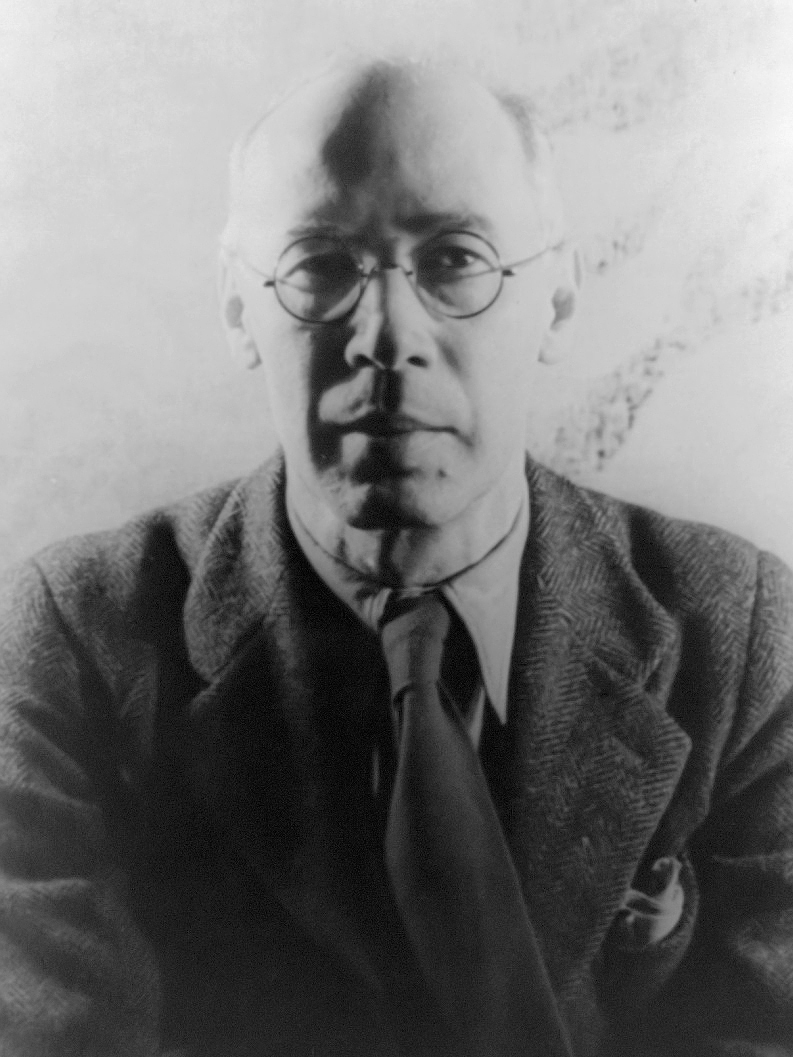
From 1924 to 1926, Brooklyn played host to two of the great unhatched writers of the twentieth century. Brooklyn native Henry Miller was on his second marriage, and had quit his job to focus on being a writer; H. P. Lovecraft was a newcomer to New York City, on his first (and only) adventure in marriage, and desperate to find work. If the two men ever met, over some Brooklyn book stall or at the New York Public Library, no record has survived, despite the many volumes of their letters that have been published.
Nor are the men known to have read each other’s work. On the surface, this looks understandable: Miller’s first book, Tropic of Cancer, was published in Paris in 1934 and, deemed obscene, was banned from sale in the United States; Lovecraft’s only book published and distributed during his lifetime was The Shadow over Innsmouth in 1936, when Miller was still in Paris. On closer inspection, however, here again they nearly encountered each other in the pages of the pulp magazine The Black Cat (1895-1922).
Lovecraft had first noticed The Black Cat around 1904, due to its inclusion of weird stories, and bought it regularly for a period, although he was apparently surprised to learn that it had run until 1918. (Lovecraft 2007, 29; Lovecraft 2011, 372) In 1921, following the urging of his friend James F. Morton, Lovecraft attempted to sell his story “The Tomb” in the magazine, but was answered with a rejection slip. (Lovecraft 2011, 40; cf. Lovecraft 2022, 96) In so doing, Lovecraft missed by a couple of years Henry Miller’s first published work—a series of reviews of stories previously published in The Black Cat, running from May 1919 to October 1919. Miller had published his work under the auspices of “The Black Cat Club,” which, for a subscription to the magazine, solicited short critical reviews, with the offer that the best of them might be published for 1 cent per word. The policy ended in October 1919 when the magazine was sold. (Miller 1996, 10-16)
Yet even if they never encountered each other physically or on a literary level, there are some fine threads that connect the two—particularly the shared love for the works of the Welsh mystic Arthur Machen. The two men’s mutual appreciation of Machen was both immediate and effusive, finding expression in their letters and their fiction—but for different reasons.
Lovecraft discovered Machen in 1923, through the Knopf reprint of The House of Souls, which contained some of Machen’s best weird novellas, including “The Great God Pan” and “The White People,” and in that same year devoured the whole of Machen’s novel The Hill of Dreams in a single sitting. (Lovecraft 2011, 40 & 47) By 1924, Lovecraft had purchased or read practically the entire corpus of Machen’s weird fiction, as well as the three volumes of Machen’s autobiography and Hieroglyphics, and would continue to do so in later years. (Lovecraft 2020, 185)
Lovecraft hailed Machen as a master of the weird tale, and devoted a significant chunk of the work to the Welsh mystic in his seminal essay Supernatural Horror in Literature—but while he lauded Machen’s “exquisitely lyrical and expressive prose style” and “refreshing essays,” Lovecraft’s appreciation for Machen was always primarily—almost exclusively—as an author of weird fiction, especially in regard to Machen’s oblique hints of a dark, hidden mythology expressed in some of his best fiction. (Lovecraft 2000, 61) The peak of Lovecraft’s Machenmania was “The Dunwich Horror” (1928), which is both inspired by and pays homage to “The Great God Pan” and “The White People,” both through subtle references to Machen’s pseudomythology and more directly in one passage:
“Inbreeding?” Armitage muttered half-aloud to himself. “Great god, what simpletons! Shew them Arthur Machen’s Great God Pan and they’ll think it a common Dunwich scandal![”]
Henry Miller did not discover the Hill of Dreams until 1925, but if anything, his response to Machen’s fabulous story of a penniless, struggling writer in a strange city was even greater:
Stolen this day—3/18/25—from my good friend, Emil Schnellock, never to leave my possession until death and dissolution. No more wonderful epic of the artist’s soul have I seen till now. This I write solemnly in the flyleaf of your book, so generously loaned me and so wantonly filched. But this is a gift from the high places. This is an involuntary gift which can never be requited fully. (Miller & Schnellock, 11)
Miller apparently quoted from Machen’s book for five pages in that letter, adding in a postscript that he would buy Schnellock another copy.
But their appreciation was not identical. For Lovecraft, it was the subtle and sublime horror of Machen’s short fiction which most affected him, themes that he would use and expand on in his own stories. For Miller, it was Machen’s capture of ecstasy and sin, the Welshman’s ability to defend the profanity of Rabelais as well as capture the plight of the struggling novice. Yet both men loved Machen for his language, his rich vocabulary and meter, and would carry their influence on in their very different works. Where Lovecraft glossed over some of Machen’s more “picaresque” works—bowdlerized translations of the memoirs of Casanova, the Heptameron of Margaret of Navarre, references to Rabelais and obscenity in Hieroglyphics—in favor of the weird, Miller appears to have been the exact opposite. There is scant mention of Machen’s weird fiction in any of Miller’s letters or writing, yet Miller cites several passages from Machen’s Hieroglyphics in his essay “Obscenity in Literature.” (Miller 1964, 196)
Miller, too, would go on to pay further homage to Machen in his own works, particularly The Hill of Dreams, which would appear in his novels Nexus and Sexus:
“Oh,” I said, “you called me a dreamer a moment ago. Let me read you a passage–it’s short–from The Hill of Dreams. You should read the book some time; it’s a dream of a book.” (Miller 1965a, 215-6)
He threw the book aside. It was The Hill of Dreams. (Miller 1965b, 193)
Both men likewise shared their discovery with others. Lovecraft found fellow-admirers in the likes of Donald Wandrei and August Derleth, who would go on to found Arkham House after Lovecraft’s death, and in her diary Anaïs Nin recollects how Miller would read to her from the book (as first noted by Don Herron in “Analects from the Mainstream #2: Of Machen and Henry Miller: Or, Anais, Meet Arthur”): “Henry was telling me about a book I had not read. It was Arthur Machen’s Hill of Dreams.” (Nin 80)
If Miller and Lovecraft shared a literary ancestor of sorts in Arthur Machen, they also shared a kind of mutual descendent in the form of British horror writer Ramsey Campbell. In the early 1960s, the teenaged Campbell had contacted August Derleth at Arkham House about publishing a series of pastiches of Lovecraft; Derleth countered by asking Campbell to rewrite them using his own setting. During the writing and editing process they continued the correspondence, and in 1962 Campbell prevailed upon Derleth to send him copies of Miller’s novels Tropic of Cancer and Tropic of Capricorn, which were still banned for sale in Britain as obscene, and Derleth complied. (Campbell & Derleth 88-90) The two discussed Miller on occasion in their letters; but as Derleth was editing stories for Campbell’s The Inhabitant of the Lake and Less Welcome Tenants. Campbell would later write:
This led me to assume he wouldn’t mind if I introduced a different kind of shock into my Lovecraft imitations, but he took the shit out of a line of dialogue. I still think it’s what the character would have said, but I see that that may not be relevant to such a stylised form as Lovecraft pastiche. (Campbell 2002, 233)
Campbell would reply that “I’m afraid that the Henry Miller-Burroughs influence has been telling on me.” (Campbell & Derleth, 125), to which Derleth replied, “[…] I think you may be mixing your liking for Miller (whose TROPIC OF CAPRICORN I sent off to you the other day) and Burroughs with your penchant for the weird, an insoluble combination, unfortunately.” (127-128) and in greater detail:
“Shit” etc. may be in place in TROPIC OF CANCER, but it is out of place in a weird tale. The reader is not concentrating upon anything but the horror of your tale, and the intrusion of such language is unwarranted and distracting. It is certainly not a matter of prurience on my part, but only of the fitness of things. Whenever you use these offensive words (offensive in your context only, that is) any other word will do as well; they are not vital to your story, as they are vital to Miller’s, by contrast. In a Miller story “cunt” for women is inevitable, and “woman” would be as out of place in his context as “shit” or “shitty” etc. are in yours. (129)
Despite Derleth’s small editorial adjustments with regard to vulgarity, and his pronouncement that mixing Miller and Lovecraft would produce an “insoluble combination,” Campbell’s first Lovecraftian pastiches like “The Moon-Lens,” and later “Cold Print” and “The Faces at Pine Dunes” contained a heretofore unseen flair, a touch of vulgarity and sexual taboo which had been heretofore missing in many Mythos tales.
The shadows of Miller and Lovecraft fall across the literary landscape of the twentieth century, and it is impossible to say how many more writers were influenced by both. At least one wondered what it would look like had the two men not just met, but collaborated together on a work of fiction. The result is Peter Cannon’s “Asceticism and Lust: The Greatest Lovecraft Revision.” Taking the form of a trail of fragmentary letters and obscure references familiar to many Lovecraft scholars, the parody supposedly traces the generation of the lost shared work “Tropic of Cthulhu,” done with all the skill of a good hoax and the love of someone well-versed in not just the letters and fiction of the two great authors, but of their respective mythology as well. Here is juxtaposed Lovecraft’s prudery against Miller’s vulgarity, the Bohemian Brooklynite paired against the Cosmic Yankee. As a “what if?” it is a fitting tribute to both of them, who though they never quite met in life, yet continue to cross paths today.
Bibliography
Campbell, Ramsey (2003). Ramsey Campbell, Probably. Harrowgate, UK: PS Publishing.
Campbell, Ramsey & August Derleth (2014) Letters to Arkham: The Letters of Ramsey Campbell and August Derleth, 1961-1971. Hornsea, UK: PS Publishing.
Cannon, Peter H. (1988) “Asceticism and Lust: The Greatest Lovecraft Revision” in Robert M. Price (Ed.) Crypt of Cthulhu 61.
Herron, Don (1989) “Analects from the Mainstream #2: Of Machen and Henry Miller: Or, Anais, Meet Arthur “ in Robert M. Price (Ed.) Crypt of Cthulhu 65.
Lovecraft, H. P. (2000) The Annotated Supernatural Horror in Literature. New York, NY: Hippocampus Press.
Lovecraft, H. P. (2007) O Fortunate Floridian: H. P. Lovecraft’s Letters to R. H. Barlow. Tampa, FL: University of Tampa Press.
Lovecraft, H. P. (2011) Letters to James F. Morton. New York, NY: Hippocampus Press.
Lovecraft, H. P. (2020) Letters to Family and Family Friends, Vol. 1: 1911-1925. New York, NY: Hippocampus Press.
Lovecraft, H. P. (2022) Miscellaneous Letters. New York, NY: Hippocampus Press.
Miller, Henry (1964). “Obscenity in Literature” in Henry Miller on Writing. New York, NY: New Directions Books.
Miller, Henry (1965a). Nexus. New York, NY: Grove Press.
Miller, Henry (1965b). Sexus. New York, NY: Grove Press.
Miller, Henry (1996). Henry Miller: Letters to The Black Cat. Ann Arbor, MI: Roger Jackson.
Miller, Henry and Schnellock, Emil (1989). Letters to Emil. Edited by George Wickes. New York, NY: New Directions Books.
Nin, Anaïs (1966). The Diary of Anaïs Nin Volume 1 (1931-1934). New York, NY: Harcourt, Inc.
Vidal, Gore (1965). “The Sexus of Henry Miller” in Reflections Upon a Sinking Ship. New York, NY: Little, Brown and Co.
Bobby Derie is the author of Weird Talers: Essays on Robert E. Howard and Others and Sex and the Cthulhu Mythos.
Deep Cuts in a Lovecraftian Vein uses Amazon Associate links. As an Amazon Associate I earn from qualifying purchases.

