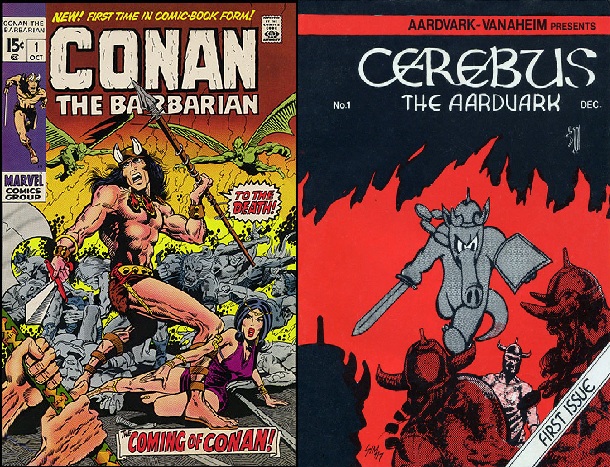
When accounting the cultural legacy of Robert E. Howard’s Conan the Cimmerian—the comics, films, animated series, artwork, videogames, and a rich literary legacy of authors either using Conan and related characters or inspired by the Hyborian Age setting—one of the odder entries to consider is the considerable impact that Howard’s Conan has had on anthropomorphic animal comics. For almost five decades, Howard’s Conan has been a specific reference point for certain anthropomorphic animal comics and related works. While this can be seen as part of the larger cultural impact of Conan on all media, there are also good historical reasons why this Conan found this particular expression in this specific creative mode—and that historical context offers insight into the wider impact of Howard’s creation in popular culture.
Background
Throughout history, art and storytelling have attributed human characteristics to animals. In the 19th century, stories and illustrations with anthropomorphic (“man-shaped”) animal characters aimed at children emerged into prominence, such as Uncle Remus (1892) by Joel Chandler Harris and Father Goose, His Book (1899) by L. Frank Baum. This led to a fad for such characters in children’s literature, such as the White Rabbit in Alice’s Adventures in Wonderland (1865) by Lewis Carroll, the animal characters in The Jungle Book (1894) by Rudyard Kipling, The Wind in the Willows (1908) by Kenneth Grahame, as well as When We Were Very Young (1924) and Winnie-the-Pooh (1926) by A. A. Milne (Yesbick 35-37).
Sequential comic art gained traction during the late 19th century, and from this emerged the familiar form of comic strips in newspapers and magazines, such as Krazy Kat (1913-1944) by George Harriman and Tiger Tim’s Weekly (1919-1940) by Herbert Foxwell and others (Yezbick 37). From the strips, the characters broke into both American-style comic books and animation (Cohen 9, Labarre 37-38). Anthropomorphic cartoon characters during the early period included Felix the Cat in Feline Follies (1919) and Mickey Mouse in Steamboat Willie (1928). The adoption of the Hays Code by the Motion Picture Association in 1930 influenced the depiction of cartoon animal characters in both appearance and action: nudity, swearing, sadism, blasphemy, drug use, racism, and sex were all downplayed. The formerly innocent animal nudity for some characters was required to be hidden behind clothes; for example, a cow character might be required to hide her udder behind a skirt (Cohen 28).
While anthropomorphic animals were never the exclusive provenance of children (cf. George Orwell’s Animal Farm (1945)), these formed the foundation of the “funny animal” genre of comics that were largely aimed at a younger comic-reading audience, such as Funny Animals (1942-1954) and various comics based on Disney and Warner Bros. characters (Labarre 37-38).
Comic book publishing in the US as a whole shifted with the creation of the Comics Code Authority in 1954, and in the United Kingdom with the Children and Young Persons (Harmful Publications) Act 1955. Neither contained language that specifically targeted funny animal comics, but they did place limits on the subject matter and depiction of all comics, especially downplaying violence, gore, sex, drugs, or questioning of the political and social status quo. Effectively, the CCA and 1955 law accentuated the perception that comics were primarily for kids, and funny animal comics was a genre aimed primarily at that younger audience.
Not every anthropomorphic animal comic was meant for kids, however. In the 1930s and 40s especially, existing comic strip and comic book characters were ripe for parody and satire, since their emblematic status as innocent characters for children could be exploited by having them involved in adult activities. This was especially the case for the Tijuana bibles (8-pages, bluesies), short and blatantly pornographic comics that often utilized existing comic characters—including animals, anthropomorphic or not—in their brief, crude narratives (Estren 25-26). At the same time, comic strips like Walt Kelly’s Pogo (1948-1975) showed how relatively stereotypical funny animal comics could be used for purposes of political satire, while writer/artists like Carl Barks work for Walt Disney’s Donald Duck and Scrooge McDuck comics highlighted how storytelling and worldbuilding in funny animal comics held just as much narrative possibility as for human-centric series (Yezbick 40-41).
What emerged is that there was an audience, albeit possibly a select one, for more mature funny animal comics among teens and adults—and perhaps that for various reasons, including a desire for satire, parody, and more mature storytelling and art, there were writers and artists that wanted to take those funny animals they had grown up with and carry them into adulthood.
In the late 1960s in the United States, a rebellion took place against the status quo of the Comics Code Authority. Small, independent creators were publishing and selling comix without CCA approval and outside of the normal distribution markets. These underground comix were not bound by previous mores, and often focused on depicting everything the CCA had suppressed—sex, violence, political and social satire and commentary, gore, drugs, blasphemy, the lot—as well as to highlight artists’ individual style, as opposed to the house style pushed by major comic publishers like Disney and Archie that focused on comics-as-products. Some of the underground comix published were derived from the funny animal comics—notably, Air Pirates #1 (1971), a pornographic parody of Walt Disney’s anthropomorphic characters that resulted in a Disney sueing for copyright infringement (Estren 260). A similar shift took place in animation due to the retirement of the Hays Code in favor of the MPAA film rating system, which went into effect in 1968. Fritz the Cat (1972) from director Ralph Bakshi was an anthropomorphic animal animated film based on R. Crumb’s underground comix of the same name, which ran 1965-1972. It was the first animated film to garner an X rating, and helped redefine what an animated film could be (Cohen 81, 88).
In 1969, Roy Thomas was an associate editor at Marvel Comics. A deal was struck between Marvel and Robert E. Howard’s estate for the adaptation of Howard’s 1930s pulp barbarian character Conan to comics, and in 1970 Conan the Barbarian was launched, written by Roy Thomas and illustrated by Barry Windsor-Smith (Thomas 2-6). They cooked up a distinctive look for the translated Cimmerian:
Even though Conan wasn’t a superhero, Stan [Lee], Barry [Windsor-Smith], and I all thought that he needed to have some kind of recognizable “outfit.” Barry designed a colorful medallion, and the horned helmet was a pretty predictable element. However, in the Starr the Slayer story [Chambers of Darkness #4, Apr 1970], Barry had put the Viking-style horns on the front of the helmet instead of on the sides, so that on occasion Conan looked not unlike a charging bull. It was, we all agreed, a good look for him. Only the coloring of the helmet and loincloth were changed, to protect the innocent. (Thomas 12)
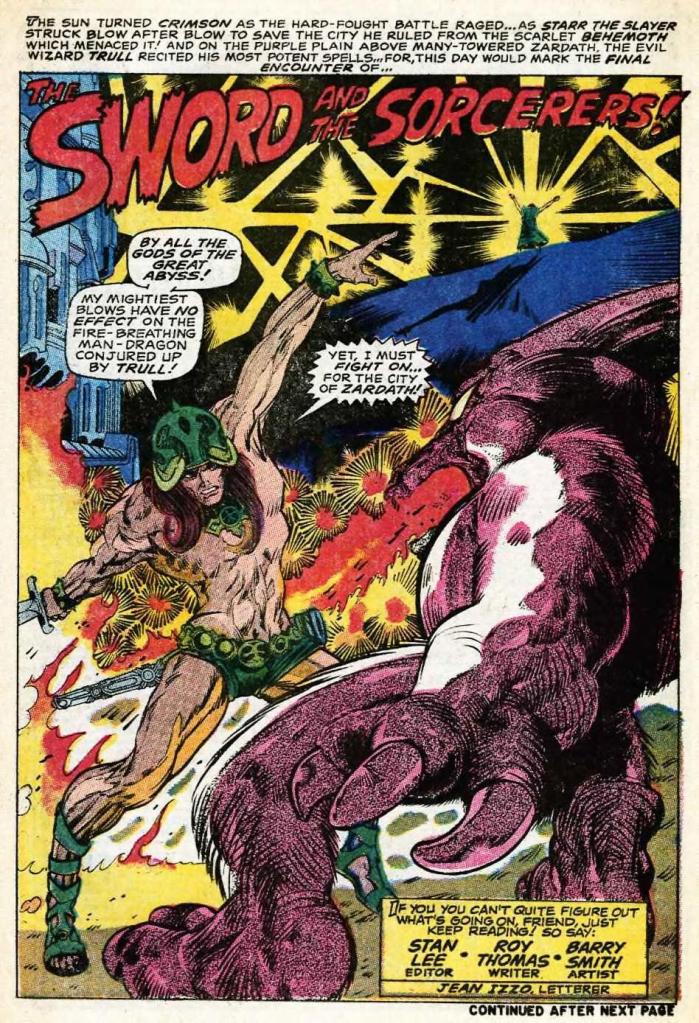
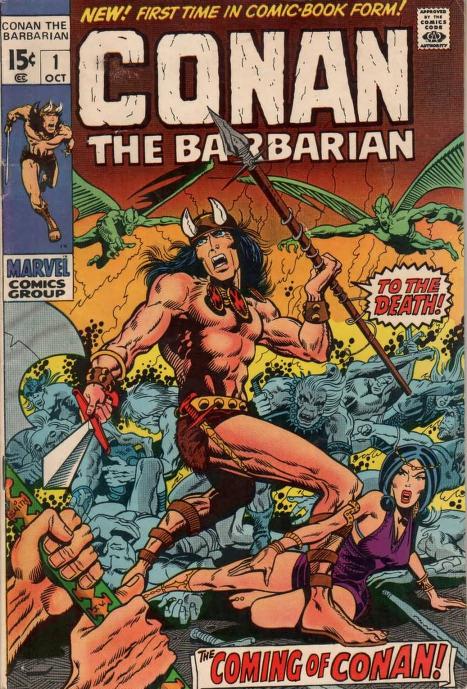
This iconic outfit would be strongly referenced by authors aping the comic-book Conan, although the helmet was lost in issue #6; the medallions last appeared on the neck of a girl named Ivga in issue #23. Conan’s most iconic costume for most of the Marvel run would be a kind of furry loincloth and boots. Still, the early years of the comic formed many of the key visual and stylistic attributes of Conan, the ones that anthropomorphic characters based on Conan would draw on.
While Conan the Barbarian was a regular comic magazine and published under the censorship of the CCA (e.g. Thomas 139-140), Marvel also launched magazine versions, the most successful of which was Savage Sword of Conan in 1974. Savage Sword circumvented CCA censorship and could involve more gore and occasional nudity, and the title would lend itself also to homage, imitation, and satire.
Red Sonja of Hyrkania made her debut in “The Shadow of the Vulture” and “The Song of Red Sonja” in Conan the Barbarian #23 (Nov 1972) and #24 (Dec 1972), co-created by Roy Thomas and Barry Windsor-Smith. The character was inspired by the character of Red Sonya of Rogatino in Robert E. Howard’s “The Shadow of the Vulture,” but Thomas saw other possibilities for the character as a foil to Conan (Thomas 131-133, 137). The character would continue to develop, visually and narratively, in Conan the Barbarian, Savage Sword of Conan, Kull and the Barbarians and eventually her own starring role in Marvel Feature (1975) and eventually her first ongoing series, Red Sonja (1977).
Conan the Barbarian and Red Sonja were satirized and parodied relatively swiftly. Underground comix creator Jack “Jaxon” Jackson published “Testicles the Tautologist” in Skull Comix #3 (Nov 1971), Barry Windsor-Smith provided the art for the gag “Norman the Barbarian” in National Lampoon #26 (May 1972), Bud Plant published Tom Bird’s one-shot Barbarian Killer Funnies #1 in 1974, and the sexually explicit “Gonad the Barbarian” appeared in the San Francisco Ball underground newspaper in the 70s. In 1977, Randy Crawford put out a Tijuana-bible-style comic Red Sonja and Conan: Hot and Dry, riffing directly off the art and characters of the Marvel comic. While the latter two examples are blatantly pornographic, they speak to both the tremendous success of Conan the Barbarian as a comic book, and how the independent comic scene was able to absorb and reflect these influences.
Comic fandom had long shown appreciation for funny animal comics, but in the mid-70s emerged a new strain of fandom more focused on anthropomorphic animal comics and their possibilities. Partially, this was led by animated cartoons, including features such as Disney’s Robin Hood (1973), which combined action, comedy, romance, and drama:
FURtherance; Have you ever asked yourself, “why funny animals?”
Groat: Yeah, yeah, I wondered myself. I’ve always had a liking for them. Even as a kid, it was like, Quickdraw McGraw and, ah, Wally Gator – I guess they were so stupid but I’d enjoy them. There’s something inside me, I really enjoy them. And when Disney came out with Robin Hood in ‘73 THAT got me hooked forever. I know that’s a major force behind a lot of funny animal artists today. (Rooney & Groat 1991, 7)
Comic books such as Howard the Duck (1976), Quack! (1976), and Cerebus (1977), as well as many underground and independent comix. In 1976, Reed Waller and Ken Fletcher founded the Vootie amateur press association, dedicated to anthropomorphic animal art and comics, which marked a key development point of “furry” fandom (Patten, “Retrospective”). Several of these works, notably an early issue of Howard the Duck and Cerebus, drew directly on Marvel’s Conan the Barbarian comics.
What emerges out of this milieu is that in the 1970s, at the same time that funny animal comics and animation were getting more serious, creators in that underground scene were also drawing inspiration from Conan the Barbarian and its related characters for satire and parody, and a dedicated fandom emerged that was receptive to that material. The coming together of these threads may seem obvious in hindsight—why wouldn’t you expect anthropomorphic animal comics based on, and satirizing or parodying, Marvel’s Conan the Barbarian comics? However, this is not something that would have necessarily emerged at any other time or circumstance. It took the successful reception of the Marvel series at just the time when comic creators were diversifying away from censorship and repurposing funny animal comics, and the development of a fanbase for such works, for that to happen. As a consequence, the featuring of Robert E. Howard’s Conan in these materials had a lasting and substantial impact on anthropomorphic animals in comics.
Barbarian Killer Funnies (1974)
One of the immediate consequences of the publishing of Conan the Barbarian was imitators in the underground comix scene, including Barbarian Comics (1972), Barbarian Women Comics (1975), and the one-shot Barbarian Killer Funnies (1974) written and drawn by Tom King and published by Bud Plant. Barbarian Killer Funnies features the barbarian Crnch of C’here,ya in “The Tower of the Warthog”—a straight-up parody of Robert E. Howard’s “The Tower of the Elephant,” with a little female nudity and a lot of puns thrown in—only with a winged, talking (wise-cracking), magical warthog in place of the somber Yog-Kosha.
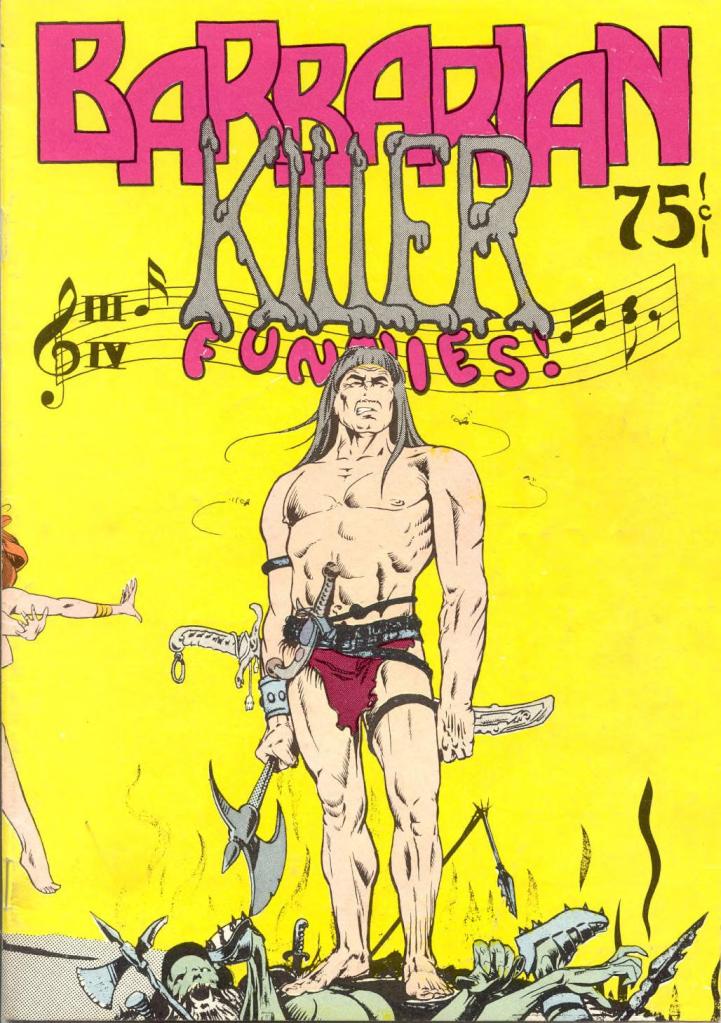
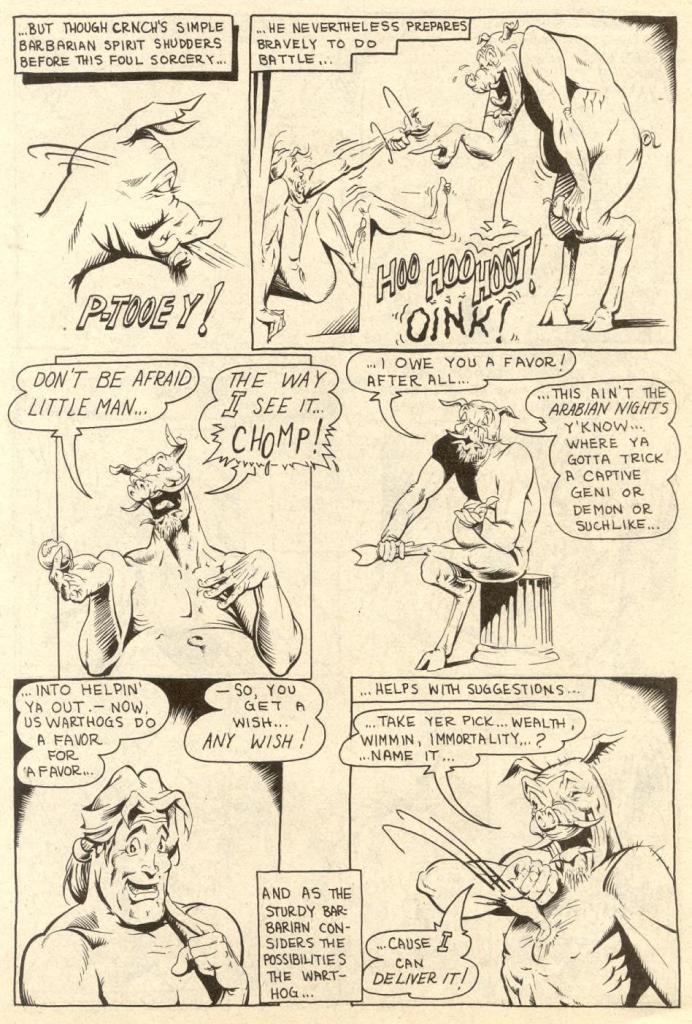
In this brief survey, the works discussed are those which are primarily focused around anthropomorphic animal characters, usually as the protagonist of the story. However, the Warthog in Barbarian Killer Funnies is a good reminder that to a degree most of the Conan comics and their spin-offs like Red Sonja and their parodies have some character that can be classed as an anthropomorphic animal. They may be alien like the “Elephant” of the tower; another race like the beast-men of Conan the Barbarian #2 (Dec 1970), or magical in some way, like the were-tiger Zephra in Conan the Barbarian #5 (May 1971). There is even a talking cat, Saremes, in Kull the Conqueror #7 (Mar 1973), which adapts Robert E. Howard’s story “Delcardes’ Cat.” However, these are all generally “serious” in the sense that their designs are not cartoonish or reminiscent of stereotypical funny animal comics; the talking cat is a ruse of the wizard Thulsa Doom, the Serpent Men and Beast-Men are monsters. Anthropomorphic animals in Conan and related books are not derived from Mickey Mouse and Donald Duck, and have little in common with them.
Yet the line between these often one-off characters and those of anthropomorphic animal comics is often a fine one, if there’s any distinction at all. Warthog in Barbarian Killer Funnies is an exaggeration of the Yog-Kosha concept in the direction of comedy, but in character design there is not much difference between them—both blend human and animal characteristics, it is only the characterization which makes the true distinction between them. The difference between Conan the Barbarian and the anthropomorphic animal comics it inspired is not just the presence of an anthropomorphic animal, but the focus on that character or characters as a major and ongoing element of the narrative.
Howard the Duck (1976)
Marvel and DC had never stopped including anthropomorphic animal characters in their comics, although their appearance in superhero and non-funny animal genre comics tended to diminish during the 1960s and 70s. Comic writer Steve Gerber began his career at Marvel in the early 70s, writing for the horror-themed character Man-Thing; Howard the Duck was a Man-Thing supporting character who debuted in a sword-and-sorcery laden storyline of Adventure into Fear #19 (1973) with artist Val Mayerik, inker Sal Trapani, letterer Art Simek, and colorist Stan Goldberg. The wise-cracking anthropomorphic duck had the look of a Disney-style funny animal character but the sensibilities of an everyman. Gerber convinced Marvel to launch Howard under his own title.
Howard the Duck #1 (Jan 1976) launched with the story “Howard the Barbarian,” with pencils and color provided by Frank Brunner, inks by Steve Leialoha, and lettering by John Costanza. Brunner had worked on a previous Dr. Strange series at Marvel, adapting some of Robert E. Howard’s creations, and would go on to do some work for Savage Sword of Conan. The story is a half-serious parody of Marvel’s own brand of horror, mysticism, and sword-and-sorcery. Poor Howard is soon decked out in a version of the horned-helmet and fur-loincloth outfit typical of early Conan the Barbarian by the evil wizard Pro-Rata and a coquettish damsel in a chainmail bikini named Beverly Switzler. The parody is half-serious because while the situation is absurd, the action and drama are played straight, and the visuals are as serious as any Dr. Strange or Conan comic. Gerber’s strength is in accepting the absurdities of the Marvel Comics and working with them (Borenstein 202-203).
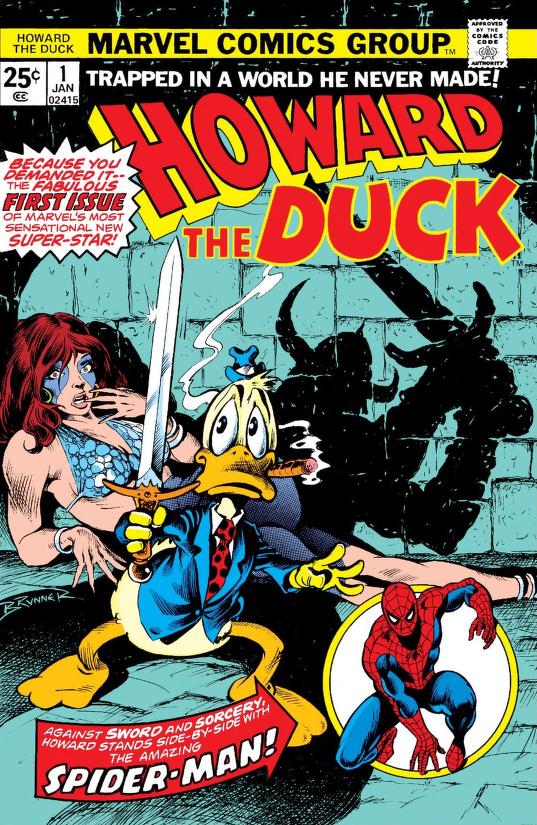
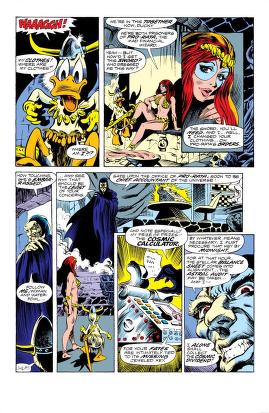
“Howard the Barbarian” was riffing off of images that Marvel itself had created and popularized in their fantasy comics, but the way Gerber wrote the character reflected a more mature target audience than Donald Duck—an audience that would recognize and respond to the combination of silliness and seriousness. Although Howard the Duck hung up the horned helmet and sword after this issue, there were many subsequent characters that would riff on the same idea.
Cerebus (1977)
I felt Mike [Golden] had a pretty much missed the boat on what made Howard the Duck successful […] With Howard, it was the idea of a funny animal in today’s world of humans. So, the obvious thing for me would be either a science fiction or a barbarian funny animal … I had a bizarre idea [for] A Barry Smith-style funny animal. (Sim, quoted in Hoffman 21)
In 1977, writer/artist Dave Sim and his girlfriend Deni Loubert founded Aardvark-Vanaheim, Inc. as a small independent comics publisher. Sim at the time was a semi-professional comic artist, selling artwork including Conan art based on Barry Windsor-Smith’s work in Marvel’s Conan the Barbarian and trying to sell comic series with limited success (Hoffman 11, 18). Cerebus the Aardvark was initially conceived as a mascot for the fledgling company, and Sim drew a page of Cerebus atop a horse, which was submitted to Quack! (1976), a funny animal comic anthology which served as a companion to the better-known Star*Reach (1974). These comics combined the more mature sensibilities of underground comics, free from the editorial control of Marvel, DC, Archie Comics, etc., and the censorship of the CCA, but also had greater artistic ambitions than just transgression. Quack! turned Cerebus down; Sim took the idea and spun it out into the first issue of a series that would run 300 issues, plus several spinoffs, and numerous collections (Sim 1).
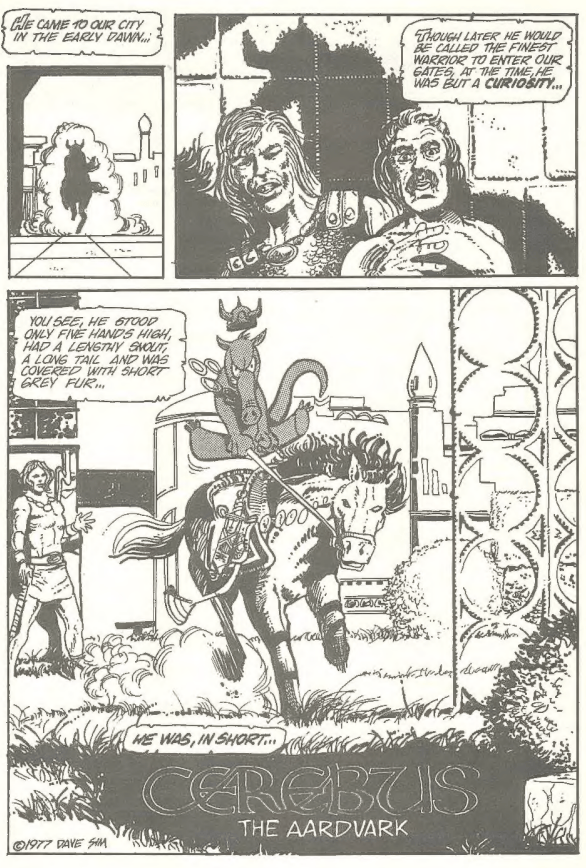
In Cerebus #1, a very cartoonish aardvark arrives in a sword & sorcery setting which was very palpably and consciously modeled on the first couple of years of Conan the Barbarian as written by Roy Thomas and illustrated by Barry Windsor-Smith. Sim noted that at the time, Howard the Duck and Red Sonja were the hot books (Hoffman & Grace 75), and Sim drew inspiration from Gerber’s run on Howard especially:
Optimistically, I thought I could get away with stealing Steve Gerber’s Howard the Duck “hook”: the funny animal trapped in the realistic world and transposing it to a sword-and-sorcery setting. (Ibid. 170)
Later, Sim noted:
I shot my wad mixing Howard the Duck and Conan together—which the market considered “clever” rather than “hot.” (ibid. 173)
The barbarian Cerebus is decked out with a very familiar horned helmet and three medallions, but like Donald Duck and the earliest version of Howard the Duck, does not wear pants. The first story, originally untitled and retroactively labeled “The Flame Jewel” echoes “The Tower of the Elephant” in Conan the Barbarian #4 (Apr 1971) and “Red Nails” from Savage Tales #2 (Oct 1973) and #3 (Feb 1934), the latter of which Sim acknowledges as an influence (Hoffman & Grace 170). Sim strikes a tone between satire and homage, alternately drawing some influence from Thomas & Windsor-Smith’s storytelling and art, but was not regurgitating their work. The references are clear, but the story is a riff off of existing tropes, not a simple retelling. There are gags, but Cerebus is also not just a joke character:
I admit to an intentional gross-out on page two, that you would not be likely to see again in the pages of Cerebus. The severed hand bit served to establish that tho this might be a cute and furry aardvark, this was also a mean and lethal aardvark. (Sim 1)
Cerebus #2 (Mar 1978), continued both the conscious referencing of Conan the Barbarian and Sim’s unique take on the character:
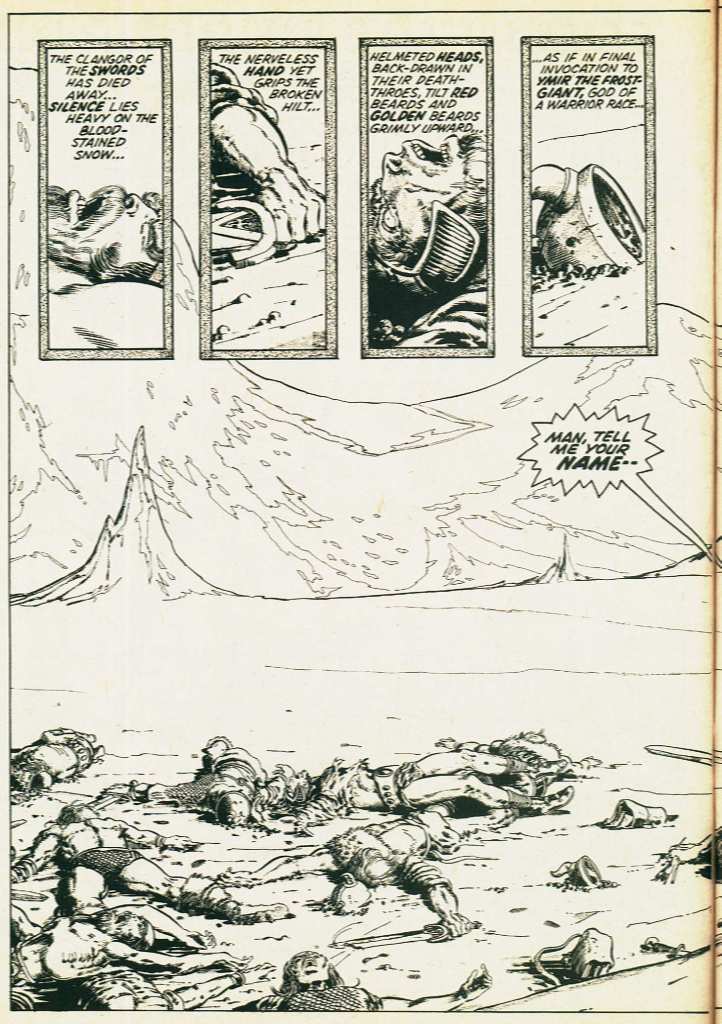
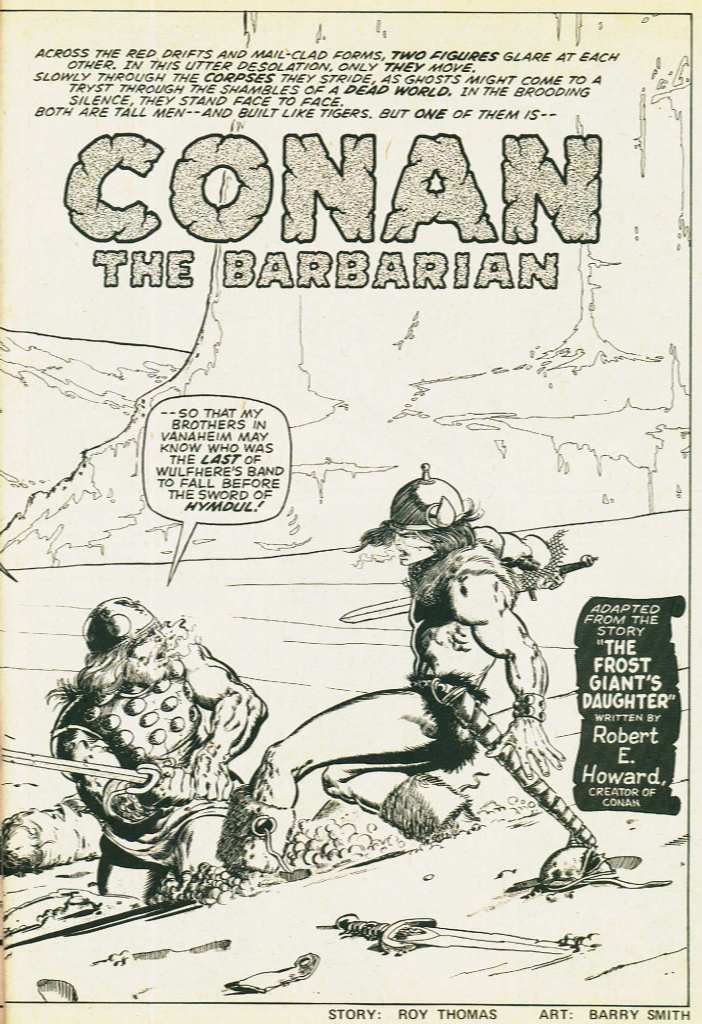
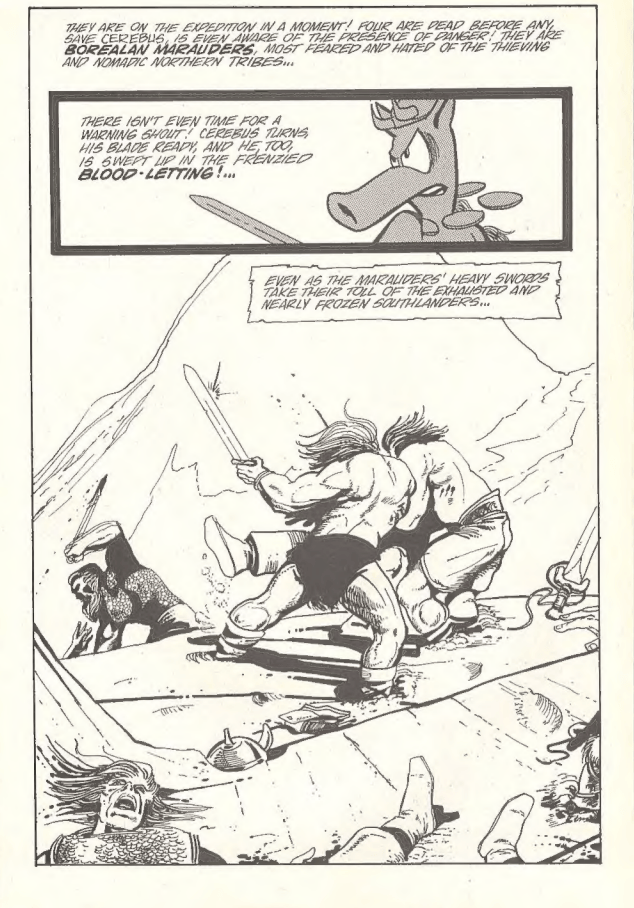
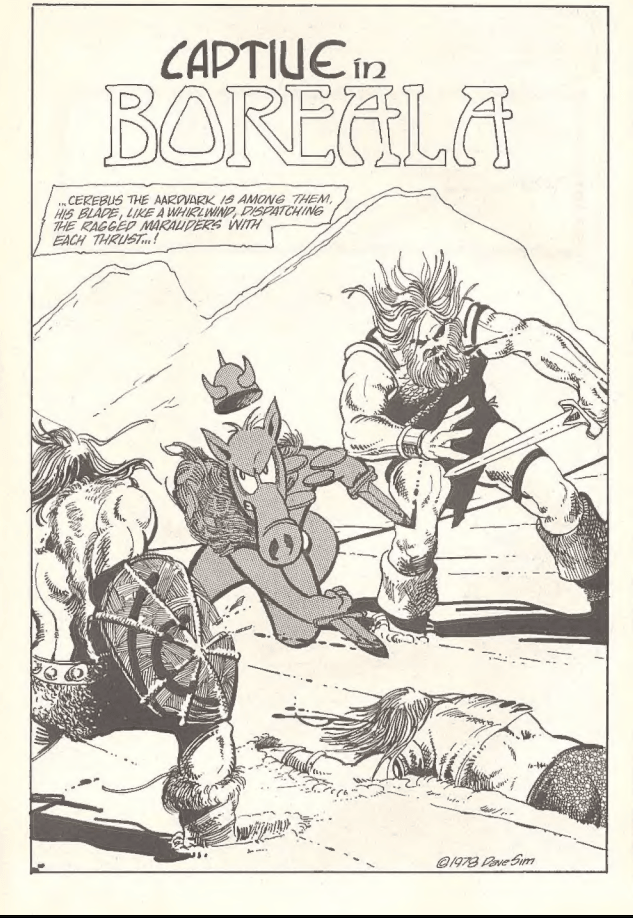
I like the way Barry Smith drew the snow in “Frost Giant’s Daughter” and (as I haven’t mentioned yet) the name of the game at this time was ‘look as much like Barry Smith as possible.’ Short of developing a mid-Atlantic accent (half New York, half London) I was doing my level best, and ripping off the two-page splash to “Frost Giant’s” looked like a good bet to get the second issue off to a roaring start. (Sim 24)
Roy Thomas and Barry Windsor-Smith had first adapted Robert E. Howard’s “The Frost Giant’s Daughter” in the black-and-white magazine Savage Tales #1 (May 1971); since this was a magazine, they could get away with a bit of gore and nudity—and did. When the story was reprinted in Conan the Barbarian #16 (Jul 1972), it was in color, but it was also censored. Sim’s story “Captive in Boreala” draws artistic inspiration from the tale, but is an original sword & sorcery story, borrowing light from the Conan comics in its references to Tarim/Terim, a fantasy religion which would be expanded upon enormously by Sim in later issues, veering far from its origins in Conan the Barbarian and Howard’s work. Most of the comedy came from the juxtaposition of a funny animal character (albeit a grim and grumpy one) in an otherwise serious sword & sorcery setting, like Howard the Duck lost in a world of humans.
Cerebus #3 (Apr/May 1978) introduced the character of Red Sophia. As Sim tells it:
I had decided when I finished issue #2 that I would do a Red Sonja parody in issue #3. This was largely because of Frank Thorne. […] Of course I ran into problems at the time. I was trying to do Frank Thorne’s Sonja, inked like Barry Smith does, only more hair and aw nuts it doesn’t look like anything. (Sim 47)
In a later interview, Sim expanded on this:
Red Sonja was the hot comic book at the time, beautifully written, penciled, inked, and lettered by Frank Thorne about a female Conan-type who wouldn’t surrender sexually to any man unless he defeated her in battle. When I did my parody, Red Sophia, I extrapolated that this poor, magnificent warrior woman was probably getting unbelievably horny waiting for someone to come along who could beat her. It does seem more resonant today now that the “ballsier” feminists, much to their consternation, seem to be having difficulty finding men who are interested in—or capable of—going mano a mano with them. At the time, it just seemed a funnier, racier version of the real thing. (Hoffmann & Grace 205-206)
Roy Thomas & Barry Windsor-Smith instantiated Red Sonja in Conan the Barbarian #23 (Nov 1972), but subsequent artists and writers made their own mark on the character. In Savage Sword of Conan #1 (Aug 1974), “The Curse of the Undead-Man” was adapted by Roy Thomas from Robert E. Howard’s “The Mistress of Death” with art by John Buscema, inked by Pablo Marcos, and featured Sonja in her soon-to-be-iconic costume of a chainmail bikini. Roy Thomas later credited the outfit to Spanish artist Esteban Maroto (Sunrich 14). In Kull in the Barbarians #3 (Sep 1975), Red Sonja got an origin story in “The Day of the Sword,” with a plot by Roy Thomas, script by Doug Moench, and art by Howard Chaykin; here it is established that she cannot love a man unless he defeats her in battle, a plot point for several of Red Sonja’s future encounters with Conan.
Before Red Sonja got her own title, she headlined the first issues of Marvel Feature (1975); a new artist was brought in for several of these issues, Frank Thorne. When the character got her own ongoing series Red Sonja in January 1977, it was Thorne who drew her—and would continue to do so through issue #11, when he left the series. Thorne’s run on the character made her flirtatious, vivacious, violent, and with a distinctive luscious style; after he left Marvel, Thorne created another warrior woman character, Ghita of Alizarr, in a series of pornographic sword & sorcery comics. Thorne was known for his strong involvement with the Red Sonja fanbase, dressing up as a wizard at conventions and judging cosplay contests, and even basing a wizard character on himself in “The Wizard and Red Sonja” in Savage Sword of Conan #29 (May 1978).
Thorne was a great encouragement to Sim early in his career, in Sim’s transition from fan to professional (Sim 47) and the “Song of Red Sophia” in Cerebus #3 is an affectionate parody of Thorne’s version of Red Sonja from c. 1978—featuring a wizard character Henrot (anagram for Thorne) that visually echoes Thorne in cosplay, and Red Sophia, a buxom and salacious swordswoman dressed in the characteristic chainmail bikini get-up as Thorne drew it. Red Sophia has a similar vow, but also a somewhat ditzy and libidinous personality that are played for laughs. It was a first step for Sim in taking established characters and personalities and making new ones based on them, finding his own voice as a writer and artist (Hoffman 23).
Cerebus #3 (Apr 1978) also included a map of the “Aardvarkian Age” by Sim and Michael Loubert inspired by the map of the Hyborian Age featured in the Marvel Conan comics, which was in turn based on original maps drawn by Robert E. Howard for his own use in writing his stories (Hoffman 22). The map would feature in issues 3 through 10, and were accompanied by some prose essays by Michael Loubert, but never emerged as The Aardvarkian Age book that Sim mentions in Cerebus #7 (Hoffman 68).
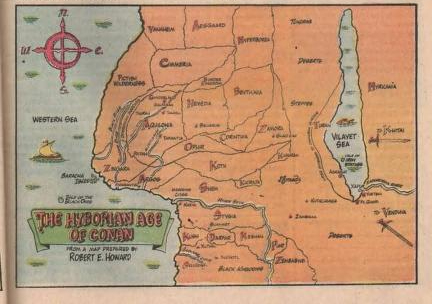
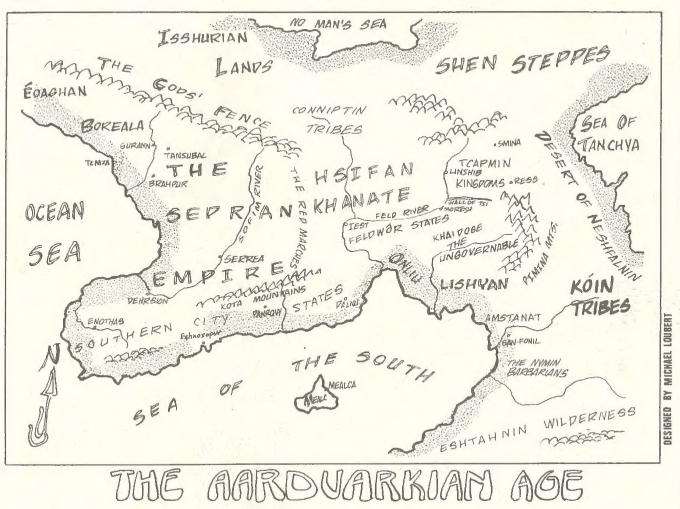
Cerebus #4 (Jun/Jul 1978) introduced Elrod the Albino. This character was based on the character Elric of Melniboné, created by Michael Moorcock in “The Dreaming City” in Science Fantasy #4 (May 1962), and would grow through a series of stories, novels, and comics into a major and influential part of sword & sorcery. Elric is in many ways a direct contrast to Howard’s Conan the Cimmerian: an albino sorcerer of an ancient and decadent empire who uses drugs and a soul-stealing black blade named Stormbringer to sustain his health and strength. The two characters met in an authorized two-issue crossover in Conan the Barbarian #14 (Dec 1971) and #15 (Jan 1972), plotted by Michael Moorcock and James Cawthorn, written by Roy Thomas, penciled by Barry Windsor-Smith, inked by Smith and John Buscema, and lettered by Sam Rosen. Smith’s iconic take on the character gives Elric a high conical hat and cloak, which Elrod also possesses. However, Sim decided to make a few changes to the character’s personalities and habits; Elrod is the buffoon to Cerebus’ straight man, and talks in an exaggerated Southern drawl based on Looney Tunes character Foghorn Leghorn:
When Deni asked me what the problem was, I sort of gasped, “Elric. Picture Elric saying ‘Mind yo’ mannuhs, son. I’ve got a tall pointy hat. […] Wendy Pini’s jaw hit the floor when I told her that I had never read an Elric story. […] That was last summer and I still haven’t read an Elric story – except for the Roy THomas/Barry Smith Conan issues he appeared in. (Sim 70)
Elrod’s sword is called Seersucker, which aside from being a pun, may point to one of the immediate inspirations to Cerebus. “The Rabbit Wonder Meets the Barbarian Bunny” written by Steve Leialoha, with pencils by Steve Leialoha and Alex Niño, inks by Niño, and lettered by Leialoha was published in Quack! #3 (Apr 1977); the story parodies Elric with an anthropomorphic rabbit warrior-warlock named Elrik wielding the sword Soulsucker. Sim’s funny animal comic “The Beavers” was published in the same issue. Issue #4 is also where Cerebus loses his horned helmet, much as Conan did, although the medallion would remain an iconic part of his outfit for many issues.
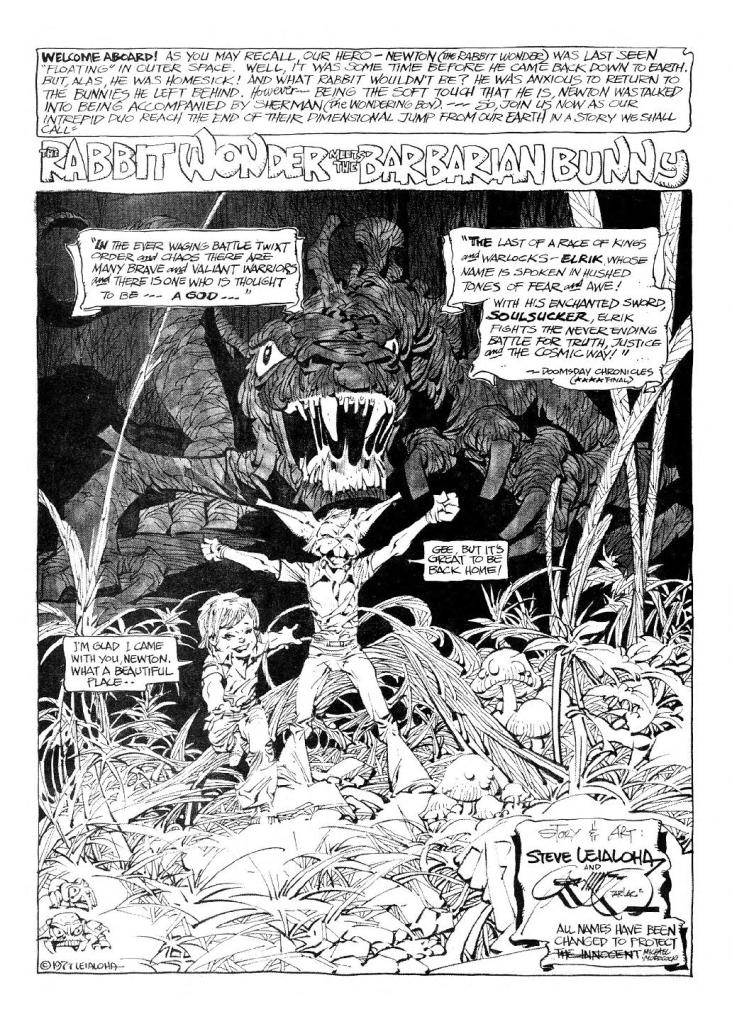
Cerebus #5 is the last issue to involve a major borrowing from the published Robert E. Howard comics. Cerebus is traveling across the marches when he runs into the Pigts, a primitive people with names like Partha Qua Non, Cromag Macg Milc, and Bran Mac Mufin (or Bran Mak Mufin) who live beneath the earth. The joke is obvious to anyone who had read Robert E. Howard’s “Worms of the Earth,” where the ancient Picts led by Bran Mak Morn (alias Partha Mac Otha)—or anyone who had read Marvel Comics’ adaptation of “Worms of the Earth” in Savage Sword of Conan #16 (Oct 1976), written by Roy Thomas, pencilled by Barry Windsor-Smith, and inked by Tim Conrad.
At this point, Sim had effectively begun to chart out his own independent fantasy setting. Red Sophia, Elrod the Albino, and Bran Mac Mufin would become minor but recurring characters in Cerebus for years to come, and quiet a bit of the early half-borrowed/half-joking mythology like the Pigts and Tarim/Terim would be revisited and expanded. Yet from this point on, even as Sim continued to follow Barry Windsor-Smith artistically for a few issues, he would also incorporate other influences, and develop his plots and characterizations away from the sort of episodic adventures that marked the Roy Thomas/Barry Windsor-Smith run on Conan the Barbarian. While Cerebus would follow a broadly similar path to Conan—aiming for supreme political power of a civilized nation—he would accomplish this not with a conquering army, but by the very unconventional method of standing for a democratic election. However, the roots of Cerebus in the Marvel Conan comics ran deep; when the first paperback collections of backissues were published in the 1980s, the title was Swords of Cerebus.
The release of the 1982 film Conan the Barbarian, starring Arnold Schwarzenegger in the title role, also inspired a brief parody in the pages of Cerebus. Arnold the Isshurian appeared in issues 46, 47, and 48 (Jan, Feb, Mar 1983), as well as the independent two-page strip “Arnold the Isshurian” in Epic Illustrated #16 (Feb 1983) as a hairy, massively-muscled barbarian mercenary. As jokes go, this was literally one-note, as Arnold disappears and is seldom referenced again.
Cerebus was not the first anthropomorphic animal sword & sorcery character, and not even the first to borrow from the iconic image of Conan the Barbarian and related comics. Yet the tremendous critical and commercial success of the series spread the idea of such satire and borrowing widely.
The Adventures of Samurai Cat (1984)
In 1980, artist and author Mark E. Rogers published The Bridge of Catzad-Dûm and Other Stories, an illustrated chapbook that parodied a portion of J. R. R. Tolkien’s The Lord of the Rings, only starring a tomcat in samurai garb. Four years later, Rogers would publish The Adventures of Samurai Cat, an illustrated novel which took Miaowara Tomokato through a series of adventures through the fantasy worlds of Tolkien (“The Bridge of Catzad-Dûm”), H. P. Lovecraft (“The Book of the Dunwich Cow”), Robert E. Howard (“Beyond the Black Walnut”), and Norse myth (“Against the Gods”). The tone of the novel was a brand of silly satire marked by puns and the superhuman attributes of the eponymous Samurai Cat, reminiscent of National Lampoon’s Bored of the Rings (1969) and Doon (1984), but the artwork was gorgeously painted and combined slapstick action and careful references to familiar interpretations of the characters being parodied.
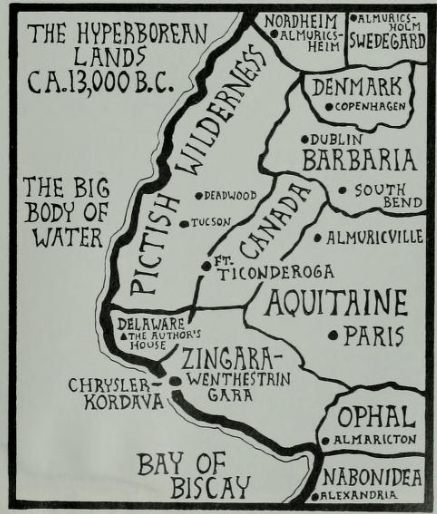
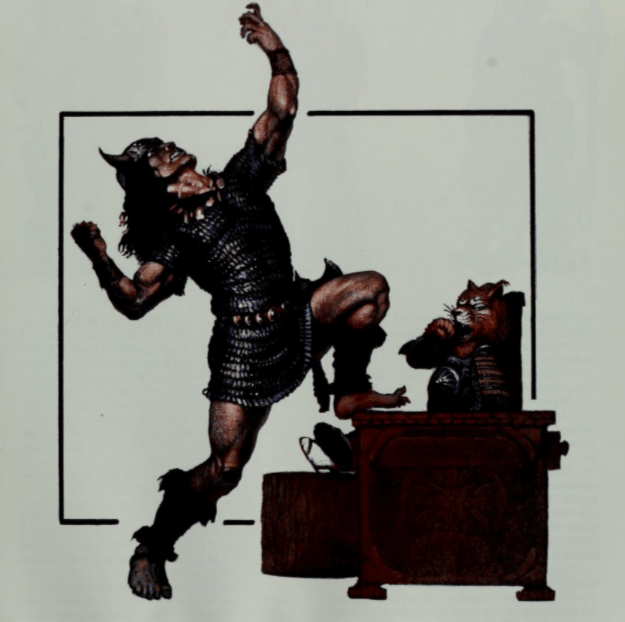
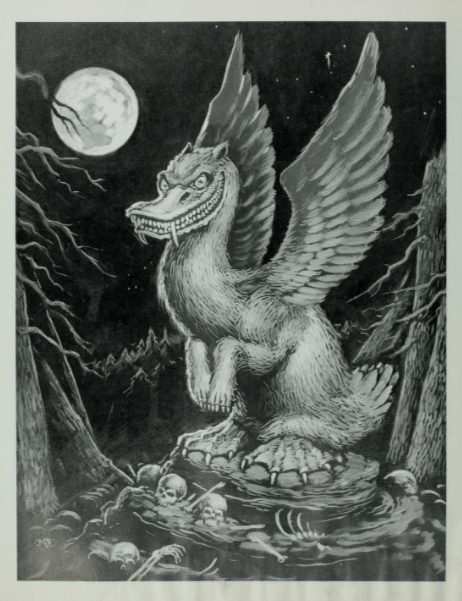
For “Beyond the Black Walnut,” a parody on Howard’s Conan story “Beyond the Black River,” the primary artistic reference seems to be Frank Frazetta’s covers—with its dark, shadowy battles against the Picts, and scantily-clad ladies—although the Conan analogue (“Con-Ed”) is a mix between of Frazetta’s Conan and John Buscema’s Conan from the comics; there is a horned helmet, but also a mail shirt. Little details show that Rogers had read quite a bit of Howard—the gag where several characters named similarly (Almaric, Almuric, Al-Muriq, etc.) echoes Howard’s tendency to reuse similar-sounding names, while making the Pictish wizard Thpageti-Thoth shows his tendency toward puns. The hallmark of the episode, however, is the Thwack the swamp-demon; a demonic duck-like figure that might have haunted Carl Barks’ nightmares.
Parts of The Adventures of Samurai Cat series were adapted into a three-issue comic book series published by Epic Comics (a Marvel imprint); “Beyond the Black Walnut” appeared in issue number two, written by Ralph Macchio, penciled by Frank Cirocco, inked by Jim Hummel, colored by Joe Rosas, and lettered by Bill Oakley, with Mark E. Rogers providing the cover painting. Cirocco and Hummel referenced Rogers’ illustrations, but the result was still, by necessity, more cartoonish than the illustrated novel. Con-Ed the Barbarian was notably closer to Marvel’s version of the Cimmerian, with horned helmet, fur loincloth, and a collection of medallions. While not word-for-word accurate to the original, it captures most of the spirit of the thing, although not all of Tomokato’s mocking final reply:
I come from a superior culture, the civilization of civilizations. That’s why I conquered where you failed. You are but a barbarian, and barbarism is but the whim of circumstance. One cannot imagine barbarians truly mastering the delicate and graceful art of the sword, let alone learning enough understated good taste to utilize transistors or devise truly splendid video games. Japanese culture is Divine, Eternal. In the end, it will always triumph. (Rogers 84)
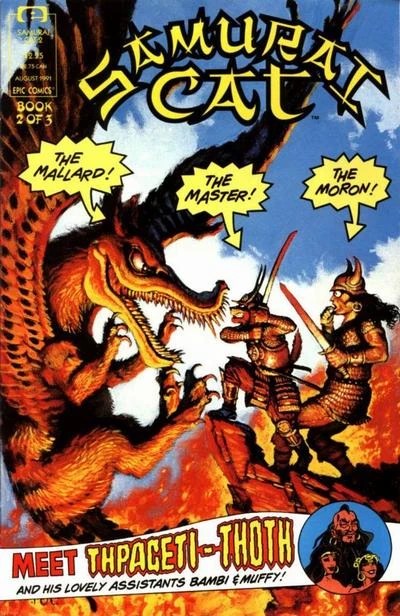
While Rogers’ work is an example of how anthropomorphic animal characters continued to break new ground as something more than just funny animals, it also illustrates that there was not just one path for Robert E. Howard’s influence on anthropomorphic comics. While creators like Steve Gerber and Dave Sim were largely drawing off of Conan the Barbarian, other creators could—and did—draw inspiration directly from Robert E. Howard’s fiction. Likewise, while Mark E. Rogers was riffing off Howard’s prose, artistically, the presentation of Thwack shows he was also drawing inspiration from the duck media of comics and animation.
Equine the Uncivilized (1985) & Red Shetland (1989)
Independent comic publishing experienced a boom in the mid-1980s, driven in part by the critical and commercial success of anthropomorphic animal comics like Destroyer Duck (1982) by Steve Geber and Jack Kirby, Omaha the Cat Dancer (1984) by Reed Waller and Kate Worley, Bucky O’Hare (1984) by Larry Hama and Michael Golden, Teenage Mutant Ninja Turtles (1984) by Kevin Eastman and Peter Laird, and Usagi Yojimbo (1987) by Stan Sakai. While the styles and production values differed, what united these disparate titles was a focus on anthropomorphic characters being taken largely seriously. While some like Teenage Mutant Ninja Turtles featured anthropomorphic animals in a world dominated primarily by humans, others like Usagi Yojimbo and Bucky O’Hare were set in worlds mostly populated by other anthropomorphic animals. The similarity of theme and creator-owned independence even led to crossovers like Cerebus appearing in Teenage Mutant Ninja Turtles #8 (Jul 1986), Leonardo of the TMNT appeared in Usagi Yojimbo #10 (Aug 1988), and a couple ninja turtles in Equine the Uncivilized #6 (Jul 1989).
This success meant that the market was suddenly open for a flood of independent anthropomorphic animal comics, often cheaply and quickly produced, and many being parodies of existing properties. Adolescent Radioactive Black Belt Hamsters (1986) by Don Chin, Geriatric Gangrene Jujitsu Gerbils (1986, uncredited), Mildly Microwaved Pre-Pubescent Kung-Fu Gophers (1986) by George Macas, Naive Interdimensional Commando Koalas (1986) by Sean Deming and Dan Green, Pre-Treen Dirty-Gene Kung-Fu Kangaroos (1986) by Lee Mars, and Samurai Penguin (1986) by Dan Vado are just some of the titles that briefly flourished during this period.
It was in this time period that Equine the Uncivilized #1 (1985) came out, created by Richard Konkle and Jim Groat. The character was conceived explicitly as a parody of a pulp adventure character:
I then had the not-too-obvious brainstorm of drawing an anthropomorphic parody of some well-known adventure character. I could have just as easily had “HORSZAN” (“Lord of the Chimps”), “DOC EQUINE” (“The Colt of Copper”), “JOHN CANTOR” (“Warhorse of Venus”), “THE LONG GRAZER” (with his faithful Appaloosa sidekick, “PINTO”), “BATHORSE” (ugh!), “SUPERSTEED” (double ugh!), etc. etc. (Of course, there’s always the possibility of back-up stories . . .) but as you might have guessed, I chose to animalize C*N*N the Barbarian. It all hit me in a flash . . . and at 2:00 AM Jan 1st, 1983, “Equine” was created! (Konkle 1)
However, artistically, Konkle’s initial concept was inspired by the John Buscema/Ernie Chan version of Conan the Barbarian then running in Marvel Comics with a long black mane, naked save for a furry loincloth, and with a female horse in a chainmail bikini giving Equine the famous Frank Frazetta leg-cling (Konkle 2). Groat joined Konkle as artist, and together they co-wrote the other characters (Rooney & Groat 1990, 6).
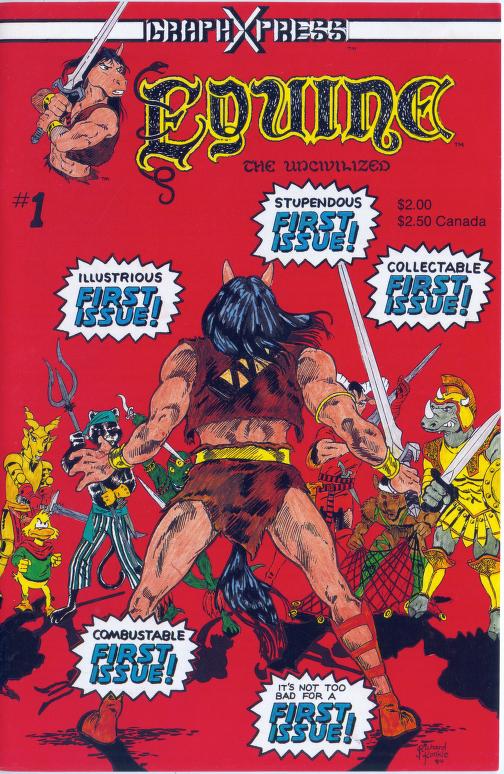
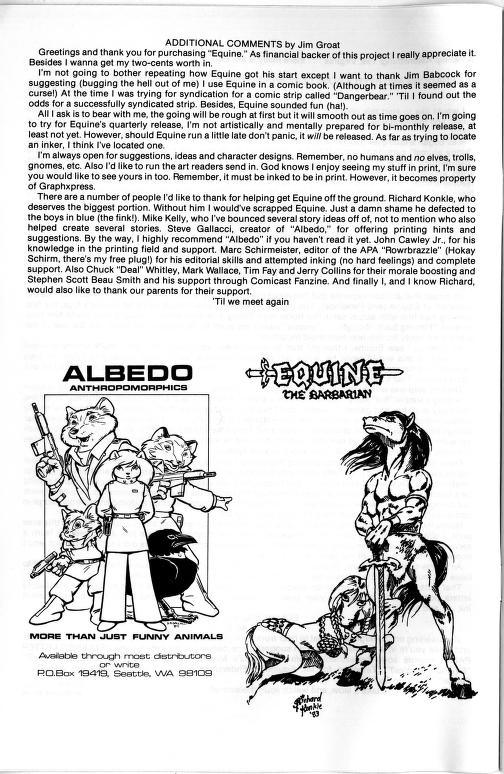
In terms of plot and characterization, the Equine stories were original comical sword-and-sorcery tales set in a fantasy world based around Howardian puns. For example, where Conan swears by Crom and Ishtar; Equine would swear by Karm and Swishtar. While a couple of visual references are borrowed from Conan the Barbarian—notably Ramesis-Tut, an anthropomorphic ram who echoes the Marvel depiction of wizard Thoth-Amon, who is depicted with a ram-horned headpiece (or actual ram horns in some issues).
Initially intended as a one-shot comic, the sales were sufficient to motivate the creators to release additional issues, albeit at irregular intervals (Rooney & Groat 1990, 6-7). Despite the scheduling hiccups, it attracted fan art, letters, and a modest following. As one fan who appeared in the letters pages of Equine #3 noticed:
Equine has done that strange and difficult thing that Cerebus also managed to do some time ago—it took the step upward from being another silly-animal Conan parody to becoming a ding an sich, a thing of its own, [an] idea independent of other ideas.
Ultimately, the Equine the Uncivilized series would end with issue #7.
Equine the Uncivilized #2 introduced the character of Red Shetland, She-Stallion with a Sword, whose character and costume were inspired by the 1977-era chainmail bikini with pauldrons, complete with a vow of chastity to a goddess that none may have her who had not defeated Red Shetland in battle. The reception of Red Shetland was so positive that Groat & Konkle published a new series with just her adventures. As the editorial in Red Shetland #1 (Aug 1989) explains:
When we came up with the character Red Shetland some years ago, little did we realize we created a monster. She was primarily a sight gag on a drawing that now graces my wall. Richard Konkle, the co-creator of EQUINE initially planned the series to parallel the Marvel series Conan. Conan & Belit, Equine & Baalite; you get the picture. Richard toyed with a design of the girl (mare) and it got a thumbs-up rating. Little else was done with her until EQUINE #2 when Red was introduced at the end of the story. […] When I first started promoting the EQUINE series at cons people always wanted me to draw them Penelope in their sketchbooks, until EQUINE #2 hit the stands. Slowly the demands for the buxom little bitch increased. Within a year it was obvious; do a comic on Red Shetland. After all, breasts sell books. Not being sexist, I asked a few female friends what they thought of Red. “She’s the perfect feminist”, “She kicks ass!” were the replies. I discussed this with Richard and he agreed, let’s give the girl her own title.
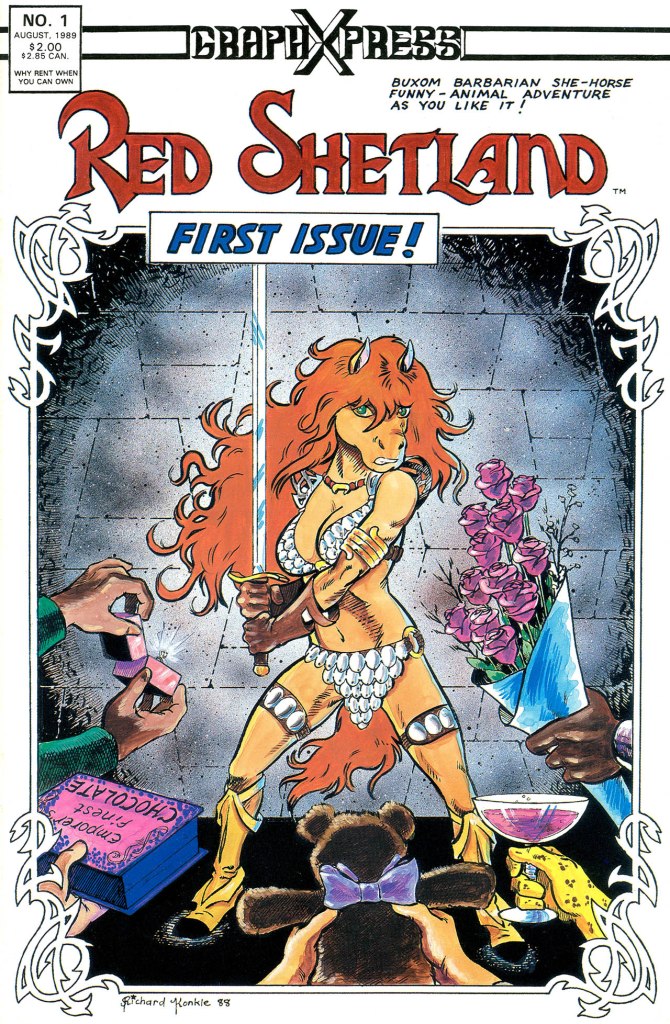
As with Equine, Ret Shetland didn’t follow too closely to the equivalent Marvel comics, taking a few visual and narrative ideas and running with them in new directions. Again, the schedule was irregular, and the series ended in 1998 with issue #11. During this same time, GraphXpress also released nine Red Shetland Artist Portfolios, eight Cheesecake Portfolios, two calendars (1996 and 1997), and an animated short (6 mins.) released on VHS.
The effort to merchandise the characters wasn’t exactly new—Teenage Mutant Ninja Turtles was noted for the toy line and animated cartoon that both appeared in 1987, and various other comics attempted to merchandise themselves with various degrees of success, such as The Animated Cerebus (1983). Convention culture was a major market for these materials, especially for independent publishers and creators, and the interaction between the creators of Equine and Red Shetland and their fans no doubt contributed to the modest success of both series.
Jim Groat continued to use a version of Red Shetland occasionally in his webcomic “West Corner of the Park” (1997-2013), which dealt largely with events in furry fandom such as FurryMUCK (an online social game founded in 1990).
Corban the Barbearian (1987)
At this point it is important to note that there is no effective way to trace all of the Howardian influences on anthropomorphic comics. While early works were drawing largely off Marvel’s Conan the Barbarian and Red Sonja comics and Robert E. Howard’s original short stories and the art in those volumes, by the 1980s there was also the influence of the film Conan the Barbarian (1982) and its sequels and imitators; Dungeons & Dragons included a Barbarian sub-class in Dragon Magazine #63 (Jul 1982), and a full class in Unearthed Arcana (1985), which further spread the literary concept of what a fantasy barbarian was around.
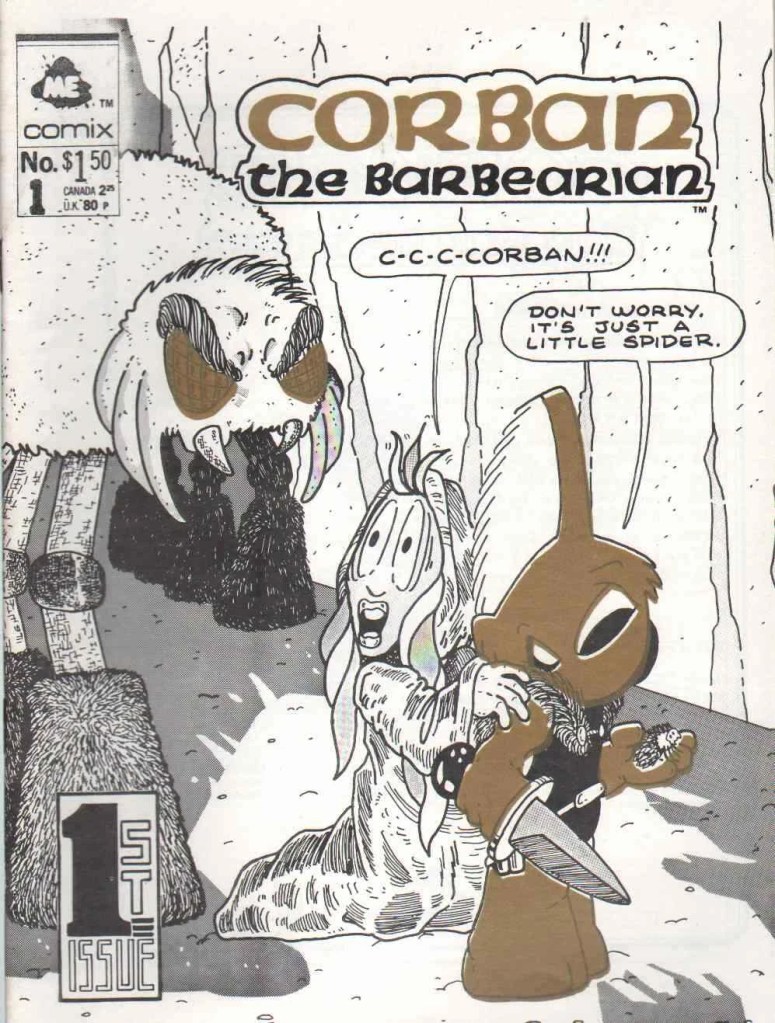
As an example, consider Corban the Babearian by Phil Greene, which ran for two issues in 1987. Corban was an anthropomorphic koala bear in a generic sword & sorcery setting. While the name strongly suggests another furry Conan parody, nothing in the art or writing indicates any strong influence from Robert E. Howard’s character. By the mid-to-late 1980s, it was entirely possible to have an anthropomorphic animal fantasy barbarian character who was effectively generic, riffing off of the imagery generated by decades of barbarian fiction, comics, art, films, and games. Unless a writer or artist is very specific in their referencing or parody, it becomes almost impossible to draw a distinction between a furry Conan parody and an anthropomorphic animal barbarian.
Conan properties during this period didn’t cease, but many of them lapsed somewhat. Marvel’s long-running Conan the Barbarian comic ended after 275 issues in 1993, and Savage Sword of Conan ended in 1995 with 235 issues. Marvel kept the license for a few years and published various miniseries, but it was over twenty years since those first iconic issues that inspired Steve Gerber and Dave Sim. In 1992, the animated children’s series Conan the Adventurer was broadcast, and ran for 2 seasons (65 episodes); it was followed by Conan and the Young Warriors for 1 season (14 episodes) in 1994. The series was very loosely based on Howard’s characters, and drew a bit of inspiration from the Marvel comics (and probably popular animated series like He-Man); it is notable in this context for including a few characters with anthropomorphic traits, such as Needle the phoenix and Dregs the naga, both of whom had human-level intelligence and could speak. Neither of these animated shows inspired any comic properties, however. So too, the short-lived Conan the Adventurer 1997 television series failed to generate the kind of buzz that inspired anthropomorphic animal comic parodies.
Elephantmen (2006)
While the original Marvel Comics series based on Robert E. Howard’s characters would end, the long tail of the influence of those issues continued to be felt—and referenced—by a generation of creators that had grown up on those comics. This manifested in very specific homages and metafictional references to the original title in a variety of comics. A particularly dedicated and relevant example occurred in the comic Elephantmen from Image Comics.
In 1992, comic book letterer, writer, and editor Richard Starkings founded Comicraft, an independent company that provided lettering and graphic design services, primarily to comic book companies. To advertise the new business, Starkings created the character of Hip Flask, an anthropomorphic hippopotamus detective. In 1995, Starkings branched out with Active Images, designed to commercialize comic fonts, and in 2002 Active Images began publishing, and released three one-shots starring Hip Flask as a private detective in a cyberpunk setting. In 2006, Image Comics began publishing Elephantmen, a series in the same universe, starring Hip Flask and related characters, and would later publish additional spin-off series as well.
In the Hip Flask/Elephantmen universe, the anthropomorphic animals are genetically engineered soldiers made with human and animal DNA by amoral megacorporation MAPPO for a global conflict; the series deals with the surviving veterans of that war (the eponymous “Elephantmen”) as they deal with post-traumatic stress disorder, discrimination, a resurgent MAPPO, various criminals that prey on Elephantmen, etc. with Hip Flask and his allies investigating various Elephantmen-related crimes. The setting is strictly science fiction, with no magic or other fantasy elements.
Elephantmen #32 (Jun 2011) written by Richard Starkings with art by Axel Medellin, is an explicit visual and literary homage to Conan the Barbarian and Savage Sword of Conan, with the note:
With a special inspired tip of our horned helmets to Roy Thomas, Barry Windsor Smith, John Buscema, Ernie Chan, Alfredo Alcala, Pablos Marcos, Frank Thorne, Boris Vallejo and, of course, Robert E. Howard, the most savage swordsman of all!
Fifteen pages of the issue are devoted to an homage to classic Marvel Conan comics, with the Conan stand-in character being Ebony, an Elephantman hooked on a drug that brings vivid dreams or hallucinations. The dream-sequences are inspired by Ebony’s fondness for old comics—pictured in the story is Savage Sword of Conan #1, with a cover by Boris Vallejo.
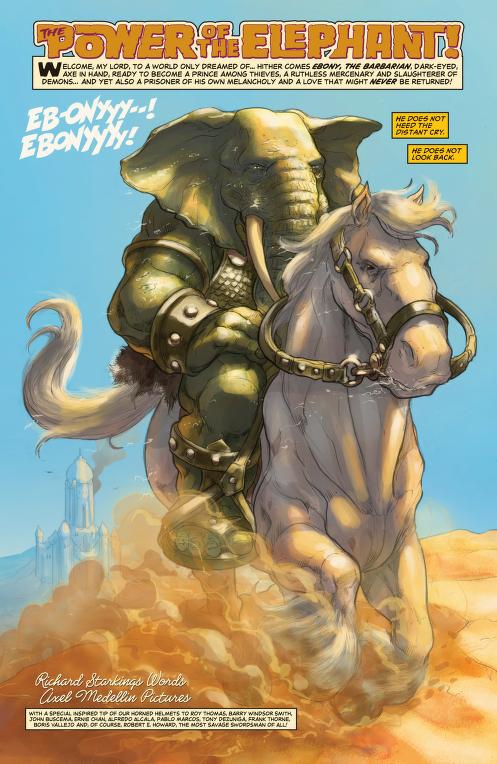
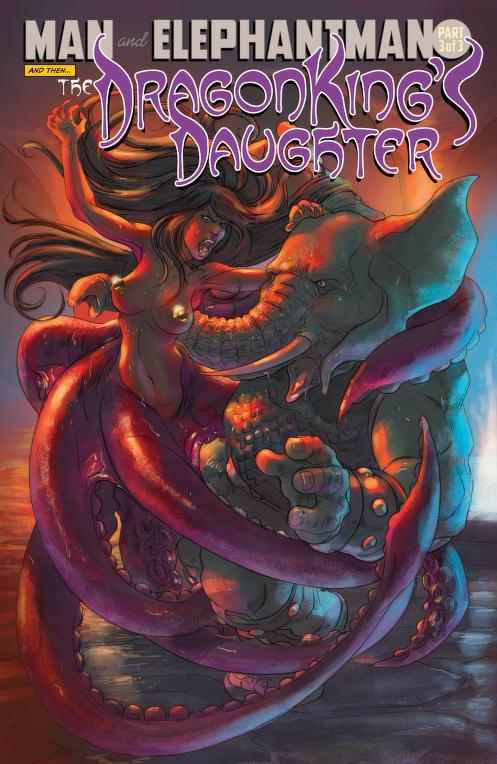
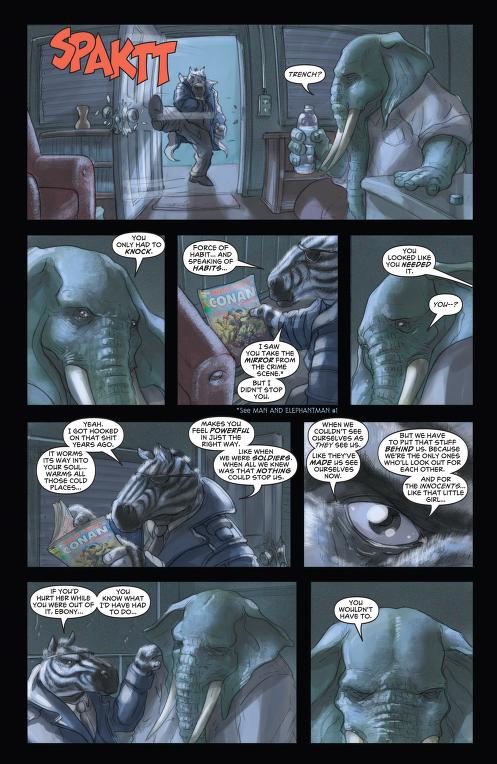
This issue is patently a way for Starkings and Medellin to create the kinds of comics they grew up with, and also to inject something new readers had not seen in the ongoing series; in the issue, the pages serve as a break between the different character point-of-views and plotlines, tied together at the end when their source—Ebony’s addiction, and his love of comic books—is revealed. So instead of a parody, this is a very conscious, clever, well-thought-out metafictional way to include this Conan-esque tribute in a way that very specifically is not a random, generic barbarian. Ebony is not playing Conan, but his dream self is consciously modelled off of Conan in the Marvel comics, and the creators want the audience to know that.
In the back of the issue is a 4-page feature “Everything I Ever Needed To Know About Lettering Comics I Learned From Conan the Barbarian #5” by Richard Starkings—which really covers a lot more than just the lettering, but also elements of page layout, graphic design, and narrative storytelling characteristic of the Roy Thomas/Barry Windsor-Smith run. At the end, Starkings writes:
I first read “Zukala’s daughter” when I was 11, in black and white in the British MARVEL ANNUAL of 1973. The story made such an impression on me that I sought out CONAN books and comics throughout my teens, this issue of ELEPHANTMEN is my homage to all those great Conan stories pbulished by Marvel comics in the 70’s and early 80’s.
Elephantmen is exemplary of a new breed of anthropomorphic animal comics. Every generation, it seems, rediscovers the utility of using these characters in works aimed at different audiences and for different purposes; former 1980s joke character Spider-Ham, for example, was worked into the 2018 animated feature film Spider-Man: Into the Spider-Verse, occupying a role of both comic relief, supporting character, and nostalgic callback to a classic and almost-forgotten character from the sillier margins of Marvel’s comics continuity. While Elephantmen isn’t driven by nostalgia per se, it is a conscious adaptation of an idea largely still seen as for kids (anthropomorphic animals), and working that idea in stories and art clearly intended for teenagers and adults. Everything old is new again.
In the same vein, the nostalgia-driven homage in Elephantmen #32 represents a significantly different approach to the Conan material from the earlier anthropomorphic animal comics discussed. Where Howard the Duck, Cerebus, Equine the Uncivilized, and Red Shetland are all also consciously referencing the same material, for most of those creators the comics were within relatively recent memory, titles still ongoing, and while the reader might be expected to catch the references that writer and artist were putting down, within the narrative itself these characters weren’t themselves readers of Marvel Comics. Cerebus never picked up an issue of Conan the Barbarian within the normal continuity of Cerebus’ 300-issue run. Elephantmen #32 is a conscious homage to the legend of Conan in comics.
Mickey the Barbarian (2020)
I love Mickey Mouse. The first time I went to Disney World my parents got me a stuffed animal of Mickey in a Hawaiian shirt. I was probably a bit too old for it, but I didn’t care… I also love Conan the Barbarian. That first movie blew my mind. In fact, the first book I bought with my own money was the original Conan Ace paperback with the Frazetta cover. I was probably too young for it, but I didn’t care… Early on in this weird quarantine Corona Covid-19 year, feeling neither too old nor too young and still not caring, I decided to mash these two characters together. Work started out sluggishly, but I noticed myself working harder as things slowly got back to normal here. I had a blast working on it. My hope is that you have an equal blast reading it. (Ostley, “Author’s Note”)
The syntax of media changes over time, and new creators adapt ideas to fit the new formats. Gabe Ostley’s Mickey the Barbarian, a non-commercial webcomic released for free online in 2020, is a spiritual descendant of the Air Pirate Funnies that lampooned famous Disney anthropomorphic animal characters in the 1970s and the early Conan parodies like Howard the Duck, Cerebus, and The Adventures of Samurai Cat. Like Elephantment #32 however, there is more going on with this comic than just putting Mickey Mouse in a fur loincloth and giving him a sword with which to slay and rend. Mickey the Barbarian has a wraparound framing narrative which portrays this as one of Walt Disney’s ideas, portraying Disney not as the mediagenic creator of Mickey Mouse that he liked to present himself as, but as the somewhat ruthless entrepreneur who commanded the talents of artists like Ub Iwerks and Fred Gottfredson, but didn’t share the profits or the credit. In a video explaining his process, Ostley showcases how he developed the idea, where it’s clear that the meta-awareness of Disney was there from the beginning (“Driven By Drawing Episode 5: Comic book Creation”).
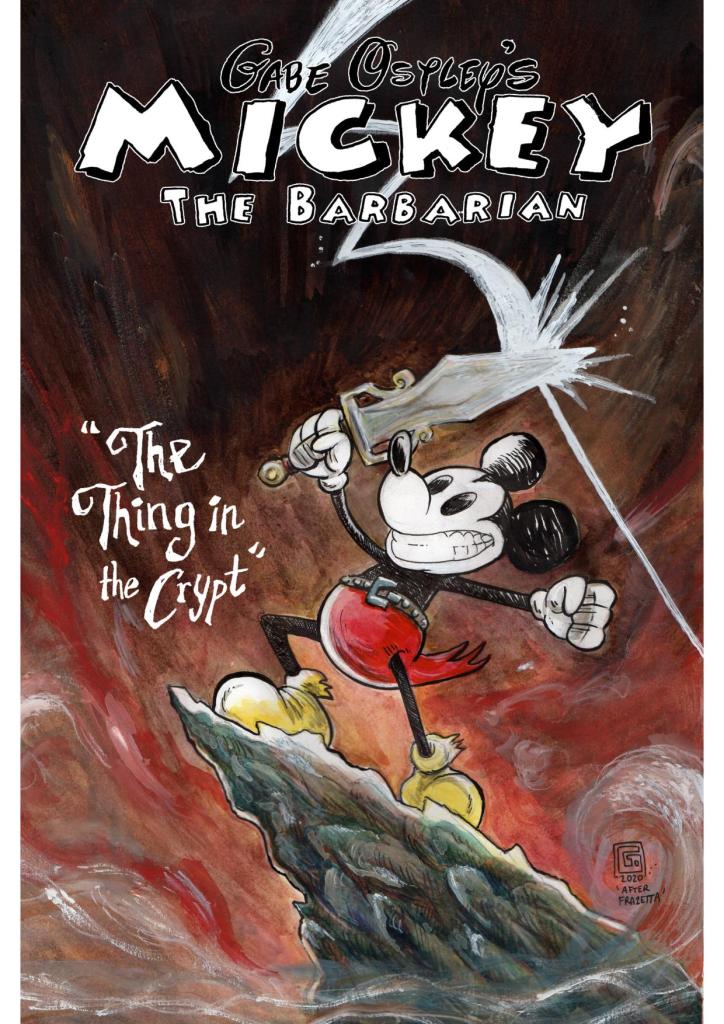
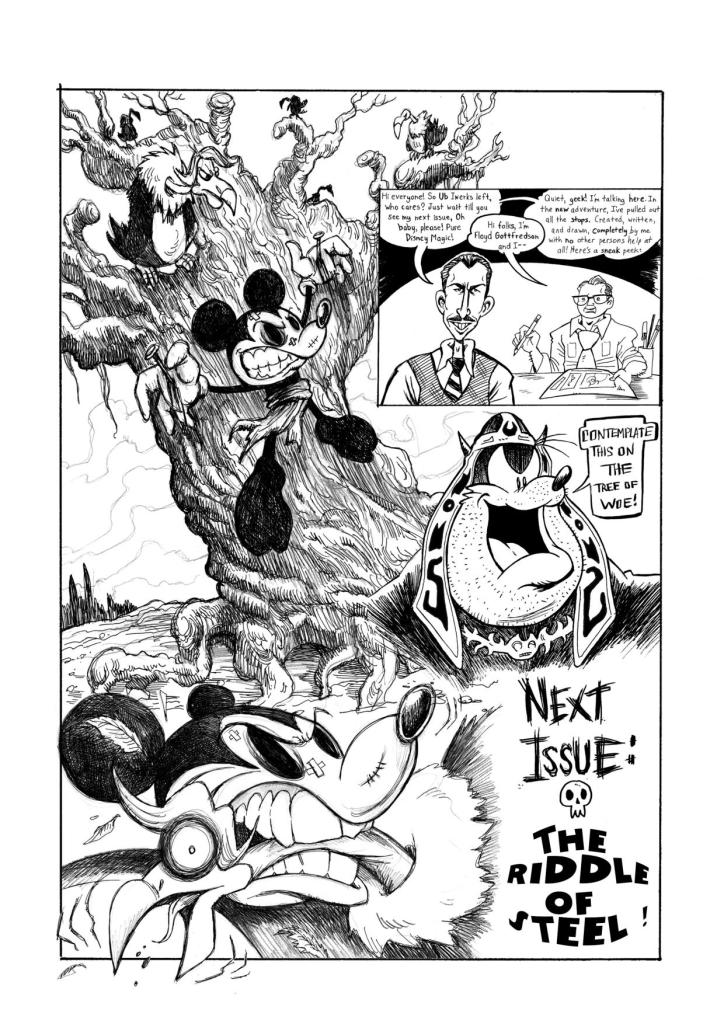
Like The Adventures of Samurai Cat, Ostley wasn’t drawing directly from the Marvel Comics Conan the Barbarian. Mickey the Barbarian is an adaptation of “The Thing in the Crypt” (1967) a Conan pastiche by Lin Carter and L. Sprague de Camp, which inspired a scene in the 1982 Conan the Barbarian film. A teaser for a never-drawn second issue features Mickey crucified on the Tree of Woe, another homage to the 1982 film (although the image was ultimately drawn from Robert E. Howard’s “A Witch Shall Be Born.”) Ostley’s depiction of Mickey as a Conan-esque barbarian draws from a quite different background from the other creators mentioned previously, and that influences the result—Ostley’s art style is closer to the rubberhose animation of the early black-and-white Mickey Mouse shorts and the daily newspaper strips, and owes nothing to works like the Roy Thomas/Sal Buscema/Ernie Chan adaptation of “The Thing in the Crypt” in Conan the Barbarian #92 (Nov 1978).
Yet Mickey the Barbarian is, by its specific references, definitely an homage to Conan, not a generic fantasy barbarian character. The Marvel Conan comics had a huge impact on comics culture, but they are not the single source of this multi-pronged comics tradition. Ostley and Mickey the Barbarian demonstrates that there are multiple paths from Robert E. Howard to anthropomorphic animal comics, as each individual’s discovery of the material for the first time can lead to unique expressions combining Howard’s Conan and anthropomorphic animals. The results share similarities, but also idiosyncratic differences reflecting the different paths they took from inspiration to production.
Egoraven: The Unicorn King’s Daughter (2023)
What happens when a joke on Facebook about crowdfunding algorithms goes off the rails and takes a life of its own? You publish it, of course!
The denizens of the doodles of Chez Egoworks take on an unapologetic one-shot parody of Robert E. Howard’s Conan story The Frost-Giant’s Daughter, featuring Unicorn Daughter Egoraven, Disaster Son Loki, Unicorn God-Mom, and a cameo by the gentlemouse himself, Oswald! (Lage, rear cover)
In the 1970s and 80s, self-publishing capabilities were limited, and a critical hurdle for independent comics like Cerebus, Equine the Uncivilized, Red Shetland, and Corban the Barbearian was distribution. To sell comic books, you needed to communicate that those issues were available to customers, either through mail-order, arrangements with comic book shops, or selling them directly at conventions. The internet greatly facilitated communication between widespread potential fans, even in niche communities, and crowdsourcing and internet printing have made it easier to fund the publication of independent comic books—including anthropomorphic animal Conan parodies, on occasion.
Egoraven; Heir of the First Unicorn is an ongoing fantasy anthropomorphic animal comic, with print issues largely funded by crowdsourcing methods like Kickstarter. The creator, Daphne Lage, is active with the fanbase through social media like Facebook, and responsive to requests for additional material. Which is why in 2023 after a successful kickstarter Lage produced both Egoraven: The Unicorn King’s Daughter and the related erotic work Medieval Unicorn Viking Slut. These are one-shots, not part of the ongoing series, but using Lage’s original characters and casting them into short tales that retell elements of the canon continuity. All in a sense of fun.
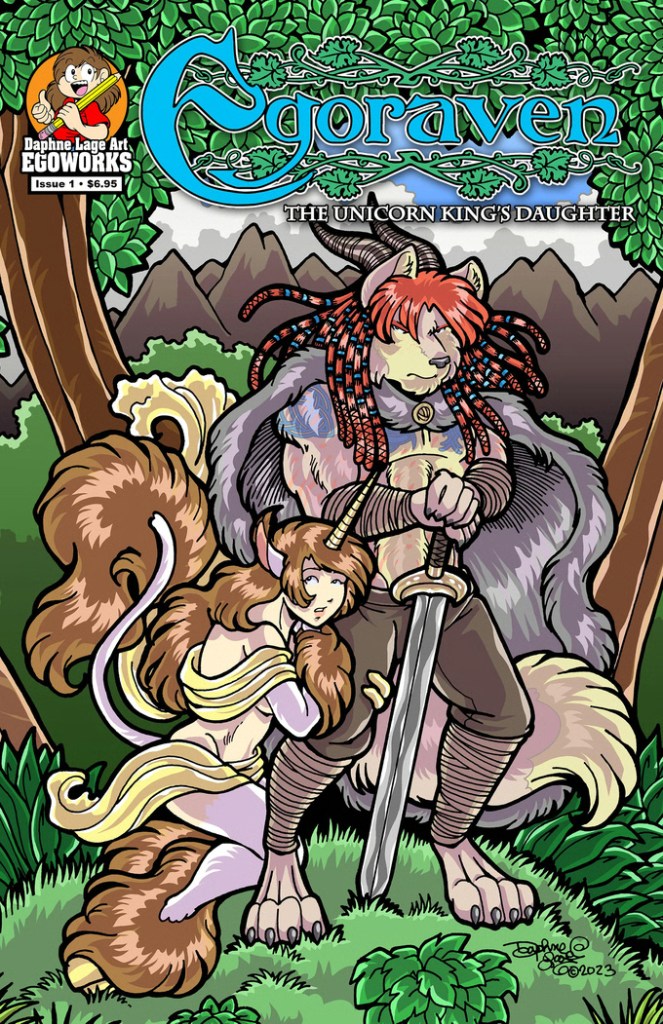
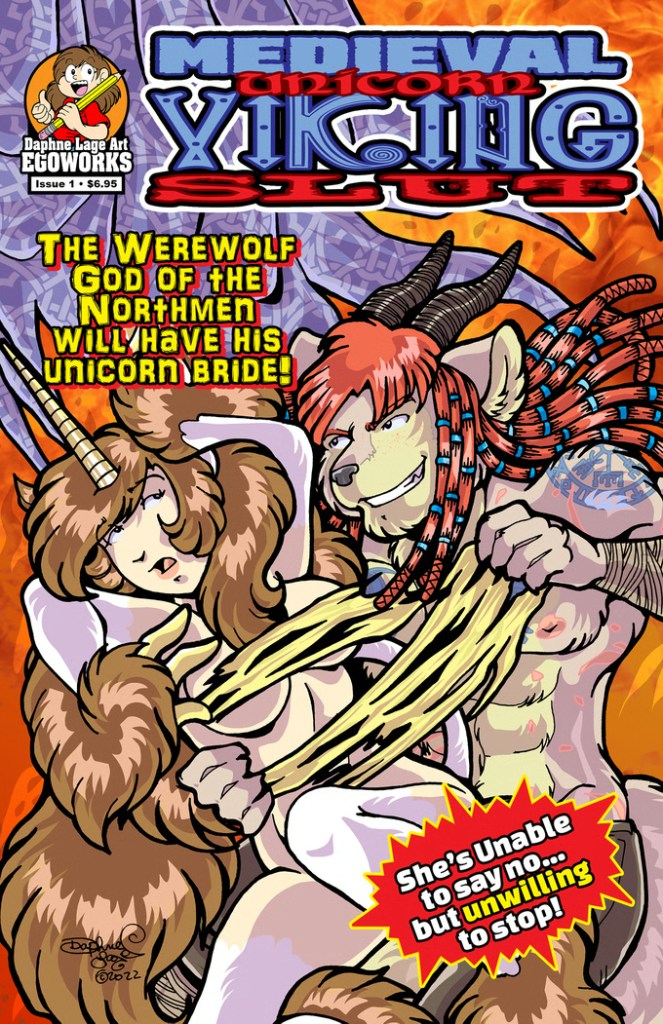
Egoraven: The Unicorn King’s Daughter opened “with apologies to Robert E. Howard, Roy Thomas, and Barry Smith”), echoing the Thomas/Smith collaboration in Savage Tales #1 (May 1971)/Conan the Barbarian #16 (Jul 1972). However, the artistic license is a bit loose, as the action takes place in a forest rather than the snow-covered landscape of the original. Egoraven (a half-unicorn character and eponymous star of the series) appears in Atli’s diaphanous garment, but there isn’t a chase, and she and Loki (a Norse god in anthropomorphic wolf form) get down to some PG-13 sexy times (the more explicit material, which kept the veil but lost the Robert E. Howard storyline, being in Medieval Unicorn Viking Slut), before continuing on, abandoning Howard’s story entirely to conclude with a happy ending. At the end, there is a post-story framing device where Loki is pitching the comic to Lage, who responds: “I was wondering where all my Conan comics disappeared to’ (Lage 13).
While the borrowing from Howard is really slight, the recognition of Howard’s stories as iconic stories that can be referenced, remixed, and reworked with existing characters echoes what Mark E. Rogers was doing with The Adventures of Samurai Cat, but in a different way. Lage isn’t really parodying Conan here, or making jokes based on Howard’s prose; the borrowed elements of the story are played largely straight, it is the juxtaposition of these familiar (to the Egoraven readers) characters with the Howard/Thomas/Windsor-Smith storytelling style that is amusing and interesting. In that sense, it is closest to Elephantmen #32, with the same metafictional awareness and acknowledgement of where the story and art references are coming from, but the tone is lighter, and the erotic supplement Medieval Unicorn Viking Slut is much more explicit.
Erotic comics go very far back in the history of comic book publishing, and were a major element of underground comix that emerged in the 1960s and 70s. However, aside from the cheesecake supplements for Red Shetland, there were relatively few erotic anthropomorphic animal comics that parodied or referenced Robert E. Howard’s creations or their derivatives. Most examples have little to do with Howard’s character; for example, “Gonan and the Goblet of Splooge” by Mark “Gideon” Parsons that ran in Cocktails #3 (Winter Special 2009) published by Clubstripes, a short homoerotic fantasy tale where Gonan (an anthropomorphic horse) has been captured by a wizard (anthropomorphic tiger) and is seduced by a pair of scantily-clad male anthropomorphic horses for his seed. These kinds of explicitly erotic works involve rather little worldbuilding and tend, as with Corban the Barbearian, to be more about the generic fantasy barbarian tropes with an anthropomorphic animal context, with the addition of an explicitly erotic narrative. Not the easiest criteria for working in a Howardian homage or parody—but it kind of works in Medieval Unicorn Viking Slut because “The Frost Giant’s Daughter” is one of the Conan tales explicitly about a pursuit with sexual implications, even if Howard never goes that far. The relatively select market for erotic anthropomorphic comics probably also plays a part in the economics of producing such issues, but that is an instance where crowdfunding is beneficial.
While Egoraven: The Unicorn King’s Daughter and its adult supplement are very much boutique products, that is representative of the shift in anthropomorphic animal comics publishing in the 2020s. Furry fandom has spent decades consolidating online and has formed a marketplace of both ideas and creator-owned artwork that makes what would otherwise be economically unfeasible projects like this possible. Daphne Lage has succeeded in part by finding what the fans want and supplying it to them.
Conclusion
Robert E. Howard wrote a story with a talking cat. He wrote stories with werewolves and Serpent Men, and an Elephant-headed alien named Yog-Kosha. Yet the crux of his influence on the development of anthropomorphic animal comics did not come directly from any of the anthropomorphic animals whom he wrote about. It was Howard’s characters and stories, made available through affordable paperbacks, comic book adaptations, and finally a 1982 movie, that provided the major inspiration to comic creators. Each of these paths provided the raw material for parody, satire, commentary, and most importantly, original conception.
Conan the Barbarian (1970), especially the early run by Roy Thomas and Barry Windsor-Smith, hit the newsstands at a critical time. It influenced both underground comix like Barbarian Killer Funnies, mainstream comics like Howard the Duck, the nascent independent comics like Cerebus, and licensed comics like The Adventures of Samurai Cat. These works did not develop independent of each other, but were in communication with each other through both shared comic book fandom and the nascent furry fandom that was becoming increasingly distinct. So too, they helped shape that fandom, making subsequent efforts like Equine the Uncivilized, Red Shetland, and Corban the Barbearian possible.
As the idea of the fantasy barbarian that Howard’s Conan the Cimmerian helped define spread in the popular consciousness, it becomes difficult to single out individual works, unless those works are very specifically metafictional works or homages that draw explicitly on Conan and the Cimmerian’s previous comic interpretations. Works like Elephantmen #32, Mickey the Barbarian, and Egoraven: The Unicorn King’s Daughter are three examples of a mature medium with a long and storied tradition to draw on. The heirs of a legacy of Howardian comics that is still going.
When we look back over five-plus decades since Conan the Barbarian #1 came out, what becomes apparent is that these works did not, and could not, emerge right away or in volume. Cerebus the Aardvark did not just arrive on the publishing scene fully formed—it required Marvel to take a chance on Sword & Sorcery comics, an underground comix market that had matured to the point that independent comic publishing was economically feasible, anthropomorphic animal comics that had increased in sophistication and an audience for those comics—all coming together at the right time. A similar chain of associations could be laid out for all of the works discussed here; they were not just products of a process, they were part of the process by which furry fandom defined—and continues to define—itself.
Works Cited
Borenstein, Eliot. Marvel Comics in the 1970s. Cornell University Press, 2023.
Cohen, Karl F. Forbidden Animation: Censored Cartoons and Blacklisted Animators in America. McFarland, 1997.
Eastern, Mark James. A History of Underground Comics. 3rd ed. Ronin Publishing, 1993.
Groat, Jim & Kronke, Richard. Equine the Uncivilized #3. GraphXpress, 1987.
________________________. Red Shetland #1. GraphXpress, 1989.
Hoffman, Eric (Ed.) Cerebus the Barbarian Messiah: Essays on the Epic Graphic Satire of Dave Sim and Gerhard. McFarland & Co., 2012.
Hoffman, Eric. & Grace, Dominick (Eds.) Dave Sim: Conversations. University Press of Mississippi, 2013.
Konkle, Richard. “Ruminations and Revelations Concerning One Horselike Barbarian” in Equine the Uncivilized #1, 1-2. GraphXpress, 1985.
Labarre, Noclas. Understanding Genres in Comics. Palgrave Macmillan, 2020.
Lage, Daphne. Egoraven: The Unicorn King’s Daughter. Egoworks. 2023.
Ostley, Gabe. “Author’s Note.” Yurei Zoku. 2020, https://yureizoku.com/comic/mickey-2/
Ostley, Gabe. “Driven By Drawing Episode 5: Comic book Creation.” Youtube. https://www.youtube.com/watch?v=eR1urWuxc4U&ab_channel=GabeOstley
Patten, Fred. “Retrospective: An Illustrated Chronology of Furry Fandom, 1966–1996.” Flayrah. 15 July 2012, https://www.flayrah.com/4117/retrospective-illustrated-chronology-furry-fandom-1966%E2%80%931996
Rogers, Mark E. The Adventures of Samurai Cat, Tor, 1984.
Rooney, Ray “Rune” & Groat, Jim. “The Horseman: A Rambling Interview/Conversation with Morph Maven Jim Groat, Ownder/Publisher/Eidtor/Artist/Janitor of GraphXpress, and Co-Creator of Equine and Red Shetland” in Furtherance #2, 6-9. Furtherance, Spring 1990.
____________________________. “The Horseman Part 2” in Furtherance #3, 6-11. Furtherance, Winter 1991.
Sim, Dave. Swords of Cerebus: Volume 1. Aardvark-Vanaheim, 1981.
Starkings, Richard & Medellin, Axel. Elephantmen #32. Image Comics, 2011.
Sunrich, Matthew Stephen. Drawn Swords: An Unauthorized Exploration of Red Sonja and the Artists Who Brought Her to Life. Hasslein Publishing, 2017.
Thomas, Roy. Barbarian Life: A Literary Biography of Conan the Barbarian, Volume 1. Pulp Hero Press, 2018.
Yezbick, Daniel F. “Lions and Tigers and Fears: A Natural History of the Sequential Animal” in David Herman (Ed.) Animal Comics: Multispecies Storyworlds in Graphic Narratives. 29-52. Bloomsbury, 2018.
Bobby Derie is the author of Weird Talers: Essays on Robert E. Howard and Others and Sex and the Cthulhu Mythos.
Deep Cuts in a Lovecraftian Vein uses Amazon Associate links. As an Amazon Associate I earn from qualifying purchases.

