Who hath desired the Sea—the sight of salt-water unbounded? The heave and the halt and the hurl and the crash of the comber wind-hounded? The sleek-barrelled swell before storm—grey, foamless, enormous, and growing? Stark calm on the lap of the Line—or the crazy-eyed hurricane blowing? His Sea in no showing the same—his Sea and the same ’neath all showing— His Sea that his being fulfils? So and no otherwise—so and no otherwise Hill-men desire their Hills!
Rudyard Kipling, “The Sea and the Hills” fromKim(1900)
There are weird things out in the water. We still thrill to every strange creature that washes ashore, or is dredged up from the depths by a storm; the exotic, almost alien lifeforms that we glimpse through submarines or haul up in nets. The great depths of the ocean remain unexplored territory where wonders and terrors may yet reside: shipwrecks, volcanoes, lost cities. Nautical tales often contain elements of mystery, survival, adventure, and horror…and have left their mark on science fiction and fantasy. Krakens, Cthulhu, and Godzilla are all part of the lore and mystery of the ocean; sailors were the first great explorers who have lent their terminology to starships and space marines.
Yet for all the weird inspiration that the seas and oceans of the world have lent to H. P. Lovecraft and other weird writers, actual nautical weird fiction is a distinct and often overlooked subgenre. William Hope Hodgson, who was himself a sailor, was no doubt the greatest master of the weird nautical tale with his Sargasso Sea stories, “The Island of the Ud” (1907), and the unforgettable “The Voice in the Night” (1907), which inspired the Japanese film Matango(マタンゴ, 1963). H. P. Lovecraft would dabble in the genre with “Dagon” and the final chapter in “The Call of Cthulhu,” Frank Belknap Long, Jr. would contribute “The Ocean-Leech” in Weird Tales.
Nautical fiction has not gone extinct, but like railroad fiction and zeppelin stories, cultural and technological shifts have made such tales less common than before. Fewer people travel by water over long distances, with motors and electronics making it easier for ships to travel and stay in communication. Many of the tropes of nautical fiction are readily adapted to space travel stories—Event Horizon(1997) is essentially a ghost ship story set in space—and vice versa, as shown by films like The Abyss(1989) and Underwater (2020), so it might be more accurate to say that nautical fiction is undergoing an evolution as it finds its place in a changing culture.
Sometimes evolution tries something weird.
As the title might indicate, I was informed by a fellow author that every series absolutely must stay within a well-defined genre. Being a contrarian, I promptly set out to write a series in which each subsequent story is set with the same characters in a wildly different genre. I would love to hear your thoughts as I write this series as to which genres I should tackle next. Space Opera? Cozy Mystery? Amish Romance? The fun of me posting series as I write them is that it provides you, the reader, with an opportunity to shape and guide the results!
“Sailing Downwind to the Cthulhu Call” by Lisa Shea is Book 4 in an ongoing series about Samantha, a Black bisexual woman with a Mythos artifact and dire premonitions of Cthulhu’s emergence, and her friend-and-romantic-interest Gabriel. Strictly speaking, it might be better to regard these as chapters in a serial: while each attempts a distinct genre (1 – Horror, 2 – Mystery, 3 – Science Fiction, 4 – Sea Stories, and 5 – Romance), none of them is quite a standalone story in itself. Nor does the narrative seem complete; presumably more books are forthcoming at some point to carry Samantha and Gabriel’s story onwards, hopefully to some kind of conclusion.
Lisa Shea is a prolific author who is game for anything, and the decision to specifically try and do a nautical story with the Cthulhu Mythos has a lot of potential. While “Cthulhu,” “Dagon,” or “The Shadow over Innsmouth” might seem the obvious candidates for maritime adventures, one could just as easily imagine a sailor of any time period coming across a ghost ship crewed by Mi-Go brain canisters, or an Antarctic cruise ship that hits a frozen shoggoth. Sailing has such a rich and fascinating history, has been such a constant in human life even to the present day, that a story could be set almost anywhere or anytime.
Shea was slightly constrained in that she was keeping the same characters and continuing an overall narrative; “Sailing Downwind to the Cthulhu Call” starts out with them aboard ship, has a bit of light-hearted fun with nautical terminology, and tries to stay on topic…which is kind of where it begins to fall apart.
“I suppose, if I’m going to be reciting lines from doomed naval incidents, the Titanic shouldn’t be my first choice. Seems only two men of color were even on the ship, out of its 2,224 passengers.”
How many people can recite the exact number of passengers on the Titanic off the top of their heads in casual banter? Keeping in mind that at no point in the proceeding does this character demonstrate that she is a Titanic fanatic. The point is driven home in the next paragraph when she begins to go into the details of the Port Chicago disaster, without any real prompting. It is not that this is information she couldn’t know, or have looked up at some point, but for a character that doesn’t know port from starboard it feels very out of character, and almost like the kind of filler used to fluff out historical romance novels for which page count is more important than pacing.
The point of bringing up the Port Chicago disaster specifically appears to be to prompt a discussion between Samantha and Gabriel on the issue of historical racism and the historical racial diversity of sailing crews, e.g.:
“When I was a boy, our neighbor was African-American. Elderly. Wrinkledlike a raisin. He’d served on the U.S.S. Mason in World War II. It said out of Boston, you know. The entire crew was African-Ameircan. At the time, our Navy wouldn’t mix those types with the white sailors.”
His brow furrowed. “Can you imagine, caring about something like that while the Nazis were slaughtering Jewish people by the trian-car-load?”
If this was a single bit of conversation in a longer novel, it might stand out less. Perhaps it might even help establish elements of their characters better and explain their romantic rapport since they both appear to be WWII naval buffs. However, the interaction doesn’t really drive the plot of the chapter or the story forward at all. It’s fascinating as trivia and in another context it might provide an interesting line of inquiry—how did changing racial politics affect the dynamics of sailing ships?—but in this story, the question has to be asked: what is the point? Because neither the Titanic, the Port Chicago disaster, or the U.S.S. Mason figure into Samantha and Gabriel’s little sailing cruise to Nantucket Island.
“Sailing Downwind” is technically a sea story because it takes place at sea, on a small sailboat, and most of the content is explicitly related to sailing in some fashion—even the discussion about why rum and why alcohol is measured in proof, which makes me wish Shea had consulted And a Bottle of Rum: A History of the New World in Ten Cocktailsby Wayne Curtis. Yet it feels like a missed opportunity. The sailing is a little too smooth. Samantha never really learns anything about how to help out around the ship in her brief time on it. Long car trips have been planned with more care and contained more incident and excitement. For a single chapter in a longer novel, this wouldn’t be a complaint, but in a chapter trying to bill itself as nautical fiction, it just feels like so much more could have been done with the idea…a storm. Rough waves. Shark attack. Man overboard. Lost at sea. Sneaky Deep One stealing the rum. St. Elmo’s fire. Pirates (off Nantucket? Perhaps not.)
The Cthulhu Mythos material is a continuation of the story from previous books. Readers who skipped those can get the gist of the idea rather quickly; Samantha has a crystal, a piece of alien technology which is somewhere between a palantir and a browser for extraterrestrial webcams, and it’s safer to use it far away from land just in case Cthulhu decides to make a guest appearance.
I murmured, “The Chinese government would love to get their hands on this. It seems the cameras are simply orbs of energy. There’s one currently by a mountain range. I remember it from last time. I can even see how the clouds driftingby get caught in its peaks and drag a bit. It’s quite lovely.”
The Mythos material is slight. That isn’t a bad thing in and of itself, Lovecraftian mood and ideas are more important than quotes from the Necronomicon and eldritch entities with tongue-twisting names. Unfortunately, there isn’t much of that mood either. In trying to make this a “sea story,” “Sailing Downwind” gives short shrift to also being a Mythos story. On paper, there’s no reason why it can’t be both—the nominal reason for the cruise is grounded in using the Mythos device, the Mythos device is used, and Gabriel uses sailing lore to try and interpret some of the information retrieved—and maybe it would have worked, if there was more story there.
If the essential goal of “Sailing Downwind” was to write a work of nautical fiction that mentions Cthulhu in ~25 pages, then it technically fulfills that goal…but only technically. There are some real missed opportunities here, as far as what could have been done with the same characters and the same premise with the same word count. Shea could have made this much more dramatic, much more focused on the sailing experience, emphasized the nautical horrors of the Mythos…but, Shea misses the boat. The overall impression is less of a sea story or a Mythos story, but a bridging chapter between the science fiction chapter (#3) and the sweet romance chapter (#5).
But more wonderful than the lore of old men and the lore of books is the secret lore of ocean. Blue, green, grey, white, or black; smooth, ruffled, or mountainous; that ocean is not silent.
While he was with me, the wonder and diabolism of his experiments fascinated me utterly, and I was his closest companion. Now that he is gone and the spell is broken, the actual fear is greater. Memories and possibilities are ever more hideous than realities.
In 1922, before Weird Tales had ever hit the stands, H. P. Lovecraft’s first commercial work went into print: six brief tales of gruesome mad science, for which he was to be paid five dollars an episode. Commercial hack work, and Lovecraft knew it; it would not be published again until Lovecraft was safely dead and beyond objecting. From there it entered the domain of reprints, and it became the basis for the 1985 film Reanimator. The film, with the iconic performance by Jeffrey Combs as Herbert West and the glowing green reanimation agent, was a smash success. It inspired a franchise of movies, a novelization, comic books, merchandise, and stories chronicling the further adventure of the reanimator, his foes and rivals.
Herbert West has become one of Lovecraft’s breakout characters.
It is harder to pin down when the queer interpretations began. The basic building blocks were always there, from the beginning: West and his unnamed partner’s close homosocial bond, like Holmes and his Watson; Lovecraft’s typical asexuality and lack of romance in the story; the allegorical implications of men trying to create life without women, especially via the Freudian technique of injecting some of their special serum into the body. One might also add the loneliness of the outsiders, forced to hide their actions from the world, forced out onto the fringes just to be themselves without discrimination.
For queer folk, reading into the text or the adaptations something of their own experience, maybe Herbert West was always queer too. He just wasn’t out about it yet.
Brian McNaughton may have been the first to really play with the idea in “Herbert West—Reincarnated: Part II, The Horror from the Holy Land” (2000), published in Crypt of Cthulhu #106 and his collection Nasty Stories. Molly Tanzer certainly brought in the open with “Herbert West in Love” (2012). The erotic appeal was made manifest in “Herburt East: Refuckinator” (2012) by Lula Lisbon. Alan Moore & Jacen Burrows expressly coded West and his companion as queer in Providence (2017), which played off against their own queer protagonist…and there are more. The constellation of Reanimator-derived works continues to grow; some are more explicitly queer than others. Each of these interpretations is different, both in their understanding and in their depiction of what being queer means, and in what they drew from Lovecraft or what they borrowed from other media; the glowing green reagent being a common element in most stories written after 1985.
The fluid was fluorescent and green as I gently tipped the vial. A single bead of he concoction caught on the lip of the tube and then fell, splashing into the beed’s mouth.
“(UN)Bury Your Gays” is a spiritual sequel to “Herbert West—Reanimator”; one that retreads a little familiar ground (it is a reanimator story, it would be more shocking if there wasn’t a reanimation), but is overall smaller, more focused: the protagonists are not simply repeating the Herbert West/unnamed assistant dynamic, but are exploring a much more complicated, nuanced, realistic friendship as the only two queer kids in high school. There is a sensibility in the story reminiscent of “Pale, Trembling Youth” (1986) by W. H. Pugmire & Jessica Amanda Salmonson; a weird sort of universality to the outsider experience which makes the characters much more sympathetic than West and his nameless assistant ever were.
Waters sets the action in the current day, and a certain pop-culture sensibility flows through the scenario: like the genre-savvy characters in the Scream films, they can picture themselves in a horror story and sometimes try to interpret what’s happening through that lens, riffing on vampirism and flesh-eating zombies in a way that Herbert West & his assistant in 1922 couldn’t. Less directly and less obviously, the two teens also approach their sexuality and relationship through the same lens. This is far and away from a Lovecraftian interpretation of Brokeback Mountain, but there are shades of the same relationship dynamics at play. What the leads have isn’t sexual, but they are tied together by their sexuality. A shared intimacy, but not exclusivity.
In a lot of ways, Waters flips Lovecraft’s script. Instead of a nameless protagonist talking about his relationship with Herbert West, we have the great-grand nephew Humphrey West telling the tale of his best friend. Where Herbert West is focused on reanimation practically to the exclusion of all else and seems to take his relationship with the unnamed narrator for granted, in “(UN)Bury Your Gays” the focus is all about the relationship between Humphrey and his friend, with reanimation a catalyst for a shift in their dynamic, and that is what the story is ultimately about.
Of Daniel “Danny” Moreland, I can only speak fondly. He was my closest companion. My champion. My single greatest achievement.
A key point in Waters’ approach is that it is a queering, not the queering of “Herbert West—Reanimator.” This is one interpretation, one take, one possible iteration of the infinite possibilities of exploring Lovecraft’s original narrative, characters, or concepts through a queer lens. Rather than repeating what Molly Tanzer or Alan Moore wrote, Waters is presenting a different permutation on the same idea—one that is more inspired by Lovecraft’s original than a strict revisitation of the same familiar story and characters.
Because there is more than one way to be queer, and more than one way to reanimate the Lovecraftian corpus.
It began with what has been called Cancel Culture, I suppose. Without much warning, I was subjected to a number of public accusations by various women of my alleged misdeeds. These accusations were largely unsubstantiated and were simply the public revenge of various disgruntled and jilted former lovers and employees.
But the resulting furor was considerable. I was dropped by my long-time publisher, in a very public manner. My book sales, which had been very considerable (and some quite lucrative movie development deals) quickly began to evaporate. […]
I spent a small fortune on lawyers. It was not successful. And in the court of public opinion, I was tried and convicted in short order. And so, it was in the depths of despair that I somehow found a most unusual, a most intriguing, website for someone or something called “The Repairer of Reputation”.
“The Repairer of Reputations” is the first, weirdest, and arguably most important tale in Robert W. Chamber’s 1895 collection The King in Yellow. It is also the hardest to actually follow up: Chambers had set the scene thirty years in his future, in the manner of future war stories like H. G. Wells’ “The Land Ironclads” (1903). The narrator is unreliable, as is Mr. Wilde, the eponymous Repairer of Reputations, which adds to the mystery and disquiet of the story—how much of this is true, and how much is madness?
While a few works like Alan Moore & Jacen Burrows’ Providence have deliberately woven some elements of that story into their own, this is rare. Most who draw on The King in Yellow focus on the Yellow Mythos surrounding the play, such as “Cordelia’s Song from The King in Yellow” (1938) by Vincent Starrett & “Evening Reflections, Carcosa” (2011) by Ann K. Schwader rather than the events of the story. So there is a certain cleverness in how Diane Woods takes the idea of the Repairer of Reputations and gives it the perfect contemporary context: who would be in more need of such a service than someone who has been canceled?
Political partisans can be relieved that this book is not about cancel culture, either for or against. The social ostracism is the catalyst for the events of the story, and Woods never goes into vast detail about how true the allegations are or whether the outrage is justified or not. This is, as the story suggests, a transgender tale: the way that the protagonist’s reputation is repaired involves becoming someone else.
Impossibly, my transformation was complete. This was monstrously alarming, of course, but Tanya assured me that this need not be a permanent change. For my own personal reasons, this felt deeply ironic to me. At the same time, deeply erotic.
Since my adolescence, I had been obsessed with the idea of a male being transformed into a female. And since my teens, I had compulsion to periodically dress in the clothes of a female. This has been my most closely guarded secret, of course. But it may help explain what happened next.
Fantasy gender-bending stories are nothing new. H. P. Lovecraft had body-swapping in “The Thing on the Doorstep,” Bergier used Mythos magic in “Celui qui suscitait l’effroi…” (1958), John Blackburn had a surgical solution in Dagger of Blood (1997), and so on. The method varied, but the result was often the same: a gender transition that was often swift and total. The reality of transition is much longer, messier, and more difficult, involving various degrees of psychiatric evaluation and therapy, hormone treatments, and possibly surgery—and accompanied by legal and bureaucratic hurdles, healing times, side effects from medication, and social ostracism.
Transgender fantasies cut past many of the real-life difficulties to focus on the drama—and sometimes wonder—of the transformation itself, and in many ways are probably closer to transformation erotica than to any desire to live vicariously through someone else’s transition. In this respect, many such “gender bender” tales are closer to a fetishization of the idea of gender transition, titillating readers with the taboo of crossing that imaginary definitive line between male and female, rather than any effort to create an authentic transgender character.
Devil’s Due: A Transgender Tale is not King in Yellow erotica in the usual sense, however. There are a few scattered erotic scenes in the book, but those hoping for a version of the King in Yellow to appear with a three-foot penis will be sadly disappointed. Fantasy transition tales like this one have a body of tropes of their own, involving how willing the participant is, how they come to accept or reject their new gender, etc.; if the physical transition is swift, the mental transition and acceptance of new gender—and often new sexuality—takes longer, and Diane Woods plays with some of the familiar tropes, but shies away from going into lengthy and explicit sex scenes as the protagonist, now a woman, has to find out if she is a lesbian or bisexual.
While the premise of the story is focused on the repairing of the protagonist’s reputation, and the gender transition is a part of that, the plot gets a little messier. Rather than keep strictly to the Yellow Mythos, Wood brings in elements of the Cthulhu Mythos including Randi Carter (a transitioned Randolph Carter) and Nyarlathotep; the relatively magical physical gender transition is accompanied by a science fiction hypnosis/brainwashing device that facilitates the mental transition and sets up a somewhat Twilight Zone-esque ending. It is far more Mythos material than is strictly necessary for the plot, and gives the story a bit of a fanfiction feel which it didn’t need to accomplish some of the plot twists—but some of the twists themselves aren’t bad.
It is important to note that Devil’s Due does not tackle a difficult subject via the medium of the Mythos in the manner of “Koenigsberg’s Model” (2011) by Peter Tupper & “The Ape in Me: A Tale of Lovecraftian Lust” (2016) by Raine Roka; that is, Woods is not using the story to address any social theme or element in Chambers or Lovecraft’s fiction, or any such theme or element in their personal prejudices. Devil’s Due is a transformation story that uses the Mythos for inspiration and aesthetics, but there’s not any deeper message about how Lovecraft felt about gender or how Chambers depicted gender in his stories.
Which is fair: not every latter-day Mythos story has to be a commentary on what has gone before. Devil’s Due is a competently-written fantasy transformation story; the riff off of “The Repairer of Reputations” helps it stand out from the dozens of other titles involving gender transformation on the Amazon ebook stocklist, and that is no doubt the point. If anything, it perhaps reads a bit closer to some of the older, less sexually explicit transvestite and transgender stories edited by Sandy Thomas.
Devil’s Due: A Transgender Tale (2021) by Diane Woods is available on Amazon Kindle, it was briefly available as a paperback.
Ever since the publication of The Private Life of H. P. Lovecraft (1985) by Sonia H. Davis in various recensions, there has been great interest in the marriage of H. P. Lovecraft, and in his wife Sonia Haft Greene, who remarried in 1936 and became Sonia H. Davis. As the story of their marriage has unfolded in letters and memoirs, the narrative possibilities have struck several writers. Richard Lupoff included Sonia as a character in Lovecraft’s Book (1985), later expanded or restored as Marblehead (2015), to give one prominent example. Readers and scholars who have traced the story of their meeting, their work on the Rainbow, their collaborations “The Horror at Martin’s Beach” (1923), “Four O’Clock” (1949), Alcestis: A Play (1985), and “European Glimpses” (1988), and their final separation all speak to a dramatic narrative—some might say a tragedy, for all human lives tend toward tragedy at the end.
Howard, Mon Amour is a short drama in 23 scenes by Martine Chifflot. The scene is 1946; their mutual friend Wheeler Dryden has informed Sonia of the death of H. P. Lovecraft, nearly a decade prior. The two had fallen out of touch, and apparently contact had been broken prior to her third and final marriage to Nathaniel A. Davis. Alone while writing, the phantom of Lovecraft appears…whether his ghost, or a hallucination born of her grief, never quite clear. It doesn’t really matter.
Howard: Je suis ici, Sonia; je resterai aussi longtemps que tu vivras. Les choses là-bas ne sont pas tout à fait semblables à ce que l’on raconte, à ce que, moi-même, j’en ai dit et je ne suis pas autorisé à en parler mais il a été permis que je revienne… pour toi, comme pour t’accompagner, comme pour te remercier.
Howard: I am here, Sonia; I will stay as long as you live. Things down there are not quite the same as we are told, as I myself have said, and I am not allowed to talk about them, but I have been allowed to come back… for you, as if to accompany you, as if to thank you.
The French found an early appreciation for Lovecraft, and not just his fiction but many of his letters and associated biographical materials have been translated into French, including Sonia’s memoir. “Un mari nommé H.P.L.” (“A Husband Named H.P.L.” in Lovecraft (Robert Laffront, 1991) appears to have been Chifflot’s main source of data on the marriage, and Chifflot’s drama is fairly accurate to the facts. She may put words into her character’s mouths, but the events play out largely in accordance with Sonia’s account of the marriage, warts and all; the drama of the scenes is a little heightened in the telling, the events more emotional and detailed, but also emotionally true to how Sonia told them herself.
Tante Lilian (ou Sonia L’imitant), apres un moment de silence): Chère Sonia, nous vous remercions mais cela est tout bonnement impossible.
Voyez-vous, Howard et nous-mêmes sommes des Phillips et nous ne pouvons envisager que l’épouse de Howard doive traviller pour vivre à Providence. Cela constitue une sort de déshonneur que nouse ne pouvons tolérer pour Howard et pour nous-mêmes.
Non. L’épouse de Howard Phillips Lovecraft no peut entretenir son ménage, ni ses tantes. C’est le devoir du mari de subvenir aux besoins familiaux et Howard a joué de malchance à cet égard. Nous connaissons, tout comme vous, les grandes qualités de Howard et nouse aimerions vous voir réunis mais cela ne se peut dans de telles conditions. Vous nous entretiendriez et nous seriouns à votre charge. Ce serait une honte pour nous malgré votre générosité. Cela ne se peut, chère Madame… et nous devrons tous souffrir en silence.
Aunt Lilian (or Sonia imitating her), after a moment of silence): Dear Sonia, we thank you but this is simply impossible.
You see, we and Howard are Phillips and we cannot contemplate Howard’s wife having to work to live in Providence. This is a dishonor that we cannot tolerate for Howard and ourselves.
No. The wife of Howard Phillips Lovecraft cannot support his household, nor his aunts. It is the husband’s duty to provide for his family, and Howard has been unfortunate in this regard. We know, as you do, the great qualities of Howard and we would like to see you reunited, but it is not possible under these conditions. You would be supporting us and we would be in your charge. It would be a shame for us despite your generosity. It cannot be, dear Madame… and we must all suffer in silence.
Most of the scenes are monologues, recalling some incident from their married lives; the more interesting scenes are dialogues, where Howard and Sonia actually have a bit of back-and-forth; other characters like Howard’s aunts Lillian and Annie have brief roles, and as suggested, could simply be retold by the actress playing Sonia doing their parts. It is a work meant to be not just read, but acted out; Chifflot herself has performed on stage in the role of Sonia:
For all the research that went in Howard, Mon Amour, there are a few idiosyncrasies that go beyond the facts. Little attention is given to Sonia’s Jewish identity or how Howard’s prejudices and antisemitism spiked during his stressful stay in New York, for example. There is an odd moment where Sonia believes that Howard’s correspondence with his revision client Zealia Bishop caused a “cooling” (refroidissement) of their relationship; and another where Sonia is said to dislike Crowley (in reality, Sonia and Aleister Crowley never met, it’s all an internet hoax). Which can all be explained as dramatic license rather than error or intentional misdirection. These are things that might stand out to a Lovecraft scholar with a penchant for pedantry more than a Lovecraft fan.
The emotional core of the work is true, however. In many ways, Sonia did find herself haunted by Lovecraft’s ghost for the rest of her life; his legacy clung to her as people asked her about the marriage, and many of her surviving letters survive because they are about Howard or addressed to his friends like August Derleth and Samuel Loveman. In Howard, Mon Amour, Sonia seems to accept that…and that she still loves him. Which, perhaps, is true. It was never love that got in the way of their relationship, but everything else around them: her health, his aunts, their finances, a difference in wants and needs, what they were and were not willing to do.
Howard, Mon Amour by Martine Chifflot was published in 2018 by L’Aigle Botté, and has been performed on stage as “Lovecraft, Mon Amour.” An English translation by Claude Antony has been announced:
Lavinia was one who would be apt to mutter such things, for she was a lone creature given to wandering amidst thunderstorms in the hills and trying to read the great odorous books which her father had inherited through two centuries of Whateleys, and which were fast falling to pieces with age and worm-holes. She had never been to school, but was filled with disjointed scraps of ancient lore that Old Whateley had taught her. The remote farmhouse had always been feared because of Old Whateley’s reputation for black magic, and the unexplained death by violence of Mrs. Whateley when Lavinia was twelve years old had not helped to make the place popular. Isolated among strange influences, Lavinia was fond of wild and grandiose day-dreams and singular occupations; nor was her leisure much taken up by household cares in a home from which all standards of order and cleanliness had long since disappeared.
There is a small cycle of stories involving Lavinia Whateley, spinning out from “The Dunwich Horror.” W. H. Pugmire & Robert M. Price suggested her survival in “The Tree House” in The Dunwich Cycle; Alex Picchetti went into explicit detail about her conception of the twins in “When The Stars Come” in Whispers in Darkness: Lovecraftian Erotica; Edward Lee was no less explicit in describing Lavinia’s relationship with her sons in The Dunwich Romance.
Yet these stories are all more or less unsympathetic—perhaps not surprising as they were all written by men, and accept that Lavinia was a more or less willing participant in the events leading up to the Dunwich Horror; a cultist who finally grew afraid of her children and quietly disappeared off the page when her part in the story was over. Few of them focus on what it was like to be Lavinia Whateley. Albinos don’t have it easy in life, even when they’re not uneducated and living in rural poverty under the will of a demented wizard intent on using her as a broodmare for a pair of cosmic horror antichrists. There is little of the realism of that hard life in their characterizations. As Smith puts it:
Also, as a fellow disabled New England woman living in poverty, I felt there was something beyond affinity forming between my eyes and the words on the page. I wanted to hear her, imagine her as more fully-formed than Lovecraft had made her.
Lovecraft’s model of Lavinia Whateley was Mary from Arthur Machen’s “The Great God Pan”—a young woman raised to be the subject of an experiment by an older, learned man, who gives birth to an enfant terrible, inhuman in aspect. Mary is barely there in Machen’s story, and Lovecraft gave her both more background and characterization—but not very positive characterization, and even the description of Lavinia is unflattering. Lavinia was “a somewhat deformed, unattractive albino woman of thirty-five,” a “slatternly, crinkly-haired albino,” with “misproportioned arms” and the Whateley chinlessness.
Some of Lovecraft’s descriptions are particular: why the misproportioned arms? Why an albino? Why crinkly hair? Readers and writers might gloss some of these: making Lavinia an albino helped to heighten the contrast with her “black brat,” Wilbur Whateley; crinkly hair can be a sign of dryness, suggesting she doesn’t wash it, which would go along with the idea that Lavinia was “slatternly” or unkempt, dirty, a common characteristic of poor whites in Lovecraft’s fiction. Yet Farah Rose Smith looked at these pieces of the puzzle and went a different way…
Ma was born in the back of a show wagon to a dyin’ hottentot (that’s what Barnum called ’em, she said, but said she’d slap me cross the cheeks top and bottom if I ever said it myself) and “New England’s tallest Negro.” When she was a little gilr, they told her to get out when she could, or else Barnum’d put her on display like them and even take out her body parts fer exhibition after she was dead.
This puts, to pun a phrase, an entirely different complexion on the matter. Lovecraft gives no attention to Lavinia Whateley’s maternal line except to say that Mrs. Whateley died violently when the girl was twelve years old. He has nothing to say about Wilbur Whateley’s maternal grandparents. Human zoos and human oddities were real—and often very exploitative—enterprises in the late 19th and early 20th century, as famously depicted in the 1932 pre-Code horror film Freaks. Making Lavinia mixed-race highlights a heritage of discrimination…and a life she didn’t want for her sons.
Like “The Ballad of Black Tom” (2016) by Victor LaValle, Lavinia Rising is an alternate point of view for “The Dunwich Horror,” but largely follows the plot of Lovecraft’s story. This changes the story from a horror to a tragedy; readers know what is going to happen, more or less, and the difference is that we get Lavinia’s point of view as she grows up, dealing with her illnesses and disabilities, the discrimination and misogyny of a rural New England town and a patriarchal household ruled by a twisted madman that sees her as no more than a means to an end. There is little happiness in that life, and we know how it is going to end.
Yet what Farah Rose Smith offers readers is one thing more: what happens after the end. A brief epilogue to “The Dunwich Horror” which focuses on her actions to understand what happened to her children, as opposed to what happened to Mamie Bishop or Wilbur Whateley. The domestic drama and very human grief may be completely counter to Lovecraft’s idea of cosmic horror…but that is rather the point. Lovecraft did enough damage to Lavinia’s reputation; it’s time to hear her own story in her own words, and her point of view makes her an outsider in her own family of outsiders.
The only book really comparable to Lavinia Rising in the corpus of weird fiction is Helen’s Story (2013) by Rosanne Rabinowitz—and while the stories are very different in how they turn out, there is a similarity in that both of these works revisit women in weird fiction who have been ill-served by the rather patriarchial attitudes of the late 19th and early 20th century. Both Machen and Lovecraft were fully capable of writing fiction from the point of view of women, and capable too of imagining them as sympathetic and intelligent beings—Machen’s “The White People” and “The Man of Stone” (1932) by Hazel Heald & H. P. Lovecraft showcase that, at least a little—but they rarely did so. In focusing on their supernatural horrors, Lovecraft and Machen largely overlook or choose not to detail the domestic horrors and psychological horrors of those women’s lives, except by inference…or, in the case of Lavinia, a single desperate conversation:
Through all the years Wilbur had treated his half-deformed albino mother with a growing contempt, finally forbidding her to go to the hills with him on May-Eve and Hallowmass; and in 1926 the poor creature complained to Mamie Bishop of being afraid of him.
“They’s more abaout him as I knows than I kin tell ye, Mamie,” she said, “an’ naowadays they’s more nor what I know myself. I vaow afur Gawd, I dun’t know what he wants nor what he’s a-tryin’ to dew.”
Smith retains Lovecraft’s dialogue verbatim, but expands on the scene and the thoughts and events behind them. Like Rabinowitz, the main point of departure is the part of the story where the woman died or disappeared—and their survival marks the transition from the familiar to the unfamiliar. This is all about the parts of the story the reader never got to read about…and, it has to be said, Smith does it well. It is a compelling story, and if there are a few inconsistencies here and there, those might as easily be chalked up to an unreliable narrator and unreliable transcription as error.
Plus, we get to learn the name of Wilbur’s brother.
They had done the same thing on other planets; having manufactured not only necessary foods, but certain multicellular protoplasmic masses capable of moulding their tissues into all sorts of temporary organs under hypnotic influence and thereby forming ideal slaves to perform the heavy work of the community. These viscous masses were without doubt what Abdul Alhazred whispered about as the “shoggoths” in his frightful Necronomicon, though even that mad Arab had not hinted that any existed on earth except in the dreams of those who had chewed a certain alkaloidal herb.
Slavery was a part of Lovecraft’s heritage. While his immediate family never owned any slaves or showed any inclination to, the oldest of his aunts could remember the American Civil War and emancipation; Lovecraft himself was well aware of the part slavery had played in his own native Rhode Island, and liked to remind correspondents that his ancestor Robert Hazard had left 133 slaves in his will.
When Lovecraft wrote his alien entities, the two most detailed civilizations—the Old Ones in Antarctica in At the Mountains of Madness and the people of K’n-yan in The Mound—they were both defined by slave ownership. Why isn’t exactly clear; the exact forms of slavery involved were both like and unlike the chattel slavery of the American system or the slavery practiced by civilizations like the Romans in antiquity. There was no way for slaves in Lovecraft’s stories to earn freedom, and in fact much of the economics and social ramifications of slavery are unexamined…except for one: as in the antebellum South, the Old Ones and K’n-yans lived in the shadow of a slave revolt.
Victor LaValle’s “Up from Slavery” is a riff on an uncommon theme; a companion piece in many ways to “Shoggoths in Bloom” (2008) by Elizabeth Bear. In both stories, the experience of Black people in America, who deal every day with the legacy of slavery, draws parallels with the plight of the shoggoths.
“You were born to serve,” he said. “It’s genetic.”
In many ways, the slavery of the shoggoths is closer to that of replicants in Blade Runner than to what is described in the first chapter of Booker T. Washington’s Up from Slavery(1901)—but the overall morality is identical. Whether a sentient being is kidnapped and forced into service, or grown in a lab and made to serve, the end result is the same. Because of this, slavery narratives work for shoggoth characters. No one has written Uncle Tekeli-Li’s Cabin yet, and maybe never will, but there is real empathy for shoggoth characters who run away from slavery, or fight back to avoid being returned to a state of slavery.
That is important because in a lot of ways the protagonist Simon Dust is unlikable. He carries a big chip on his shoulder, and not without reason. The world through his eyes is stacked against him because of his race. It colors his interaction with others, and his response to little things…people not sitting next to him on the train, muted anger at discovering he has a father after 29 years as an orphan who grew up in foster care, the white neighbor’s disbelief when he shows up. It is familiar territory; LaValle explored the Black experience in his novella “The Ballad of Black Tom” (2016) as well, and he is excellent at presenting an individual who has labored all their life under a sword of Damocles, and has to deal with a thousand little microaggressions every day or face the consequences.
It is weird to think that Booker T. Washington (1856-1915) and H. P. Lovecraft (1890-1937) were contemporaries…but their lives did overlap, even if they did not intersect. LaValle’s use of Washington’s autobiography helps ground Dust’s experience, and that of the shoggoths. Up from slavery shows that being born into slavery may only be the first chapter of someone’s life, even if the experiences and scars of that first chapter stay with them. Likewise, we may say that though Lovecraft may have written slavery into his Mythos, that too is only the first chapter in the saga of the shoggoths, and there is much more that may be written.
She gently unrolled the parchment, staining its edges with her filthy hands, then did her best to recite the strange serpentine text with the same guttural intonation the witch was so fluent with. She remembered the book this passage had been transcribed from, and that stark silver word embossed on its greasy black cover: Eibon.
—H. K. Lovejoy, “Phantasmagore” in Beyond the Book of Eibon 192
In 1980, Italian filmmaker Lucio Fulci directed City of the Living Dead (Italian title: Paura nella città dei morti viventi), the first of what would become known as his “Gates of Hell Trilogy,” the other two films of which are The Beyond(1981, …E tu vivrai nel terrore! L’aldilà) and The House by the Cemetery(1981, Quella villa accanto al cimitero). The films share little continuity of plot or setting: all involve one of the doorways to hell opening, resulting in hauntings, baroque and gory deaths, and the undead, and all contain references to or elements of the Mythos—the eponymous “City of the Living Dead” is Dunwich, and the Book of Eibon appears to prophesy or predict some of the events of the films.
Even these references are very slight; Fulci wasn’t quite trying to bring Lovecraft or Clark Ashton Smith directly to the big screen, and the films do not reference each other and can be viewed standalone. What unites them is Fulci’s style: visceral, weird, almost poetic compositions of color and sound. He was fond of eye trauma and smoking acid dissolving faces, but largely avoided sexual exploitation or the mondo excesses of, say, Cannibal Holocaust (1980).
Fulci’s trilogy became cult favorites among the horror movie buff scene, and remain so even today with remastered re-releases and commentaries. They’ve also inspired some other media, notably a series of comic adaptations form Eibon Press, and fiction including The Final Gate (2021) by Wesley Southard and Lucas Mangum, and the anthology Beyond the Book of Eibon(2021) edited by Perry Ruhland and Astrid Rose for Death Wound Publishing. Unfortunately, the latter company appears defunct so if you missed the kickstarter, finding a copy might be quite difficult.
“Phantasmagore” by H. K. Lovejoy is the final story in Beyond the Book of Eibon. The tale is brief, and Lovejoy enjoys an elaborate and detailed style reminiscent of Smith or Lovecraft’s more ultraviolet prose:
Mounds of her honey hair fell in an exquisite latticework across her bare breasts and stomach, only to be gently reshuffled by her lover.
—H. K. Lovejoy, “Phantasmagore” in Beyond the Book of Eibon 193
In the context of Fulci’s trilogy, however, it works. It evokes something of his style, of the artistry of horror, the beautiful moments that then break into desolation and decay. As with the films, the story is set in their orbit but independent of their plots: a Dunwich affair leads to ghastly supernatural revenge via the Book of Eibon. Lovejoy isn’t afraid to go full Fulci when it comes to describing the culmination of the affair, doesn’t let the reader’s eye drift away from the page. Which is, again, quite fitting.
Her eyes had reduced to frothing pools of blood, allowing the brains, which had taken on a gelatinous state, to plunge through her sockets from the blind momentum of nightcrawlers.
—H. K. Lovejoy, “Phantasmagore” in Beyond the Book of Eibon 194
“How Lovecraftian (or Klarkash-Tonian) is ‘Phantasmagore’?” is an interesting question. Fulci’s films themselves borrow little from the Mythos, and have their own aesthetic entirely. There are few explanations in Fulci’s films, and it is up to the reader to theorize and interpret the images and events that appear on screen, to try and make sense of what are ultimately irrational happenings. Lovejoy’s story is more straightforward than Fulci’s films, and outside the context of the anthology in which it appears could easily be taken as a brief Mythos tale—there, after all, is Dunwich, there is the Book of Eibon. You don’t need the whole eldritch pantheon in every story.
At the opening of the film Manhattan Baby(1982), Fulci gives an apocryphal (and most likely invented) quote from Lovecraft:
Il mistero non è attorno alle cose, ma dentro le cose stesse.
Mystery is not around things, but within things themselves.
Ultimately, it is up to the reader to decide where “Phantasmagore” lies…whether it “counts” as a Mythos story, or a story set exclusively in the Gates of Hell narrative universe, or perhaps neither or both at the same time. The story exists as its own work, and can be enjoyed as such; any greater meaning has to be supplied by someone else.
In all of his stories, not one of H. P. Lovecraft’s characters ever pissed themselves in fright. No character soiled their britches as Great Cthulhu stumbled through the waves, or noisily vomited up a half-digested lunch on seeing the swiftly-decomposing remains of Wilbur Whateley. You might run across a reference to a man whose face has been bitten away, but never a dirty diaper; a suggestive smear of blood, but never a drop of menses. A character might be described as moving through filth, but you never get the actual description of the turds, or the rotting carcasses buzzing with flies, or the sudden desperate need for a restroom.
Weird fiction may be horrifying, but it is rarely disgusting. Fear and disgust are basic emotions that can both arise from transgressions, and can be quite intimately linked: a dead body may engender fear and disgust, a prude might find a Satanic orgy both horrifying and revolting. During the heyday of Weird Tales, there was a limit one could go in explicit description, and while later decades grew more lax in terms of actual censorship, many practical limitations remain. Nudity is still more acceptable in horror films than actual feces; a character might be shot a hundred times or bisected by a saw blade, but they probably won’t be drowned in a toilet full of urine.
Even in weird and horror fiction, there are many norms and mores…and transgressing these can result in quite powerful works of art and literature. Terrible, in their own way, but powerful.
This is the psychology of the exploitation films, underground comix, heavy metal and all of its many musical sub-genres and modes with their cover art, and of Splatterpunk fiction and its literary descendants Extreme Horror and Bizarro fiction. For writers and artists who embrace the transgression beyond mere fright, there are strange, vast opportunities to go beyond what any normal writer—even the normal Lovecraftian writer—has gone before.
Of course, it isn’t necessarily pleasant to read or write, but that’s the point. The visceral response, the new emotional sensation that you can’t get anymore. After reading “Innsmouth” or “Cthulhu” for the fiftieth or a hundredth time, do you really still feel the same dread? Or have you gotten used to it? Cthulhu, for many, has become a familiar horror. There are plushies. You can go buy dice and pillows, Cthulhu panties and sex toys. While a Lovecraft reader might be horrified at the mere existence of such merch, Cthulhu itself is far less a figure of terror to most. Cthulhu has become…cuddly.
Many of these works are now out of print and rare. Extreme fiction tends to have a limited audience, and self-publishing and small presses have been the norm; once it was Arkham House that published what the big publishers wouldn’t, but now the bleeding, gore-stained edge of extreme Lovecraftian fiction is mostly occupied in self-publishing…and there are some delightfully disgusting treats out on the fringes of known literature.
“Adolf Lovecraft” was the pseudonym for a bizarro writer who self-published three ebooks: Cthulhu Scat Hangover (2014), The Innsmouth Porno VHS (2014), and Cthulhu Bomb (In A Whore’s Guts (2016). While never destined for any best-of anthologies and largely ignored by critics, these are works that are exactly what they set out to be: nasty deep dredges where the balance is less on Lovecraftian horror than Lovecraftian disgust.
Cthulhu Scat Hangover contains two stories: “The Brown Eye From Beyond” and “Cthulhu Scat Hangover.” Both of these stories deal with very similar themes and visuals, and barely amount to more than a scene each; they may or may not have been inspired by a similar scene in chapter four of “The Apocalypse Donkey” in Squid Pulp Blues…
The wet sounds of shit-hitting-cement got louder. The tentacles got closer and before they wrapped around his leg, JImbo thought he saw the hypnotic and crystalline eyes of a squid. He blinked, thinking it was his imagination but when he looked again, they were still there.
—Jordan Krall, Squid Pulp Blues 146
…or perhaps not; independent invention has happened before and will again.
While some of the images are striking, the prose is rather straightforward, with an almost business-like low-budget horror movie earnestness than any effort to wax loquacious. Adolf Lovecraft does not try to ape Lovecraft’s loquaciousness and occasional ultraviolet prose.
The pain was indescribable as Angela from accounts slowly forced her entire fist into his sphincter. He was screaming gibberish, completely helpless, and she too was shouting something equally nonsensical—”Cthulhu R’lyeh wgah’nagl fhtagn!” or some such bollocks—as her wrist, then her forearm, strekaed with gore and faeces, disappeared past Donny’s torn, haemorrhaging anus.
—Adolf Lovecraft, “Cthulhu Scat Hangover”
The stories also have no wider Mythos to tie into; aside from the name and familiar incantation, we aren’t left with any idea of why Angela from accounts is doing this, exactly. We don’t see the cult, if there is one, we get one perspective of a life with all of its petty bullshit hopes, ambitions, fears, and insecurities, and then he dies on a toilet after shitting out a tentacled horror.
It isn’t even played for laughs.
The Innsmouth Porno VHS also consists of two short works: the eponymous “Innsmouth Porno VHS” and “Brown Shower Apocalypse.” The latter has more in common with the contents of “Cthulhu Scat Hangover” than the others, and again there’s that sense of familiarity of theme, if nothing else, with Krall’s Squid Pulp Blues: the looming apocalypse, the terrible mundane sordidness of human relationships, sexual paraphilia, and the use of drugs and alcohol to cope. While it isn’t wholesome to any degree, “Brown Shower Apocalypse” isn’t written as a story to cater to or condemn those who have a sexual desire for a woman to shit on their chest like that infamous scene in Ilsa, She-Wolf of the S.S. As kinks go, it’s disgusting but not horrorific…except, perhaps in this story where it blends from one into the other at the end.
“The Innsmouth Porno VHS” is a different approach: no scat, for one thing. For another, it engages in a bit of intriguing worldbuilding:
Mike and I, in our early 20s, had been born into a world in which the Innsmouth Condition already existed. The Innsmouth kids had been born about a decade earlier. It wasn’t exactly commonplace to us—I’d only ever seen a couple of people with it in my life, and that had been in large cities—but it definitely was part of the world.
—Adolf Lovecraft, “The Innsmouth Porno VHS”
Imagine a world where developing fishy attributes was like Thalidomide babies. Pornography is already intensely driven by genre and tags; the desire for new and different sees users browse by both specific sexual acts and kinks and types of performers. Race, sex and gender, hair color, body types, body modifications like tattoos and piercings are all fair game. It wouldn’t be that strange to imagine what adults with Innsmouth Condition might end up doing in front of the camera…
It is about as far from cosmic horror as you can get. If Joe Koch is correct that body horror is the opposite end of the spectrum from cosmic horror (A Transmusculine Horror Writers Looks At Lovecraft), then “The Innsmouth Porno VHS” might suggest that the spectrum has another axis, and that body disgust is the opposite end of the spectrum from cosmic disgust. The idea recalls Arthur Machen’s dialogue on sorcery and sanctity, the idea that there are transgressions of the mundane world that are more repellent than mere theft or murder, the kind of revulsion against reality hinted at in some weird tales:
And for three hundred years I have done his bidding, from this marble couch, blackening my soul with cosmic sins, and staining my wisdom with crimes, because I had no other choice.
—Robert E. Howard, “The Tower of the Elephant”
A tentacled entity sliding out of a broken rectum covered in shit into a toilet might evoke mingled disgust and horror, but there is nothing of the cosmic in a videotaped orgy featuring two women with birth defects. Weird, certainly; outside the mundane categories on your pornographic website of choice, but the physicality of a hardcore sex tape, with spitting, rough sex, and dirty talk spoken from mouths ill-adapted to human speech trends more toward disgust than horror…although there is still that strange fascination that accompanies anything unusual, bizarre, and taboo.
As the name implies, “The Innsmouth Porno VHS” is sexually explicit, but the real focus is on the mental or spiritual corruption of the protagonist. The eponymous VHS awakens something in him, and Adolf Lovecraft deftly captures that sense of utter fascination, of something beguiling in its wrongness, the shivering sensation of watching something you weren’t meant to see…trying to capture, in a sense, that liminal state of watching pornography for the first time, except with less explicit fear of being caught and more explicit visceral attraction mixed with disgust.
The orgy, gangbang, fish fry, whatever it was, began to wind down.
—Adolf Lovecraft, “The Innsmouth Porno VHS”
The difference between this story and the others in Adolf Lovecraft’s small corpus is that the dirtiness and disgust are on the inside. The other stories are gross-outs, violent, nasty, and viscerally disgusting in the acts they describe, and the point-of-view characters don’t survive to develop new kinks or learn any moral lesson. In “The Innsmouth Porno VHS” however, there’s something more…not in the sense of a greater extreme of physical disgust, but maybe in the sense of cosmic disgust. It isn’t just about jerking off to a new fetish for Innsmouth girls, it’s what that new and unnatural libido leads him to do…and that is, in many ways, more disgusting than all the scat-filled references in the other stories combined.
Cthulhu Bomb (In A Whore’s Guts) is an omnibus anthology of Adolf Lovecraft’s work, including all four stories from the previous two collections along with several new ones. The same themes are at play, but the stories don’t build on one another, there is no larger picture to grasp. Many of the same ideas, spinning out in variations, fucked-up situations that are brutal but never beautiful, that degrade but don’t enlighten.
Disgusting stories aren’t for everyone; it is a different kind of transgression, meant to invoke a different response, and while disgust and fear are closely related, the effects they have on mind and body can be very different. For those who think they have delved into the depths of cosmic horror…there may be some things out there that you aren’t ready for yet, and may never be. There are stranger and more terrible things than Adolf Lovecraft out there.
While men are thinking of the planets, other worlds may be thinking of us. At least the curious phenomena of that old New England house suggested that possibility… An unforgettable new story of uneathly wonder by two masters of the science-fiction terror tale.
Epigraph to “The Murky Glass” in Saturn: The Magazine of Fantasy & Science Fiction May 1957
August Derleth was one of the original creators of what became known as the Cthulhu Mythos. His contributions started while Lovecraft was alive with “The Lair of the Star Spawn” (1932) and “The Thing That Walked on the Wind” (1933). After the death of H. P. Lovecraft in 1937 and the creation of Arkham House in 1939 to publish Lovecraft’s work, August Derleth would continue to write a number of tales of the Cthulhu Mythos and in the Lovecraftian vein. These were not written immediately with an eye toward filling out the Lovecraft collections or even his own anthologies, but for sale to magazines, mostly Weird Tales, and published over a series of years. The stories can be divided into three groups:
Older stories written with Mark Schorer that were not published until later (“Spawn of the Maelstrom” (1939) and “The Evil Ones” (1940, later reprinted as “The Horror from the Depths”).
Pulpy horror tales (“The Return of Hastur” (1939), “Passing of Eric Holm” (1939), “The Sandwin Compact” (1940), “Ithaqua” (1941), “Beyond the Threshold” (1941), “The Dweller in Darkness” (1944), “Something in Wood” (1948), “The Whippoorwill in the Hills” (1948), “The House in the Valley” (1953), “The Seal of R’lyeh” (1957, also as “The Seal of the Damned”), and the Trail of Cthulhu series (“The Trail of Cthulhu” (1944, also as “The House on Curwen Street”), “The Watcher from the Sky” (1945), “The Testament of Clairmont Boyd” (1949, also as “The Gorge Beyond Salapunco”), “The Keeper of the Key” (1951), and “The Black Island” (1952)).
“Posthumous collaborations” with H. P. Lovecraft: The Lurker at the Threshold (1945), “The Survivor” (1954), “Wentworth’s Day” (1957), “The Peabody Heritage” (1957), “The Gable Window” (1957, also as “The Murky Glass”), “The Ancestor” (1957), “The Shadow Out of Space” (1957), “The Lamp of Alhazred” (1957), “The Shuttered Room” (1959), “The Fisherman of Falcon Point” (1959), “Witches’ Hollow” (1962), “The Shadow in the Attic” (1964), “The Dark Brotherhood” (1966), “The Horror from the Middle Span” (1967), “Innsmouth Clay” (1971), and “The Watchers Out of Time” (1974); and Robert E. Howard: “The House in the Oaks” (1971).
The individual merit of these stories varies considerably, but it should be apparent that taken together they represent a substantial body of “Lovecraftian” fiction: 34 short stories, novelettes, and a novel—and Lovecraft’s own published fiction only amounts to 65 stories (plus ~33 revisions and collaborations like “Four O’Clock” (1949), “The Curse of Yig” (1929),“The Night Ocean” (1936), etc.)…and Derleth had, as well as his fictional input to the Mythos, a strong editorial influence on how Lovecraft’s fiction was interpreted, through his introductions to various anthologies and collections of Lovecraft’s work, analyses of his fiction, press releases etc. This is why after Derleth’s death in 1971 there was pushback from fans like Richard L. Tierney in “The Derleth Mythos”—and this in turn lent impetus to a Lovecraft purest movement in publishing and scholarship.
Much of the animus against Derleth is centered on his “posthumous collaborations” with Lovecraft. To better understand the reasoning behind these, it is important to understand what Derleth publicly claimed and presented these stories as:
Not for twelve years has the byline of the late, great Howard Phillips Lovecraft appeared on any new work–and it appears now only because, among the papers of the late R. H. Barlow are found Lovecraft’s notes and/or beginnings for the seven stories which go to make up this collection–all now completed by August Derleth, just as he completed Lovecraft’s unfinished novel, The Lurker at the Threshold.
Here are seven tales–two novelettes and five shorter stories–which belong to virtually every period of Lovecraft’s work–from the early fantasies (The Lamp of Alhazred), through the New England pieces (Wentworth’s Day and The Peabody Heritage) to the Cthulhu Mythos (The Gable Window, The Shadow out of Space, The Survivor). Taken together, these seven stories are a nostalgic backward look to the macabre world in which H. P. Lovecraft was supreme.
These are tales of terrifying witchcraft, of cosmic horror, of quaint magic, such as only H. P. Lovecraft could have conceived. Here in these pages Great Cthulhu walks again, the Dunwich-Arkham country lives once more, and, in a final allegory, Lovecraft himself is portrayed in a quasi-autobiographical manner.
August Derleth’s completion of these stories was a labor of love. Perhaps no other contemporary writer has so closely emulated the Lovecraft style as he–as these stories testify.
The Survivor and Others 1957, inside front jacket flap
Among the papers of the late Howard Phillips Lovecraft were various notes and/or outlines for stories which he did not live to write. Of these, the most complete was the title story of this collection. These scattered notes were put together by August Derleth, whose finished stories grown from Lovecraft’s suggested plots, are offered here as a final collaboration, post-mortem.
The Survivor and Others 1957, copyright page
The works in The Survivor and Others and the novel The Lurker at the Threshold were all presented as “unfinished” works, or works built up from Lovecraft’s notes. The truth was quite different: Lovecraft left no such incomplete stories. What he did leave was a commonplace book containing various bare ideas for stories, some fragments of prose, and a body of correspondence that included Lovecraft’s dreams and other ideas for stories never written during his lifetime. From these, Derleth wrote his “posthumous collaborations”—some of them (“The Lamp of Alhazred”) contained some genuine text from Lovecraft, but most of them were little more than stories vaguely suggested from Lovecraft’s commonplace book, as close to pure Derleth as most of Lovecraft’s “ghostwriting” efforts were pure Lovecraft. Derleth’s marketing of these works as “by Lovecraft and Derleth” was seen by some as dishonest…and worse than that, those that took Derleth at his word often took the works to be primarily Lovecraft’s, such as David Punter’s influential textbook The Literature of Terror (first edition 1980, second edition 1996).
It should be noted thas as much as the publication of these stories always emphasized Lovecraft’s name and contribution, this was first and foremost a marketing gimmick. In private, just as Lovecraft would acknowledge his own contributions in his revision and ghostwriting work, Derleth would frankly acknowledge the full extant of his authorship:
[…] & Ballantine’s paperback of THE SURVIVOR & OTHERS (emphasizing Lovecraft, understandably, over Derleth, who did 97% of the writing) […]
The pushback against Derleth’s interpretation of and contributions to the Mythos has led to his stories being largely neglected by scholars and fans. Yet many of Derleth’s stories are worth at least a little study, and some understanding of how and why they were written and published can help elucidate the picture of Mythos publishing post-Lovecraft.
As should be clear, August Derleth didn’t start out writing “posthumous collaborations” as soon as Lovecraft’s corpse was cold. His first was The Lurker at the Threshold, which has the distinction of being the first Mythos novel, wasn’t published until 1945. Including Lovecraft’s name in this work can be barely defended—the ~50,000 word novel contains two unrelated fragments from Lovecraft’s papers, “The Round Tower” and “Of Evill Sorceries Done in New-England, of Daemons in No Humane Shape” which come to ~1,200 words—but it is clear that Derleth is using Lovecraft’s name predominantly for marketing purposes, and did not assay another “posthumous collaboration” until late 1953 or early 1954:
You already have “The Survivor,” which I hope can appear in the July or September issue. Three others are now ready–
“Wentworth’s Day,” at 4500 words
“The Gable Window,” at 7500 words
“The Peabody Heritage,” at 7500 words
There will be at least two more–or enough for an entire year of Weird Tales. And we might be able to turn up more thereafter, if the use of them has any noticeable effect on the sales of the magazine.
By 1954, Weird Tales under editor Dorothy McIlwraith was on its last legs, having switched to bimonthly and a digest format, and even re-instated reprints to cut costs—which included reprinting some of Lovecraft’s fiction. Derleth was a loyal contributor and could have resurrected the “posthumous collaboration with Lovecraft” gimmick in an effort to help save the magazine—or, considering that Derleth had married in 1953 and his wife was pregnant, perhaps he simply needed the money. In either case, it was too little, too late to save Weird Tales, which folded with the September 1954 issue, before any of Derleth’s “posthumous collaborations” except “The Survivor” (WT July 1954) could be published.
I have here: “The Gable Window,” “The Ancestor,” “Wentworth’s Day,” “The Peabody Heritage,” “Hallowe’en for Mr. Faukner,” also “The Seal of R’lyeh.” It might be that whoever takes over WT might see the value of the Lovecraft tie-in, but I don’t know…
Despite McIlwraith’s hopes, no one picked up publication of Weird Tales, and August Derleth was left with a handful of “posthumous collaborations” and very few markets in which to publish them. Eventually, Derleth would publish these stories through Arkham House in a volume titled The Survivor and Others (1957)…yet there is an interesting note in that book regarding one of the stories:
The Gable Window, copyright 1957, by Candar Publishing Company, Inc., (as The Murky Glass), for Saturn, May 1957.
The Survivor and Others 1957, copyright page
Derleth had managed to get “The Gable Window” published, albeit under a different title—which is no great surprise, many editors change titles to suit their tastes, and some editors go further: they might break up or combine chapters and paragraphs, revise wording, even excise extraneous text or revise endings. Lovecraft decried these practices and would in later years be adamant that the editor not even change a comma, but Derleth was probably more practical and less particular: weird fiction was, for Derleth, often more of a potboiler effort than a major form of personal expression as it was with Lovecraft.
As it happens, a close (line-by-line) comparison between the Saturn text of “The Murky Glass” and the Survivor text of “The Gable Window” shows a number of differences between the two texts, most relatively minor. Without access to surviving drafts, it’s difficult to reconstruct the exact sequence of revision or editorial interference, but by looking at a handful of the differences we might get an idea of the editorial thought behind those changes—and this is especially the case since “The Gable Window” text in The Survivor and Others is the basis for all other publications of the text. “The Murky Window” has never been reprinted as-is.
“The Murky Glass”
“The Gable Window”
It seemed, therefore, that the first order of business was a restoration of the rightful way of existence in the house, a resumption of life on the ground floor. To tell the truth, I found myself from the beginning curiously repelled by the gable room; in part, certainly, because it reminded me so strongly of the living presence of my dead cousin who would never again occupy his favorite corner of the house, and in part, also, because the room was to me unnaturally alien and cold, holding me off as by some physical force I could not understand, though this was surely consistent with my attitude about the room, for I could understand it no more than I ever really understood my cousin Wilbur. (SA103)
It seemed, therefore, that the first order of business was a restoration of the rightful way of existence in the house, a resumption of life on the ground floor, for to tell the truth, I found myself from the beginning curiously repelled by the gable room; in part, certainly, because it reminded me so strongly of the living presence of my dead cousin who would never again occupy his favorite corner of the house, and in part, also, because the room was to me unnaturally alien and holding me off as by some physical force I could not understand, though this was surely consistent with my attitude about the room, for I could understand it no more than I ever really understood my cousin Wilbur. (SO79-80)
One of the characteristics of Derleth’s pastiche style of Lovecraft is long, run-on sentences; a tendency that is more marked when sentences (and paragraphs) that were separate in “The Murky Glass” are conjoined in “The Gable Window.” Whether this was a result of an editor chopping up Derleth’s initial draft, or Derleth splicing together things to make longer sentences and paragraphs when preparing it for book publication is unclear, and either is likely. Derleth’s choice to omit “cold” from the description of the gable room probably reflects that he never refers to the room as particularly cold in the remainder of the story; a little clean-up.
My cousin’s will had been probated, the estate had been settled, and no one challenged my possession of the house. (SA105)
My cousin’s will had been probated, the estate had been settled, and no one challenged my possession. (SO82)
Pulp writers typically had to shave words from a manuscript to meet tight wordcount limits, so the question here is: did Derleth include “of the house” originally and decide to excise it as unnecessary in “The Gable Window?” Or did the editors of Saturn think the line was unclear and add “of the house” to clarify?
Dear Fred, he wrote, The best medical authorities tell me I have not long to live, and, since I have already set down in my will that you are to be my heir, I want to supplement that document now with a few final instructions, which I adjure you not to dismiss and want you to carry out faithfully. There are specifically three things you must do without fail, and these are as follows:
One: All my papers in Drawers A, B, and C of my filing cabinet are to be destroyed. Two: All books on shelves H, I, J, and K are to be turned over to the library of Miskatonic University at Arkham. Three: The round glass window in the gable room upstairs is to be broken. It is not to be simply removed and disposed of elsewhere, but it must be shattered.
You must accept my decision that these things must be done, or you may ultimately be responsible for loosing a terrible scourge upon the world. I shall say no more of this, for there are other matters of which I wish to write here while I am still able to do so. One of these is the question… (SA108)
“Dear Fred,” he wrote, “The best medical authorities tell me I have not long to live, and, since I have already set down in my will that you are to be my heir, I want to supplement that document now with a few final instructions, which I adjure you not to dismiss and want you to carry out faithfully. There are specifically three things you must do without fail, as follows:
“1) All my papers in Drawers A, B, and C of my filing cabinet are to be destroyed. “2) All books on shelves H, I, J, and K are to be turned over to the library of Miskatonic University at Arkham. “3) The round glass window in the gable room upstairs is to be broken. It is not to be simply removed and disposed of elsewhere, but it must be shattered.
“You must accept my decision that these things must be done, or you may ultimately be responsible for loosing a terrible scourge upon the world. I shall say no more of this, for there are other matters of which I wish to write here while I am still able to do so. One of these is the question…” (SO86)
The most notable changes between the two texts are format. The Saturn editors preferred italics to quotation marks, and spelling out words and months to abbreviations, The Survivor text is pithier. Which is better for reading is a bit of an open question; as a digest Saturn had to be divided into two columns per page, which might encourage shorter paragraphs, more frequent breaks, and the more streamlined experience italics give…or perhaps Derleth changed his mind.
What was I to make of these curious instructions? (SA108)
What was I to make of these strange instructions? (SO86)
Case in point, “curious” and “strange” in this context are basically synonymous, so the changing from one to the other is essentially down to personal preference rather than any kind of artistic or editorial justification. These are the kind of changes in word choice that you might expect to see either from an editor determined to change something or a writer that just liked to fiddle.
Most of the differences in “The Murky Glass” and “The Gable Window” are like that: formatting, word choice, a little cutting or rearranging, mostly in The Survivor and Others text. There are a handful of typos as well: “scratching” (“Murky”) becomes “cratching” (“Gable”); “Shanteks” (“Murky”) becomes “Shantaks” (“Gable”), “myths” (“Murky”) becomes “Mythos” (“Gable”), “subterranean” (“Murky”) becomes “subterrene” (“Gable”) and other bits like that. There is one rather significant and noticeable difference, however, in a particular passage:
These books were in various languages; they bore titles such as the Pnakotic Manuscripts, the R’lyeh Text, the Unaussprechlichen Kulten of von Junzt, the Book of Eibon, the . Celano Fragments, the Cultes des Goules of the Comte d’Erlette, the Book of Dzyan a photostatic copy of the Necronomicon, by an Arabian, Abdul Alhazred, and many others, some of them apparently in manuscript form. (SA109)
These books were in various languages; they bore titles such as the Pnakotic Manuscripts, the R’lyeh Text, the Unaussprechlichen Kulten of von Junzt, the Book of Eibon, the Dhol Chants, the Seven Cryptical Books of Hsan, Ludvig Prinn’s De Vermis Mysteriis, the Celano Fragments, the Cultes des Goules of the Comte d’Erlette, the Book of Dzyan a photostatic copy of the Necronomicon, by an Arabian, Abdul Alhazred, and many others, some of them apparently in manuscript form. (SO87)
Either Derleth decided to insert several eldritch tomes in “The Gable Window,” or whoever was setting text or type for “The Murky Glass” dropped a line; given the odd period right before Celano, I lean toward the latter. Little printing errors like that just happen sometimes.
Even taken all together, the sum of these small textual differences do not substantially impact the story; this is not a Mythos equivalent of the Wicked Bible, but it shows that you should not take a given version of a text for granted. How do you know that the text you are reading in a Lovecraft book is what Lovecraft set down—or is by Lovecraft at all? How many editors have had their hands on it? Textual errors and variations have propped up and been carried forward…sometimes for decades and through multiple versions. In many online versions of “Herbert West—Reanimator” for example, you will find the text prefaced with a spurious quote from Dracula—which was not in Lovecraft’s original text or any major subsequent printing; it appears to have been added on to a freely available text on the internet sometime in the 2000s and to have spread from there, even into print editions that use Wikisource as their source.
You might well imagine how a reader in the 1950s might have felt as they sat down with their “new” book of Lovecraft stories, and wondered to themselves: did Lovecraft write this?
The point is all the more cogent because “The Murky Glass”/”The Gable Window” is one of Derleth’s most poorly-received “posthumous collaborations.” We’ve focused so far on textual criticism and publishing history, but we haven’t discussed the content of the story or how it fits into the larger body of Mythos fiction. To understand that, let’s rewind back to how this story came to be.
After writing “The Survivor” (which was based on some actual notes Lovecraft left for a story of that name), Derleth turned to Lovecraft’s Commonplace Book, which had been preserved by R. H. Barlow, for inspiration. Two plot-germs probably inspired “The Gable Window”:
Something seen at Oriel window of forbidden room in ancient manor house. (29)
Pane of peculiar-looking glass from a ruined monastery reputed to have harbored devil-worship set up in modern house at edge of wild country. Landscape looks vaguely and unplaceably wrong through it. It has some unknown time-distorting quality, and comes from a primal, lost civilization. Finally, hideous things in other world seen through it. (41)
Derleth identified the second entry (“Pane of…”) as the genesis for the story in The Shuttered Room and Other Pieces (1959); Derleth scholar John Haefele adds the other (“Something seen…”) as a probable inspiration in A Look Behind the Derleth Mythos 224, and I have to agree (the distinction between “oriel” and “gable” in this case being close enough for amateurs to mistake one for the other). The story is, although this is not immediately apparent, a tie-in to Lovecraft’s “The Whisperer in Darkness,” since the protagonist’s uncle is Henry Akeley—Derleth would be the first pasticheur to exploit genealogical connections, adding cousins to Lovecraft’s family trees in stories like “The Shuttered Room,” though far from the last.
The set-up for the plot is familiar: a relation has died, and the heir must goes to the old house and finds they’ve inherited a bit of a Mythos mess. Lovecraft himself never used this exact formulation, though “The Moon-Bog” and “The Rats in the Walls” both involve an heir rebuilding an ancestral manse or castle. Derleth had already written something similar in “The Return of Hastur” and “The Whippoorwills in the Hills,” and would use the premise again in “The Seal of R’lyeh,” “The Peabody Heritage,” “The Shuttered Room,” “The Shadow on the Attic,” “The Horror from the Middle Span,” and “The Watchers out of Time.” It is ultimately a variation on the haunted house tale, or even of the Gothic inheritance of an ancestral house or castle, and there are a million different variations on that familiar theme, and Derleth was well-versed in such tales.
The pseudo-haunting takes its time to develop. While not every “posthumous collaboration” that Derleth wrote was explicitly part of the Mythos, “The Gable Window” was intended to be such a story, and so Derleth is careful to place it not far from Dunwich and Arkham, to drop references to Miskatonic University, and to build up to the succession of revelations. His prose doesn’t try to capture Lovecraft’s more ultraviolet style, and there is at least one passage which is very un-Lovecraftian:
No matter how I tried, I failed utterly to catch any sight of the cat, though I was disturbed in this fashion fully half a dozen times, until I was so upset that, had I caught sight of the cat, I would probably have shot it.
August Derleth, “The Gable Window” in The Survivor and Others 83
It is always difficult to tell with Derleth whether certain details are drawn from his great familiarity with Lovecraft’s correspondence and life and how many are original to him. The name of the cat “Little Sam,” for example, recalls “Little Sam Perkins,” one of the neighborhood cats that Lovecraft doted on while he lived at 66 College St. If Derleth had incorporated some of Lovecraft’s material from his letters about Sam Perkins, we could say for certain, but Derleth didn’t. Instead, Little Sam occupies largely the same purpose in the text as the cat in “The Rats in the Walls” does, as an animal attuned to the strange dangers in the house.
As the story progresses, Derleth presents his interpretation of the Mythos. Keep in mind, “The Gable Window” was originally intended for magazine publication, and not necessarily to an audience that would be immediately familiar with any of the preceding Mythos fiction, so this is a point he tends to bring up more often and more explicitly in his 1940s and 1950s fiction to introduce it to new audiences; when reading chunks of his fiction at once, it can get a bit repetitive:
It was the old credo of the force of light against the force of darkness, or at least, so I took it to be. Did it matter whether you called it God and the Devil, or the Elder Gods and the ancient Ones, Good and Evil or such names as the Nodens, Lord of the Great Abyss, the only named Elder God, or these of the Great Old Ones—the idiot god, Azathoth, that amorphous blight of nethermost confusion which blasphemes and bubbles at the center of all infinity; Yog-Sothoth, the all-in-one and one-in-all, subject to neither the laws of time nor of space, co-existent with all time and con-terminous with space; Nyarlathotep, the messenger of the Ancient Ones; Great Cthulhu, waiting to rise again from hidden R’lyeh in the depths of the sea; the unspeakable Hastur, Lord of the Interstellar Spaces; Shub-Niggurath, the black goat of the woods with a thousand young?
August Derleth, “The Gable Window” in The Survivor and Others 83
Derleth was capable of subtlety in his fiction and the slow and careful development of mood, but this recital or regurgitation of blasphemous names and casting the whole implicitly complex artificial mythology into a Manichaean dichotomy is not an example of it. This tendency to cram everything into a story is very fannish, but in the case of this story it also serves as build-up for the next section: the reader is basically given a crash course on the Mythos so that they can be prepped to see where the story is heading. Mythos fans can pat themselves on the back for catching the references, and new readers can at least sort of follow along.
In portraying the Mythos this way, Derleth also repeats many of the inherent prejudices in Mythos fiction in brief and in miniature. For example:
There were also more recognizable human beings, however distorted—stunted and dwarfed Oreintals living in a cold place, to judge by their attire, and a race born of miscegenation, with certain characteristics of the batrachian beings, yet unmistakably human.
August Derleth, “The Gable Window” in The Survivor and Others 90
The “stunted and dwarfed Orientals” are probably the Tcho-Tcho; the “race born of miscegenation” probably the inhabitants of Innsmouth. It’s notable that Derleth is more explicit in his language here than Lovecraft ever was in “The Shadow over Innsmouth,” and he gets even more explicit on the next page when he writes: “Deep Ones together with humans of partly similar origin: hybrid white” (91). The dry technical nature of the language robs the idea of Innsmouth hybrids of their mystery and mystique; he might as well be describing a creole colony…and that kind of misses the entire point of Lovecraft’s story. “Innsmouth” presented miscegenation (without ever using the word) as the intended accepted explanation for why the people of Innsmouth were hated and feared by their neighbors; racial discrimination was the red herring that concealed the much weirder revelation that the horror wasn’t a mixed race Pacific Islander or Asian community, but something altogether less homo sapiens.
Like many of Lovecraft’s stories, there isn’t an excess of plot. The use of the journal excerpts allows Derleth to indulge himself a bit in describing exotic landscapes and beings, and to build mood. The result is something of an orgy of evidence for the Mythos, touching on many different entities and places, some of which would be unfamiliar to Mythos fans. Yet at the same time, there’s a certain laziness to Derleth’s approach. Why would the words that activate the glass from Leng be “Ph’nglui mglw’nafh Cthulhu R’lyeh wgah’nagl fhtagn?” That is the motto of the Cthulhu cult in “The Call of Cthulhu,” but here Derleth uses it where another writer of a more mundane demonology might have used “abracadabra.”
Pedantic nitpicking aside, “The Gable Window” comes to a well-telegraphed end…and a relatively light legacy. Readers of “The Murky Glass” in Saturn might have been intrigued by the idea of an extraterrestrial glass that showed alien worlds, which has had its fair number of variations in fantasy already (e.g. “The Wonderful Window” by Lord Dunsany), but Mythos fans took very little notice of it. Derleth introduces the Sand-Dwellers in this story, for example, but never used or referenced them elsewhere again, and very few other authors have picked up the threads of this story (most notably Adam Niswander in his 1998 novel The Sand Dwellers). The biggest impact the story had has been on the Call of Cthulhu Roleplaying Game, which gladly incorporated both the Glass from Leng and the Sand-Dwellers into its version of the Mythos, and has continued to make some small use of them in every edition since.
While it is impossible to say if Derleth himself was unsatisfied with “The Gable Window” as written, but there is the suggestion that he might have been inspired to make another attempt:
This glass also has attributes similar to the tower window in The Lurker at the Threshold, which Derleth derived from Lovecraft’s “The Rose Window” prose fragment. Referring to the fragment as the “notes relative to the mysterious window or ‘carved surface with convex glass circle seven inches in diameter in centre’ related primarily to a story to be set on ‘Central Hill, Kingsport’ in the ancient house of ‘Edward Orne,'” Derleth admits how, “This story remains in essence to be written, since not enough was borrowed from this set of notes to invalidate a second story; and I mean to write it, possibly in novel length, time and circumstances permitting, under the title The Watchers Out of Time” (“Unfinished Manuscripts”).
Derleth would not live long enough to finish “The Watchers Out of Time,” but it may well be that the fragment of a story he did write owes something to “The Gable Window,” since he felt he hadn’t quite exhausted the possibilities of the glass from Leng. One had to wonder if the massive spread of televisions in United States homes after World War II played any influence in what was, in many ways, an eldritch audiovisual receiver.
Taken as a whole, “The Murky Glass”/”The Gable Window” represents much of what has soured Derleth’s reputation among Lovecraft fans and scholars: it is neither a terrible or a terrific weird tale, but a relatively average story that remixes some very familiar tropes and adds a smorgasbord of Mythos references, in addition to a somewhat preachy version of Derleth’s particular take on the Mythos (although it leaves out the elemental associations). Perhaps most damning, in every publication it was presented as a joint work with Lovecraft, who had nothing to do with it. Derleth was a competent weird fictioneer, and that’s what this story was intended to be when it was written with Weird Tales in mind: the Mythos as a reliable product, with Lovecraft’s name as a marketing draw.
Which is probably the most damning thing. Lovecraft was an auteur who took painstaking efforts with his stories, and whether or not you like his person or his prose, his stories represent a great deal of work from the initial plotting to the craft of writing. Derleth, by comparison, was much more restricted in the time and energy he could or would devote to his weird fiction, and while the stories might have been passable to pulp audiences in the 1950s, they are consistently outshone by Lovecraft’s actual fiction, and Derleth’s conception of the Mythos is shown to be much more limited and imperfect than that of his friend…as though viewed through a murky glass.
“The Murky Glass” was published in Saturn May 1957, and was not published again under that title. “The Gable Window” has been published in multiple anthologies and collections of Lovecraft and Derleth’s Mythos fiction, including The Watchers Out of Time (2008, Del Rey).
There was never any question about the name of our publishing house—the imprint to be used on what we then thought perhaps the first of three volumes. Arkham House suggested itself at once, since it was Lovecraft’s own well-known, widely-used place-name for legend-haunted Salem, Massachusetts, in his remarkable fiction; it seemed to use that this was fitting and that Lovecraft himself would have approved it enthusiastically. […]
Nevertheless, the buyers of our first book were sufficiently enthusiastic to persuade me to believe there might be a market for small editions of books in the general domain of fantasy, with emphasis on the macabre or science-fiction.
Before he was a professional writer of weird fiction, Lovecraft was an amateur. He came out of his shell in the 1910s with the amateur press movement, and his first weird fiction was published not in pulp magazines or anthologies, but in small amateur journals—and he carried that amateur attitude with him for the rest of his life. While Lovecraft did not disdain being paid for his work, he disliked writing for money rather than for art. He loved weird fiction, and that appreciation and passion became a part of his legend.
So too, it became a part of the legend of Arkham House.
It is easy today to consider Arkham House as a mere business venture. It was not the first small press in the United States, nor the first to publish anthologies and novels of weird fiction. The Popular Fiction Publishing Co., the publishers of Weird Tales, had tried their hand at a slim anthology titled The Moon Terror and Others(1927), culled from the magazine; it was a commercial failure that took decades to sell out. More success was found in the United Kingdom with the Not At Night series edited by Christine Campbell Thomson, which had its pick of the most gruesome Weird Tales, and brought writers like H. P. Lovecraft and Robert E. Howard into hardback publication.
Yet mainstream publishers, while they might tolerate H. P. Lovecraft in the occasional anthology like Creeps By Night: Chills and Thrills(1931), would never bring out a collection of Lovecraft’s fiction during his lifetime, or in the years immediately after. Nor was Robert E. Howard collected during his lifetime, except for the Western stitch-up novel A Gent from Bear Creek (1937). Popular as they might have been in the pages of Weird Tales, many of the most prominent Weird Talers lacked recognition outside of the pulps and the growing body of organized science-fiction/fantasy fandom.
Imagine for a moment that you were at a newsstand in July 1954, and you put down your thirty-five cents for the penultimate issue of Weird Tales. It was the 278th issue of the Unique Magazine, which during its initial run had been published since 1923. The first story in that issue you might have read was “The Survivor,” one of August Derleth’s “posthumous collaborations” with H. P. Lovecraft, worked up from a note in Lovecraft’s commonplace book.
If that story resonated with you—if you wanted to read more from this “Lovecraft” person—how would you do it? Try to buy back issues of Weird Tales? Hope for a reprint in another pulp? Or, perhaps, you would note the advertisement for Arkham House in the back of the issue, and write to them for a catalog, or mail off your check or money order for one of the advertised titles.
That is what Arkham House was, for much of its existence: for decades, it was practically the sole source for Lovecraft’s works and those related to him. As it expanded, it also published works by Robert E. Howard, Clark Ashton Smith, Lord Dunsany, Arthur Machen, Robert Bloch, Ray Bradbury, Henry S. Whitehead, Frank Belknap Long, and many more. These were relatively expensive books at the time, in limited print runs, but it was not the limited book market of today. These books took years and sometimes decades to sell through 2,000-4,000 copies.
August Derleth did not get rich off Arkham House. It was a business, to be sure, and he was by necessity a businessman as well as a writer, an editor, and a fan. Yet if it had just been about the money, or just about Lovecraft, Derleth could have stopped long decades before his death and focused more on his own writing. Instead…he inspired competition.
By the close of the first decade of publishing, the seeming success of Arkham House had brought into being a dozen other small houses in direct competition, following the lead of Arkham House.
Derleth doesn’t name names, but Arkham House outlived erstwhile publishers like Fantasy Press (1947-1961), Gnome Press (1948-1962), and Macabre House (1954-1979). With longevity came the legend: Arkham House had not only been the first to publish many works by Lovecraft & co., but those books, once sold out, began to demand higher prices on the used & rare book market. A cycle which still feeds collectors paying fabulous prices even today, with no end in sight.
Like Weird Tales, Arkham House was not some faceless corporate enterprise. The readership was relatively small, and intimate, especially during the first period under August Derleth’s directorship—when Derleth would often personally take and fulfill orders, answer letters, put together newsletters and journals like The Arkham Sampler (1948-1949) and The Arkham Collector (1967-1971)…and it would have been Derleth who received a token of poetic appreciation from a fan toward the enterprise he was so closely associated with:
For Judy Reber, the best of macabre verse, Cordially, August Derleth
That was the connection between fantasy fans and the director of Arkham House; that was the kind of personal touch which built the legend of Arkham House, above and beyond their catalog. It was the weird community of spooky book lovers, and the experience of being able to order those strange and weird works which were otherwise inaccessible to the average fan which Judy Reber paid tribute.
“Lines On Placing An Order With Arkham House” by Judy Reber appeared on several of Arkham House’s promotional materials from 1965 until 1970. Being ephemera, these small pamphlets and folded sheets are often overlooked by cataloguers, so the exact publication history is obscure. The poem is in the public domain (no copyright registration or renewal could be found), and was last published in Leigh Blackmore’s ‘zine Mantichore vol. 4, no. 1 (2009).
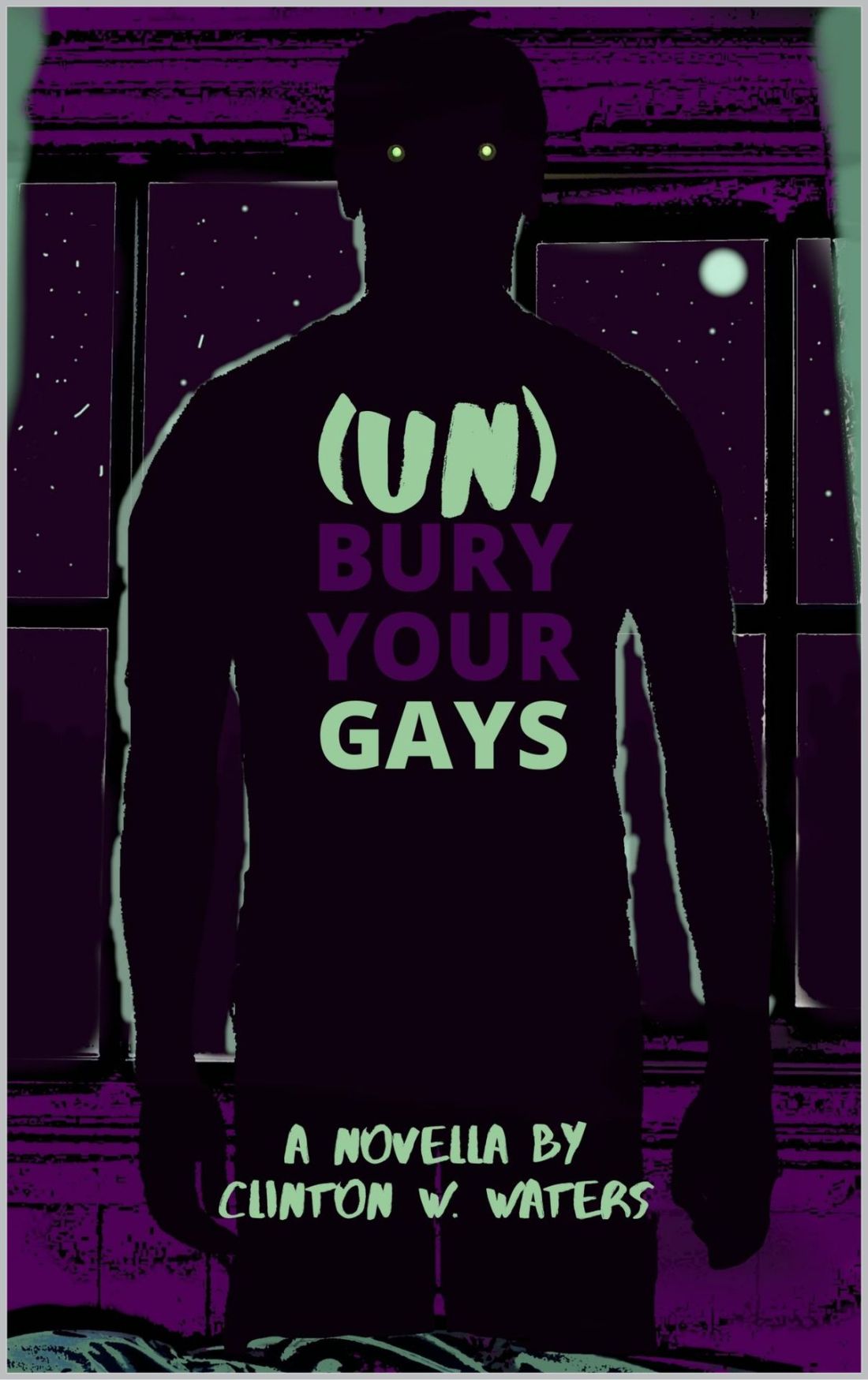

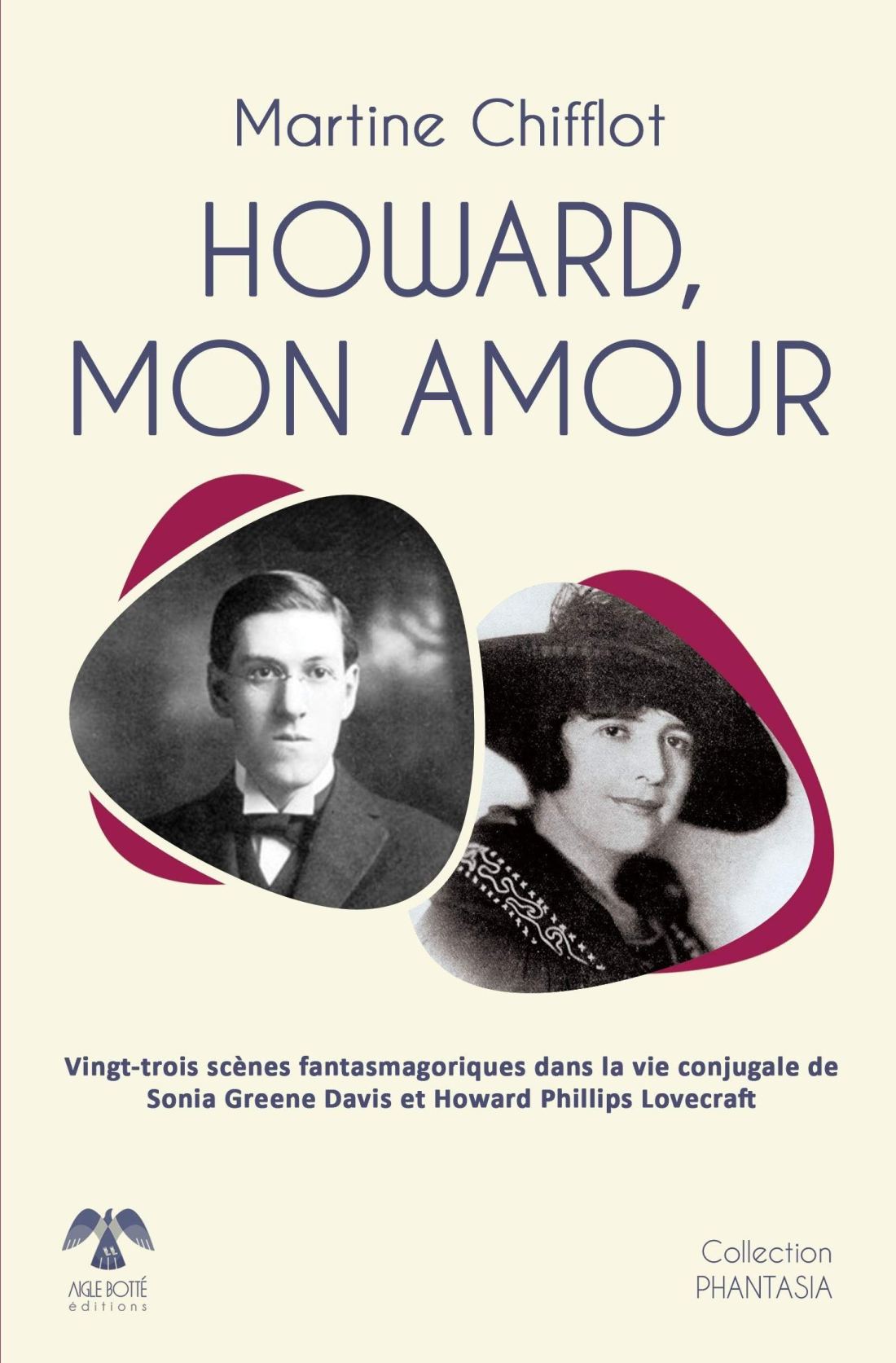
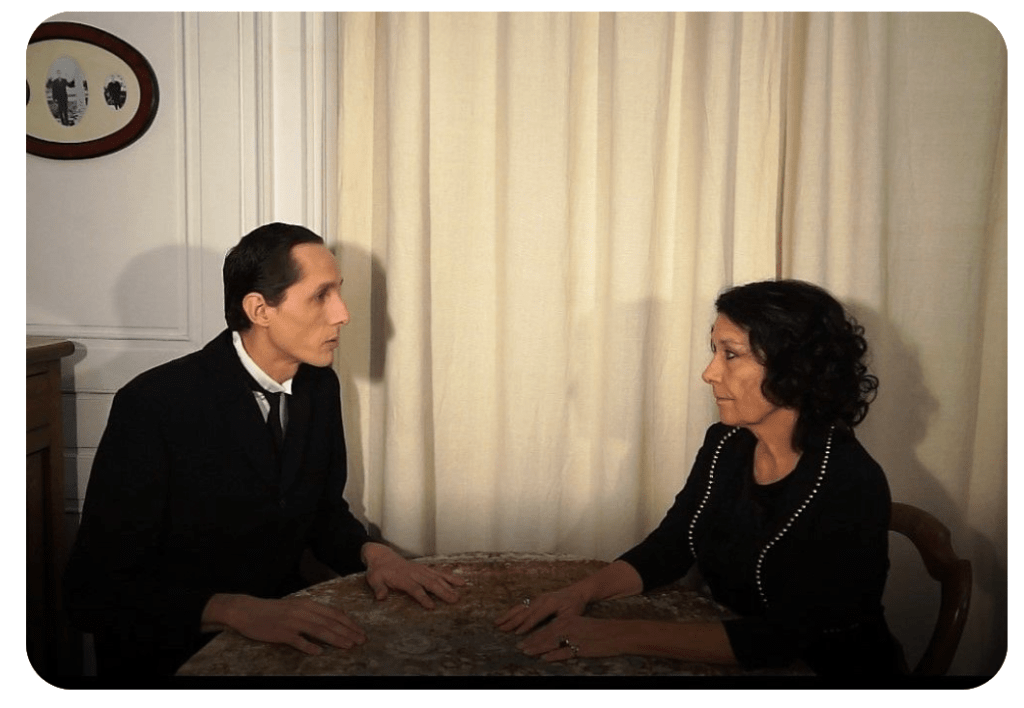
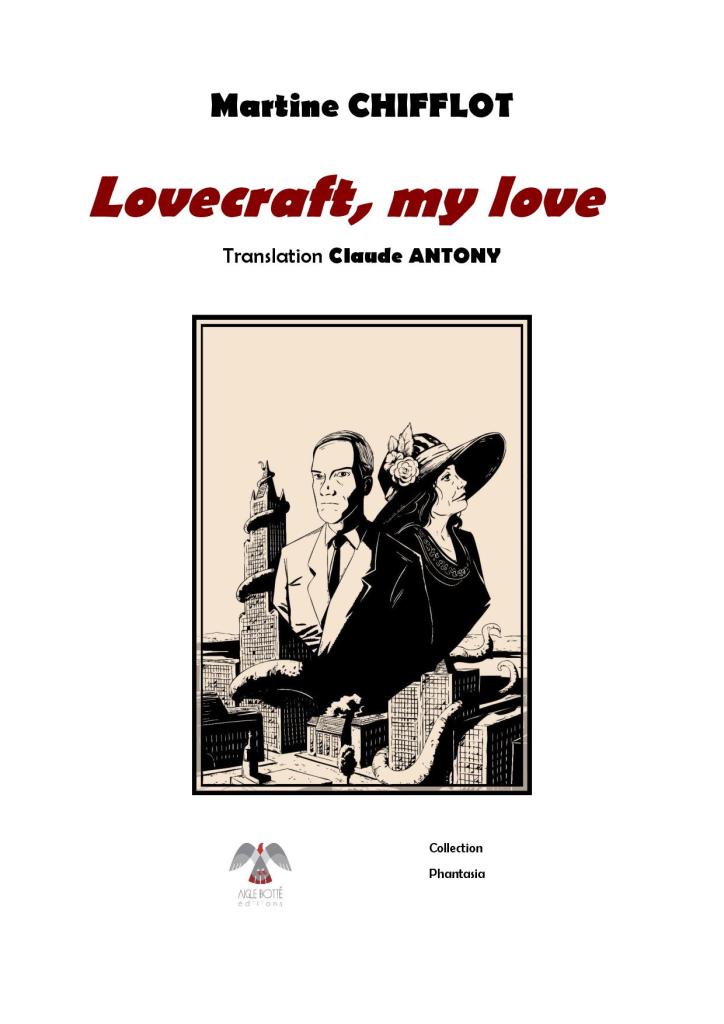
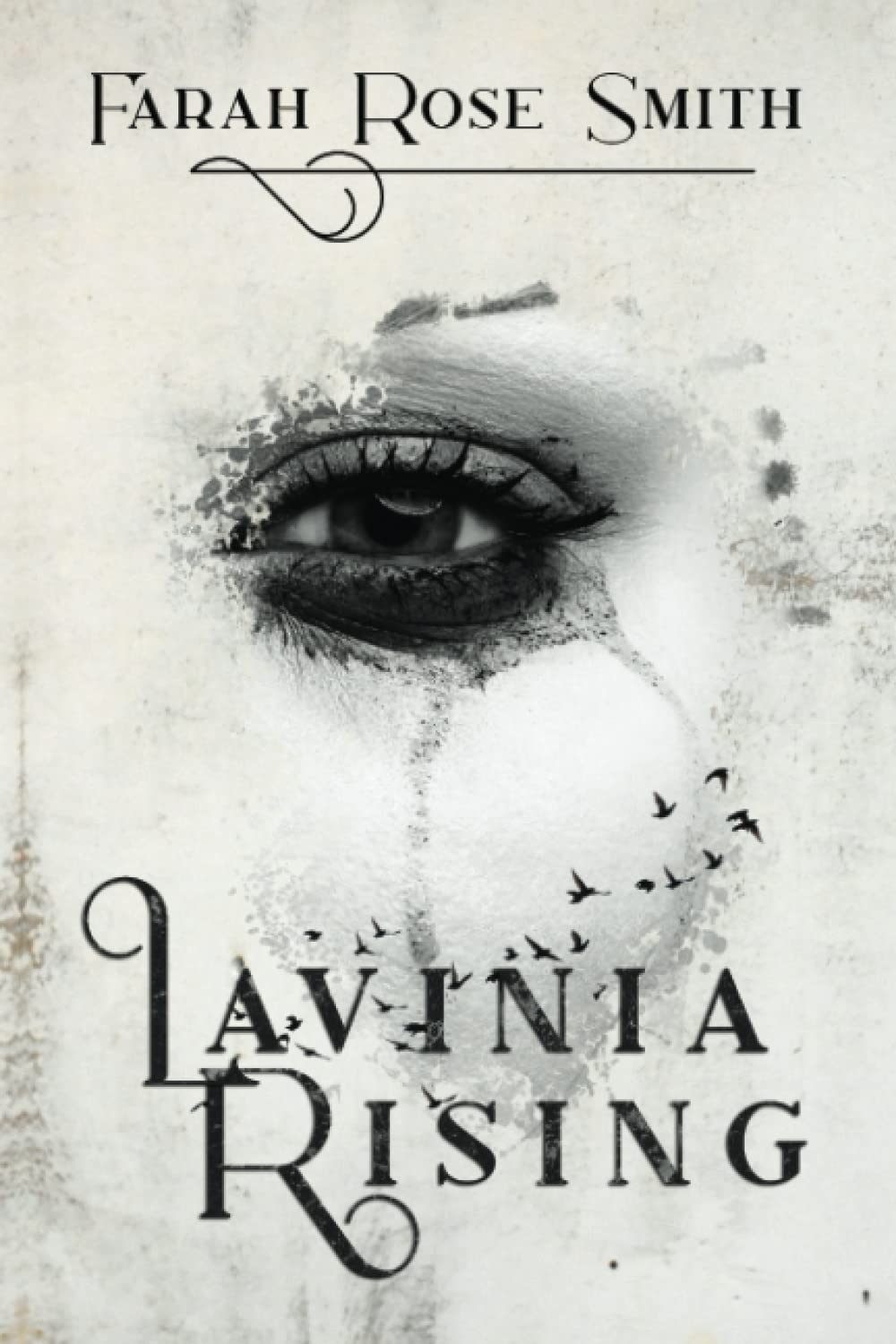


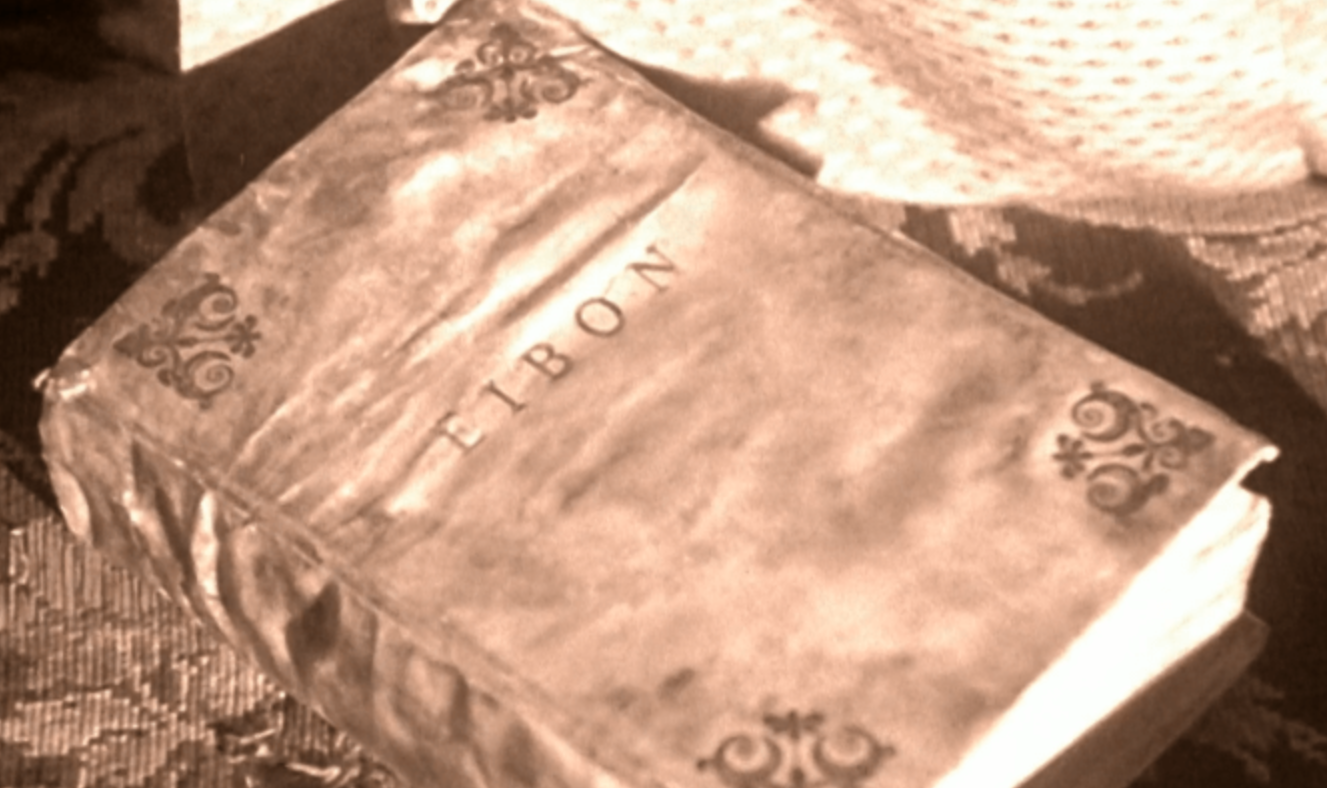

 Deep Cuts in a Lovecraftian Vein