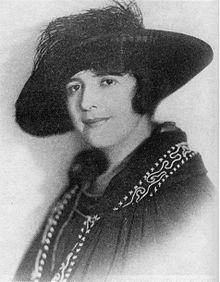
Alcestis: A Play (1985) by Sonia H. Greene & H. P. Lovecraft

Alcestis. As by “Howard phillips Lovecraft and Sonia Haft Greene Lovecraft.”
Madison, WI: Strange Co., 1985. 15 pp.
Facsimile of the A.Ms. of a play (in Sonia Greene’s handwriting) that the editor, R. Alain Everts, maintains was co-written by Lovecraft and Greene. The degree of Lovecraft’s involvement (if any) is, however, undetermined.
—S. T. Joshi, H. P. Lovecraft: A Comprehensive Bibliography (2009) 195

Prior to their marriage, Sonia had suggested three ghost story plots, two of which Lovecraft expanded into stories that appeared in WEIRD TALES magazine. The third tale rests unpublished as did this play, written out in longhand by Sonia, sometime in the early 1930’s. This play was written much the same way—Sonia suggested the theme, the classical Greek subject matter delighting Lovecraft, and then Lovecraft set out to flesh out the play. His notes on Greek Mythology and on Alcestis particularly have survived, indicating that as was usual, most of the writing was his alone. despite the handwriting being that of Sonia, who likely was acting as Lovecraft’s scribe, the play bears the mark more of Lovecraft than his wife.
—R. Alain Everts, introduction to Alcestis: A Play (1985)

In the late 1960s R. Alain Everts, using a tape recorder provided by Brown University (where Lovecraft’s papers are archived), conducted a series of interviews with surviving acquaintances of H. P. Lovecraft and his circle, notably including Wilfred Blanch Talman and Sonia Davis, Lovecraft’s former wife. After the conclusion of the interviews, it became clear to Brown University that Everts had also collected materials from some of the interviewees which he did not turn over to the university. The university took out the unusual step of issuing a notice to booksellers against purchasing this material, which began a series of legal suits (see 757 F.2d 124).

In the 1970s, Everts began publishing articles based on his interviews including “Howard Phillips Lovecraft and Sex: or The Sex Life of a Gentleman,” as well as fanzines and chapbooks under the imprint “The Strange Company,” including previously unseen photographs of Lovecraft & co., letters, and Alcestis: A Play (printed in 1975 but not published until 1985). Released in an edition of only 200 copies and never reprinted, it is the rarest and most contentious of Lovecraft’s collaborations.

The play is based on Euripides’ play of the same name, which was available in several translations during Lovecraft’s lifetime, including Coleridge’s 1906 verse translation. The exact translation Howard and Sonia might have been familiar with is unknown, as no such work is listed in Lovecraft’s Library: A Cataloguebut Lovecraft specifically mentions Alcestis among Euripides’ plays in his Collected Essays (2.185). Sonia’s memoir of their marriage, The Private Life of H. P. Lovecraft (1985) likewise emphasizes their appreciation for ancient Greece:

The nomenclature of “Socrates and Xantippe” were originated by me because, as time marched on and our correspondence became more intimate, I either saw in Howard or endowed him with a Socratic wisdom and genius, so that in a jocular vein I subscribed myself as Xantippe.
—Sonia Davis, The Private Life of H. P. Lovecraft 27

The is no mention of Alcestis: A Play in the published correspondence of H. P. Lovecraft; then again, Lovecraft rarely mentioned his marriage or his wife in his correspondence after their separation, so this does not preclude collaboration. Even after Sonia filed for divorce, they remained on friendly terms and continued to correspond. Lovecraft is known to have visited her in March 1933, as she was recovering from an illness after returning from a trip to Europe (ibid. 22). Possibly this visit allowed for collaboration or at least inspired her to make this holograph manuscript; Sonia herself never alludes to the play in her memoir.

Absent all other evidence the only determination as to whether Lovecraft and Sonia did or did not collaborate on Alcestis: A Play is to look at the text itself.

Prologue

Scene I

Night. A cemetery beside a high-road, under a horned moon. Edge of road with low wall in the foreground. Ground covered with asphodel (the flower of the dead) and studded with tombs and stelae, rises unevenly to wall of cyclopean masonry overgrown with vines and lichens.

“Cyclopean” is famously one of Lovecraft’s favorite adjectives, but otherwise there is no exact bit of language readers can lean on to discern who is the author; it’s a work for stylometrists. If Lovecraft was involved, the play marks a departure from his usual style: being all-dialogue, with a few descriptions of scenes and action.

Worth noting is that despite carrying her name, the character of Alcestis—who sacrificed herself so that her husband might live—never appears in the brief play. It is more accurate to say that Alcestis: A Play is a kind of prologue, setting up the events where Apollo is made the servant of Admetus and the bargain with the Fates, ending on the rather hopeful upbeat that someone will be found willing to die in the king’s place.

Addendum: Since writing this entry, I’ve discovered that a typewritten edition of the play and prologue, probably made in the 1960s, survive at the John Hay Library and can be viewed online for free.


Bobby Derie is the author of Weird Talers: Essays on Robert E. Howard & Others (2019) and Sex and the Cthulhu Mythos (2014).

Lovecraft Country (2016) by Matt Ruff

So they talked about Ray Bradbury, and Robert Heinlein, and Isaac Asimov, all of whome Earl liked; and L. Ron Hubbard, whom he didn’t; and the Tom Swift series, which Earl had loved when he was young but which embarrassed him now, both for the books’ depiction of Negroes and for the fact that as a boy he hadn’t noticed it, despite his father’s repeated attempts to point it out to him.
—Matt Ruff, Lovecraft Country 5

There’s a lesson buried in the opening pages of Matt Ruff’s novel, soon to be an HBO series, which may go unnoticed by some readers. It is thirteen pages before Atticus Turner stumbles across a copy of The Outsider and Others (1939), the first collection of H. P. Lovecraft’s work from Arkham House. Thirteen pages of seemingly pointless discrimination against a black man, Army veteran, trying to do something as simple as drive from Jacksonville, Florida to Chicago, Illinois.

Except it isn’t pointless; it is the sole point of Matt Ruff’s novel. As much as readers and critics might like to focus on Lovecraft and his contemporaries, science fiction and weird fiction, in exclusion to the realities of Jim Crow and segregation—race and prejudice—they were a part of it, and it informed their fiction. Privilege, for white people, is not having to think too hard about it.

It’s old. It’s just the way it was. Can’t change it.

But we as readers can change the way we read it. Can understand the context in which a story was written, try to empathize with what it might be like to be an African-American and read Lovecraft’s “On the Creation of Niggers” for the first time…which is where, fifteen pages in, Ruff’s novel starts to fall apart.

The poem was written circa 1912, during a period when Lovecraft as a young man wrote ultra-nationalist and xenophobic poetry, long before he was a horror writer or connected to amateur journalism; the text Ruff uses to introduce the poem to Atticus is a complete fiction. Lovecraft never published “On the Creation…” during his lifetime; there are no mentions of it in any of his published letters, nor in any of the memoirs of his life. It was not revealed to the public until 1975 when L. Sprague de Camp published in his flawed book H. P. Lovecraft: A Biography, and for much the same reason that Ruff inserts it here: graphic, undeniable shorthand that Lovecraft was racist.

Ruff’s mention of the poem is less lazy than economic: nothing else Lovecraft wrote has the N-word in the title, and Arkham House had made a point of not emphasizing (and occasionally denying) that aspect of his life. “Medusa’s Coil” was published in Arkham House’s The Curse of Yig (1953), but that collection was released under Zealia Bishop’s name, not Lovecraft’s, and the ending censored. The first volume of the Selected Letters would not be published until 1964, and that too was censored. Ruff could have dug into Lovecraft’s fiction for an N-word—in “The Picture in the House” or “The Rats in the Walls”—but it was no doubt easier and faster to create a convenient fiction.

While the cast (predominantly African-American, with a black protagonist) and setting (1950s United States) may be relatively novel for the Mythos, relatively little else in Ruff’s novel is. Atticus Turner exists in a world where both Lovecraft’s fiction is a reality and where some iteration of the Mythos is apparently real; the same basic premise as August Derleth’s The Lurker at the Threshold (1945) and Robert Bloch’s Strange Eons (1979). Once the first connections are made, it’s a road trip to Lovecraft Country, with The Safe Negro Travel Guide as psychopomp for the journey.

It’s difficult not to compare Lovecraft Country with “The Ballad of Black Tom” (2016) by Victor LaValle, released the same year and covering some of the same thematic ground. LaValle’s worth benefits from brevity: it is difficult to maintain the mood and suspense of the short story at novel length. So too, LaValle had the courage for a downer ending. Not everybody has to live, or come out whole. More importantly, perhaps, “The Ballad of Black Tom” is a story of the Mythos—Lovecraft Country, despite the title, is not.

There is one tantalizing suggestion of a connection: that Lovecraft’s Arkham might have really been Ardham, that the tentacled Scylla might be the inspiration for Lovecraft’s shoggoths…but the farther in the reader gets to the novel, the less connection it has to Lovecraft and the Mythos. The initial set-up, in that first 13 pages, was for a dive into the Mythos from an entirely different perspective. What it delivers, ultimately, is a rather conventional occult thriller with a somewhat unconventional cast.

Lovecraft Country, it should be emphasized, is not a bad book. Matt Ruff did a fair amount of research, it shows in every chapter. His prose is solid, his characters well-developed, the plot is effective. It simply isn’t what it could be, or really what it promised to be. The name itself is a great hook, the premise it sets up is excellent, but this isn’t a book that dives into the thick of racism in the time of Lovecraft, or the Mythos he and his contemporaries created. A drive into a Massachusetts town where a freemason lodge practices real magic is not a journey into Lovecraft country.

What this book needed was some greater revelation. Some attempt to reconcile the everyday horrors of being African-American in the United States in 1954 and the cosmic horrors of the Mythos. Something like Harlem Unbound (2017), but in narrative form. Lovecraft Country didn’t have that. It never even aspired to it.


Bobby Derie is the author of Weird Talers: Essays on Robert E. Howard & Others (2019) and Sex and the Cthulhu Mythos (2014).

 

“Meet Me on the Other Side” (2002) by Yvonne Navarro

Bethmoora,” Paul said. “And no, it’s not Israeli. Actually, the roots aren’t traceable to any specific language or dialect. But it’s still…foreign.”
– Yvonne Navarro, “Meet Me on the Other Side” in The Children of Cthulhu 141

Four million people asleep, dreaming perhaps. What worlds have they gone into? Whom have they met? But my thoughts are far off with Bethmoora in her loneliness, whose gates swing to and fro. To and fro they swing, and creak and creak in the wind, but no one hears them.
– Lord Dunsany, “Bethmoora” in A Dreamer’s Tales (1910)

A few years after the birth of the 21st century, Anglo-Irish aristocrat Lord Dunsany was inspired to create his own artificial mythology⁠—not a substitute national mythos a la J. R. R. Tolkien’s The Lord of the Rings, but something new and largely unprecedented. He combined the love of the commonplace with the desire for the exotic, and wrapped it together in language reminiscent of the King James Bible and ancient Grecian odes. Stories like “Idle Days on the Yann” directly inspired the dream-quests of Lovecraft’s Randolph Carter…and many others besides.

For Yvonne Navarro, the questers are Paul and Macy.

“Meet Me on the Other Side” is smarter than just an update of Dunsany’s old formula where seekers tired of mundane life look for the key of dreams, the path that leads Beyond the Fields We Know, escape from the here and the now. Like many a goof Mythos story, it mixes fact with fiction; Paul first finds reference to Bethmoora in that ancient and terrible tome the Encyclopedia Cthulhiana (1994) by Dan Harms. The questers too are not run down by everyday life—they’re thrill-seekers, adventurers, explorers in their own right.

Bethmoora was out there, all right. Just waiting to be rediscovered.
Revitalized.
And they were just the people to do it.
– Yvonne Navarro, “Meet Me on the Other Side” in The Children of Cthulhu 144

The discoveries and revelations when they come are almost perfunctory; old tropes dusted off and brought out because that’s the cycle of a Mythos story: Macy is the latest Lavinia, destined for a bit of cosmic miscegenation and birthing of eldritch abominations. Yet the response is different, and what makes the story.

Paul and Macy like a challenge.

Navarro is an old pro at genre fiction; she could easily have spun this story off into an entire novel. Urban explorers in the not-quite-abandoned city in the Dreamlands, flashbacks to old adventures, the slow peeling-of-the-onion, one layer of revelation coming at a time as things build inevitably to a climax—instead, she rips the bandaid off in a couple paragraphs of exposition. The backstory is something Mythos fans have read again and again for decades. “Meet Me on the Other Side” seeks to give the readers something new, and it delivers.

The benefit of having tropes and formula is that they’re building blocks, stepping stones and shortcuts that writers can use to go beyond—and one of the great failures of many Mythos writers is that they try to only ape Lovecraft or Dunsany, to regurgitate old ideas rather than to subvert expectations or push forward with fresh takes.

Navarro does make the leap. How many other writers have had their protagonists look on conceiving and birthing tentacled horrors and the inevitable end of the world as a challenge? It is absolutely a subversion of the typical Lovecraftian attitude that humans are so small in the grand scheme of things that there is little they can do…and not an unwelcome one. The Dreamlands stories do not all embrace or express Lovecraft’s cosmicism, nor need every echo of his work embrace nihilistic horror.

“Meet Me on the Other Side” was published in The Children of Cthulhu (2002), and has not been reprinted. Navarro’s other Lovecraftian fiction includes the novelization of the film Hellboy (2004) and “Feeding the Masses” (1992) and “WWRD” (2018).


Bobby Derie is the author of Weird Talers: Essays on Robert E. Howard & Others (2019) and Sex and the Cthulhu Mythos (2014).

“Tloque Nahuaque” (2011) by Nelly Geraldine García-Rosas

Estela explained to me that Tloque Nahuaque, the Lord of the Near and the Nigh, had been to the Aztecs the Master of the Near and the Far, for they believed he is near all things and all things are near him.
—Nelly Geraldine García-Rosas, “Tloque Nahuaque” in Future Lovecraft 128

“Tloque Nahuaque” is an advanced Mythos story. One for initiates. This story requires readers to connect the dots. To understand where it is coming from and what it is saying requires more than a passing familiarity with Lovecraft’s corpus, and recent-ish developments in experimental physics; a passing familiarity with Aztec mythology is helpful, but García-Rosas provides the short version for readers.

It is marvelous to be able to have a story that can invoke a familiar Mythos entity not be attributes, or some purported quotation from the Necronomicon, but by reference to their attributes. To intimate to readers a new angle on an old mystery, a new interpretation on an existing concept, a new (or old) face for a familiar god.

What makes “Tloque Nahuaque” work, fundamentally, is that Lovecraft’s horrors in the 1920s and 30s were essentially contemporary. Pluto was discovered in 1930; Lovecraft casually associated this discovery with Yuggoth in “The Whisperer in Darkness” that was written around the same time. Einstein’s theory of General Relativity was rewriting physics and the universe as people knew it, and for all the grimoires and incantations, “The Dreams in the Witch House” was as much about advanced mathematics as magic.

Lovecraft’s Mythos works, fundamentally, because he tried to ground it in reality. The dividend that pays is that writers like García-Rosas, who are familiar with advances in physics, can extend and revisit those conceptions. It’s okay if a scientific theory is proved wrong; that only provides the basis for further understanding. New ideas are still applicable to old concepts—be they from the Aztec or Lovecraft Mythos.

Azathoth, by whatever name, can still be relevant to a contemporary audience.

“Tloque Nahuaque” is a narrative of mood and idea more than plot, reminiscent in some ways of “Are You Loathsome Tonight?” (1998) by Poppy Z. Brite. It is episodic, jumbled, fragmentary, yet there is a thread of ideas that progresses from piece to piece. A collection of scraps that point toward a bigger picture. For the subject, it works. The mood sustains. There is no conclusion as such, only a culmination of the initial idea…but the vector of the narrative is clear; everything points to a suggestion of an ending that only initiates might fully grasp.

It works well.

“Tloque Nahuaque” was published in Future Lovecraft (2011) and can be read for free at Innsmouth Free Press.  Nelly Geraldine García-Rosas’ other Mythos works include “Ahuizotl” (2011), “Tloque Nahuaque” (2011), “They Came From Carcosa” (2013), “Caza de shoggoths. Colección grotesca” (2013), “In Xochitl in Cuicatl in Shub-Niggurath” (2014), and “The Head of T’la-yub” (2015). Many of these stories have been translated into English by Silvia Moreno-Garcia, author of “Flash Frame” (2010), and editor and publisher of Innsmouth Free Press.


Bobby Derie is the author of Weird Talers: Essays on Robert E. Howard & Others (2019) and Sex and the Cthulhu Mythos (2014).



“The Lady of the Swamp” (2014) by Janeen Webb

Picture Australia, with its unfamiliar names and strange, fascinating animals; the unique culture that is not British or American but parallels both in its own way. As with the United States, there is a limit to Australian history, a beginning; the cities are new places, and before the first Europeans came is a vast and sketchy pre-history belonging to the Native Australians. No Gothic castles, no crumbling Roman ruin; Lovecraft made do with standing stones and secret caverns in the United States, and in Australia, Janeen Webb’s eponymous old woman finds a cave in the swamp, with native paintings adorning its walls.

“The Lady of the Swamp” is like “Red Goat, Black Goat” (2010) by Nadia Bulkin in that it is not explicitly a story of the Mythos; there are no familiar names invoked here, only themes and tropes. It is Mythos-by-association, in that it was published in the collection Cthulhu: Deep Down Under (2015), and there are definite shades of Lovecraft twisted throughout the narrative: the dark crystal so reminiscent of the Shining Trapezohedron, yet another curious cosmic rape, impregnation, and birth like so many other Mythos tales. The tale is told through diaries, a callback to yesteryear, the determined investigator sorting through the documentary pieces of a life, trying to resolve the mystery in their own minds. Very Lovecraftian.

Yet H. P. Lovecraft knew nothing of fracking. The mundane horror of a nameless Company driving a road through a swamp, threatening the life of a poor and lonely woman living out of a broken caravan, is at best tangential to the themes he liked to employ—of people on the edge of things, where civilization ends and slick citydwellers come only rarely and without real understanding. Webb’s story is part ecopunk, part adult fears: people falling out of society, migrating to the edges, only for their solitude to be rudely interrupted. The uncaring tentacles of the Company ripping apart the fragile tissue of a life are meaner than those of Cthulhu, but only because the hands that drive the bulldozer are ultimately human.

The disconnect between the two themes, of the eldritch evil which rapes the old woman at the beginning of the story and the studied ignorance and lack of empathy of the Company men and reporters in the second half, feels like cognitive dissonance. The narrative distance between the two portions of her diary are immense; the unnatural sexual congress and birth are less intrusive than that of the callous “scientists” and reports that studiously ignore and belittle her, trespassing on her home.

It is the latter which ultimately cuts more deeply; the child of their union is, however unnatural the conception, little different from the other young creatures she has nurtured. She may have stumbled across an eldritch evil in a forgotten cave, but it did not seek her out or harass her beyond that, whereas the company is coming into her home, threatening her life.

The confrontation is easy to see looming.

And when the lady of the swamp is given the choice between the mundane horrors of “progress” and the bloody price extracted by eldritch horror of her swamp…well, it isn’t much of a choice at all, really. People fight with the weapons they have, and the lesser evil is sometimes a nameless thing of darkness. At least the eldritch evil probably won’t kill all the wombats.

“The Lady of the Swamp” first appeared in Webb’s collection Death at the Blue Elephant (2014), and was reprinted in the hardback Cthulhu: Deep Down Under (2015) and The Year’s Best Australian Fantasy and Horror 2014 (2015). The story was not republished in the paperback collection Cthulhu Deep Down Under: Volume 1 (2017), but was replaced by another of Webb’s stories, “A Pearl Beyond Price.”


Bobby Derie is the author of Weird Talers: Essays on Robert E. Howard & Others (2019) and Sex and the Cthulhu Mythos (2014).
“Falco Ossifracus” (1921) by Edith Miniter

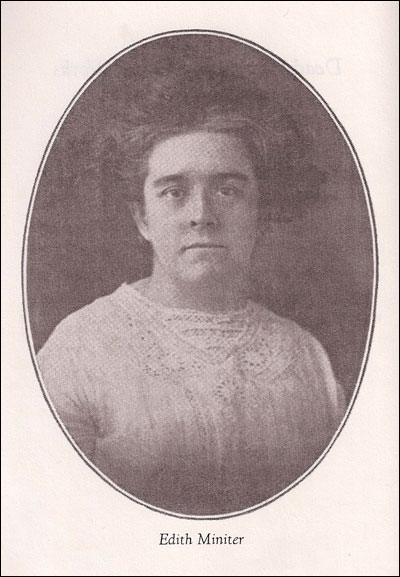
For the next few years I saw Mrs. Miniter quite often at meetings and festivals of the Hub Club, and always admired the effectiveness with which she devised entertainment and maintained interest. In April, 1921, her quaintly named and edited paper The Muffin Man contained a highly amusing parody of one of my weird fictional attempts… “Falco Ossifracus, by Mr. Goodguile”…thought it was not of a nature to arouse hostility.
—H. P. Lovecraft, “Mrs. Miniter—Estimates and Recollections” (1938) in the Collected Essays of H. P. Lovecraft 1.381

Edith Dowe Miniter was a professional journalist during the 1880s to 1900s, writing both articles and perceptive stories that dealt often with the perspective of women in New England; her sole published novel was Our Natpuski Neighbors (1916), chronicling the experience of an immigrant Polish family to Massachusetts—and the townfolks’ not always positive reaction to their new neighbors.

Along with professional journalism, Edith Miniter was a powerful voice in amateur journalism, a leading voice of the Hub Amateur Journalism Club in Boston. An idealist, she was not one for compromise and engaged in fierce battles over the administration of the National Amateur Press Association, which caused one friend to write:

In spite of unusual difficulties and unforseeable betrayals, her administration was able and efficient; and it ended forever the tradition that the highest official position within out gift was earmarked “For Men Only.”
—James F. Morton, “Some Thoughts on Edith Miniter” in Dead Houses and Other Works 79

In 1920, she met the young amateur Howard Phillips Lovecraft, and they became good friends through her final years, with a visit to her home in 1928 providing some of the details to “The Dunwich Horror.” For all that Miniter and Lovecraft were friends, their tastes did not all run in the same line. Lovecraft reported that:

Mrs. Miniter did not care for stories of a macabre or supernatural cast; regarding them as hopelessly extravagant and unrepresentative of life.
H. P. LovecraftCollected Essays of H. P. Lovecraft1.381

At the time, Lovecraft was publishing little else. His published fiction in amateur periodicals in 1921 included “Beyond the Wall of Sleep” (1919), “Dagon” (1919), “The White Ship” (1919), “The Statement of Randolph Carter” (1920), “The Doom that Came to Sarnath” (1920), “The Cats of Ulthar” (1920), “Nyarlathotep” (1920), and “Polaris” (1920). It was in this spirit that Miniter chose to tweak her younger friend’s nose with one of the first parodies of his style. In her epigraph to the story, Miniter wrote:

It pleasures us exceedingly to offer our readers a condensed novel by the renowned Mr. Goodguile. Why pursue the works of this author throught Tryouts, Vagrants and National Amateurs, as yet in press, when here is the quintessence? Similar attention is promised later to such of our eminent fictionists as merit it.
—Edith Miniter, Dead Houses and Other Works 117

The Tryout, Vagrant, and National Amateur well all amateur journalism magazines where Lovecraft’s work had appeared; the name “Goodguile” (aside from being an obvious play on Lovecraft), was a jab at Lovecraft’s love of pseudonyms during this period, as was used in “Poetry and the Gods” (1920) by Anna Helen Crofts & H. P. Lovecraft and “The Crawling Chaos” (1921) by Winifred Virginia Jackson & H. P. Lovecraft. In this, Miniter was unknowingly anticipating the work of pasticheurs and parodists of several generations in the future, such as “I Wore the Brassiere of Doom!” (1986) by “Sally Theobald” (Robert M. Price).

The primary inspiration for Miniter’s parody appears to be “The Statement of Randolph Carter,” at least so far as the protagonist is their with his close male associate in a graveyard echoes some of the essentials of that story. Lovecraft had not yet written “The Unnameable” or “The Hound,” but the fact that those stories hit so close to the same formula shows how squarely Miniter’s critique hit home.

Other shots followed, and ones Lovecraft and their mutual friends could hardly miss:

“Your pal,” came the response, “Iacchus Smithsonia,” the name was originally John Smith, but it is always my will that my friends bear a name of my choosing and as cumbersome a one as possible, “is cleaning out Tomb 268.” (ibid, 118)

This is a jab at Lovecraft’s habit of doing exactly this with friends, addressing them by nicknames in letters and sometimes other places; famously this was adopted by his circle of pulp friends so that Clark Ashton Smith became Klarkash-Ton, and Robert E. Howard was Two-Gun Bob, but it was applied to many as a sign of affection. In her surviving letters to Lovecraft, Miniter addresses him as “Mr. Goodguile.” (ibid. 46)

A little farther down, she takes a shot at Lovecraft’s occasionally ultraviolet prose and fondness for obscure, archaic, or technical terminology:

“I am really sorry to have to ask you to absquatulate,” he said, employing the chaice diction which is so peculiar to we of the educated aristocracy, “but this ain’ no place for a feller with cold feet.” (ibid.)

As parodies go, Miniter’s “Falco Ossifracus” probably hits home a little less to contemporary readers than The Adventures of Samurai Cat (1984) by Mark E. Rogers or “Nautical-Looking Negroes” (1996) by Peter Cannon & Robert M. Price. Lovecraft’s mythos had not strictly been put to paper yet, as the first tale in the Arkham cycle, “The Picture in the House” was written in December 1920 but not published until the summer of 1921, so Miniter had no such target to purposefully aim for.

Yet if it lacks for not being a true pastiche, or for going after what today might seem to be obvious targets, there is no doubt that the good-natured shots aimed at Lovecraft must have hit home. The well-intentioned roasting was likewise received with good humor considering they were still subsequently on good terms.

“Falco Ossifracus” first appeared in The Muffin Man (Apr 1921), and has been reprinted by Kenneth W. Faig, Jr. in Going Home and Other Amateur Writings  (1995) and Dead Houses and Other Works (2008).


Bobby Derie is the author of Weird Talers: Essays on Robert E. Howard & Others (2019) and Sex and the Cthulhu Mythos (2014).

“Red Goat, Black Goat” (2010) by Nadia Bulkin

“The Goat is our real mother! She is everyone’s real mother!”
—Nadia Bulkin, “Red Goat, Black Goat”

From the 1930s on, fans and writers have tried to give shape and order to the Mythos. It is a participatory ritual: the reader’s understanding is always unique, built and shaped by what they have read, what connections their intellect has made, how their imagination fills in the blanks. There is no one canon. There are only possibilities.

In “Red Goat, Black Goat” Nadia Bulkin cracks opens up a new possibility.

It is a story of Shub-Niggurath only by inference. Bulkin eschews the tropes of Mythos pastiche. The Black Goat of the title is a hint, at best; a suggestion of the epithet “The Black Goat of the Woods with a Thousand Young.” Yet the entity in this story is never named as such; there are no tomes, no familiar place names. “Red Goat, Black Goat” does not partake of the “lore” of the Mythos in the tongue-in-cheek manner of “ALL THIS for the GREATER GLORY of the 7th and 329th CHILDREN of the BLACK GOAT of the WOODS” (2012) by Molly Tanzer or “Shub-Niggurath’s Witnesses” (2015) by Valerie Valdes.

Bulkin carves her own bit of lore, with the bloody skill of an Indonesian horror film. The setting is not played up as some exotic bit of the “mysterious Orient” as it might have been in Lovecraft’s day. She grounds and develops the setting as Lovecraft did Dunwich, the characters an organic part of the whole so that none of the non-English terminology that peppers their thoughts and speech seems false or unnecessary.

At the same time, “Red Goat, Black Goat” partakes of the essence of the Mythos. The Goat is something outside the system of superstition that the characters know; it exists beyond their framework of understanding. Aspects of it echo themes developed by other writers; the terrible all-mother Cybele of “The Rats in the Walls,” or “Koenigsberg’s Model” (2011) by Peter Tupper, but it is far less defined than even those incarnations.

Nor is the story leavened by any real attempt at humor, wry or otherwise; there is gore, but not the microscopic dwelling in viscera that is splatterpunk. Bulkin moves quick, lest the tale be bogged down in dirty details. Her horrors are passing, visceral images that build shortly toward mini-climaxes, her pacing cinematic as the narrative moves swiftly toward a point of finality—not the ending of a story, but the closing of one chapter.

It’s a good story that leaves you wanting more; Bulkin could have written “Red Goat, Black Goat” out as a Javanese Gothic novel and it wouldn’t have seemed out of place. There are no answers, really, and that’s okay. Readers will fit this into their own personal understanding of the Mythos just fine; one more incarnation of Shub-Niggurath, one more thread in the endless tapestry. It’s a story that should be part of more reader’s personal Mythos.

“Red Goat, Black Goat” was first published for free online in Innsmouth Free Press #4 (June 2010); it has been reprinted in Lovecraft’s Monsters (2014) and Nadia Bulkin’s collection She Said Destroy (2017).


Bobby Derie is the author of Weird Talers: Essays on Robert E. Howard & Others (2019) and Sex and the Cthulhu Mythos (2014).


“The Curate of Temphill” (1993) by Peter Cannon & Robert M. Price

It should be noted that this tale attempts a new stage of the evolution of Mythos fiction. It has been justly said that much Mythos fiction fails for its redundancy: the same thing happens that happened in Arkham House books of fifty years ago. Once we read certain book titles or demonic names we know what will happen. The story reduces to the collection of names, almost as if that were all most readers were looking for anyway. For new Mythos fiction to have any chance of being effective perhaps it must be scrupulously spare in its referenced to the received lore.
—Robert M. Price, The Shub-Niggurath Cycle 187

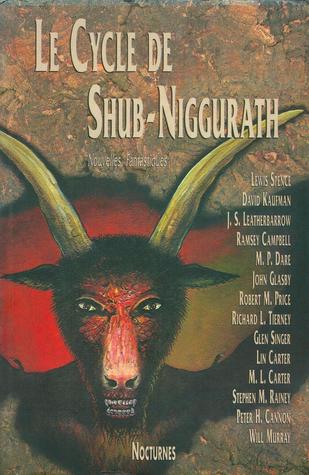
This story can be read as one of the most homophobic stories in the Cthulhu Mythos. That in itself might explain why this first collaboration between Robert M. Price & Peter Cannon is a bit of an orphan. It has been published only twice, first in the ‘zine Grimoire Vol. 1, # 1 (Spring 1993), and in The Shub-Niggurath Cycle (1994), a volume edited by Price as part of the Chaosium Call of Cthulhu Fiction line. Neither Price nor Cannon has seen fit to reprint it in any of their subsequent collections, nor written much about it; though it is clear from Price’s editorial comments that Cannon probably wrote the bulk of it, attempting to emulate the style of M. R. James, and that Price supplied much of the theological background. It is therefore feasible that this collaboration operated similar to their later story “Nautical-Looking Negroes” (1996).

The Jamesian atmosphere may have suggested the religious theme, which is Dr. Price’s special area of expertise; the setting is Temphill, part of the Severn Valley setting created by Ramsey Campbell for his own Mythos stories. Campbell might be credited with one of the first overt references to homosexuality in Mythos fiction with his short story “Cold Print” (1969), though whether that was any inspiration on “The Curate of Temphill” or simply coincidence is unclear—James was British, and Campbell’s Severn Valley is the most prominent and memorable British setting for the Mythos outside of Exham Priory (“The Rats in the Walls”). The name itself recalls the Templars…and if one traces that line of thought, perhaps leads us to the inspiration for this story.

There are certain relatively obscure elements of homosexuality in the demi-monde of legend surrounding Christianity, if you look for it. One of these is the charge at their trials that the Knights Templar practiced sodomy; another is the Secret Gospel of Mark, an apocryphal text which reads in part:

And after six days Jesus told him what to do and in the evening the youth comes to him, wearing a linen cloth over his naked body. And he remained with him that night, for Jesus taught him the mystery of the kingdom of God…naked man with naked man…
—”The Curate of Temphill” in The Shub-Niggurath Cycle 196

Price & Cannon quote this material almost verbatim from the original source; what the authors are doing here is taking known elements from Christian scholarship and weaving them together to form the Mythos “lore” that the protagonist, Rev. Morgan Ackerley, slowly uncovers. It is a genuine Lovecraftian approach, developing the “secret history” of the story with all the care and attention of a good hoax, only with very unconventional (for the Mythos) source materials; readers might compare it to how Dan Brown’s The Da Vinci Code (2003)created a narrative based on the remixed history, legend, and conspiracy theories of The Holy Blood and the Holy Grail (1982).

Where it gets problematic in the story is specific applications. One of the most prominent:

Shortly after deciding the vandalism episode was too trivial to report to the secular authorities, he received a solemn summons to the hospital in Brichester, where Ms. Radclyffe lay in a coma, the victim of violent rape. She expired before his arrival, never regaining consciousness.
—”The Curate of Temphill” in The Shub-Niggurath Cycle 198

While the matter is treated by suggestion and implication rather than outright stated, Vita Radclyffe was a lesbian—unmarried, living with her “companion” Florence Trefusis, reading the lesbian novel The Well of Loneliness (1928) by Radclyffe Hall, and opposed to the domination of the local church by the previous curate, who had preached “You know, the woman shalt be subservient to her lord and master, her husband—obsolete rot like that.” (ibid 190) Her death by sexual assault is treated as horrific, but the why of it is hauntingly unclear…as with much in this story.

A large part of the mystery is on purpose. M. R. James was careful to leave much of the detail to the reader’s imagination, so certain mysteries would always remain. Readers might well argue that since Radclyffe had opposed the old curate, she would also oppose the new one, and so her death would benefit the conspiracy surrounding Temphill.

That doesn’t explain why Radclyffe was either a lesbian or specifically raped to death. Neither aspect of the character is a necessary detail for the purposes of her role in the story, but the fact that both were included strongly suggests that to the authors they were. The implications are therefore nasty: Radclyffe was included in the story because it needed a female antagonist to oppose a cabal of chauvinistic men, who were preaching the strong patriarchal version of the Bible; her opposition to this patriarchal slant would be stronger if she were a feministand disinterested in men generally, hence a lesbian; her death would be all the more horrific if it came about by the very thing she opposed, hence the rape.

Horror exists for violating taboos; the thrill of crossing a boundary, be it social, sexual, legal, religious, even geographic or physical is real. Rape and violent death are a part of that, and many slasher films eagerly combine sex and death, race and death, etc. Characters are introduced as predestined victims, with the only question being not if they will survive but how they will die. It is still an ugly thing to introduce a woman to the plot specifically for her to be raped to death a few pages later, but it is not beyond the pale: H. P. Lovecraft & Zealia Bishop story “The Curse of Yig” is built around a supernatural sexual assault.

The rape in “The Curate of Temphill” in nasty in part because of the ideology behind the attack. Would a man who opposed the group be raped to death? The new curate isn’t; he is instead initiated. Would a woman who was not a lesbian be raped to death? The option is not explored, and that in itself is a bit damning. The story, as brief as it is, only gives hints and suggestions to the actual nature of beliefs held by the old curate and his group…and this is where the homophobia really starts in the story.

In Ramsey Campbell’s “Cold Print,” homosexuality is a secondary aspect of the main character’s sexuality, which is primarily tied up with discipline, spanking, and sadomasochism in the grand tradition of British private schools, or at least the fetishistic pornographic depiction of the same, with hints of pedophiliaall appropriate for the character Campbell was developing. Price & Cannon seem to have taken their inspiration from “Secret Mark” and the implication that Jesus Christ’s hidden teachings involved a pedophilic encounter with a young boyand perhaps by extension touching on general allegations of pedophilia and inappropriate sexual contact on the part of Catholic and Anglican priests, accounts of which have become much more public in the past several decades.

All of which Price & Cannon bring together in their finale, where they hint strongly at this turn of events with:

His parishioner had subsequently invited h im to a special meeting of select members of the Temphill and Goatswood youth groups, where certain wondrous ceremonies would be performed.
—”The Curate of Temphill” in The Shub-Niggurath Cycle 200

Basically, there is no male homosexual in “The Curate of Temphill” who is not also implicitly a pedophile. This might not have been the intended depiction, but the story is short and the cast is small: we aren’t given any other details to go by. It should be mentioned that this conflation of homosexuality and pedophilia is not pursued by Price or Cannon in any other story. Maybe it was just the pursuit of this one set of ideas as a connecting theme—homosexual Templars, a gospel that preaches homosexual pedophilia, the prevalence of homosexual pedophilia among some priests—that suggested the story.

Yet each of those individual elements also embodies homophobia: the Templars were charged with sodomy because homosexuality was a sin; Secret Mark is blasphemous because it suggests Jesus had gay sex with a young boy; the most popular depiction of sexual assault by priests against youth is that they targeted altar boys for abuse, with the homosexual element heightening the scandal for churches that still often disapprove of homosexuality. All of that plus the ultimately needless death-by-rape of Vita Radclyffe makes this a short story with a lot of issues.

Readers at this point might ask “How does all this relate to Shub-Niggurath?”—and it does not, directly. Shub-Niggurath is associated with Campbell’s Severn Valley setting via nearby Goatswood and its inhabitants in “The Moon-Lens” (1964). The Templars were accused of worshiping Baphomet, who in turn was famously depicted as the Satanic Goat by Eliphas Levi, and Price in his introduction to The Shub-Niggurath Cycle thematically connected this figure with  “The Black Goat of the Woods,” often taken as a title for Shub-Niggurath. It is implied that the entity that raped and killed Vita Radclyffe was a satyresque figure, which would make this a rare masculine depiction of Shub-Niggurath, comparable to that in “The Thing from Lover’s Lane” (1996) by Nancy A. Collins.


Bobby Derie is the author of Weird Talers: Essays on Robert E. Howard & Others (2019) and Sex and the Cthulhu Mythos (2014).



“The Black Brat of Dunwich” (1997) by Stanley C. Sargent

The next January gossips were mildly interested in the fact that “Lavinny’s black brat” had commenced to talk, and at the age of only eleven months.
—H. P. Lovecraft, “The Dunwich Horror”

In many ways a spiritual precursor to “The Ballad of Black Tom” (2016) by Victor LaValle and “Herbert West in Love” (2012) by Molly Tanzer, “The Black Brat of Dunwich” is one of Stanley C. Sargent’s most reprinted stories—and one of his most radical. It is a story which emerged from many of the ideas of Lovecraft scholarship at the time of its writing: Donald Burleson’s characterization of the Whateley twins fulfilling Joseph Campbell’s heroic monomyth, as detailed in Disturbing The Universe (1990); the tracing of autobiographical elements from Lovecraft’s life in “The Dunwich Horror” which Sargent would later expand on in the essay “Howard Phillips Whateley, An Observation” (1999, rev. 2002).

“The Black Brat of Dunwich” is a deliberate subversion of Lovecraft’s original narrative, a sort of critical reading re-cast as fiction, a different point of view where the real antagonist of the original story is not Wilbur Whateley. It is the kind of story that reflects the reality of biographical research, where scholars have to sift through different anecdotes and memoirs, trying to reconcile contradictory accounts and arrive at the truth—and the same game can be played by fans of the Mythos, as they attempt to reconcile different stories written by different authors, to arrive at some coherent understanding of the shared artificial mythology.

Part of the story is thus a very deliberate attempt to confirm certain long-held fan-theories, even while recasting the traditional Lovecraftian narrative. For example:

“Did Wilbur explain how Lavinia had a child by this non-material being?” Jeffrey asked.

Gavin chuckled. “I’d of thought you boys would be smart enough to figure that one out for yourselves! Seems self-evident to me that Wizard Whateley allowed himself to be possessed for an incestuous encounter with his daughter. You’ve read Armitage’s account, don’t you recall that Curtis Whateley described the giant face on top of the monster as being the unmistakable likeness to Wizard Whateley?
—Stanley C. Sargent, “The Black Brat of Dunwich” in The Taint of Lovecraft 54

This was probably the inspiration for the scene regarding the conception of the Whateley twins in Alan Moore & Jacen Burrows’ graphic novel Providence.

While writers like Sargent & LaValle have played free with the interpretation of events and characters in Lovecraft’s stories, they have still largely bound themselves to the general sequence of those events and their outcomes—so in “The Black Brat of Dunwich” Lavinia Whateley still gets shut out from her pagan celebrations on Sentinel Hill, and still comes to the same end, just as in “The Dunwich Horror.” The difference in Sargent’s recension is the more sympathetic take on her as a character, showing her as more simple-minded than Lovecraft had and with Wilbur showing real affection for his mother, and going into more detail about her inevitable death.

Inadvertently, this treatment of Lavinia Whateley as a lonely, uneducated woman who is the mere pawn of the men in her life gives her even less agency as a character, but that is a common issue with many re-tellings of “The Dunwich Horror.” Lovecraft’s narrative doesn’t provide much of a role for Lavinia beyond mother and victim, and any narrative that sticks close to the events of that story will have trouble expanding her story much beyond that. The death of Lavinia becomes not an ominous mystery, but a tragedy unfolding.

One open question left by the story involves a particular scene which blurs the line between homosocial and homosexual. The narrator is aware that Wilbur Whateley is self-conscious of his appearance, and:

“I tried to get him over it, show him it didn’t matter to me. I even kept talking to him on a couple occasions to keep him in the room while I took a bath, figuring he’d eventually loosen up, seeing as how I was no Adonis myself, but it didn’t work. He just sat there staring at me all over, like he was studying me as an example of how folks are supposed to look. I just wanted him to accept himself for who he was and stop worrying about what anyone else thought.” He stared directly at James. “You’d best get that disgusted look off your face damn quick, young man, or I’m done talking.”
—Stanley C. Sargent, “The Black Brat of Dunwich” in The Taint of Lovecraft 50

Keeping in mind that while appearing full-grown, Wilbur Whateley was only about six years old in this scene, which makes this feel more than a little like indecent exposure, and recalls some of the problematic issues with “The Devil’s Hop Yard” (1978) by Richard Lupoff. The whole tone of Sargent’s appeal likely echoes strongly with those who have had difficulties coming to grips with either their sexuality or body image, with it being remembered that Stanley C. Sargent put forth one of the most elegant arguments for why Lovecraft may have been a closeted homosexual in an interview with Peter A. Worthy (1998). Wilbur, like Lovecraft, is presented in this story as an outsider.

It is perhaps appropriate then that Sargent dedicated this story to his friend Wilum H. Pugmire, a Mythos author who also identified with the Outsider—but had embraced that identity and relished it.

“The Black Brat of Dunwich” was first published in the Esoteric Order of Dagon amateur press association mailing #97 and Cthulhu Codex #10 (1997); it has subsequently been reprinted many times, in The Ancient Track (Oct 1998), The Taint of Lovecraft (2002), The Black Book #2 (2002), Tales Out of Dunwich (2005), The Book of Cthulhu II (2012), and A Mountain Walked (2014).


Bobby Derie is the author of Weird Talers: Essays on Robert E. Howard & Others (2019) and Sex and the Cthulhu Mythos (2014).

“Herbert West in Love” (2012) by Molly Tanzer

“Of Herbert West, who was my friend in college and in after life, I can speak only with extreme terror. This terror is not due altogether to the sinister manner of his recent disappearance, but was engendered by the whole nature of his life-work, and first gained its acute form more than seventeen years ago, when we were in the third year of our course at the Miskatonic University Medical School in Arkham. While he was with me, the wonder and diabolism of his experiments fascinated me utterly, and I was his closest companion.”
—H. P. Lovecraft, “Herbert West—Reanimator”

“Knew you faggots were faggots,” he said smugly. “Going on a date? To a party? I’m not surprised you suck dick by choice, West, but you, Langbroek? You might actually get a girl to look at you! That is, if you weren’t so busy sucking dick. By choice,” he added, and then laughed loudly, hurr hurr hurr.
—Molly Tanzer, “Herbert West in Love”

Readings of homosexual subtext in Lovecraft’s fiction rarely give way to text—critics are more comfortable noting the possible allegories and ambiguity of language than they are exploring those themes in a work of fiction. There are some who do have the courage and insight to go into such uncharted territories, including the graphic novel Providence (2015-2017) by Alan Moore & Jacen Burrows, “Herburt East: Refuckinator” (2012) by Lula Lisbon, and “Herbert West in Love” (2012) by Molly Tanzer. While Lisbon focuses on eroticism, Tanzer addresses the more complex social and emotional issues surrounding the realities of homosexuality in the early part of the 20th century…when gay men could often face violence and legal penalties as well as social ostracism.

Tanzer’s story works because of how well she develops the characters of the story. As a prequel to Lovecraft’s tale, it beautifully sets up a number of scenes, with a great deal of attention to little details of Lovecraftian lore in the name of streets and Miskatonic University faculty—but all of this is dressing for the main question: who or what is Herbert West in love with?

Tristan almost slipped on a patch of ice when West grabbed him by the hand and pulled him down into a kiss, right there in the snowy brightness under the lamppost, but West’s grip was like iron, and it kept Tristan steady on his feet.
—Molly Tanzer, “Herbert West in Love”

It feels like a question that shouldn’t need to be asked, that doesn’t matter, certainly not in Lovecraft’s narrative and most of the stories that follow it. Lovecraft, uninterested in romance, never gave West any romantic partners; it was a rare author that followed that did. The intensity of West’s focus on reanimation often makes him an essentially asexual character, all of his passion devoted to his work. Yet that is the crux of Tanzer’s narrative.

It isn’t a question of whether or not West is homosexual or bisexual; Tanzer and Lovecraft never get inside West’s head on the matter of his sexuality. West is only seen through the eyes of his associates, with their own emotions and prejudices coloring their perceptions. The degree of manipulation that the young reanimator shows make all of his actions suspect. We never know if West is truly attracted to his fellow student, or if sex is one more weapon that West will use to achieve his goal.

Pete Rawlik, who has carved something of a niche in this particular corner of the Mythos, described “Herbert West in Love” as “subversive” in his introduction to Legacy of the Reanimator (2015)—which it is, in a certain sense. The reader is not presented with any definitive statements on West’s sexuality, but his actions in the story frame two possibilities: either West is open to sexual encounters with men, and thus subverting the asexual character created by the largely homophobic Lovecraft; or West is far more treacherous and alien than even Lovecraft portrayed him, willing to feign homosexuality, even with all its attendant potential consequences in the early 20th century, if that will successfully manipulate his assistant.

Either reading changes our perspective on West, and how we read the reanimator from that point on.

“Herbert West in Love” was first published in the Lovecraft ezine, it has been republished in Tanzer’s collection Rumbullion ‘and Other Liminal Libations’ (2013) and the anthology Legacy of the Reanimator (2015).


Bobby Derie is the author of Weird Talers: Essays on Robert E. Howard & Others (2019) and Sex and the Cthulhu Mythos (2014).